








Perspective on the Exchange Transformation: A Paradigm Revolution from "Technology-Driven" to "Institutional Moat"
TechFlow Selected TechFlow Selected
Perspective on the Exchange Transformation: A Paradigm Revolution from "Technology-Driven" to "Institutional Moat"
The future exchange wars will essentially be a multi-dimensional competition involving "technology + institutional framework + legal system."
 Navigating Web3 tides with focused insights
When the digital asset industry faces a series of sudden risk events, how can users and the industry ensure asset security?
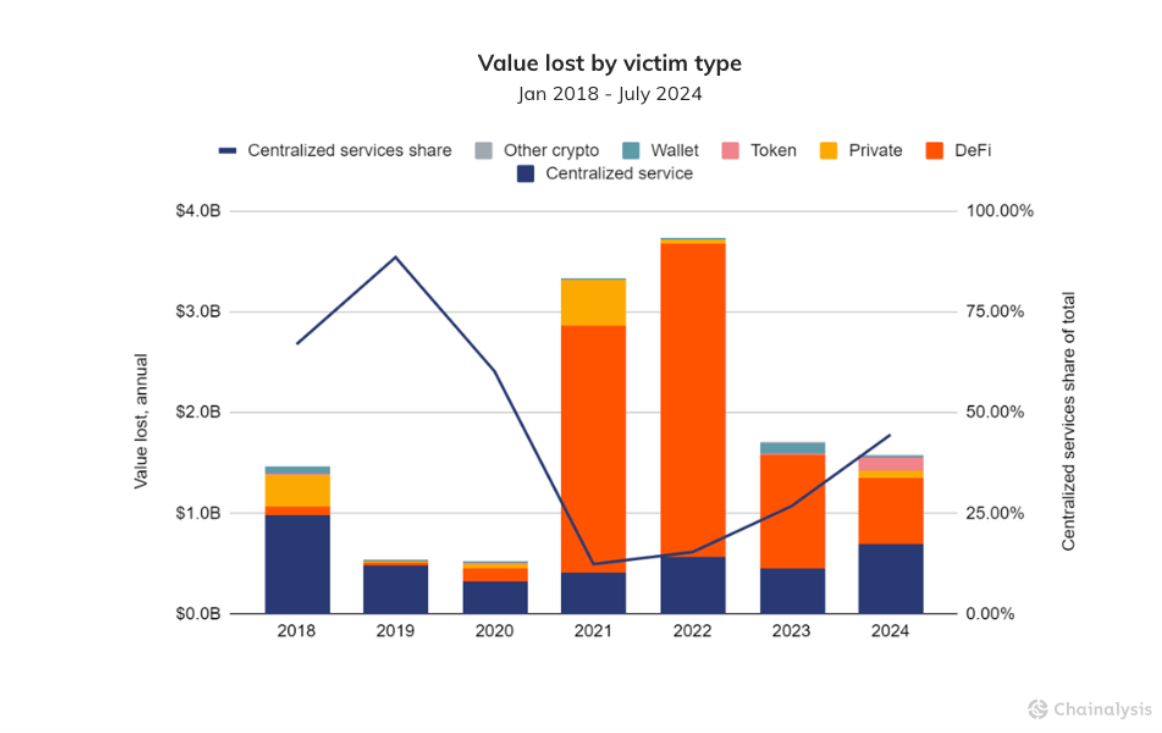
Chainalysis' report last year noted that crypto criminals have increasingly targeted centralized trading platforms, with both the value of stolen cryptocurrency and the number of hacking incidents rising sharply. As hacking methods and capabilities become more professional, management processes and systemic vulnerabilities beyond "technical risks" are emerging as new security threats.
Objectively speaking, as the digital asset industry gradually enters the mainstream, security—the lifeline of industry development—is no longer merely a battle of code, but a competition of rules and institutional systems. In this context, those who can transform regulatory frameworks into security premiums will inevitably gain a competitive edge.
The Watershed from "Technology-Driven" to "Institution-Driven"
The essence of financial history is the pricing history of risk and trust.
Just as traditional finance took over a century to evolve into a mature system centered on the Basel Accords, completing the critical transition from chaotic growth to maturity,
today, against the backdrop of the global digital asset market surpassing $3 trillion, the pace of losses from security incidents has far outstripped market expansion—revealing the limitations of purely technical protection. To some extent, the digital asset industry must address institutional shortcomings and achieve a shift from "technology-driven" to "institution-driven."

In short, licensing and compliance represent an inevitable stage of maturation for the digital asset industry.
Against this backdrop, compliance is not only a security baseline but also the cornerstone of industry trust. Over the past few years, systemic risks at unregulated platforms have shown increasingly diverse trends—whether stemming from technical vulnerabilities, flaws in management processes, or liquidity crises—all of which have severely impacted market participants.
In contrast, regulated platforms (such as licensed exchanges in Hong Kong) have effectively avoided these risks and have seen no major security incidents, thanks to their more robust risk control systems and compliance frameworks.
For this reason, institutional investors and high-net-worth clients increasingly prefer regulated platforms, which serve as a solid foundation for systemic risk management through multi-layered safeguards of "technology + institutions + law."
The Hidden Costs and Necessity of Compliance Investment
From a cost-accounting perspective, although the SFC's official website lists license application fees at just several thousand Hong Kong dollars per item, the cumulative costs associated with process setup and meeting the required compliance standards for capital operations could reach tens of millions of dollars.
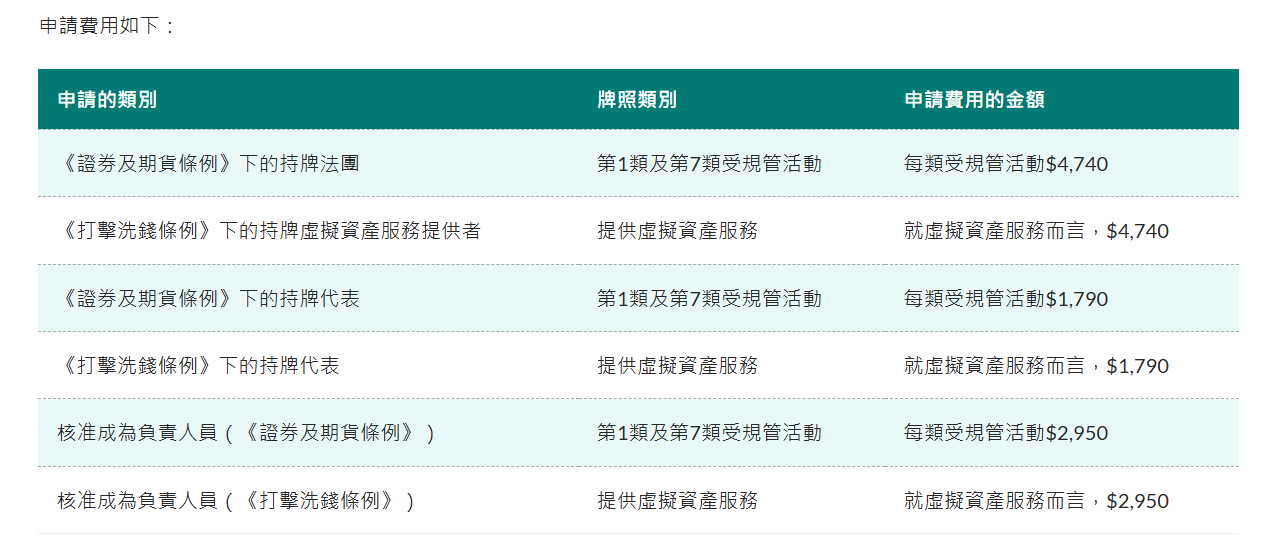
Yet even though the price of licensing and compliance is high, its long-term value far exceeds short-term costs. Take OSL, Hong Kong's first regulated licensed exchange, as an example: it invests millions of dollars annually in compliance operations.
The compliance licensing process is complex and stringent, involving the establishment of legal and compliance teams, investment in security and technical resources, implementation of fund segregation and risk management mechanisms, setting up auditing and reporting systems, and conducting compliance training and education.
As a result, the market share of compliant platforms among institutional investors and high-net-worth clients continues to rise. OSL’s Chief Institutional Business Officer (CIBO), Yinghua Zhang, once disclosed that when Bitcoin’s market cap surpassed $2 trillion, security ceased to be a cost factor and became a "mandatory ticket" for institutional entry:
“Institutional and high-net-worth clients today place extreme importance on security. They prefer to store BTC on compliant exchanges like OSL or invest in BTC ETFs to avoid risks such as lost wallets or asset theft.”
Clearly, compliance investment is not a burden, but the core of long-term competitiveness.
A Systemic Revolution in Exchange Institutions Prioritizing "Security First"
Unlike offshore exchanges that prioritize user experience in their business logic, regulated licensed exchanges always place security in absolute priority. Of course, in the digital asset space, no perfect solution can simultaneously optimize all aspects; thus, platforms must make trade-offs between technology, user experience, and security.
The security advantage of licensed exchanges is most directly reflected in their architectural design—on the technical and exchange architecture level, regulated platforms employ multiple security measures to ensure the safety of user assets.
Specifically, these platforms typically adopt the following measures to build their security moats:
● Technical Protection: Licensed exchanges like OSL use cutting-edge crypto asset storage technologies, storing private keys and backups in certified devices such as certified Hardware Security Modules (HSMs), ensuring the security of user data and transaction information and preventing hacking and data breaches;
● Cold-Warm Wallet Isolation: Licensed exchanges must keep 98% of user assets in cold wallets, with no more than 2% in hot wallets. Additionally, they must fully cover (via third-party insurance, trust funds, or bank guarantees) 50% of assets in cold wallets and 100% of assets in hot wallets;
● Custody System Protection: Regulated exchanges typically require independent third-party custodians to hold assets, a segregated custody mechanism ensuring the exchange itself cannot arbitrarily access user funds, further enhancing security and transparency;
● Exchange Whitelist Address Mechanism for Deposits and Withdrawals: Licensed exchanges use a whitelist address mechanism to ensure users transact only with their own or approved third-party wallet addresses. Verification of whitelist ownership can be done via "message signing tests" or "micro-payment tests";
● Insurance Coverage: Some licensed exchanges also offer additional insurance coverage for asset losses caused by platform vulnerabilities or hacking, providing stronger safeguards and risk mitigation. For instance, OSL launched a record-setting $1 billion insurance program globally, offering customers more comprehensive asset protection;
Conclusion
As digital assets like Bitcoin gradually become part of balance sheets, compliance and licensing are increasingly becoming new imperatives for digital asset exchange development.
This is not merely a technical issue, but a revolution in cognition and institutional governance—one requiring joint efforts from industry practitioners and users alike to promote a "security-first" industry culture:
Users should choose licensed platforms, and practitioners should embrace regulatory frameworks, together building a sustainable digital asset ecosystem.
Join TechFlow official community to stay tuned
Telegram:https://t.me/TechFlowDaily
X (Twitter):https://x.com/TechFlowPost
X (Twitter) EN:https://x.com/BlockFlow_News






