FTX starts payouts, why are countries like China and Russia not included?
TechFlow Selected TechFlow Selected
FTX starts payouts, why are countries like China and Russia not included?
Analyze potential factors from legal and financial regulatory perspectives.
 Navigating Web3 tides with focused insights
If we go back to 2022, FTX Exchange, founded by Sam Bankman-Fried, was undoubtedly one of the benchmarks in the crypto asset market industry. Of course, everyone is already aware of what happened to FTX later. The Sa Sister team has written several articles about the FTX exchange. With FTX's dramatic collapse, its bankruptcy and liquidation case—one of the largest in cryptocurrency history—has continued to attract attention from investors around the world.
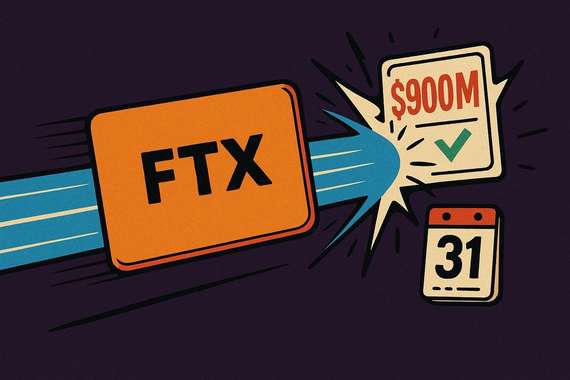
After more than two years of bankruptcy restructuring, FTX's repayment plan has finally entered the execution phase. The first round of repayments officially began on the 18th of this month. According to FTX's established repayment plan, retail users with claims under $50,000 will be prioritized for cash repayment at approximately 119% calculated based on coin prices as of November 2022. These retail users account for roughly 98% of total users. According to recent reports, the initial $800 million has already been distributed to 162,000 accounts, with the remaining funds to be allocated progressively.
01. Can users from mainland China receive FTX repayments?
However, just as things seemed to be improving, Sunil, the representative of FTX creditors, posted a statement explicitly stating that users from five countries—including China, Russia, and Ukraine—are not eligible to participate in the bankruptcy distribution. Although users from these five countries are excluded from the distribution, given that the user proportions from Ukraine, Russia, Nigeria, and Egypt are almost negligible, while users from mainland China account for as high as 8% of the platform’s total user base, this exclusion effectively affects a significant number of people and a substantial amount of money. While Sunil stated that users from these five countries, including China and Russia, cannot participate in the distribution, he did not explain the reasons. Speculations regarding political factors, international relations, and judicial jurisdiction have run rampant without consensus.
02. Speculation on reasons for exclusion from repayment
Actually, the current online theories explaining why FTX refuses repayment to users from these five countries, including China and Russia, sound unconvincing. Today, the Sa Sister team will briefly analyze possible factors from legal and financial regulatory perspectives. In short: First, users from China, Egypt, and Nigeria may be unable to receive repayments from the FTX liquidation team likely due to judicial jurisdiction and compliance risks; Second, users from Russia and Ukraine may be excluded due to SWIFT sanctions and wartime financial controls. Below, the Sa Sister team will provide a detailed analysis for our valued readers.
Judicial Jurisdiction Barriers and Significant Compliance Risks
The three countries—China, Egypt, and Nigeria—share a key similarity in their virtual asset regulatory models: they all adopt a prohibitive regulatory approach. Mainland China issued the "Notice on Preventing Risks Associated with So-Called 'Virtual Currencies' such as Bitcoin" in 2017, which can be seen as an official "implicit ban" on virtual currency trading. In 2021, the People's Bank of China and nine other ministries released the "Notice on Further Preventing and Addressing Risks of Cryptocurrency Exchange Speculation," clearly stating that virtual currencies do not have legal status equivalent to fiat currency... and that activities related to virtual currencies constitute illegal financial activities. This notice directly established the attitude of Chinese regulators toward virtual currencies—that is, adopting a prohibitive regulatory model, where virtual currency-related businesses are deemed illegal financial activities and are not protected by law.
Egypt's regulation of virtual currencies is similar to China's. Article 4205 of Egypt's religious decree explicitly states that any commercial transaction based on virtual currencies such as Bitcoin constitutes "Haram," meaning actions violating Islamic law. Thus, commercial transactions based on virtual currencies are considered illegal financial activities in Egypt.
Nigeria's situation is even more complex. As early as February 2021, the Central Bank of Nigeria declared that virtual currencies represented by Bitcoin "violate existing laws," simultaneously banning commercial banks from engaging in virtual currency transactions and classifying virtual currency-related financial activities as illegal. However, due to the fragility of Nigeria's financial regulation, the country has actually become the second-largest user of Bitcoin and a hotspot for money laundering and terrorist financing via virtual currencies.
From the above analysis of virtual currency regulations and usage in these three countries, it is evident that if FTX were to make repayments to users in these countries, it would contradict their existing prohibitive regulatory policies on virtual currencies, exposing itself to significant compliance risks. Naturally, the FTX liquidation team would remain cautious. Particularly for Nigeria, the FTX liquidation team cannot ensure whether Nigerian users might use the platform for money laundering or terrorist financing. Therefore, in the view of the Sa Sister team, users from mainland China and Egypt might still have hope for future repayment, but Nigerian users are unlikely to receive any repayment anytime soon.
SWIFT Sanctions and Wartime Financial Controls
The remaining two are old rivals—Russia and Ukraine. Unlike the prohibitive regulatory models adopted by China, Nigeria, and Egypt, both Russia and Ukraine have embraced virtual currencies. But each faces its own challenges. First, due to a well-known reason, on February 26, 2022, the United States, the UK, the EU, and Canada jointly announced the removal of major Russian banks from the SWIFT (Society for Worldwide Interbank Financial Telecommunications) system.
SWIFT's role is to connect payment and clearing systems across different economies—by establishing a financial messaging network, SWIFT connects global entities with financial transaction needs. Although technically speaking, Russia could still conduct cross-border payments and settlements through bilateral arrangements or by connecting other financial institutions to the SPFS system, convenience and applicability are undoubtedly greatly reduced. Moreover, because of being excluded from the SWIFT system, even if the FTX liquidation team wanted to repay Russian users, it would face insurmountable obstacles in transferring the funds in the short term. This may be the primary reason why the FTX liquidation team cannot repay Russian users.
For Ukrainian users, the inability to receive repayment is likely tied to Ukraine's wartime financial controls. Due to wartime financial control policies, large-scale cross-border remittances and capital movements in Ukraine are essentially stalled in terms of approval cycles, directly preventing the FTX liquidation team from making repayments to Ukrainian users.
03. Final thoughts—What should Chinese users do?
The Sa Sister team remains relatively optimistic. In the future, the FTX liquidation team may establish special liquidation channels for countries adopting prohibitive regulatory models (mainland China, Nigeria, Egypt), or possibly use stablecoins for online repayments (although this approach may also introduce compliance risks). Overall, the only thing users from mainland China can do for now is wait. After all, even establishing special liquidation channels would require cooperation and breakthroughs within international and national financial regulatory frameworks.
Join TechFlow official community to stay tuned
Telegram:https://t.me/TechFlowDaily
X (Twitter):https://x.com/TechFlowPost
X (Twitter) EN:https://x.com/BlockFlow_News