








Why hasn't the山寨 season arrived yet? Why is this cycle so difficult?
TechFlow Selected TechFlow Selected
Why hasn't the山寨 season arrived yet? Why is this cycle so difficult?
If we go on a reckless money-printing spree, we might see something closer to the previous traditional altcoin season, but this scenario is unlikely.
 Navigating Web3 tides with focused insights
Author: Wen Gou Diary
First, this cycle is tough. But the reality is that each cycle is harder than the last. You're competing against a larger crowd, and the number of experienced participants keeps growing. If you didn't hold most of your BTC or SOL during the bear market, then you probably haven't made any money and are now scrambling.

So why is this cycle so difficult?
1. Post-Traumatic Stress Disorder
We have two major altcoin cycles as examples where most assets dropped 90-95%, and due to the liquidations from Luna and FTX, the entire industry became infected—prices may have even fallen further than they should have. This post-traumatic stress has deeply affected crypto natives.
No one wants to hold anything long-term anymore because no one wants to lose a significant portion of their portfolio again. Emotional swings among participants are more intense, and everyone is constantly searching for the top of the cycle.
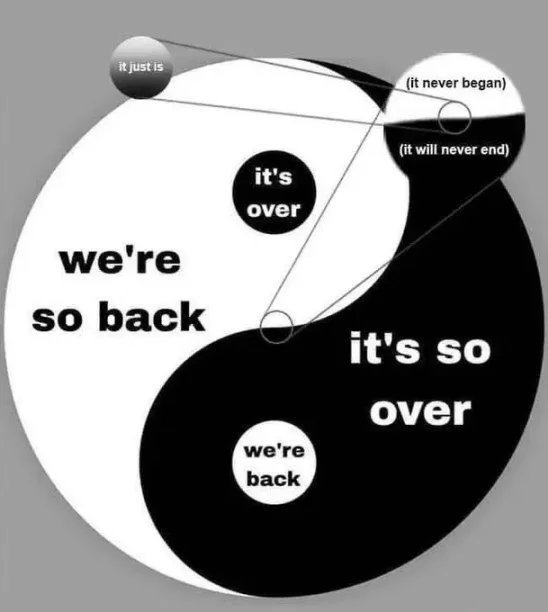
The psychological impact extends beyond trading behavior and affects how the entire ecosystem builds and invests. Projects now face stricter scrutiny, and trust thresholds have multiplied. This has both positive and negative effects: while it helps filter out obvious scams, it also makes it harder for legitimate projects to gain attention.
2. Innovation
There's more iterative innovation and ongoing infrastructure improvements, but nothing as groundbreaking as DeFi’s 0->1 leap. This makes it easier for people to argue that crypto hasn’t progressed, leading to more claims like “crypto has achieved nothing.”
The innovation landscape has shifted from revolutionary breakthroughs to incremental improvements. While this is the natural evolution of any technology, it poses challenges for a narrative-driven market.
We still lack breakout applications—the kind needed to bring crypto to hundreds of millions of on-chain users.
3. Regulation
The corrupt SEC has caused serious damage. They’ve hindered industry growth and prevented certain sectors (like DeFi), which could have achieved greater product-market fit and broader adoption, from developing further. They’ve also blocked all governance tokens from delivering value to holders, creating the narrative that “all these tokens are useless”—which is somewhat true.
The SEC drove away builders (see Andre Cronje’s account of how the SEC forced him to step down), prevented TradFi from engaging with the industry, and ultimately pushed the industry toward raising funds from venture capitalists, creating poor supply and price discovery dynamics where value is captured entirely by a few.
4. Financial Nihilism
All the above factors have made financial nihilism a significant theme in this cycle. “Useless governance tokens” and the high FDV, low float dynamics created by the SEC have driven many crypto natives toward memecoins in search of a “fairer” opportunity.
It's also true that in today’s society, asset prices soar, fiat currencies depreciate continuously, wages fail to keep up, and young people feel compelled to gamble their way to wealth—making the memecoin lottery highly attractive. Lotteries are always appealing because they offer hope.
Because gambling has achieved PMF in crypto, and because we have superior technology for it (e.g., Solana and Pump.fun), the number of issued tokens has surged. Many people want extreme gambling. There’s demand for it.
“The trenches” has always been a term in crypto, but in this cycle it has become a widely understood concept.
This nihilistic attitude manifests in several ways:
-
Rise of “degenerate” culture into the mainstream
-
Shortened investment horizons
-
Greater focus on short-term trading over long-term investing
-
Normalization of extreme leverage and risk-taking
-
Indifference toward fundamental analysis
5. Prior Cycle Experience Is a Hindrance
Past cycles taught you that you could buy alts during the bear market and eventually outperform BTC.
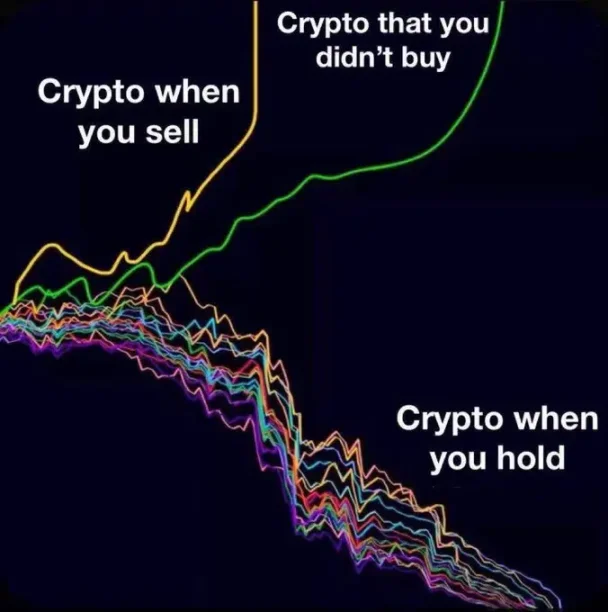
Almost no one is a great trader, so this was the best option for most people in previous cycles. Overall, even the worst alts had a chance.
This cycle favors traders—sellers are better suited than holders. Traders even captured the biggest gains of this cycle via HYPE airdrops.
The first AI Agent hype cycle was an example. It might have been the first time people felt, “This is the new thing we’ve been looking for.” We’re still early, and long-term winners may not have emerged yet.
6. BTC Has New Buyers, But Alts Mostly Don’t
The divergence between Bitcoin and everything else has never been clearer.
BTC has unlocked bids from TradFi. For the first time, it has an incredible new source of passive demand, and central banks are now discussing adding it to their balance sheets.
Alts are struggling more than ever against BTC—and it makes sense, given BTC’s clear goal of achieving gold-like market cap status.
Alts simply don’t have new buyers. Some retail investors return at BTC new highs (but they buy XRP), but overall, there isn't enough inflow from new retail. Crypto still has reputation issues.
7. ETH’s Role Shift
The decline in BTC dominance was largely driven by ETH’s market cap growth. Many believed the trigger for “alt season” would be ETH rising, but this heuristic hasn’t worked so far this cycle because ETH has performed poorly due to fundamental reasons.
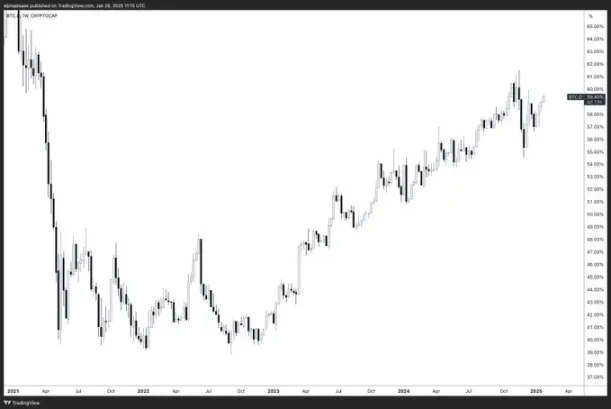
I still believe fundamentals will win in the long run, but you must truly understand the projects you back and how they’ll genuinely outperform BTC. There are candidates, but only a few right now.
Look for projects with the following characteristics:
-
Clear revenue model
-
Real product-market fit
-
Sustainable tokenomics
-
Strong narratives to complement fundamentals (for me, AI and RWA qualify)
I believe those with stronger fundamentals and PMF can eventually add value to their tokens—especially as U.S. regulation eases—making them lower-risk investments. Revenue-generating protocols are now built and working well. This is very different from the “greater fool theory” that dominated many token models before.
You can choose to become a better trader, develop an edge, and focus on more short-term trades, as this market does offer many consistent short-term setups. Onchain offers higher multiples but also lower tolerance for downside risk.
For the majority without a clear edge, a barbell portfolio remains a viable approach: BTC and SOL (70–80%), with a smaller allocation for more speculative bets. Rebalance regularly to maintain these ratios.
You need to understand how much time you can dedicate to crypto and adjust your strategy accordingly. If you're a regular worker, competing in the trenches with a Zoomer who sits 16 hours a day won't work. And this time, passively holding underperforming alts and waiting for your turn won’t work either.
Another strategy is to combine different approaches: build a core portfolio of solid assets, then consider farming airdrops (harder now, but lower-risk opportunities still exist), identify emerging ecosystems early (HyperLiquid, Movement, Berachain, etc.), or go deep into a chosen category.
I still believe the alt market will grow this year. Conditions are set—we remain tied to global liquidity—but those truly outperforming BTC and SOL will be limited to a few sectors and fewer alts. Alt rotation speed will continue to accelerate.
If we go crazy with money printing, we might see something closer to previous traditional alt seasons, but I think that’s unlikely. Even in that case, most alts would only deliver market-average returns. We’ll still launch some major alts this year, and liquidity will keep fragmenting.
Join TechFlow official community to stay tuned
Telegram:https://t.me/TechFlowDaily
X (Twitter):https://x.com/TechFlowPost
X (Twitter) EN:https://x.com/BlockFlow_News






