








10 DeFi Platforms to Watch in 2025
TechFlow Selected TechFlow Selected
10 DeFi Platforms to Watch in 2025
Helping you better determine whether it suits you after understanding the characteristics of each platform.
 Navigating Web3 tides with focused insights
Author: Alan Draper
Translation: Baishihua Blockchain
The financial world remained relatively stable until the emergence of decentralized finance (DeFi), which brought significant changes. DeFi has redefined finance through decentralized lending and ownership, and has the potential to transform various aspects of daily life.
Today, we will explore leading DeFi platforms such as Aave, Lido, Compound, and Uniswap, analyzing their services, core principles of DeFi, security, and how to choose the DeFi platform best suited to your needs.
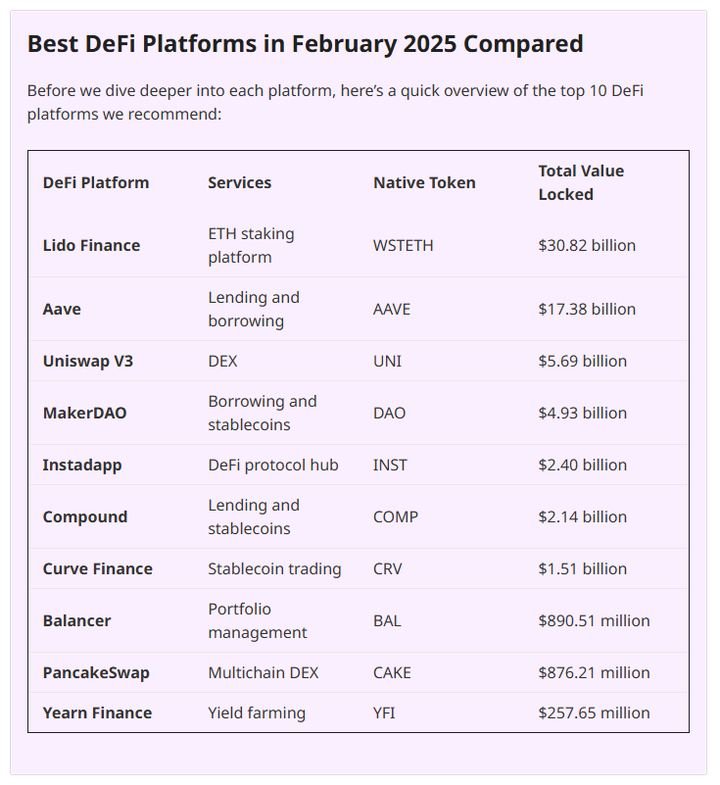
Best DeFi Platforms Review – In-Depth Look. In this section, we'll briefly review each DeFi platform to help you understand their services and advantages. Our goal is to enable you to better assess whether a platform suits your needs after understanding its unique features.
1. Lido Finance – Best DeFi Staking Platform, Connected to Over 100 Apps
Lido Finance is a decentralized finance platform focused on staking, operated by a mission-driven decentralized autonomous organization (DAO), with all decisions made through public voting by holders of LDO, the platform's native token.
The platform is known for high security and cutting-edge technology. Lido specializes in Ethereum staking, specifically stETH (Lido’s version of Ethereum), a token used to distribute staking rewards to users who stake ETH. You can unstake any amount of stETH at any time and redeem it 1:1 for ETH.
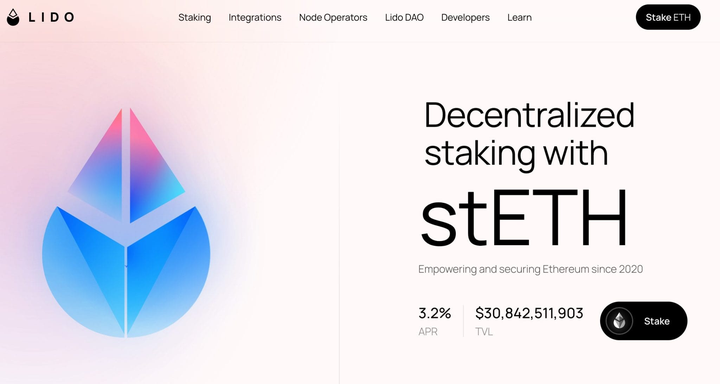
Lido now also allows users to stake MATIC via stMATIC under the same system. Staking ETH or MATIC does not require locked assets, and the entire service is fully non-custodial.
If you plan to hold stETH, note that Lido connects to over 100 applications, enabling you to use it for borrowing, as collateral, and more. Recently, Lido has been expanding its offerings beyond ETH staking to potentially include other assets, further enriching its staking ecosystem to attract more users.
DeFi Services: Staking Total Value Locked (TVL): $30.82 billion
2. Aave – Best DeFi Lending Platform, One of the Longest Operating Records
Aave is one of the leaders in the DeFi space, offering cryptocurrency lending services. It also allows you to earn passive income by staking its native token AAVE (4.60% APY), GHO (5.30% APY), and ABPT (11.70% APY).
In terms of lending, Aave supports around 30 cryptocurrencies, including ETH, WBTC, wstETH, USDT, USDC, AAVE, DAI, and LINK.
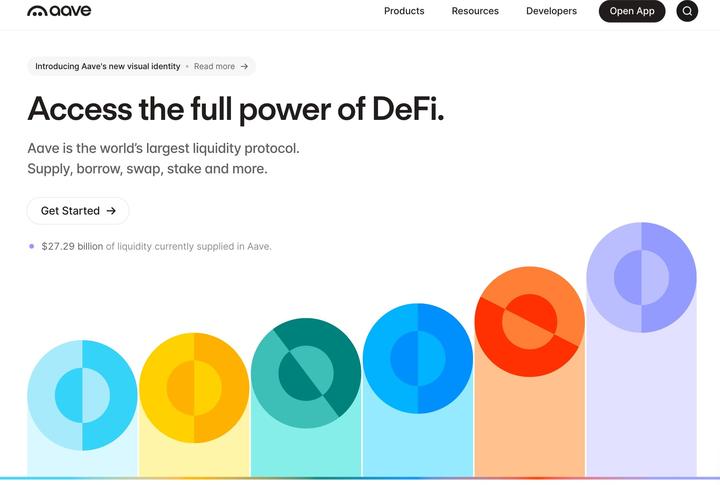
Moreover, Aave is renowned for its innovation within the DeFi sector. Since its launch in 2017, it has significantly expanded and is among the longest-running DeFi platforms. Although Aave's total value locked (TVL) isn't the highest, it leads the DeFi space in trading volume.
Aave is entirely non-custodial, open-source, and community-governed. Additionally, borrowers and lenders can define and execute loan terms directly via smart contracts. At the end of 2024, Aave launched Aave V3 on the zkSync Era mainnet, enhancing transaction efficiency.
If you want to learn more, check out our Aave user guide.
DeFi Services: Lending, Staking Total Value Locked (TVL): $17.38 billion
3. Uniswap – Largest Decentralized Exchange and Best DeFi Trading Platform
Uniswap is currently the largest decentralized exchange (DEX) in the market and a top-tier DeFi trading platform, featuring over 1,500 trading pairs.
More importantly, Uniswap’s robust DeFi platform offers multiple services, including token swaps, earning yield by providing liquidity, and building dApps using the Uniswap protocol. It also integrates with over 300 applications, such as wallets, dApps, and aggregators.
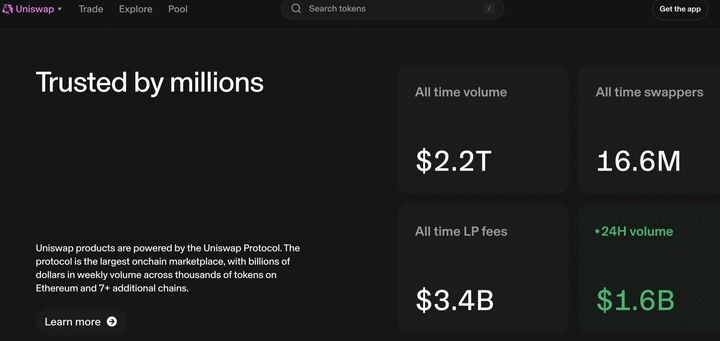
While Uniswap may not be the largest DeFi platform overall, in the DEX category, it is unmatched. Users can trade on a fully transparent and decentralized platform without intermediaries, completing trades through smart contracts. Recently, the platform has focused on improving liquidity provision and user experience, especially through its V3 model that enables concentrated liquidity pools.
For a DEX, learning how to trade on Uniswap is relatively simple due to its user-friendly and clean interface. Uniswap is known for constantly listing new tokens, so if you're interested in trading the latest cryptocurrencies, check out the trending new listings on Uniswap to diversify your portfolio.
DeFi Services: Trading and Lending Total Value Locked (TVL): $5.69 billion
4. MakerDAO – Lending Platform Offering the DAI Stablecoin
MakerDAO is a large Ethereum-based decentralized collateralized debt position (CDP) platform. In other words, it allows users to borrow cryptocurrency. Users can create a CDP by locking up ETH or other Ethereum-based assets as collateral.
MakerDAO’s primary objective is to ensure DAI, its stablecoin and one of the most popular and widely used stablecoins globally, maintains its peg to the U.S. dollar.
MKR is Maker’s native token, used to facilitate interest payments. Whenever a CDP on the platform is settled, the paid DAI and MKR are burned. The community actively discusses governance changes to improve risk management and collateral strategies.
Besides its secure and transparent operations, MakerDAO earns its place on this list due to its close association with DAI and long-term market stability. It has endured all market fluctuations and remains standing.
DeFi Services: Lending Total Value Locked (TVL): $4.93 billion
5. Instadapp – Easy Access to DeFi Protocols
Instadapp is an Ethereum-based decentralized finance application designed to provide users with a convenient way to interact with other DeFi protocols.
Its DeFi smart layer allows users to access various DeFi platforms from one location. In other words, with Instadapp, you don’t need to download multiple separate apps for staking, lending, or other activities.
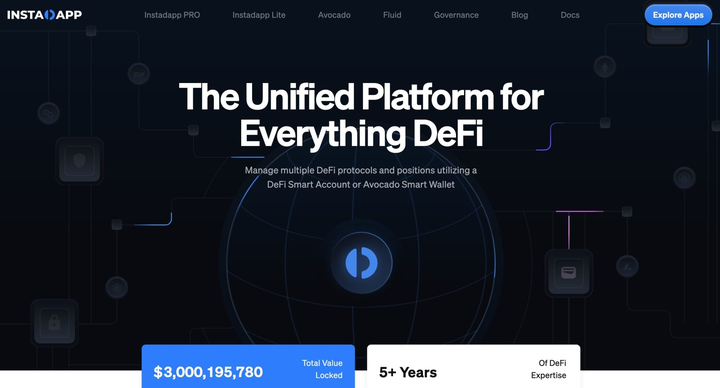
Instadapp offers a full suite of DeFi tools, including Instadapp Lite and Instadapp Pro, along with the Web3 Avocado smart wallet and the Fluid lending platform. Despite sounding less intuitive, Instadapp Pro is actually completely free.
Nonetheless, the platform has yet to attract a broad DeFi user base, but it is working to improve its user interface and functionality to simplify multi-protocol interactions. Its relatively low popularity may be why its TVL remains modest.
DeFi Services: Lending, Staking Total Value Locked (TVL): $2.85 billion
6. Compound – Lending Platform with Strong Stablecoin Support
Compound.finance is a decentralized cryptocurrency lending market. According to the latest data, it covers 16 markets, including cryptocurrencies such as ETH, USDT, USDC, OP, and MATIC.
With the inclusion of USDT and USDC, the platform clearly excels in supporting stablecoin lending.
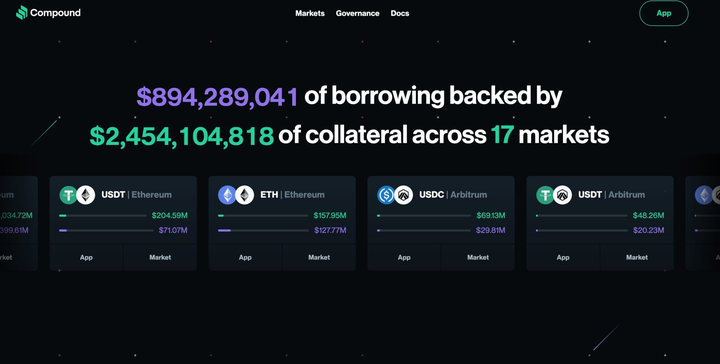
Compound is built on Ethereum and fully supports collateralized borrowing and lending. Interest rates are typically favorable but still influenced by supply and demand. While the platform may not be as large as Curve or Maker, it provides considerable value to most crypto users.
Compound has a native token (COMP), which users can hold to participate in governance of the decentralized protocol. Change proposals are posted on the official Compound website, where users can vote.
DeFi Services: Lending Total Value Locked (TVL): $2.45 billion
7. Curve Finance – DEX Focused on Stablecoin Trading
Curve Finance is a decentralized finance platform offering trading, lending, and borrowing services. This DEX quickly became one of the leaders in the DeFi space by focusing on stablecoin trading, setting it apart from competitors. If you're looking for low fees and low slippage, Curve is the ideal choice.
The Curve platform uses automated market makers (AMMs) to help maintain stablecoin pegs, allowing users to trade with minimal price impact. Curve maintains market liquidity by automatically buying and selling digital assets and profiting from bid-ask spreads.
The platform currently holds over $1.78 billion in total deposits, with daily trading volumes typically exceeding $100 million, firmly establishing itself as a leading platform for stablecoin trading with significant TVL. For a platform launched only in 2020, this is no small achievement.
Another unique selling point of this DeFi platform is its distinctive website design, which gives off a retro feel while incorporating advanced Web3 functionalities.
DeFi Services: Lending, Trading
Total Value Locked (TVL): $1.84 billion
8. Balancer – DeFi and DEX Platform Offering Automated Portfolio Management
Balancer is a suite of automated market maker (AMM) products, a type of decentralized exchange (DEX) that uses algorithms to facilitate token trading. Unlike trading with other traders, all transactions are processed through AMMs.
Beyond that, Balancer allows users to earn passive income through the platform’s yield pools. Currently, Balancer has over 240,000 liquidity providers—though not a huge number, the DeFi platform is growing rapidly.
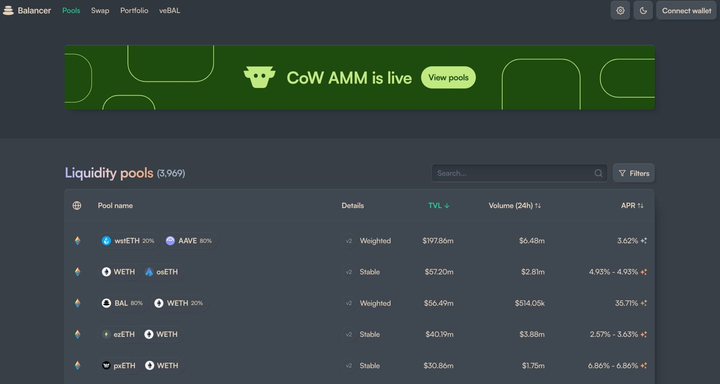
Balancer creates and manages various liquidity pools, each composed of multiple tokens, enabling portfolio management. Recently, the platform has focused on enhancing its automated market maker (AMM) capabilities and expanding liquidity incentives.
Like other DeFi platforms, Balancer also allows users to purchase and hold the native token BAL to participate in protocol governance.
DeFi Services: Automated Portfolio Management, Trading, Yield Farming
Total Value Locked (TVL): $890.51 million
9. PancakeSwap – All-in-One DEX Offering DeFi Services Including Staking
PancakeSwap is one of the most unique DEXs you’ll encounter, standing out with its distinctive design and vibrant colors. But don’t let its quirky appearance distract you—it remains one of the leading multi-chain decentralized exchanges globally.
PancakeSwap is an all-in-one DEX offering services including trading, staking, yield farming, and even a Game Marketplace launched at the end of 2023.
PancakeSwap’s popularity stems from its operation on the BNB Chain, enabling fast confirmation times and lower user fees.
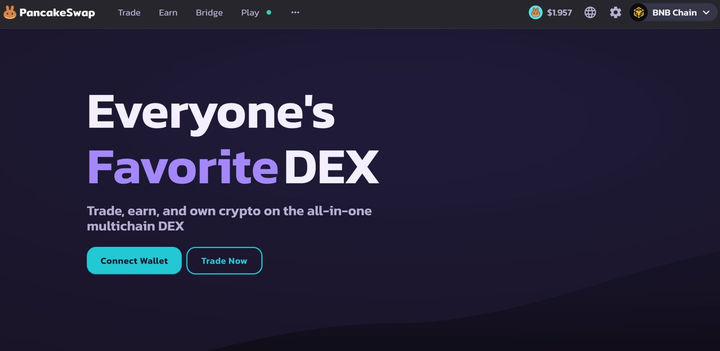
Earning potential is rich and diverse—you can trade, stake the platform’s native token CAKE at up to 25.63% APY, join liquidity and farming pools, and more, including gaming options through the Game Marketplace and NFTs.
Although relatively new, PancakeSwap has already dominated the DEX market on BSC. Additionally, due to its integration with the BNB Chain, it is particularly ideal for BN users.
DeFi Services: Trading, Yield Farming, Staking
Total Value Locked (TVL): $876.21 million
10. Yearn Finance – Yield Farming Platform with Automated Strategies
Yearn Finance is a suite of products focused on helping individuals and decentralized autonomous organizations (DAOs) earn returns from digital assets. This yield aggregator aims to simplify yield farming and optimize your returns.
By leveraging the many options offered by Yearn, you can maximize interest rates. Additionally, you can participate in platform development and network governance by holding the native token YFI.
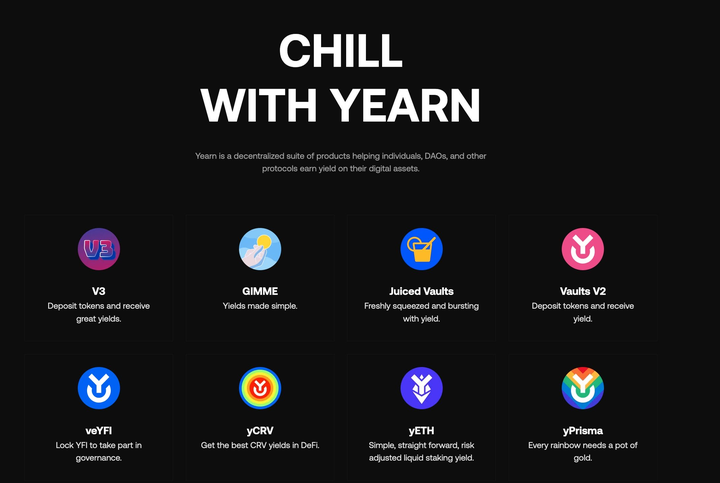
The protocol can automatically adjust your assets and shift them between various high-yield options to deliver optimal returns. In other words, you don’t need to manually manage your portfolio—the platform handles most of it. Furthermore, the development team is actively creating new vaults and strategies to optimize user yield generation.
DeFi Services: Yield Aggregator
Total Value Locked (TVL): $221.97 million
11. What Is a DeFi Platform?
DeFi platforms leverage blockchain technology and cryptocurrencies to offer financial services. While this definition is broad, DeFi itself is comprehensive, effectively covering all aspects of decentralized finance.
DeFi platforms are typically decentralized cryptocurrency exchanges, liquidity provision platforms, lending platforms, yield farming apps, prediction markets, or NFT markets.
A key premise of DeFi platforms is peer-to-peer financial transactions. They generally aim to provide:
-
Greater accessibility
-
Higher interest rates
-
Lower fees
-
Strong security
-
Near or full transparency
-
Complete autonomy from centralized institutions
Despite many advantages, DeFi is not without drawbacks. The DeFi ecosystem remains unregulated, allowing bad actors into the market. Additionally, programming vulnerabilities in DeFi applications can lead to hacks and scams.
DeFi platforms are relatively new, but their popularity continues to grow. In recent years, the number of DeFi users has steadily increased. According to Statista, the market is expected to reach approximately 22.09 million users by 2028—up dramatically from 7.5 million at the end of 2021.
12. Types of DeFi Platforms
As mentioned above, DeFi platforms come in many different forms. Below, we explain the most common types we recommend.
1) Decentralized Exchanges (DEXs)
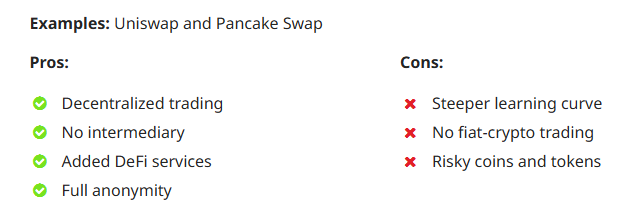
A decentralized exchange is a peer-to-peer cryptocurrency trading market. Unlike centralized exchanges, which act as intermediaries themselves, DEXs only facilitate exchanges between traders. Traders conduct transactions independently and freely set terms. The entire process is usually completed via smart contracts.
DEXs facilitate cryptocurrency trading, so they do not offer fiat purchase options like centralized exchanges, nor can they convert crypto assets into cash. To use a DEX, you need a cryptocurrency wallet containing digital assets.
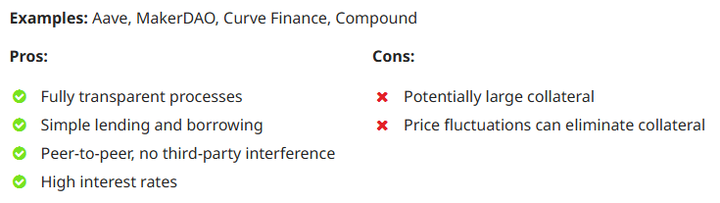
2) Lending Platforms
As the name suggests, these platforms allow users to lend and borrow cryptocurrency. Those who wish to lend can deposit assets into the platform and earn interest by letting others borrow. Borrowers must provide collateral and pay interest to obtain cryptocurrency.
In a sense, this system resembles traditional banking, but operates as a fully decentralized, peer-to-peer model. Moreover, the platform is unregulated, with everything handled by smart contracts, ensuring security and transparency.
3) Liquidity Mining Platforms
These platforms allow cryptocurrency holders to profit from their digital assets through liquidity mining. They enable users to lend crypto assets to various decentralized applications (dApps) to provide liquidity and earn corresponding returns. These returns are typically expressed as annual percentage rate (APR), based on borrower interest rates.
Liquidity mining is essential to the functioning of decentralized finance (DeFi). Unlike staking, which involves participating in network governance, liquidity mining earns rewards by lending assets. Many decentralized exchanges (DEXs) offer liquidity mining services, but there are also dedicated liquidity aggregation platforms.
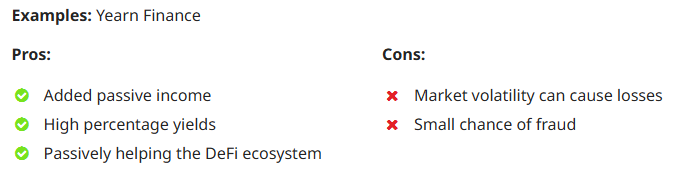
4) Stablecoins and Synthetic Assets
Stablecoins and synthetic assets are services provided by DeFi platforms rather than platforms themselves. Stablecoins play a crucial role in DeFi, widely used across DEXs, lending platforms, and liquidity mining platforms. In this guide, you've already learned about MakerDAO—a platform focused on stablecoin services.
Synthetic assets are crypto derivatives whose value derives from other underlying assets. Top DeFi platforms offer synthetic products like options, swaps, and futures, allowing investors to benefit from asset exposure, customizable risk, and cash flow patterns.

5) Asset Management Platforms
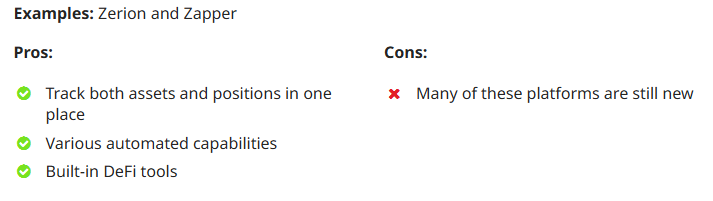
The DeFi space is becoming increasingly diverse. Traditional Web3 wallets can no longer effectively track various digital assets—tokens, coins, NFTs, or DeFi positions. This is where DeFi asset management platforms like Yearn Finance, Zerion, and Zapper come into play.
These platforms offer multi-chain compatibility, detecting DeFi positions beyond just assets in crypto wallets, with most functions automated. Using these platforms, you can monitor all your assets and positions through a single dashboard.
6) How to Choose a DeFi Platform – Our Criteria
Selecting the right DeFi platform—whether a staking platform or another type—requires careful consideration of several important criteria. Let’s examine these standards.
Clarify Your Goals First, determine your objectives on a DeFi platform (e.g., how much you aim to earn). Then evaluate whether the platform can meet these goals. Here, you should review the platform’s annual percentage yields (APYs).
Evaluate Security Measures Due to the lack of regulation in DeFi, checking a platform’s security measures is critical. If a platform’s security doesn’t meet current standards, you could face potential cyberattacks. Verify whether the platform offers safeguards such as multi-signature wallets, end-to-end encryption, and regular audits.
Check Platform Reputation Beyond security, assess the platform’s reputation. If the platform itself is untrustworthy, even strong security measures won’t help. The DeFi space, lacking regulation, is rife with scams, making it vital to choose verified, secure, and trustworthy platforms.
Explore Platform Features and Offerings After confirming security, focus on what matters most—platform functionality. If you’re into yield farming, the platform should offer diversified liquidity pools. If you want to earn through staking, look for competitive APYs and diverse token options. Additionally, the platform should interoperate with other DeFi protocols, as you may want to use other dApps and DeFi platforms.
7) Are DeFi Platforms Safe for Beginners?
If you're using a reputable platform with strong security measures, DeFi is safe for both beginners and advanced users.
However, beginners must understand what they're engaging in and how DeFi services work. The DeFi space can be highly risky for new investors, primarily due to the volatility of cryptocurrencies and the resulting uncertainty of related products.
Profits from DeFi options like staking and lending can be very high. Yet, poor decisions, investing in underperforming tokens, or joining failed projects could result in losing your entire investment.
Most importantly, you must always retain control of your private keys. Lastly, avoid making decisions based solely on crowd sentiment.
8) DeFi vs CeFi Platforms: Which Is Better?
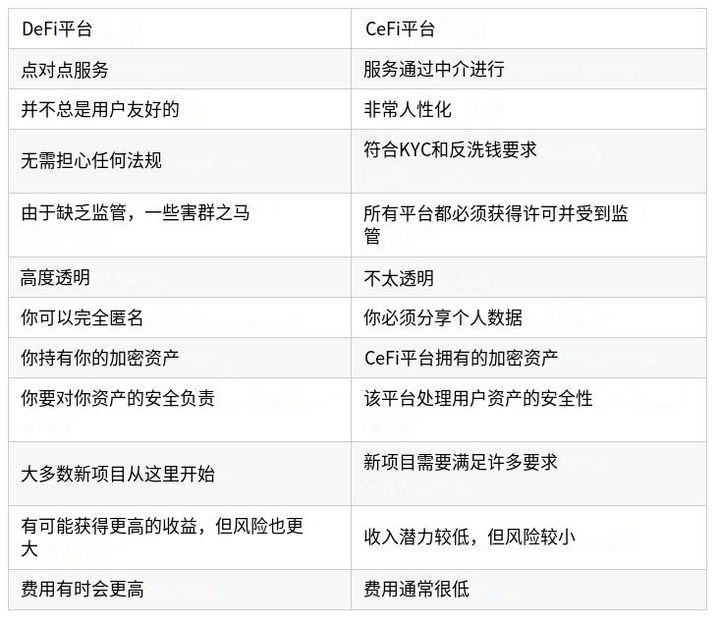
As you might guess, decentralized finance (DeFi) and centralized finance (CeFi) are opposing concepts. DeFi relies on decentralized networks, emphasizing innovative and fully transparent financial services powered by smart contracts; CeFi, on the other hand, uses traditional intermediaries, follows all regulations, and prioritizes user experience.
To better understand the differences and decide which financial platform is better, let’s examine the pros and cons of each:
13. Conclusion
The DeFi space is dynamic and continuously evolving, which is why you encounter a wide variety of platforms offering one or more DeFi products.
Given the size of the market, finding the platform best suited to your needs can be challenging. However, by following the steps in this guide and considering our recommendations, the search process should become much easier.
Join TechFlow official community to stay tuned
Telegram:https://t.me/TechFlowDaily
X (Twitter):https://x.com/TechFlowPost
X (Twitter) EN:https://x.com/BlockFlow_News
 @cryptonews






