








One Year Up 64x: What Has RWA Sector L1 Project MANTRA Been Doing?
TechFlow Selected TechFlow Selected
One Year Up 64x: What Has RWA Sector L1 Project MANTRA Been Doing?
On January 9, MANTRA announced it has reached an agreement with Dubai-based real estate group DAMAC Group to tokenize at least $1 billion worth of the group's assets in the UAE.
 Navigating Web3 tides with focused insights
Author: Weilin, PANews
On January 9, MANTRA, a Layer 1 blockchain project focused on tokenizing real-world assets (RWA), announced it has reached an agreement with DAMAC Group, a Dubai-based property group, to tokenize at least $1 billion worth of the latter’s assets in the UAE.
In the RWA sector, MANTRA (OM) has been highly active over the past year. After launching its mainnet in October 2024, its token surged significantly. According to CoinGecko data, from January 1 to December 25, 2024, MANTRA (OM) achieved a yearly gain of 6,418.3%, rising from $0.0584 on January 1 to $3.81 by December 25—making it the top-performing RWA investment of 2024.
Middle East as Strategic Focus: Tokenizing $1 Billion in Assets Here
John Mullin, co-founder and CEO of MANTRA, said DAMAC's support represents “a massive vote of confidence in the future of RWA tokenization.”
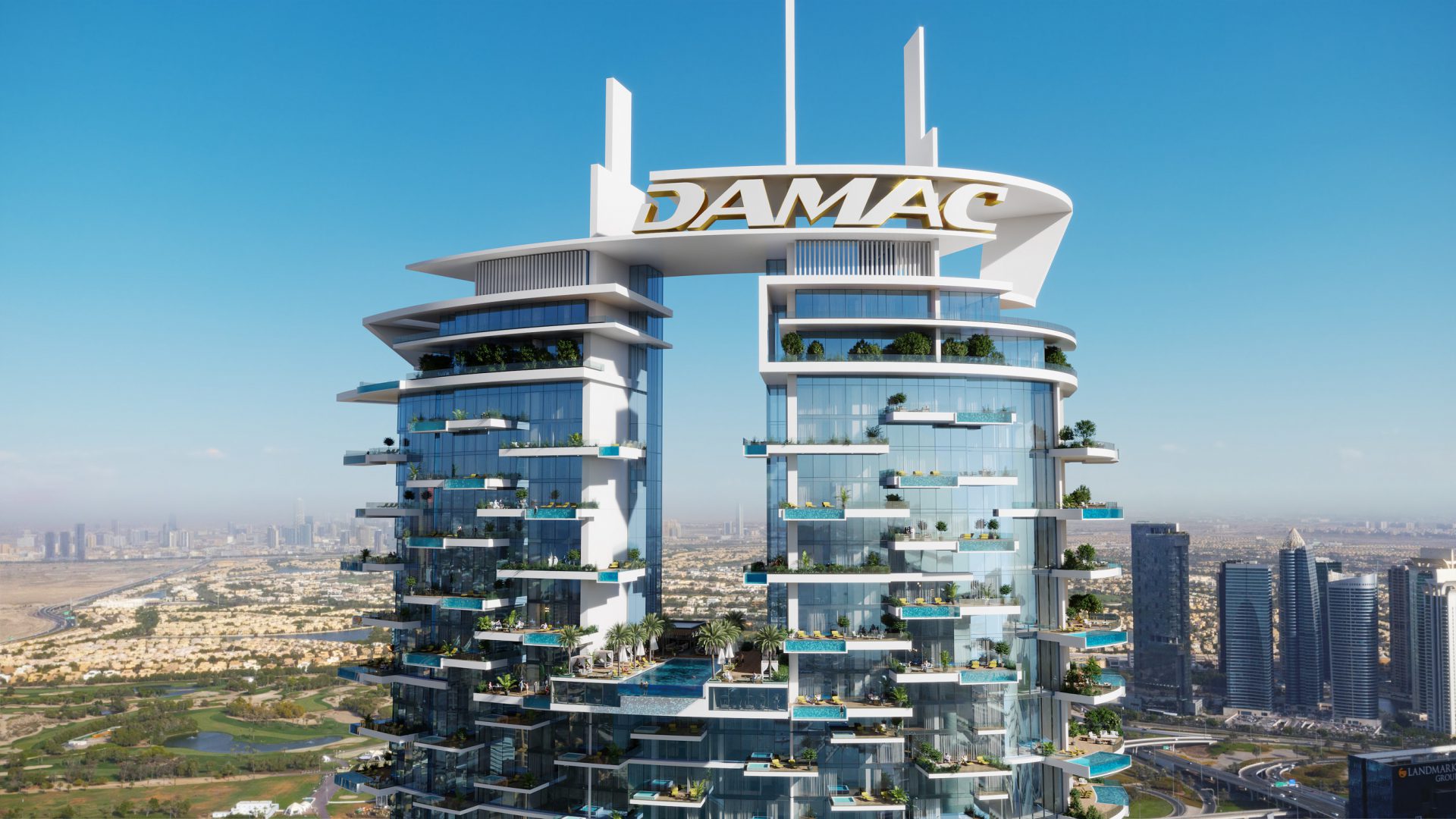
DAMAC is a well-known real estate developer under the Hussain Sajwani family based in the UAE. The group’s investments span seven core sectors: real estate, capital markets, hospitality and resorts, manufacturing, dining, luxury fashion, and data centers. Notable entities within DAMAC include DAMAC Properties. The company has acquired Italian fashion brand Roberto Cavalli and Swiss luxury jewelry brand de GRISOGONO, and developed projects such as the 50-story DAMAC Towers Nine Elms in London and a luxury resort in the Maldives.
According to reports from The Guardian and AP, founder Hussain Sajwani is a close friend and business partner of Donald Trump. CNBC reported that U.S. President-elect Trump recently announced that UAE billionaire Hussain Sajwani has pledged at least $20 billion in foreign investment to build new data centers in the United States.
This new agreement aims to provide token-based financing for DAMAC’s portfolio companies across real estate, hospitality, and data center sectors. The collaboration will enhance investment accessibility and streamline processes, with asset tokenization expected to begin in early 2025.
Currently, MANTRA operates in Hong Kong, Singapore, and several other regions, with its primary operational focus on the Middle East, particularly Dubai.
Last year, MANTRA also partnered with developer MAG Property Development to tokenize $500 million worth of real estate assets, starting with a residential project in Dubai.
In addition, MANTRA signed a memorandum of understanding (MOU) with Zand Bank, a digital bank authorized by the Central Bank of the UAE. The cooperation between the two entities will focus on developing frameworks to support the tokenization and distribution of RWAs, fully compliant with regulations set by Dubai’s Virtual Assets Regulatory Authority (VARA).
2024 Recap: $11 Million Raised, Mainnet Launched
Judging from its official annual review, MANTRA was extremely active in 2024. As early as March 2024, MANTRA secured $11 million in funding led by Shorooq Partners. Two months later, it received strategic investment from Laser Digital, the digital asset subsidiary of Nomura Securities.
To date, MANTRA has developed a comprehensive RWA suite including digital identity (DID), compliance system MANTRA Guard, token management system MTS, decentralized exchange (DEX), and Liquidity Efficient Emission Protocol (LEEP). These modules work together to enable efficient management and liquidity of tokenized RWA assets within a compliant framework.
The MANTRA Token Service (MTS) is an integrated module allowing users to create, manage, and control tokenized assets on MANTRA Chain. Key features include: token factory, configurable workflows, admin controls, full token management (minting, burning, seizure, freezing, distribution), built-in functionalities, jurisdictional compliance, and integration with banking modules.
MANTRA DEX (decentralized exchange) introduces a protocol-level liquidity pool system forming the core of the platform’s decentralized finance (DeFi) infrastructure. It creates a permissionless environment offering blockchain-integrated liquidity through purpose-built whitelisted pools operating as standard automated market maker (AMM) swap mechanisms.
MANTRA LEEP (Liquidity Efficient Emission Protocol) is currently under development and aims to address widespread liquidity shortages in crypto markets—especially for assets beyond top-tier cryptocurrencies like Bitcoin and Ethereum. LEEP specifically targets providing liquidity for tokenized real-world assets, which often lack liquidity even in traditional markets.
MANTRA launched its mainnet on October 23, 2024. Users can now perform several key activities: bridging OM tokens from ERC-20 to MANTRA mainnet tokens to gain access to future RWA tokens; staking OM to help secure the network and earn on-chain staking rewards; using OM as a core component of the RWA ledger; and earning KARMA by completing new tasks on the mainnet.

Still in Phase One: Bringing High-Quality Assets On-Chain
During an X Space session last year, MANTRA CEO Mullin stated that the project’s goal is to become the ledger for asset issuance or RWA.
He said: “For mass adoption of RWA, whether in retail or broader markets, we need public blockchains compatible with the wider DeFi ecosystem. At MANTRA, we’ve built a permissionless layer enabling asset issuers, tokenization platforms, and regulated trading venues to easily, simply, and compliantly issue, distribute, and manage RWAs.”
He also mentioned MANTRA’s efforts in expanding its DApp ecosystem, including secondary markets and an upcoming licensed on-chain RWA liquidity hub called Omega, along with collaborations with various DeFi providers on lending, borrowing, and fractional real estate products. He noted ongoing exploration into private credit, payments, and carbon credits.
Looking ahead, Mullin outlined a three-phase approach to developing the RWA space: “Right now, we are in phase one, focusing on the supply side—bringing high-quality assets on-chain. Phase two will focus on liquidity and secondary market venues, while the final phase will unlock composability of RWAs so they can be used across different DeFi applications.”
The vision Mullin leads is ambitious: “I hope that by the end of 2026, we can reach $100 billion in RWA TVL. Right now, we’re literally teaching people one by one how to operate on-chain, which is very slow. But we are genuinely attracting new funds, new capital, and completely new participants who’ve never done this before. That’s incredibly powerful. Over time, it will create a snowball effect, ultimately bringing us to the top of the RWA landscape. But it will take time.”
Overall, MANTRA’s partnership with DAMAC marks further application of blockchain technology in real estate tokenization in the Middle East, opening up new opportunities for the RWA sector.
As MANTRA continues to expand in the RWA field, the project may already be demonstrating formidable strength.
Join TechFlow official community to stay tuned
Telegram:https://t.me/TechFlowDaily
X (Twitter):https://x.com/TechFlowPost
X (Twitter) EN:https://x.com/BlockFlow_News
 PANews






