








Galaxy Research 2025 Forecast: Bitcoin to Hit $185,000, Ethereum to Break $5,500
TechFlow Selected TechFlow Selected
Galaxy Research 2025 Forecast: Bitcoin to Hit $185,000, Ethereum to Break $5,500
Tether's market share is expected to fall below 50% in 2025, challenged by yield-generating stablecoins.
 Navigating Web3 tides with focused insights
Author: Galaxy Research
Translation: TechFlow
2025 cryptocurrency predictions from @glxyresearch, covering Bitcoin and Ethereum price trends, the ETHBTC ratio, Dogecoin and D.O.G.E., stablecoins, DeFi, Layer 2 solutions, policy, venture capital, and more. Below are the forecasts we just shared with @galaxyhq's clients and partners:
Bitcoin price is expected to surpass $150,000 in the first half of 2025 and reach or exceed $185,000 by the fourth quarter
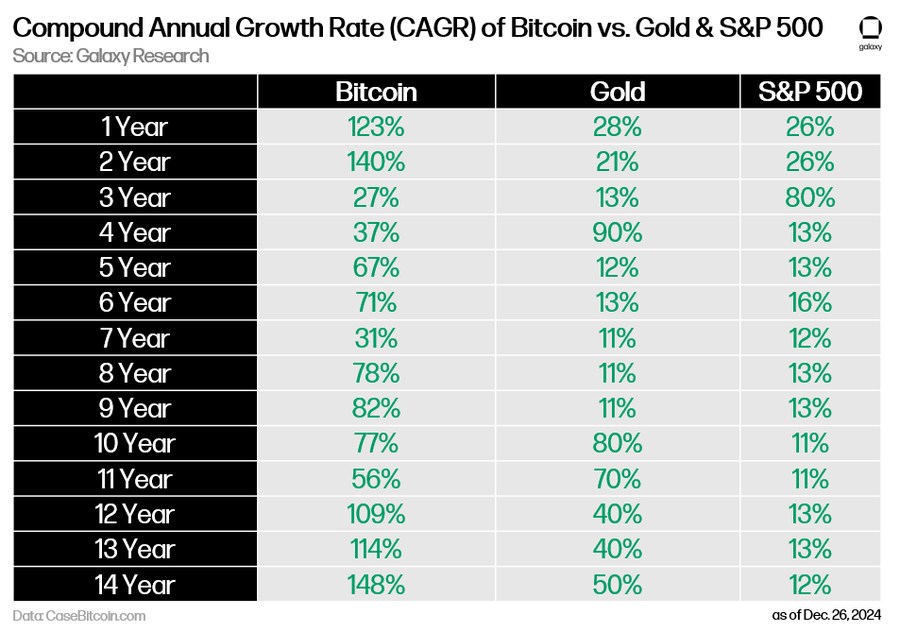
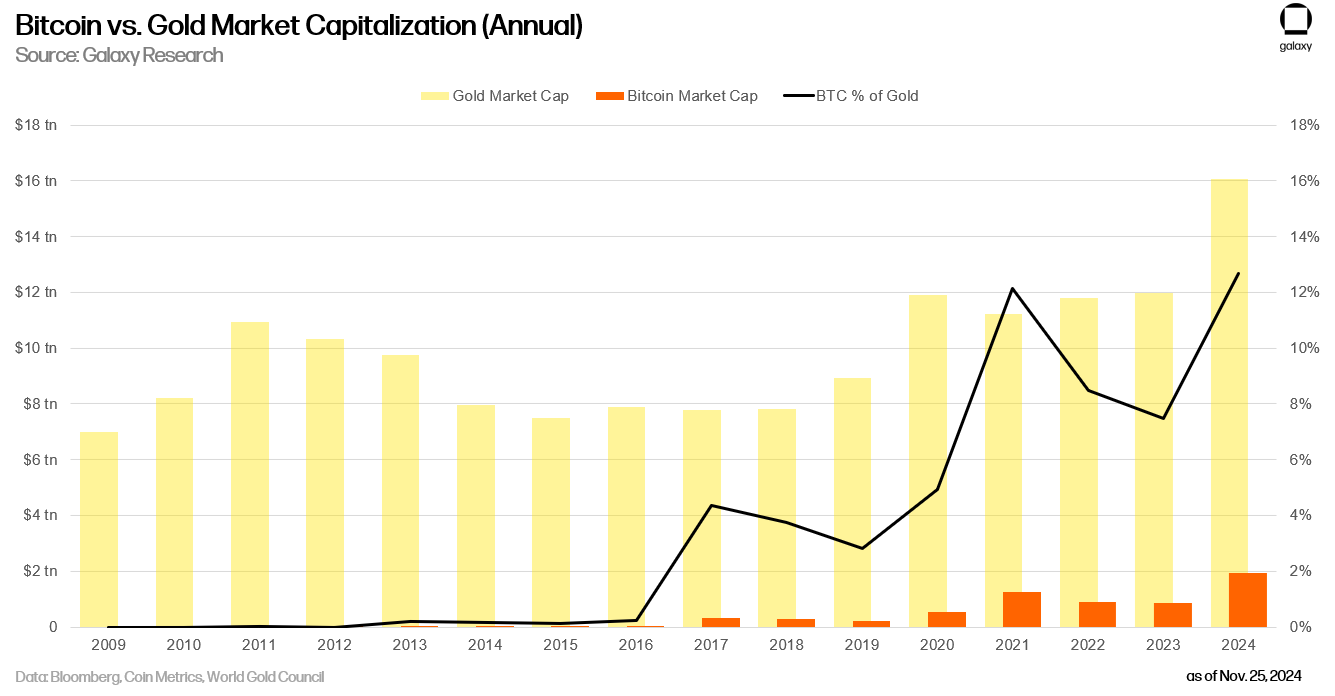
Institutional, corporate, and national adoption will be the primary drivers pushing Bitcoin to new highs in 2025. Since its inception, Bitcoin has outperformed all other asset classes—especially the S&P 500 and gold—and this trend is expected to continue into 2025. Bitcoin’s market cap is projected to reach 20% of the total market cap of gold.
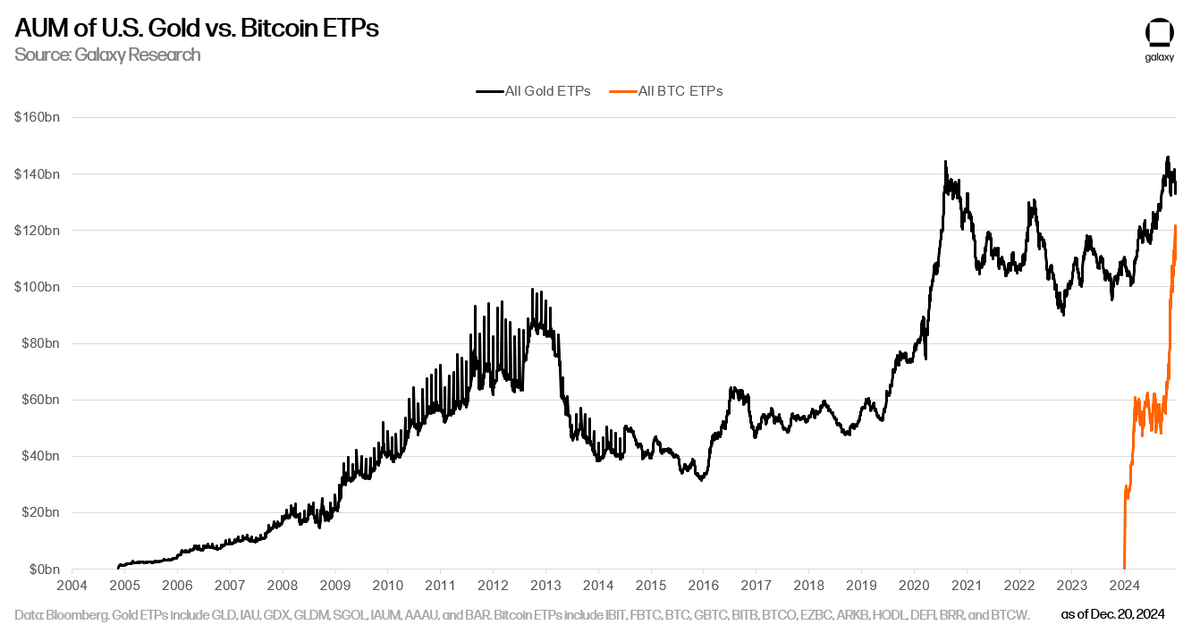
Total AUM of U.S. spot Bitcoin ETPs will exceed $250 billion in 2025
In 2024, Bitcoin ETP products attracted over $36 billion in net inflows, making them the best-performing ETP product suite in history. Many top global hedge funds (such as Millennium, Tudor, and D.E. Shaw) have chosen Bitcoin ETPs, and according to 13F filings, the State of Wisconsin Investment Board (SWIB) also holds positions. Within just one year, the AUM of Bitcoin ETPs is only $24 billion (19%) short of surpassing the combined AUM of all physical gold ETPs in the U.S.
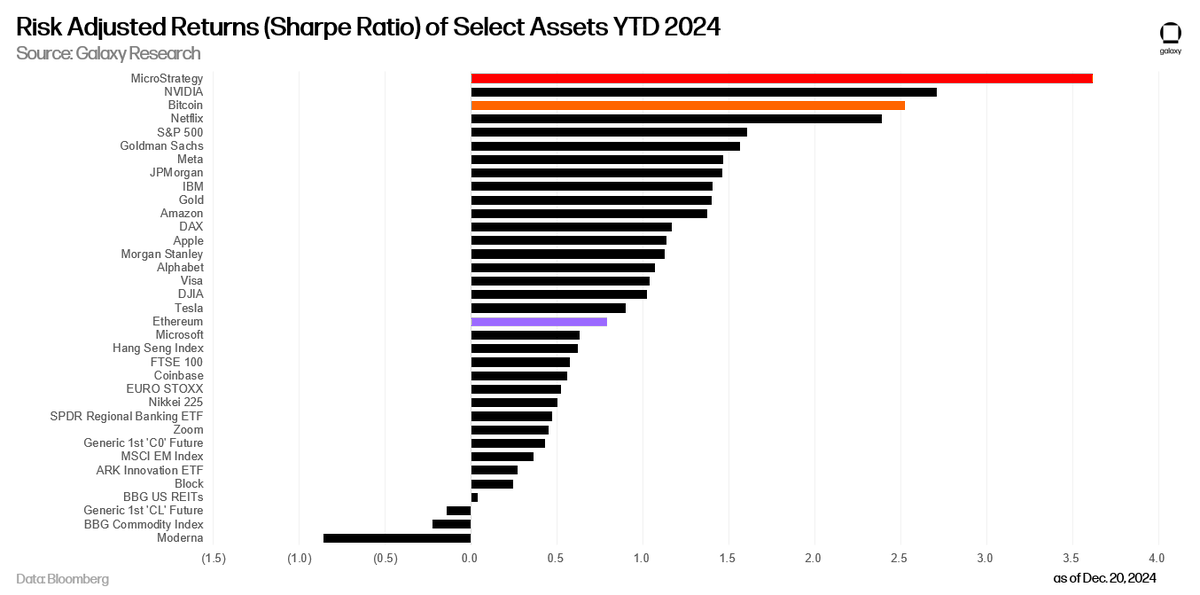
Bitcoin will once again rank among the top risk-adjusted performers across global assets in 2025
Bitcoin's strong performance is driven not only by record capital inflows but also by price appreciation in 2024. By risk-adjusted return metrics, Bitcoin ranks third globally among assets, trailing only a few elite performers. MicroStrategy, the self-proclaimed "Bitcoin treasury," stands out particularly in terms of Sharpe ratio.
At least one major wealth management platform will recommend a 2% or higher Bitcoin allocation to clients in 2025
Currently, no major wealth manager formally includes Bitcoin in its recommended portfolios due to factors like investment familiarization, internal education, and compliance requirements. However, this will change in 2025, further accelerating inflows and AUM growth for U.S. spot Bitcoin ETPs.
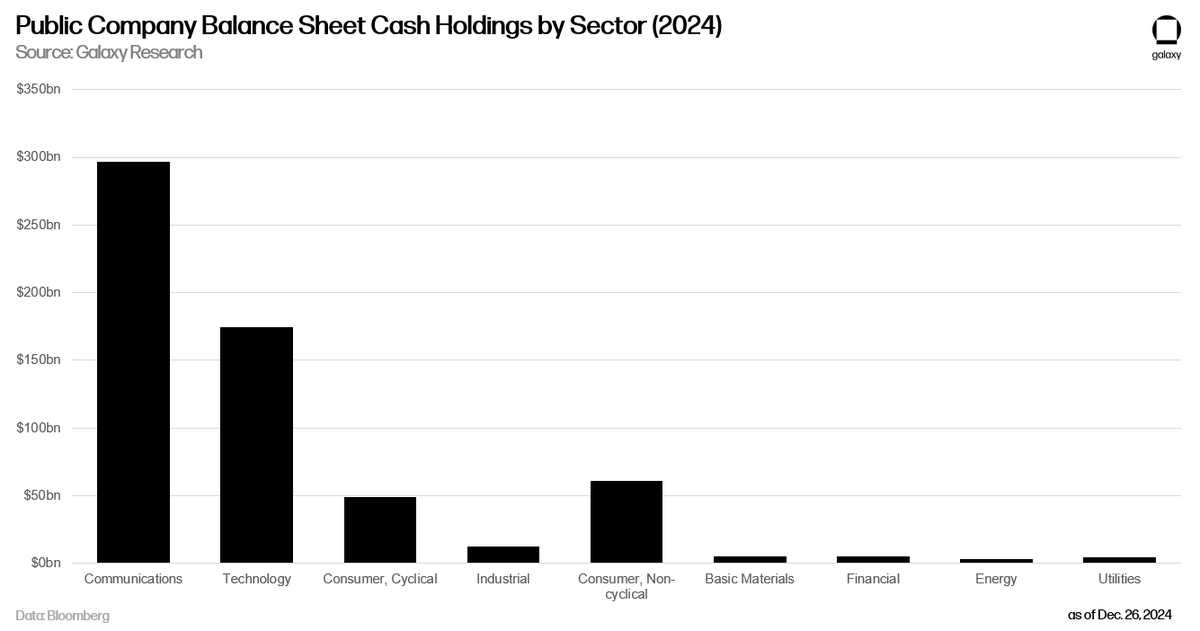
Five Nasdaq 100 companies and five nations will announce Bitcoin additions to their balance sheets or sovereign wealth funds in 2025
Whether for strategic reasons, portfolio diversification, or trade settlement purposes, Bitcoin will gradually enter the balance sheets of major corporations and national-level investors. In particular, non-aligned countries, those with large sovereign wealth funds, or even nations opposed to the U.S. will actively acquire Bitcoin through mining or other means.
- JW
Bitcoin developers will reach consensus on the next protocol upgrade in 2025
Since 2020, Bitcoin core developers have been discussing how to enhance transaction programmability via new opcodes. As of end-2024, the most supported proposals include OP_CTV (BIP 119) and OP_CAT (BIP 347). Although achieving soft fork consensus on Bitcoin is rare and time-consuming, agreement on implementing OP_CTV, OP_CSFS, and/or OP_CAT is expected in 2025. However, activation of the upgrade will not occur within 2025.
More than half of the top 20 publicly listed Bitcoin miners by market cap will announce pivots or partnerships with hyperscalers, AI, or high-performance computing (HPC) firms in 2025
With surging AI-driven demand for compute, Bitcoin miners will increasingly retrofit existing facilities, build new infrastructure, or co-deploy mining sites with HPC companies. This trend will constrain the annual growth rate of global hash rate, which is projected to reach 1.1 zetahash by the end of 2025.
These predictions outline a potential roadmap for the crypto market in 2025—full of opportunities, yet accompanied by challenges.
- @intangiblecoins, @SimritDhinsa
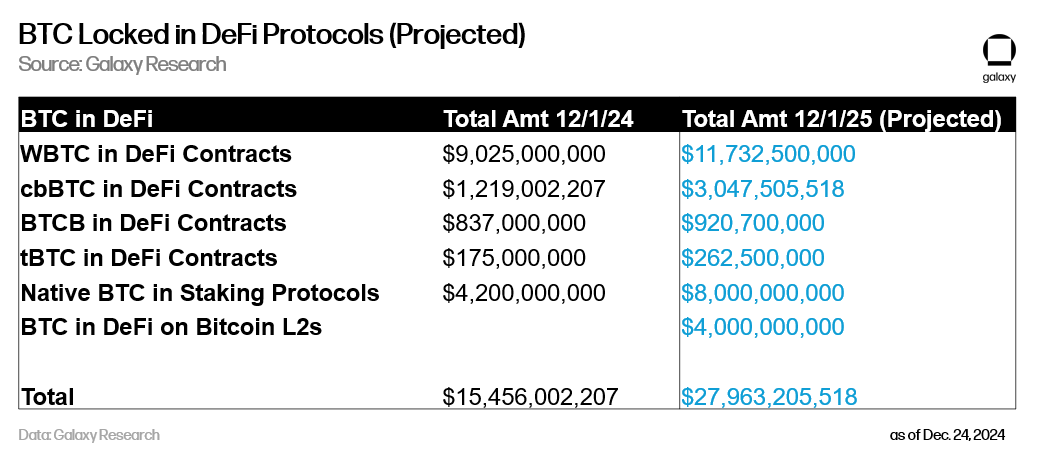
The Bitcoin DeFi market size is expected to double in 2025
By the end of 2024, over $11 billion worth of wrapped Bitcoin (e.g., WBTC) was locked in DeFi smart contracts, with over 70% used as collateral in lending protocols. Additionally, approximately $4.2 billion was deposited via Babylon, Bitcoin’s largest staking protocol. The current total valuation of the Bitcoin DeFi market stands at $15.4 billion and is expected to grow significantly in 2025. Growth will come from multiple vectors: existing DeFi protocols on Ethereum L1/L2, new DeFi protocols on Bitcoin L2s, and staking layers like Babylon. Key drivers for doubling the market include: 150% YoY growth in cbBTC supply, 30% increase in WBTC supply, $8 billion TVL on Babylon, and $4 billion DeFi TVL achieved on new Bitcoin L2 networks.
Ethereum price is expected to surpass $5,500 in 2025
As regulatory pressure eases in DeFi and staking sectors, Ethereum will achieve new all-time highs in 2025. Collaboration between DeFi and traditional finance may emerge within new regulatory sandboxes, enabling deeper exploration of public blockchains by traditional capital markets—with Ethereum and its ecosystem as primary beneficiaries. Enterprises will increasingly experiment with Layer 2 networks based on Ethereum technology. Some blockchain-based games may find product-market fit, while NFT trading volume will also see a significant rebound.
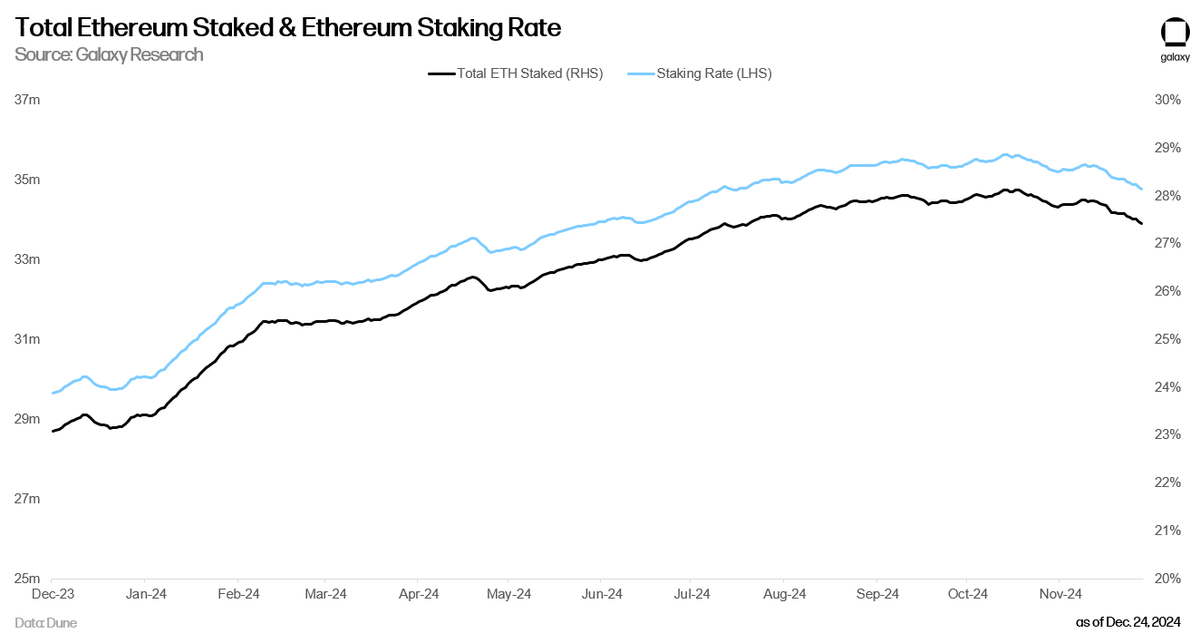
Ethereum staking ratio is expected to exceed 50% in 2025
The U.S. government may provide clearer regulatory guidance for the crypto industry, such as allowing spot ETH ETPs to stake part of their holdings. Demand for staking will continue to rise next year, and by the end of 2025, staked Ethereum could surpass half of its circulating supply. This will push Ethereum developers to seriously consider adjusting the network’s monetary policy. Rising staking rates will further drive demand and value accrual toward staking pools (like Lido and Coinbase) and restaking protocols (such as EigenLayer and Symbiotic).
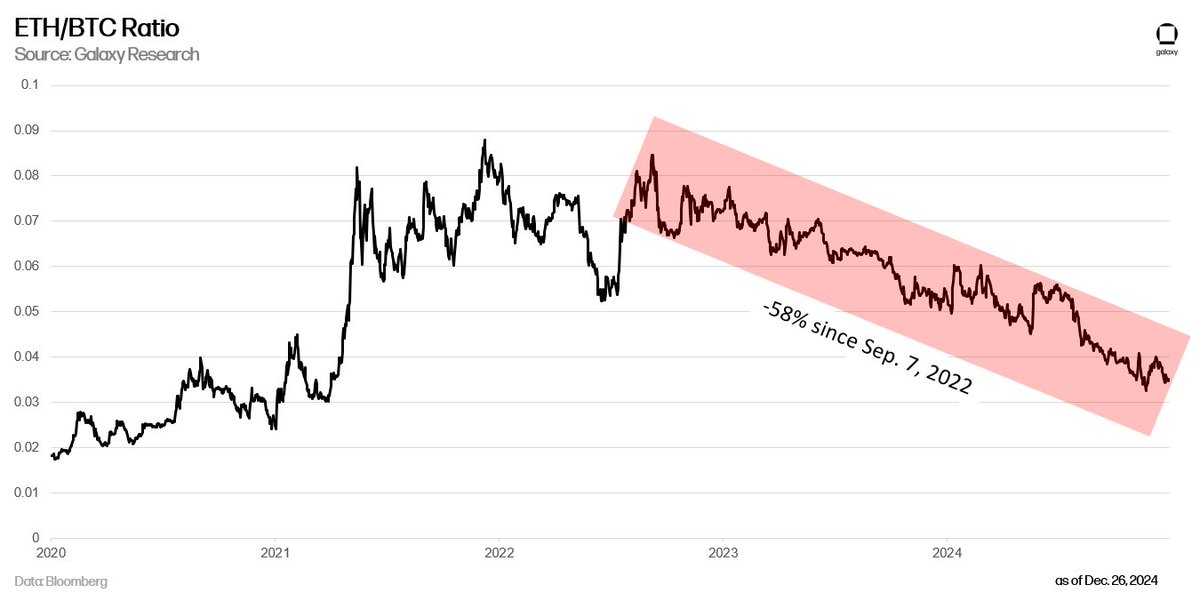
The ETH/BTC ratio will fall below 0.03 in 2025 but rebound to above 0.06 by year-end
The ETH/BTC pair is one of the most watched in crypto. After Ethereum completed its “Merge” transition to proof-of-stake in 2022, the ratio has steadily declined. However, anticipated shifts in the regulatory landscape—particularly supportive of Ethereum and its application layer, especially DeFi—are expected to reignite investor interest in the world’s second-largest blockchain.
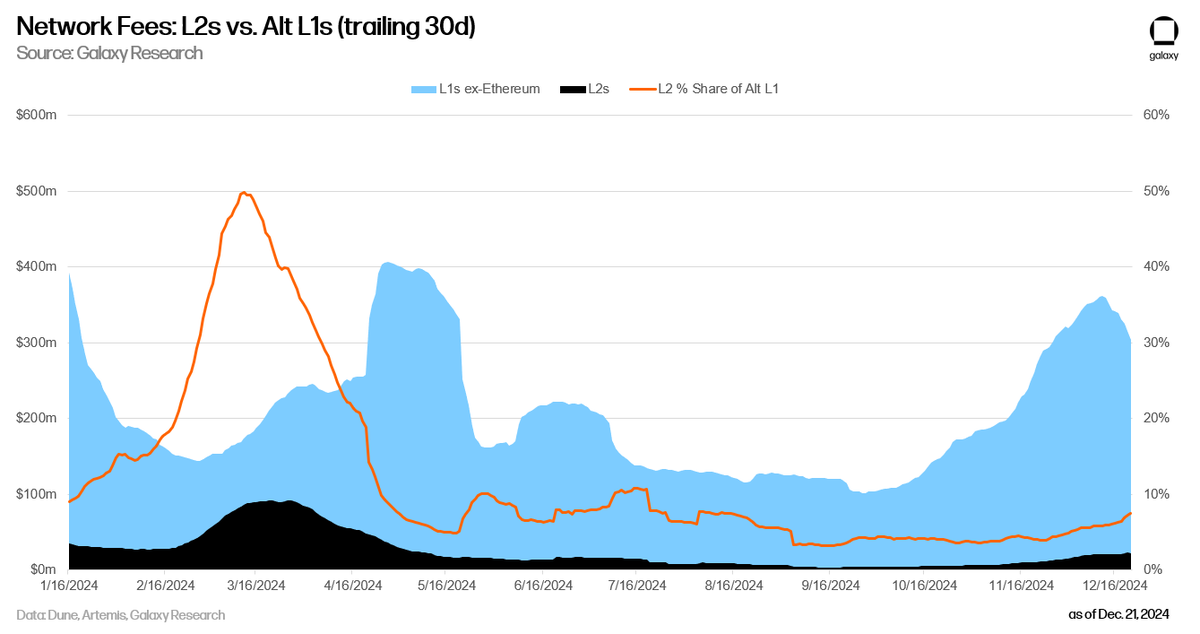
L2 economic activity will surpass that of other alt-L1 networks in 2025
L2 fee share (currently in the low single digits) is expected to exceed 25% of total alt-L1 fees by year-end. As L2s approach scaling limits early in the year, transaction fees may spike frequently, forcing adjustments to gas limits and blob market parameters. Nevertheless, technical improvements—such as the Reth client or alternative VMs like Arbitrum Stylus—will enhance Rollup efficiency and keep transaction costs within acceptable ranges.
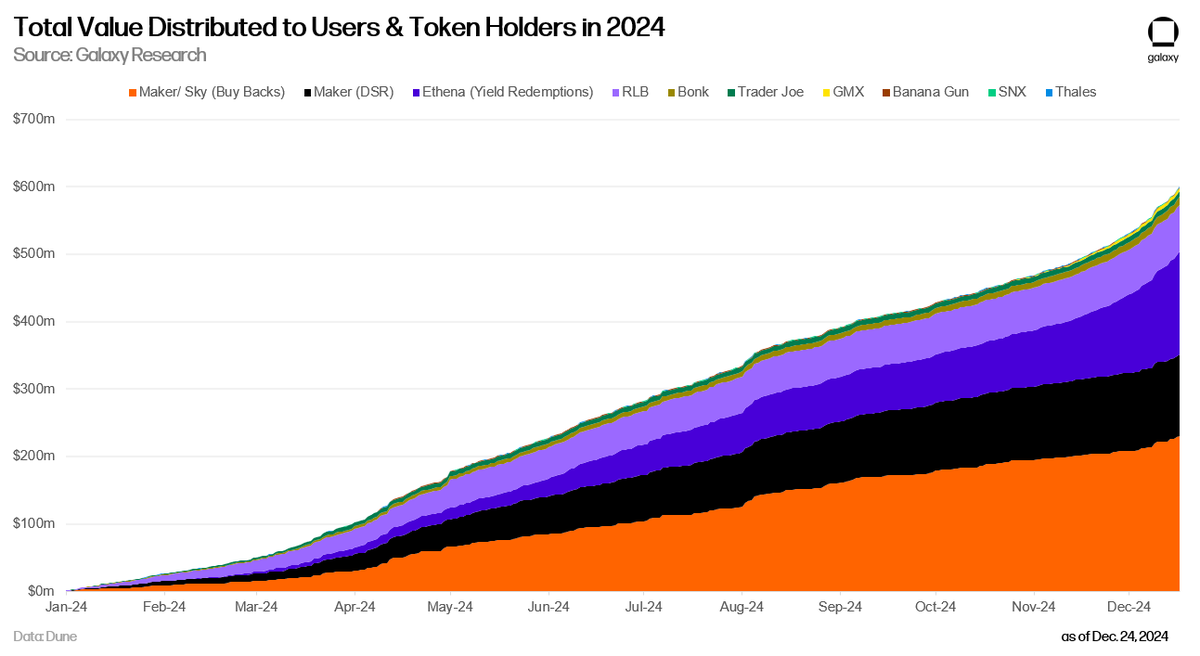
DeFi may enter a "dividend era" in 2025, with on-chain applications distributing at least $1 billion in value to users and token holders
As DeFi regulation becomes clearer, value-sharing mechanisms in on-chain applications will expand. Projects like Ethena and Aave have already begun discussing or passing proposals to implement fee distribution mechanisms that directly benefit users. Other protocols previously opposed to such models (like Uniswap and Lido) may reassess their stance due to regulatory clarity and competitive pressure. A more accommodating regulatory environment and increased on-chain activity suggest protocols may conduct buybacks and direct income distributions at higher frequencies.
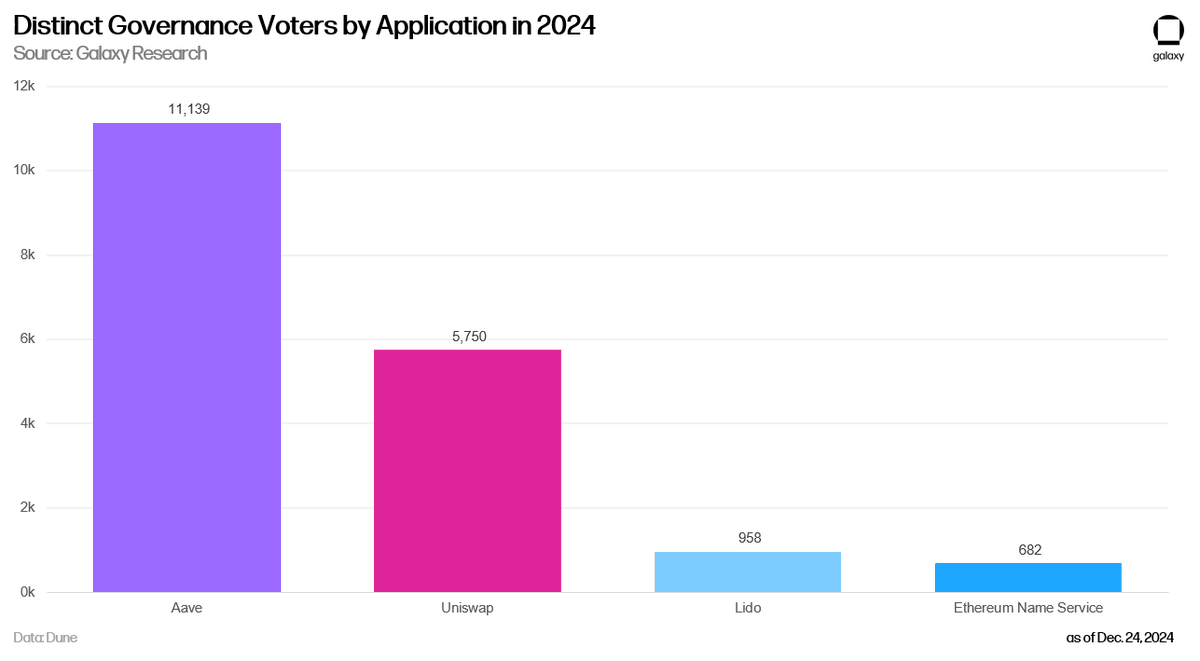
On-chain governance may experience a revival in 2025, with applications experimenting with futarchy-style governance models
The total number of active voters in on-chain governance is expected to grow by at least 20%. On-chain governance has long faced two key issues: low participation and lack of voting diversity (most proposals pass overwhelmingly). However, with reduced regulatory pressure and the success of Polymarket, these problems could improve in 2025. More applications are expected to shift from traditional governance models to futarchy-inspired systems, enhancing voting diversity and improving governance outcomes.
The world’s four largest custodian banks are expected to begin offering digital asset custody services in 2025
The U.S. Office of the Comptroller of the Currency (OCC) plans to establish a policy pathway for national banks to custody digital assets, paving the way for the Big Four custodians—BNY Mellon, State Street, JPMorgan, and Citibank—to launch digital asset custody services in 2025.
At least ten TradFi-backed stablecoins are expected to launch in 2025
From 2021 to 2024, the stablecoin market grew rapidly, now comprising 202 projects, some of which have established close ties with traditional finance (TradFi). Not only is the number of projects increasing, but their transaction volumes are growing far faster than traditional payment networks—ACH (~1% annual growth) and Visa (~7% annual growth). In 2024, stablecoins are gradually integrating into the global financial system. For example, U.S.-licensed FV Bank now supports direct stablecoin deposits, and Japan’s three largest banks are collaborating with Pax via SWIFT for faster, lower-cost cross-border transfers. Payment platforms are actively building stablecoin infrastructure: PayPal launched PYUSD on Solana, and Stripe acquired Bridge to natively support stablecoins. Asset managers like VanEck and BlackRock are also partnering with stablecoin projects and actively positioning themselves in this space. With regulatory clarity improving, traditional institutions will further integrate stablecoins into their operations to gain market advantage and lay foundations for future growth.
- JW
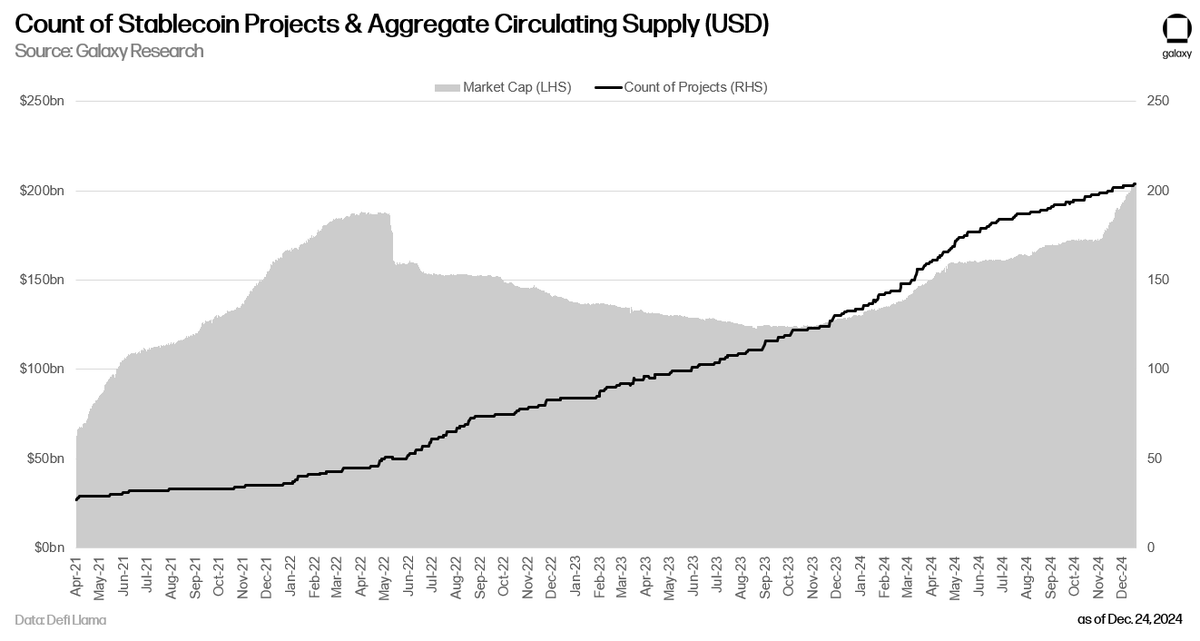
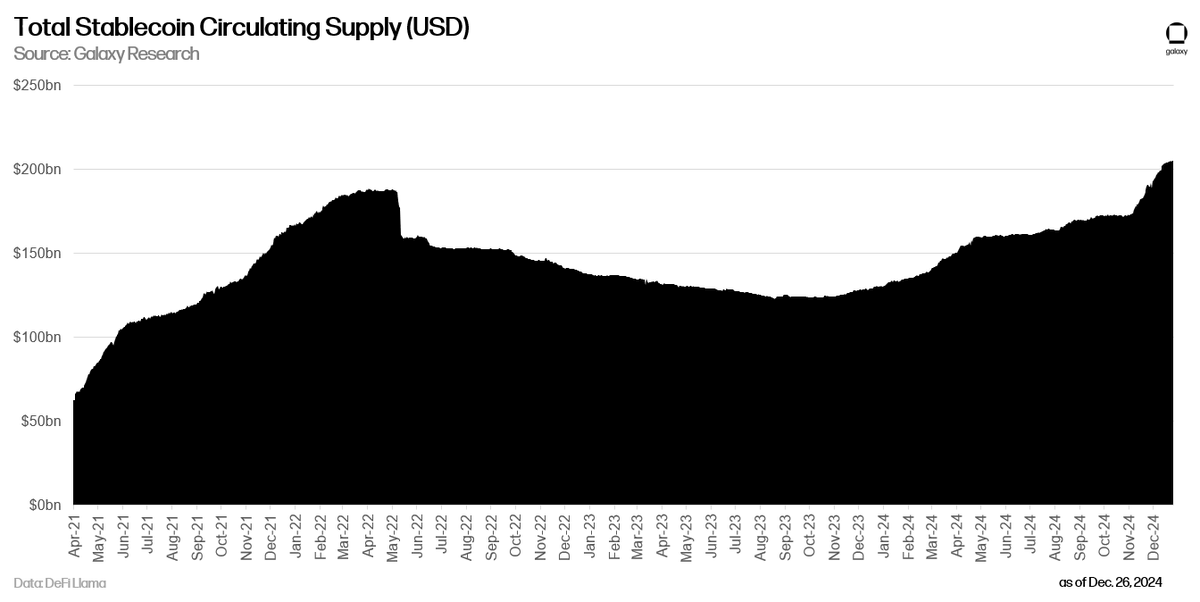
Stablecoin supply is expected to double in 2025, exceeding $400 billion
Stablecoin usage in payments, remittances, and settlements is growing rapidly. As regulations become clearer for existing issuers and for traditional banks, trusts, and custodians, stablecoin supply is expected to surge in 2025.
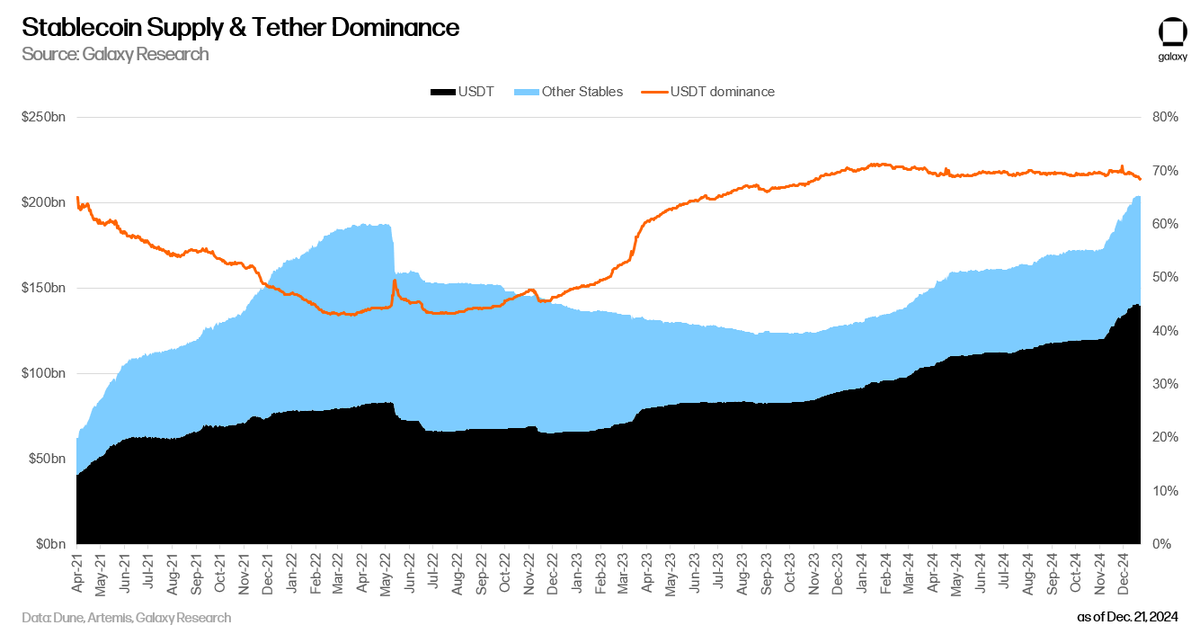
Tether’s market share is expected to drop below 50% in 2025, challenged by yield-bearing stablecoins
Tether uses earnings from USDT reserves to fund investments, but other stablecoin issuers and protocols attract users through yield-sharing, prompting migration from Tether to yield-generating alternatives. For instance, Coinbase’s USDC rewards on exchange balances and wallets will become a powerful incentive—not only boosting DeFi but potentially being integrated by fintech firms to enable new business models. In response, Tether may start sharing reserve earnings with USDT holders or even launch competitive yield-bearing products, such as a market-neutral stablecoin.
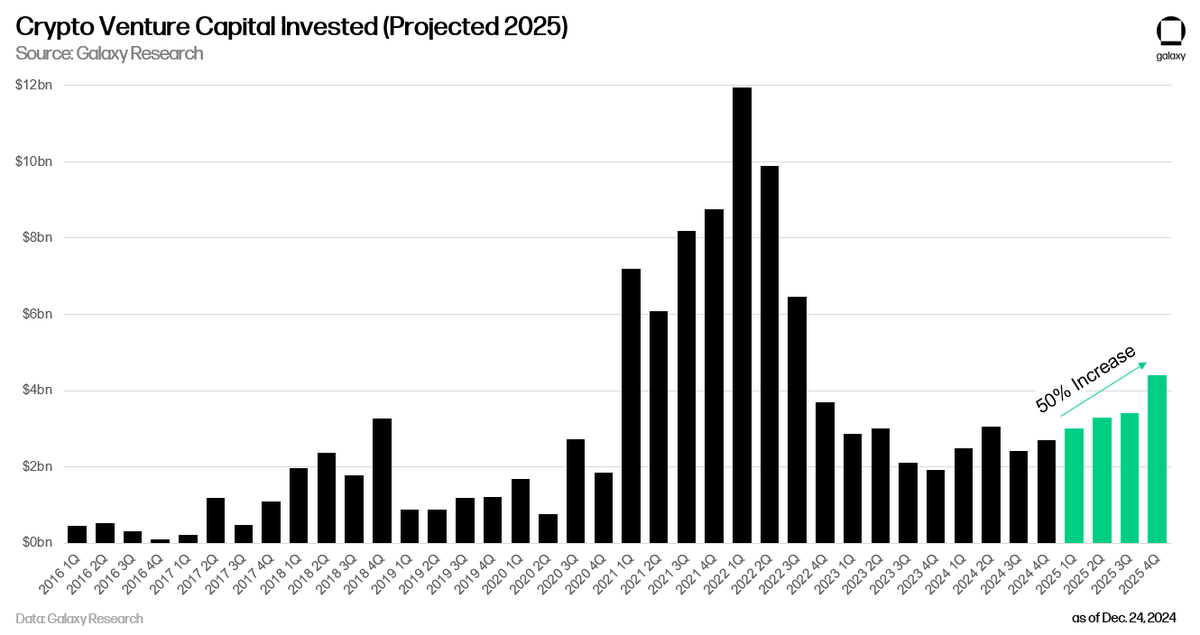
Total capital invested in crypto venture capital (VC) is expected to exceed $150 billion in 2025, a year-over-year increase of over 50%
With declining interest rates and improved regulatory conditions, investor appetite for venture capital will rise sharply, fueling a boom in VC activity. Crypto VC fundraising has historically lagged broader market cycles, and the next four quarters may see a catch-up effect.
- @hiroto_btc, @intangiblecoins
Stablecoin legislation is expected to pass both chambers of the U.S. Congress and be signed by President Trump in 2025, though market structure legislation may not pass
Legislation establishing a registration and regulatory framework for stablecoin issuers is expected to pass with bipartisan support and be signed into law before the end of 2025. The growth of USD-backed stablecoin supply will reinforce the dollar’s global dominance and further strengthen the U.S. Treasury market. Combined with relaxed restrictions on banks, trusts, and custodians, stablecoin adoption is expected to grow significantly. However, market structure legislation—such as registration, disclosure, and oversight requirements for token issuers and exchanges, or adjustments to SEC and CFTC rules to cover these entities—is too complex and unlikely to be finalized and enacted in 2025.
The U.S. government is not expected to purchase Bitcoin in 2025, but may use existing reserves to build inventory and initiate discussions across agencies about expanding Bitcoin reserve policies
- @intangiblecoins
The U.S. Securities and Exchange Commission (SEC) is expected to investigate Prometheum, the first "special purpose broker"
Prometheum, a previously obscure brokerage firm, unexpectedly received a novel broker-dealer license in 2023 and publicly endorsed SEC Chair Gensler’s view that digital assets are securities—a move that sparked widespread skepticism. Its CEO was questioned by Republican lawmakers during a congressional hearing, and FINRA records show its Alternative Trading System (ATS) has not conducted any trades. Republicans have called on the Department of Justice and the SEC to investigate whether Prometheum has "ties to China," while others have pointed to irregularities in its fundraising and financial reporting. Regardless of whether an investigation proceeds, the "special purpose broker" license is expected to be repealed in 2025.
Dogecoin may break $1 for the first time in 2025, with market cap reaching $100 billion
As the world’s most recognized and longest-standing memecoin, Dogecoin will reach new market highs in 2025. However, its peak market cap may be surpassed by budget cuts identified and implemented by the Department of Government Efficiency. The department is expected to successfully cut spending exceeding Dogecoin’s peak valuation in 2025.
Disclaimer:
Members of Galaxy and/or Galaxy Research hold Bitcoin, Ethereum, and Dogecoin. Many predictions were not shared, and many more could have been made. These predictions are not investment advice, nor do they constitute an offer, recommendation, or solicitation to buy or sell any security (including Galaxy securities). These views represent those of the Galaxy Research team as of December 2024 and do not necessarily reflect the views of Galaxy or any of its affiliates. These predictions will not be updated.
Join TechFlow official community to stay tuned
Telegram:https://t.me/TechFlowDaily
X (Twitter):https://x.com/TechFlowPost
X (Twitter) EN:https://x.com/BlockFlow_News
 @galaxyhq


