March 19 Market Recap: Powell Said What the Market Least Wanted to Hear—U.S. Stocks Plunged 600 Points, and Bitcoin Reacted with a “Sell-the-News” Move
TechFlow Selected TechFlow Selected
March 19 Market Recap: Powell Said What the Market Least Wanted to Hear—U.S. Stocks Plunged 600 Points, and Bitcoin Reacted with a “Sell-the-News” Move
Looking back at 2025, Bitcoin recorded negative returns within 48 hours following the Federal Open Market Committee (FOMC) meetings on seven out of eight occasions.
 Navigating Web3 tides with focused insights
Author: TechFlow
U.S. Equities: The “Flash Crash” Moment After Powell’s Press Conference
On Wednesday, the Federal Reserve held rates steady, as expected, within the 3.5%–3.75% range. The dot plot maintained its projection of one rate cut in 2026 and another in 2027—both fully anticipated, leaving markets largely unmoved.
But a single sentence from Chair Powell during the press conference ignited a full-blown sell-off.
“We anticipate progress on inflation, but that progress has been less than we would like,” Powell stated.
Major indices promptly plunged to their intraday lows. The Dow Jones Industrial Average fell more than 600 points—or 1.3%—in a single day; the S&P 500 and Nasdaq Composite each declined 0.9%.
This was the answer markets had waited for on March 18—not “Will the Fed hold rates?” (that was already settled), but rather: “How will Powell define ‘what comes next’?” The answer: Inflation is stickier than expected, and rate cuts are farther off than anticipated.
The “hawkish detail” in the dot plot: Seven officials project zero cuts in 2026.
Of the 19 FOMC participants, seven now forecast no change in rates this year—up by one from the December update. The biggest shift lies in elevated 2026 inflation expectations: both core PCE and headline PCE are now projected at 2.7%, still above the Fed’s 2% target.
Although forecasts for subsequent years show considerable dispersion, the median outlook calls for one additional cut in 2027, after which the federal funds rate would settle near 3.1% in the longer run.
Powell rejects the term “stagflation,” yet acknowledges the “dual mandate is under strain.”
Powell pushed back against claims that the U.S. economy is entering “stagflation”—a bleak confluence of rising prices, sluggish growth, and high unemployment. While he conceded that the Fed’s dual mandate of price stability and maximum employment is under tension, he insisted, “That is not the situation we are in.”
“When we use the word stagflation, I always point out it’s a 1970s term—when unemployment hit double digits, inflation ran very high, and the misery index soared. That’s not what we’re seeing now. Our actual unemployment rate is very close to its long-run normal level, and inflation is only about one percentage point above our target… I’ll reserve the term stagflation for far more severe circumstances.”
Yet markets weren’t convinced. Powell noted oil-price shocks could weigh on the U.S. economy: “The net effect of an oil-price shock remains some downward pressure on spending and employment, and upward pressure on inflation.”
That, by definition, is stagflation—regardless of whether Powell chooses to call it that.
Powell touched on politics during the press conference, stating, “I have no intention of leaving the Board until the investigation into ‘complete and total termination’ is concluded.” He added that if Kevin Warsh’s nomination is delayed, he would serve as acting chair—and that he has not yet decided whether to remain on the Fed Board once the matter is resolved.
Powell’s term as Fed governor runs through early 2028. This means: Even if Trump appoints Warsh as chair, Powell will retain his vote on the FOMC and continue shaping monetary policy.
Oil Prices: Day 19 of War, and the Strait of Hormuz’s “Half-Closed” State Becomes the New Normal
As of March 12, Iran had confirmed 21 attacks on commercial vessels. Warnings—and subsequent strikes—triggered a sharp drop in maritime traffic: tanker movements first fell roughly 70%, with over 150 ships anchoring outside the Strait to avoid risk.
On March 8, crude oil prices breached $100 per barrel for the first time since Russia’s 2022 invasion of Ukraine. On March 11, the International Energy Agency’s 32 member countries unanimously agreed to release 400 million barrels from emergency reserves—equivalent to roughly four days of global consumption.
The IEA stated that the Middle East war is causing the largest supply disruption in the history of global oil markets. Crude and petroleum product flows through the Strait of Hormuz have plummeted from ~20 million barrels per day pre-war to a mere trickle today. Capacity to bypass this critical waterway is limited, storage facilities are filling up, and Gulf producers have collectively cut output by at least 10 million barrels per day.
“Selective opening”: Iran permits passage for select allied vessels.
On March 5, Iran’s Islamic Revolutionary Guard Corps announced it would close the Strait of Hormuz to vessels from the U.S., Israel, and their Western allies. This position was reaffirmed on March 8. On March 13, Turkish Transport Minister Abdulkadir Uraloğlu stated Iran had approved passage for a Turkish vessel. Reports also indicated two Indian-flagged LNG carriers and a Saudi oil tanker carrying one million barrels bound for India had received clearance.
Yet this “selective opening” fails to meaningfully ease the global supply crunch. According to data from the UK Maritime Trade Operations (UKMTO), fewer than five vessels have transited the Strait daily since hostilities began—down from a historical average of 138 per day.
Trump’s “coalition escort” plan meets tepid response.
U.S. President Trump called on other nations to help Washington reopen the Strait of Hormuz, which normally handles roughly one-fifth of the world’s oil supply. So far, his proposal has drawn muted responses: none of the countries he specifically named—including China, Japan, France, and the UK—have publicly committed naval assets to safeguard the Strait.
In a Sunday interview with the Financial Times, Trump warned NATO faces a “very bad” future if his proposal receives “no response—or a negative one.” Japan and Australia both stated on Monday they have no plans to deploy warships.
Oil price outlook: Short-term peak at $109, potential retreat to $70 by year-end.
If the Strait of Hormuz remains severely disrupted, Brent crude could reach $100/barrel—but should still fall back to around $70/barrel by end-2026 as markets adjust. In a tail-risk scenario—where the Iranian regime attacks regional energy infrastructure and further disrupts Strait shipping—Brent could surge above $130/barrel.
Despite current price spikes, the U.S. Energy Information Administration (EIA) still expects prices to decline later this year if supply flows normalize. The EIA now forecasts Brent’s 2026 average price at $79/barrel—up sharply from its prior $58/barrel forecast issued just one month earlier.
Cryptocurrencies: “Sell the News” Materializes—The Eighth Time in History
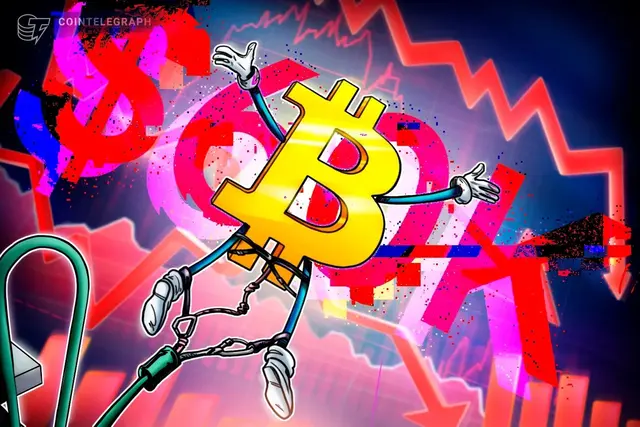
Following Wednesday’s Fed decision, the cryptocurrency market delivered the widely anticipated “sell the news” reaction.
Bitcoin entered the March FOMC meeting on strong footing, trading above $74,000 after eight consecutive days of gains. Yet data compiled by Bitcoin lending firm Two Prime suggests this strength may mask a recurring pattern—FOMC meetings have historically acted as short-term bearish catalysts for BTC.
Looking back at 2025, Bitcoin posted negative returns within 48 hours following seven of eight FOMC meetings. Even during May’s broad-based rally, the broader trend pointed to persistent post-meeting weakness—regardless of whether the Fed held rates steady or shifted policy direction.
With Bitcoin entering the meeting in an optimistic posture, the risk tilted decisively toward a classic “sell the news” reaction.
Powell’s remarks on oil prices inject further uncertainty into crypto markets.
Federal Reserve Chair Powell said rising energy prices are affecting inflation forecasts—but “nobody knows” how long that impact will last.
Powell acknowledged surging oil prices “definitely figure into” policymakers’ elevated 2026 inflation outlook, lifting their forecast from 2.4% to 2.7%. He dismissed comparisons to 1970s-style stagflation, noting unemployment is near its long-term norm and inflation is only modestly above target.
Yet these comments failed to soothe crypto markets. The Hormuz Strait crisis sent oil prices soaring above $119/barrel in early March 2026. Higher oil prices lifted inflation expectations, thereby diminishing the odds of rate cuts—and reducing liquidity for risk assets.
The key metric now commanding market attention: ETF fund flows.
In order of priority: (1) Bitcoin ETF net flows reported by Farside Investors on March 19 and 20; (2) Bitcoin’s market dominance trajectory—rising toward 60% or falling toward 55%; (3) Whether Ethereum can hold the psychological $2,000 level; (4) Whether XRP ETF flows reverse or continue outflowing; (5) Solana’s price action relative to Bitcoin—as a signal of altcoin sentiment strength.
ETF fund flow data is the decisive reading. Sustained net inflows on March 19 and 20 would indicate institutions interpreted the meeting as positive—or at least neutral.
Three potential Bitcoin paths: The “neutral hold” scenario now appears most likely.
If the Fed signals no cuts are likely in 2026, risk assets could suffer. In that case, Bitcoin might fall to $65,000, while altcoins would face even steeper declines.
If the Fed preserves the possibility of one cut later this year, Bitcoin is expected to trade between $68,000 and $74,000.
Finally, if policymakers hint at two cuts, crypto markets could interpret that as bullish. Such an outcome might propel Bitcoin above $75,000—with outsized gains across the broader altcoin market.
For now, the Fed has chosen the second path—holding to one-cut expectations, but with hotter inflation forecasts pushing the timing of that cut further out. This implies Bitcoin may experience a 3–5% “sell the news” correction over the next 48 hours, then consolidate in the $68,000–$74,000 range.
Today’s Summary: Powell Said Exactly What the Market Didn’t Want to Hear
On March 18, markets held their breath awaiting Powell’s press conference. When the answer arrived, disappointment was universal.
Fed Chair Powell emphasized the uncertainty stemming from oil-price shocks and stated U.S. progress on inflation has fallen short of expectations. Equities responded with immediate losses.
2026 PCE inflation is now forecast at 2.7%, above target—and the Fed signaled it won’t cut rates until inflation shows clearer improvement. Most FOMC members don’t view hikes as the baseline scenario, but neither will they cut unless inflation advances further.
This is the answer markets received on March 18:
Inflation is stickier than expected — Both headline and core PCE for 2026 are projected at 2.7%, well above the Fed’s 2% target.
Rate cuts are farther off than expected — The dot plot maintains one cut in 2026, but seven officials now forecast zero cuts this year.
The impact of oil-price shocks is “unknown” — Powell admitted the war’s economic effects are “too early to assess,” yet already raised the inflation forecast from 2.4% to 2.7%.
Powell refuses to step down — Even if Warsh is nominated as chair, Powell will remain a voting FOMC member through early 2028.
Markets reacted uniformly to these answers: U.S. equities crashed, oil spiked, and cryptocurrencies “sold the news.”
This isn’t the end of March 18—it’s the beginning of a longer period of uncertainty. Will oil prices retreat? Can inflation cool? Will the Fed cut in September—or wait until 2027?
No one knows. Not even Powell himself: “If there were ever a meeting where we should skip the SEP [Summary of Economic Projections], this would be the one—because we truly don’t know.”
Yet they published the projections anyway. And markets reacted anyway. That is March 18, 2026—a moment of certainty defined entirely by uncertainty.
Join TechFlow official community to stay tuned
Telegram:https://t.me/TechFlowDaily
X (Twitter):https://x.com/TechFlowPost
X (Twitter) EN:https://x.com/BlockFlow_News
 深潮TechFlow