How Kalshi, the $2 billion regulated prediction market, turns your predictions into profit?
TechFlow Selected TechFlow Selected
How Kalshi, the $2 billion regulated prediction market, turns your predictions into profit?
Polymarket has attracted crypto-native users and international traders, while Kalshi was born for Wall Street.
 Navigating Web3 tides with focused insights
By Thejaswini M A
Translated by Luffy, Foresight News
For months you've been watching Fed meetings, knowing they're about to shift rates. Economic data is shouting it, inflation numbers confirm it, even subtle changes in Powell's wording hint at the moment approaching.
But how do you turn that insight into a trade?
Sure, you could buy bonds, hoping they rise when rates fall; short the dollar, praying correlations hold; or overweight rate-sensitive tech stocks, betting the market interprets news your way.
But what if… you could trade the Fed’s decision directly? What if instead of playing these indirect "derivative games," you could simply bet on "Will the Fed cut rates at the next meeting?" and earn $1 per contract if you’re right?
Same with sports betting. You could buy New Balance stock, hoping Coco Gauff winning the Australian Open boosts sportswear sales; short Nike because their sponsored player exited early; or invest in DraftKings, betting higher tennis viewership drives more wagers. But what if… you could directly bet on whether Gauff will win the Australian Open? Put down $100, get $200 if correct—no need to ever read another earnings report.
You could buy TKO Group stock, hoping WrestleMania draws record viewers; short rival entertainment companies; or bet on merchandise sales surging. But what if… you could directly trade whether Roman Reigns keeps his title? Place your money directly on the storyline outcome, skipping all media company analysis.
This is exactly what Kalshi allows you to do.
Kalshi is the first prediction market regulated by the U.S. Commodity Futures Trading Commission (CFTC), where you can trade the outcomes of real-world events directly—not stocks affected by events, not currencies fluctuating on news, but the events themselves.
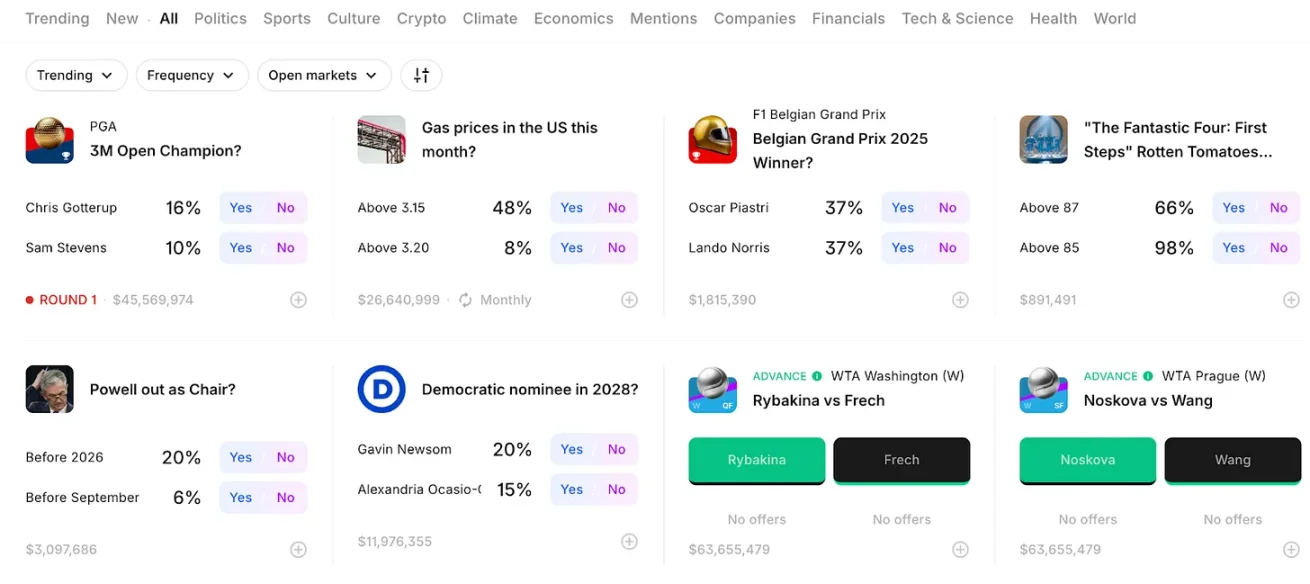
Make Your Predictions Pay Off
Fed decisions, election results, Supreme Court rulings, whether Bitcoin will hit $150,000, inflation exceeding 4%, your favorite team winning the championship—if you can form an opinion with objective resolution criteria, there might already be a market for it on Kalshi.
Polymarket pioneered the modern prediction market concept, processing billions in volume during the U.S. election and proving massive demand. Now Kalshi has raised $185 million at a $2 billion valuation, with major trading firms like Susquehanna providing liquidity, and Robinhood integrating Kalshi markets directly into its platform, giving millions of retail traders access. Even Elon Musk’s Grok AI has embedded its trading interface.
This is a regulated, institutional-grade infrastructure for “trading reality.” Building on Polymarket’s global foundation, Kalshi brings prediction markets into the regulated U.S. financial system.
Consider what this means: for the first time, you can directly monetize your edge in predicting real-world events, without friction from traditional financial markets—no complex derivatives, no counterparty risk, no worrying whether your hedge actually works when the event hits.
If you think the next NFP report will surprise, there’s a market. If you believe Trump will win the 2028 election, you can trade that now. If you’re certain AI companies will dominate the next decade, you can bet on the specific milestones and regulatory outcomes that determine their fate.
The platform turns every piece of non-public information, every analytical edge, every well-founded prediction into a potential profit opportunity. Unlike traditional markets where informational advantages are arbitraged through complex strategies, prediction markets directly reward knowledge.
How Kalshi Works
Understanding Kalshi’s mechanics is essential, because event contracts work differently from any financial instrument you’ve traded before. Let me walk you through a real example step by step.
Step 1: Account Setup & Funding
Create an account at kalshi.com and complete standard identity verification (KYC). Since Kalshi is CFTC-regulated, you’ll need to provide ID, proof of address, and other standard documents.
For funding, Kalshi offers multiple options with varying limits and speeds: bank transfers are free but take 1–2 business days; debit cards are instant but charge 2% fees with a $2,500 daily limit; crypto users can deposit USDC up to $500,000 daily, arriving within 30 minutes; wire transfers suit large amounts but have minimum requirements.
Step 2: Understanding Market Pricing
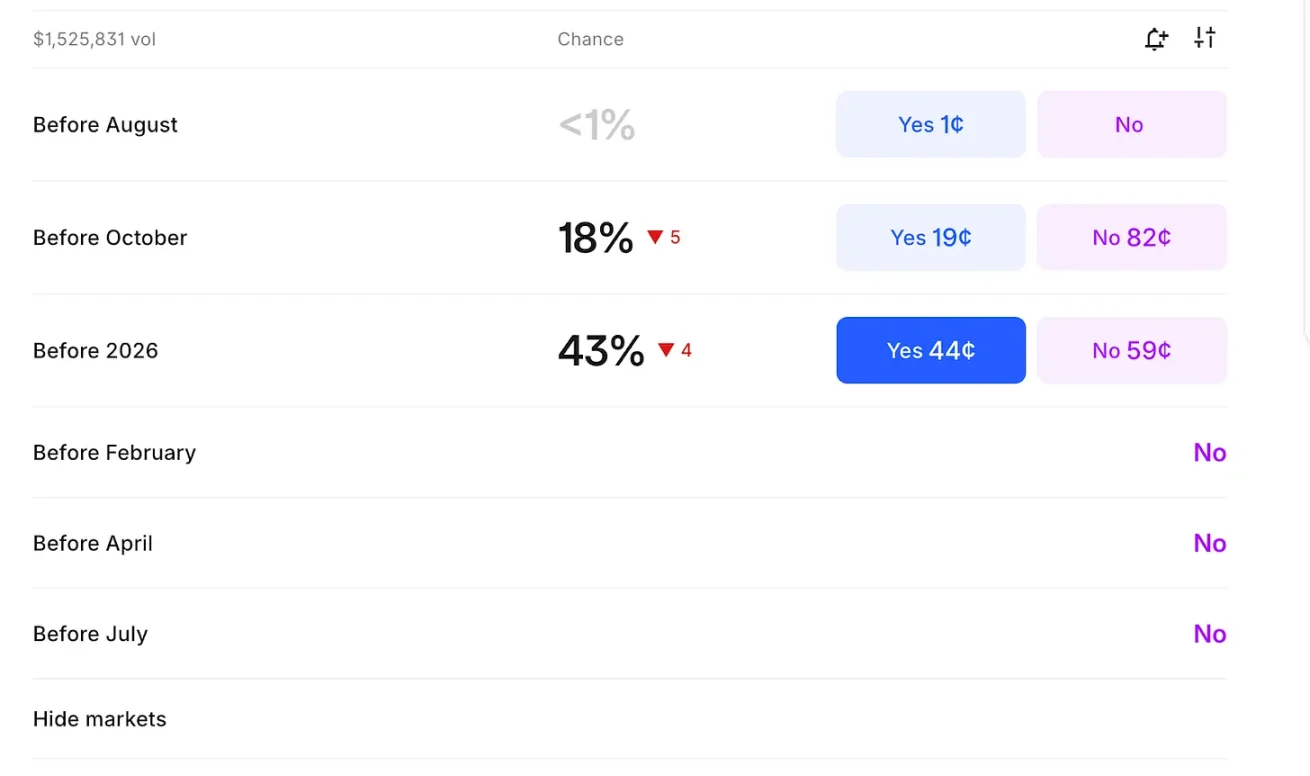
Enter any market and review the current pricing. Take the “Will Bitcoin hit $150,000 before 2026?” market: the “Yes” contract trades at 44 cents, the “No” at 59 cents—meaning the market assigns a 44% probability to Bitcoin hitting $150K by 2026.
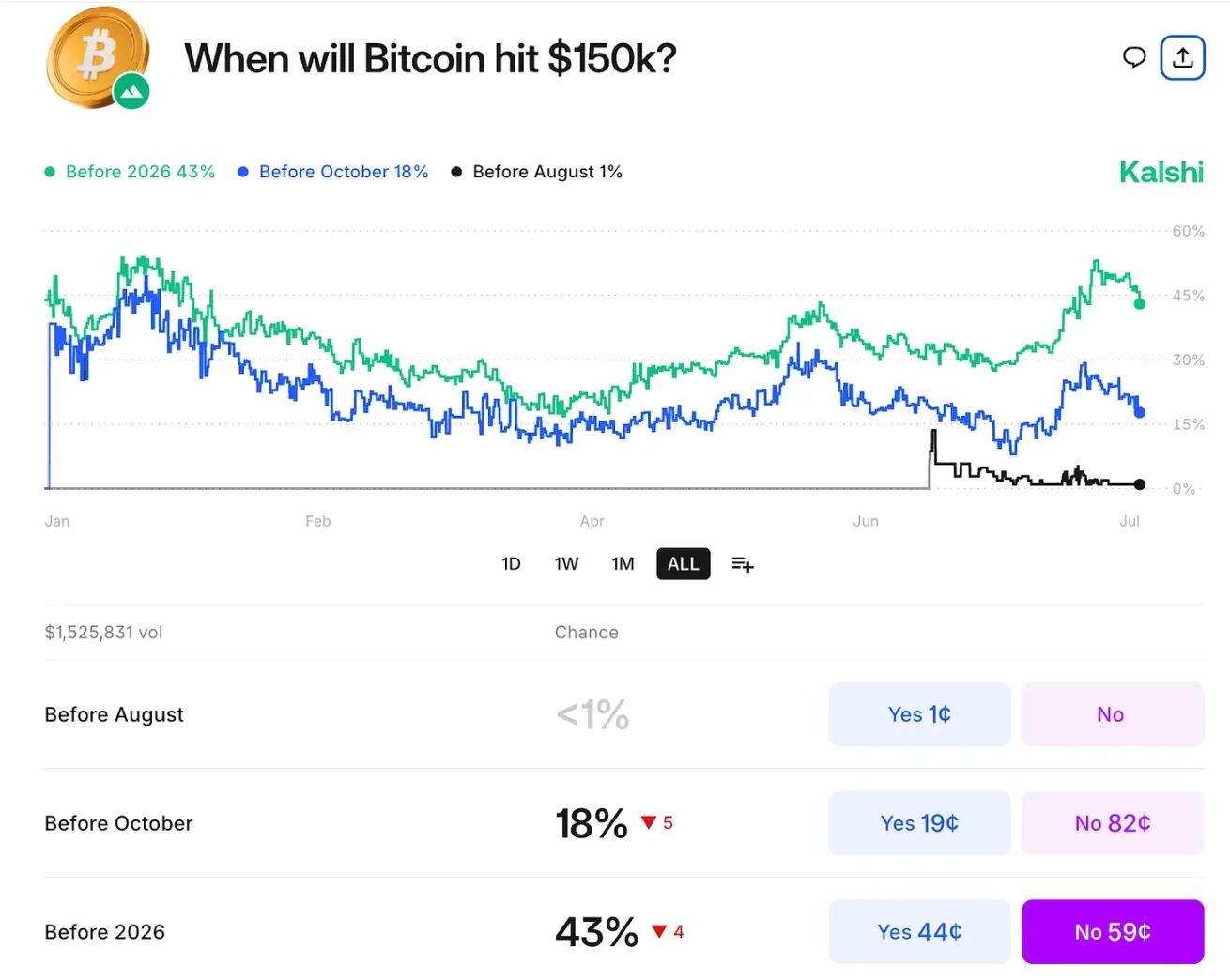
The interface clearly shows your potential payout: if you buy the “Yes” contract at 44 cents and Bitcoin does hit $150K, you receive $1 per contract—earning 56 cents profit. If it doesn’t, the contract expires worthless.
Here’s how a trade works: suppose you believe Bitcoin will reach $150K and buy 100 “Yes” contracts at 44 cents each, paying $44 total. If Bitcoin hits the target by 2026, each contract pays $1—you receive $100, making $56 profit. If not, the contracts expire and you lose $44.
Step 3: Placing Trades
Select “Yes” or “No,” enter your amount (minimum $1), and the platform automatically calculates how many contracts you can buy and your maximum payout.
Back to Bitcoin: buying $1 worth of “Yes” contracts at 44 cents gets you about 2.27 contracts. If correct, you receive $2.27—profit of $1.27. All calculations are transparent before confirmation.
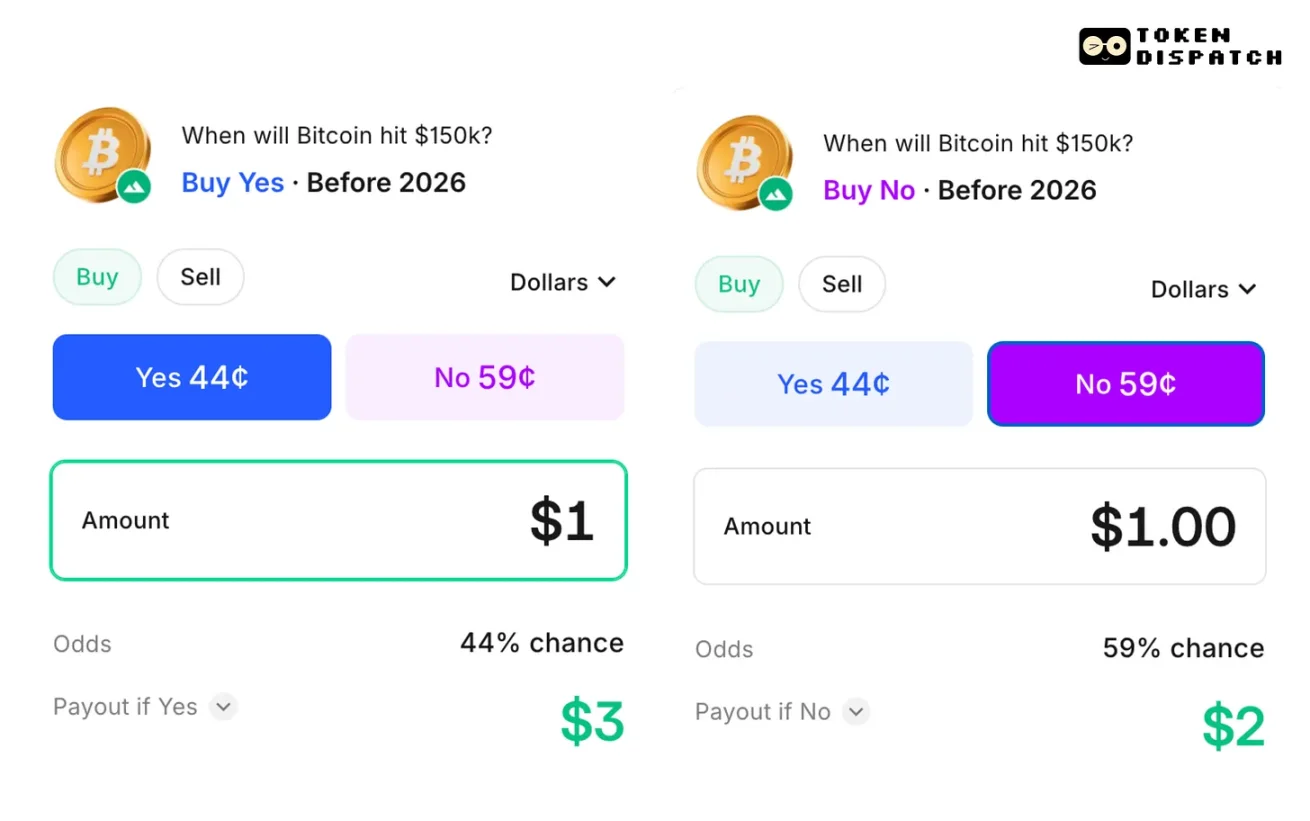
The elegance lies in simplicity: your maximum loss is your purchase cost, your maximum gain is $1 minus entry price per contract, with no margin calls, no complex Greeks, no overnight financing costs.
Step 4: Multiple Timeframes
Many markets offer contracts with different time horizons for the same event. The Bitcoin $150K market includes “by August” (<1% probability), “by October” (18%), and “by 2026” (43%).
Each timeframe is traded independently. If you believe Bitcoin won’t reach $150K until next year, you can buy the 2026 “Yes” contract while selling the August “Yes” contract.
Step 5: Monitoring & Exiting
You don’t have to hold until expiration—contract prices move in real time with news and sentiment. The platform displays live price charts so you can track shifting probabilities.
If breaking news impacts your position, you can exit immediately. For example, if you bought the Bitcoin “Yes” contract at 44 cents and positive news pushes it to 60 cents, you can sell now—locking in 16 cents profit per contract—without waiting for final resolution.
Exiting is smooth: place market orders (execute instantly at current price) or limit orders (wait for target price), with potential P&L shown before confirmation. Settlement occurs automatically via predefined data sources—no disputes, no interpretation, just data.
Position limits prevent market manipulation. Most retail traders can trade up to $25,000 per contract, while institutions have higher limits. Fees range from 0.7% to 3.5% of contract value depending on market probability—contracts near 50/50 odds cost more than extreme longshots.
Market Categories & Discovery
Kalshi organizes markets into categories: politics, sports, economics, crypto, climate, and more. Trending sections highlight active or recently volatile markets.
The platform also features a “Views” section where users discuss analyses and share trading logic. This community aspect helps you discover new markets and understand diverse perspectives on event probabilities.
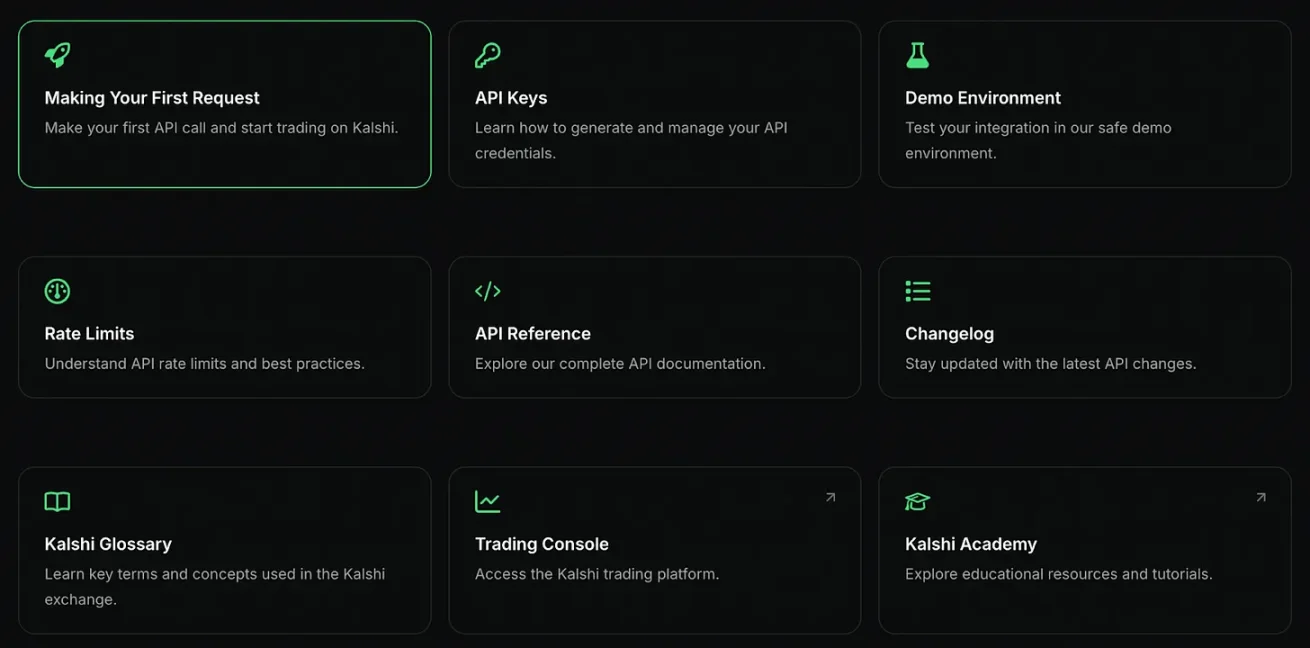
For active traders, Kalshi offers API access for algorithmic trading and data analysis: retrieve historical prices, automate orders, and integrate Kalshi markets into broader strategies.
Detailed volume and open interest data for each contract help assess liquidity before large trades.
The brilliance is in simplicity: no complex derivatives, no leverage, counterparty risk limited to the exchange itself—just pure information markets with transparent, regulated settlement.
Portfolio managers use Kalshi to hedge event risks that traditional instruments can’t efficiently cover: clean energy funds worried about policy shifts can directly trade policy outcome contracts; tech-heavy portfolios can hedge antitrust risks by trading related legal markets.
If you hold $1 million in assets and a specific policy change could reduce their value by 20%, spending $5,000 on a 25%-probability hedge contract could yield $20,000 if the event occurs—exactly offsetting portfolio losses.
Knowledgeable traders can directly monetize expertise: political insiders trade election markets, economic analysts trade Fed decision contracts, industry experts trade regulatory outcome markets. Unlike stock markets—where informational edges are quickly arbitraged through complex derivative strategies—event markets let superior predictions translate directly into profits. Your edge in forecasting FDA approvals or Supreme Court rulings becomes immediate trading gains.
Grok Integration
A recent partnership with xAI reveals the future of information trading.
Grok integration delivers real-time analysis of on-chain data, historical odds, and breaking news directly within the Kalshi interface. Before placing a trade, users can query Grok for event context, probability assessments, and trend data.
This creates a feedback loop: AI helps traders make better predictions, while prediction market outcomes train the AI’s real-world forecasting ability. Grok is tested in live probability evaluation, while traders gain AI-enhanced information analysis.
The impact goes beyond individual decisions: as AI systems grow better at processing vast data and identifying probabilistic patterns, prediction markets become more efficient—leading to tighter spreads, more accurate price discovery, and more practical hedging tools.
Kalshi vs. Polymarket
The prediction market space now has two complementary leaders: Polymarket pioneered the category with crypto-native innovation, while Kalshi was built for Wall Street.
Core Differences
Kalshi operates under full CFTC regulation, with funds held in federally insured accounts and disputes resolved through clear procedures. Everything mirrors traditional finance: fund via bank transfer, trade in USD, withdraw to checking accounts.
Polymarket settles in USDC, uses decentralized oracles for dispute resolution, proving the model’s global viability. It recently obtained proper U.S. licenses and is expanding into regulated markets.
Audience Differences
Institutional capital flows to Kalshi due to regulatory certainty: major market makers like Susquehanna provide liquidity, and over $1 billion in monthly volume shows mainstream preference for compliant platforms.
Polymarket attracts crypto-native and international users who value decentralization and permissionless access. Its early success validated the entire prediction market category.
Conclusion
For U.S. users prioritizing regulatory protection and traditional finance integration, Kalshi holds clear advantages. For global users comfortable with crypto infrastructure and appreciative of Polymarket’s innovation, it offers unique value. Both platforms advance prediction markets from different angles, and their shared growth reflects strong demand—from both institutions and retail—for this new asset class.
What This Means for Your Strategy
Whether you manage portfolios, build trading strategies, or follow financial trends, Kalshi’s rise deserves attention.
For portfolio managers: event contracts offer precise hedging tools for risks traditional instruments struggle with—political, regulatory, and macro events can now be directly hedged without relying on imperfect correlations.
-
For active traders: informational edges in predicting real-world events can now be directly monetized. Your specialized expertise gains a clear path to profit.
-
For long-term investors: understanding the evolution of prediction markets helps you grasp the broader trend of “financializing all measurable uncertainty.” Early builders of such infrastructure may reap substantial rewards.
-
Regulated prediction markets resemble DeFi in 2019: still nascent, but with clear product-market fit. As infrastructure matures and adoption grows, the growth potential is enormous.
Kalshi’s $2 billion valuation and rising institutional adoption signal we’ve moved beyond experimentation—event contracts are becoming a legitimate asset class, and early-adopting traders will gain first-mover advantage in this rapidly expanding market.
Kalshi is the infrastructure layer for “trading reality.” As the boundary between information and markets continues to blur, the value of this infrastructure will only grow.
Join TechFlow official community to stay tuned
Telegram:https://t.me/TechFlowDaily
X (Twitter):https://x.com/TechFlowPost
X (Twitter) EN:https://x.com/BlockFlow_News