








ArkStream Capital: Why Did We Invest in Ethena After Trump Took Office?
TechFlow Selected TechFlow Selected
ArkStream Capital: Why Did We Invest in Ethena After Trump Took Office?
By 2025, decentralized stablecoins represented by Ethena are expected to continue expanding their market share, reaching 10% market penetration.
 Navigating Web3 tides with focused insights
Author: Ray, ArkStream Capital
Prologue to a New Era of Strategic Investment: Ethena
On November 5, 2024, Donald Trump successfully won the U.S. presidential election—a result signaling an impending economic transformation in America led by traditional industry and decentralized finance. At the core of Trump’s policy agenda is breaking the stranglehold of dollar hegemony over the domestic economy, revitalizing industrial production, and reducing excessive control by Democratic-aligned financial capital over the U.S. economy. In early November, ArkStream Capital敏锐ly identified Ethena (ENA) as playing a pivotal role at this historic juncture, making a strategic investment of $5 million into the project. As one of ArkStream's major portfolio holdings, Ethena has met our expectations and is already generating exceptional financial returns.
Ethena, an innovator in the DeFi space, aims to deliver multiple stable and scalable crypto-native monetary solutions. Its first stablecoin, USDe, is a crypto-native synthetic dollar whose key innovation lies in maintaining intrinsic value stability through a Delta hedging strategy—holding spot positions in major cryptocurrencies alongside corresponding short positions in derivatives markets. This design does not rely on traditional U.S. dollar bank reserves, bypassing the Democrat-dominated legacy financial system and serving as a new alternative to the U.S. dollar.
The second stablecoin, USDtb, is co-developed with Securitize, a leading institution in the RWA sector, leveraging BlackRock’s BUIDL platform to connect traditional financial instruments such as the U.S. dollar, short-term U.S. Treasuries, and repurchase agreements. It creates a digitally native dollar backed by real-world assets that generate stable yields, efficiently channeling capital into American domestic industry and the real economy—directly supporting Trump’s central goals of industrial revival and job creation.
Notably, World Liberty Financial (WLFI), led by the Trump family, although not adopting a DAO governance model, demonstrates a strong determination to bring DeFi into mainstream American finance—revealing its grand vision for the DeFi landscape. Within the diverse array of DeFi sub-sectors and infrastructure projects, those capable of generating sustainable revenue are attracting particular attention—such as lending platforms like AAVE, oracle networks like LINK, RWA-backed ONDO, and ENA, which drives crypto-native stablecoin innovation. According to reports, WLFI has cumulatively invested $750,000 worth of Ethena tokens via on-chain transactions and announced a partnership to use Ethena’s yield-bearing token sUSDe as collateral within the WLFI lending platform.
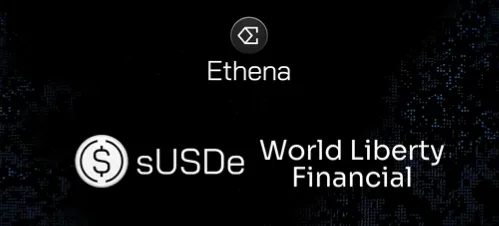
Source: https://x.com/ethena_labs/status/1869413546225983536
RWA and the Stablecoin Investment Perspective
RWA (Real-World Assets), payments, and stablecoins constitute three interwoven core elements in finance. These can be considered together within specific financial contexts or treated as distinct verticals. Among them, payments have relatively clear definitions and use cases similar to those in traditional finance. The other two concepts—RWA refers to assets digitized through Web3 technologies and transformed into transparent, easily tradable blockchain-based assets. This process spans diverse asset classes including stablecoins, private credit, U.S. Treasuries, commodities, and equities. Given the dominant share occupied by stablecoins within this category, they can also be analyzed as a standalone sector. This chapter will examine RWA and stablecoins from an investor’s perspective, analyzing their growth rates, market potential, evolving competitive landscape, and the development trajectory and challenges facing crypto-native stablecoins.
Outstanding Growth and Vast Potential
By examining the total asset value trends of RWA and stablecoins, we gain direct insight into their scale and momentum. Currently, the total value of the RWA market stands at approximately $218.3 billion, with stablecoins accounting for $203.4 billion—representing 93.2% of the total. The stablecoin market has grown from just $30 million in early 2018 to $203.4 billion today. This extraordinary expansion reflects not only robust growth but also immense market potential. In non-stablecoin RWA sectors, total asset value has risen from $10 million in 2018 to $200 million in 2021, then surged to $14.9 billion today, demonstrating impressive compound annual growth. Private credit and U.S. Treasury exposure have been key drivers behind this surge.
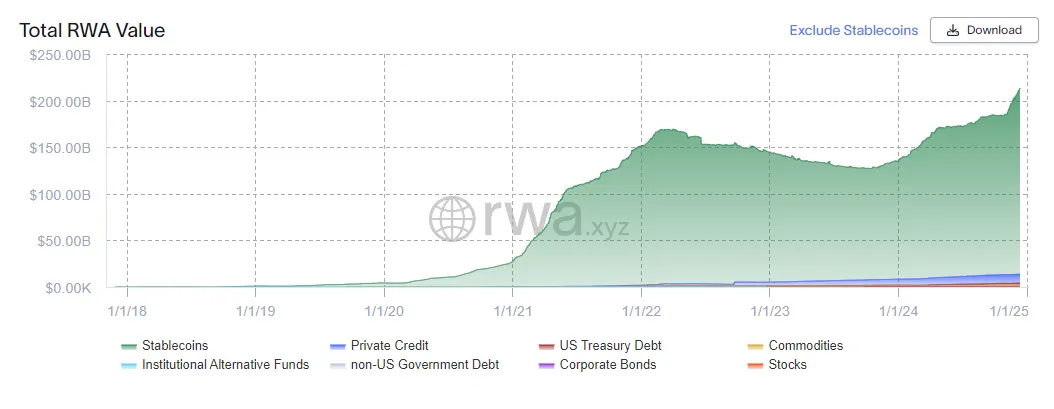
Total Market Cap of RWA (including stablecoins)
Source: https://app.rwa.xyz/
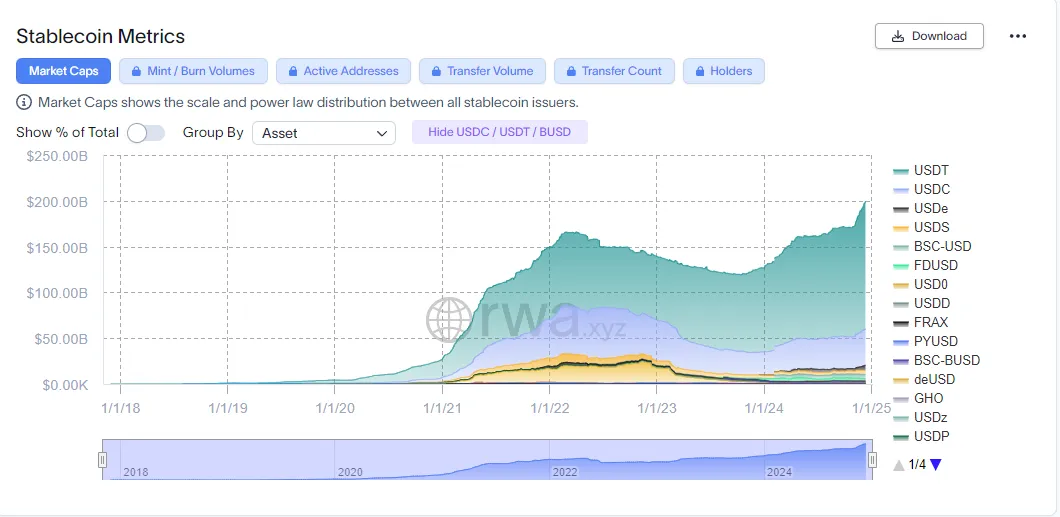
Stablecoin Market Cap
Source: https://app.rwa.xyz/stablecoins
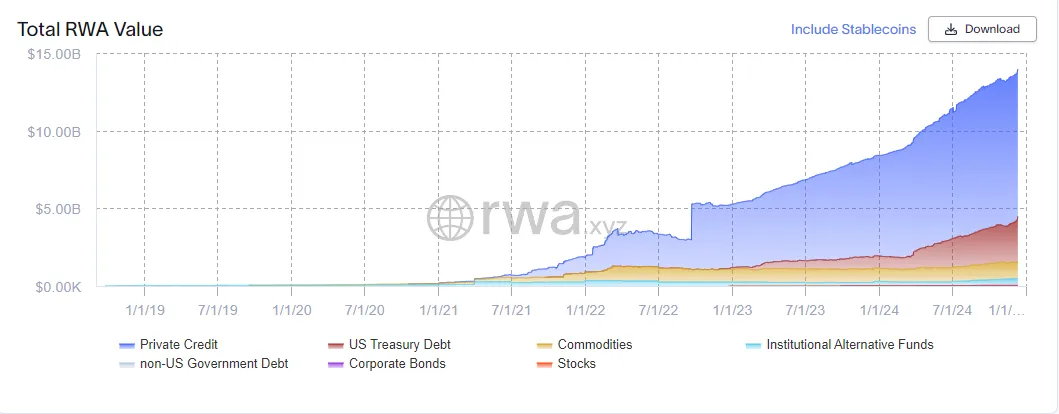
Total Market Cap of RWA (excluding stablecoins)
Source: https://app.rwa.xyz/
Stablecoins, as a unique and critical asset class within RWA, warrant special attention. Before diving deeper, let’s briefly review the U.S. dollar and its associated assets. The U.S. dollar enjoys unparalleled international status, serving as the primary currency for cross-border transactions, financial settlements, and global investments. Dollar-denominated assets, particularly U.S. Treasuries, play a central role in global financial markets, reinforcing the dollar’s position as the world’s reserve currency and symbol of hard currency.
In the cryptocurrency market, dollar-pegged stablecoins have played a vital role since 2018. They serve not only as benchmark units of account but also function as shadow dollar assets across various scenarios including transfers and payments. For example, daily on-chain transfer volumes consistently remain high between $25 billion and $30 billion, never dropping below $10 billion even during bear markets. In terms of trading volume, according to CCData, centralized exchanges recorded $1.8 trillion in monthly stablecoin trading volume in November 2024—exceeding half of the entire crypto industry’s market cap. Based on CoinMarketCap data, we estimate November’s average daily trading volume was around $200 billion, implying a monthly total of $6 trillion. This means stablecoins accounted for 30% of trading volume on centralized exchanges—a figure that doesn’t include decentralized exchange (DEX) volumes, suggesting the actual share may be even higher. Beyond transaction and trading metrics, stablecoins are increasingly integrating stable-yield assets like U.S. Treasuries as underlying collateral, delivering consistent returns and generating positive externalities that bridge Web3 with the real world.
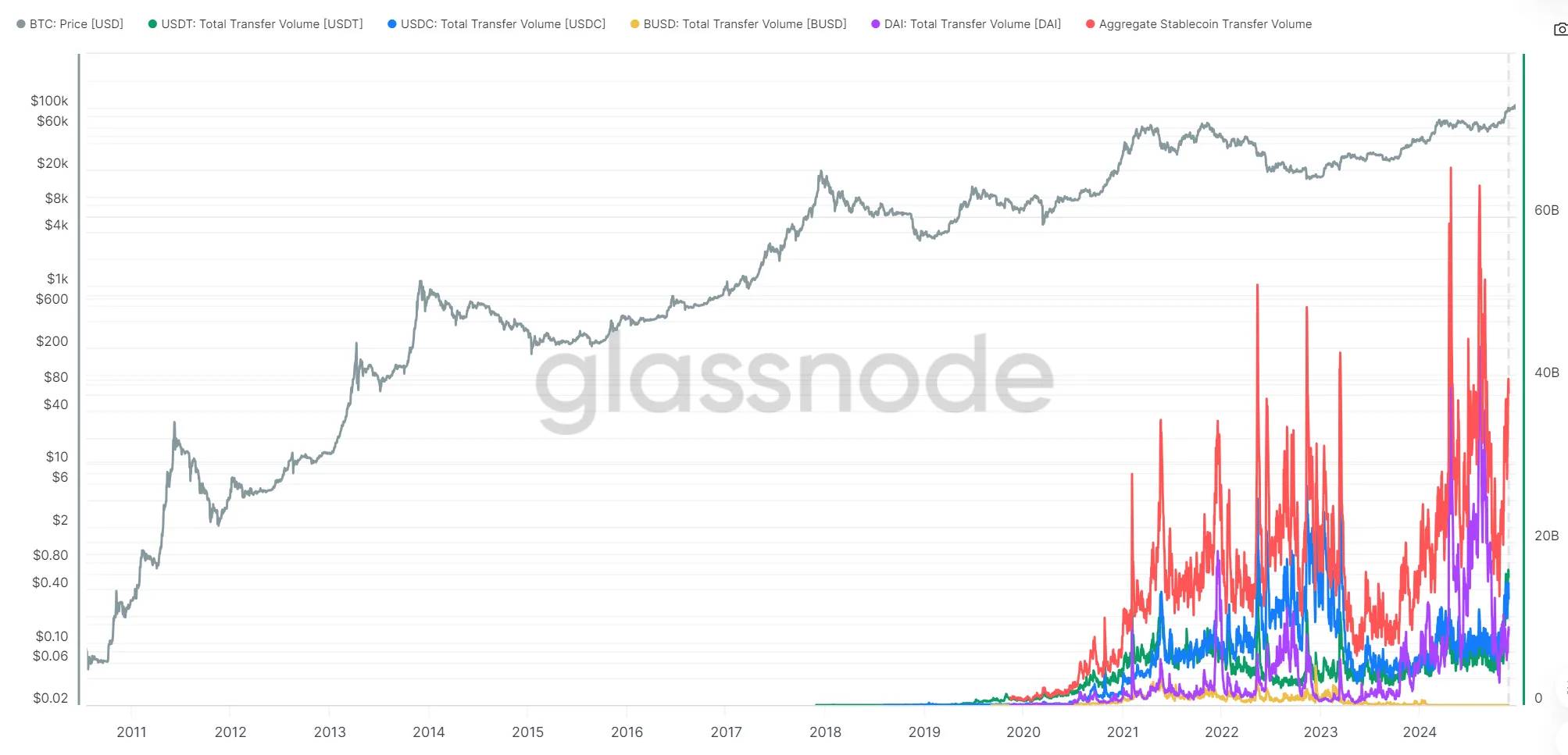
Daily Stablecoin Trading Volume
Source: https://studio.glassnode.com/charts/usd-transfer-volume
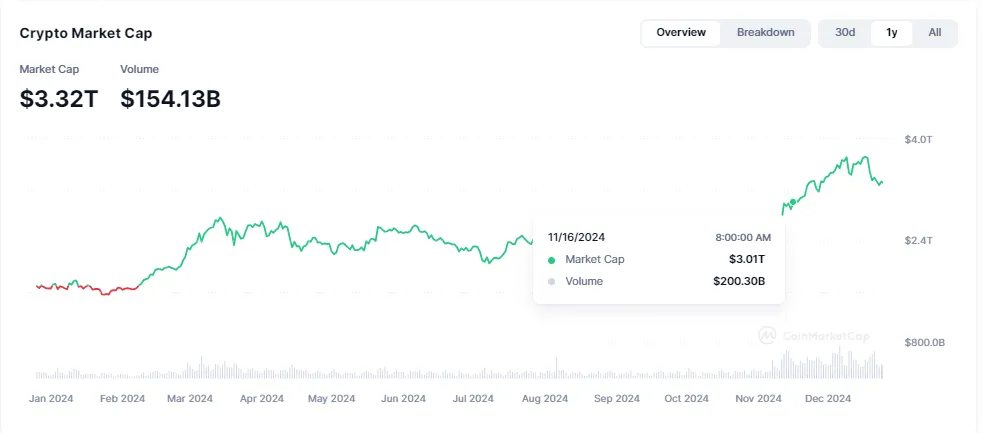
Stablecoin Market Cap and Trading Volume
Source: https://coinmarketcap.com/charts/
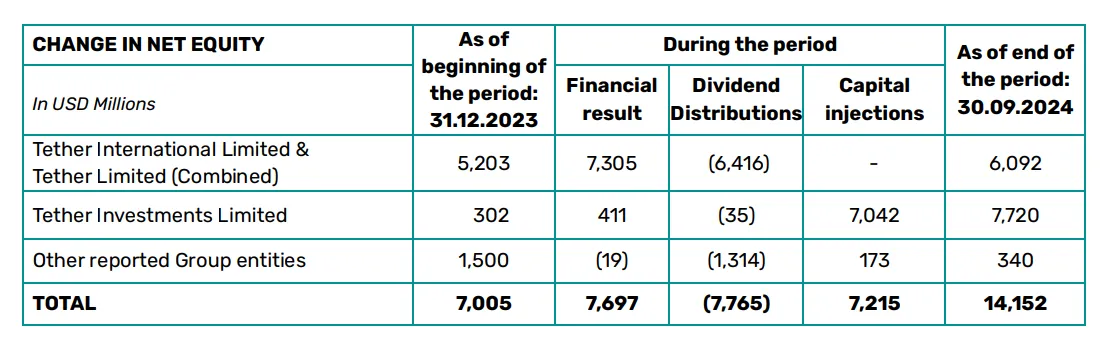
Tether's Profits in Q1–Q3 2024
Source: https://tether.io/news/tether-hits-7-7-billion-2024-nine-month-profits-102-5-billion-in-u-s-treasury-holdings-almost-120-billion-usd₮-circulation-and-an-over-6-billion-reserve-buffer-in-q3-2024-attestation/
With the approval of spot Bitcoin and Ethereum ETFs in 2024, inflows of capital have pushed the total market cap of the crypto industry to record highs. We anticipate that as the industry grows and user adoption expands, stablecoins will set new records across key metrics including market cap, transfer volume, and trading volume.
Evolution of the Stablecoin Market Landscape
Stablecoins emerged from the crypto industry’s urgent need for price-stable tools. In the early days, high volatility made Bitcoin and Ethereum unsuitable as stable units of account. By pegging to fiat currencies like the U.S. dollar, stablecoins offered a relatively stable store of value and medium of exchange, allowing users to hold digital assets resilient to market swings and enabling fast fund transfers. As demand grew, various types of stablecoins appeared: fiat-collateralized, decentralized overcollateralized, and algorithmic stablecoins, offering diverse options aligned with different risk appetites and market needs.
When analyzing the stablecoin market, we focus on several representative examples: Tether’s USDT, Circle’s USDC, MakerDAO’s DAI/USDS, and Terra’s algorithmic stablecoin UST. Analyzing these helps us understand each type’s characteristics and market performance.
As an early entrant, USDT has enjoyed broad market support since 2018. Accepted by numerous exchanges, it further penetrated primary and secondary markets, DeFi protocols, major public chains, and Layer 2 solutions after 2020. Consequently, USDT has maintained market leadership. Its underlying assets primarily consist of U.S. Treasuries and overnight reverse repos. However, due to limited real-time transparency, USDT has faced several de-pegging events—some nearing 10%. Despite this, USDT’s first-mover advantage and global usability ensure its dominance in both spot and derivatives trading volumes across major exchanges. Most platforms treat USDT as the primary quote currency, and even when supporting alternatives like USDC or FDUSD, USDT still far exceeds others in trading volume and liquidity depth.
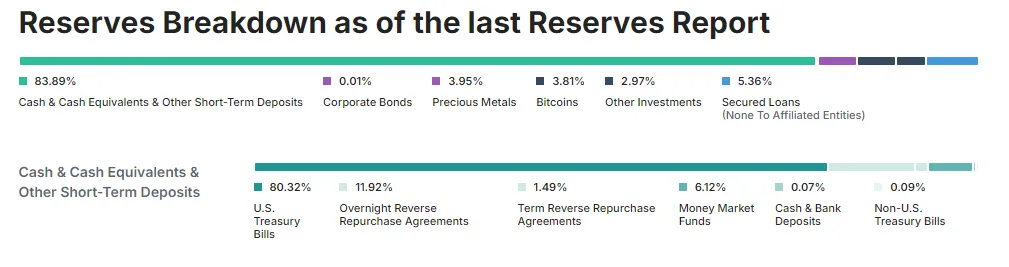
Tether’s Q3 2024 Reserves Report
Source: https://tether.to/en/transparency/?tab=reports
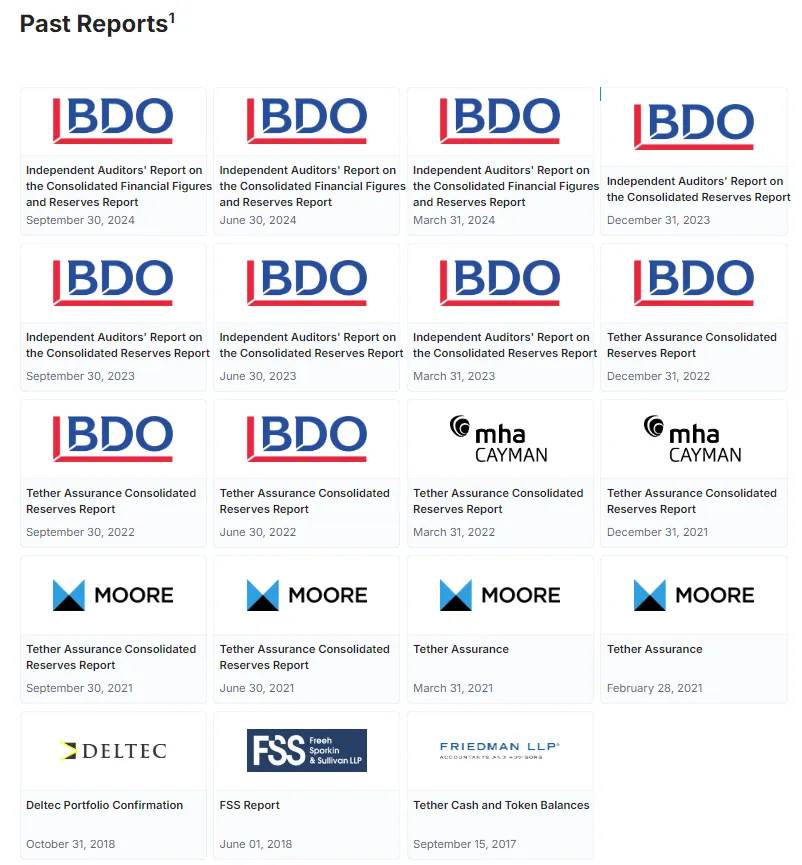
Tether Historical Transparency Reports
Source: https://tether.to/en/transparency/?tab=reports
USDC, issued by Circle—a company with strong regulatory backing and multiple asset management licenses—has become the second-largest stablecoin since its October 2018 launch, holding about 20.9% market share. Renowned for compliance and transparency, USDC’s reserves mainly comprise cash, short-term Treasuries, and overnight repo agreements. Most USDC reserves sit in the Circle Reserve Fund—an SEC-registered 2a-7 government money market fund managed by BlackRock, which publishes daily portfolio reports ensuring full transparency. However, during the March 2023 collapse of Silicon Valley Bank (SVB), where Circle held approximately $3.3 billion of its $40 billion reserves, panic erupted, causing USDC to de-peg and triggering a partial run. Only after coordinated intervention by the Federal Reserve and Treasury did confidence return and the peg stabilize. This incident exposed USDC’s vulnerability to risks within the traditional banking system, leading to a sustained decline in issuance. To strengthen resilience, Circle implemented reforms. While market share hasn’t recovered to prior levels, USDC remains highly competitive in on-chain transaction volume and count due to its inherent regulatory alignment.
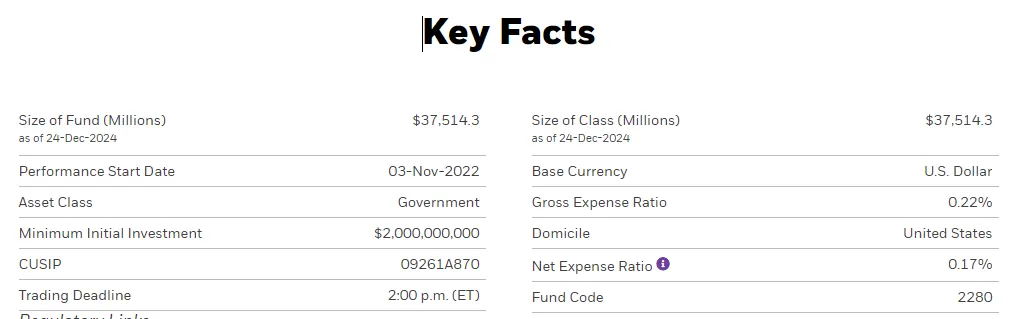
Circle Reserve Fund
Source: https://www.blackrock.com/cash/en-us/products/329365/
DAI/USDS, issued and governed by MakerDAO, is a decentralized stablecoin designed to maintain a 1:1 peg with the U.S. dollar. Initially, DAI was minted through an overcollateralization mechanism: users lock crypto assets (e.g., Ether) in smart contracts to generate DAI, with collateral value exceeding the DAI amount to ensure stability. However, extreme price fluctuations could trigger cascading liquidations. Combined with on-chain transparency, attackers could target vulnerable minters’ liquidation thresholds, resulting in failed auctions and bad debt. To mitigate these risks, MakerDAO expanded collateral options—including USDC and wBTC—and established dedicated risk management teams. DAI’s decentralization offers unique advantages in certain applications, especially within DeFi, where it serves as a core medium for trading, lending, payments, and staking. Though smaller than centralized counterparts like USDT and USDC, DAI maintains a significant presence in the global stablecoin market.
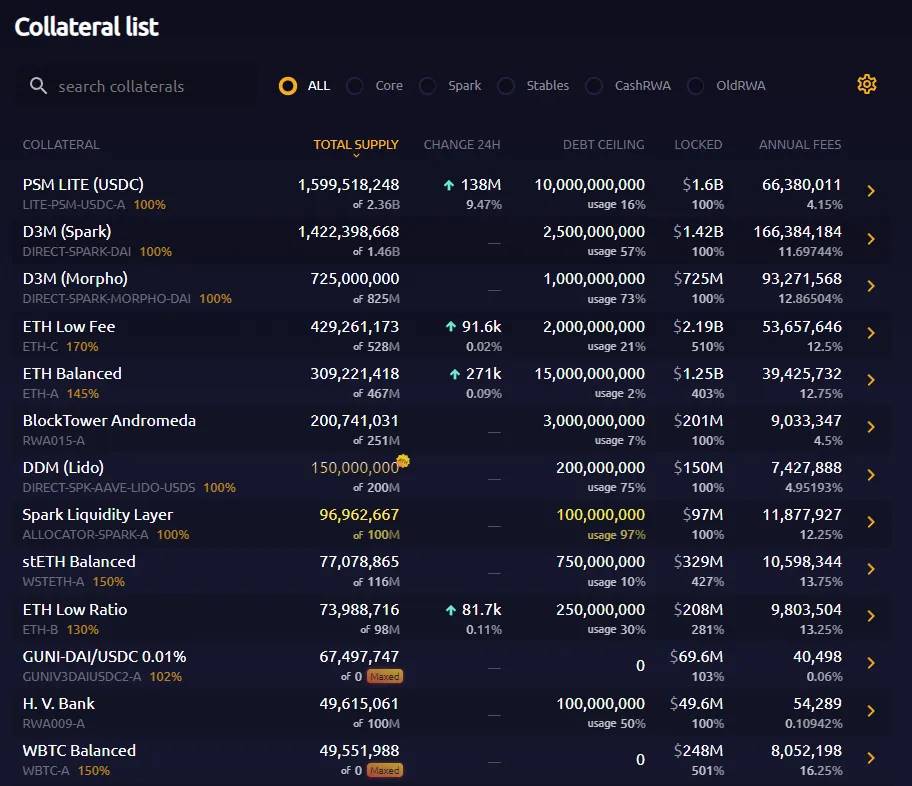
DAI / USDS Collateral List
Source: https://makerburn.com/#/rundown
UST, the decentralized algorithmic stablecoin of the Terra ecosystem, aimed to maintain a 1:1 dollar peg via smart contracts on the Terra blockchain, using LUNA as backing. Users burned equivalent LUNA to mint UST and redeemed UST for LUNA upon burning. Market arbitrageurs were expected to maintain price stability. During periods of rising LUNA prices, this created a “positive spiral.” But when LUNA declined, its market cap became insufficient to back UST, risking a “death spiral” and de-pegging. UST previously scaled rapidly by offering high yields through Anchor Protocol, becoming a major stablecoin. Tragically, in May 2022, the Terra ecosystem collapsed, UST lost its peg, and its value dropped to zero. This event highlighted fundamental risks in purely algorithmic stablecoins—especially under stress conditions related to market psychology and flawed incentive design.
Clearly, fiat-backed stablecoins dominate the market and continue growing. Yet, given persistent demand for new financial tools, decentralized stablecoins keep exploring innovative paths. Among them, Ethena has emerged as a leader. USDe, Ethena’s synthetic dollar, occupies a distinctive niche in DeFi thanks to its novel financial architecture. Unlike traditional stablecoins, USDe uses advanced Delta hedging strategies to maintain dollar parity, setting it apart. Additionally, USD0 issued by Usual deserves attention: backed by RWA, it deeply integrates the stability of traditional finance with DeFi’s transparency, efficiency, and composability. With a permissionless yet compliant framework, USD0 channels real-world yield directly to community users, showcasing the competitiveness of next-generation stablecoins. These emerging players enrich market diversity and expand investment opportunities.

Core Metrics for Crypto-Native Stablecoins
We define stablecoins like USDe and USD0—those not reliant on fiat backing—as “crypto-native stablecoins.” This category includes stablecoins collateralized by major cryptocurrencies like Bitcoin and Ethereum, algorithmically pegged stablecoins, and those using neutral strategies to anchor value.
When evaluating such stablecoins, multiple dimensions matter, with the most important being stability, market capitalization, and application scope (including DeFi integration and support from centralized exchanges).
Stability is the cornerstone metric. The essence of a stablecoin lies in maintaining a stable exchange rate with its pegged asset. Failure to sustain this link undermines the very concept of “stability,” rendering the asset unfit for its intended purpose.
Assuming price stability is achieved, a stablecoin must reach a meaningful market scale to become a mainstream currency and secure a place in the financial ecosystem. Without scalability, its influence and utility remain constrained, unable to make a lasting impact in a competitive environment.
Market scale depends heavily on the breadth of practical applications. A stablecoin without real-world use cases—no matter how large its market cap—is like a tree without roots. Therefore, stablecoins must aggressively pursue widespread adoption and diversified use cases to enhance circulation and reinforce long-term value stability.
Why We Invested in Ethena
Ethena’s vision is to rebuild the crypto financial system by bridging DeFi, CeFi, and TradFi, fostering the prosperity of next-generation internet finance. Its first stablecoin, USDe, has already achieved deep integration across key DeFi domains: money markets, leveraged collateral in derivatives, stablecoin infrastructure, interest rate swap protocols, and spot AMM DEXs. In the exchange space, Ethena’s liquidity pools support both existing centralized and decentralized platforms while helping emerging exchanges overcome initial liquidity hurdles—positioning itself as a leading provider of deep and OTC liquidity. For TradFi, USDe stands out with its unique yield profile: it combines native yields from two billion-dollar-scale cryptocurrencies, with returns weakly negatively correlated to traditional financial rates. Underlying assets are custodied by institutions trusted by TradFi. USDe offers institutional investors a streamlined way to access outsized returns from crypto markets through a single asset. As real interest rates fall and speculative leverage rises in crypto markets, USDe’s yield is expected to increase further—making it a compelling catalyst for trillion-dollar TradFi entities to invest in the Ethena ecosystem.
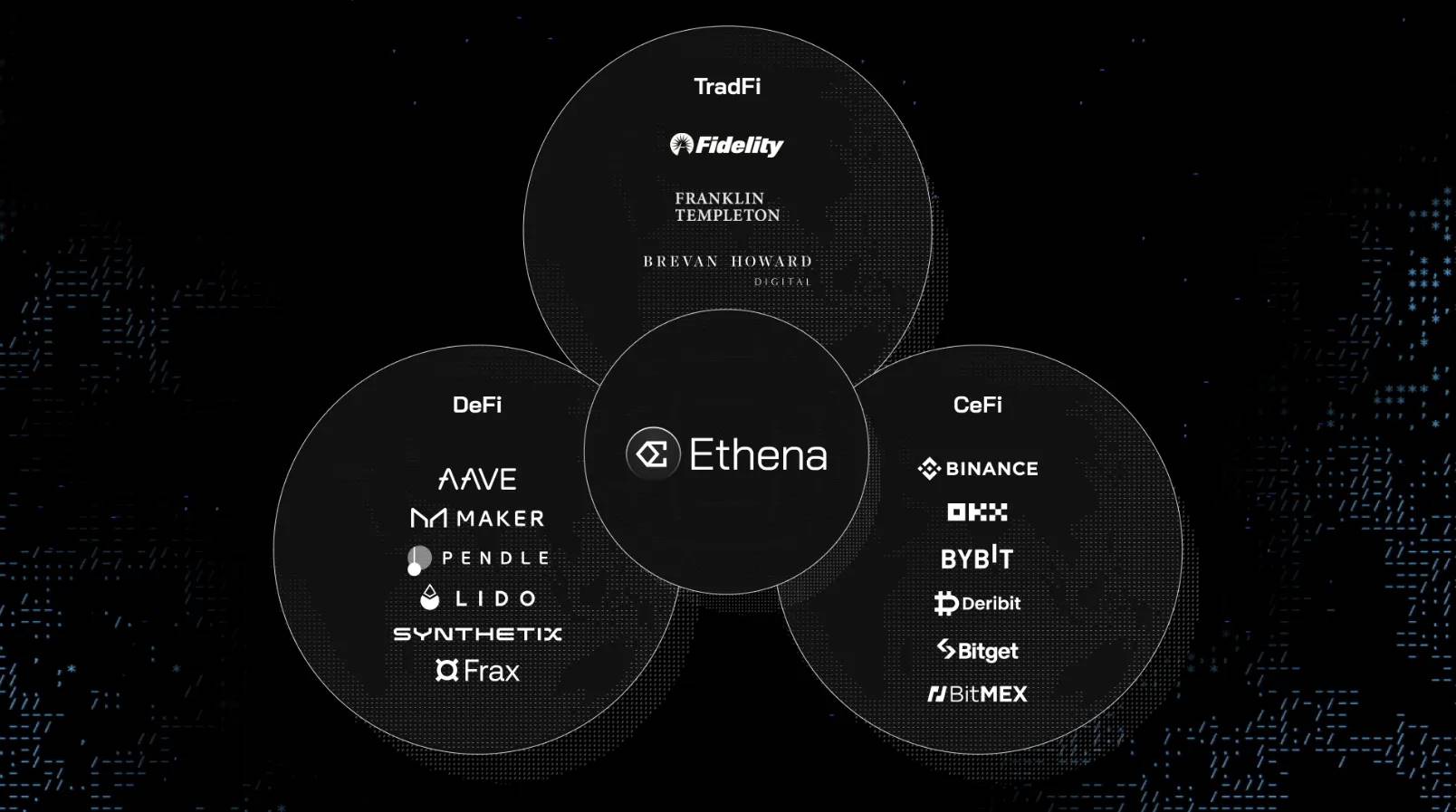
Delta-Neutral Synthetic Dollar: USDe
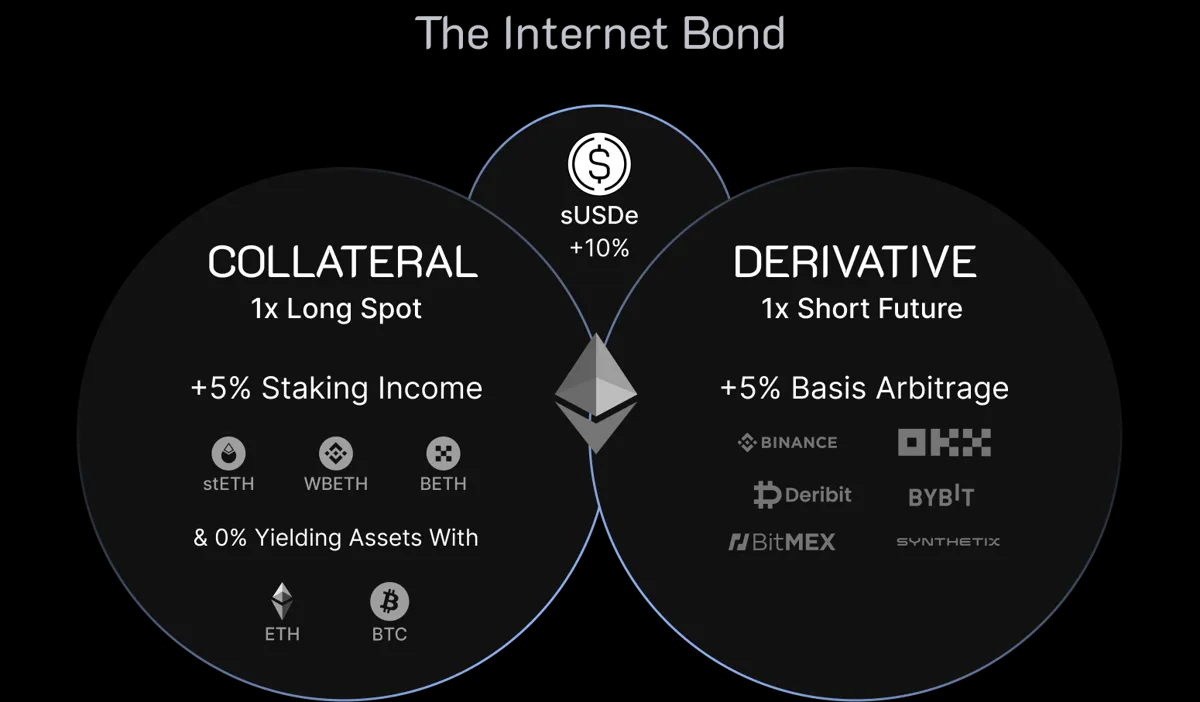
USDe, Ethena’s stablecoin, is a crypto-native asset distinct from dollar-pegged stablecoins backed by traditional assets like U.S. Treasuries. Its issuance involves holding spot positions in major cryptocurrencies while establishing offsetting short positions on exchanges. This innovative model plays a crucial role in locking in value of major crypto assets and injecting liquidity into derivatives markets. Especially during bull markets, as asset prices rise and derivative contract sizes expand, USDe’s scale grows accordingly. Moreover, USDe’s positive funding rates offer holders significantly higher yields compared to traditional stablecoins like USDT—making it more attractive and fueling further adoption and scale expansion.
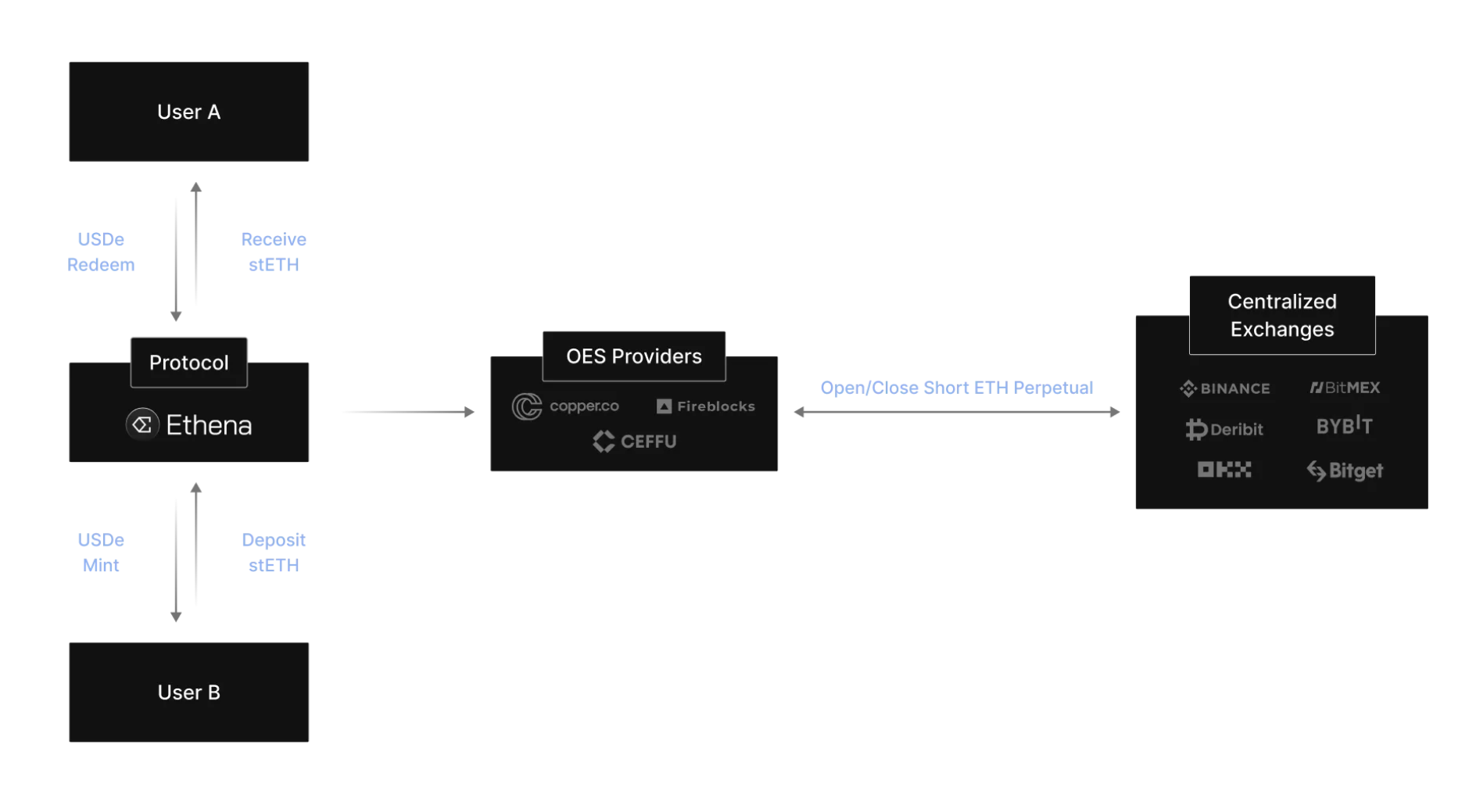
Minting, Redemption, and Staking
Users can mint USDe by sending underlying assets to the protocol, and redeem USDe by burning it to receive back the original collateral. Staking USDe allows users to lock their tokens in smart contracts to earn yield. Upon staking, users receive sUSDe, whose value increases as protocol earnings accumulate. sUSDe can be unstaked at any time to retrieve the accrued-value USDe.
Delta-Neutral Peg Mechanism
USDe maintains its peg through automated, programmatic Delta-neutral hedging strategies that stabilize its value relative to underlying assets. By establishing short positions in derivatives markets equal in value to its spot holdings, Ethena offsets price volatility risks—keeping the synthetic dollar value of USDe relatively stable under most market conditions. Additionally, Ethena generates income from spot staking rewards and funding rate earnings on short positions, further reinforcing USDe’s stability. Through these mechanisms, USDe becomes a reliable medium of exchange and store of value in crypto markets, sustaining its dollar peg.
Hedging Strategy and Risk Management
Ethena’s hedging system consists of off-chain application services that interact with on-chain smart contracts and the Ethereum blockchain. It handles market data acquisition, verifies data integrity, calculates risk exposure, coordinates internal systems, publishes minting/redemption pricing, determines order routing and execution venues, validates operational integrity in real time, monitors dependency availability, manages collateral flows, and disseminates live updates. The system prioritizes protecting protocol collateral, ensuring USDe stability and real-time system integrity. Furthermore, Ethena maintains deep awareness of potential risks—smart contract vulnerabilities, third-party platform failures, liquidity crunches, custody operations, counterparty risks from exchanges, and broader market risks. To address these, Ethena actively mitigates and diversifies exposures, enhancing overall system robustness and reliability.
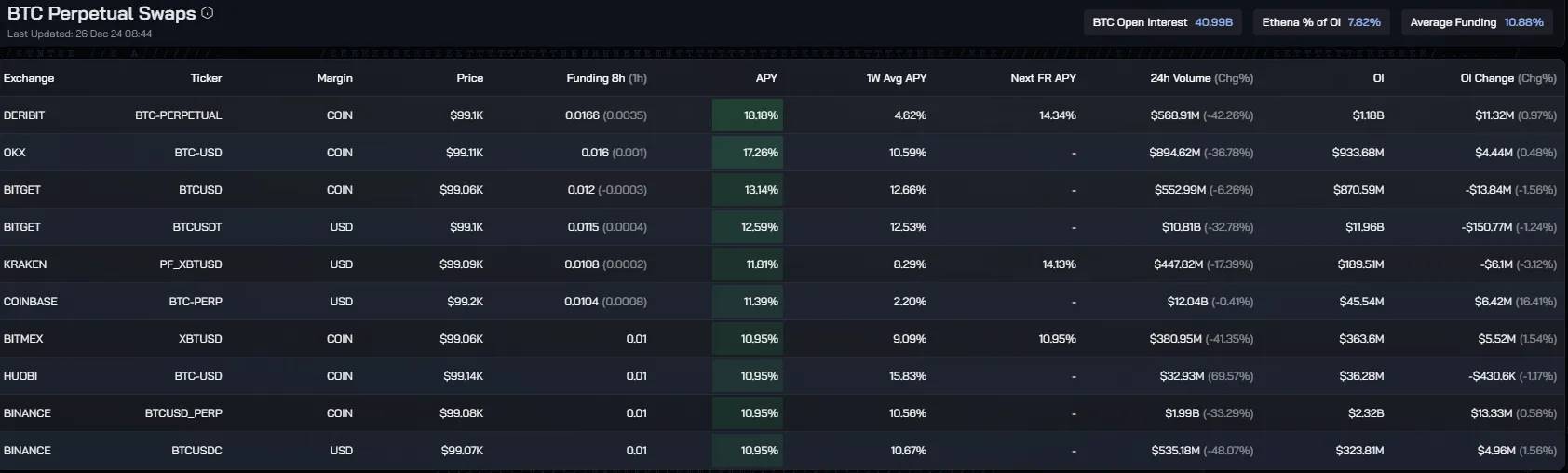
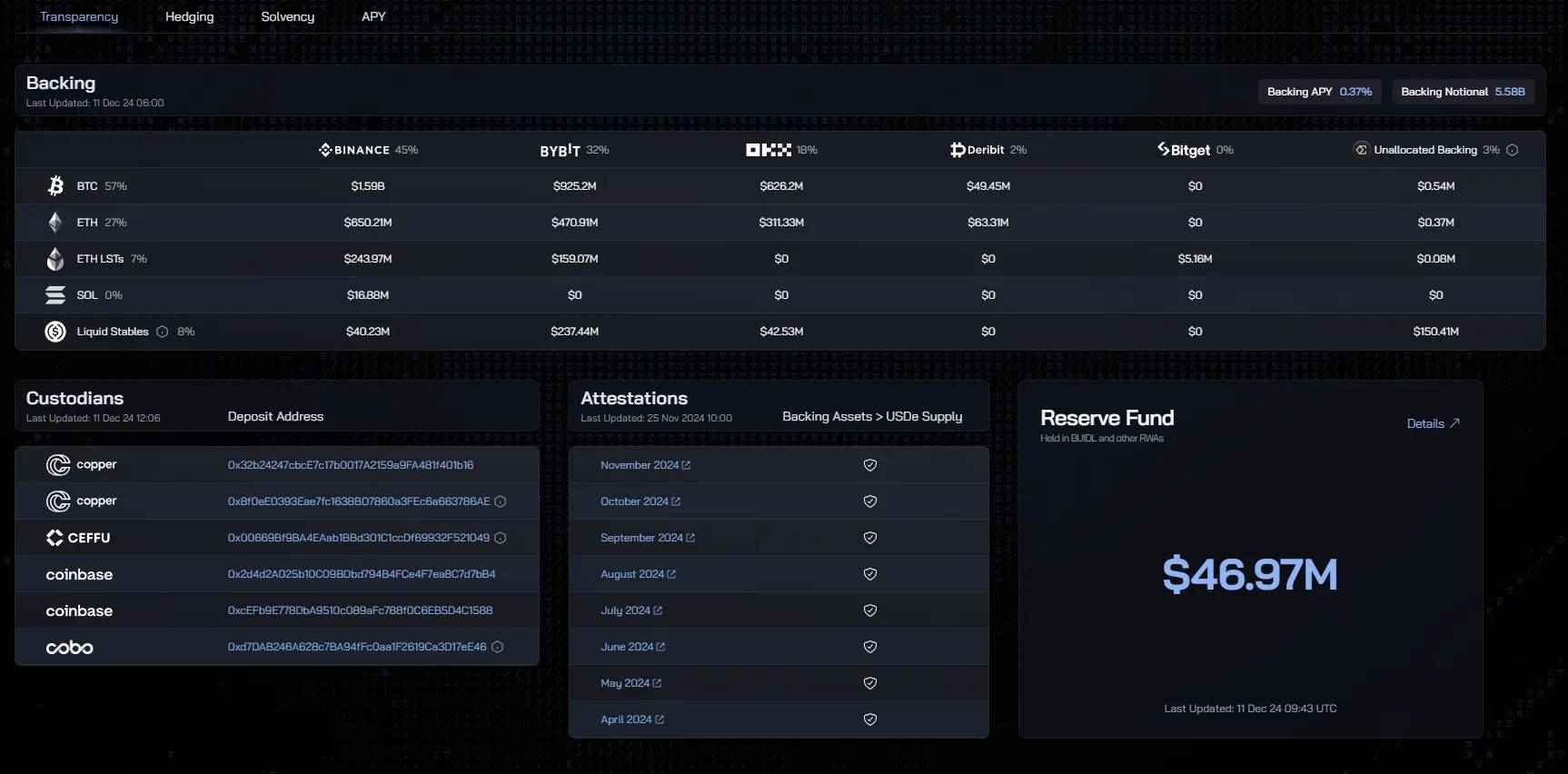
Transparency and Fund Security
The core value of a stablecoin lies in its ability to maintain a stable peg to its reference fiat currency. Historically, stablecoins like USDT and USDC have experienced de-pegging due to insufficient transparency and inadequate risk controls. To prevent this, Ethena employs multi-signature wallets, institutional custody solutions, and deep partnerships with exchanges to ensure stable and transparent asset management. Additionally, to handle extreme funding rate volatility, Ethena maintains a substantial reserve fund. These measures collectively strengthen USDe’s credibility, provide solid safeguards for yield generation, and protect holder interests and market stability.
TradFi-Friendly Digital Dollar: USDtb
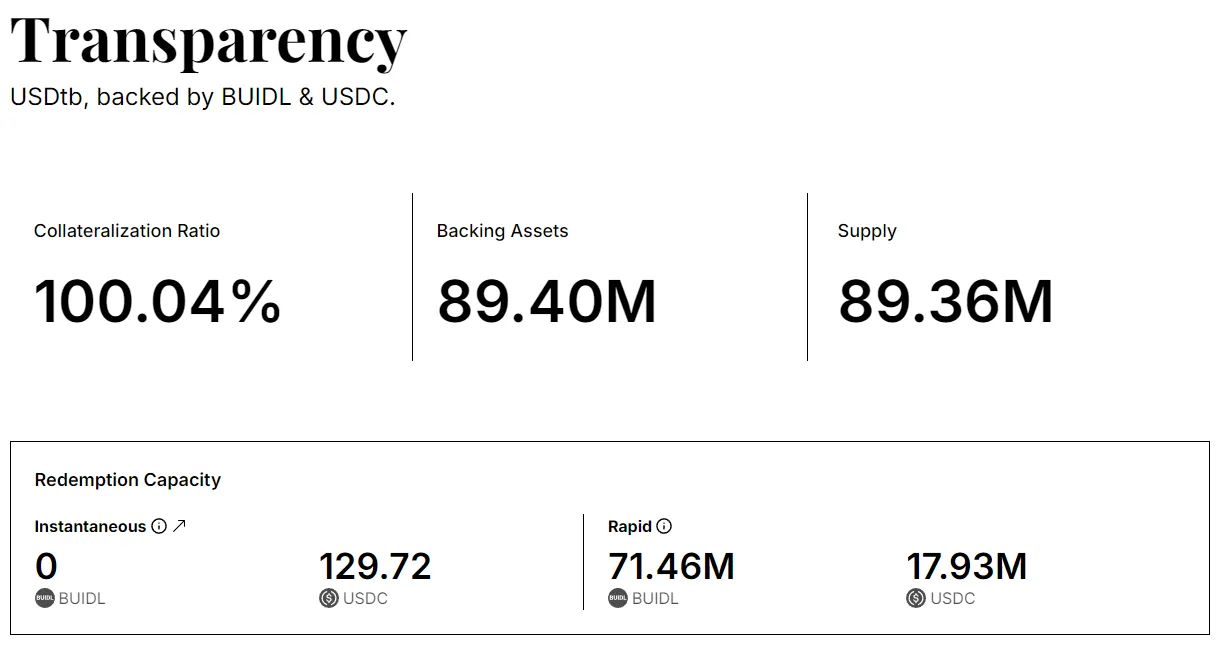
USDtb is an institutional-grade stablecoin built on BlackRock’s BUIDL—the world’s largest asset manager—with backing from high-quality short-term Treasuries, ensuring top-tier security and trust. In DeFi, USDtb is fully accessible and easy to integrate, usable as collateral on centralized exchanges and major brokers—offering traditional institutions a direct gateway into DeFi. Additionally, USDtb features a unique on-chain minting and redemption mechanism, enabling 24/7 service and enhancing its competitiveness and convenience in digital asset markets.
As a product independent of USDe, USDtb offers users a distinctly different risk profile. Its existence enables USDe to better navigate market challenges—for instance, during periods of negative funding rates, Ethena can close USDe’s hedge positions and reallocate assets to USDtb, thereby reducing systemic risk and strengthening overall stability and resilience.
ENA Token Design
The ENA token plays a pivotal role in Ethena’s ecosystem—serving as a governance token that grants holders voting rights on key decisions such as electing risk committee members and shaping policy direction. It also enables staking to receive sENA, which accrues additional yield. As ENA is set to function as a voting instrument for the upcoming Ethereal derivatives exchange, its strategic importance within Ethena’s roadmap continues to grow. These functionalities solidify ENA’s role as a core component of the Ethena protocol and are essential for maintaining decentralized governance and incentivizing user participation.
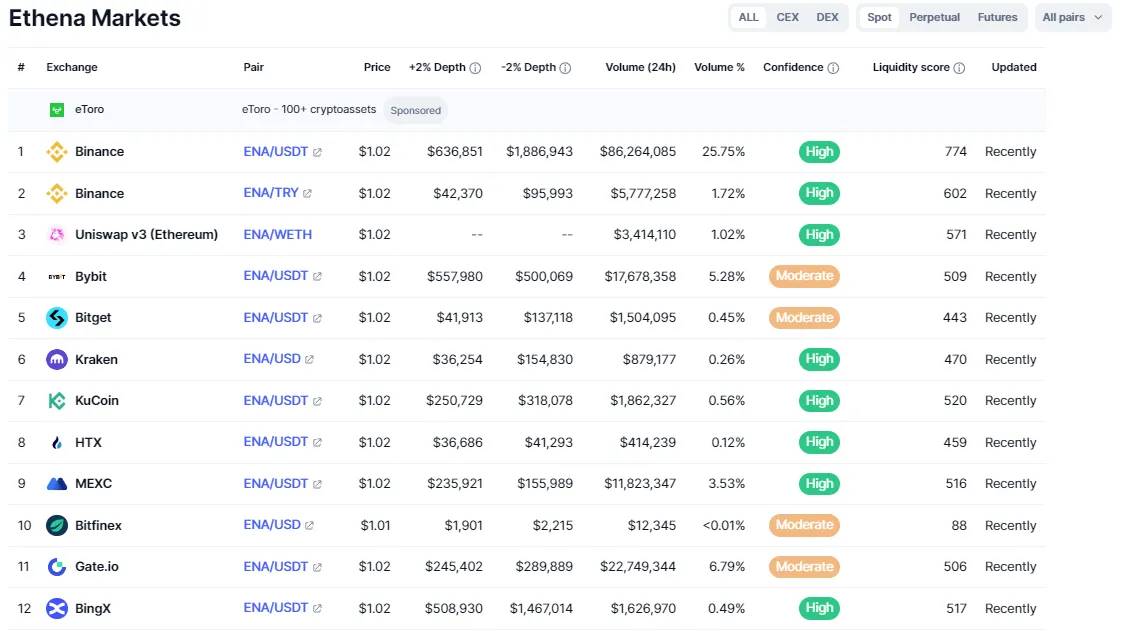
In terms of liquidity, ENA performs exceptionally well on major exchanges, consistently ranking among the top in trading volume—demonstrating both the vibrancy of the Ethena protocol and broad market acceptance.
Operational Resources
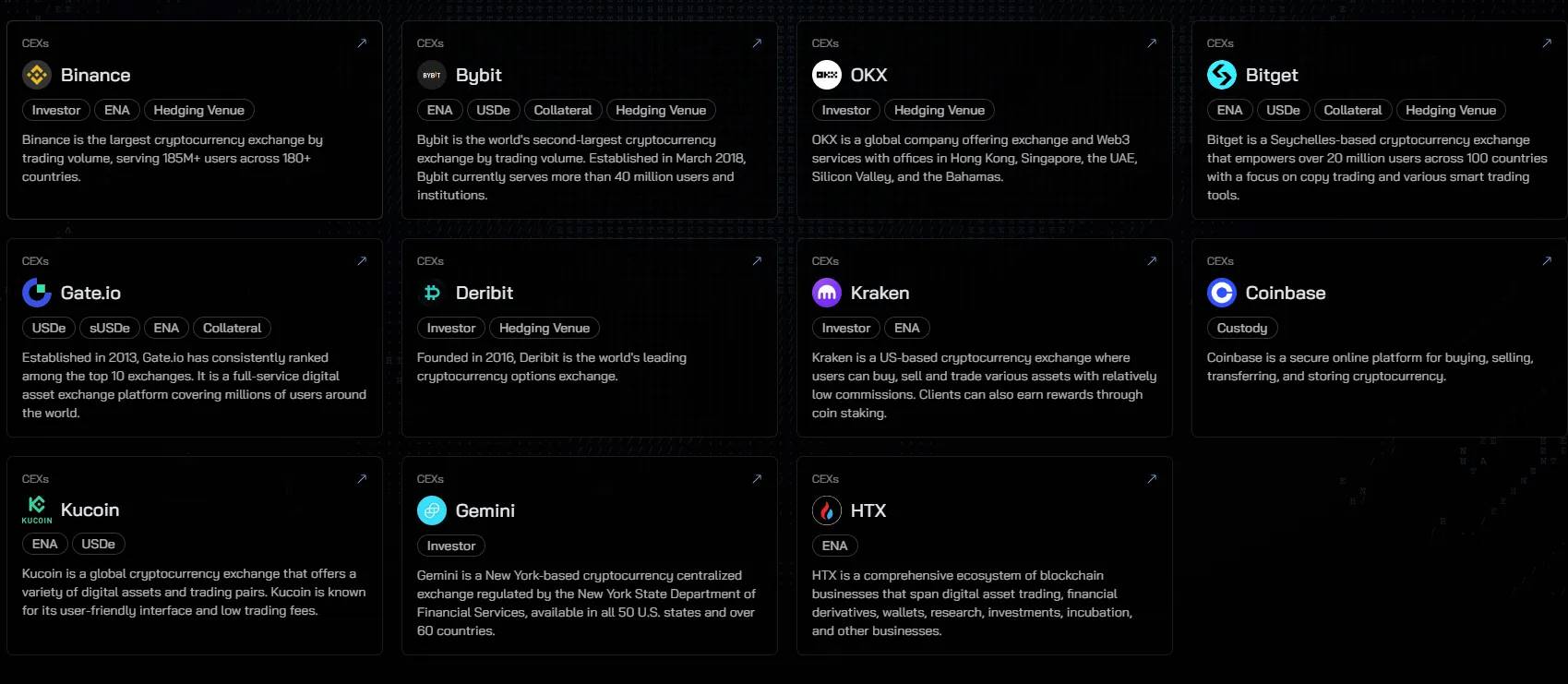
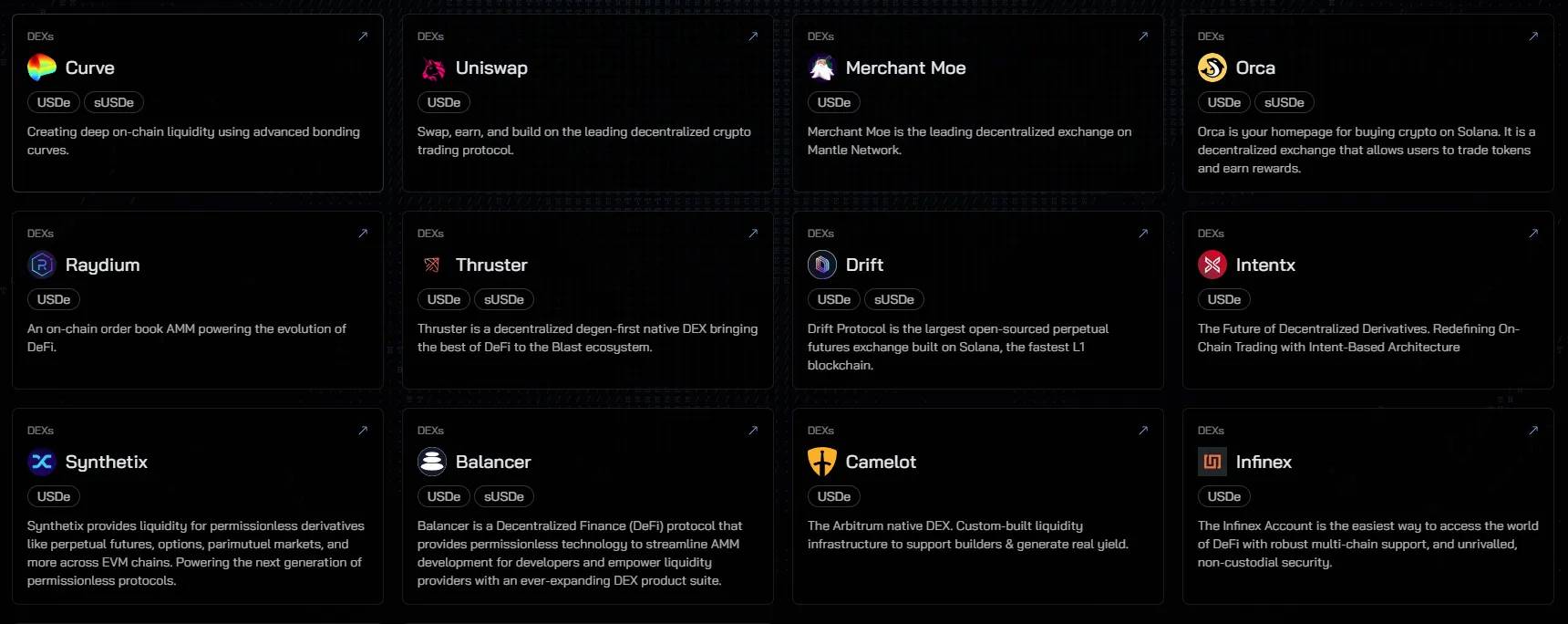
Through deep collaboration with major exchanges, Ethena implements comprehensive hedging strategies to manage unexpected events in derivatives markets, ensuring USDe’s stability and safety. Additionally, the adoption of USDe as a trading pair is gradually expanding, supported by Ethena’s ongoing efforts to boost liquidity and reduce risk. On the resource front, Ethena partners with several globally renowned market makers who provide liquidity and depth, further enhancing USDe’s adaptability and resilience in dynamic markets.
Source: https://ethena.fi/ecosystem
Future Outlook for Ethena
The stablecoin landscape remains far from settled. While USDT and USDC currently lead, emerging competitors possess real potential to challenge their dominance. The key lies in identifying protocols with unique mechanisms, reliable pegs, growing market caps, and expanding use cases. Just as DEXs now capture 10% of CEX trading volume, decentralized financial products—thanks to verifiability and convenience—are rapidly capturing market share. We project that by 2025, decentralized stablecoins like Ethena will grow to command 10% of the market—equivalent to $20 billion.
Moreover, we believe Ethena will become one of the key financial instruments enabling Trump’s policy agenda. The implementation of Trump’s policies will elevate Ethena’s strategic significance in America’s economic revival and global financial restructuring, positioning it as a foundational pillar connecting domestic and global digital financial ecosystems. As an industry pioneer, ArkStream Capital will stand alongside Ethena, witnessing this transformative era of decentralized finance unfold.
Join TechFlow official community to stay tuned
Telegram:https://t.me/TechFlowDaily
X (Twitter):https://x.com/TechFlowPost
X (Twitter) EN:https://x.com/BlockFlow_News
 Arkstream Capital






