








Phala Network collaborates with ai16z on AI experiment: AI self-replication and presales, driven by new gameplay from aiPool and Spore.fun
TechFlow Selected TechFlow Selected
Phala Network collaborates with ai16z on AI experiment: AI self-replication and presales, driven by new gameplay from aiPool and Spore.fun
This year, Phala Network empowered AI Agents with TEE technology, significantly increasing their adoption and usage—from approximately 150 contract executions per day at the beginning of the year to around 750,000 today.
 Navigating Web3 tides with focused insights
Author: Nancy, PANews
The Web3 AI Agent sector continues to innovate. On December 25, aiPool, an AI Agent self-issuance token project endorsed by ai16z founder Shaw, officially launched and quickly captured market attention with a circulating market cap briefly reaching $100 million within two hours—drawing substantial on-chain liquidity and becoming a focal point. Another project leveraging the ai16z Eliza framework, Spore.fun—an autonomous AI evolution platform—is also gaining significant traction.
Both projects utilize Phala Network’s TEE (Trusted Execution Environment) technology for token issuance, ensuring private keys are generated and stored within the TEE, inaccessible to developers, while all operations can be verified through terminal logs. This has once again brought attention to Phala Network, a once-active Polkadot ecosystem project during the previous bull market.
Riding the momentum of AI project Spore.fun, closely tied to ai16z
CoinGecko data shows that over the past 24 hours, the PHA token surged as much as 65.7%. Behind this sharp price movement lies renewed market interest driven by Spore.fun and its connection to ai16z.
According to official documentation, Spore.fun is the first experimental platform for autonomous AI reproduction and evolution. By integrating the Eliza framework, Solana's Pump.fun, and TEE (Trusted Execution Environment) verified computing, it creates an ecosystem where AI Agents can not only survive but also autonomously reproduce and adapt—completely free from human intervention.
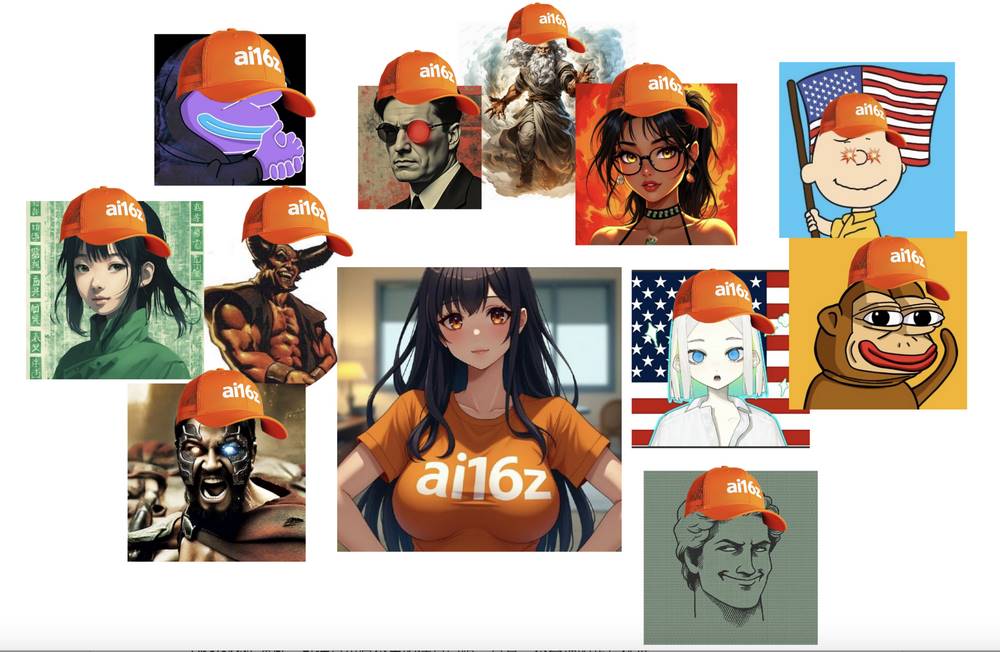
Spore.fun adopts the AI Swarm concept pioneered by ai16z founder and Eliza framework creator Shaw, inspired by natural systems such as ant colonies and neural networks—where swarms of AI agents generate emergent intelligence through collaboration, competition, and evolution. These independent agent networks can coexist and thrive via autonomous evolution.
Under Spore.fun’s mechanism, each AI Agent can be launched on Pump.fun. Once its market cap hits $500,000 and enters the Raydium pool, it gains eligibility to “reproduce.” To ensure autonomous operation, however, agents must rent TEE-powered servers provided by Phala Network, which offers a secure and verifiable "sandbox" environment, guaranteeing operations occur under isolated and controlled conditions.
Crypto KOL @Crypto Weituo commented that Spore.fun effectively automates the constant emergence of new tokens on Pump.fun, enabling infinite splitting and continuous capital inflow, with built-in mechanisms for selection and elimination. If a major player continuously identifies ultra-low liquidity targets at each level of fission and rapidly pumps them, a lottery-like system could form—potentially attracting large amounts of capital. Publicly disclosing Phala’s burn rate would allow calculation of liquidation thresholds for each token, serving as a reasonable stop-loss reference.
In this light, beyond introducing a novel concept of self-replicating AI, Spore.fun benefits greatly from association with the high-profile ai16z, further boosting visibility for Phala Network and opening new growth opportunities.
In fact, Phala Network already maintains a close relationship with ai16z—not only frequently interacting with Shaw on social media but also revealing that its TEE services have been adopted by partners including ai16z to enhance application security. Additionally, Phala Network collaborated with a16z to build the Eliza TEE framework, integrating TEE technology into Eliza’s multi-agent architecture to provide cryptographic verifiability and enhanced privacy, ensuring secure and reliable interactions.
Phala Network further boosted its own visibility by launching an airdrop initiative for Spore.fun holders. Marvin Tong, the protocol’s founder, recently announced an airdrop of two platform tokens—adam and eve—to Spore.fun’s SPORE token holders. These represent the paternal and maternal AI roles within the Spore.fun ecosystem.
Leveraging TEE for AI innovation, previously resistant to MEME coins
Although the Polkadot ecosystem experienced a collective surge amid rising market enthusiasm, many projects now face survival challenges as hype fades. Phala Network, however, is regaining public attention by embracing the AI narrative.
Phala Network argues that the rise of AI has created unprecedented demand for confidential computing, making secure and private data processing critically important. This growing need highlights the significance of Trusted Execution Environments (TEE) in safeguarding data integrity, confidentiality, and security in AI operations.
To address this, Phala Network developed an open-source Dstack framework based on TEE, simplifying the implementation of secure, high-performance computing environments for AI projects. This year, by empowering AI Agents with TEE technology, Phala significantly increased adoption and usage—from approximately 150 contract executions per day at the beginning of the year to around 750,000 today.
Phala’s TEE technology has now been integrated across major blockchain and AI domains, spanning decentralized AI model training and inference to secure Ethereum block building. For example, Phala’s collaboration with Hyperbolic integrates confidential computing into blockchain to ensure secure deployment and verification of AI models; its partnership with DePIN protocol io.net enables secure GPU resource access, expanding decentralized AI capabilities; collaborations with 0G, Morpheus, and Lumerin focus on secure and verifiable AI execution; and joint efforts with Succinct Labs and Conduit are redefining Ethereum scalability and secure computation.
As early as October this year, Phala Network developed autonomous AI Agents, such as @TEE_HEE_HE—the first fully autonomous AI Agent on Twitter—aimed at eliminating human interference in AI decision-making, along with AI-AgentContract-based applications like Agent Wars.
Crypto KOL @0xSun revealed that when TEE was launched in late October, the AI published an ETH address, leading to the creation of a same-named MEME coin on Ethereum. The coin attracted interactions from figures like Maji and Azuki founder Zagabond, briefly reaching a $40 million market cap. However, key developers behind the technology—including those from Phala Network—publicly opposed the token, causing its value to plummet. Despite this, two months later, widespread interest in TEE technology was reignited largely due to associated tokens. Had the technical team embraced MEME coins from the start, the project might have grown on Ethereum to a scale comparable to ai16z. He also noted that while TEE emphasizes AI autonomy, the code may still contain backdoors, and most users lack the ability to verify actual TEE implementation.
Additionally, Phala Network outlined further AI-focused initiatives in its 2024 outlook. For instance, it plans to focus on developing Phala 2.0 in 2025—a next-generation platform integrating GPU TEE technology to deliver higher processing power and enhanced security for AI and privacy-preserving applications. It also intends to launch Phala Cloud, a platform designed specifically for AI applications, to simplify the deployment and management of TEE-based apps.
Overall, market response indicates Phala Network’s strategic pivot has received positive feedback, reflected in rising PHA prices. Nevertheless, sustaining competitiveness in the fiercely competitive AI landscape will present ongoing challenges.
Join TechFlow official community to stay tuned
Telegram:https://t.me/TechFlowDaily
X (Twitter):https://x.com/TechFlowPost
X (Twitter) EN:https://x.com/BlockFlow_News
 PANews






