WOO X Research: One Night of Collapse—Is the Bull Really Gone?
TechFlow Selected TechFlow Selected
WOO X Research: One Night of Collapse—Is the Bull Really Gone?
This liquidation event is the second-largest in history, far exceeding the "Black Thursday" crash.
 Navigating Web3 tides with focused insights
By: WOO
On December 5, Bitcoin officially broke through the $100,000 mark, signaling the start of a new wave in the crypto market. Just as market sentiment reached a fever pitch, on December 10, prices suddenly plunged—Bitcoin dropped from $100,000 to a low of $94,100 within six hours, a decline of 6%.
At the same time, altcoins excluding Bitcoin and Ethereum (Total 3) faced even steeper losses, falling as much as 14%.
According to Coinglass data, liquidations over the past 24 hours reached a staggering $1.734 billion, with approximately 580,000 traders liquidated—far exceeding the scale of March 12, 2020, when Bitcoin crashed 50% in a single day and around 100,000 positions were liquidated.
This downturn came completely out of the blue. Although Bitcoin later recovered to around $97,000, the forcibly closed positions are gone for good. Was this drop merely a routine correction—or has the current bull cycle already peaked? Let WOO X Research break down the reasons behind the crash and what may lie ahead!
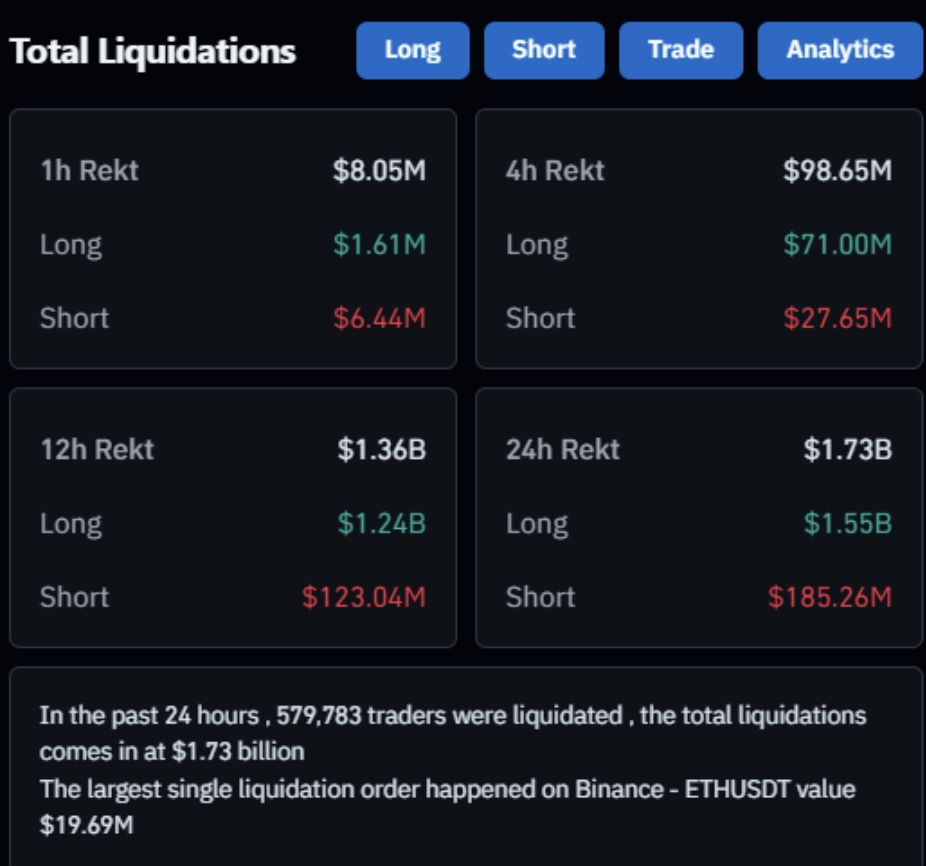
Source: Coinglass
Altcoin Market Sentiment Soars, Fueled by Massive Leverage
As early as November 14, WOO X Research published an article predicting that the market cycle was entering the "eve of an altseason." At that time, Bitcoin's market dominance stood at about 61%. In less than a month, it has now dropped to 55%, confirming that the current phase is indeed an altcoin breakout period.
Meanwhile, the total market cap of Total 3 altcoins has surged past $1 trillion, rising 55% over the past month.
The rotation into altcoin gains wasn't the root cause of the downturn; rather, excessive optimism led to dangerously high leverage across the market.
Major altcoins such as ETH and SOL saw their futures open interest hit all-time highs, rising in tandem with price. This suggests that many crypto users don’t actually hold these assets but instead use leveraged long positions—the higher the open interest, the stronger the bullish sentiment.
Prior to the crash, ETH open interest reached $27 billion, up from $17 billion just a month ago—an increase of nearly 60%. The actual price rise failed to keep pace with this explosive growth in open interest, highlighting rampant speculation.
ETH is just one example. Many other altcoins experienced even more dramatic increases in open interest, including Doge, XRP, and Pepe. Altcoins themselves can be seen as "leveraged Bitcoin," and when layered with contract trading leverage, the market had accumulated excessive risk. A deleveraging event was necessary for sustainable progress.
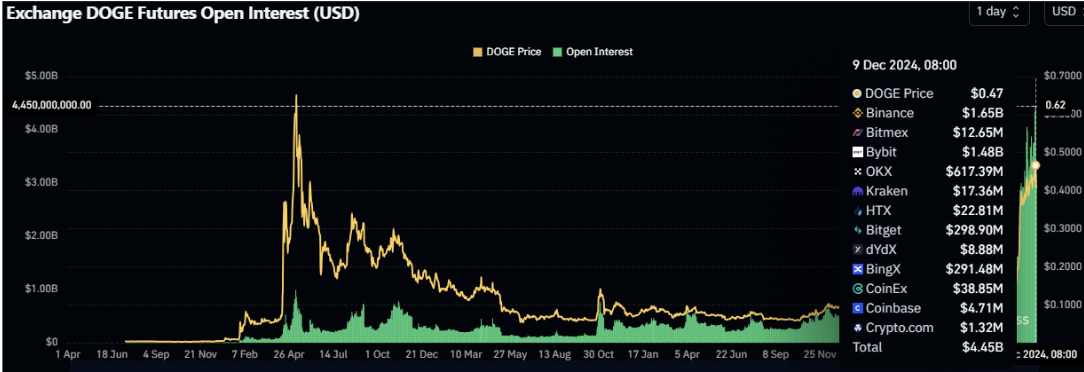
Source: Coinglass
From the perspective of funding rates, signs of overheating were evident even before the crash.
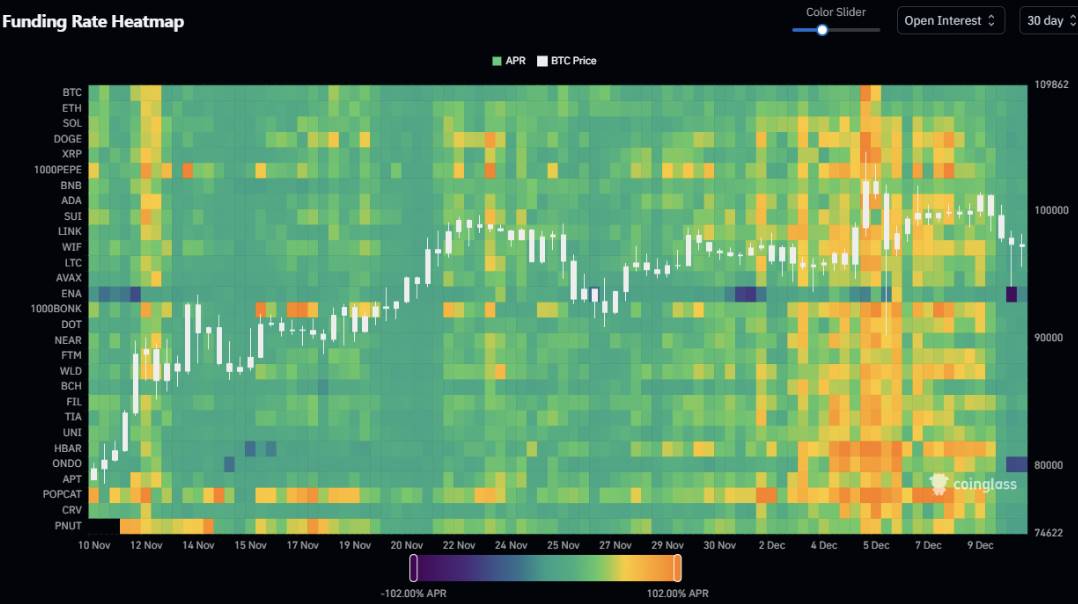
Reviewing the relationship between Bitcoin’s price movement and altcoin funding rates over the past month, during Bitcoin’s climb from $70,000 to $100,000, altcoin funding rates showed no significant spike. Annualized rates mostly stayed between 10% and 30%, with only sporadic and isolated coins briefly exceeding 100% for a few days.
However, as shown in the chart below, starting December 4, funding rates across most altcoins began surging continuously, climbing into the 60%–100% range.
The synchronized rise in both open interest and funding rates reaffirms the presence of massive leverage in the market. The primary cause of the downturn is straightforward: a cascading liquidation effect triggered by excessive leverage.
Source: Coinglass
External Triggers: Hawkish Comments + Christmas Holidays
As discussed above, the crypto market was already bloated with leverage. Externally, recent hawkish signals from the Federal Reserve added pressure. Macquarie Group, Australia’s largest banking group, noted that the Fed's shift toward a more hawkish stance stems from three factors: a recent slowdown in disinflation, lower-than-expected unemployment since September, and strong performance in U.S. financial markets.
Additionally, key economic data—including CPI and unemployment figures—are set for release on December 11 and 12, coinciding with the approaching Christmas holiday season. Amid such uncertainty, it's understandable that Western investors sought to lock in profits and reduce exposure.
Conclusion: Bull Market Still Intact, Liquidations Are Normal
We view this pullback primarily as a healthy deleveraging event. Our outlook for the 2025 bull market remains unchanged.
Speculation is inherent in crypto markets, and high leverage serves as a key emotional indicator. However, extreme sentiment alone cannot sustain upward momentum—it requires fresh capital inflows. At its core, price appreciation follows supply and demand dynamics.
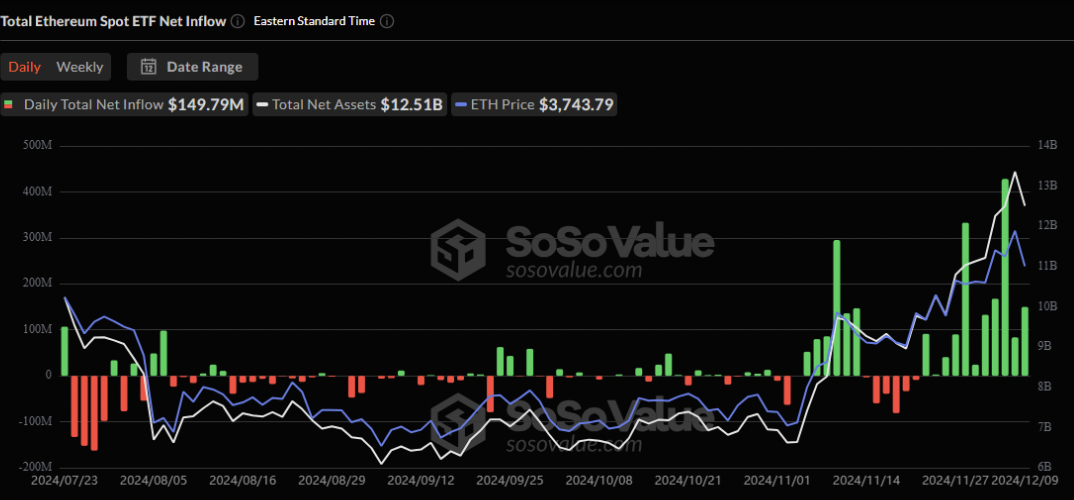
Institutional interest in both Bitcoin and Ethereum remains strong, evidenced by consistent net inflows into spot ETFs. Ethereum ETFs have seen net inflows for 11 consecutive days, even surpassing Bitcoin spot ETFs in daily inflows on November 30—a historic first.
Moreover, institutions are actively filing for ETFs on other assets like SOL and XRP. This confirms that institutional appetite for crypto remains robust. With supply largely fixed and external demand growing, both Bitcoin and altcoins stand poised to continue the bull run.
Source: sosovaule
Join TechFlow official community to stay tuned
Telegram:https://t.me/TechFlowDaily
X (Twitter):https://x.com/TechFlowPost
X (Twitter) EN:https://x.com/BlockFlow_News
 @WOOXResearch