








America and the Transformation of the World Order under the Trump Administration
TechFlow Selected TechFlow Selected
America and the Transformation of the World Order under the Trump Administration
Embrace the new order, welcome new opportunities.
 Navigating Web3 tides with focused insights
Author: Ray Dalio, Founder of Bridgewater Associates
Translation: Block Unicorn
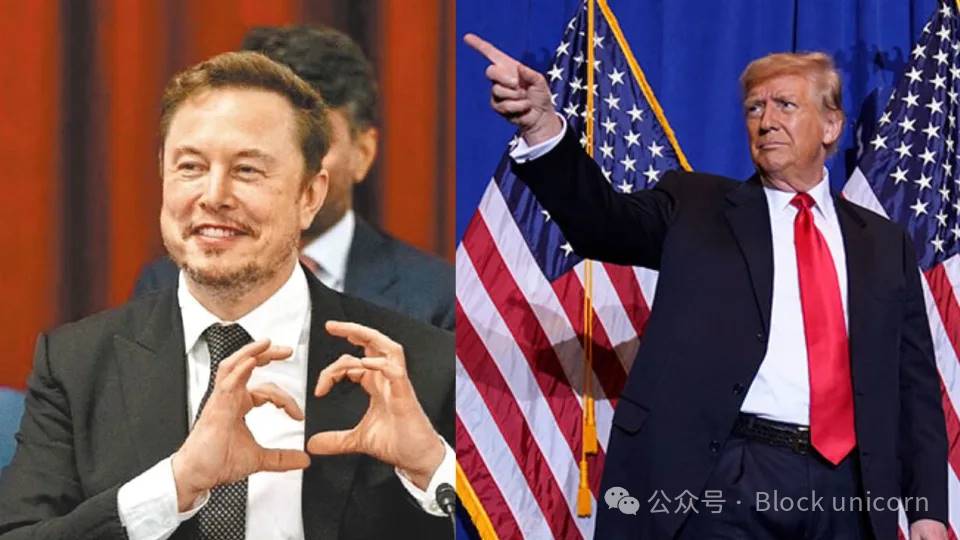
Trump’s right-wing team has now achieved a decisive victory in the election over Harris’s left-wing platform, avoiding the nightmare scenario in which Trump might narrowly lose and trigger an electoral dispute. With the announcement of several key appointments, a potential future is beginning to take shape. I want to be clear: the picture I am painting aims to reflect the situation as accurately as possible, without bias toward good or bad, because accuracy is essential for making optimal decisions.
What I see in the current state includes:
1) A large-scale overhaul aimed at improving government efficiency, which will trigger internal political struggles to turn this vision into reality;
2) A “America First” foreign policy, along with external preparations for conflict with China, which is seen as America’s greatest threat. This approach bears similarities to policies pursued by certain nations in the 1930s.
Trump is selecting individuals to help achieve these goals, including Elon Musk and Vivek Ramaswamy, who will lead the newly proposed Department of Government Efficiency; Matt Gaetz, who—if confirmed by the Senate—will serve as Attorney General and push the legal boundaries of the new governance order; RFK Jr., who as Secretary of Health and Human Services will carry out sweeping reforms of the healthcare system; and Marco Rubio as Secretary of State, Tulsi Gabbard as Director of National Intelligence, and Pete Hegseth as Secretary of Defense, who will lead the fight against foreign adversaries. In addition, many others—some within government, others as outside advisors such as Tucker Carlson, Steve Bannon, and members of the Trump family—will join Trump in fulfilling this mission. All are loyalists committed to the leader and the cause, “victory-first” advocates aiming to dismantle the so-called “deep state” and replace it with a new domestic order they hope will maximize economic strength and counter foreign enemies.
Once these individuals are in place, this model of appointment will likely be used to purge those accused of being members of the “deep state”—individuals perceived as misaligned with or disloyal to this mission. This purge could extend across all parts of the government system, including institutions previously considered less subject to political/ideological control, such as the military, the Department of Justice, the FBI, the SEC, the Federal Reserve, the FDA, the CDC, the Department of Homeland Security, the Interior Department, and “Schedule F” federal employees (a classification Trump hopes to reinstate to remove civil service protections from certain government roles). Nearly every appointable position that the president can control—with cooperation from a Republican-controlled Senate, House, and DOJ—will be filled with individuals aligned with Trump and his new domestic agenda. In this process, nearly everyone inside and outside government will be viewed as either ally or enemy, and all available power in the hands of Trump and his allies will be used to confront those who obstruct reform. I believe they will almost certainly have a major impact on both American and world order—so what might these changes look like?
Changes to the American Order
It is now clear that Trump and his team intend to restructure government and the nation much like corporate raiders restructuring an inefficient company—by replacing personnel, drastically cutting costs, and introducing new technologies to drive massive transformation. One might recall Gordon Gekko’s “greed is good” speech, but must recognize this approach is now being applied by a U.S. president to the federal government—and indeed the entire country. As mentioned, the closest historical precedent in recent times is the far-right regimes of the 1930s. To be clear, I am not saying that Trump or his administration are fascists, nor that they will behave in many ways like fascist leaders; rather, to understand those now in power—their nationalism, protectionism, top-down, state-directed economic and social policies, low tolerance for internal dissent, and propensity for great-power international conflicts—we can draw parallels with the behavior patterns of countries in the 1930s that pursued similar policies.
Economic reforms will likely be driven through industrial policy designed to boost productivity and efficiency, while paying little attention to issues that may hinder these goals—such as environmental protection, climate change mitigation, poverty alleviation, or promoting diversity, equity, and inclusion. Some critical areas (including, in my view, education and debt management) may be neglected (which Democrats may also neglect). For as long as the partnership between Trump and Musk endures, they will be the principal architects and executors of the new American order.
Previously, these entities were constrained in many ways by regulation, but going forward they will operate with greater freedom from government oversight. These changes will greatly benefit financial intermediaries, banks, and asset managers, as capital controls will be relaxed and the Federal Reserve will face pressure to adopt looser monetary policies, giving them more freedom, liquidity, and credit. The policies will also favor tech companies supportive of Trump, allowing them to grow and operate largely unchecked. Additionally, lawyers will benefit, as they will become significantly busier. I have already seen these players developing larger plans to accomplish more under a Trump administration than they could under Democratic leadership.
Moreover, regulation of artificial intelligence will be loosened, while tariffs will be used both to increase tax revenue and protect domestic producers. If the Fed continues lowering interest rates (though I believe it should not), this would shift substantial funds currently held in money market funds and other deposits into other markets, stimulating both markets and the economy.
In addition, the U.S. is engaged in an economic and geopolitical war and may enter military conflict with China, as well as with Russia, Iran, and North Korea—a reality that will profoundly affect domestic security and policy. For example, policies will be introduced to ensure sufficient supply of all critical technologies domestically (e.g., requiring that 20% of the most advanced chips be produced in the U.S. by 2030) or in allied countries. This will require strong central government action and consistent enforcement of sound energy and regulatory policies to meet these targets.
Changes to the International Order
The international order will shift between two forms:
a) The existing, fractured system established by the U.S. and its allies after WWII, based on globally accepted norms, rules, and institutions such as the UN, WTO, International Court of Justice, IMF, and World Bank;
b) A more fragmented world order in which the U.S. pursues an “America First” policy, clearly defining allies, enemies, and non-aligned nations, as the next decade brings more economic and geopolitical conflicts and a higher likelihood of military war than before.
In other words, the era of U.S.-led multilateral cooperation—where countries coordinated relations through multilateral organizations and shared principles and rules—is coming to an end. It will be replaced by a more self-interested, survival-of-the-fittest order, with the U.S. and China as the two main players, and the core struggle remaining the classic “capitalism versus communism” conflict (in its modern form).
As a result, U.S.-led moral and ethical standards—what is considered “right” and “ethical”—will matter less, as the U.S. will no longer act as the global advocate and enforcer of these principles. Alliances and enmities will be determined more by strategic calculations—such as what deals can be made. A country’s alignment will become the most important question.
China will be treated as the primary adversary, both because of its strength and its ideological opposition to the U.S.; Russia, North Korea, and Iran will also be classified as enemies. Indeed, China is widely seen as America’s greatest threat—even surpassing domestic threats. While I won’t detail the positioning of other countries here, it is fair to say that nearly all nations are now, to some extent, categorized as allies or enemies, and this will guide how they are treated.
Meanwhile, detailed contingency plans for major countries and key sectors are being developed. All nations will face immense pressure and be offered incentives to realign their domestic systems with the U.S.-led order under Trump; otherwise, they will face negative consequences.
This rivalry between the two superpowers will also create opportunities for neutral, non-aligned countries—especially in business.
These shifts in international dynamics will have significant impacts on developing nations (today referred to as the “Global South”) and the world at large
The Global South accounts for about 85% of the world’s population and may choose to chart its own course, as the U.S. will no longer dominate a values-based global order, and other countries may be unwilling to follow American leadership. The U.S. and China will compete for allies, and China is generally seen as having an edge in attracting non-aligned nations due to its greater economic importance and stronger soft power outreach.
Given these changes in the international order, non-aligned countries that meet the following conditions will benefit:
1. Strong fiscal health, i.e., healthy income statements and balance sheets;
2. Well-ordered internal systems and capital markets that enhance national and citizen productivity;
3. Avoidance of involvement in international wars.
More specifically, the following points can be further elaborated:
Greater Government Influence
To achieve national objectives—even at the expense of free markets and profit-driven mechanisms—government influence will expand. This will spark debate between conservatives (who support top-down direction) and proponents of freer markets. Along this line, we should expect increased government intervention in private markets to advance ambitious national goals, including economic restructuring and war preparedness. Thus, cost efficiency and national security will become primary objectives in government collaboration with “national champion” enterprises, not just profit maximization, since profit alone cannot achieve these ends.
We should monitor policy shifts that determine which economic sectors stand to gain the most, such as energy and mining industries supporting AI development. While free markets produce winners, in some obvious cases, even America’s best companies may fall short of national needs (e.g., in advanced semiconductors). Therefore, strategic partnerships with aligned foreign producers (like TSMC in Taiwan) will be needed to manufacture goods in the U.S., minimizing dependence on foreign adversaries.
Beyond producing critical technologies domestically, the U.S. will also need to produce steel, automobiles, and many other essentials. This implies more “onshoring” and “friend-shoring.” At the same time, risks of supply chain disruptions—through various means—must be addressed.
Massive Deregulation
To support cost-efficient production, widespread deregulation will be implemented.
Immigration and Deportation Measures
Immigration policy will be tightened, initially focusing on border closure and the deportation of undocumented immigrants with criminal records.
Trade and Tariff Reforms
Challenges in Cooperation with U.S. Allies
In the geopolitical contest with China, Japan is America’s most important ally, making its current political dynamics crucial. Other allies like the UK and Australia are important but not major powers. Europe is weak, preoccupied with its own problems, and lacks direct stakes in this conflict; at the same time, facing the Russian threat, Europe remains dependent on U.S. support via NATO. Most other countries are reluctant to get involved, as the U.S.’s objectives are less vital to them, while their economies rely more on China than on the U.S. The emerging non-aligned bloc—the Global South, including BRICS members like China and Russia—is a group worth watching.
The High Economic Cost of Global Hegemony
The economic cost of maintaining technological leadership, strong military power, and soft power will exceed what a purely profit-driven model can sustain. How to address this economic reality will require further examination.
The Need for Lower Taxes
To maintain voter satisfaction and keep capital in the hands of the most productive individuals, taxes will need to be reduced. Trump and his advisors believe that lowering the corporate tax rate below current levels (~20%) will increase total tax revenue and boost productivity. This view is positive for markets.
Major Healthcare System Reforms
Sweeping changes to the current healthcare system are expected to improve efficiency and reduce costs.
Priority Agenda and Timeline
Facing this daunting list of tasks, the new administration has only a limited window—especially during the first 100 days and the initial two years—to deliver results. Therefore, priorities must be rigorously prioritized. It remains unclear which goals will be emphasized, or how successful the administration will be when its ambitions encounter deeply entrenched systemic resistance.
Undoubtedly, this will be a challenging and consequential period. Let us stay alert and watch closely.
Join TechFlow official community to stay tuned
Telegram:https://t.me/TechFlowDaily
X (Twitter):https://x.com/TechFlowPost
X (Twitter) EN:https://x.com/BlockFlow_News
 TIME
TIME


