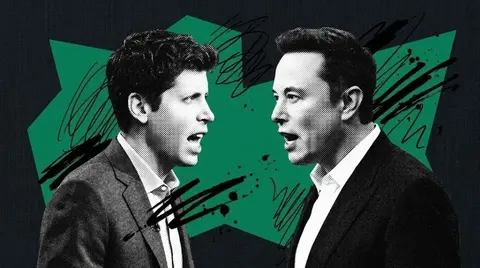
Bloomberg: Musk's New Venture as an 'Oligarch'
TechFlow Selected TechFlow Selected
Bloomberg: Musk's New Venture as an 'Oligarch'
Elon Musk is betting on the Trump administration just as he once bet on Twitter.
 Navigating Web3 tides with focused insights
By Max Chafkin, Dana Hull
Translated by Luffy, Foresight News
On the afternoon of Election Day in the United States, Elon Musk was at a polling station in South Texas. Afterward, he boarded a private jet bound for Mar-a-Lago in Palm Beach, Florida, to attend Donald Trump’s election night party. En route, Musk held an impromptu political rally. He livestreamed it on his social network X. "Only a few hours left," Musk said as the plane's engines hummed in the background and roughly 100,000 people tuned in. "So make sure everyone is urging their friends and family to vote, vote, vote."
Prior to this year, Musk ran six companies: Tesla (electric vehicles), SpaceX (rockets), Neuralink (brain implants), Boring Co. (tunnels), xAI (artificial intelligence chatbot), and X (formerly Twitter). But in May, he added a seventh: America PAC. This political action committee spent over $170 million from its founding through the general election.
Even more surprising was Musk’s personal involvement. He temporarily relocated to Pennsylvania, crisscrossing the state, holding marathon Q&A sessions in suburban auditoriums, and turning his personal X account into a rapid-response hub against the left. Many of the memes he amplified were sexist, racist, or both. In the final days of the campaign, much of his posting fury centered on outrage over the euthanasia of a pet squirrel belonging to a porn actress.
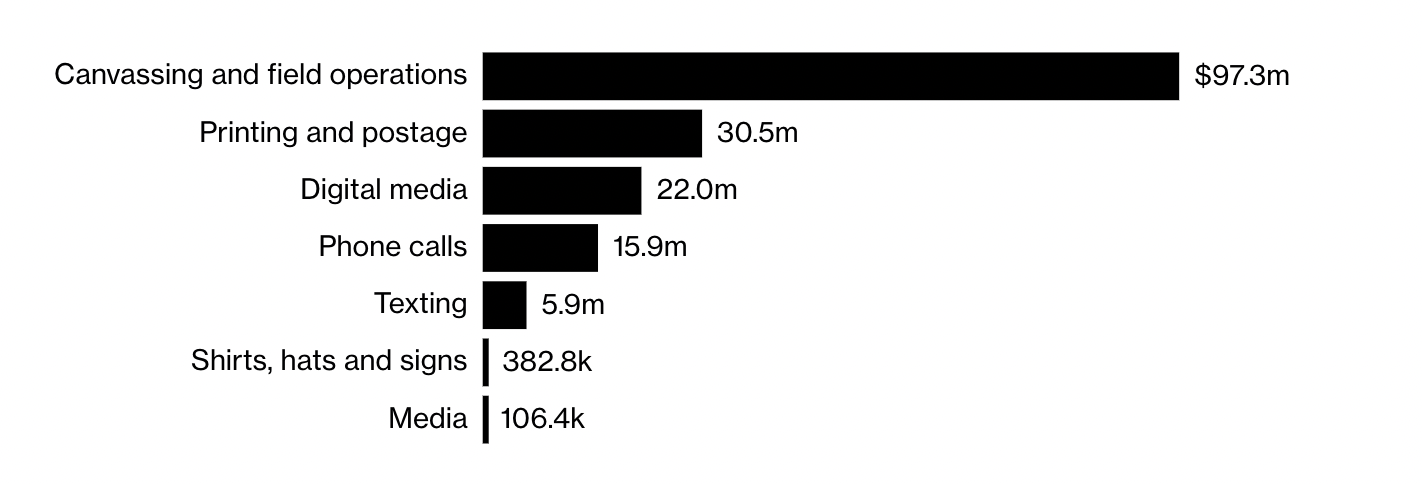
Breakdown of America PAC spending, source: Federal Election Commission
Musk’s signature blend of rebellious humor and audacious behavior proved effective—perhaps because Trump is the ideal candidate for such traits. On Election Day, the twice-impeached, 34-times-convicted former president not only energized the usual base of older white voters but also expanded his coalition to include a younger, more diverse, male-dominated demographic—the very people who admire Elon Musk. "He lowered the barrier to being a Trump supporter," says Josiah Gaiter, vice president at Harris Media, a political marketing firm.
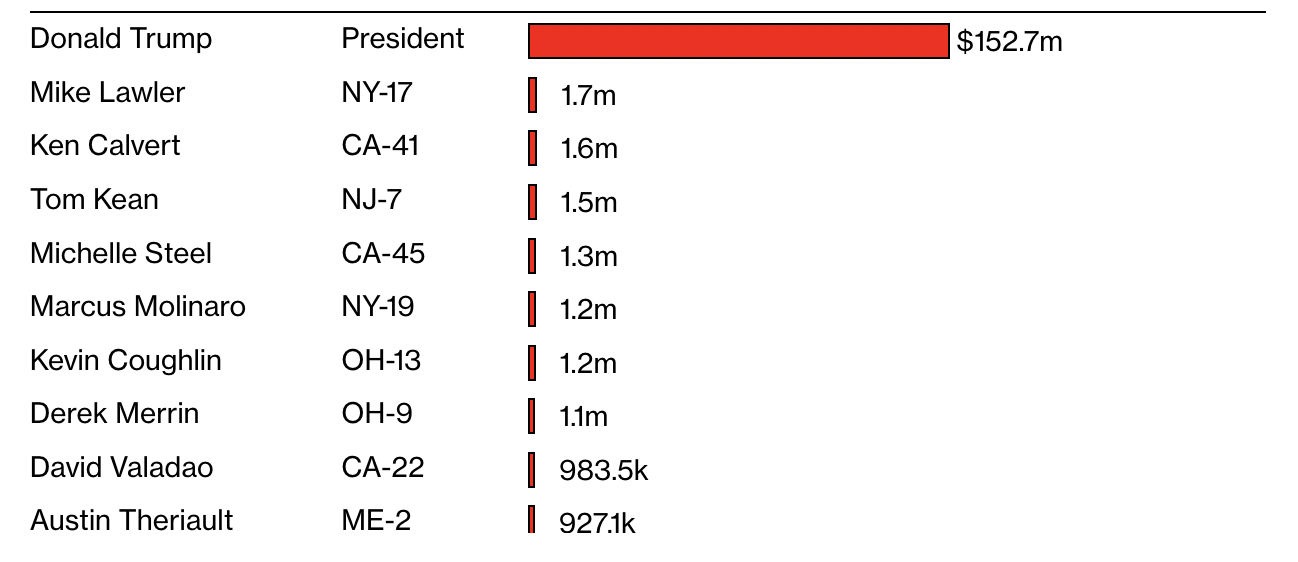
Candidates supported by Musk’s PAC, source: Federal Election Commission
"The Democrats have basically dragged every celebrity into this," Musk said during the livestream. "They have massive bias toward traditional mainstream media." He told listeners that Democratic politicians deliberately brought in "illegal immigrants" to "flood swing states with ballots so there isn’t really an election anymore." Like many things Musk has said over the past two years, this claim is at best misleading. The migrants disparaged in his conspiracy theories aren't "illegal immigrants"—they're asylum seekers legally residing and paying taxes in the U.S., but without voting rights.
Musk is clearly no underdog. His alliance with Trump is a classic strongman story: one domineering billionaire aligns with another, equally domineering billionaire who happens to be the richest person on Earth. It’s also a story about money. We don’t know the full extent of Musk’s financial contributions to Trump’s election effort, but they amount to at least $132 million—and possibly as much as $200 million when all expenses are tallied. How much will these investments pay off over the next four years? In the three days following the election, Tesla’s market value rose 25%, increasing Musk’s net worth by $50 billion to over $300 billion.
Musk awards Kristine Fishell a $1 million check at Pittsburgh City Hall. Photo: Getty Images
Trump has promised returns: rocket contracts for new Mars missions, regulations favorable to Musk’s upcoming autonomous taxi service, and influence over which government programs get cut or preserved in his administration. Trump and Musk refer to this hypothetical policy agenda as the “Department of Government Efficiency,” a name inspired by Musk’s fondness for the acronym DOGE—the symbol of Dogecoin, his favorite cryptocurrency. In his victory speech, Trump referred to Musk: "He’s a special man, a super genius. We must protect our super geniuses."
Soon, Musk may earn an even more accurate title: oligarch. The label applies not just to him, but also to Jeff Bezos, Sam Altman, Sundar Pichai, Satya Nadella, and other corporate titans who, after the election, have adopted everything from forced smiles to outright sycophancy in hopes of extracting favors from Trump. Their top concerns appear to include more lenient merger approvals (Pichai, Nadella), lax AI regulation (Altman), and avoiding retaliation for news published in their outlets (Bezos).
Will their efforts succeed? Trump’s track record offers little reassurance. After Bezos withdrew support for Kamala Harris, The Washington Post suffered a wave of subscription cancellations—losing 10% of its subscribers within days. This suggests executives and investors who boosted Tesla’s stock price have yet to fully grasp the potential downsides.
In the days following the election, Trump and Musk grew even closer. Musk effectively camped out with Trump’s inner circle at Mar-a-Lago, appearing in family photos and joining Trump’s calls with world leaders. So far, the president-elect has treated Musk both as a trophy and a confidant, showing no hesitation in involving him in national security matters—such as allowing Musk to speak directly with Ukrainian President Volodymyr Zelensky or threatening to withdraw from NATO in response to European attempts to regulate Musk’s companies.
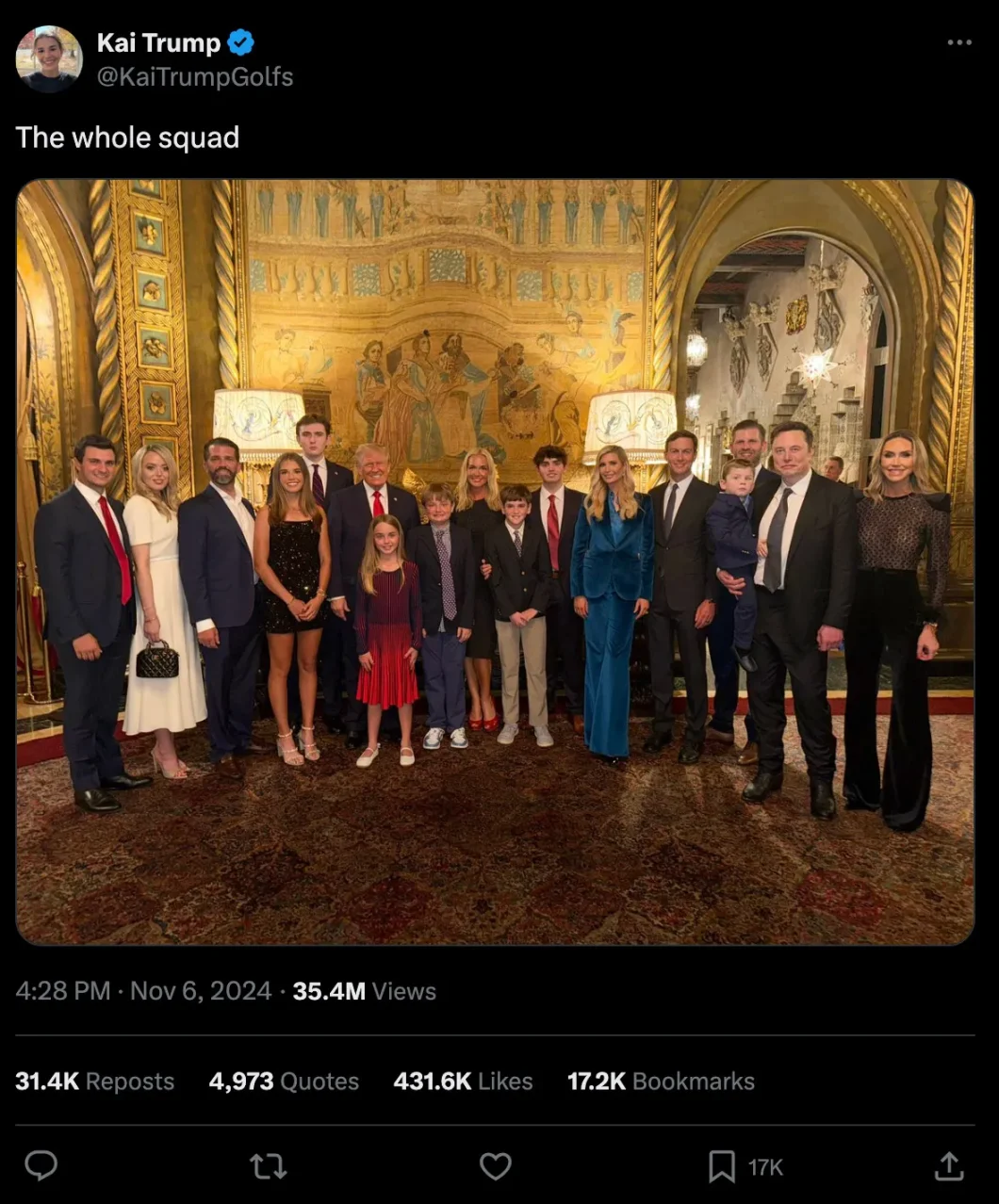
Musk with members of the Trump family at Mar-a-Lago. Photo: Kai Trump’s Twitter
Meanwhile, Musk continued his usual fervent support for Trump on X, suggesting he might fire 80% of federal employees, abolish the Department of Education, and intensify claims that the Federal Reserve is unconstitutional.
This frenzy certainly won’t last—and if Trump wants to govern effectively, it can’t.
Musk is gregarious and quick-witted. At 53, he intuitively understands young men, perhaps because in many ways he behaves like a teenager. This may alienate analysts and investors who don’t see flatulence jokes, 420, and 69 as comedic gold—and who fail to grasp that for Musk and his fans, the point is precisely the boredom-breaking absurdity.
Observers may not realize that despite X’s commercial failure, it has become a political powerhouse. Musk transformed an unpopular social network into a distribution platform for right-wing media, fans, and numerous genuine white supremacists. X lost most of its users and advertisers, causing the company’s value to plummet nearly 80% since its 2022 acquisition. Yet it still commands a vast young audience interested in Trump, sports, video games, and crypto. A November survey by YouGov Blue, a polling firm working for progressive groups, found that among males aged 18–29, X was the top source for news—outpacing YouTube and TikTok.
When Musk launched America PAC, he targeted this exact demographic. The group had three core goals to help elect Trump: register new voters, encourage early voting, and mobilize non-voters. It hired paid canvassers instead of volunteers and poured millions into social media ads tailored to the emotional sensibilities of Trump’s “edge-lord” audience. One 15-second ad opens with a bearded young man lounging on a couch while a gruff voice declares, "If you don’t show up for this election, Kamala and the crazies win," then portrays Trump as an “American badass.” Another warns that Harris would ban pickup trucks, red meat, and Zyn nicotine pouches. A third labels Harris as “a big fat C-word.” (“C” stands for “communist.”)
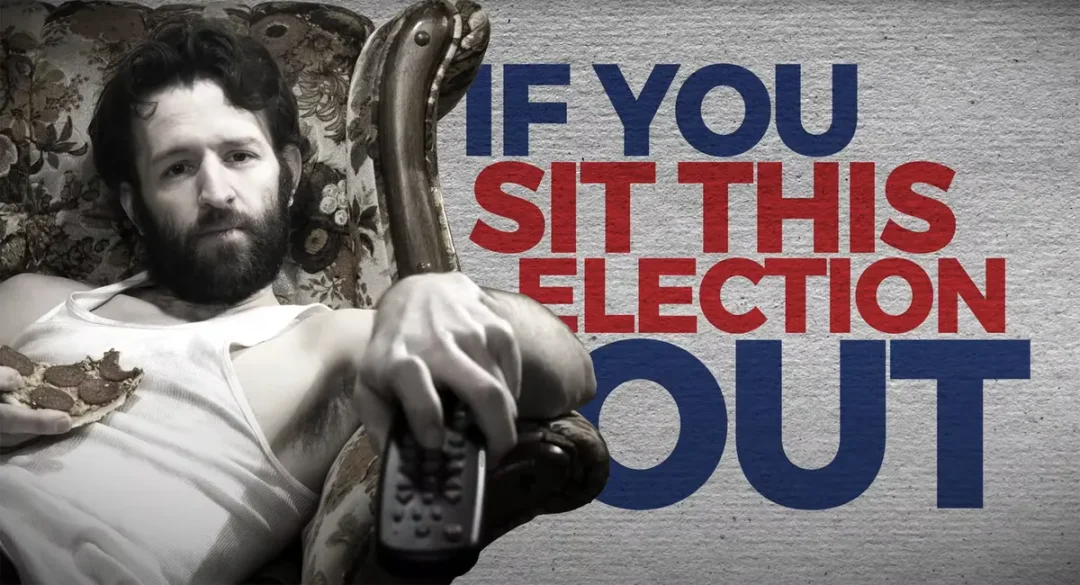
Video ads from Musk’s PAC. Source: YouTube
The PAC’s early operations were chaotic. Staff complained about unpaid bills, erratic decision-making, and violations of standard labor practices—echoing long-standing grievances from Tesla and SpaceX employees. Yet Musk’s efficiency was remarkable: political campaigns typically take years to build, but Musk and his deputies assembled a 2,000-person army in just months. Andrew Romeo, formerly an advisor to Florida Governor Ron DeSantis, led efforts in North Carolina. David Rexrode, who worked for Virginia Governor Glenn Youngkin, took charge of Pennsylvania and Michigan. Chris Carr, Trump’s 2020 political director, oversaw Arizona and Nevada. Most voter outreach operations save money by sending canvassers to densely populated areas where they can visit as many homes as possible. But according to someone familiar with the PAC’s operations, Musk’s funding allowed state leads to deploy canvassers into more rural regions, helping Trump boost turnout there. The anonymous source said the PAC visited approximately 11 million households.
Musk also spent lavishly in other ways. When campaign teams rent contact lists to send emails and texts to potential voters, they usually pay no more than $10 per lead. Musk built his own list from scratch, offering $47 to anyone who referred registered voters in swing states via a petition requesting their email and phone number. He later raised the bounty for Pennsylvania voters to $100. Then he announced a daily $1 million giveaway to a randomly selected petition signer. The offer was arguably illegal and prompted a lawsuit from Philadelphia’s district attorney attempting to block the payments—but it also generated massive publicity. Ultimately, Musk’s petition collected over a million names. "That’s a solid number," says Gaiter of Harris Media.
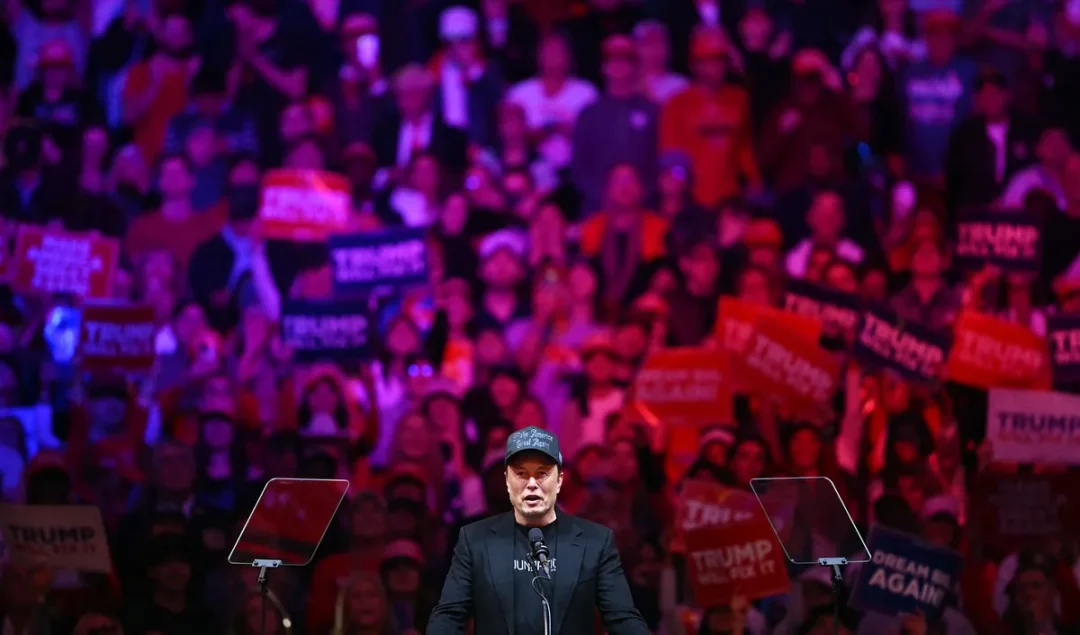
Musk campaigning for Trump at Madison Square Garden. Photo: Getty Images
But Musk’s most significant contribution was injecting his personal brand into the PAC’s work. On October 5, he appeared onstage at a Trump rally in Butler, Pennsylvania—the site where Trump survived an assassination attempt. He didn’t just speak; he leapt into the air, donned a black MAGA hat, and declared himself “Dark MAGA.” (The campaign quickly adopted the term, meaning “love Trump so much it’s scary.”) Musk held a series of events across Pennsylvania, drawing young audiences who admired him but weren’t necessarily loyal to Trump. Then, on October 27, he headlined Trump’s showcase rally at New York’s Madison Square Garden, receiving a reception greater than that given to Trump’s running mate and children.
The day before Election Day, Joe Rogan, America’s most popular podcaster, interviewed Musk—just as he had interviewed Trump a week earlier. "This is a message to the men," Musk said, as Rogan nodded in agreement. "Vote like your life depends on it." Rogan, who backed Bernie Sanders in 2020, said he now supported Trump—and made clear it was due to Musk. "The great and powerful Elon Musk," Rogan later wrote on X. "I think he made the most compelling argument for Trump, and I completely agree with him."
In the days after Trump’s victory, Musk wasn’t the only wealthy individual to see his net worth rise. Top beneficiaries included investors in private prison firms, cryptocurrency ventures, and nuclear energy producers. The logic behind these so-called “Trump trades” is straightforward: if Trump deports millions of immigrants, private prisons profit; if he establishes the strategic Bitcoin reserve he promised, crypto values surge; and if he follows through on building new nuclear reactors, those companies benefit.
Musk’s own Trump trade follows similar logic. During the campaign, Trump said his administration would fund Musk’s plan for a crewed Mars mission by 2028. That could bring SpaceX—already launching rockets for NASA and the Department of Defense—tens or even hundreds of billions of dollars in value.
A more immediate potential payoff involves Starlink, SpaceX’s satellite internet service. Musk has long complained about being excluded from a $42.5 billion subsidy program established under Biden to fund fiber broadband in rural areas. Telecom analyst Blair Levin of New Street Research says the government could redirect some of those funds to Musk instead of laying fiber.
Other Musk-Trump deals are more speculative, bordering on fantasy. Tesla’s stock surge appears tied to expectations that Trump will unilaterally legalize Musk’s planned autonomous taxis. Musk floated this idea during Tesla’s earnings call weeks before the election. "If there’s a Department of Government Efficiency, I’ll do my best to make it happen," Musk said, adding that the rules would apply to all automakers, not just Tesla. The problem? Tesla hasn’t actually developed a functioning self-driving taxi.
Moreover, while many Tesla investors resemble Trump voters or Musk fans, actual buyers of Musk’s electric cars tend to be climate-conscious middle-of-the-road moderates. During Trump’s previous presidency, Tesla customers responded to his Muslim travel ban by canceling orders—even though Musk had only indirect ties to the administration at the time.
Then there’s the personal relationship between Musk and Trump. Nearly every influential business leader close to Trump has eventually been pushed out of his orbit. Trump’s influence has such a short half-life that there’s a joking shorthand—"Scaramucci"—referring to investor and former Trump ally Anthony Scaramucci, who was fired as White House communications director after just 10 days in 2017. "Elon Musk and others are having a great time with Donald Trump right now," Scaramucci said in a radio interview in early November. "But they’re going to go down with him—it’s just a matter of time."
Even if Musk lasts beyond the Scaramucci era, even if his businesses withstand customer backlash, neither Musk nor Trump is broadly popular. (An NBC News poll in late September showed Musk’s approval at 34%; as of November 11, FiveThirtyEight’s polling average put Trump’s at 44%). If Trump tries to fulfill Musk’s promise to cut $2 trillion from the federal budget, he’ll almost certainly target Social Security and other widely supported programs—sparking fierce opposition not only from Democrats but also Republicans. Even if the GOP wins the House, their congressional control will remain razor-thin.
“Musk may act like an elected oligarch, but America isn’t an oligarchy—at least not yet,” says Bill Allison.
Join TechFlow official community to stay tuned
Telegram:https://t.me/TechFlowDaily
X (Twitter):https://x.com/TechFlowPost
X (Twitter) EN:https://x.com/BlockFlow_News
 @Bloomberg