









Zero-cost DePIN farming projects roundup
TechFlow Selected TechFlow Selected
Zero-cost DePIN farming projects roundup
Old computers can now earn tokens just by staying online.
 Navigating Web3 tides with focused insights
Author: shaofaye123, Foresight News
Recently, Grass's listing on Binance sparked a wave of enthusiasm, and Solana’s DePin leader IO has also seen a significant rebound. Research firm Messari estimates that the total addressable market (TAM) for the DePIN sector could exceed $2.2 trillion, reaching $3.5 trillion by 2028. Major institutions are actively investing, and various DePIN projects are gradually expanding, leveraging the AI narrative.
Besides Grass, which other DePIN projects are worth watching, and how can one participate early? This article provides a tiered overview of DePIN projects offering passive, zero-effort participation and early airdrop opportunities.
Five-Star Watchlist
DAWN
DAWN is a decentralized autonomous wireless network project developed by the Andrena team. The Andrena project began R&D as early as 2014, initially focusing on Web2 mobile data sharing. Its founder, Chatterjee, is from Princeton University. Another core member, Pramod Viswanath, has a stronger academic background compared to Chatterjee’s legendary entrepreneurial journey. Pramod Viswanath is a professor at Princeton University and also a key member of Sentient, another popular crypto AI project.
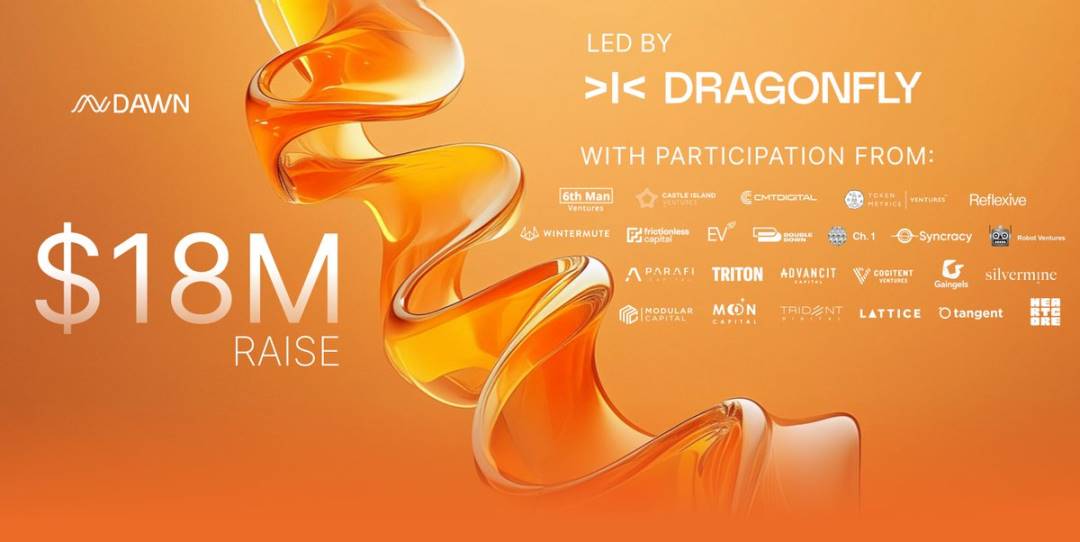
DAWN breaks away from the traditional model where internet bandwidth is managed and allocated by large Internet Service Providers (ISPs), leaving consumers with no say in pricing or distribution. Instead, it turns bandwidth into a commodity that every user can manage, use, or sell. DAWN has raised $18 million in funding, led by Dragonfly, with participation from CMT Digital, Castle Island Ventures, Wintermute Ventures, 6th Man Ventures, and ParaFi. Solana has also retweeted and promoted the project on X. According to the official whitepaper, approximately 32% of the total token supply is allocated for user airdrops, with 7% designated for software participants.
DAWN operates through a combination of hardware and software but is still in its early stages, with RAS hardware not yet widely available. Current participation is simple: download the browser extension (https://www.dawninternet.com/blog-posts/dawn-validator-extension-rewards-system) to act as a validator node and earn early积分 rewards. Completing social tasks grants an additional 15,000积分 bonus.
Gradient Network
Gradient Network is an open layer for edge computing on Solana, aiming to make computing inclusive, accessible, and affordable for everyone. Like DAWN, it falls under the IP mining category. It has secured investments from Multicoin Capital, Pantera Capital, and Sequoia Capital. Its initial product, GradientSentry, has already entered public beta testing.
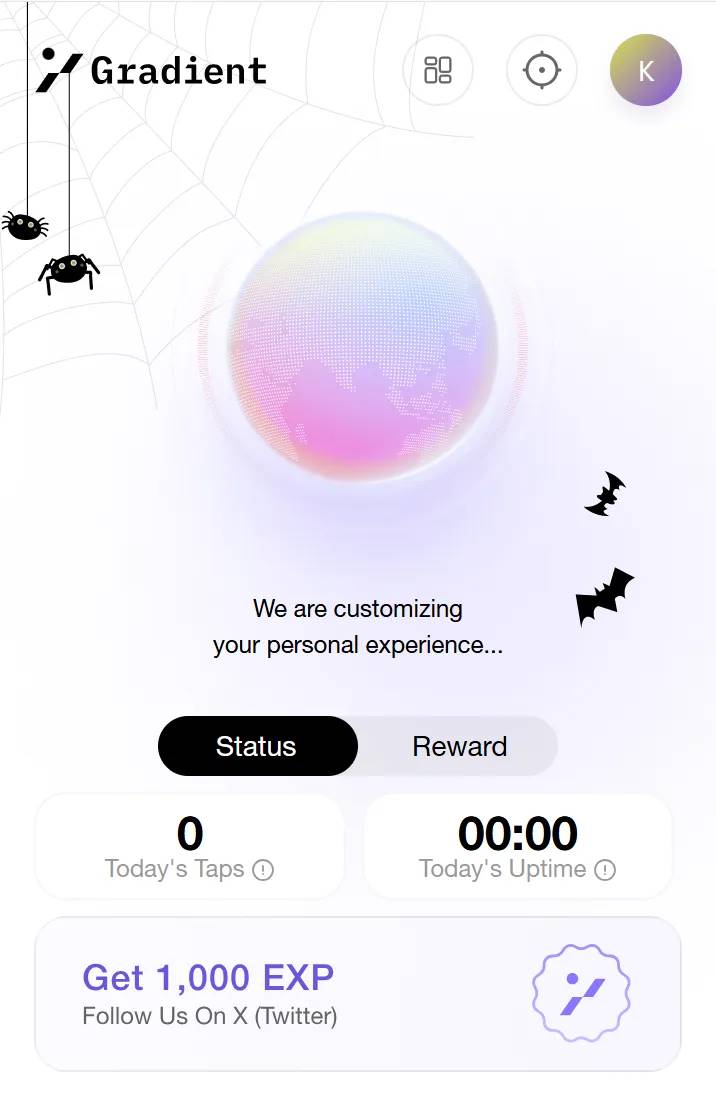
The registration process is similar to DAWN—users can sign up via email or directly log in with Google. After downloading the plugin and running it in the background, users automatically accumulate积分, and inviting friends further boosts their积分.
Rivalz Network
Rivalz Network is an AI-driven DePin RollApp, the first player-to-AI network built on Dymension and supported by Celestia Labs. Rivalz focuses on personal data sourcing, providing verifiable data sources for individuals, credentials, and behavioral data, while embedding privacy and intellectual property protections.
The project has raised $9 million in funding from major investors including Delphi Ventures, D1 Ventures, Gate.io, Magnus Capital, and Cogitent Ventures, with additional support from DWF Labs, Mask, and GSR.
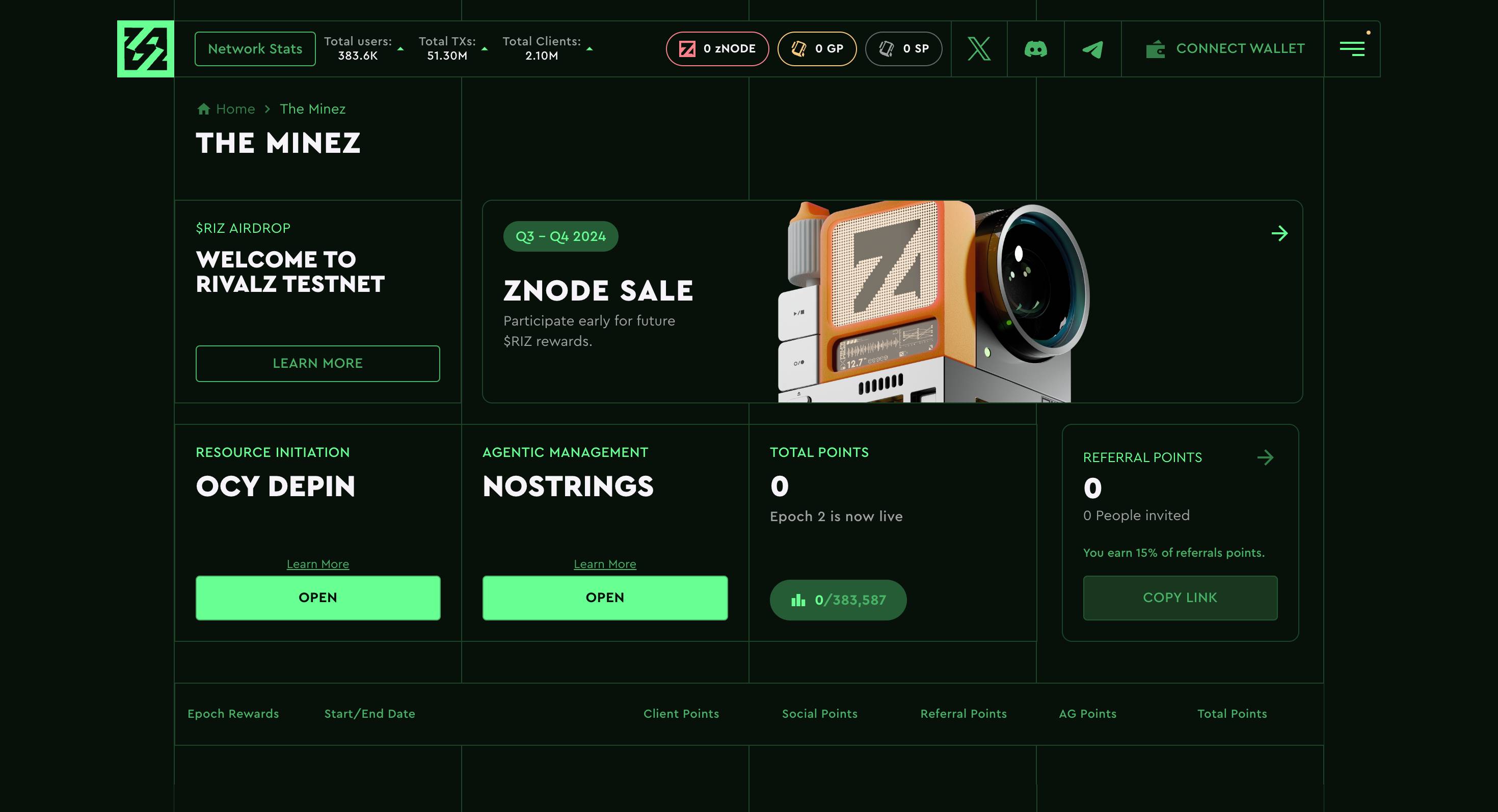
Rivalz currently supports mining on Windows, Mac, and Linux clients. Users can earn RIZ tokens by completing social tasks or mining. Purchasing a node offers higher airdrop allocation, accounting for about 25% of the total token issuance. The official minimum system requirements are: 8GB RAM, 4-core CPU (2.2 GHz), 50GB SSD, and 10Mbps internet speed.
Nodepay
Nodepay is an AI infrastructure project—a decentralized AI training network. Nodepay provides decentralized bandwidth infrastructure for AI training. By connecting to the Nodepay network, users can sell unused internet bandwidth to AI companies, enabling efficient transmission of public training data, labeling, model sharing, and remote distributed training.
In October this year, Nodepay completed a funding round with undisclosed amounts, backed by Animoca Brands, Jump Crypto, Elevate Ventures, OKX Blockdream, Mirana Ventures, and NGC Ventures. On November 12, Nodepay announced an airdrop for users holding the "Proof of Humanhood" badge. Recently, Nodepay's mobile app has performed well in app stores, achieving high engagement and ranking within the top 200.
Participation is similar to the above projects—simply download the plugin and run it in the background to mine积分.
Nexus Network
Nexus Network is a massively parallelized proof-mining network, falling under the category of decentralized cloud computing. It serves as a world-class instantiation of Nexus zkVM, designed to operate at one trillion CPU cycles per second. Nexus zkVM (zero-knowledge virtual machine) is currently at version 1.0—an open-source, modular, scalable, highly parallelized, verification-optimized, contributor-friendly zkVM written in Rust, focused on high performance and security.
Nexus has completed two funding rounds totaling $27.2 million. In June, it raised $25 million in Series A funding led by Pantera and LightSpeed, with participation from Dragonfly Capital, Faction Ventures, and Blockchain Builders Fund.
The initial Beta version of Nexus Network is now live—an open-access, distributed validator network based on zero-knowledge virtual machines. Nexus aims to unite computers worldwide into a single supercomputer, unlocking a verifiable internet.
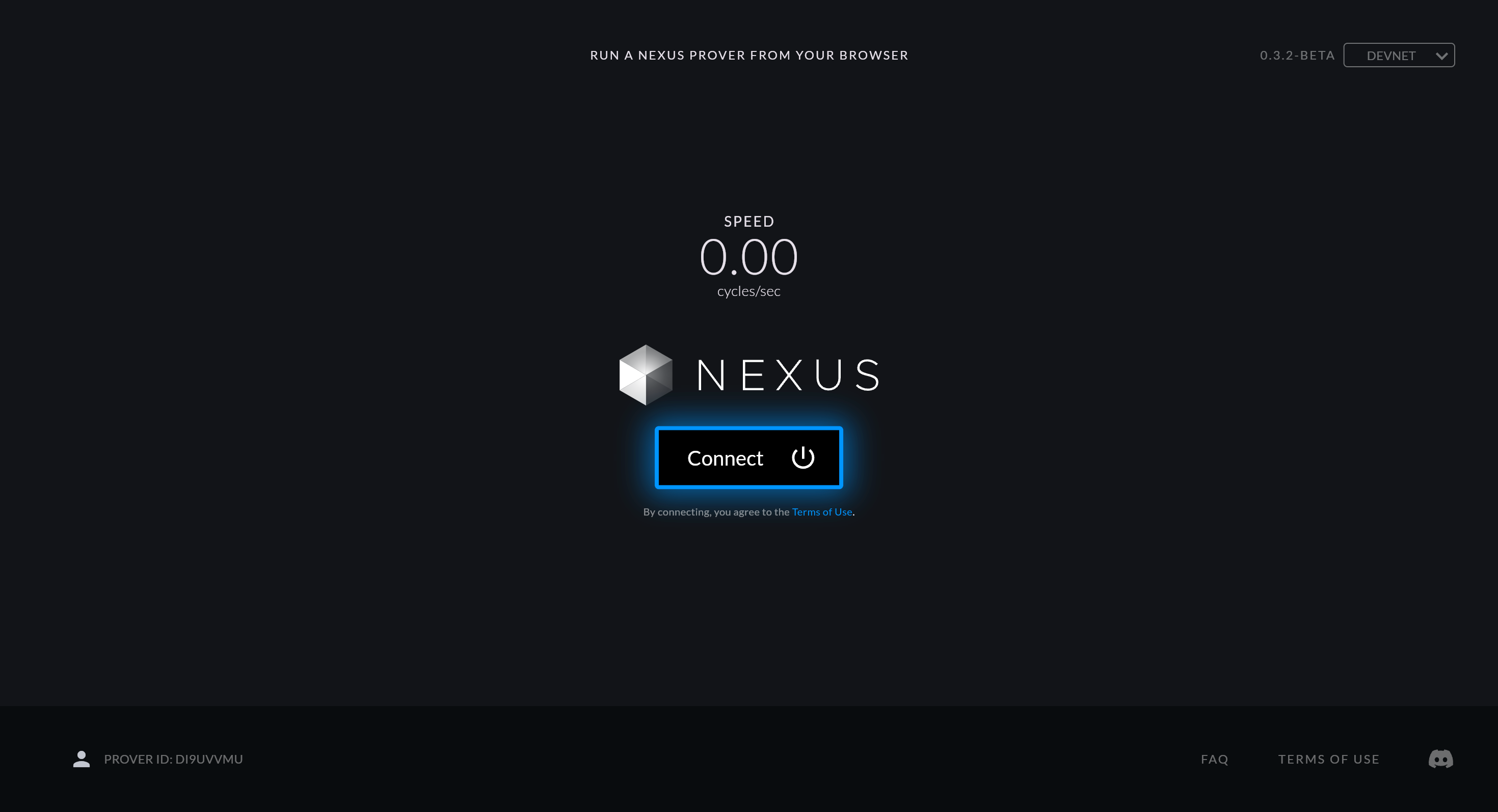
Users can participate by joining the Beta testnet and clicking “Connect.” Note: Wallet binding is not yet implemented, and clearing browser cache may result in loss of accumulated积分.
Other Notable Projects
Network3
Network3 is a decentralized AI infrastructure platform where users share bandwidth, computing power, and datasets to provide inference, fine-tuning, and training services for edge AI models, earning token-based积分 incentives in return. Network3 supports mining across all platforms: Mac, Windows, Android, iOS, and Linux.
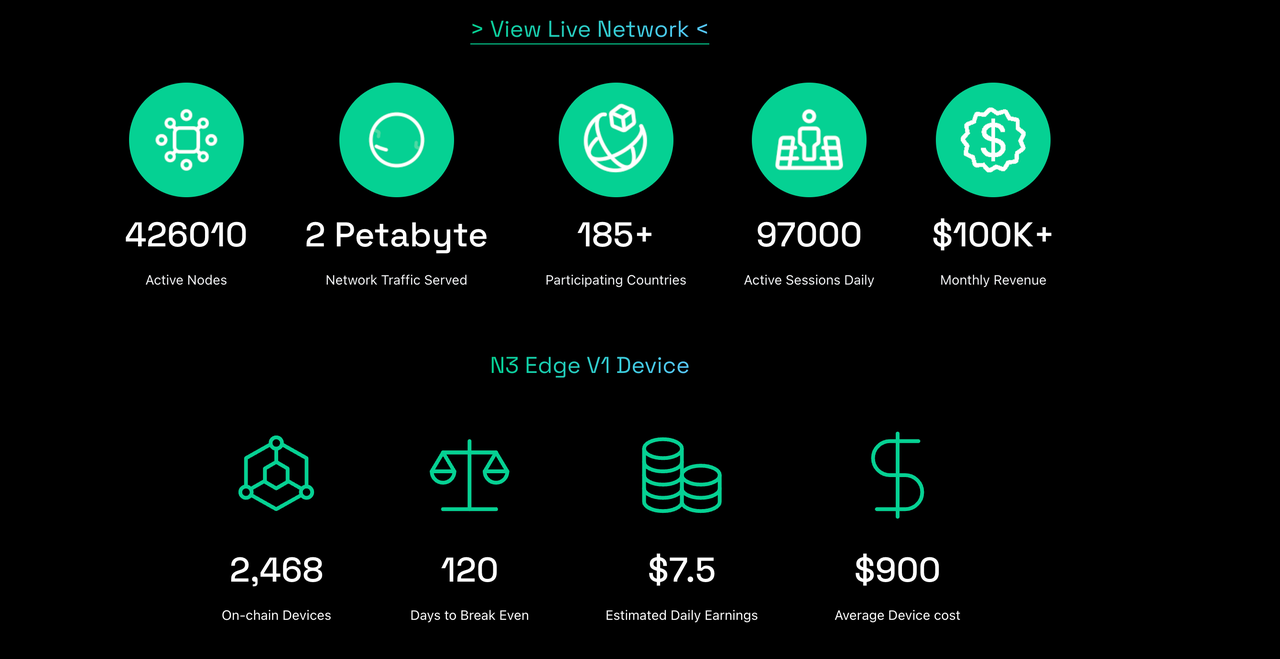
It has raised $5.5 million in funding, with Waterdrip Capital and IoTex among the investors. The first round of miner pre-sales launched in August, with estimated payback time for initial miners around 120 days.
Uplink
Uplink is a decentralized physical infrastructure network (DePIN) primarily offering decentralized connectivity, aiming to build better distributed, user-operated infrastructure. Users can become providers by installing Uplink-compatible hardware in their communities or business locations and directly profit from usage. Its business model is similar to DAWN. The project has raised $10 million in funding, led by Framework, with participation from Blockchange, Outlier, NxGen, and Stratos. Additionally, Uplink has previously partnered with Ericsson, Deutsche Telekom, and E.ON. The mining client has not yet launched; users can only earn积分 by completing social tasks.
BlockMesh Network
BlockMesh is a decentralized bandwidth network project. It enables users to tokenize excess bandwidth, offering opportunities for passive income and participation in AI data layers, online privacy, open-source, and blockchain industries. The project won first place in the DePIN track at a hackathon and has partnered with exchange BackPack.
PinGo
PinGo is an AI and DePIN project on the TON network, aiming to solve the fragmentation and underutilization of idle computing resources by providing foundational compute power for AI models. PinGo originated from Cpin, a Web2 company with nearly 100,000 devices, which will eventually be integrated into its own DePIN network. As one of the few DePIN projects in the TON ecosystem, PinGo completed a seed round in October, funded by CGV, CatcherVC, T-Fund, K24, and LandScape. Currently, only Android and Linux systems are supported.
Oasis AI
Oasis AI is an AI inference project—a GPU computing power sharing mining initiative designed to meet the massive demand for open-source model inference. Oasis connects AI model users with computing resource providers via a browser extension. Users can freely access and run open-source AI models such as chat assistants, image generators, and speech-to-text tools. Meanwhile, computing providers can earn OAI tokens by sharing GPU or CPU resources. It currently supports Windows, Mac, and Linux systems, allowing users to earn tokens simply by running the application in the background.
Functor Network
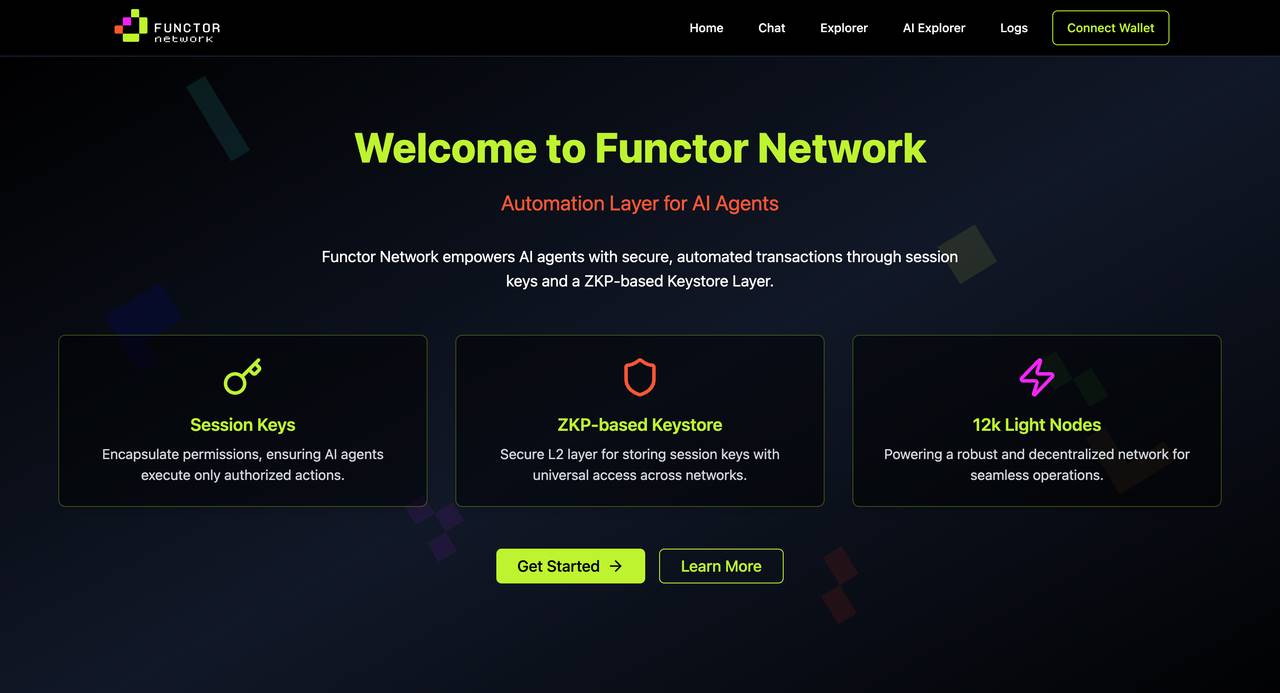
Functor Network is an autonomous layer for AI agents. It automates complex, data-intensive tasks, aiming to create a world securely assisted by AI agents. The team boasts strong technical expertise—the CEO has won eight hackathons and is a founding member of H.E.R DAO. The project is still in early stages; users can mine by downloading the plugin, and registration grants 200 FUNC tokens immediately.
Teneo
Teneo is a DePIN IP mining project. It appears to originate from the same team behind the previous Eloop One project. The team is primarily based in Europe, operating its network from Vienna, Austria. Investment and financing details remain unclear. Users receive 2,500积分 upon registration and can start mining by downloading the plugin.
Join TechFlow official community to stay tuned
Telegram:https://t.me/TechFlowDaily
X (Twitter):https://x.com/TechFlowPost
X (Twitter) EN:https://x.com/BlockFlow_News
 Foresight News






