How long will the hype around Polymarket and prediction markets last after the U.S. election?
TechFlow Selected TechFlow Selected
How long will the hype around Polymarket and prediction markets last after the U.S. election?
Analysis suggests that Polymarket's new users are likely to continue using the platform after the U.S. election cycle.
 Navigating Web3 tides with focused insights
Author: Animoca Digital Research
Translation: ChainCatcher
Key Questions
-
Why does the world need Polymarket?
-
Will Polymarket's popularity persist after the U.S. election?
-
Is Polymarket the next killer app for crypto?
-
Will Polymarket issue a token?
-
Polymarket is an on-chain prediction market that solves the critical problem of information gaps by providing quantified odds for future events—offering probabilistic representations previously missing from news media and social discussions.
Summary
-
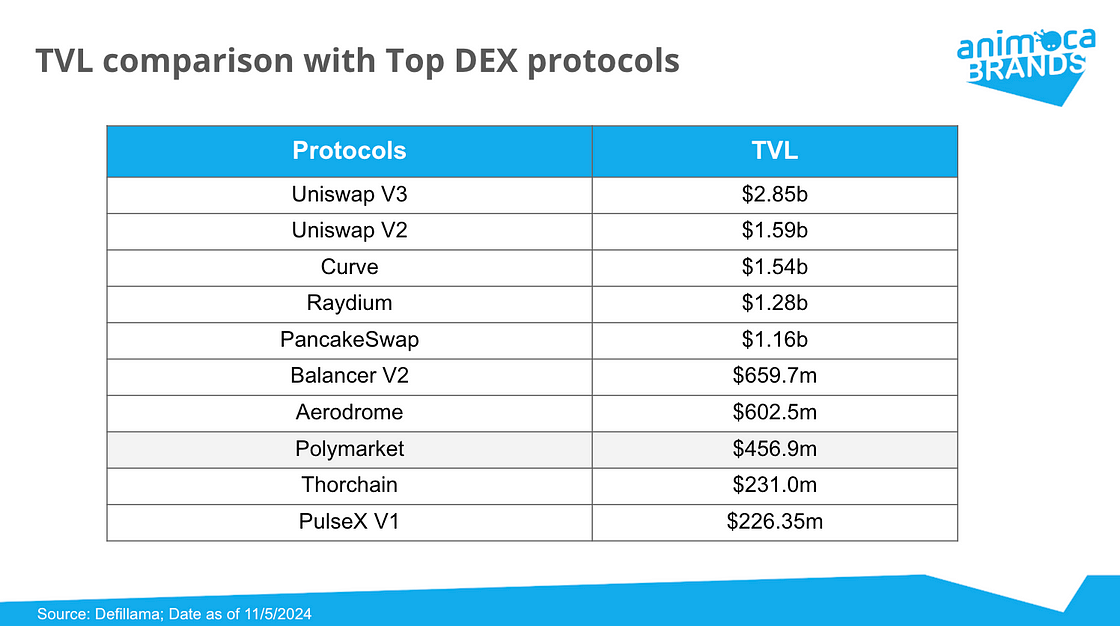
The platform has experienced significant growth over the past six months. From April to October, monthly trading volume surged from $40 million to $2.5 billion, while open interest grew from $20 million to $400 million. The amount of capital locked now rivals leading decentralized exchanges (such as SushiSwap AMM V3) and matches the total value locked (TVL) of networks like TON.
-
In October, Polymarket’s website recorded 35 million visits—twice the traffic of popular betting sites like FanDuel. Its U.S. election forecasts have been frequently cited by mainstream outlets including The Wall Street Journal and Bloomberg. This growth indicates that Polymarket has evolved from a well-known project in the crypto space into a platform reaching mainstream audiences—a long-awaited milestone for Web3 mass adoption.
-
Our analysis suggests that most new users will likely continue using the platform beyond the U.S. election cycle. Approximately three-quarters of users trade on non-election-related topics, indicating sustained interest across diverse subjects.
-
Polymarket has not yet finalized plans regarding token issuance. The company is exploring the possibility of introducing a token to verify real-world event outcomes but has not made any official decisions.
Introduction
Polymarket is a blockchain-based prediction market platform founded in 2020 by 22-year-old Shayne Coplan. Its timely launch quickly attracted widespread attention during the 2020 U.S. presidential election cycle. Despite subsequent volatility in the crypto market, Polymarket persevered and returned with even greater popularity during the 2024 U.S. election cycle.
Prediction markets are innovative trading platforms where participants create and trade contracts based on whether future events will occur. By trading “Yes” or “No” options, markets aggregate collective opinion, with the price of a "Yes" contract representing the consensus probability of an event occurring at any given moment. This real-time pricing provides valuable insights into public expectations and forecasts.
Real-time tracking of event probabilities is often overlooked by news media and social platforms. While the U.S. election draws immense attention, there is no centralized platform that integrates daily developments into quantifiable expectation assessments. The Electoral College system further complicates predictions, causing analytics sites like FiveThirtyEight to focus primarily on polling data rather than offering clear odds for potential winners.
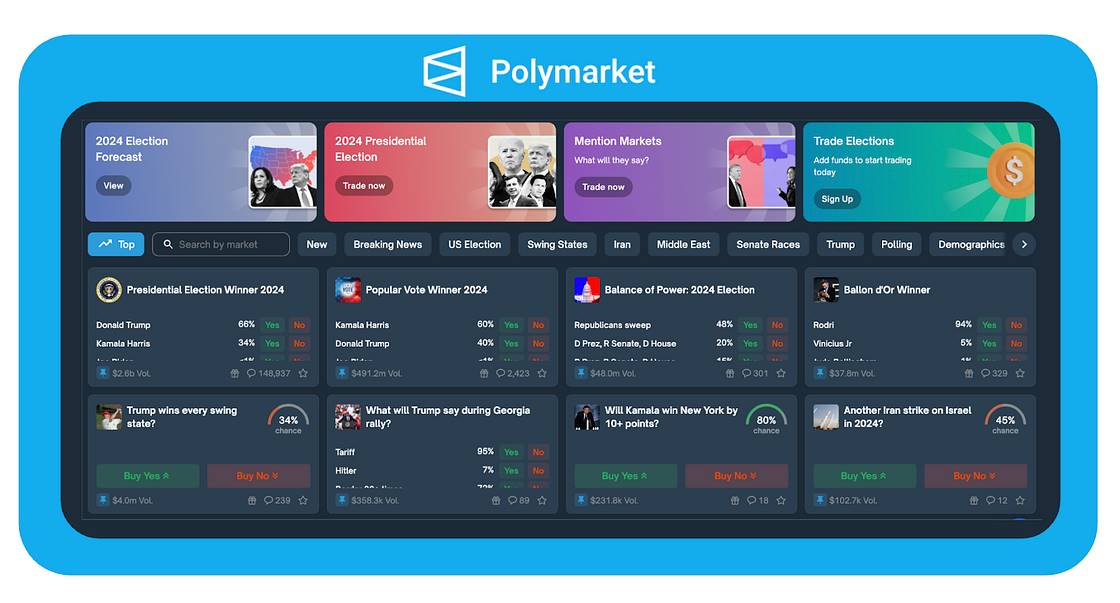
Polymarket fills this gap through its presidential election prediction market. New information—such as candidate activities and polls—is immediately reflected in the contract prices. This quantified and instantly updated nature helped Polymarket rapidly gain traction and become a common reference point in social media discussions about the election.
In the near future, Polymarket’s probability trends may become standard charts in mainstream news broadcasts. It’s not hard to imagine networks like CNN and ABC incorporating real-time probability dashboards into their coverage—similar to how CNBC and Bloomberg Television integrate data-driven insights into financial reporting.
How Did Polymarket Become Popular?
Origins
Founded by Shayne Coplan in 2020, just before the U.S. presidential election, Polymarket saw massive engagement around the question: “Will Trump win the 2020 U.S. presidential election?” Trading volume reached $10.8 million within months, pushing Polymarket’s monthly volume above $25.9 million at its peak.
The platform also caught the attention of prominent figures such as Vitalik Buterin, who recognized Polymarket’s potential in a blog post in 2021. Although still niche at the time, some of its top markets already exceeded $1 million in trading volume, signaling strong growth potential.
Regulatory Setback
As a platform straddling gambling and futures trading, Polymarket faces unique regulatory challenges. These came to a head in October 2021 when the U.S. Commodity Futures Trading Commission (CFTC) launched an investigation due to the platform’s rapid early growth and unlicensed provision of futures trading services. In January 2022, Polymarket settled with the CFTC, agreeing to pay a $1.4 million fine for offering binary options trading without a futures license.
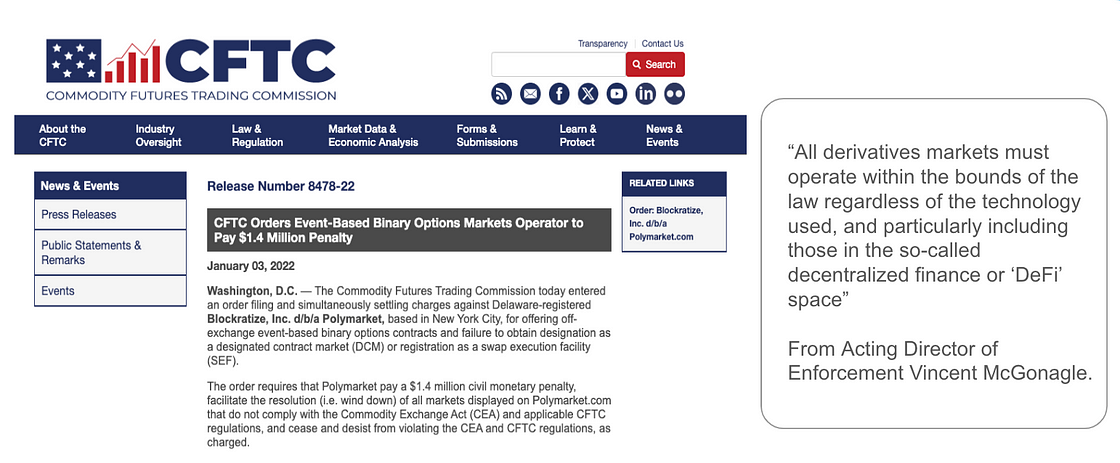
Source: CFTC Official
As part of compliance efforts, Polymarket restructured its operations offshore and banned U.S. residents from participating in its markets. The company also hired former CFTC commissioner J. Christopher Giancarlo as an advisor to navigate complex regulatory issues and ensure future compliance.
This settlement resolved some uncertainties surrounding Polymarket’s operations, allowing market activity to gradually return to early 2021 levels. However, one key question remains: When will Polymarket break through current limitations to enter the mainstream market?
Moving Toward Mainstream
One year after the CFTC settlement, Polymarket launched the “Winner of the 2024 U.S. Presidential Election” market in January 2024, sparking immediate trading activity. As the year progressed, major political events—including the attempted assassination of Trump and Biden’s unexpected withdrawal announcement—further fueled intense interest in election forecasting. In the final month of the election, with early voting results rolling in, Polymarket’s popularity reached record highs.
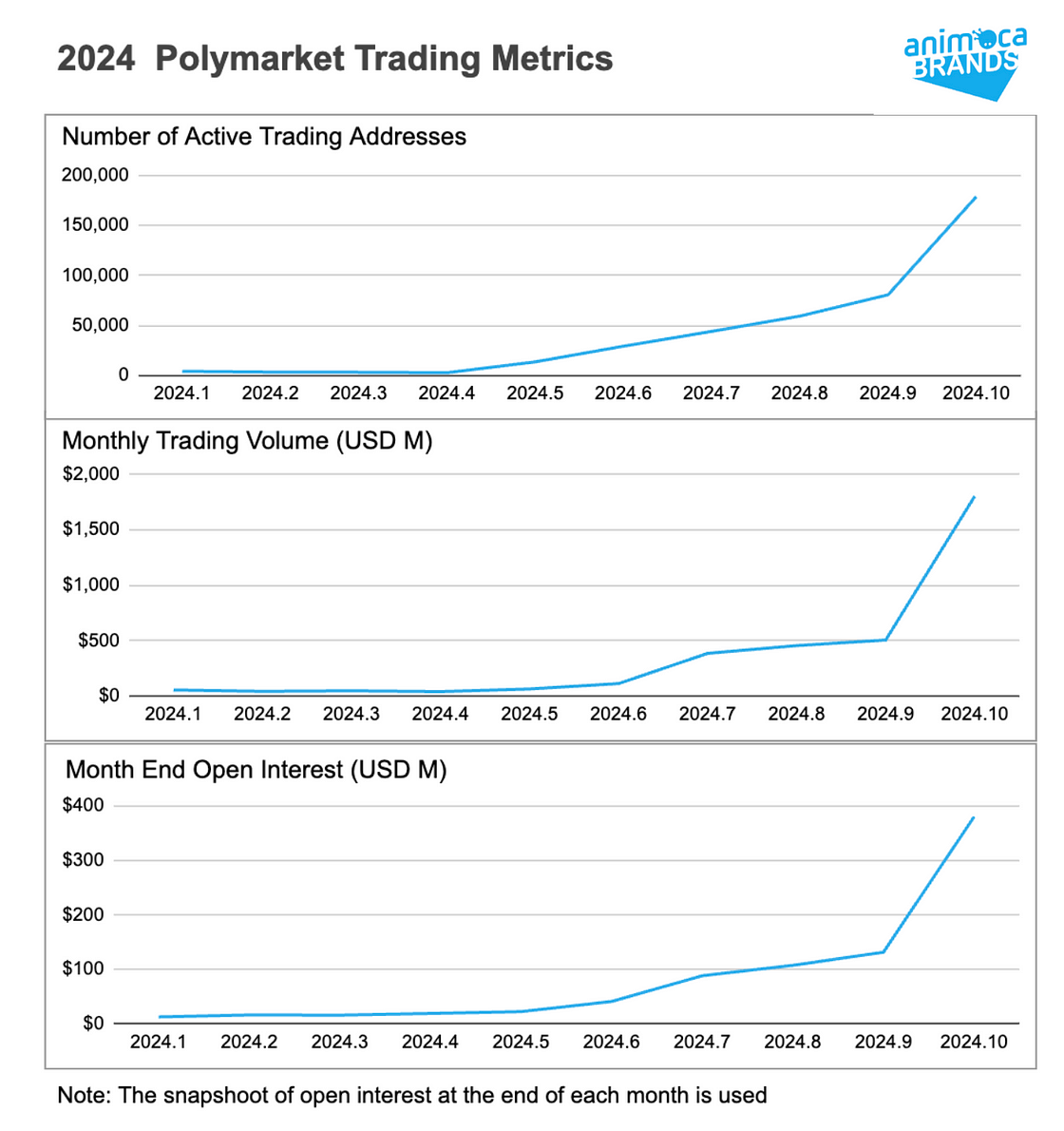
Throughout the 2024 election cycle, Polymarket’s monthly trading volume skyrocketed—from millions of dollars to $50 million in January, nearly $400 million in July, and surpassing $1 billion in October. Open interest—the amount of USDC locked and potentially payable if all contracts settle—grew from $7 million on January 1, 2024, to approximately $400 million on November 1. This locked capital exceeds TON’s total TVL, placing Polymarket 18th among blockchain infrastructure ecosystems by locked value.
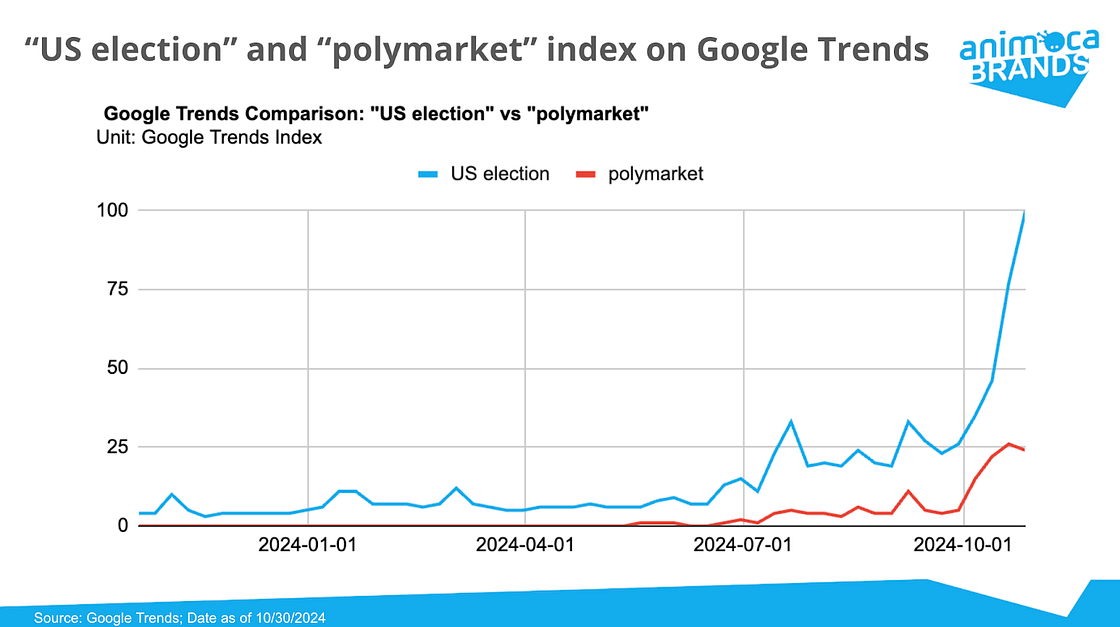
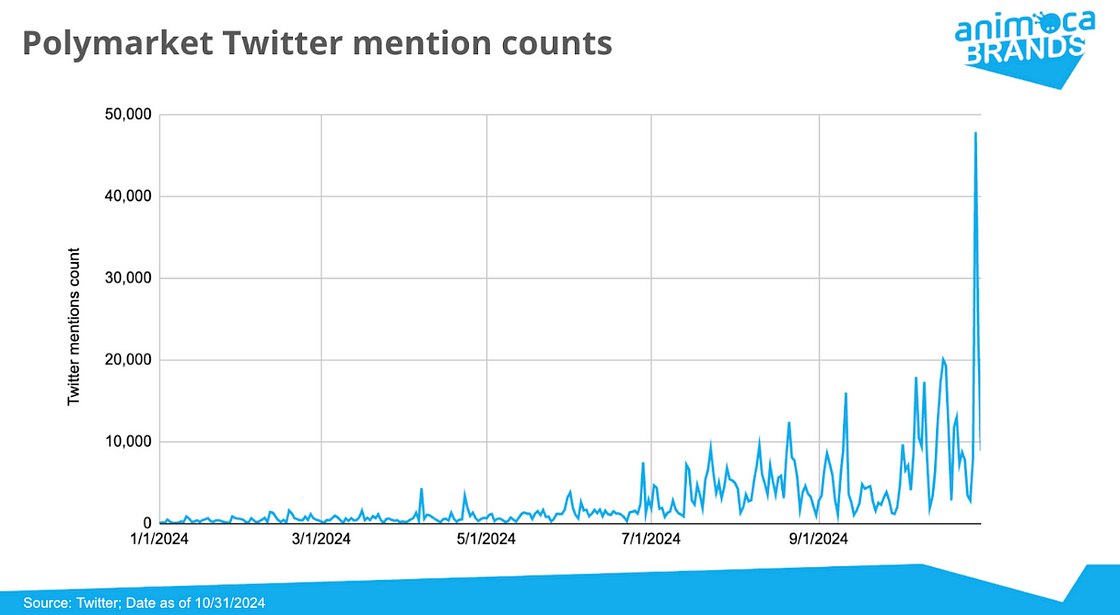
Polymarket’s attention extends beyond trading communities, with surging Google search interest and website traffic reflecting broad public awareness. Major media outlets such as The Wall Street Journal, Bloomberg, and CNN, along with public figures like Trump, frequently cite Polymarket’s election forecasts. A key milestone in mainstreaming occurred in August when Bloomberg integrated Polymarket’s election odds into its terminal system. Polymarket has thus evolved from a notable crypto project into one capturing wide public attention—the very goal Web3 has long pursued.
Web3 has yet to achieve mainstream adoption, largely due to the absence of a “killer app” capable of creating an iPhone-like breakthrough for the sector. Telegram’s collaboration with TON generated great excitement in the Web3 community due to its massive scalability potential. Similarly, Polymarket is exploring new frontiers that could push industry boundaries, offer accessible pathways for broader audiences, and drive Web3 toward wider utility.
Platform Activity
Website Traffic
As Polymarket’s trading volume and participant numbers hit new highs, its website traffic surged accordingly. In September 2023, Polymarket recorded 2.3 million unique visitors and 16 million total visits. By October, monthly visits doubled to 35 million, placing it alongside popular betting platforms like FanDuel. FanDuel had 5 million unique visitors and 17 million visits in September, while regulated prediction trading site Kalshi reported 118,000 unique visitors and 237,000 total visits—far below Polymarket’s scale.
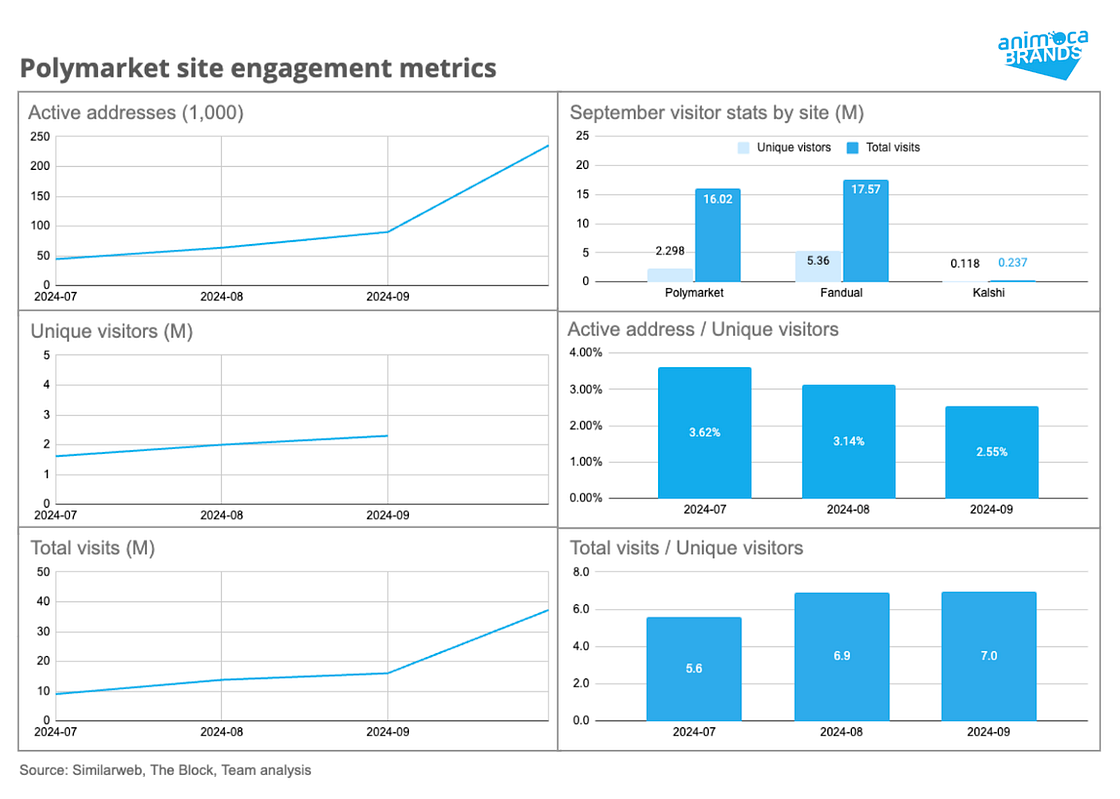
In terms of user engagement, the ratio of active traders to visitors was around 3% in July but declined over the past three months. This suggests most Polymarket users visit primarily for information, not trading. As Polymarket gains prominence, this trend highlights its appeal as an informational resource.
Additionally, the ratio of visits to unique visitors shows users return to the site an average of seven times per month, indicating high engagement and stickiness. This combination of high traffic and repeat usage underscores Polymarket’s potential not only as a trading platform but also as a widely trusted source for major event forecasts.
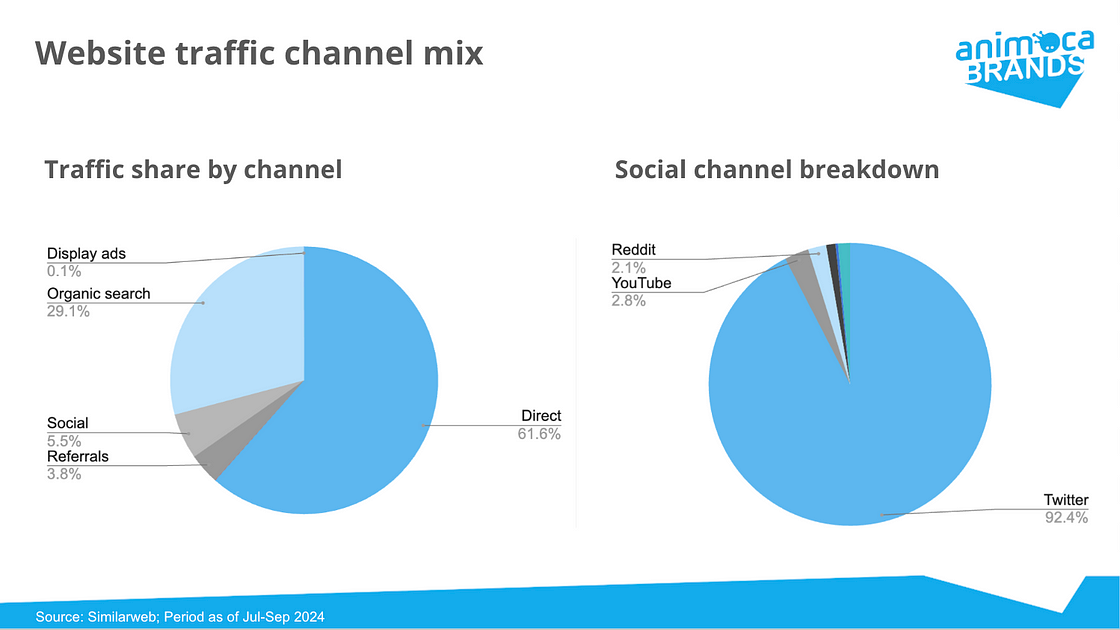
Polymarket’s primary traffic source is direct URL access, suggesting most users are already familiar with the platform before visiting. Another 30% arrive via organic search, indicating many users specifically search for Polymarket by name. Social media contributes about 5% of traffic, with Twitter being the main driver—consistent with Twitter’s central role in crypto and election discourse.
Notably, paid traffic sources such as paid search and display advertising represent a very small share, highlighting that the platform attracts users through brand recognition and organic interest rather than paid ads. This traffic composition reflects Polymarket’s growing influence, with users increasingly treating it as a reliable source for predictive insights.
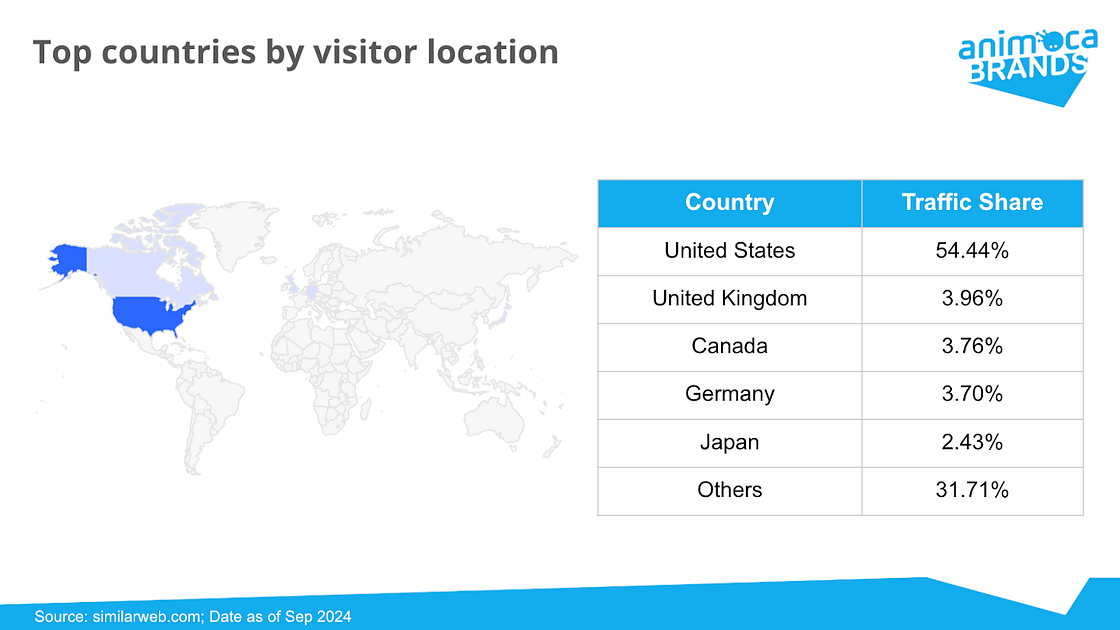
Geographically, over half of the traffic comes from the United States, followed by four close U.S. allies significantly impacted by U.S. election outcomes.
These observations suggest most Polymarket users now treat the platform as a regular reference point, returning frequently to track unfolding major events. This aligns with CEO Shayne Coplan’s view that Polymarket’s value lies in delivering “the most accurate information signals on the internet.”
Markets
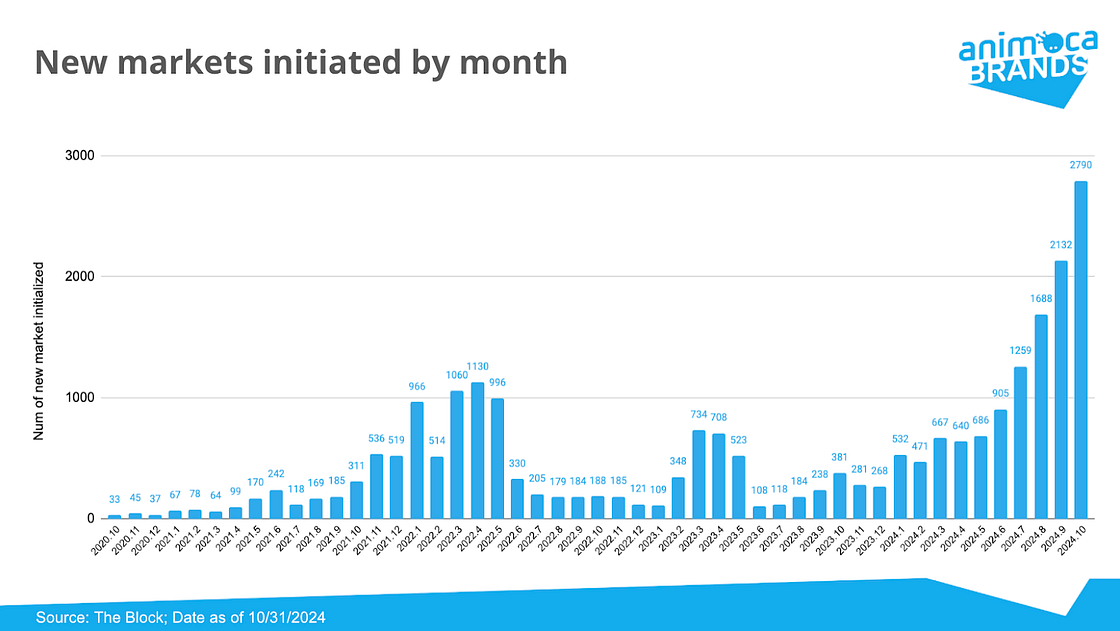
Each event on Polymarket typically includes one or more markets, each structured as binary outcome pairs. For example, under the “U.S. Election” event, separate markets include “Trump Wins Y/N” and “Harris Wins Y/N,” along with lower-priority ones like “Biden Wins Y/N.”
The Polymarket team creates new markets, incorporating community feedback. At the end of 2021 and beginning of 2022, the team experimented with launching up to 2,000 markets per month, possibly to boost user engagement. However, this pace eventually stabilized to several hundred markets per month. Starting in January 2024, market creation surged again exponentially, suggesting recent additions have received strong user approval and positive feedback.
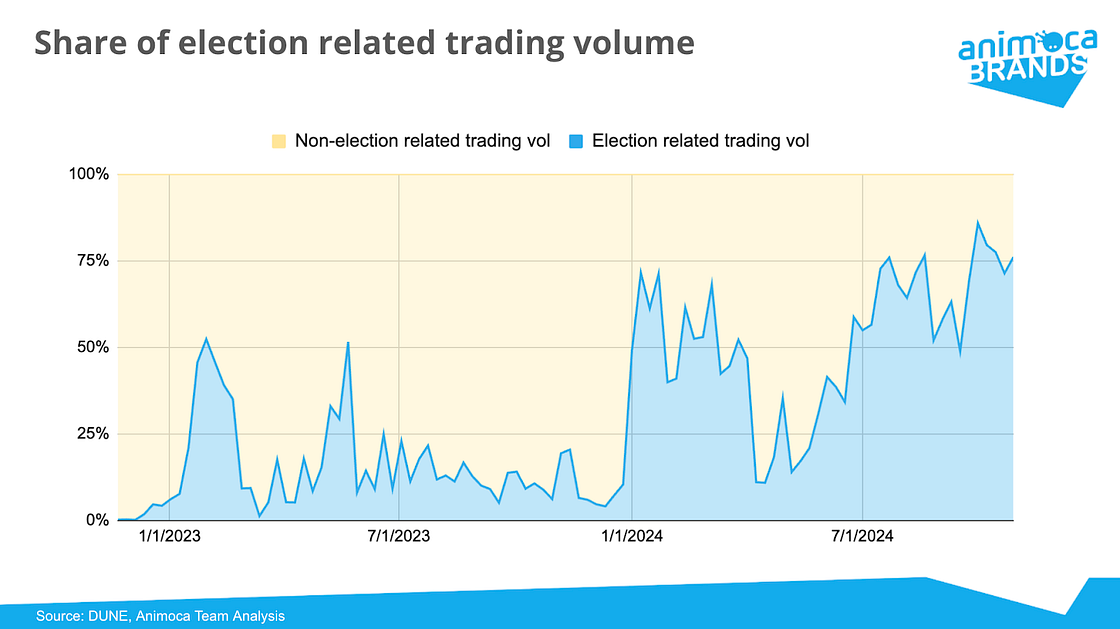
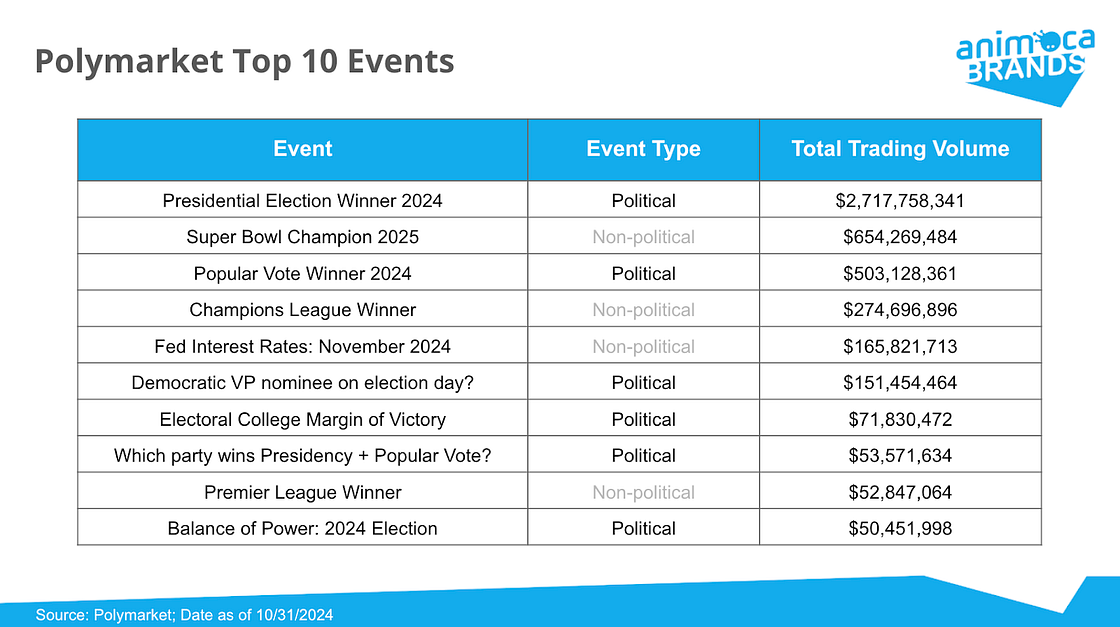
Since January 2024, U.S. election-related markets have driven much of Polymarket’s trading volume, accounting for roughly 50% of total volume in the first half of the year and rising to over 75% amid heightened election interest. Interestingly, despite the surge in election-related volume, non-election markets still attract substantial trading—accounting for nearly 25% of total volume. Sports-related markets, such as Super Bowl and UEFA Champions League predictions, stand out, demonstrating diverse user interests beyond election cycles. This balance suggests Polymarket’s appeal is expanding, positioning itself as a multi-functional prediction platform.
Users
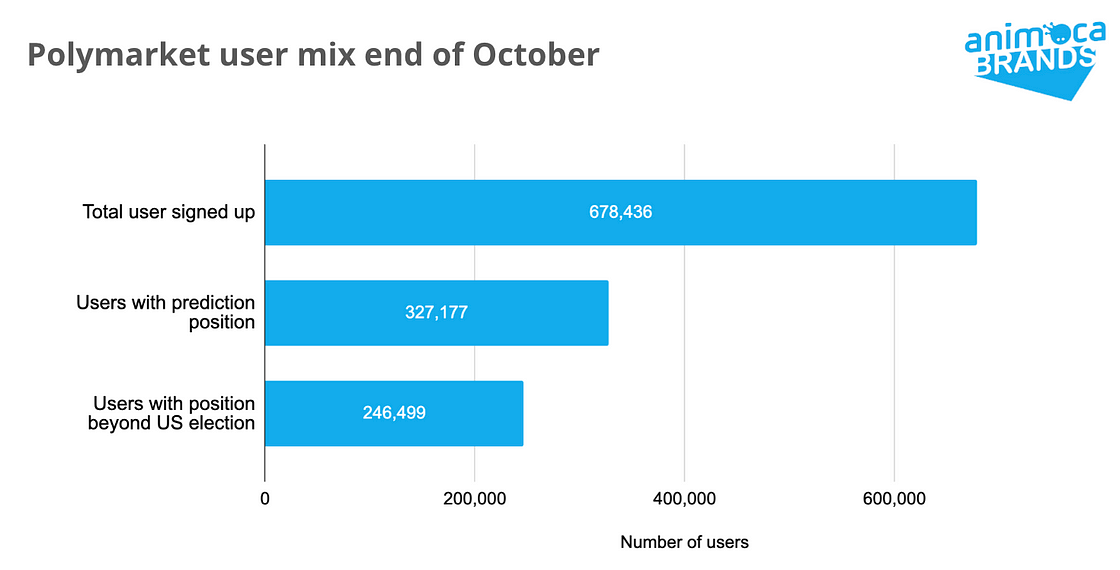
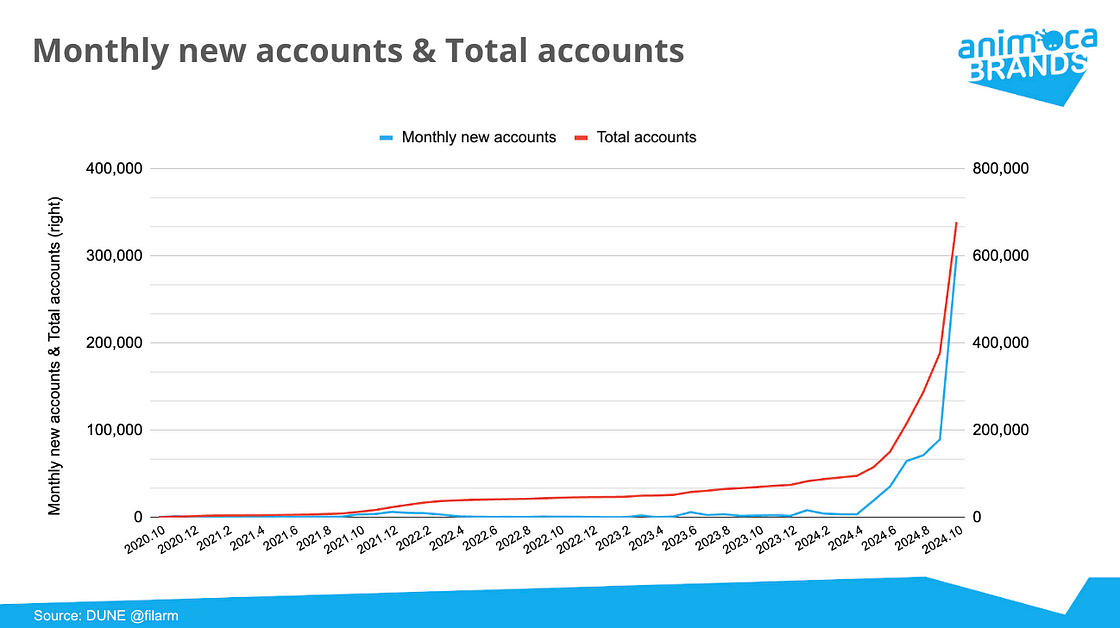
Since mid-2024, Polymarket has seen a surge in new user registrations, with over 300,000 new sign-ups in October alone. This rapid growth means 86% of users joined within the past six months. In October, the platform recorded 235,000 active trading addresses, representing 35% of all registered users.
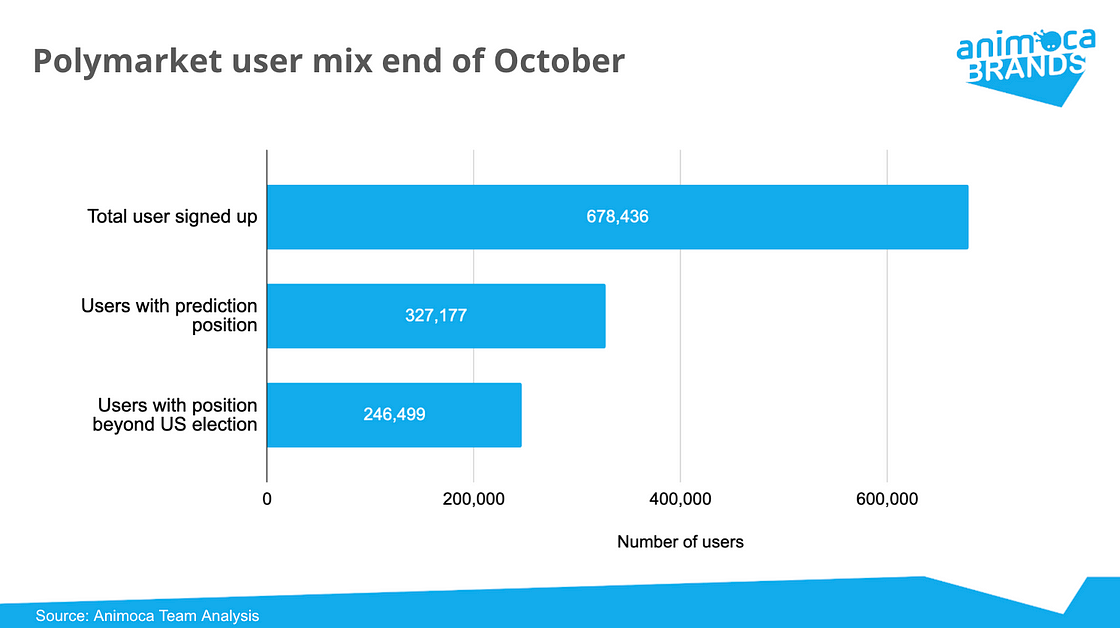
As of November 3, there were 327,000 total users, with half maintaining active positions. Among these active users, approximately 80,000 focus on U.S. election-related markets, while the remaining 247,000 engage with other market categories. This shows that significant participation in non-election markets reflects sustained user interest—suggesting continued platform relevance and growth potential even after the election cycle ends.
A Global Perspective on America
These observations reveal an interesting phenomenon: although most Polymarket visitors come from the United States, regulatory restrictions mean only non-U.S. users can participate in trading. This creates a unique situation—users from the rest of the world are effectively predicting the next U.S. president, while Americans remain mostly spectators.
Thus, Polymarket becomes a platform where international participants provide a global perspective on U.S. political events—all aimed at serving a predominantly American audience.
How Polymarket Works
Prediction Market Mechanism
Prediction markets trace back to 16th-century political wagers, initially focused on events like papal succession. These markets allowed bets on future outcomes and gradually evolved into platforms aggregating public sentiment on uncertain events. In July 2018, prediction markets entered the crypto space with Augur, the first decentralized prediction platform built on Ethereum. Two years later, Polymarket launched, enabling users to deposit USDC and bet on future outcomes of various events.
Prediction markets operate similarly to futures markets: they create contracts that pay a fixed amount if a specific event occurs, and participants trade these contracts by submitting buy and sell orders. At any moment, the contract price represents the market’s consensus estimate of the event’s probability.
Traditionally, prediction markets are highly valued for efficiently aggregating diverse information, enhancing forecast accuracy—as discussed by James Surowiecki in *The Wisdom of Crowds*. Prediction markets capture opinions from various sources, refining collective insights through participants’ probabilistic estimates.
Differences from Traditional Betting
While prediction markets have existed for a long time, traditional betting markets still attract more participants. To understand why, we must first examine traditional betting closely.
Prediction markets differ from traditional betting in several key ways. First, they are two-way trading markets, allowing participants to exit positions anytime before an event is resolved. Second, prediction markets continuously update consensus odds in real time, reflecting public sentiment, whereas traditional bookmakers primarily adjust odds to balance betting pools and minimize potential losses. This practice often leads bookmakers to over-correct odds, distorting true event probabilities.
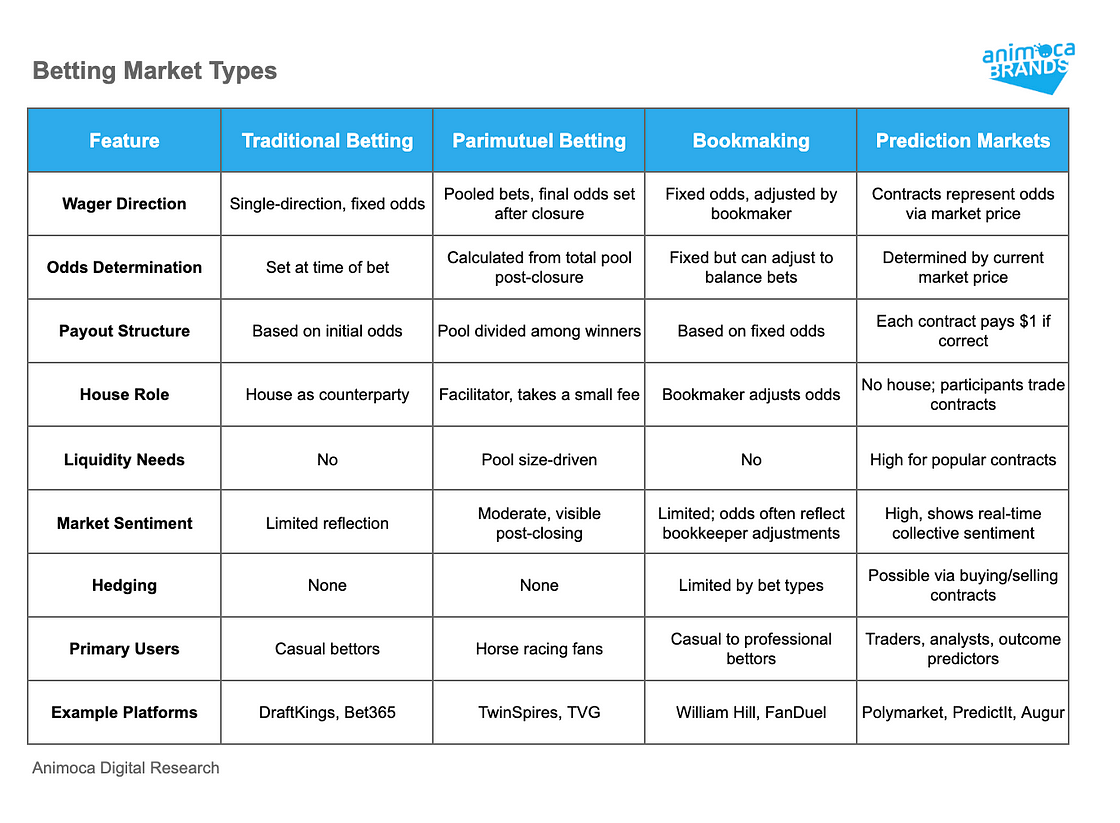
However, prediction markets face unique challenges, particularly around liquidity. To enable smooth trading, platforms must ensure sufficient liquidity for contracts, requiring stable liquidity sources. This can be achieved via automated market makers (AMMs), similar to decentralized exchanges (DEXs), or via order books supported by market makers, akin to centralized exchanges (CEXs). Either way, liquidity providers must be incentivized, increasing costs for traders or the exchange itself.
Liquidity issues are especially pronounced for low-interest events. Traditional bookmakers meet demand by setting initial odds and pooling bets, while prediction markets rely on sufficient user interest to maintain active trading. Without enough activity, prediction markets struggle to establish meaningful odds, limiting their accuracy and appeal for low-traffic events.
Polymarket’s User Interface
Polymarket stands out with its clean and intuitive user experience. The platform uses USDC (a dollar-backed stablecoin regulated at the federal level) for trading and payments. Since transactions are fully on-chain, using a blockchain-native currency is mandatory.
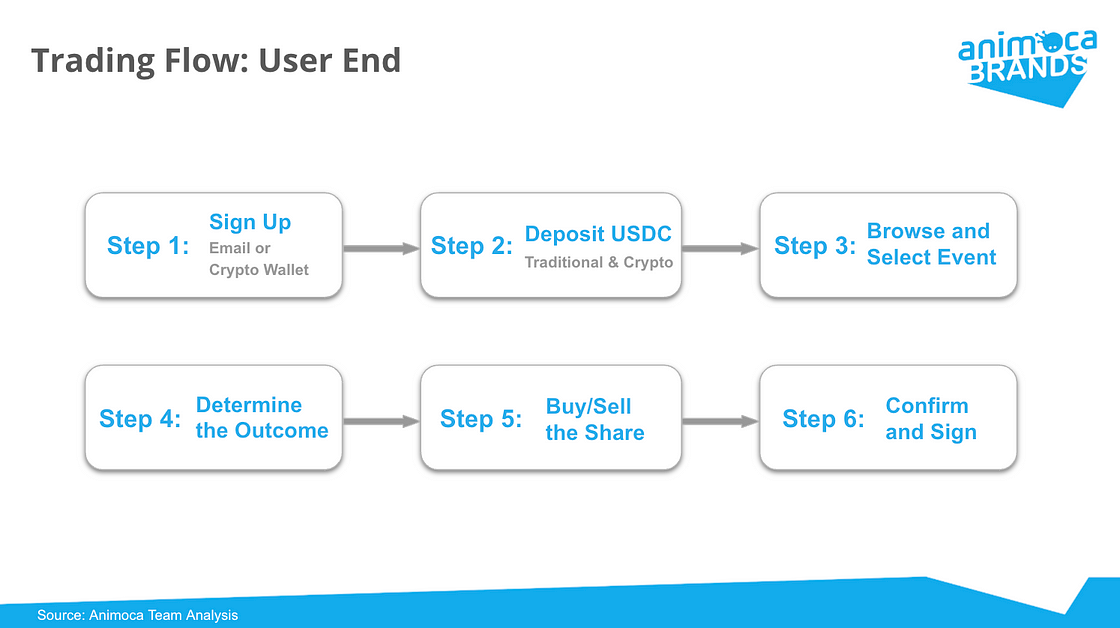
User journeys begin with registration via email or crypto wallet, followed by transferring USDC from an existing wallet to the platform or purchasing USDC directly with fiat via Moonpay. After browsing available markets and selecting an event, users leverage real-time data to inform their predictions. They then buy or sell based on these insights, with the interface showing potential returns. Once confirmed, the transaction is executed at the user’s wallet address. In case of disputes, users can challenge event resolutions.
Trading
In Polymarket’s peer-to-peer prediction markets, trades occur directly between users, with prices naturally formed by user-driven orders. New markets launch without shares or preset prices; traders place limit orders at prices they’re willing to pay, effectively acting as market makers. For binary events, users can bet on either “YES” or “NO” outcomes. When the total amount of “YES” and “NO” orders reaches $1.00, they are paired to set the initial market price. For example, a $0.60 “YES” order pairs with a $0.40 “NO” order to establish pricing. As trading progresses, buy and sell orders can match directly at existing prices, increasing liquidity.
Polymarket uses ERC-1155 tokens called “outcome tokens” to represent these binary predictions. Beyond binary choices, the platform supports more complex market structures:
-
Category Markets: Users choose from multiple mutually exclusive outcomes (e.g., A, B, C).
-
Scalar Markets: Break down broad questions into a series of yes/no contracts.
-
Combinatorial Markets: Enable layered predictions through combinations of multiple questions.
This diversity enhances platform flexibility, enabling the creation of a wider range of future events.
When an event concludes on Polymarket, profits are distributed based on the winning outcome. Winning shares are worth $1.00, losing shares $0.00. Markets settle once results are clear and conform to established rules. If users disagree with a settlement, they can challenge it by posting a $750 USDC bond, which is only refunded if the challenge succeeds—providing incentives for valid disputes while discouraging frivolous appeals.
Technical Architecture
Several components in Polymarket’s technical design ensure prediction markets operate in a decentralized manner.
The Gnosis Conditional Token Framework (CTF) provides the foundational structure for creating conditional tokens tied to various event outcomes. The CTF Exchange serves as the on-chain component of Polymarket’s order book, supporting atomic swaps between CTF ERC-1155 assets and ERC-20 collateral, and non-custodially settling matched orders. Meanwhile, off-chain operators handle order matching and transaction submission, manage pending orders, and allow immediate off-chain order placement and cancellation.
To resolve bet conditions, the UMA CTF Adapter connects the Optimistic Oracle with CTF conditions, initializing markets and resolving outcomes by querying the UMA oracle and retrieving settlement data. The UMA Optimistic Oracle resolves prediction market disputes and allows challenges during a dispute window, ensuring accurate on-chain reporting of off-chain events. Another component, the NegRisk Adapter, enables Gnosis CTF to manage binary markets by converting “NO” tokens into collateralized “YES” tokens and integrating binary outcomes into a unified market structure. Finally, the NegRisk Exchange is Polymarket’s simplified trading contract, enabling trading within NegRisk markets via a Central Limit Order Book (CLOB).
Company Overview
Team
Polymarket is led by three key individuals:
-
Shayne Coplan, Founder & CEO: A New Yorker, Shayne entered Web3 at age 15 through Bitcoin mining. He dropped out of NYU in 2017 and launched his first venture in 2020, officially launching Polymarket that same year.
-
David Rosenberg, VP of Business Development & Strategy: David brings extensive experience in business development and strategy, having worked at Foursquare, GIPHY, and Snap. He joined Polymarket in June 2020, after serving as Director of Strategy at Snap for four years. David graduated from Cambridge University in 2011.
-
Liam Kovatch, Head of Engineering: Liam left Columbia University in 2018 to start his DeFi career. He founded Paradigm Labs and served as Chief Engineer at 0x. He joined Polymarket in 2021 and quickly rose to lead the engineering team.
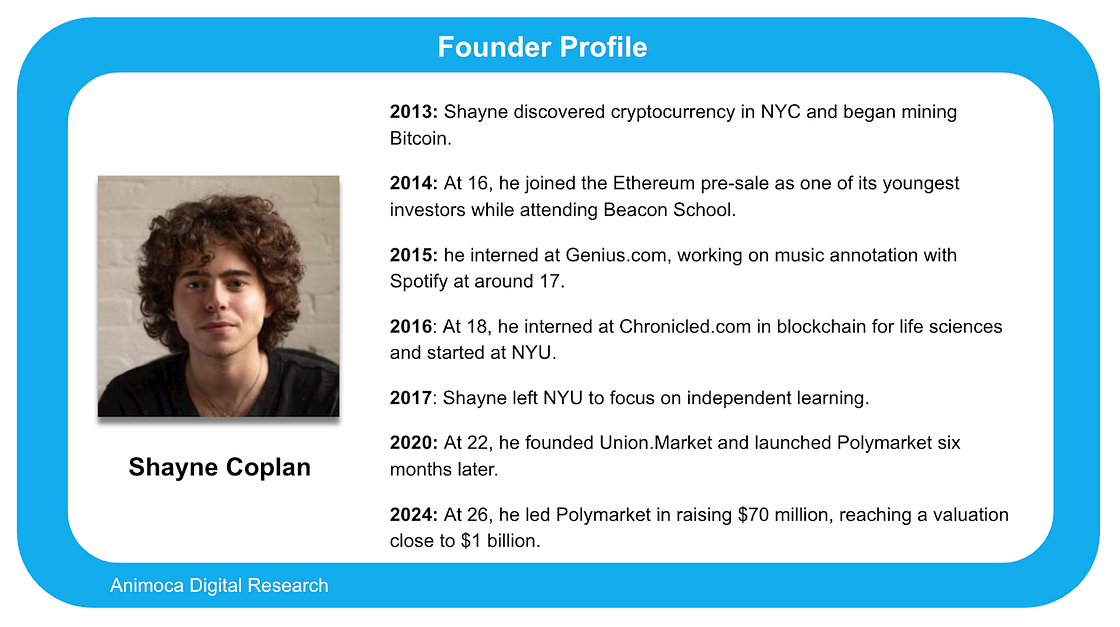
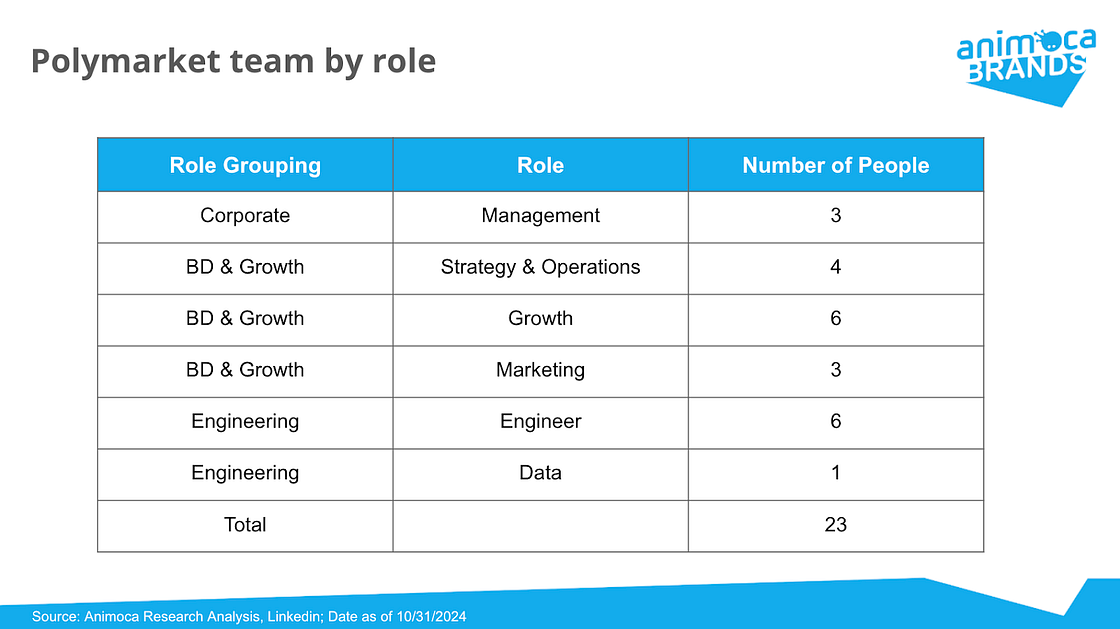
The rest of the company is organized around business development and engineering, with 12 members focused on growth, marketing, and strategy, and 8 on engineering and data—totaling 23 employees. The company also engages part-time or outsourced professionals to support other functions like finance. Most team members are based in New York.
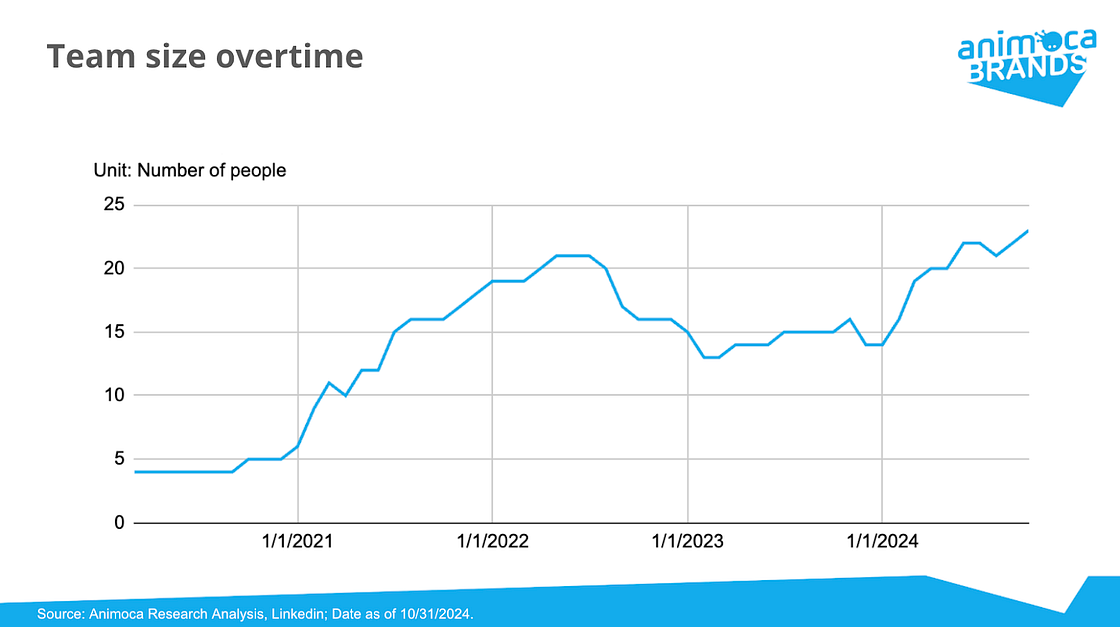
Polymarket’s team size has fluctuated over time. Initially starting with four employees, the team expanded rapidly after early success in 2020, reaching about 20 staff by mid-2022. However, in late 2022, following the CFTC investigation, the team downsized and remained lean until early 2024.
In early 2024, the company began hiring again, signaling leadership confidence in a more favorable operating environment ahead of the expected surge in trading volume.
Operating Profitability
Currently, Polymarket does not charge any fees for platform use, including buying/selling positions, rewards distribution, or deposits/withdrawals. Previously, the platform charged liquidity provider (LP) fees to compensate liquidity providers under an automated market maker model, but eliminated this fee after switching to an order book architecture in late 2022. While third-party services charge fees when converting fiat to USDC, these are paid to the service providers—not to Polymarket.
Beyond waiving fees, Polymarket subsidizes operational costs to support the platform, including market-making rewards for order book liquidity, on-chain gas fees, and website maintenance. Reports indicate Polymarket has distributed over $3 million in USDC incentives, with popular markets offering liquidity providers up to 600 USDC per day.
Polymarket’s early cash flow may have been supported by ecosystem incentives. The platform received approximately 160,000 UMA tokens (valued between $40,000 and $48,000) from UMA as an incentive for adopting its tech stack. However, there is no public information on whether Polymarket received incentives or revenue sharing from its exclusive fiat-to-USDC partner Moonpay or its blockchain partner Polygon. Such incentives are crucial for sustaining daily operations, especially considering the company raised only $4 million before mid-2024.
Although no formal monetization plan has been announced, the CEO has hinted at potentially introducing platform usage fees in the future. On the other hand, given recent fundraising success, the team may not rush to monetize, instead continuing to subsidize operations to solidify its leadership in the prediction market space. Considering that over 95% of platform traffic is for content consumption rather than trading, the platform could quickly generate revenue by adding display advertising instead of charging transaction fees.
Funding History
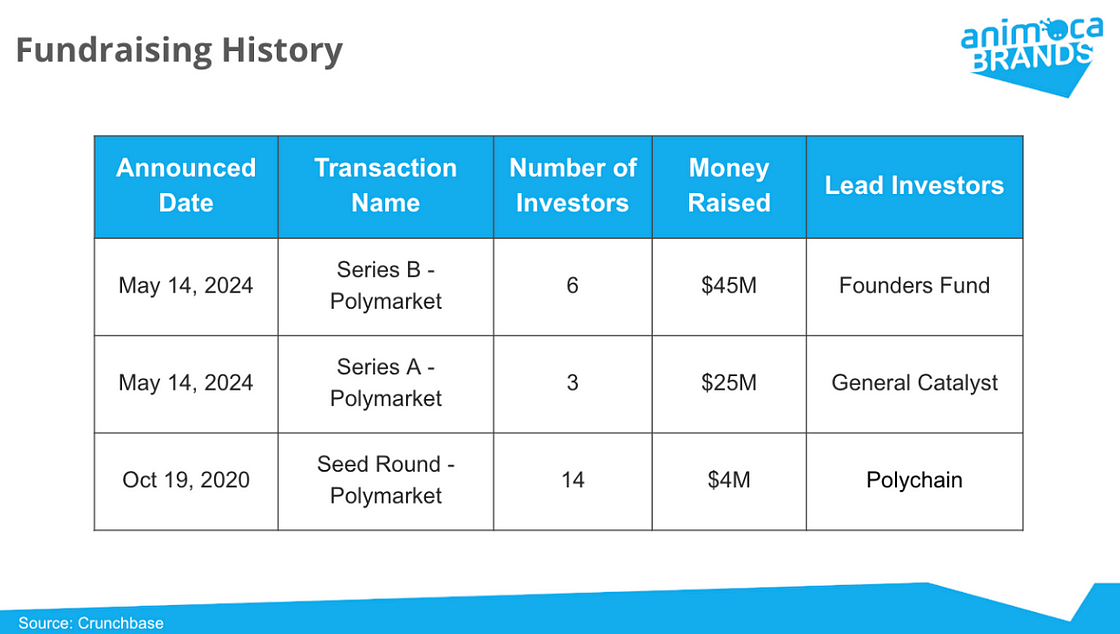
Polymarket’s first funding round occurred in 2020, raising $4 million. In May 2024, the company closed two funding rounds, attracting nine investors and securing $70 million. This capital is expected to significantly enhance Polymarket’s scalability, including talent acquisition and market expansion.
No token generation event (TGE) has been confirmed yet, but recent reports suggest Polymarket is exploring a potential $50 million funding round. The company has also hinted at possibly launching a token designed to enable users to verify real-world event outcomes.
Given Polymarket’s rapid fundraising pace and potential challenges with a traditional IPO due to its offshore structure, a TGE appears quite likely. Regarding valuation, specific figures were not disclosed in the funding rounds. However, based on the $45 million raised in the Series B, it is reasonable to infer that Polymarket’s valuation may already have reached unicorn status (over $1 billion).
SWOT Analysis
Although Polymarket has operated for four years, it has only recently gained significant market attention and remains in a highly volatile phase. Rather than speculating about its future, a SWOT analysis offers a clearer lens to assess its potential trajectory:
Strengths
Polymarket’s greatest strength is its unprecedented public visibility. This high exposure attracts a large number of participants, creating a virtuous cycle—more participation leads to more accurate and trustworthy predictions. If managed well, this self-reinforcing loop can solidify Polymarket’s market leadership.
Additionally, Polymarket’s on-chain architecture distinguishes it from traditional prediction markets by ensuring the highest level of transparency, thereby building trust. However, compared to other on-chain competitors, this advantage is not overwhelming, as Polymarket lacks proprietary intellectual property or a dedicated blockchain, making it easier for others to replicate its model.
Weaknesses
Liquidity for niche events is a major bottleneck as Polymarket expands into diverse topics. This is an inherent challenge in prediction market design, exacerbated by the order book model. Unlike traditional sportsbooks that easily cover a wide range of events, Polymarket must provide sufficient incentives to narrow spreads and improve liquidity for less popular topics.
Another limitation is that because Polymarket’s team is U.S.-centric, its platform inherently excludes U.S. users from trading. This mismatch could hinder its global development and may continue to expose it to U.S. regulatory scrutiny. The fact that “Super Bowl champion” remains the most popular sports event suggests its strategy still heavily targets U.S. audiences.
Opportunities
With its growing reputation for reliable crowd-sourced event forecasting, Polymarket has the potential to become a core component of media and social content consumption. This integration could drive more traffic and unlock new revenue streams.
Polymarket’s data also holds significant potential as an alternative asset for quantitative trading. Given its high reliability in forecasting, the platform could attract more institutional investors and algorithmic traders, stimulating demand for broader event predictions.
Geographically, Polymarket’s success could rapidly expand into regions with growing Web3 adoption, such as Asia and the Middle East. There would be strong demand for localized event predictions in regional languages.
Threats
Like other platforms in its category, Polymarket faces legal uncertainty. Regulatory challenges have affected similar platforms like Betfair and PredictIt, raising questions about whether peer-to-peer prediction markets will be classified as gambling, securities, or other financial products. Increased regulatory scrutiny poses a significant risk.
Another operational threat is the possibility of market manipulation. As a decentralized platform, individuals or groups with substantial capital could influence odds, creating misleading trends and undermining trust in the platform’s predictive power.
Join TechFlow official community to stay tuned
Telegram:https://t.me/TechFlowDaily
X (Twitter):https://x.com/TechFlowPost
X (Twitter) EN:https://x.com/BlockFlow_News
 @animocaresearch