
a16z Latest Report: Crypto Can Address Some of AI's Pressing Challenges
TechFlow Selected TechFlow Selected
a16z Latest Report: Crypto Can Address Some of AI's Pressing Challenges
As blockchain infrastructure continues to improve, the potential for AI-driven applications in the crypto ecosystem is also expanding.
 Navigating Web3 tides with focused insights
Source: cryptoslate
Translation: Blockchain Knight
According to a16z's "State of Crypto 2024" report, crypto assets are playing a key role in addressing challenges posed by artificial intelligence (AI).
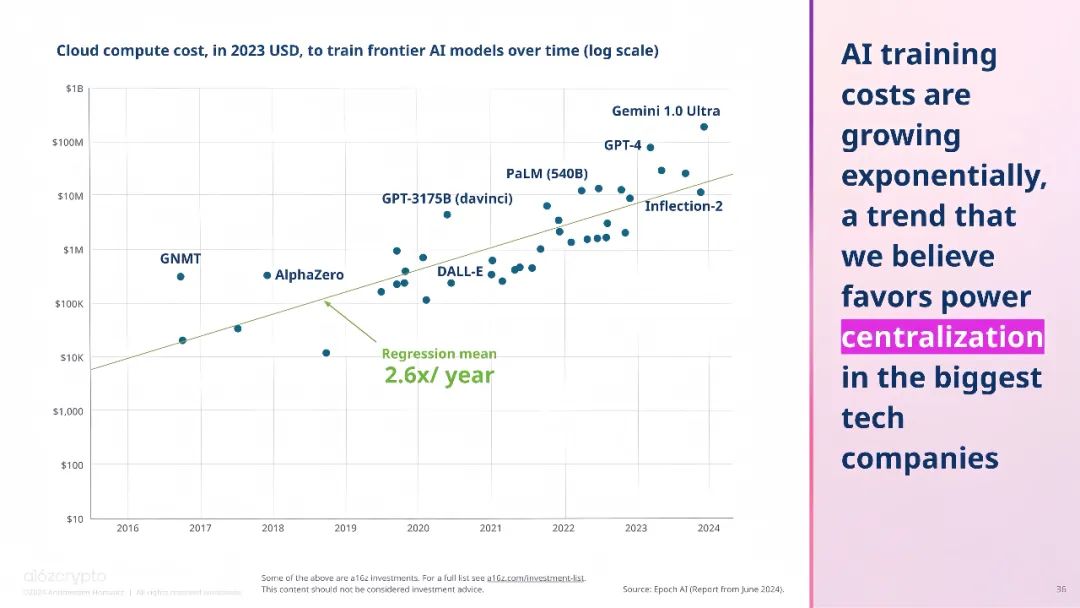
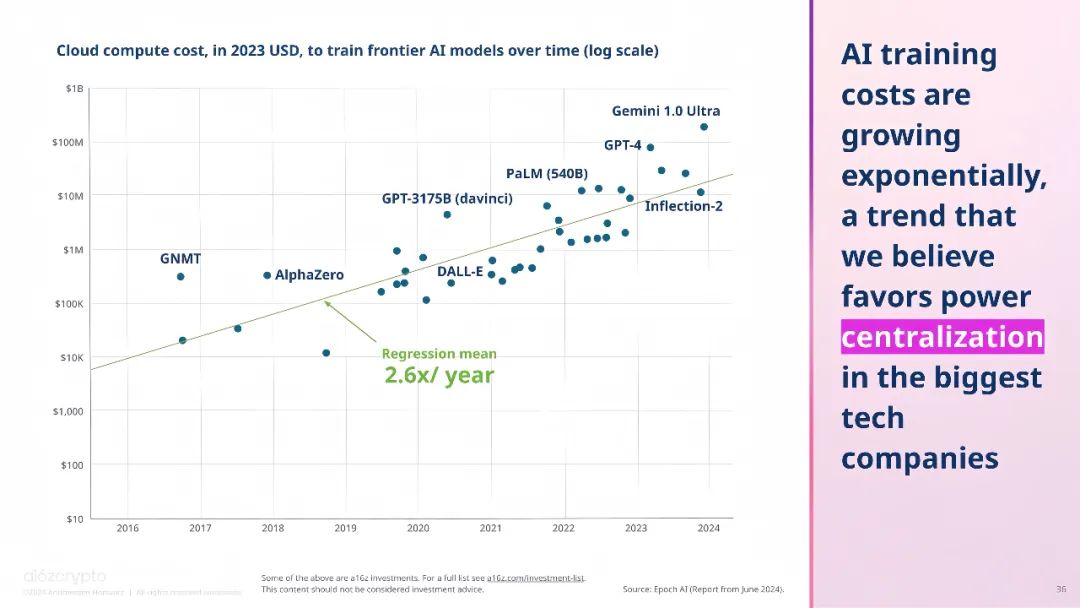
One of the issues facing AI is that development is becoming increasingly expensive and centralized, and the report presents blockchain-based decentralized solutions as a remedy.
The report highlights that 34% of crypto projects now incorporate AI, a significant increase from 27% in 2023, with many of these projects focused on making AI more accessible through decentralized networks.
Meanwhile, the soaring costs of developing and training advanced AI models have led to resources being concentrated in the hands of a few large tech companies. This centralization restricts innovation and limits access to the computing power needed for AI breakthroughs.
However, crypto projects are beginning to shift this dynamic by decentralizing access to AI resources.
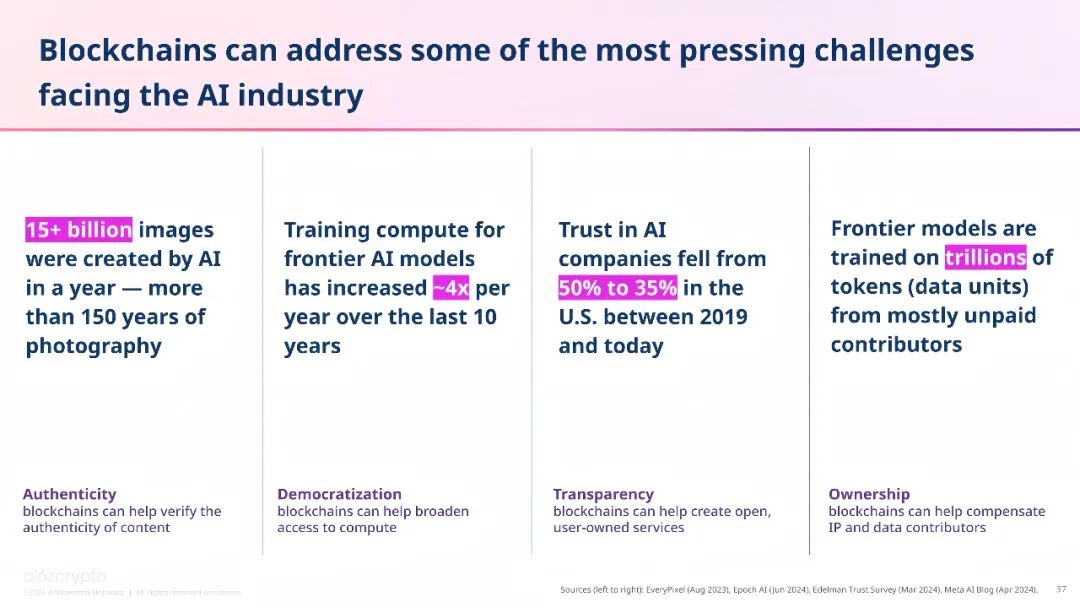
The report notes that projects like Gensyn are working to democratize access to AI computing power.
Gensyn’s decentralized network enables smaller developers and startups to access the computational resources required to train AI models, removing the financial barriers traditionally associated with AI development.
By decentralizing AI infrastructure, these projects open up opportunities for broader participation and innovation in AI, rather than leaving control in the hands of a few dominant players.
Beyond resource distribution, blockchain technology can also enhance transparency in AI processes, particularly in intellectual property (IP) and content verification.
Projects such as Near and Story use blockchain to track and verify the origins of digital content, ensuring creators receive proper credit and compensation.
These verification systems address a growing problem in AI: training datasets often include materials used without creators’ authorization or compensation.
The report also suggests that blockchain’s transparency can help restore public trust in the AI industry.
Over the past five years, public trust in AI companies in the United States has declined sharply, dropping from 50% to 35% in 2024.
Crypto developers are increasingly integrating AI into their projects, with blockchain infrastructure remaining the most widely adopted category for AI applications.
According to a16z’s Builder Energy dashboard, builders are using AI to optimize smart contracts, enhance decentralized autonomous organizations (DAOs), and improve algorithmic trading systems.
The report states that as blockchain infrastructure continues to mature, the potential for AI-driven applications within the crypto ecosystem is expanding.
Significant advancements in blockchain technology have dramatically reduced transaction costs, making it easier to build scalable, AI-powered applications.
Lower costs create more room for experimentation and innovation at the intersection of AI and decentralized technologies, enabling new applications in areas such as identity verification, prediction markets, and content authentication.
These use cases collectively demonstrate AI’s potential to unlock new functionalities on blockchain platforms.
Join TechFlow official community to stay tuned
Telegram:https://t.me/TechFlowDaily
X (Twitter):https://x.com/TechFlowPost
X (Twitter) EN:https://x.com/BlockFlow_News
 @CryptoSlate