All In Latest Podcast | OpenAI vs Anthropic IPO Showdown: Trillion-dollar Valuation, Price War, and China's Open Source Pivot
TechFlow Selected TechFlow Selected
All In Latest Podcast | OpenAI vs Anthropic IPO Showdown: Trillion-dollar Valuation, Price War, and China's Open Source Pivot
Anthropic may go public at a $3 trillion valuation, but your token bill doubles every 45 days, yet ROI is close to zero.
 Navigating Web3 tides with focused insights
Organized & Compiled: TechFlow
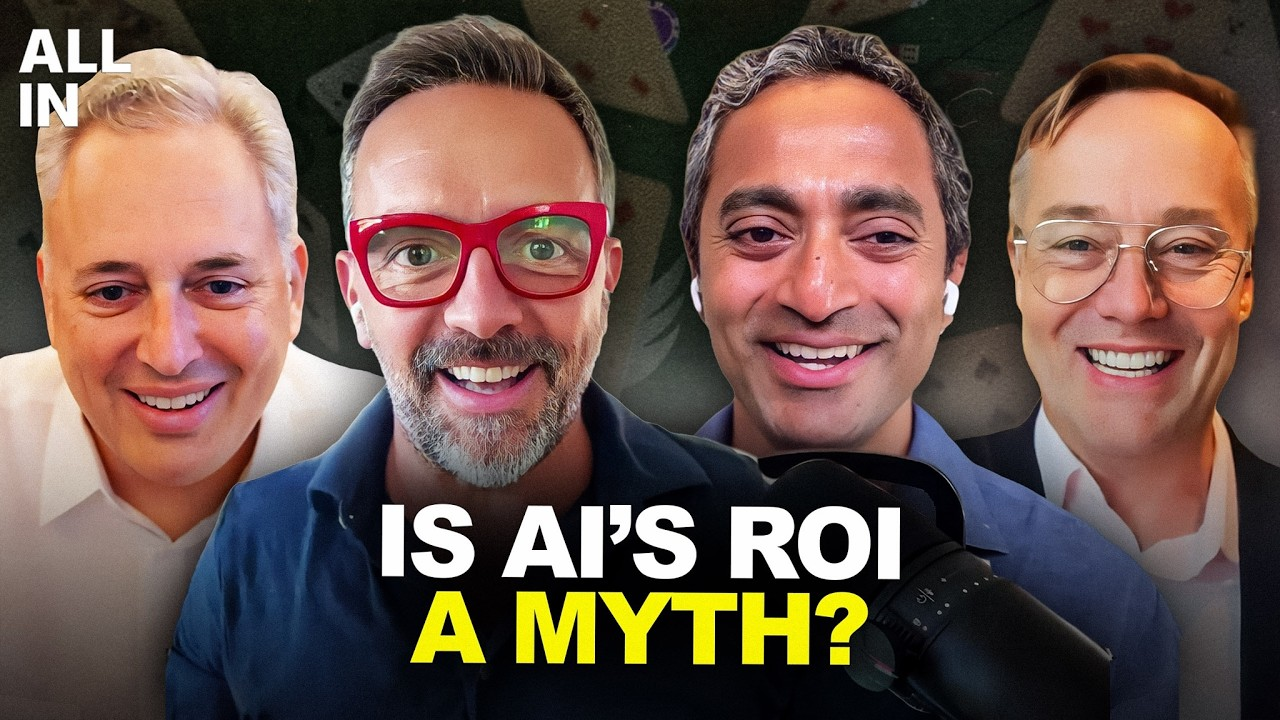
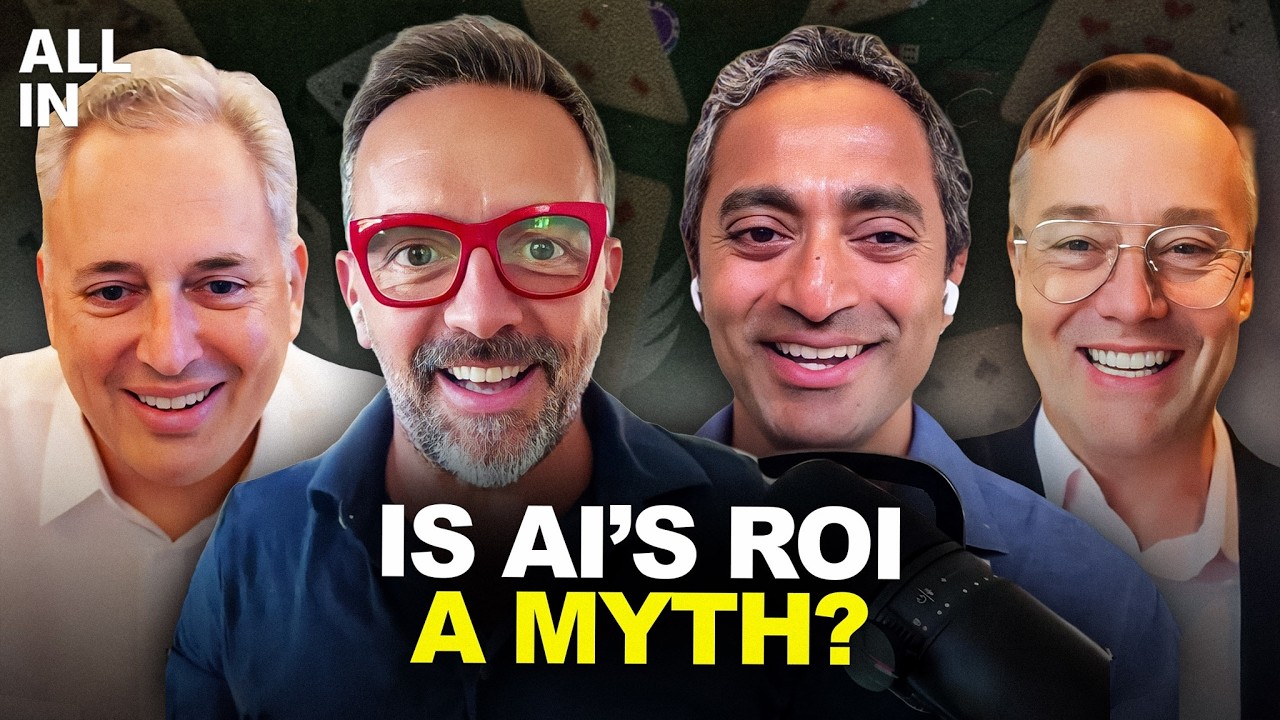
Guests: Chamath Palihapitiya (Founder of Social Capital), Brad Gerstner (Founder & CEO of Altimeter Capital), David Sacks (Partner at Craft Ventures)
Host: Jason Calacanis, All-In Podcast
Podcast Source: All-In Podcast
Original Title: OpenAI vs Anthropic IPOs, Anthropic $3T, Zuck's Price War, China Ends Open Source?, Trump Accounts
Air Date: July 11, 2026
Key Takeaways
In this Episode 280 of All-In, Friedberg is on leave, Brad Gerstner fills in. The show starts with a trillion-dollar IPO race: SpaceX has successfully listed with a $1.75 trillion valuation, Anthropic secretly filed on June 1, OpenAI follows closely. Gavin Baker predicts Anthropic's revenue could exceed $100 billion this year, listing valuation could reach $3 trillion. Brad says without hesitation that Altimeter will buy heavily into both companies' IPOs.
But Chamath poured cold water. He found his company's token costs double every 45 days, downstream productivity improvement at most 5%. He asked Claude 5 a question: How much EPS growth did AI bring to the S&P 500? The answer is 50%. But excluding Nvidia selling chips to Amazon, the actual EPS growth of S&P 493 is only 9%, most of which comes from pricing power above inflation and buybacks, true AI ROI is between 0 to 2%. Chamath's judgment is: If you can list now, list now, before these numbers seep into the market waterline.
The latter half turns to China. Reuters reports the CCP is considering limiting overseas access to China's top AI models, listing AI research leakage as a national security crime. Sacks discussed this topic in Washington with the White House and Treasury. His judgment is: China's strategy is the same as Sam Altman's back then, open source before catching up, closed source after catching up. He also revealed GLM-5.2 contains distillation watermarks of US frontier models, the US government will likely crack down on distillation. Finally, Brad spent nearly an hour talking about Trump Accounts, a plan to give every US newborn $1,000, investing in S&P 500, App launched 24 hours opened 1.5 million accounts, absorbing over $1 billion in deposits.
Highlights Summary
On IPO Timing
- Chamath: "If you can list now, list now, before these numbers seep into the waterline. Because I think that's the window where you can exit at a high price and raise a lot of money."
- Brad: "Today Altimeter will buy both these IPOs at scale and volume."
- Brad: "Anthropic's annualized revenue could exceed $100 billion, while SpaceX's forward revenue is only $35 billion. Based on SpaceX's success, this will be a phenomenal IPO."
On AI ROI
- Chamath: "My token costs double every 45 days, downstream productivity might be at most 5%. My costs are doubling, returns are basically flat."
- Chamath: "S&P 493's EPS growth is 9%, most of which comes from pricing power above inflation, another 3% comes from buybacks. True AI ROI is between 0 to 2%."
- Brad: "We've never seen revenue growth like this, because we've never seen a TAM this big. Intelligence is the largest addressable market in human history."
On Open Source vs Closed Source
- Sacks: "The enterprise spirit is willing, but the capability is weak. They want to migrate from closed source models, but can't do it."
- Sacks: "The share of open source in enterprise spending is actually declining, from 19% last year to 11% this year."
- Brad: "Using a $3 cheap model or a $15 frontier model to replace a $200 per hour consultant, the price difference doesn't matter at all."
On China's Open Source Shift
- Sacks: "China's strategy is: you open source when you're catching up, you close source when you've caught up. Sam Altman did exactly this three years ago."
- Sacks: "GLM-5.2 has Mythos distillation watermarks inside. The US government will crack down on distillation, this is the right thing to do."
- Chamath: "The best thing for the US is for a doomsday community to emerge in China too."
On Trump Accounts
- Brad: "If you get $1,000 at birth, someone matches some more, save $10 a week, by 18 it's $50,000. All invested in the S&P 500."
- Sacks: "If Trump Accounts are maxed out from the start, at past 30 years market returns, by 28 this kid is a millionaire."
- Jason: "This can replace Social Security. This replaces the Giving Pledge."
Main Text
Chapter 1 Trillion-Level IPO Race: SpaceX Set the Example, OpenAI and Anthropic Prepare to Debut
Jason: Let's start with IPO updates. A trillion-dollar level IPO sprint is underway, SpaceX has listed, trading price basically near the issue price. Pricing was perfect, theoretically two more to follow: OpenAI and Anthropic. SpaceX stock price once hit $200, now fell back to $150, right at the issue price. Currently market cap $2 trillion, seventh largest company globally. Anthropic secretly filed on June 1, Polymarket gives 65% probability for listing this year. Gavin Baker said two weeks ago, he thinks Anthropic's revenue will exceed $100 billion by end of year and achieve profitability, if listed now valuation could reach $3 trillion. Chamath, you previously said Elon listing first was a good move, what's the probability these two come out this year or next Q1?
Chamath thinks both are excellent businesses, but the core question is where the market clearing price is. This depends more on how much appetite the market has for new issuances, and at what price level it can digest.
OpenAI and Anthropic are at different stages. OpenAI's last disclosed information shows cash burn is still high, because business is scattered, more reliant on consumer side. Brad previously mentioned Anthropic might have unexpectedly become profitable. Chamath shared a detail: he asked his CTO about token spending, the other party said "currently doubling every 45 days". He asked how much downstream productivity improvement, CTO said "at most 5%". Costs are doubling, returns basically flat. CTO explained, to reach the next iteration improvement requires consuming much more tokens, because effects are starting to diminish marginally.
Chamath's judgment is: If you can list now, list now, before these numbers seep into market cognition. This is probably the window to raise big money at high prices.
Brad, as an investor in both companies, gave a more optimistic judgment. SpaceX's IPO was textbook: raised $75 billion, valuation $1.75 trillion, forward revenue about $35 billion, current stock price already up 25%. Anthropic's revenue reportedly could exceed $100 billion this year, if true, next year GAAP revenue could far exceed this number. Based on SpaceX's successful precedent, Brad thinks this will be a phenomenal IPO. SpaceX did pioneering work on IPO volume, pricing, liquidity, index inclusion, lock-up arrangements, Anthropic and OpenAI are both learning from it.
Regarding the controversy over index inclusion, Brad explained previous rules existed for a reason, because most newly listed companies are younger, less revenue, weaker profitability. But SpaceX is too big and too important, not including in index is unreasonable. Exchanges and index companies made adjustments, didn't stuff it in at the highest point, avoiding the common 30% pullback after IPO叠加 on passive investors.
Brad also revealed OpenAI's latest dynamics: revenue has rebounded to about $70 billion this year, GPT6 might be released within 30 days. Although only twice SpaceX's revenue, less than Anthropic's rumored $100 billion, but as one of the two frontier labs, listing at over trillion with this growth rate is reasonable. He doesn't think there's a race between the two, both will act when timing is mature. OpenAI's company structure adjustment is more complex, so might be after Anthropic.
Chapter 2 Token Costs Double Every 45 Days, AI Investment Return Close to Zero?
Jason: We've been discussing token spending ROI issue these past few weeks. CTOs and CEOs in the industry are starting to respond publicly on X. Uber's CTO Pinen shared their approach: 99% of engineers are using AI tools, over 70% of pull requests come from local or cloud agents, engineers have already built 200 agentic skills. They deployed engineers to various departments as "frontline deployment engineers", working with department heads to sort out processes. Brad, what do you think of Uber's approach?
Brad thinks Chamath is right, the question is just time frame. Now indeed there's a lot of money spent in experimental buckets, might not have direct ROI. But enterprise adoption of AI is still too early. Addressable market is every company on earth, unprecedentedly large. Revenue distribution is also not concentrated, millions of customers making rational decisions independently every day.
Brad made a bold prediction: If Anthropic's revenue exceeds $100 billion by year end, their revenue next year could double another 3 to 5 times. From $100 billion to $300 billion, $200 billion incremental revenue is unimaginable in Silicon Valley history.
Chamath's skepticism focuses on ROI sustainability. He asked Claude 5 two questions. First: How much EPS growth did AI bring to S&P 500? Answer is 50%. But he found this number includes Nvidia selling chips to Amazon revenue. So he asked second question: What is S&P 493 (excluding Mag7) EPS growth? Answer is 9%. Breaking it down, most comes from pricing power above inflation, another 3% comes from buybacks. True ROI attributable to AI is between 0 to 2%.
Chamath thinks enterprise side looks shiny, but the problem is smart investors like Brad and Gavin will sooner or later ask companies: What's your ROI? Where is the actual EPS improvement? If answer is "I'm not too sure", and you don't have sustained pricing power, enterprise side will become fragile. Consumer side instead becomes a safe haven, because you have tens of millions of buyers, price points much smaller, two orders of magnitude buyer difference exempts you from ROI scrutiny.
Jason added a perspective: The uniqueness of this technology is it touches everyone in the organization. When Excel came out, accounting department was excited, but HR and marketing departments didn't feel much. AI is different, in a 1,000 person organization everyone is using it, each person spends $200 monthly, doubles to $400, relative to $150,000 annual salary is just an increase of 3 to 4%. Key question is: Did it make this person 3 to 5 times more efficient? If yes, that explains why token spending is surging.
Chapter 3 Open Source vs Closed Source: Revenue Concentrating on Frontier, But Enterprises Want to Run
Jason: Sacks, CTOs are starting to discuss intelligent routing on X, send tasks to open source models first, if can't handle then fallback to Claude. What do you think of this trend? If you're an investor, when frontier model's CFO starts asking "can it be cheaper", how do you view frontier model growth?
Sacks thinks enterprise CTOs indeed want to shift token consumption to cheaper models. They watch token costs soaring, all trying to find ways to brake or at least control. Plus AI sovereignty issue discussed last week, enterprises worry about handing core alpha to a frontier lab that might become a competitor in the future.
Sacks's core judgment is: Enterprises want to migrate from closed source models, but most don't have technical capability to do so. The spirit is willing, the flesh is weak.
Coinbase and DoorDash achieved it, they built token routing middleware, send frontier tasks to frontier models, non-frontier tasks to ordinary models. But general enterprises don't have this capability. This is why closed source model wallet share is instead increasing. Open source share in enterprise spending dropped from 19% last year to 11% this year. Of course this doesn't mean usage is declining, might just be because using open source models only pay hosting fees, not pay labs, so hard to statistics.
Sacks also cited Decagon founder's view: When you know exactly what to do, using small and cheap open source models is right, but you need data and post-training. If you don't know what to do yet, you want the most powerful general intelligence. Mature use cases use open source, immature use cases use frontier models.
Jason mentioned Databricks founder Ali's discovery: Same model, changed harness (task orchestration framework), costs can be cut in half. GLM-5.2配合 specific harness performs extremely well, task volume directly halved. Jason himself has experience: He built a trend discovery agent running hourly, after optimization token consumption dropped 80%. When tokens became cheaper, he changed agent from running daily to hourly, then split single agent into three parallel tasks. Woke up in morning found 14 tasks completed, feels completely different.
Brad's view on this is: Core debate is whether intelligence will converge. 18 months ago when DeepSeek moment happened, market fell 40%. Many thought frontier models were done, open source would kill them. But 18 months passed, facts are exactly opposite. Jesse Zang's tweet pointed out, frontier labs wallet share is actually rising, although token usage is rising on both sides.
Brad proposed a counter-intuitive hypothesis: Maybe intelligence simply won't converge. If superintelligence becomes self-recursive, models smarter make more money, make more money buy more compute, buy more compute build better models. Distance might not be narrowing in next 2 to 3 years, instead widening.
Jason also mentioned he interviewed Lovable's CEO Anton, product launched about 30 months, revenue grew from zero to $600 million. He also asked 11Labs's CEO Matti: You are frontier models' big customer, spend tens of millions annually, worry about data leakage and competition? Both said developing their own models. These are eight or nine figure big customers, if they all start building vertical models, frontier labs will feel pressure. But Chamath countered: 11Labs wants to make world's best voice agent, if best voice capability comes from frontier labs, can he bear the cost of using suboptimal self-built models in competitive market?
Chapter 4 Zuck Launches Price War: Same Quality, One Percent Cost
Jason: Meta released Spark 1.1 this week, a very strong agentic encoding model, price very low. Zuck is unusually active on X, posted most tweets in history. He's basically saying: I give you same quality, but cost only one percent. Brad, what do you think of Zuck's strategy?
Brad thinks Meta previously had mistakes in open source strategy, but now Zuck clearly chose price war direction. Meta simultaneously released new model API, not just making models, also providing tokens. Competition is good for US.
Brad used an analogy to explain why frontier models won't be easily replaced: If your AI agent is replacing a $200 per hour consultant, using a $3 cheap model or a $15 frontier model, this price difference doesn't matter at all. Key is whether the $15 one can complete task without errors. If task crashes halfway, you lose both tokens and time.
Chamath has different view on this. He thinks like when iPhone first came out everyone kept upgrading, because new price was worth it. But someday people will say "old phone is good enough". He tried Claude 5 and found some research directions were restricted, didn't answer. Everyone will reach "good enough" critical point at different times.
Chamath also shared his experience at UN AI Committee. He participated in UN AI Committee co-hosted by Benioff together with Benioff, Jensen, Brad Smith. His observation is: No country in the world is not formulating its own sovereign AI strategy, and no country is willing to use US closed source models as answer. Many countries would rather take an open source model, like Nvidia's, build a whole set of infrastructure themselves.
Sovereign AI examples include: UAE's Falcon model, Saudi Arabia's Arabic LLM, Japan investing $6 billion Neoterra alliance jumping directly to physical AI and robots. Chamath thinks when models reach 95% to 99% frontier level, many countries will say "good enough". On other hand, some companies don't have enough profit growth to support this spending, nor courage to make large-scale cost cuts. Like the famous letter he wrote to Zuck, Zuck was pushed by pressure to finally execute. Most companies will just let problems accumulate.
Chapter 5 China Considering Limiting AI Model Exports: Start Closing Doors After Catching Up
Jason: Reuters reports, CCP is considering limiting overseas access to China's top AI models. Two regulators interviewed Alibaba, ByteDance and Z.AI (the one making GLM-5.2), discussing limiting overseas access to top open source and closed source models. They are listing AI research leakage as national security crime, also want to control who can invest in China AI labs. Sacks, last week I raised reverse question: Should US ban China models? Now it's reversed, China saying limit. What do you think of this chess game?
Sacks thinks this news might be somewhat exaggerated. China's number one model is ByteDance's, originally closed source. Alibaba's Qwen was open source before, now might be turning closed source. Z.AI's GLM-5.2 was open source before, now also turning closed source.
Sacks's judgment is: Strategy is obvious, you open source when catching up, you close source when approaching frontier. Sam Altman did exactly the same thing to OpenAI three years ago, from non-profit to for-profit, from open source to closed source.
Open source benefit is attracting developer community, in AI field also gives you reinforcement learning data flywheel. But once you've caught up, closed source can capture all value.
Sacks discussed this topic in Washington with White House and Treasury this week. He said among all regulatory controversies, one thing is absolute consensus: Lead China at all costs. From President down, everyone is asking "how far ahead are we" and "what needs to be done to stay ahead". The idea of letting US frontier labs exit while letting China's open source models circulate freely, this thinking doesn't exist in Washington. He also revealed GLM-5.2 has Mythos distillation watermarks inside, US government will likely crack down on distillation.
Sacks thinks China doing this instead has little impact on US. US has capability to make open source models, Nvidia is doing it, Reflection is also doing it. He talked to frontier labs about why not do open source, other party's answer was "demand not big, if demand big we'll do it". For China, limiting exports might hurt themselves more.
Chamath made a joke: Best thing for US is for a doomsday community to emerge in China too, worrying about AI unemployment and existential risks all day. If China's labs also start being bound by regulations, that's biggest benefit for US.
Chapter 6 Trump Accounts: Open an S&P 500 Account for Every US Child at Birth
Jason: Brad went to Washington this week. Trump Accounts App is already the number one downloaded app globally. Congrats Brad, this is your four years of effort. Tell us what happened.
Brad introduced this is a four-year journey. Last year Invest America Act was signed into law as part of bill, this year July 4 App officially launched. Every US newborn receives $1,000, deposited into a private investment account, all invested in S&P 500. Account lifetime free. Within 24 hours of launch opened 1.5 million accounts, absorbed over $1 billion in deposits. They held NYSE and Nasdaq's first joint bell-ringing ceremony in history at White House Oval Office, hundreds of CEOs attended. President proposed to automatically create accounts for 50 to 70 million minors under 18.
Sacks analyzed the mechanism's brilliance from financial planning perspective. Can deposit $5,000 into child's account annually (friends and family all can), employers can tax-free contribute $2,500. Enjoy tax-free compounding before 18. After 18 can withdraw up to 25% for buying house, starting business or college, remaining part rolls into IRA. If wait until child is no longer dependent (like just graduated in 0% tax bracket) then do IRA to Roth IRA conversion, almost no tax to turn money into lifetime tax-free investment.
Sacks calculated a bill: If Trump Accounts are maxed out from start, at past 30 years market returns, by 28 this kid is a millionaire. If $200,000 to $300,000 at 18, compound to over $10 million by 60.
Charity side also has a series of heavy announcements. Michael and Susan Dell donated over $6 billion, $250 for each of 25 million low and middle income family children. SpaceX President Gwen Shotwell donated $350 million SpaceX stock, directed to children in low income communities. Micron donated $250 million, each employee's child up to $1,000. Brad himself donated $100 million, covering all children in Indiana.
Brad said they told President, expect to raise $100 billion within 12 months. This will become the largest direct charity platform in US history, no middlemen, directly into children's accounts, cannot withdraw before 18. On this trajectory, future ten years will have over 100 million private investment accounts, future 15 years might have $2 to $4 trillion entering family accounts that originally had nothing.
Jason summarized from a broader perspective. He said this project can replace Social Security, replace Giving Pledge. US now only 50% of people hold stocks, if Trump Accounts successfully promoted, might rise to 70% to 75%. Australia is one of the happiest countries in the world, because their superannuation system forces everyone to deposit 12% to 14% of income into a 401k-like account. Trump Accounts doing similar thing, but at more fundamental level.
Jason also specially thanked Joe Gebbia (Airbnb co-founder) joined government responsible for this project's software design. He said US government made very excellent consumer-grade software, this is rare in history. Brad added team includes Michael Dell, Vlad Tenev (Robinhood CEO), Joe Gebbia and Treasury's Luke Pettit, goal is to build not just government's best product, but one of the best consumer-grade products.
Join TechFlow official community to stay tuned
Telegram:https://t.me/TechFlowDaily
X (Twitter):https://x.com/TechFlowPost
X (Twitter) EN:https://x.com/BlockFlow_News
 深潮TechFlow