Who Handles AI Agent Disputes? Blockchain "Internet Court" Has Convened
TechFlow Selected TechFlow Selected
Who Handles AI Agent Disputes? Blockchain "Internet Court" Has Convened
Future Robots Help You Shop, But Disputes Pose a Challenge: Crypto Projects Launch Internet Court to Quickly Resolve Agency Business Conflicts.
 Navigating Web3 tides with focused insights
Written by: Forbes
Compiled by: AididiaoJP, Foresight News
In the near future, everyone will use AI agents. These agents connect to the cloud, reside in phones, and can help you reply to emails, book flights, and even automatically tax-loss harvest for investment portfolios.
Robinhood customers now use AI agents to analyze stock market fluctuations and trade autonomously based on personal instructions. SAP's Joule helps enterprise customers analyze inventory, find the best suppliers, and complete purchases. Shopping agents like Amazon's "Buy for Me" scan for the best deals online at machine speed, negotiate terms with seller agents, determine delivery times, and pay directly.
From well-known AI and cryptocurrency companies like Anthropic and OpenAI to Coinbase and Circle, all are pushing hard to bring this agent-driven future sooner.
But what happens when an agent orders a sofa in the wrong color, it arrives two weeks late, or the goods are damaged and the seller insists it happened after delivery? This seemingly insignificant but potentially costly problem lurks within the grand blueprint of agent commerce. Although software can already shop, bargain, hire, and pay on behalf of humans and enterprises, AI sometimes "hallucinates," and business is never just about money; accidents always happen.
"Agent commerce is reaching a critical turning point, yet we are not prepared for the potential consequences," said David Riudor, CEO and co-founder of the GenLayer Foundation. Based in the Cayman Islands, the foundation operates a new blockchain called GenLayer and its core application—the Internet Court. Designed specifically to adjudicate disputes between agents, this court operates without human intervention and has gained support from 26 crypto and AI companies, including crypto exchange OKX, wallet provider MetaMask, and Binance's BNB Chain.
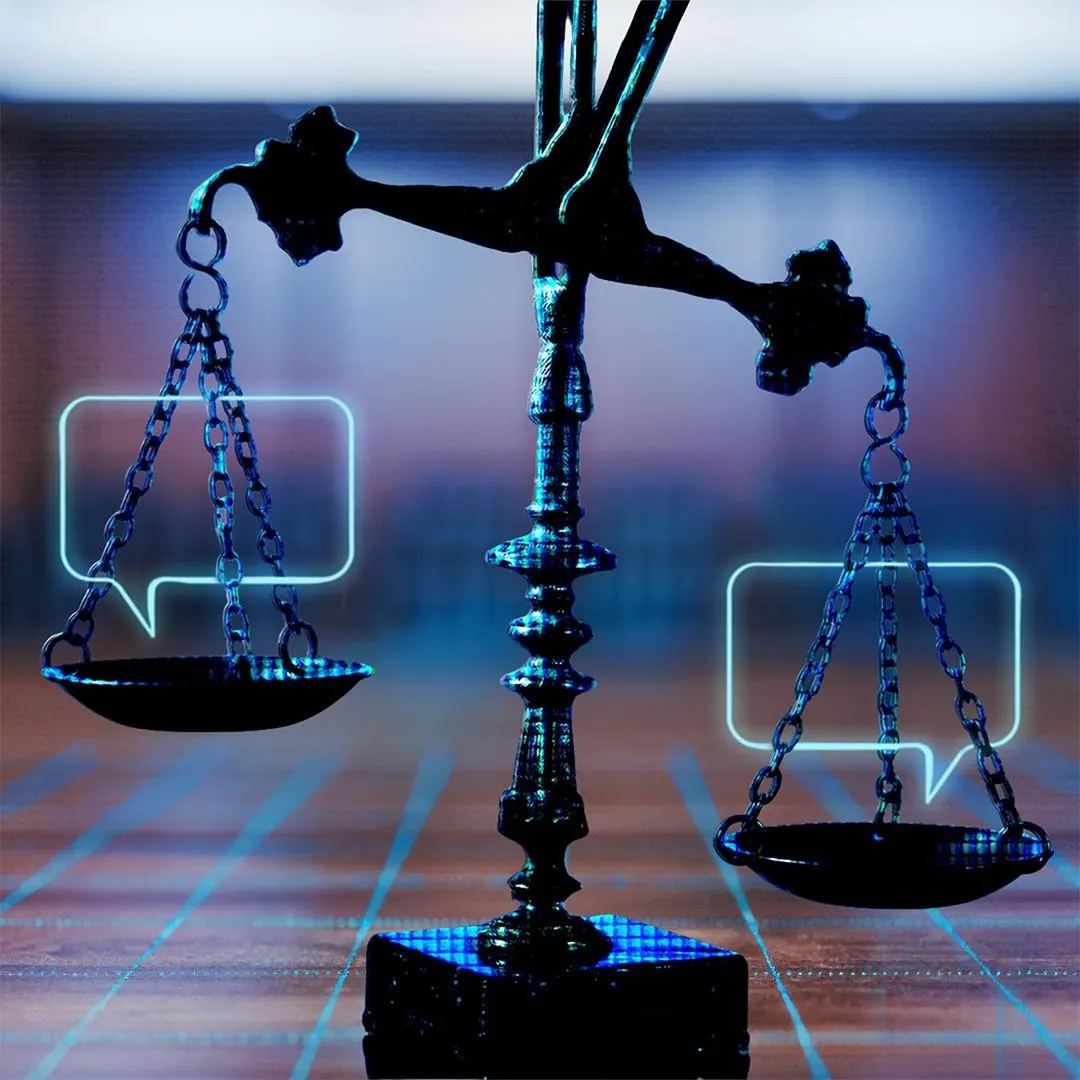
The Internet Court does not aim to completely replace human judges with robots, but rather to help agents sign contracts with clear terms in advance. When both parties cannot agree on the outcome, an AI jury will evaluate the evidence and deliver a verdict within minutes.
Riudor pointed out that this technology is particularly suitable for small transactions—hiring a lawyer is not cost-effective, but ignoring the issue incurs costs. "We are not competing with the traditional legal system," said Albert Castellana, co-founder and CEO of GenLayer Labs. "We are just providing an alternative. For a $10,000 claim, hiring a lawyer is uneconomical; this system can resolve it quickly, costing perhaps only a few cents."
The potential market size is huge. According to Adobe Analytics, since October 2024, retail website traffic driven by AI recommendations has grown more than 14-fold. McKinsey predicts that by 2030, AI agents could facilitate $3 trillion to $5 trillion in global consumer commerce transactions. However, most emerging infrastructure currently focuses on the "smooth path"—agents finding what the owner wants, completing payment, receiving goods or services, and moving on.
Currently, the Internet Court is already applied in limited scenarios. The social platform Collective Memory rewards users for uploading real-time photos, videos, and reports; when it needs to determine whether a disputed image is fake, it calls upon the GenLayer system. For example, for videos from a bombed school in Gaza or scenes from the streets of Tehran, the Internet Court will determine their authenticity based on evidence such as upload time, location, related submission records, and user historical activity.
The ultimate goal is for the Internet Court to automatically intervene when AI agents dispute with each other.
Imagine a small online clothing company where the owner has handed daily operations over to multiple agents: one manages inventory, one buys ads, and one finds creativity. The boss wants a new logo; an agent finds another designer represented by an agent. Both parties agree on design, price, and delivery date; the logo looks good upon delivery but is found via reverse image search to potentially plagiarize someone else's portfolio.
The Internet Court is designed precisely for such situations: allowing agents to agree on terms in advance, escrowing the payment, and once a dispute arises, submitting it to the jury for handling before funds are released.
The core of the jury is blockchain technology. It consists of 5 randomly selected blockchain validators, each running different models (e.g., Claude, GPT, Gemini). One serves as the leader to propose a preliminary decision; others vote secretly first, then publicly state whether they agree. If consensus is reached, a 30-minute dispute window opens, during which agents or humans can challenge by posting a bond. If challenged, the jury size expands to 11, and so on, until consensus is formed and no one raises further objections.
This mechanism draws on the Jury Theorem proposed in 1785 by Enlightenment philosopher and mathematician Nicolas de Condorcet: the more independent evaluators, the higher the probability of reaching a correct conclusion. GenLayer believes that a multi-model combination is harder to manipulate than a single model or a single human arbitrator.
Although disputes between agents sound somewhat futuristic, the Internet Court is already online and in the testing phase. According to Castellana, the network processes about 350,000 transactions daily, generating 20,000 to 25,000 decisions. It is planned to officially launch publicly later this year and issue tokens to attract more validators—anyone can participate in this role.
Riudor stated that this system is not limited to agent commerce in the future but can also be used for prediction markets. For example, Polymarket currently relies on the UMA protocol to submit disputed outcomes to token holder voting, whereas AI-assisted adjudication would be faster. "We are communicating with some large prediction markets," Castellana said. "They are still waiting for us to go fully live, but are already evaluating."
Andrew Hall, a professor at Stanford Graduate School of Business and research advisor to the a16z crypto team, wrote earlier this year that using large language models as adjudicating judges could help prediction markets scale, because models cannot be bribed and their performance is improving rapidly. But he also warned that models can still hallucinate and may be manipulated through clever prompting or contaminated training data.
Lindsay Lin, former general counsel and current COO of New York crypto venture capital firm Dragonfly, also sees similar issues: "Many large language models have correlations due to shared training data and common defects, whereas human judgment is often more independent. However, people will tend to use AI to handle low-value disputes because it is cheaper and faster than human jurors. Agent commerce is huge in scale, and the volume of disputes will also be large. It does make sense for agents to have standardized protocols so they are clear on cooperation terms and remedies when transactions are not completed correctly."
Others have reached similar conclusions. Just two weeks ago, the world's largest arbitration institution—the American Arbitration Association International Centre for Dispute Resolution—announced the launch of the "Legal Context Protocol" standard for agents. Co-led with Denver blockchain company Integra Ledger, founding contributors include Google, IBM, and several leading crypto companies such as Circle and Ava Labs.
Of course, whether these standards can become widespread ultimately depends on widespread adoption and whether AI models can effectively reduce hallucinations and biases.
Meanwhile, infrastructure for agents to find, hire, and pay each other is taking shape rapidly. In recent weeks, GenLayer partner OKX and the AI-focused NEAR blockchain team have sequentially launched markets allowing agents to hire other agents to complete paid tasks, such as acquiring datasets or assisting with code reviews.
Real courts have also begun handling AI agent violation cases. In November 2025, Amazon sued Perplexity, alleging its AI-driven Comet browser logged into customer accounts, disguised itself as a normal Google Chrome browser, and shopped on the Amazon platform without authorization. In March, a California federal judge issued a preliminary injunction prohibiting Comet from shopping on Amazon, but the appellate court later stayed the order and is hearing Perplexity's appeal.
Regardless of how the court ultimately rules, this case highlights a larger challenge facing agent commerce: when millions of AI agents act on behalf of users across platforms, how can they be effectively regulated if there is a lack of a unified enforcement mechanism?
Join TechFlow official community to stay tuned
Telegram:https://t.me/TechFlowDaily
X (Twitter):https://x.com/TechFlowPost
X (Twitter) EN:https://x.com/BlockFlow_News
 Forbes