Game Project Token Launch: Choosing Between CEX and DEX?
TechFlow Selected TechFlow Selected
Game Project Token Launch: Choosing Between CEX and DEX?
Combining DEX with 100% distribution is a pretty good strategy.
 Navigating Web3 tides with focused insights
Author: 1mpal
Translation: TechFlow

Recently, the debate over game projects listing on decentralized exchanges (DEX) versus centralized exchanges (CEX) has intensified. As an advisor to gaming projects, I’ve witnessed this firsthand. Exchange listing requirements are becoming increasingly strict and expensive.
While exchanges claim stricter standards help filter higher-quality projects, in reality, these rising barriers force teams to reshape their development roadmaps and overemphasize token generation events (TGE). As a result, launching on DEXs and allowing market forces to organically manage token supply has recently gained significant traction and support.
1. The Irrationality of CEX Listings
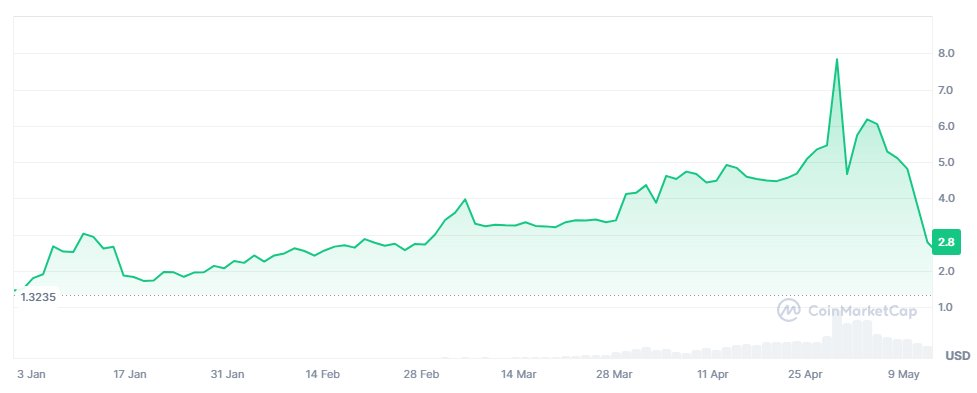
Remember the red flags when GST listed on CEX?
Possibly, all utility tokens face challenges beginning at exchange listing. The benefit lies in creating liquidity—especially when listed on top-tier CEXs, where full dilution valuations (FDV) are secured and project valuations artificially inflated. For example, Binance’s FDV reached $800 million; OKX’s was $300 million.
Projects typically need to allocate 10–20% of tokens just to list on an exchange. After TGE, existing projects often spend hundreds of thousands of dollars to list elsewhere to generate trading volume. This is devastating for game sustainability, as much of the volume flowing into exchanges ultimately results in sell-offs.
If trading volume for in-game utility tokens becomes overly concentrated on centralized exchanges (CEX), even the most innovative utility designs struggle to function effectively. Stepn's GST is a classic example. Recently, gaming projects have started adopting meme-like personas and actively engaging in narrative-building.
2. Hedging and Lending
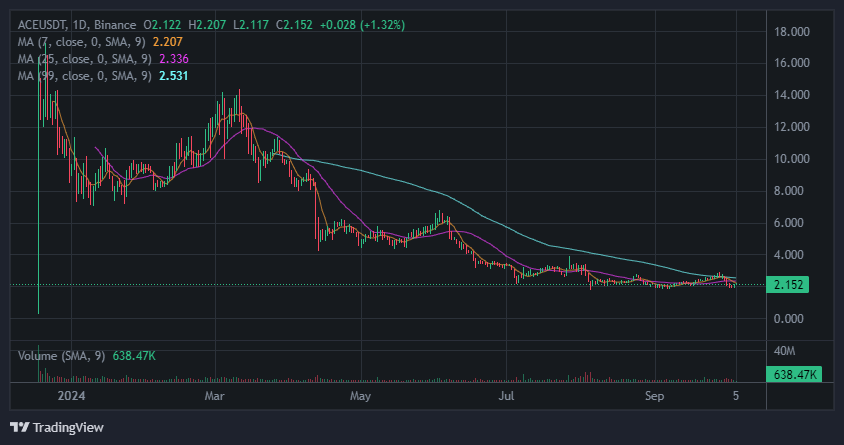
The ability to hedge essentially means a token can be used for margin or futures trading—beneficial for market-making and boosting volume, but extremely detrimental for utility and play-to-earn (P2E) tokens.
For instance, there’s a popular game in Korea called ACE ARENAS. My friends earn thousands of dollars monthly playing it. When others hear about it, they rush in. Should the token’s value rise due to increased demand? Surprisingly, no—because of hedging strategies.
Of course, decentralized exchanges (DEX) are gradually supporting hedging too, but most players still prefer risk-free yield generation on centralized exchanges. Especially because exchanges support lending of gaming utility tokens, which greatly accelerates downward price spirals.
3. Interesting Cases
This is why some recent projects have begun experimenting with token launches on decentralized exchanges (DEX). XBORG offered strong opportunities during its public sale, with early participants achieving roughly 4x to 5x returns. It’s a rare case where price rose despite 100% token allocation.
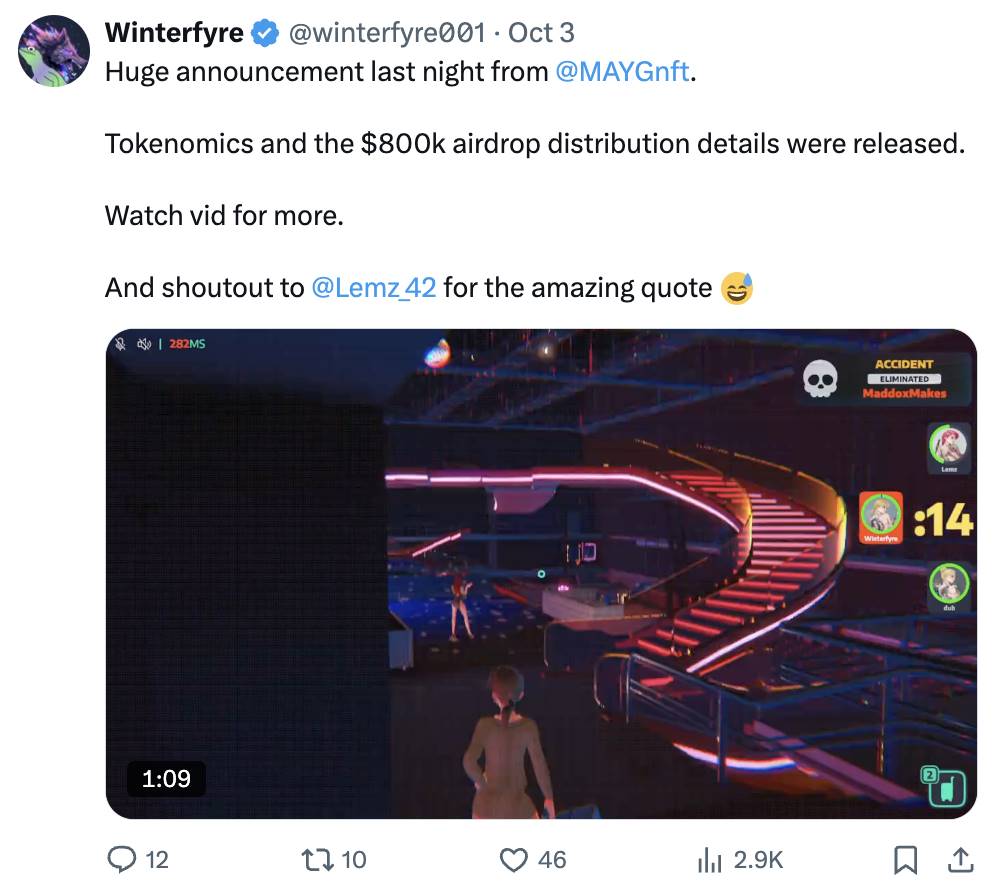
MAYG is attempting an even more radical experiment. It launched with an extremely low fully diluted valuation (FDV), distributing all tokens to the market from day one. With the product not yet fully released, this appears to be blending "meme" culture with game utility tokens.
Seedify Fund is another DEX-centric project, recently promoting Seedworld as a de facto token/NFT public sale. However, instead of distributing all tokens upfront, it signals confidence in the project—much like the original Seedify, which was also DEX-first.
-
Guaranteed FDV vs. high-risk, high-reward dynamics
-
Assured trading convenience and visibility vs. reinforcing a gaming token’s identity
-
Full distribution models hold experimental appeal for both CEX and DEX
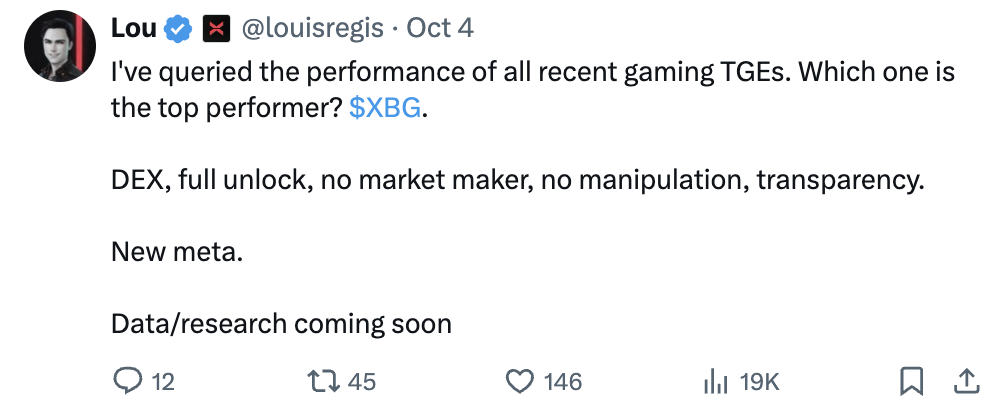
Before concluding, I should clarify—I’m not certain whether XBORG truly has value to justify its FDV, nor do I consider a temporary $100 million FDV a definitive "success." They might pop champagne and declare themselves the center of the metaverse, but I mention them merely as an example.
I remain optimistic about tokens that will list on top-tier centralized exchanges (CEX) and highly value their potential. Yet, I believe current game tokenomics require transformation—especially existing unlock models, which negatively impact the gaming token ecosystem. 100% distributed tokens can genuinely reflect market demand.
Exchange listings offer clear advantages in raising game visibility and providing liquidity—areas where decentralized exchanges (DEX) currently struggle to compete due to lower accessibility. However, DEXs excel in granting greater freedom to gaming tokens. The current discussion is fascinating, and we’re eager to see who will make a real impact. Combining DEX listings with 100% token distribution is a notably compelling strategy.
Join TechFlow official community to stay tuned
Telegram:https://t.me/TechFlowDaily
X (Twitter):https://x.com/TechFlowPost
X (Twitter) EN:https://x.com/BlockFlow_News
 @impalementd