Is top-tier Meme KOL Ansem really dumping low-cap tokens on his followers?
TechFlow Selected TechFlow Selected
Is top-tier Meme KOL Ansem really dumping low-cap tokens on his followers?
Data review of Ansem's "shipping activities."
 Navigating Web3 tides with focused insights
Author: dethective
Compiled by: BlockBeats
On October 5, Andrew Kang, co-founder and partner at crypto venture firm Mechanism Capital, posted on social media saying, "It looks like @MustStopMurad's speech at Token2049 catalyzed the next wave of capital reallocation into meme coins." This tweet sparked extensive discussion in the comments section, igniting a debate between on-chain investigator ZachXBT and trading KOL Ansem.
The core of the dispute centers on their differing views about each other’s roles and behaviors. ZachXBT accused Ansem of frequently promoting low-market-cap tokens to his large follower base, causing many people to suffer losses from blindly following him—behavior he described as "harvesting retail investors." In response, Ansem argued that he is simply identifying what he believes are the best trading opportunities in the market. He acknowledged that not every trade can succeed, but insisted he has helped more people than harmed.
Further reading: Exclusive Interview with Top KOL Ansem: This Is the Best Cycle Since I Joined Crypto | Deep Dive Interview
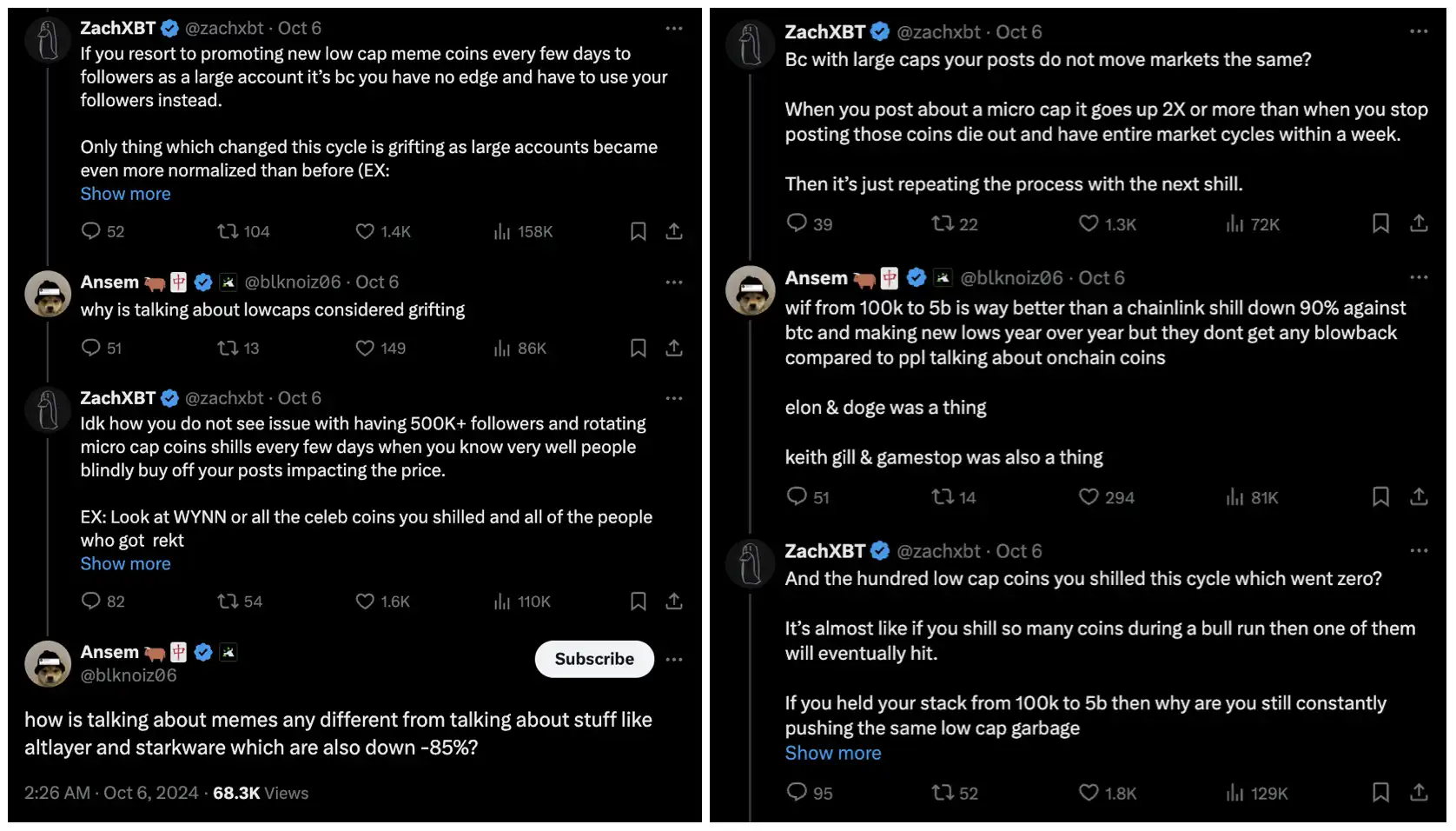
ZachXBT claims to have made tangible contributions to the crypto community by resolving hacks, assisting in criminal arrests, and recovering funds for victims—efforts he says help people avoid traps set by KOLs like Ansem. Ansem, however, argues that ZachXBT’s accusations are exaggerated, particularly the claim that he promoted hundreds of tokens. "We could debate meme coins all day, but you know full well that I’ve helped far more people than I’ve hurt. Let’s end this topic here," he said.
The debate concluded with Ansem stating: "If I could be 100% accurate, I’d already be a god on Earth. Criticizing me now by pointing out some of the coins I mentioned that later dropped is meaningless, especially when the entire altcoin market is in decline."
The following analysis comes from crypto KOL @dethective, who examined Ansem’s tweets alongside price trends of the meme coins he promoted, aiming to determine whether Ansem truly dumped meme coins onto his followers. BlockBeats previously conducted an analysis and summary of Ansem’s trading addresses as well.
Further reading: From Top Meme KOL to Utterly Wiped Out: Why Has Ansem Lost His Touch?
Many observed the intense debate between @zachxbt and @blknoiz06. This raises a critical question: Is Ansem really dumping small-cap tokens on his followers? I analyzed over 40,000 tweets to uncover the truth.
Ansem’s Average Return
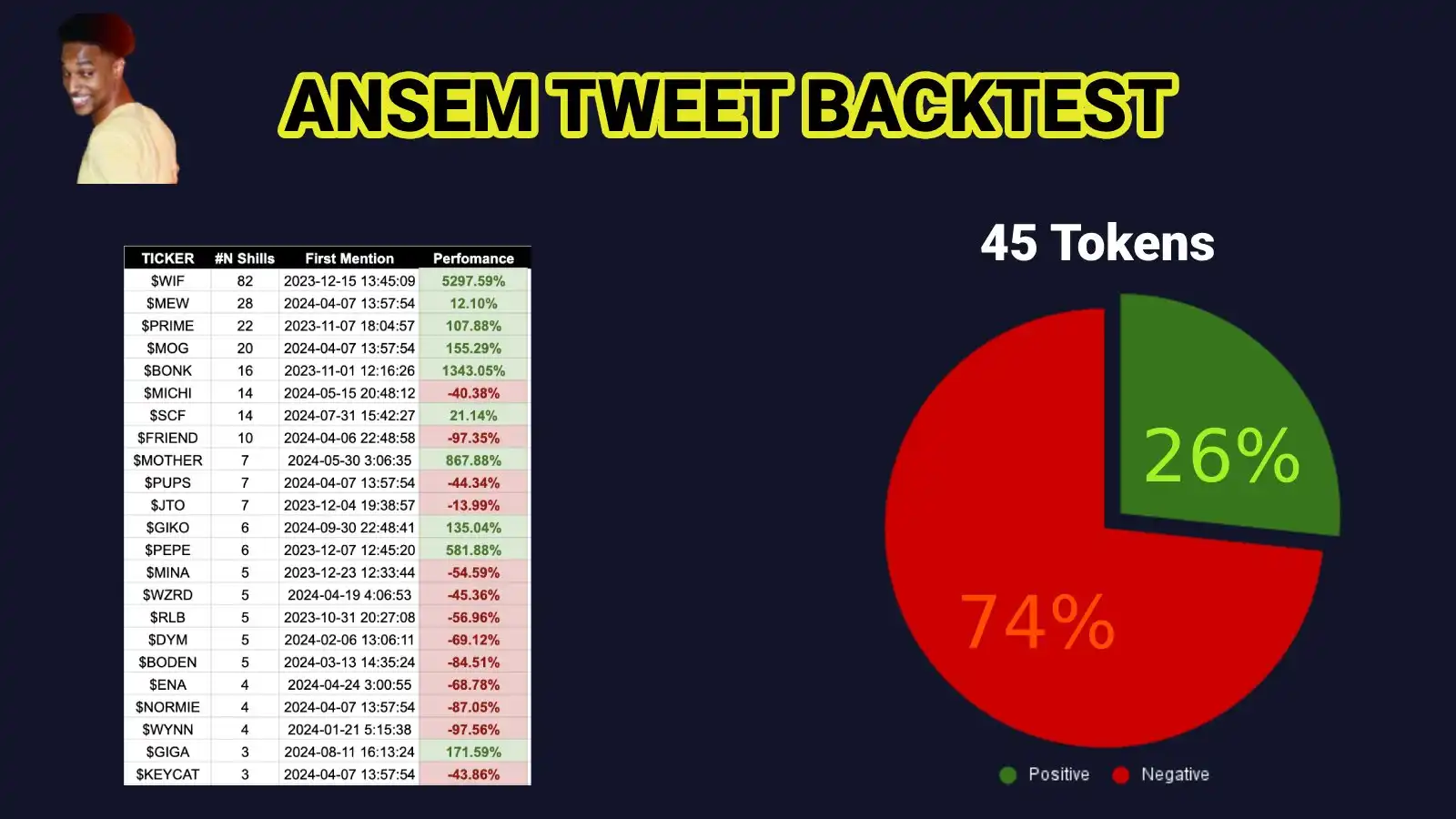
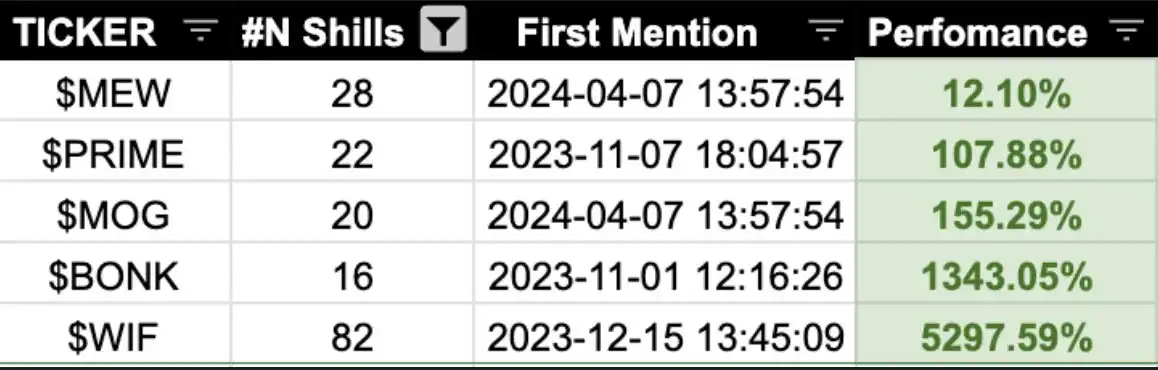
If you had bought every token at the moment it was first mentioned by Ansem, your average return would be approximately +150%. The top performers include:
$WIF: +5,300%
$BONK: +1,243%
$MOTHER: +867%
Sounds impressive, right? Not quite.
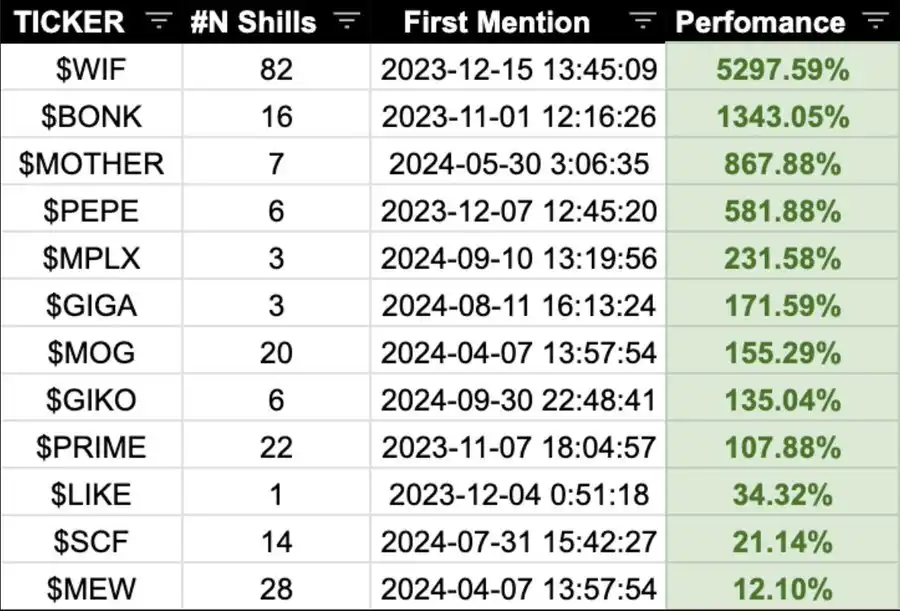
When we look at median returns, the figure drops to -55%.
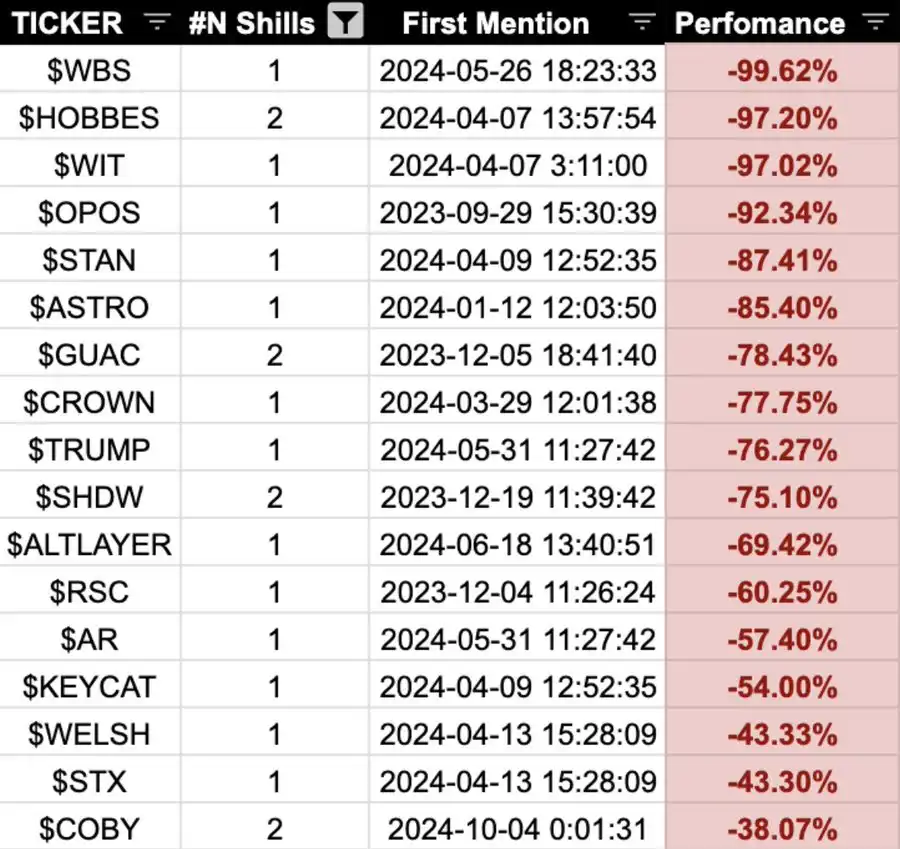
The reason for this discrepancy is that out of 45 tokens, 33 delivered negative returns—more than half declined by 50% or more.
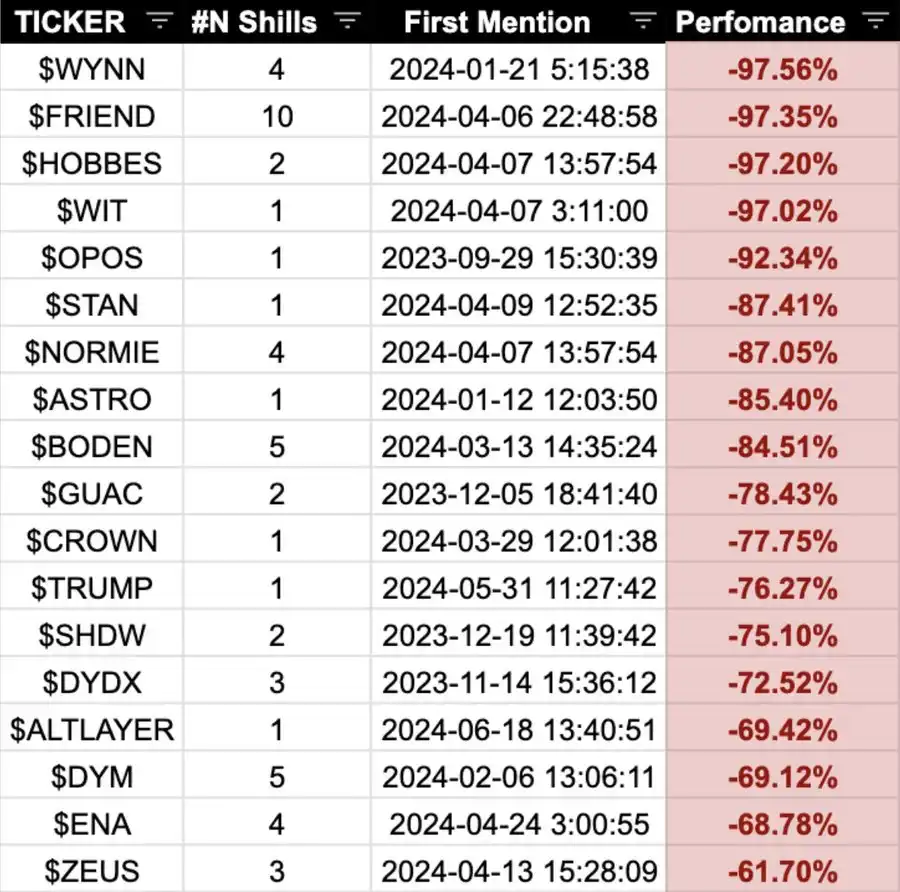
Every token that Ansem genuinely supported—shown through sustained advocacy—delivered 100% positive returns. This analysis aligns with @MustStopMurad’s widely held view: when Ansem shows conviction and long-term support for a project, it tends to have a net positive impact on the space. There’s also a clear correlation between number of mentions and project performance.
This isn’t just hype—it’s about belief. On the other hand, tokens that Ansem mentioned only once or twice showed 100% negative returns. Classic pump-and-dump behavior.
Methodology
Over 40,000 tweets were scraped.
Code was written to detect token promotions by identifying characters following the '$' symbol.
The date of each token’s first mention was recorded.
Price movements were tracked accordingly.
My Personal View
I initially started this analysis intending to support Zach in the debate. However, I made efforts to remain objective and thus aimed to fairly assess Ansem’s perspective as well.
The key question is: “Is it unethical to promote a low-market-cap project to a large audience?”
My conclusion: It’s not about market cap size—it’s about long-term commitment. Promoting a project with just one tweet and then abandoning it is unethical. But if you genuinely stand behind it over the long term, that’s understandable.
Join TechFlow official community to stay tuned
Telegram:https://t.me/TechFlowDaily
X (Twitter):https://x.com/TechFlowPost
X (Twitter) EN:https://x.com/BlockFlow_News
 @dethective