








Foresight Ventures: Why We Invested in FHE?
TechFlow Selected TechFlow Selected
Foresight Ventures: Why We Invested in FHE?
Privacy protection is extremely critical in the Web3 space, and we believe fully homomorphic encryption is the best solution to most privacy protection issues.
 Navigating Web3 tides with focused insights
Author: Maggie, Foresight Ventures

Good afternoon, everyone! Thank you for being here. I'm Maggie, Head of Research at Foresight Ventures. Over the next 20 minutes, we'll dive deep into Fully Homomorphic Encryption (FHE) from a venture capital perspective and explore why we believe it's a transformative investment opportunity.
So why should we invest in Fully Homomorphic Encryption? It all starts with privacy demands in Web3.

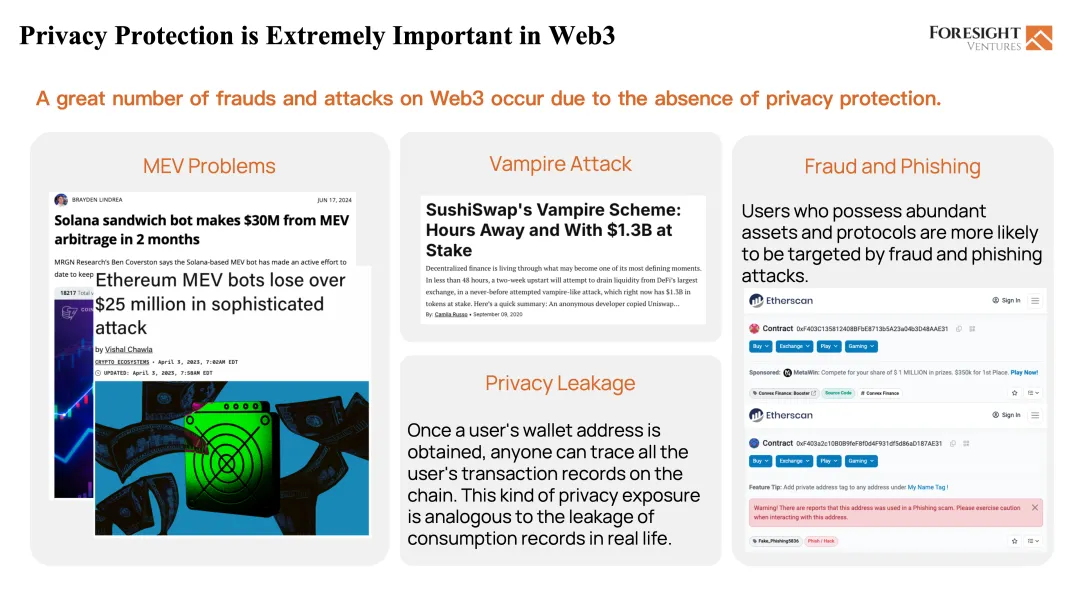
In Web3, privacy is extremely important. Without strong privacy protections, numerous frauds and attacks can occur.
For example, in MEV scenarios, sandwich attacks can cause losses for users. There’s also vampire attacks—competitors can steal your customers because they know their addresses. Privacy leaks are another major issue. If your wallet address is exposed, it's like having all your real-life spending records revealed—you lose your privacy and become a prime target for scams and phishing attacks. On blockchains, while transparency is beneficial in some aspects, it also makes wealthy users and protocols attractive targets for hackers.
Therefore, we need effective privacy protection methods.
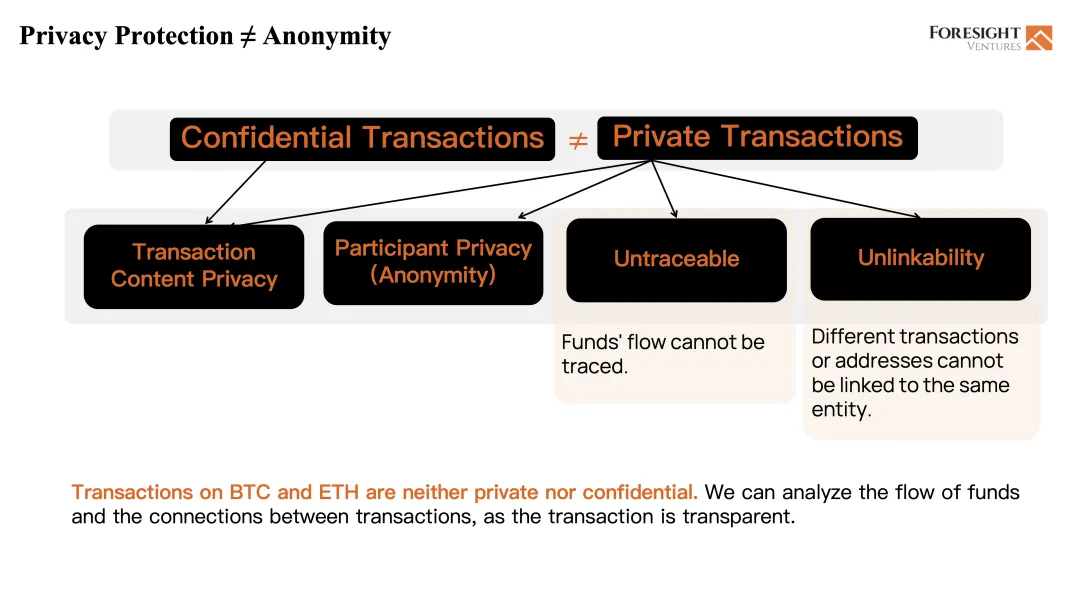
It’s essential to clarify that privacy protection does not equate to anonymity. Moreover, confidential transactions differ from private transactions. (In this article, "confidential transactions" refer to hidden transaction content or content-privacy transactions, while "private transactions" mean fully private transactions. Herein, both types are collectively referred to as “privacy transactions.”)
-
Confidential transactions aim to protect the privacy of transaction contents.
-
Private transactions must protect not only the privacy of transaction content and participant identities but also ensure transactions are untraceable and difficult to link together.
By this definition, transfers on Bitcoin (BTC) and Ethereum (ETH) are neither confidential nor private transactions.
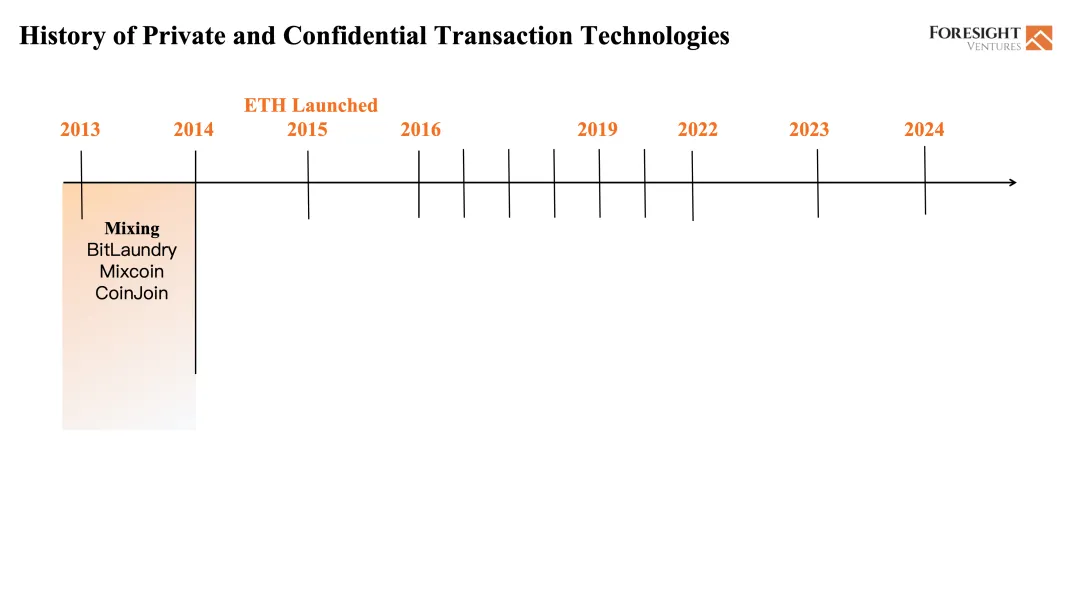
Let’s now look at the history of privacy transaction technologies. This will help you understand why Fully Homomorphic Encryption can be game-changing.
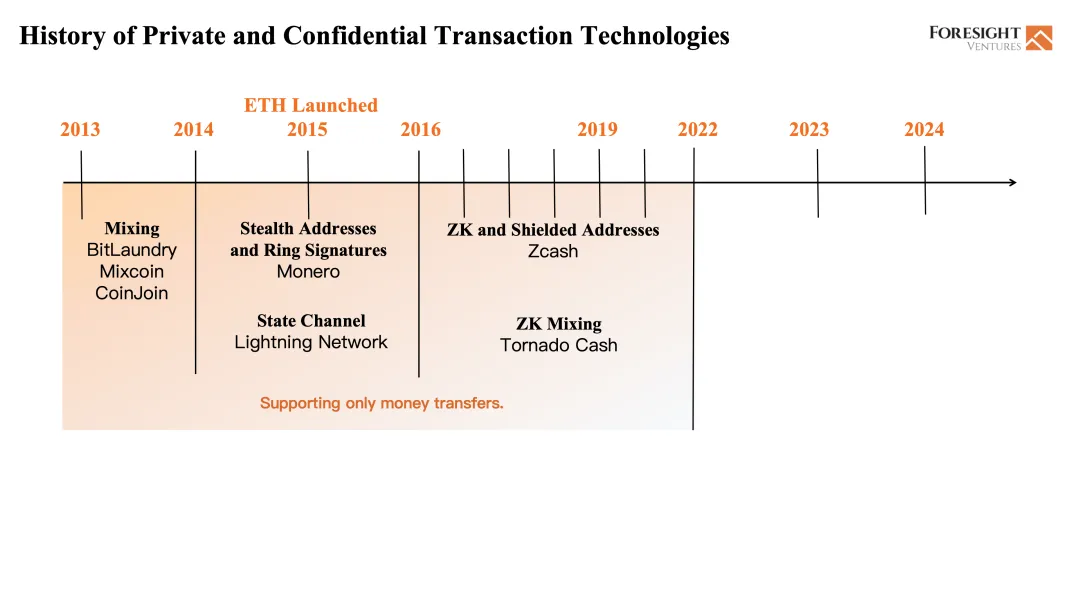
In 2013, coin mixing emerged. Mixing services combine coins from multiple users and send them to various destination accounts, making transactions harder to trace and link. However, certain tools can still detect relationships between transactions.
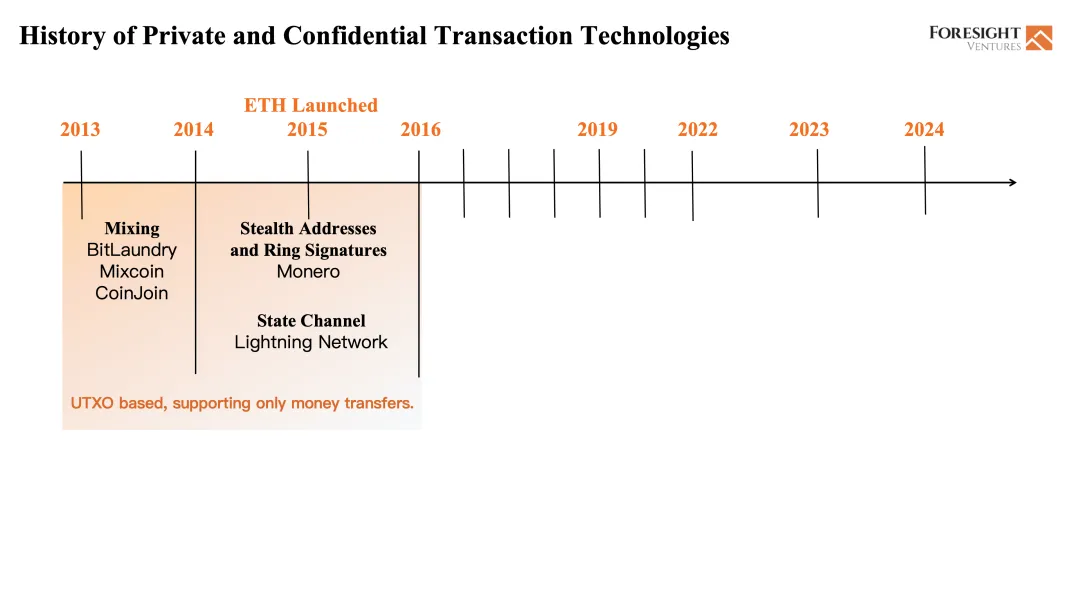
Later came privacy coins like Monero, which use ring signatures and one-time keys to obscure sender and receiver identities. Monero’s privacy features are widely considered highly effective.
In 2015, Ethereum launched and smart contracts gained popularity. But users realized that all these privacy solutions were based on BTC-like UTXO models. For account-model blockchains like ETH, there was no way to implement privacy protection.
Starting in 2016, zero-knowledge proofs began being applied in privacy-preserving protocols.
Tornado Cash is a zero-knowledge mixing protocol on Ethereum that uses ZKPs to break the link between deposit and withdrawal addresses, offering partial privacy guarantees.
Zcash provides optional privacy features, allowing users to choose between regular transparent addresses and shielded addresses for anonymity. Zcash is built on an extended UTXO model that supports only transfers.
At that time, we still didn’t have private smart contracts.
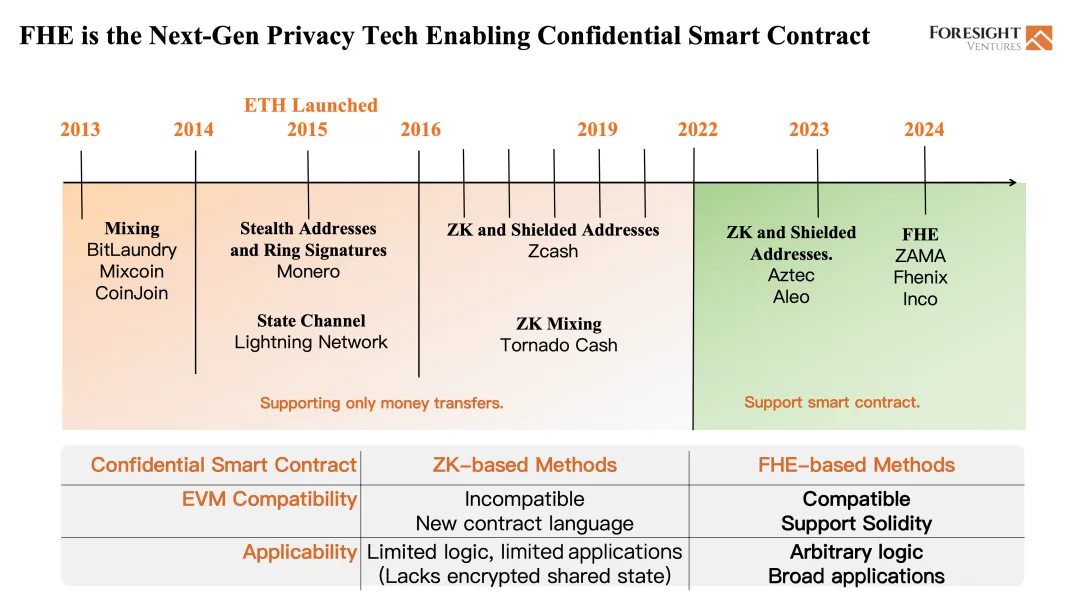
Finally, by 2022, we started seeing applications of zero-knowledge proofs (ZK) and Fully Homomorphic Encryption (FHE) in enabling private smart contracts.
Projects like Aztec and Aleo, based on zero-knowledge proofs, adopted and improved upon Zcash’s privacy techniques and now support private smart contracts. However, they are still based on an extended UTXO-like model. Their privacy-first design is fundamentally incompatible with the Ethereum Virtual Machine (EVM) architecture and Solidity language semantics. Moreover, due to their inability to support encrypted shared state, privacy smart contracts face limitations in contract logic and application scope.
Eventually, projects such as ZAMA, Fhenix, and Inco decided to use Fully Homomorphic Encryption for on-chain privacy. ZAMA implemented a fully homomorphic encrypted Ethereum Virtual Machine (fhEVM). The fhEVM is EVM-compatible and fully supports the Solidity language. It also supports encrypted shared state, allowing global state to remain encrypted yet usable, and enables arbitrary computation. This flexibility allows FHE to handle broader business logic and meet diverse needs.
Privacy smart contracts powered by Fully Homomorphic Encryption represent an incredible breakthrough. We believe FHE will reshape on-chain privacy.
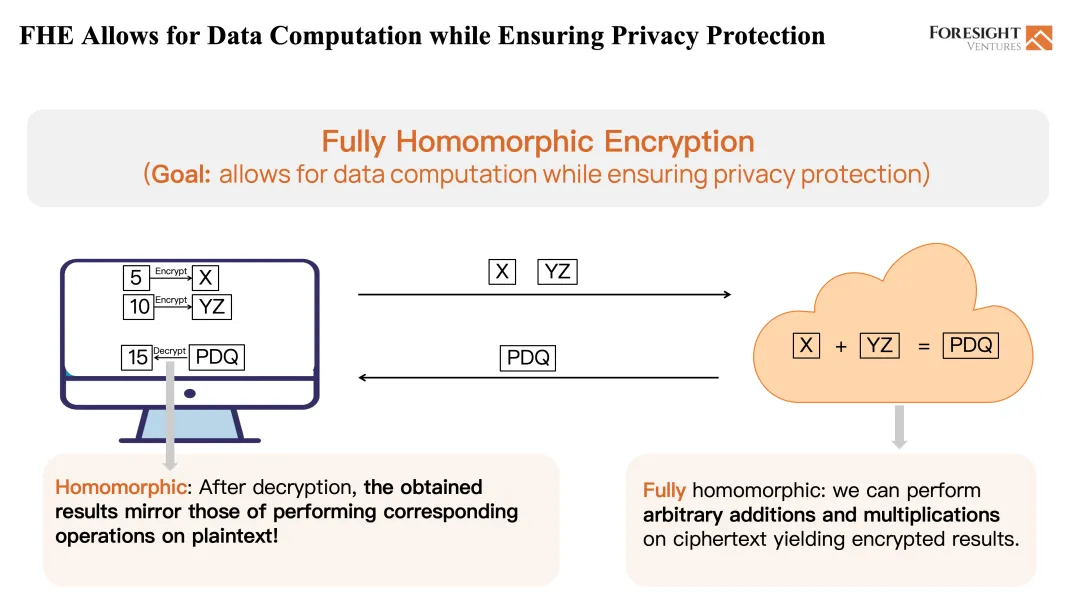
Why does Fully Homomorphic Encryption offer such great flexibility?
Fully Homomorphic Encryption allows us to perform any type of operation on encrypted data. When we decrypt the results of these operations, they match exactly what we would get if we had performed the same operations on plaintext data.
This is a super ideal privacy property. But it's extremely hard to achieve—which is why Fully Homomorphic Encryption is known as the holy grail of cryptography.
With privacy smart contracts, we can do many things previously impossible. Below are some use cases mentioned by Fhenix.
Fhenix is leading the adoption of Fully Homomorphic Encryption on-chain. Their team consists of many top experts in cryptography. CEO Guy Itzhaki has decades of experience in privacy computing and cybersecurity. Over recent years, he led Intel’s Fully Homomorphic Encryption business development team.
Last July, Fhenix launched a private Devnet. This Devnet serves as a cool playground for interested developers. Developers can easily port their existing EVM code to Fhenix. With minor adjustments, they can turn their code into native FHE-enabled code. We’re thrilled to support the Fhenix team as they build the future of on-chain privacy using Fully Homomorphic Encryption.
Their proposed use cases fall into two main categories:
-
One group relates to the Fully Homomorphic Encrypted EVM (fhEVM). It unlocks more flexible privacy transactions and privacy DeFi. With privacy DeFi, users can secretly trade, borrow, lend, and provide liquidity. It minimizes opportunities for fraud and hacking and protects users from front-running and MEV bots. We're also excited about use cases related to governance and autonomous worlds. FHE enables on-chain private voting, helping prevent voter bias and herd mentality often seen in public voting. For autonomous worlds, many on-chain games can leverage FHE to protect business strategies and sensitive user data such as location information.
-
The other group involves AI, such as decentralized identity (DID) and private decentralized AI. Decentralized AI requires privacy in two ways: first, protecting the model. When someone trains a model using significant computational power and data costs and offers it as a service, keeping the model private is crucial. Second, protecting inputs and outputs. When sensitive data—like medical records or facial images—are used during inference, people want to keep them private. With Fully Homomorphic Encryption, you can train and run inference on encrypted data without decryption.
There are also innovative uses in cross-chain bridges and on-chain compliance. With FHE, one could store chain B’s private key on chain A, and vice versa. This enables the most convenient cross-chain message passing and significantly reduces complexity in cross-chain processes. Combined with decentralized identity and account abstraction, we can implement certain on-chain compliance mechanisms.

So why are we investing in Fully Homomorphic Encryption?
-
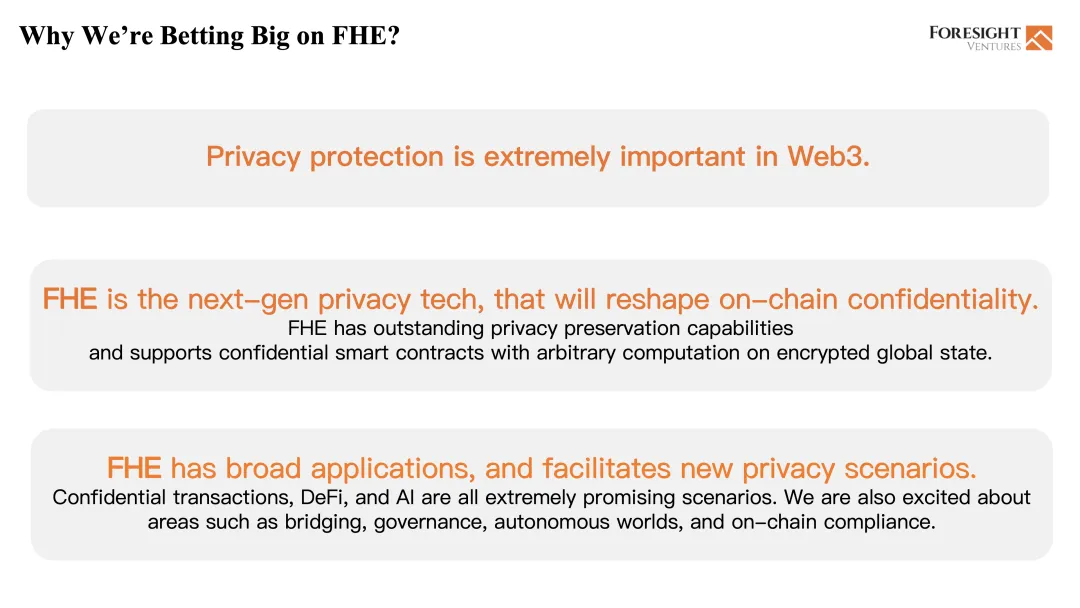
First, privacy protection is critically important in the Web3 space.
-
Second, we believe Fully Homomorphic Encryption is the best solution to most privacy challenges. FHE offers exceptional privacy capabilities and supports privacy smart contracts capable of arbitrary computations over encrypted global states. As the next-generation privacy technology, it won't just reshape on-chain privacy—it will transform how all computation works across both Web2 and Web3.
-
Finally, Fully Homomorphic Encryption has broad potential use cases in Web3. Privacy transactions, decentralized finance, and artificial intelligence are all highly promising areas. We're also excited about innovative opportunities in cross-chain bridges, governance, autonomous worlds, and on-chain compliance. We believe FHE has the potential to grow even stronger than zero-knowledge proofs. While ZKPs are primarily used in Web3, FHE will see widespread adoption across both Web2 and Web3.
Of course, we do have some concerns about Fully Homomorphic Encryption.
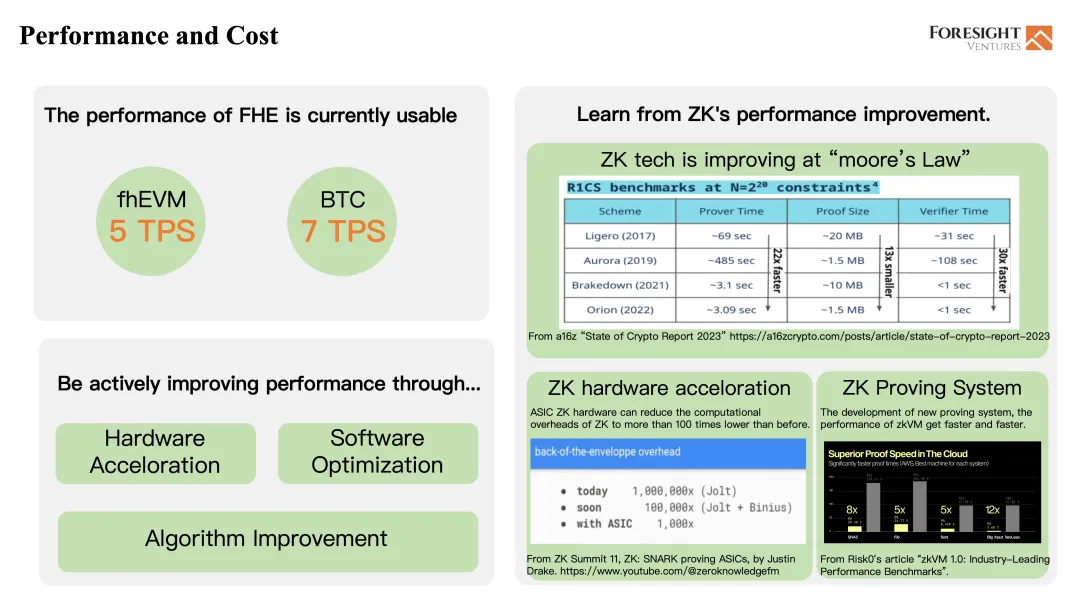
Performance and scalability of Fully Homomorphic Encryption remain major challenges.
Currently, although FHE is usable, it remains very limited. The processing capacity of the fully homomorphic encrypted EVM (fhEVM) is around 5 transactions per second (TPS), similar to Bitcoin, which has about 7 TPS.
Currently, many teams are working hard to improve FHE performance through hardware acceleration, software optimization, and algorithmic improvements.
Looking at how ZKP performance has evolved, we’ve seen zero-knowledge proof technology improving at a pace akin to Moore’s Law over the past few years.
-
New algorithms have boosted performance by tens of times in terms of proof generation time, proof size, and verification time.
-
Application-specific integrated circuits (ASICs) for ZK can reduce ZK computational overhead by 100x.
-
ZK applications are racing to increase speed. Risk Zero’s proof system is faster than Plonky3, so the corresponding ZKVM is several times quicker.
Therefore, we believe with strong support from Web3, FHE performance can experience massive, exponential improvement—just as we've witnessed with zero-knowledge proof technology.
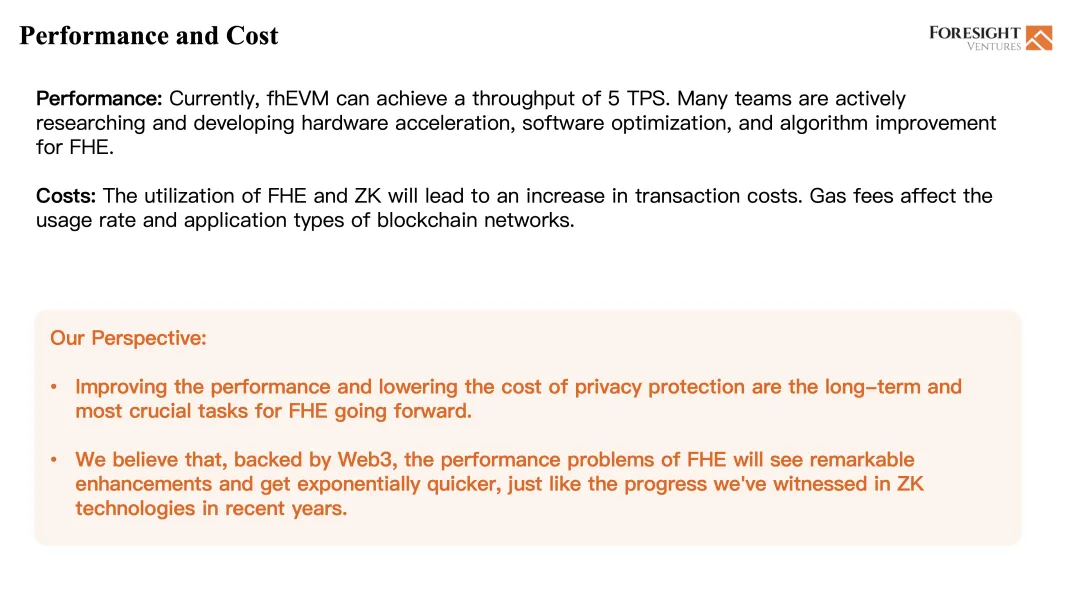
In terms of cost, both Fully Homomorphic Encryption and zero-knowledge proofs are relatively expensive computationally and require substantial resources. High gas fees will affect blockchain accessibility and determine what kinds of applications we can build.
Thus, making Fully Homomorphic Encryption faster and more cost-effective is a key long-term goal for the technology’s future development.
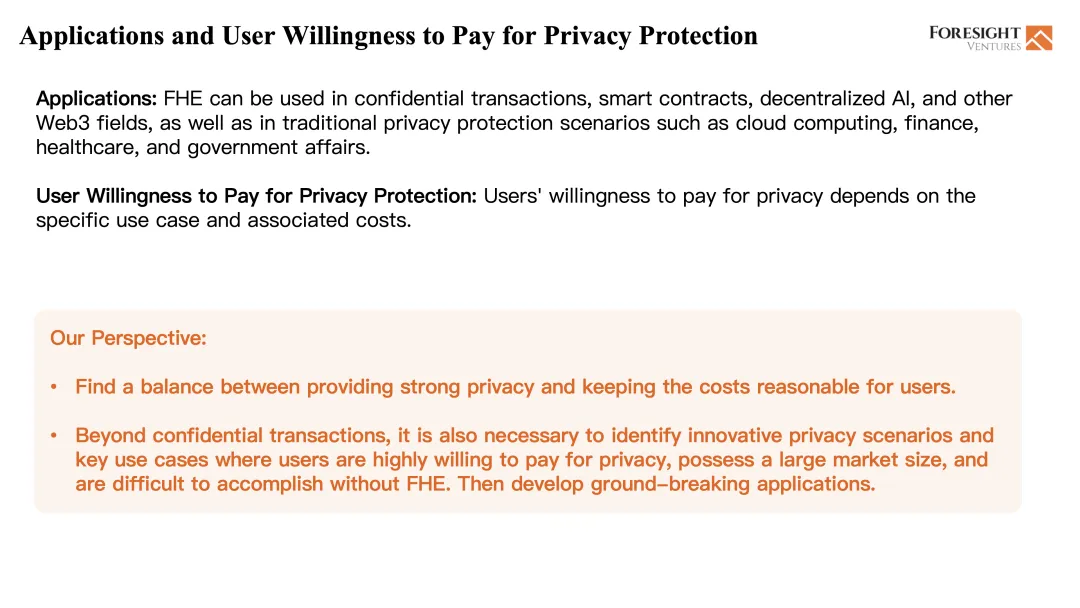
The second concern is user willingness to pay for privacy.
-
We need to strike a balance between offering robust privacy protection and maintaining reasonable costs for users.
-
Additionally, we need to identify the most valuable use cases for Fully Homomorphic Encryption and focus our efforts there. Beyond privacy transactions, let’s build groundbreaking applications.
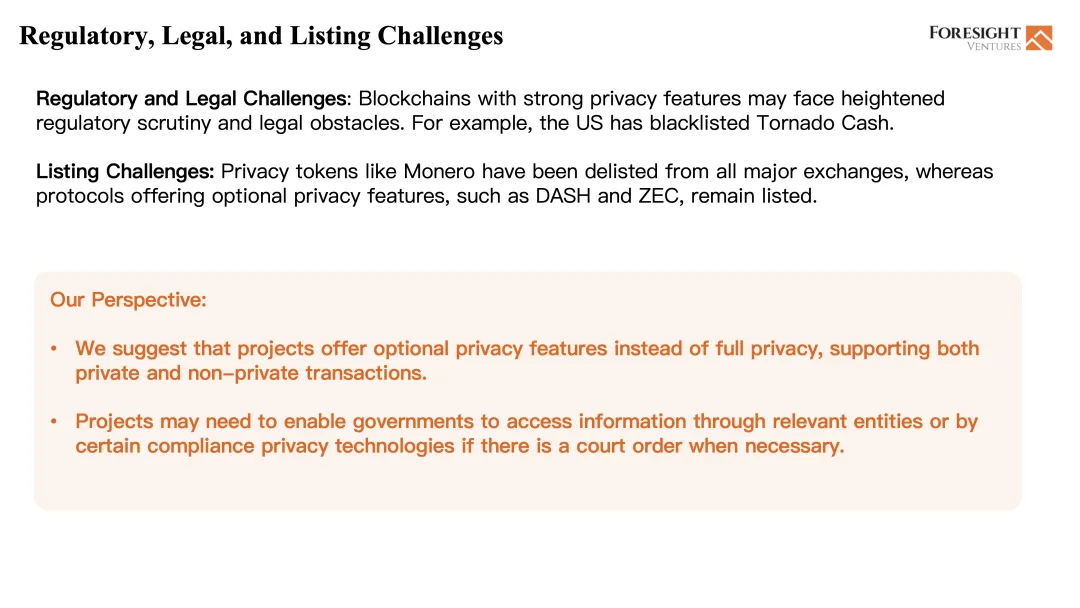
Lastly, challenges exist regarding compliance and exchange listings.
Highly privacy-focused projects face stricter regulatory and legal scrutiny. For instance, the U.S. blacklisted Tornado Cash.
On exchanges, pure privacy coins like Monero have been delisted from major centralized exchanges, whereas projects with optional privacy features like Zcash remain listed.
To address these challenges, we recommend:
-
FHE projects offer optional privacy rather than full privacy.
-
Additionally, projects may consider building mechanisms that allow government access to certain private information under legal requirements—such as via court order—through designated entities or compliant privacy technologies, under controlled conditions.
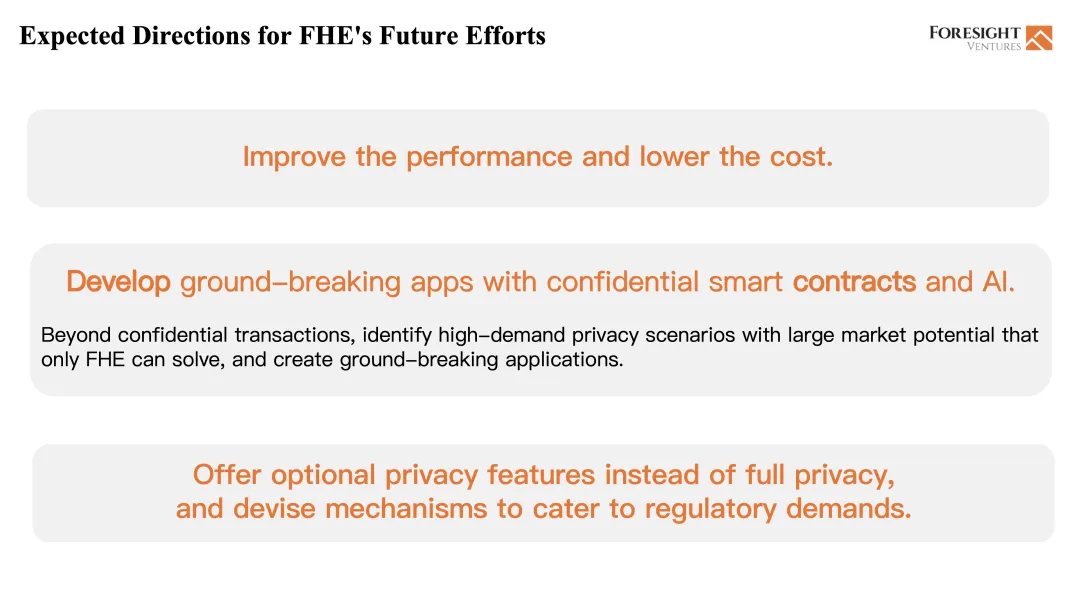
Looking ahead, we see several key areas where Fully Homomorphic Encryption should focus future efforts.
-
First, improving FHE performance and reducing its cost is critical.
-
Second, identifying valuable privacy use cases beyond privacy transactions is important. Focus on those where users are truly willing to pay for privacy, market sizes are large, and achieving the functionality is otherwise difficult without FHE. Build pioneering applications.
-
Finally, we suggest offering optional privacy instead of full privacy, and developing compliance-friendly privacy technologies to meet regulatory demands.
Join TechFlow official community to stay tuned
Telegram:https://t.me/TechFlowDaily
X (Twitter):https://x.com/TechFlowPost
X (Twitter) EN:https://x.com/BlockFlow_News
 Foresight Ventures






