From Token2049 to the Big Picture: Everyone Has Their Own Worries, Everyone Has Their Own Opportunities
TechFlow Selected TechFlow Selected
From Token2049 to the Big Picture: Everyone Has Their Own Worries, Everyone Has Their Own Opportunities
Although many things have happened in this industry, actual results have been scarce.
 Navigating Web3 tides with focused insights
Author: Sankalp Shangari
Translation: TechFlow
Background
I spend a significant amount of time each week reading, researching, and speaking with some of the smartest founders and investors in the industry. This article is my attempt to give you a very real snapshot of the current state of crypto as I experienced it firsthand at Token 2049 and Solana’s Breakpoint. I’ve been active in this space since 2013, so please trust my read on the current situation. While most of my conversations were one-on-one, I also dove down the rabbit hole into the labyrinth of booths at Token 2049 like Alice in Wonderland.
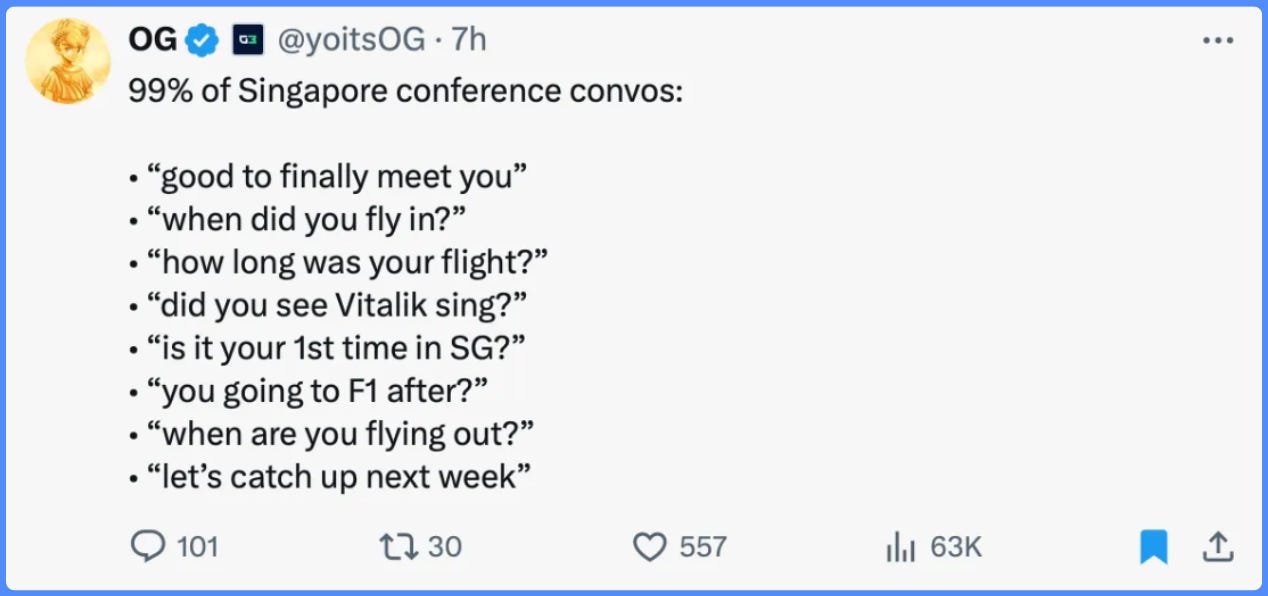
First, kudos to Singapore, Marina Bay Sands, and the organizers of Token 2049—this event was executed flawlessly. Only Singapore could pull off such a high-caliber event during its busiest week of the year, just ahead of F1 weekend.
Alright, let’s dive into the mood, blockchain projects, founders, venture capital, narratives, and of course, the winners and losers. Buckle up—we’re going deep!
Overall Sentiment
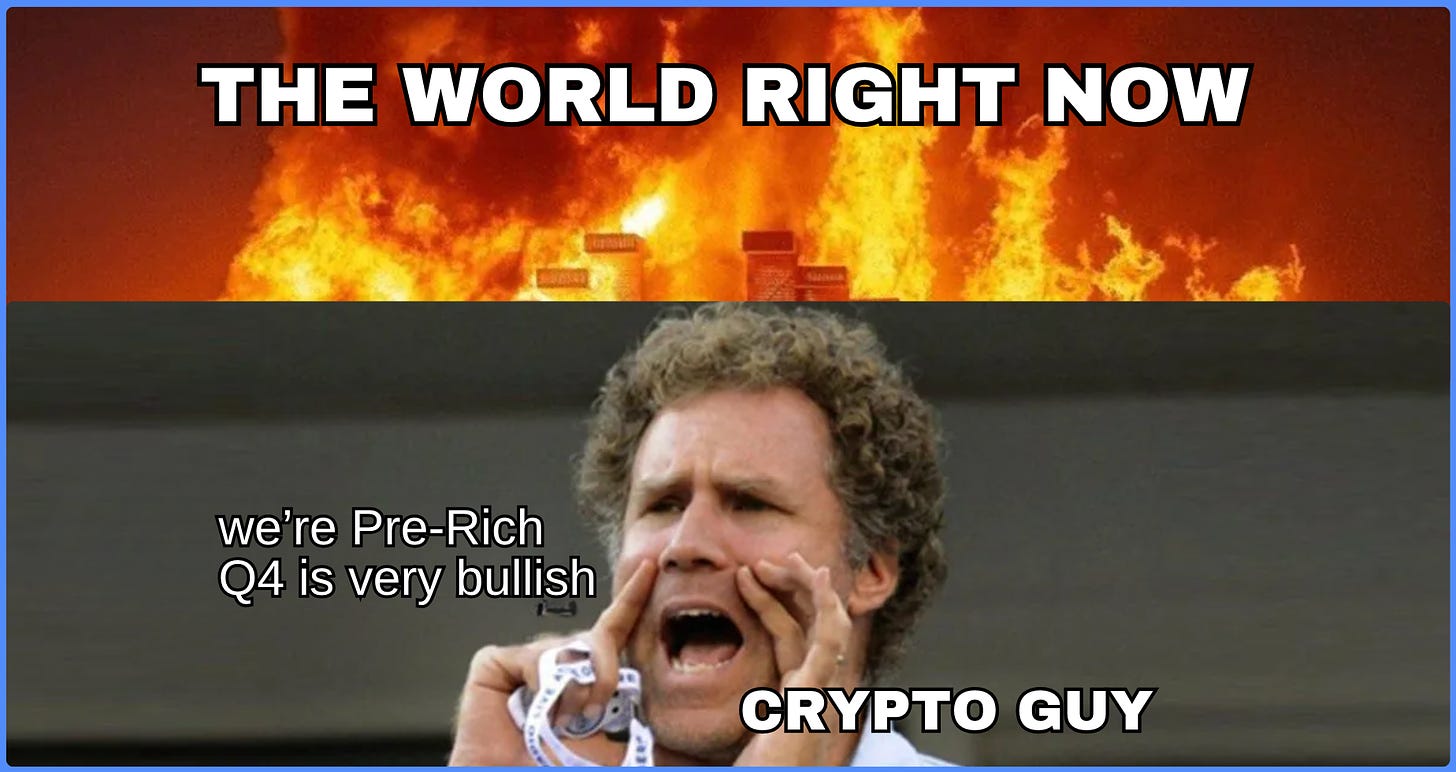
For the past decade, we've preached the dream that crypto would revolutionize the world, solve real problems, and bring masses of Web2 users into this new frontier. Frankly, though, crypto hasn't fully delivered on that promise. Instead, we seem to have collectively become thrill-seeking squirrels on espresso, jumping from one Ponzi scheme to another.
The more than 500 side events at Token 2049 are a prime example of this dilution. Many projects are overfunded, with marketing budgets exceeding actual revenue (if any exists), while flashy booths and five-star venues mask low user adoption. VCs, once eager to throw money at any project with a whitepaper, have now hit pause. The good news? Only truly promising projects are getting funded. The bad news? It took us this long to get here.
As a result, we're seeing market fragmentation—over 100 L1/L2 blockchains competing for attention from the same pool of crypto users, with declining engagement and fewer meaningful conversations. From Solana to Ethereum memes, to Base, Justin Sun is flying like Icarus, dangerously close to the sun. Great for short-term drama—but where’s the long-term vision? Where's the mass adoption we were promised? Constantly hopping between different memes and blockchains isn’t a sustainable business model.
Over the years, we’ve shifted from ICO mania to DeFi yields, NFT crazes, GameFi Ponzis, PoS staking, restaking schemes, and now even Bitcoin restaking (is that real?), culminating in a pyramid of points and airdrops. What’s next? Everyone I spoke to is deeply concerned about the industry’s future. So much has happened, yet tangible outcomes remain scarce.
Venture capitalists are frustrated they didn’t anticipate the memecoin frenzy and can’t deploy regulated funds into it. Founders complain that VCs aren’t funding anything anymore, waiting for something to breakout. Crypto adventurers run ragged between narratives, while “farmers” feel disappointed that airdrops and points haven’t delivered expected wealth (e.g., Grass, Eigen, Blast). The only ones smiling are those involved in trading (CEX, DEX, perpetuals), gambling (Rollbit, Shuffle, Polymarket, Memecoins), and the infrastructure enabling these activities. Just look at the F1 sponsorships, giant booths, and massive marketing spend.
Meanwhile, AI and stock markets are capturing more attention, with NVIDIA returns rivaling crypto. In fact, NVIDIA offers higher returns, lower risk, and a far smoother, compliant fiat onramp experience. Smart traditional finance investors are making gains from less risky equities (yes, I know stocks carry risk—but compare them to crypto’s current state). Why bother with crypto when you can gain exposure via options on MSTR or COIN?

Of course, not everything is bleak. There’s still light at the end of the tunnel. Outstanding founders are still securing funding, and genuine use cases with real revenue potential are emerging. VCs are becoming more selective—which is healthy. We’re also seeing more enterprises like Sony, global banks, and financial institutions cautiously dipping their toes in. But make no mistake—this isn’t the mass adoption we were hoping for.
So where are the opportunities? I’ll explore that below, but I believe the answer lies in each token holder’s perspective. Your position, the game you're playing, your tribe, and your circumstances all shape your opportunity. In crypto, there are two types of games:
-
Short-term narrative-driven — quick in and out — Nothing wrong with this approach; it’s mostly fueled by adventurers, short-term founders, VCs, and influencers trying to buy the dip and get rich quickly.

-
In the long term, large VC funds back top-tier developers and founders betting on listings and potential to become the next Solana or foundational infrastructure for outsized returns.
So while the mood at these events may be somewhat gloomy, there are still bright spots—founders, projects, and VCs who might surprise us in the coming years. I’ve been in this crypto world for 11 years, and I’ll keep going—but let me be clear: if Bitcoin hits $100K, we’ll rapidly return to a Ponzi-like environment. Then, no one will care about fundamentals—until the music stops, and by then, it’ll be too late.
Stay hungry, stay foolish, stay hedged. — Sankalp Shangari, Hashtalk :)
Crypto Audience
-
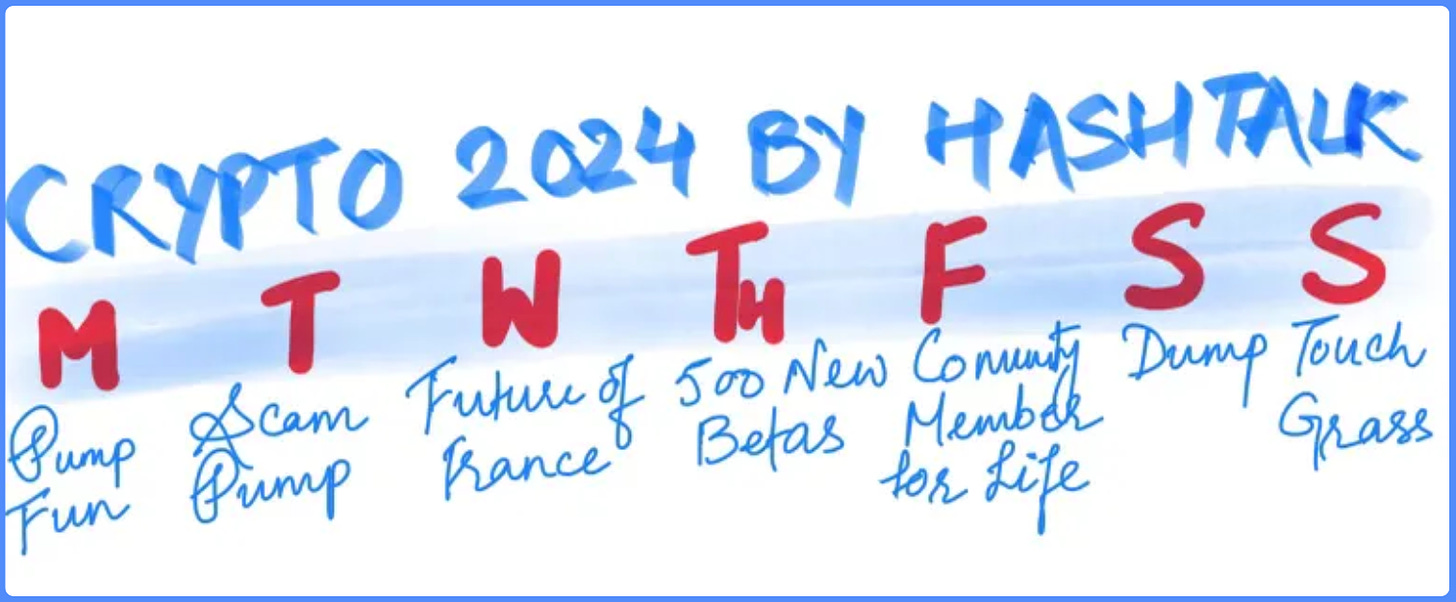
Ordinary Crypto Speculators – (65%)
These newcomers are like eager puppies chasing every shiny object, mainly aiming to catch the next Bonk, WIF, or Poppet and exit quickly for profit. Characteristics include:
-
Optimistic speculators: They believe they can get rich overnight by rotating quickly between different memecoins, like kids hopping between carnival candy stalls.
-
Freebie lovers: They’re primarily interested in giveaways—free swag at booths, parties, and endless events offering free drinks and snacks.
-
Short-sighted: Focused on immediate gains, they often overlook the bigger picture and deeper strategic dynamics.
-
Project experimenters: Some even try launching their own projects, typically relying on support from like-minded short-term VCs. However, most such founders struggle to secure long-term backing.
-
"Smart" Developers and VCs (25%)
This group consists of polished, self-proclaimed elites trying to replicate the success of figures like Vitalik, Anatoly, or Raj, while pitching their dreams to obligated VCs. Their strategies include:
-
Funding first: They prioritize securing 2–3 years of runway, crafting detailed plans, and generating hype through key influencer partnerships and flashy announcements.
-
Token hedging: They often sell large portions of treasury tokens to fund operations and hedge against price drops at listing, planning gradual sales while letting prices fall after they cash out.
-
Passing the bag: If a bear market hits, VCs and retail investors become the last buyers, while these founders enjoy high salaries and business-class travel.
-
False long-term vision: They pretend to be change-makers until token launch, when their true intentions surface—just like Blast and Friend.tech before jumping to the next Ponzi. There are hundreds of such examples.
-
True Builders (10%)
This final group comprises genuine visionaries—the real "Chads" building what they see as "France’s future" (or whatever future they envision). Traits include:
-
Exceptional minds: Beyond selling dreams, these individuals focus on building revenue-generating businesses that add real value.
-
Persistence: Though they may initially lack attention, they persist without rushing to issue tokens solely for an exit.
-
Long-term commitment: They think long-term, stay grounded, face realities head-on, and advocate for sustainable industry growth. Altogether, these three groups reflect different mindsets in crypto—from impulsive speculators to shrewd strategists, and finally, to the true builders who may lead us toward a brighter future.
L1/L2 & Infrastructure
-
Ethereum’s identity crisis: Ethereum is currently experiencing an identity crisis—like a midlife crisis, wanting a sports car while others go electric. With growing attention and developer resources shifting toward Solana and various EVM Layer 2s, many users are expressing dissatisfaction with Ethereum. Ultimately, price matters more than block size. I can’t help but wonder: are Ethereum thought leaders too comfortable in their mansions to engage with grassroots developer communities? Why can’t they be more like Solana? Is Vitalik truly the right leader?
-
Solana: The undisputed front-runner: To me, Solana feels like it just won “Best in Show,” confidently strutting across the stage. I’ve consistently championed Solana across our Telegram channel and various Hashtalk newsletters. After Breakpoint, excitement around the Solana ecosystem is red-hot. They’re not just talking—they deliver products faster than pizza on race night. Just look at Firedancer. The Solana community is highly organized, especially compared to the chaos of ETHGlobal events. Solana’s single-chain focus and unified community give it a distinct edge—focus, my friends, is key!

-
TON: At Token 2049, ride-hailing with TADA and paying via TON cryptocurrency became major highlights. Almost everyone used and shared TON and TADA referral codes—an ingenious marketing move. With 800 million internal users already, TON emerges as the next strong contender in the L1 space, poised for real mass adoption. I’m very bullish.
-
VCs hunting the next SOL killer: Venture capital continues flowing into projects aiming to replace Ethereum or Solana. From an investment standpoint, it’s obvious: finding a project that could return 1000x in a few years is like finding a golden ticket in a chocolate bar. Currently, over 10 L1 projects with little activity trade at fully diluted valuations of $1B to $10B. That’s massive upside for any VC. Fund it until it works.
-
Z-generation Layer 1 darlings: Monad and Berachain are the current talk of the town, with SUI and Base also drawing interest. In contrast, “millennial chains” like Aptos, SEI, and TIA are losing momentum, while “boomer chains” like Polygon, Algorand, and Cosmos are fading faster than New Year’s resolutions. Of course, we’ll see temporary price spikes driven by market manipulation and new narratives—like FTM and AVAX—but these tend to vanish as quickly as Snapchat stories. I’d reconsider if any of these chains hosted a standout dApp like GMX, Hyperliquid, Polymarket, or Friend.tech.
-
Niche-focused chains: We’re seeing blockchains pivot toward specific niches: Solana for memes, payments, and trading; Ronin for GameFi; Arbitrum for DeFi. Combined with chain abstraction and cross-chain solutions, this trend improves UX and makes interactions smoother.
-
Shift toward B2B infrastructure and services: Some prominent chains are offering CDKs, SDKs, rollups, and app chains. While this may preserve their token’s relevance, it’s more of a stopgap—great for living the luxury yacht life, but not fully sustainable for long-term ecosystem health.
In summary, Ethereum is like a teenager unsure about their haircut, stuck in an identity crisis, while Solana charges forward, driving innovation and community engagement. Watching how this dynamic evolves and which projects stand the test of time will be fascinating.
Projects & Founders
-
The harsh reality of crypto fundraising: Frankly, most projects are slowly and painfully dying in the crypto space. The days of raising funds with a disco-ball-shiny PowerPoint are over. Now it’s like trying to sell ice to Eskimos—good luck!
-
Fundraising cycle: The endless hamster wheel: Even funded projects aren’t in great shape. They’re trapped in a never-ending loop, burning through VC capital quickly. Once funds dry up or near depletion, they must either raise again or launch a token. If the token performs well, they might survive another 2–3 years; otherwise, it’s back to square one. Without new users or real revenue, the path to profitability is as unclear as driving down a dark, desolate road.
-
Rise of new projects: Older projects are like forgotten toys from childhood. Why invest in outdated tech when you can back emerging projects like SUI, Aptos, Berachain, and Monad, which offer grants to attract activity? It’s old wine in new bottles—and possibly not even good wine.
-
Ponzi schemes 2.0: Then come the Ponzi schemes sprouting like mushrooms. I’m reminded of the Celsius and BlockFi era, when lending markets went wild and collapsed spectacularly. Now we see similar cycles involving staking, restaking, and the classic “your token produces my token, we both produce!”—but now scaled tenfold across ten times more chains. Where does it end? No one really knows.
-
Tech founder blind spots: Many technical founders seem to naively overlook crypto’s unique aspects. They often fail to realize that buzzwords like tokenomics, product-market fit, and community building are essential to success. Success isn’t just about having a great product—it also requires a strong network and a bit of luck. If you’re not part of the right VC circle or “influencer alliance,” good luck.
In short, crypto is a strategy game. If you want to play, you must understand the rules—otherwise, you might become just another cautionary tale in the wild west of digital currency.
“They are playing. They are pretending they are not playing. If I let them know I see, they will punish me. I must play their game and pretend I do not see.” — R.D. Laing
Venture Capital
-
A rough year for VCs: Trudging through the crypto mud: Frankly, most VCs had a tough year: some invested too early and watched their bets collapse; others invested this year but must wait 12–18 months for liquidity. In crypto time, that’s like watching a snail finish a marathon!
-
The clever minority: Still, a few VCs are playing chess like grandmasters. They help tokens list at high fully diluted valuations (FDV), hedge risks, then repurchase cheaply when prices crash. It’s like buying an expensive suit at discount after a fashion show—knowing when to hold and when to fold!
-
The race for revenue: Today, most VCs finally recognize that real revenue-generating projects exist—like Friend Tech, Pump Fun, and Polymarket. Now everyone is scrambling for the next big thing. The challenge? Identifying winners amid fierce competition—Pump Fun alone has over 100 clones! It’s like a networking event packed wall-to-wall, with everyone shouting to be heard.
-
Liquidity struggles: Liquidity providers are increasingly popular in crypto, as projects desperately need more Total Value Locked (TVL) and capital to successfully launch tokens. Looking back this year, it’s hard to ignore that most liquidity funds underperformed Bitcoin—unless they were skilled in trading memecoins or crypto-related equities.
-
Can’t bet on memecoins: Regulated funds can’t invest in memecoins—and unfortunately, this year’s market has largely revolved around them.
-
Interest from liquidity providers is rising, but they’re all waiting for dramatic catalysts. I spoke with wealth managers and family offices in Asia. While they showed interest post-ETF launch, they still rely on trusted institutions to manage funds. Yet they frequently receive scary news—hacks, scams—that unsettles them.
In short, despite a turbulent and challenging landscape, those who persevere may find paths to success amid the crypto chaos.
Narratives
-
AI projects are gaining serious traction, with nearly everyone building decentralized compute networks, just as intensely as people once raced to build better TPS L1/L2 solutions. I’m very positive about the AI + crypto convergence and welcome opportunities to connect with founders in this space for mentorship. Feel free to reach out.
-
The most common question I get is—what do you think the next trend will be? Everyone wants to build or invest in the next short-term wave.
-
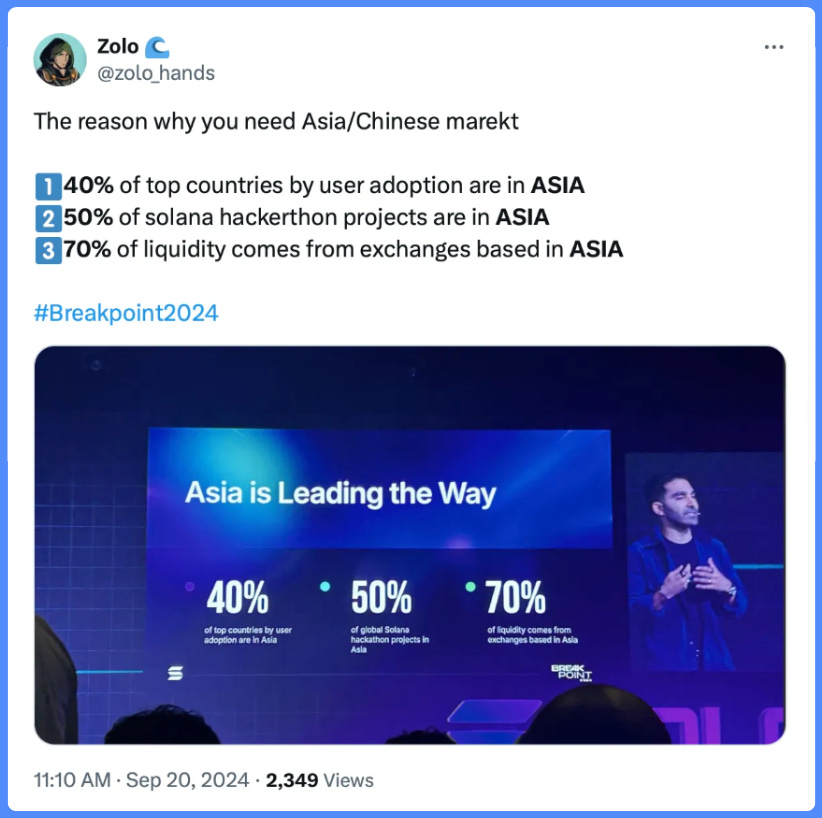
Asia leads the charge in crypto, matching Western numbers in developers, founders, and investors. Regulatory clarity in Singapore, Dubai, and Hong Kong surpasses that of the West, and everyone I spoke to wants access to Asian markets. The population is younger, hungrier, and shows higher crypto adoption. If you need strategic support or distribution help in Asia, reach out—I specialize in this.
-
Perpetuals narrative returns with Hyperliquid: After GMX, no other perpetual DEX gained traction—until HyperLiquid. Everyone is anticipating its launch, with some claiming its Fully Diluted Valuation (FDV) could hit $100B at launch. This could set the tone for other innovative perpetual platforms to emerge and succeed.
-
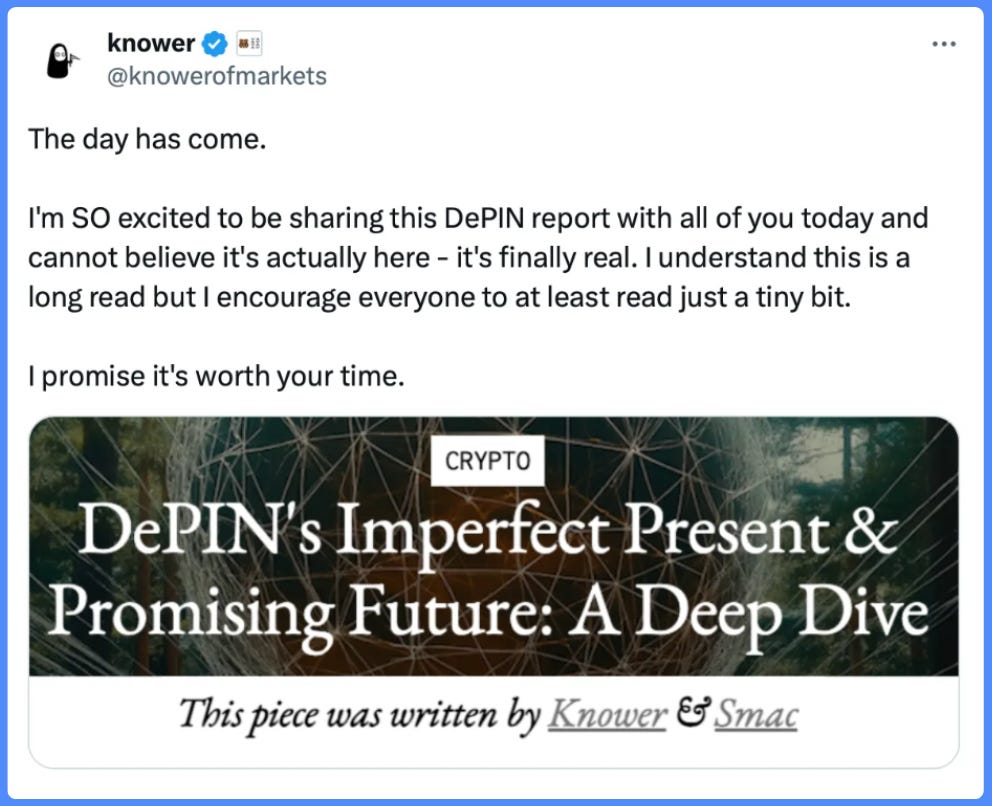
Real World Assets (RWA) are another category we and the broader industry are watching closely. Currently, Helium and Solana appear to be leading. Helium expanded home WiFi signals and is now partnering with mobile carriers to share and extend Helium coverage. This real-world use case with over 750,000 users is truly impressive.
-
You can’t stop the memecoin craze, because we’re inherently gamblers. Despite recent cooling, memecoins are here to stay. In my view, every dip in major memecoins like WIF, POPCAT, BONK, PEPE, MEW, GIGA, SUN, and MOTHER is a buying opportunity. We’re also investing in memecoin-related infrastructure that has real revenue potential and plays a central role in many transactions.
-
Chain abstraction as infra is super exciting. But at Token 2049, there were too many participants and booths. I haven’t seen a clear winner yet, but the use case is clear—users conducting multi-chain transactions without knowing they’re using blockchains. I’m very interested in simple chain abstraction infrastructure for developers. Please reach out.
-
The Bitcoin ecosystem appears to be slowing down. Despite earlier activity and hype, interest pales compared to last year. The ecosystem remains messy, with real use cases and UX still far off.
-
Staking and restaking are losing steam, as too many derivative layers across too many chains cause fragmentation and risk. I’m not optimistic. LIDO, the poster child of staking, seems to be struggling, and people are exploring alternatives. I don’t have high hopes for the staking/restaking mechanism overall, but I’ll stay open if something interesting emerges.
Winners & Losers
-
SOL is the clear winner, dominating across chains, with ETH following closely, and TON emerging as a strong contender with near-term potential, as discussed above.
-
Currently, TON and SUI appear to have the highest attention among all L1s, with TON’s potential 800 million user base awaiting development. I support TON, while I see SUI as temporary, just like previous millennial chains. SUI is approaching its $25B FDV ceiling—I think that’s it. If you’re building on TON, contact me. I’m currently evaluating several exciting apps and mini-apps.
-
TAO / BitTensor is one of the most talked-about projects, and my favorite in the AI space. It’s a clear winner in its category. Render is another favorite of mine.
-
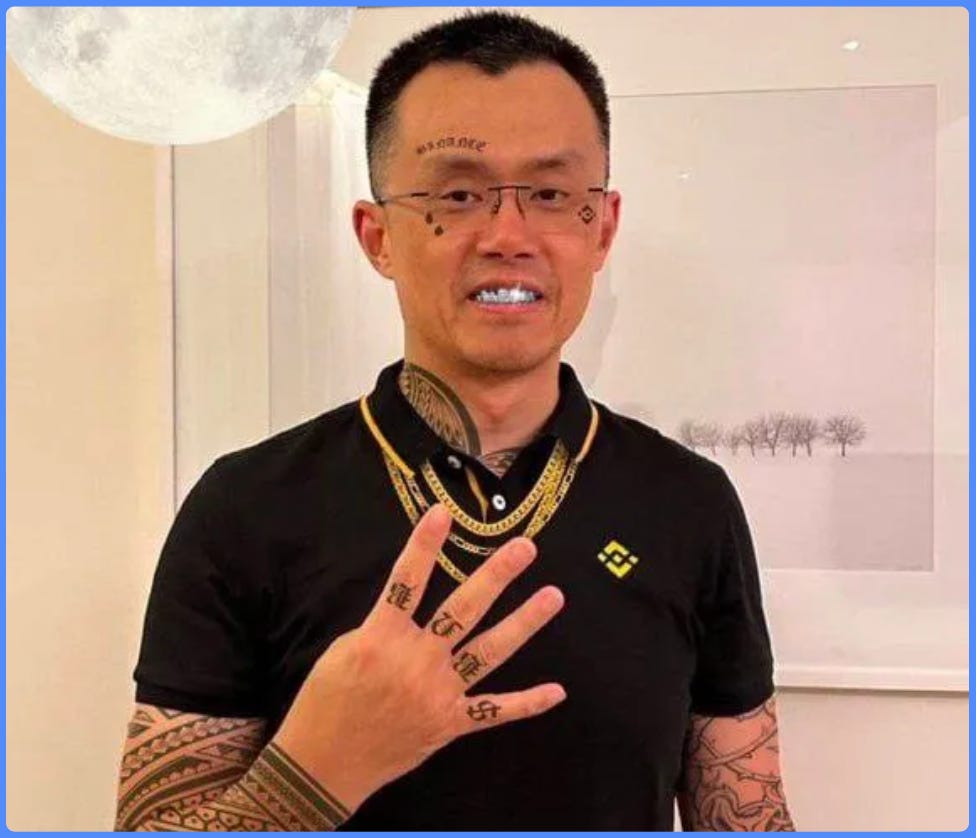
Binance may make waves when CZ reemerges. But BSC needs to generate memes like Justin, not list fake “Neiro” tokens.
-
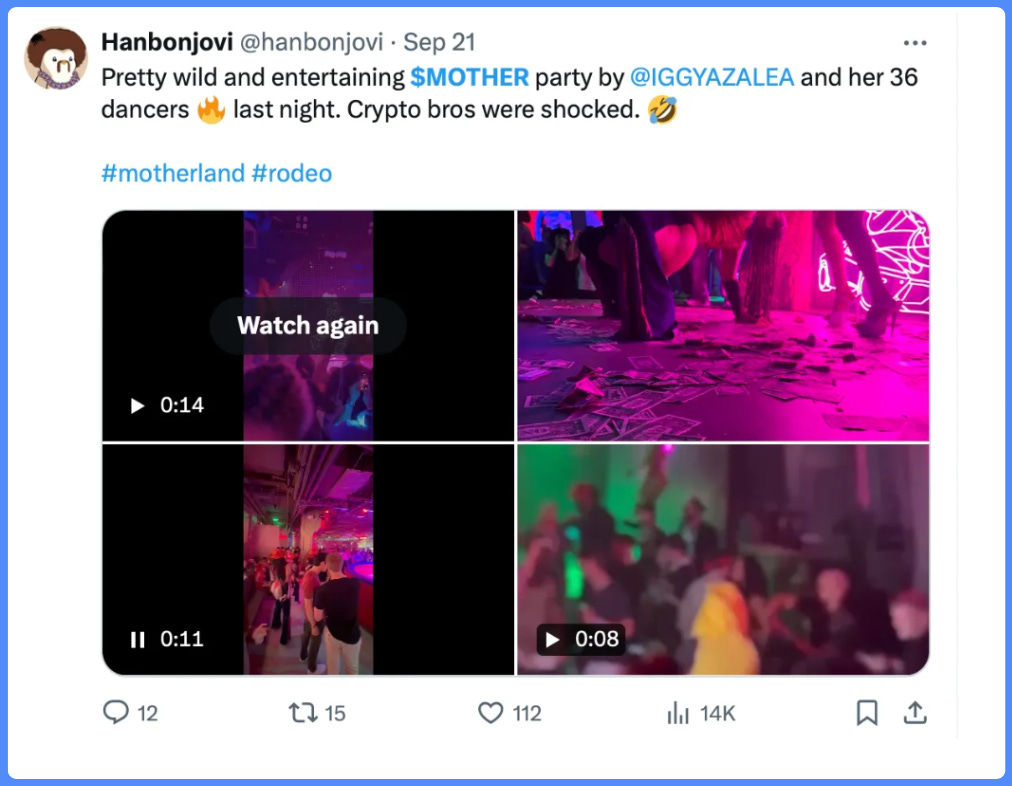
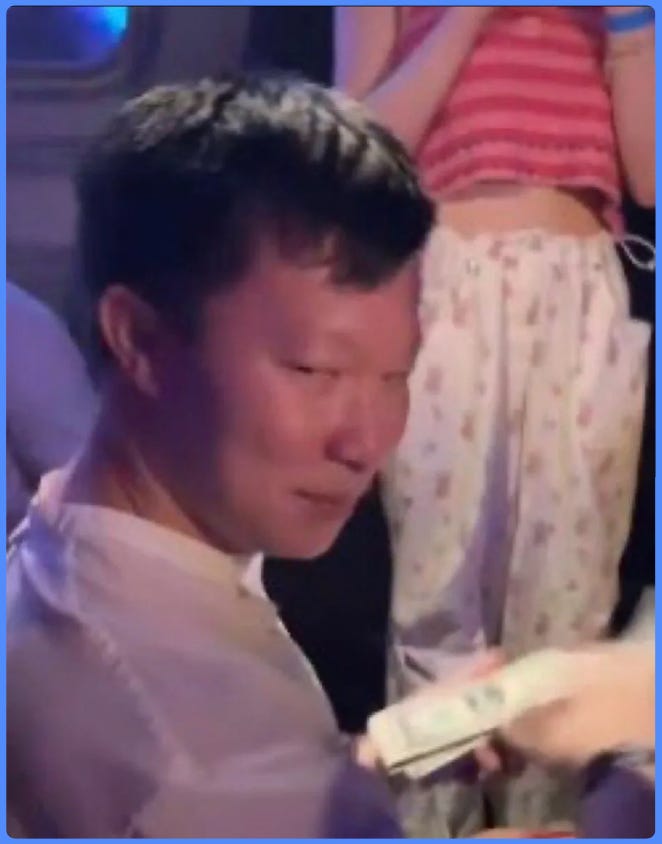
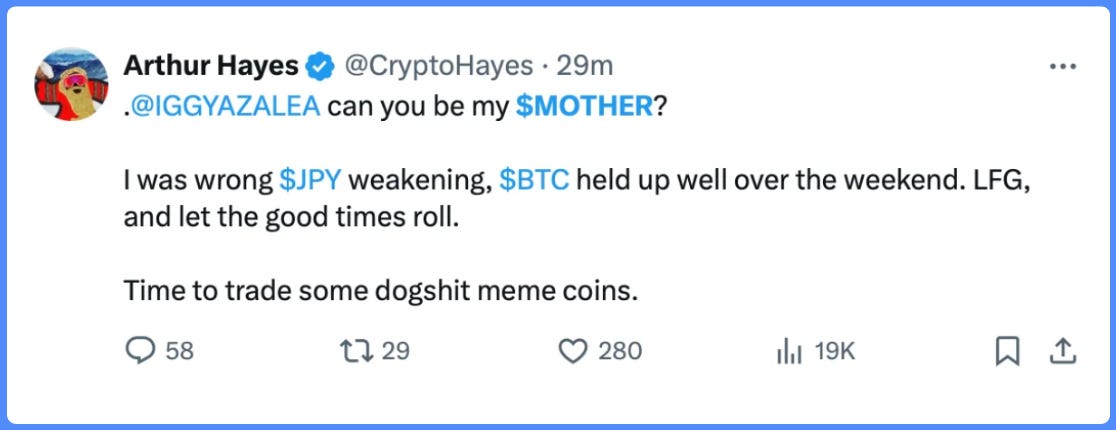
$Mother has drawn significant attention in the memecoin space, and Izzy has done an excellent job pushing it forward. I’ve never seen a celebrity work this hard.
-
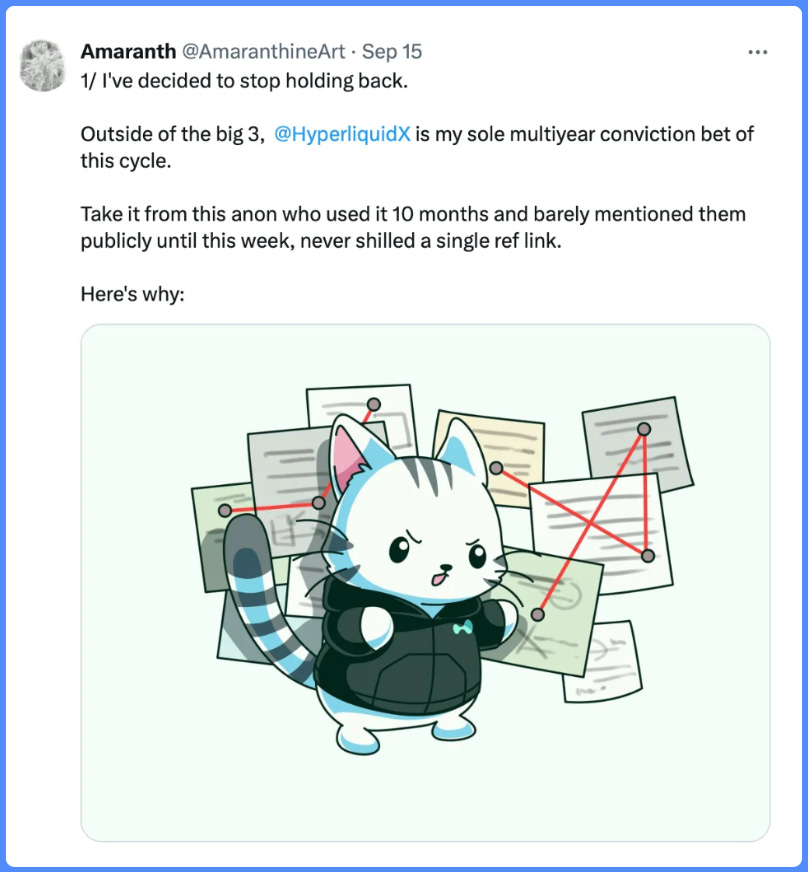
Hyperliquid is growing fast. Its smooth UX has made it the go-to exchange for many traders. Opinions are split—some love it, others hate it. Traders are candid: some hold massive points balances, placing big bets on the upcoming token launch. Hard to predict initial performance, but definitely one to watch closely!
-
New projects face liquidity challenges: Over 40 strong projects will launch in Q4, with over 100 more waiting in the wings. That’s over $20B in new FDV entering the market. Who will buy them? If people buy into Monad and Berachain, they’ll have to sell off millennial and boomer L1 tokens. I see a liquidity crunch coming, putting many projects and communities at serious risk.
-
GameFi still lacks attention: Enthusiasm for GameFi seems low. But I believe GameFi will rebound eventually. We hold some projects from last year performing well, but made no new GameFi investments this year. I’m optimistic about Ronin.
Join TechFlow official community to stay tuned
Telegram:https://t.me/TechFlowDaily
X (Twitter):https://x.com/TechFlowPost
X (Twitter) EN:https://x.com/BlockFlow_News
 @HashtalkSankalp