After Token2049, a discussion on Crypto: "Risk-free yields" create application-layer opportunities for LSDFi and RWA
TechFlow Selected TechFlow Selected
After Token2049, a discussion on Crypto: "Risk-free yields" create application-layer opportunities for LSDFi and RWA
The integration of crypto and AI is, in a way, the choice of the times.
 Navigating Web3 tides with focused insights
Author: 0xCousin
Token2049 has ended. Crypto entrepreneurs and professionals from around the world have gradually departed, and Singapore's crypto atmosphere has returned to calm. After intensive exchanges and discussions during this event period, I’ve developed some new thoughts on narratives for the upcoming cycle.
The overall architecture of the crypto industry has improved this year:
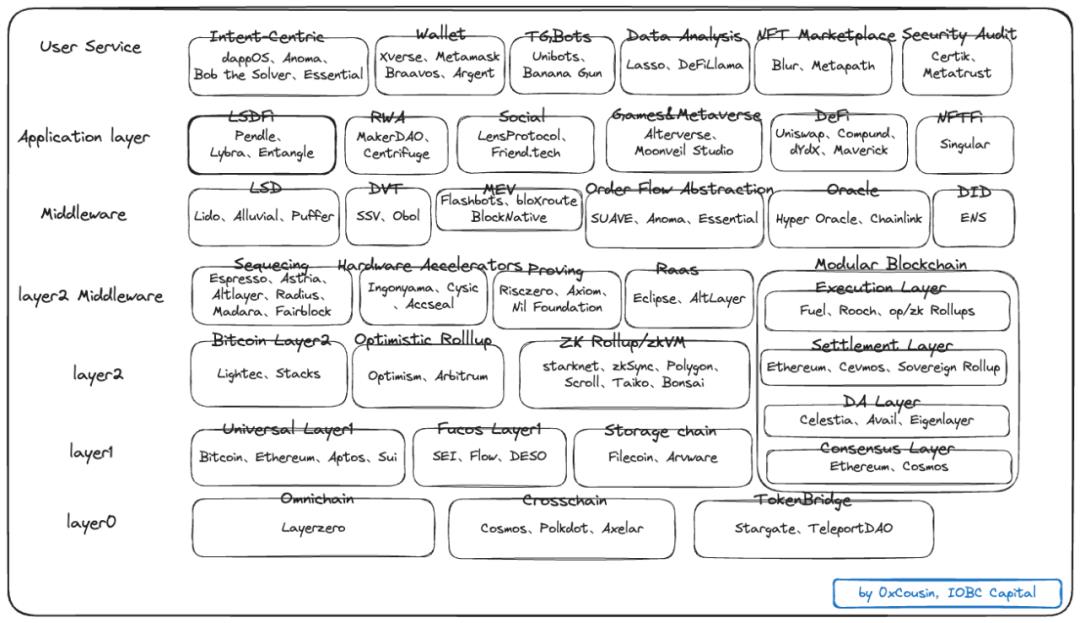
1. The most prominent Layer0 narrative remains Omnichain
LayerZero not only defined ultra-light-node-based interoperability across chains but also introduced the Omnichain Fungible Token (OFT) standard. OFT provides a more user-friendly and efficient solution for cross-chain transfers. There are two versions—OFT v1 and v2—with the key difference being that v2 supports non-EVM chains (such as Aptos). Additionally, standards like OFNT721 and OFNT1155 support Omnichain NFTs.
Many projects have already adopted LayerZero’s OFT standard, including Ethereum L2 Metis, Multichain stablecoin MIM, CDP protocol TapiocaDAO, wrapped Bitcoin protocol BTC.b, and multichain lending protocol Radiant.capital.
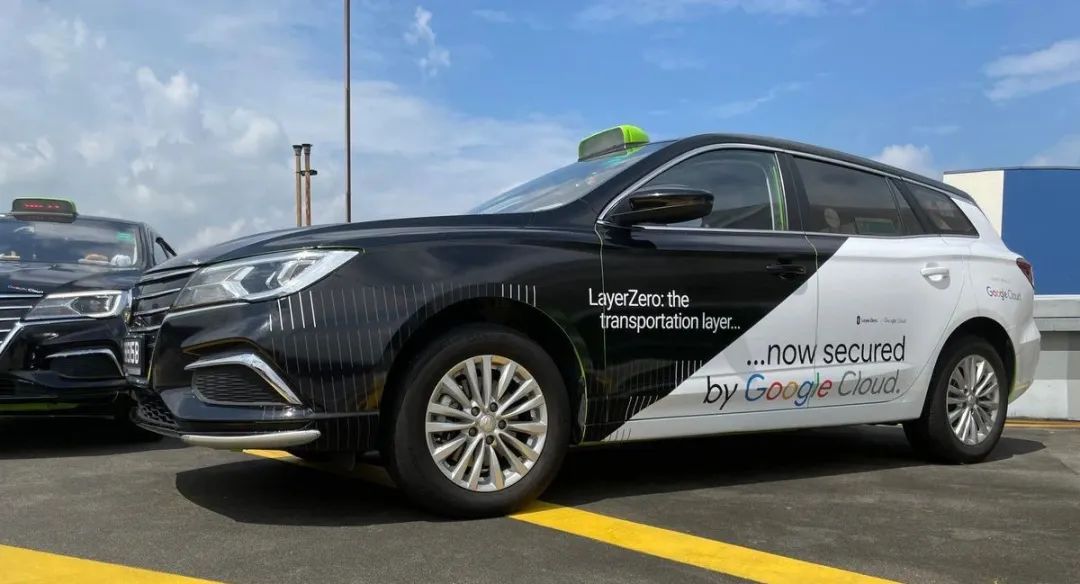
During Token2049, LayerZero deployed an electric vehicle fleet to safely transport attendees to any Token2049-related events across many streets in Singapore. Participants could ride for free by showing their conference pass or wristband, reach event venues, and receive small LayerZero souvenirs.
2. Layer1 is no longer a top-tier narrative in this cycle
There is divergence among participants regarding Layer1 projects in this cycle. New public chains based on Move have drawn slightly more attention, while other new blockchains—whether focused on DeFi or NFTs—or those claiming to support multiple programming languages to attract millions of Web2 developers—have yet to gain broad consensus. (This reflects impressions gathered during Token2049; lack of widespread consensus does not necessarily indicate poor prospects—divergence may instead offer alpha opportunities.)
Many people no longer believe a new public chain can truly surpass Ethereum. Even though they still don’t consider Ethereum the final destination, they’re unwilling to place large bets on new Layer1s. That said, several institutions continue investing in new Layer1s—Jump Crypto, Coinbase, and Circle Ventures remain common VCs appearing in new Layer1 funding announcements.
3. The Layer2 landscape is largely settled, and Layer2 middleware is ready
Optimistic Rollups are dominated by two major players—Optimism and Arbitrum. Leading ZK Rollup/zkEVM solutions include StarkNet, zkSync, Polygon, Scroll, and Taiko.
Middleware supporting ZK Rollups/zkVMs is now in place. Based on the ZK Rollup transaction flow:
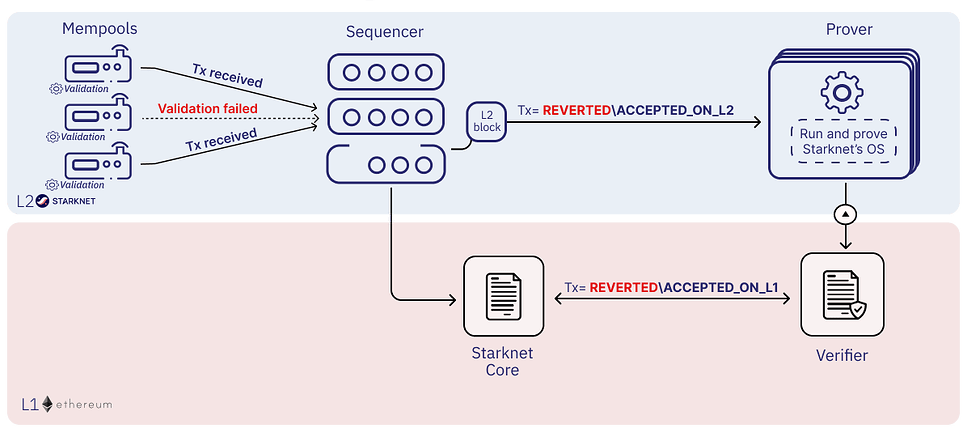
Key middleware includes:
Sequencer—the industry widely calls for decentralized sequencer networks. Top projects include Espresso Systems, Astria, AltLayer, Radius, Madara, and Fairblock;
Prover—numerous projects now focus on generating ZK proofs. By specialization: Nil Foundation focuses on Layer2 ZK proofs; Axiom targets application-level ZK proofs; Risczero generates both Layer2 ZK proofs for its Bonsai Network and application-level ZK proofs. Some provers belong to specific ecosystems—for example, Stone, Platinum, and Sandstorm specialize in StarkNet CairoVM;
Hardware Accelerators—one bottleneck limiting ZK Rollup/zkEVM performance is slow zkp generation speed, leading to specialized hardware acceleration projects. Examples include Ingonyama, offering GPU, FPGA, and ASIC acceleration; Cysic, which launched SolarMSM (using FPGA to accelerate MSM computation); and Accseal, focusing on privacy computing hardware acceleration.
4. Middleware harbors cash cows
After ETH2.0, LSD became the second "cash cow" business in crypto after Bitcoin PoW mining. Under Ethereum’s PoS mechanism, staking yields approximately 680,000 ETH annually (over $1 billion). High-quality or promising projects in this space include Lido (largest market share), Alluvial (focused on enterprise users), and Puffer (Slash-resistant).
Thanks to Flashbots’ MEV-Boost—an off-protocol implementation of PBS—the MEV sector has begun previewing future profit distribution mechanisms ahead of Danksharding. For MEV value extractors, securing more MEV opportunities requires abundant order flow. For users, avoiding MEV front-running seems impossible unless they “join” instead of fight it. Since eliminating MEV entirely isn't feasible, the most reasonable current approach is recycling MEV revenue back to users via wallets, DEXs, or other dapps.
5. Elevated “risk-free returns” create application-layer opportunities in LSDFi and RWA
ETH staking yield has become crypto’s equivalent of “government bond yield,” with LSDFi further boosting returns for ETH holders. According to current Lido data, Ethereum’s PoS annual yield is about 3.6%, positioning it similarly to sovereign bonds within crypto. After the Shanghai upgrade, ETH staking withdrawals became nearly instant, and there's ample liquidity between stETH and ETH, greatly increasing long-term ETH holders’ confidence in participating in staking to earn ETH2.0 mining rewards.
With assets like stETH, staked ETH regains liquidity, enabling various LSDFi applications. For example: Lybra Finance issues LSD-backed stablecoins. Since its underlying collateral consists of interest-bearing assets like stETH, combined with token incentives, Lybra’s eUSD stablecoin offers holders around 7% annual yield, effectively functioning as an “auto-interest-bearing stablecoin.” Currently, Lybra Finance’s TVL is ~$72M. Pendle, an interest rate swap protocol, splits yield tokens into principal and yield components, allowing users to execute diverse yield management strategies. Pendle Finance currently holds ~$144M in TVL. Some DeFi protocols have risen due to capturing significant LSD token volumes—e.g., emerging AMM Maverick gained prominence thanks to high market shares in swETH, wstETH, and cbETH, establishing itself as a top-tier AMM.
Combining ETH staking’s ~3.6% yield with additional LSDFi returns allows long-term ETH holders to capture greater earnings. Conversely, U.S. Treasury bonds yielding ~5% have pushed RWA into the spotlight. However, RWA mainly enables existing crypto users to access recent high Treasury yields—it doesn’t clearly demonstrate how RWA helps crypto attract new users. Overall, today’s elevated “risk-free rates” offer a glimmer of hope for long-term crypto holders amid bear markets.
6. Mass adoption demands reduced user experience barriers
This cycle saw many innovations in the User Service Layer, all sharing the same core narrative: lowering user experience thresholds, ultimately aiming for mass adoption.
Intent-Centric has recently become a hot topic—putting user intent at the center. Leading projects differ slightly in approach: Bob the Solver focuses on attracting more users, dappOS aims to lower usage barriers, Anoma helps users express needs better, and Essential prioritizes reducing MEV exploitation. In summary, these projects either solve the problem of “protocols being hard to use, combinations even harder,” or tackle “maximizing user returns.”
TGBot is another trending subject—one practical application of Web3 + AI. Telegram bots are lightweight apps running inside Telegram. Users interact with bots through simple commands in chat windows, enabling functions like monitoring token prices, executing DEX trades, or copy-trading. As Unibot’s user base, trading volume, and token price rose, TGBots quickly gained market attention. Within a short time, TGBots evolved into categories including trading, analytics, airdrop & mining tools. At their core, TGBots reduce UX friction and contribute to mass adoption.
7. Many projects combining Crypto and AI emerged at Token2049
The convergence of crypto and AI feels like an inevitable choice of our times. Crypto and ZK technologies create trustlessness; non-sovereign currencies and smart contracts are better suited for intelligent robots. At Token2049, numerous startups showcased crypto-AI integrations—conversations around them were impactful and thought-provoking.
Carbon-based humans created silicon-based AI to achieve greater automation, improve productivity, process massive datasets, and explore vast cosmic spaces—gradually endowing AI with thinking capabilities. Earth, with its 70% ocean coverage and oxygen-rich environment, suits carbon-based life. But in broader, oxygen-poor, water-scarce regions of outer space, silicon-based life may survive more easily than carbon-based life. Human-developed technologies—crypto, aerospace, green energy—may ultimately serve AI, enabling intelligent robots to thrive and produce in space, thereby better serving humanity.
Currently, I observe several forms of crypto-AI integration:
Automated On-chain Interaction: Represented by Unibot-style TGBots. For many new users, Web3 on-chain products have high entry barriers and are difficult to use—bots fill a real market need. With over 500 million monthly active users and a relatively open, crypto-friendly platform, Telegram makes the emergence and popularity of TGBots natural and inevitable.
To Earn Empowering AI Businesses: Exemplified by Public.ai. Public.ai is a medical-focused annotation company providing professional medical annotation tools and services, while decentralizing global expert annotators to improve quality and reduce costs.
Web3 Version of ChatGPT: Represented by Lasso and Kaito. Lasso is a natural language search engine for on-chain data. Without needing SQL or complex smart contract knowledge, users can query blockchain data using plain language. For instance, to compare Lido and Rocket Pool’s TVL over time, one simply types “Show TVLs of Lido Finance vs Rocket pool over time,” and Lasso returns results in chart form.
ZKML: Modulus Labs is a leading voice in this area. ZKML refers to creating zero-knowledge proofs for ML model inference steps—not training. The result is that provers can verify the correctness of ML computations without revealing additional information. Modulus Labs is building use cases such as RockyBot, Lyra Finance, and self-improving blockchains.
Finally
Singapore serves as a crucial hub connecting Eastern and Western Web3 industries. Token2049 attracted over 10,000 attendees—reportedly the largest event of the year so far. Most major projects attended, with infrastructure projects hosting side events and service-oriented projects mainly exhibiting at main venue booths.
I walked through every booth at the Token2049 main venue and learned about typical booth costs. Exhibitors were primarily public chains, Layer2 projects, exchanges, and payment solution providers—likely because exhibition formats add more value for these types of businesses.
Side events were mostly hosted by leading infrastructure projects or VCs, often co-organized with ecosystem partners or portfolio companies. Event formats were roughly split between social dinners and competitive hackathons/workshops followed by demo days.
We must keep building.
Join TechFlow official community to stay tuned
Telegram:https://t.me/TechFlowDaily
X (Twitter):https://x.com/TechFlowPost
X (Twitter) EN:https://x.com/BlockFlow_News
 @iobc_capital