








From Sevenfold TVL Growth to Surging On-Chain Activity: Mantle's User Acquisition Playbook in the L2 Race
TechFlow Selected TechFlow Selected
From Sevenfold TVL Growth to Surging On-Chain Activity: Mantle's User Acquisition Playbook in the L2 Race
Through data analysis, explore the multiple drivers behind Mantle's growth and gain deeper insights into Mantle's customer acquisition strategies in the current L2 competition and its future growth potential.
 Navigating Web3 tides with focused insights
Author: TechFlow
According to L2 Beat data, there are currently over 153 Layer 2 (L2) solutions launched or即将 launching. Amid this fierce competition, an increasing number of people realize that as the barrier to "launching an L2" continues to drop, the key metric for judging an L2’s success lies in how many users actually use it.
In a market cycle where “no one is propping each other up” has become a defining feature, L2s must truly deliver value to attract both users and developers, continuously expanding their ecosystems. Under these complex and volatile conditions, many community members have noticed the impressive exponential growth curve drawn by modular L2 Mantle Network on-chain:
Mantle not only saw its TVL multiply several times but also demonstrated strong on-chain activity. With growing user adoption, Mantle has stood out in the L2 race, ranking among the top five on the L2 Beat TVL leaderboard.
How was this achieved?
Let’s analyze the multiple drivers behind Mantle’s growth through data, diving deeper into its user acquisition strategies and future growth potential within today’s competitive L2 landscape.
Image Source: Mantle Medium
While TVL Growth Is Encouraging, On-Chain Activity Is More Valuable
Following the logic of “evidence before analysis,” let’s first build a concrete understanding of Mantle’s growth over the past six months using multiple data points. Mantle officially launched its mainnet on July 17, 2023, and after a period of stabilization, experienced explosive growth at the end of 2023.
In terms of TVL: According to L2 Beat, Mantle’s TVL was around $200 million in December 2023. It then surged dramatically, reaching a peak of $1.49 billion in April 2024—a more than 700% increase within four months. In Coin98 Analytics’ recently released July 2024 Layer 2 Monthly Report, Mantle achieved a 1.6x growth in TVL during July, ranking second among 11 major L2s analyzed, trailing only Scroll. As a foundational metric for evaluating L2 development, TVL reflects valuable insights into user participation, market confidence, and ecosystem health. Rapidly rising TVL often signals strong user trust and acceptance, and is also evidence of Mantle’s ability to provide stronger liquidity.
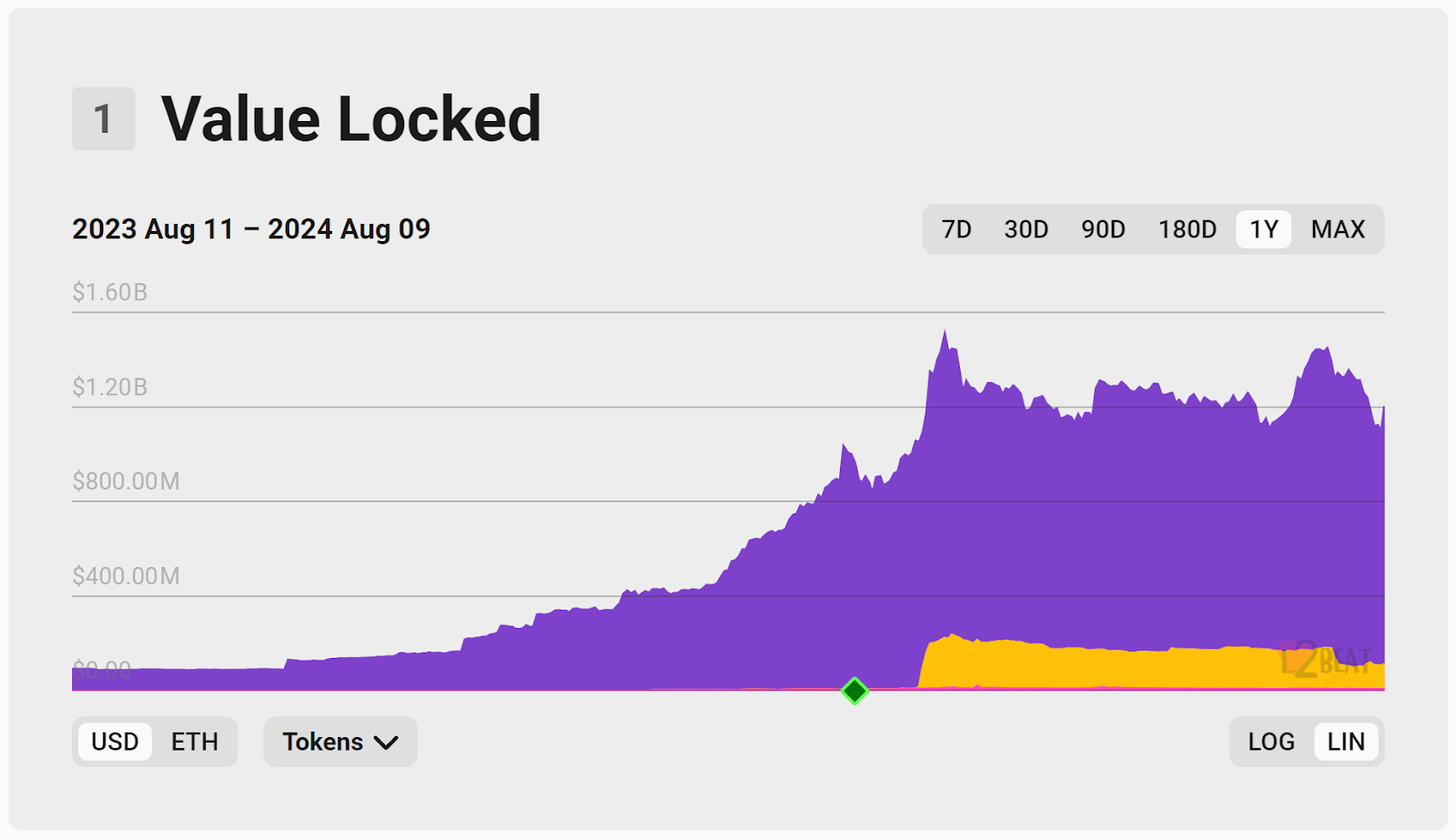
Image Source: l2beat.com
Having reviewed the TVL fundamentals, let’s now examine Mantle’s on-chain activity. As more and more L2s emerge, an increasing number risk becoming ghost towns due to lack of usage. Therefore, measuring prosperity via metrics like user count and transaction volume carries greater real-world significance—and here too, we observe exceptional user engagement reflected in Mantle’s growth data.
A closer look reveals that Mantle’s TVL gains are driven across multiple ecosystem segments including DEXs, lending, restaking, and RWA. Notably, DEX TVL has grown rapidly and accounts for a large share—an even clearer picture visible on Defillama’s dashboard—proving that a significant portion of assets on Mantle are actively deployed in on-chain applications.
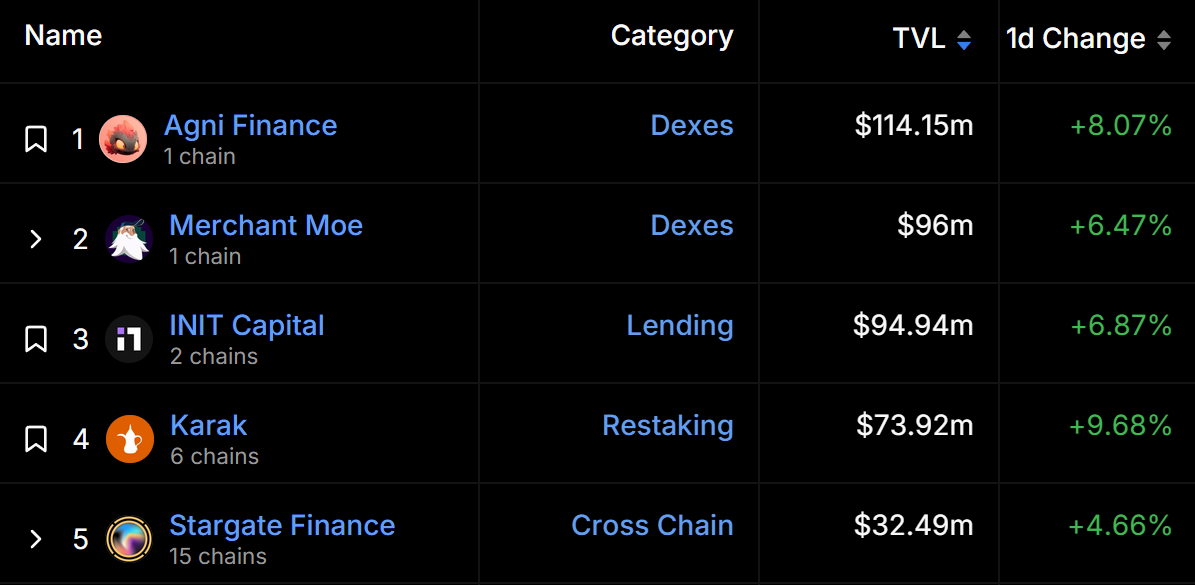
Image Source: defillama.com
In terms of user numbers: Data from Dune shows Mantle’s user base growing in distinct stages. In December 2023, Mantle had approximately 330,000 users. By August 9, 2024, the total number of users had surpassed 3.15 million, reflecting nearly tenfold growth and indicating growing adoption of the Mantle ecosystem.
Additionally, according to Coin98 Analytics’ Q2 2024 L2 report, Mantle saw an independent address growth exceeding 160% in the second quarter of 2024. On June 13 alone, new addresses exceeded 114,000, ranking second among the 11 major L2s tracked, only behind Blast, which conducted an airdrop during the same quarter.
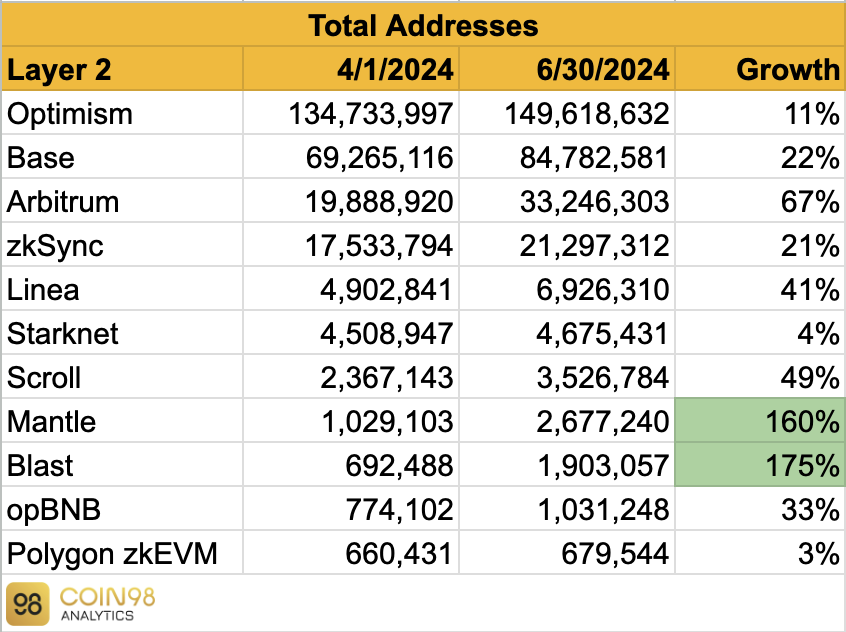
Image Source: Twitter @Coin98Analytics
Regarding transaction volume: According to Coin98 Analytics’ Q2 2024 L2 report, Mantle’s total transaction volume grew by over 77% in the second quarter, placing it among the top performers among the 11 major L2s.
Furthermore, Dune data indicates that Mantle has already processed over 120 million transactions on-chain, with daily peaks exceeding 2.2 million transactions, demonstrating strong on-chain activity. The higher the transaction activity, the greater the network fee revenue—this largely reflects the network’s self-sustaining profitability.
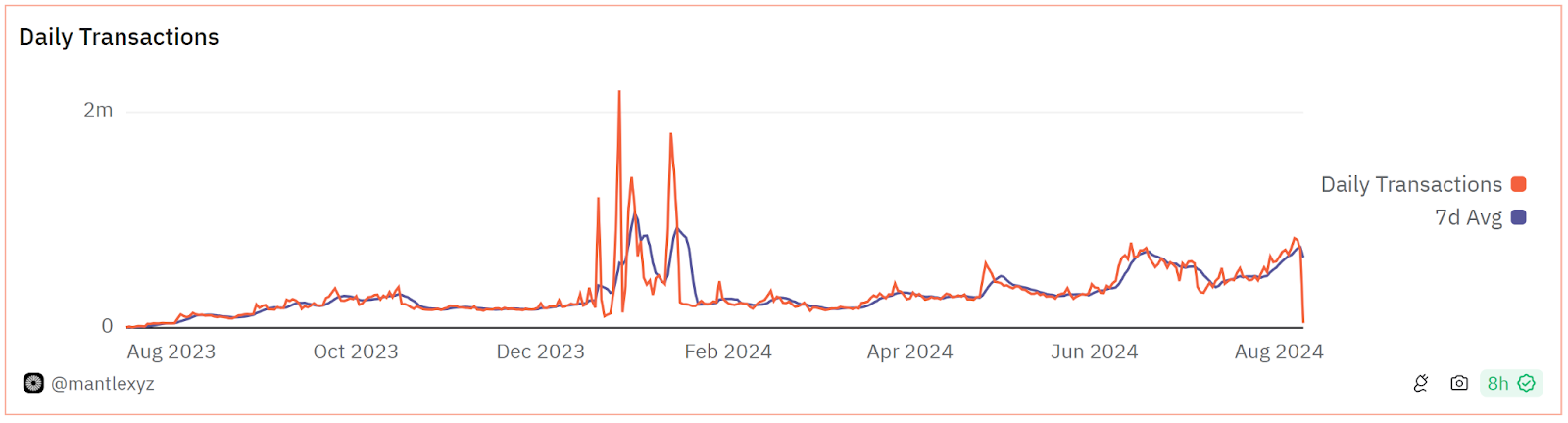
Image Source: dune.com
While existing growth achievements are certainly encouraging, understanding the underlying success factors is essential for sustaining future growth.
We know that applications serve as critical containers for ecosystem users, assets, and transactions. A rich and diverse ecosystem not only attracts new users but also encourages existing users to engage in more frequent and varied interactions.
From this perspective, while broader market cycles have positively influenced Mantle’s growth, the key driver has been the continuous enrichment of its ecosystem.
Multi-Sector Application Growth Behind the Scenes: Exploring Mantle’s Ecosystem Landscape
According to Mantle’s official ecosystem page, over 195 projects have joined the Mantle ecosystem, spanning sectors such as DEXs, restaking, real-world assets (RWA), gaming, and more—showcasing remarkable diversity and breadth. This ever-expanding ecosystem not only offers users a wide array of choices and services but also serves as a powerful engine driving on-chain growth.
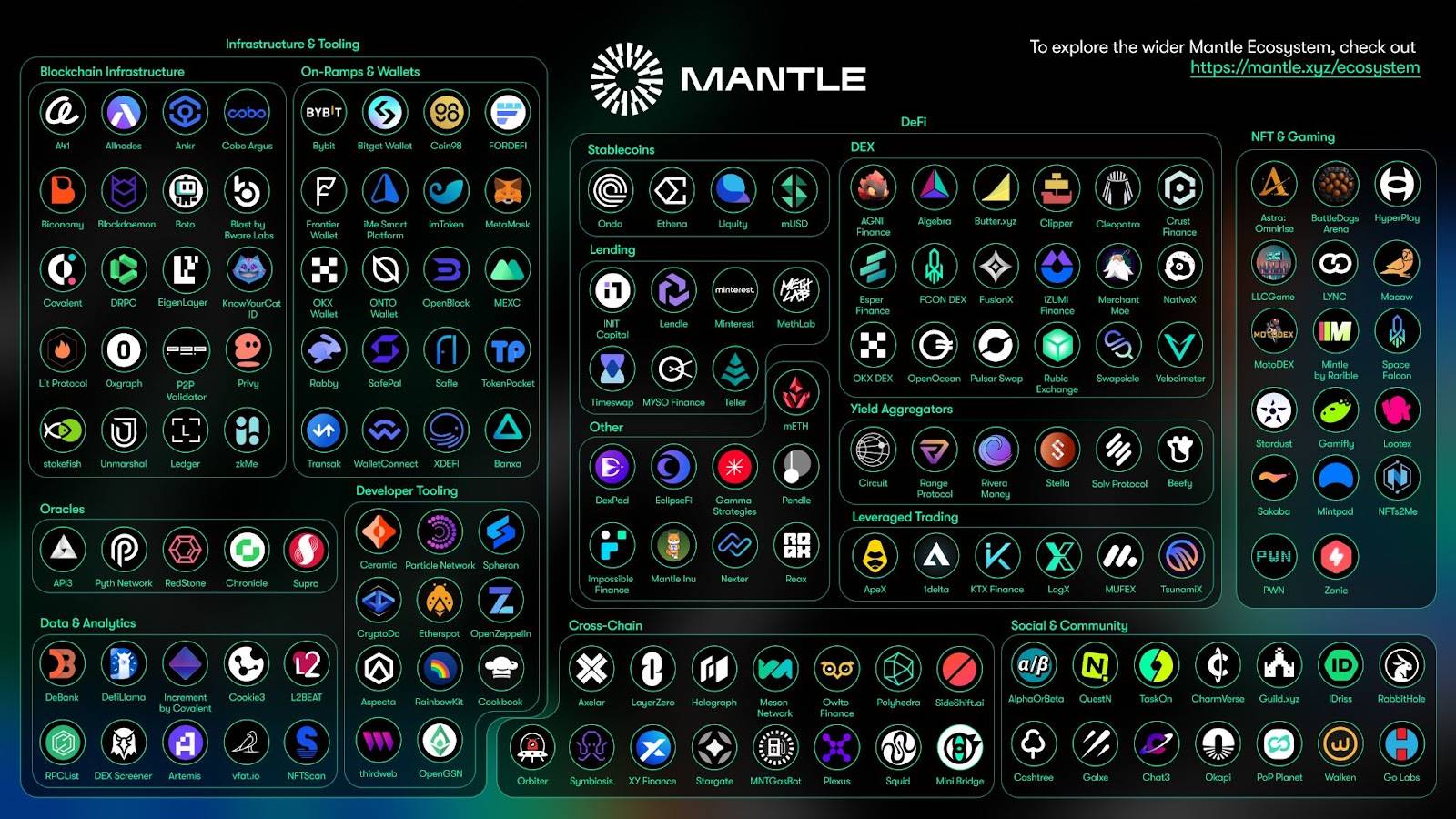
Image Source: Twitter @0xMantle
DeFi’s importance in ecosystem building cannot be overstated: If we liken each blockchain to a country, DeFi would be analogous to GDP. The maturity of DeFi infrastructure significantly impacts the overall ecosystem’s potential and ceiling.
Within the Mantle DeFi ecosystem, not only do popular community-favorite products exist across core DeFi components like DEXs and lending, but innovative projects tied to trending narratives—such as restaking—are also rapidly emerging.
In the DEX sector, Agni Finance and Merchant Moe have made outstanding contributions to liquidity and TVL: Agni Finance, an AMM-based DEX, specializes in spot trading and concentrated liquidity; Merchant Moe, part of the Trader Joe ecosystem, aims to revolutionize on-chain trading through its order book protocol. According to Defillama data, Agni Finance holds a TVL of $114 million, while Merchant Moe’s TVL stands at $96 million.
In the lending sector, INIT Capital plays a pivotal role: As a liquidity-backed money market, INIT Capital offers liquidity-backed borrowing, lending, and yield-generating strategies, achieving a TVL of $146.9 million by May 2024.
In the staking sector: In December 2023, Mantle launched Mantle LSP mETH on Ethereum mainnet, partnering with prominent restaking projects such as Karak, Pendle, and Renzo. mETH is now the fourth-largest liquid staking token (LST) in DeFi. As the first L2 protocol to launch its own LSD, Mantle is building a robust LSD ecosystem.
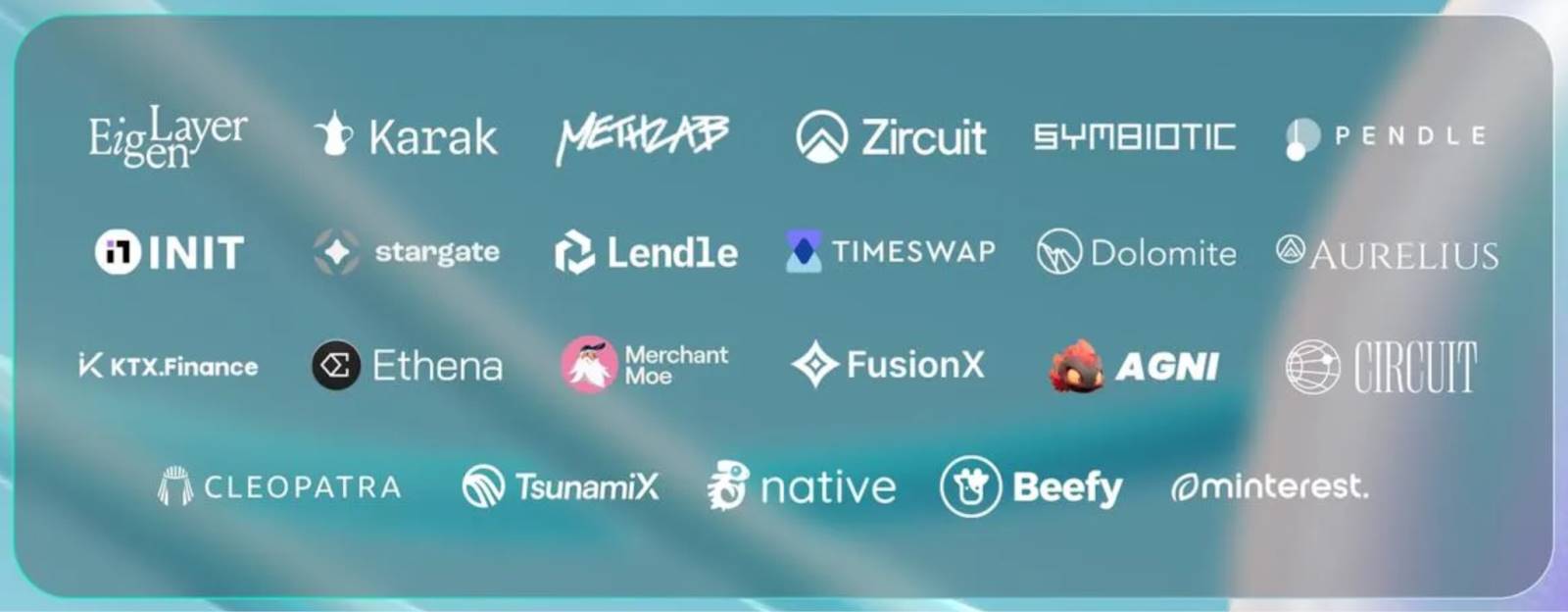
Image Source: Mantle Medium
Beyond DeFi, another defining trend of this cycle is the embrace of attention economies, with growing community interest in consumer-grade application adoption. Dedicated to delivering rich user experiences, Mantle’s ecosystem has seen high-quality projects emerge across RWA, gaming, and meme sectors.
In the RWA sector: In September last year, Mantle partnered with RWA leader Ondo Finance to launch USDY, a tokenized bill backed by short-term U.S. Treasuries and bank demand deposits. Users can mint USDY through Ondo or purchase it via DEXs on Mantle, and USDY is adopted throughout the Mantle ecosystem as a yield-bearing stablecoin. Additionally, Mantle collaborated with Ethena to launch USDe.
In the gaming sector: In April, Mantle formed a strategic partnership with Catizen, a TON-based idle cat-raising game. This collaboration focuses on seamlessly integrating Mantle’s native token MNT and modular L2 infrastructure to revolutionize in-game transactions and asset management. Thanks to its adorable cats and unique gameplay, Catizen attracted 3 million players during its public test phase, reached nearly 20 million registrations within two months of launch, and surpassed 1.25 million on-chain users by June 23. Mantle’s strong technical support enabled Catizen’s success, while Catizen’s breakout popularity brought more users and on-chain activity to Mantle.
Moreover, as gaming remains a key focus area for Mantle, another flagship project, MetaCene, received strong backing and launched a new testing round on July 28. As a large-scale meta-MMO game, MetaCene has attracted over 150,000 pre-registrations. This testing phase covers Asia and the Americas and offers $3 million worth of MAK tokens and NFTs as rewards, with additional MNT rewards provided directly by the Mantle team for participants.
In the booming meme sector this year, Mantle’s ecosystem birthed the viral meme project Puff: During its public mint in April, Puff attracted over 7,000 mETH. Its recently launched NFT collection, Puff Dragons, has already achieved approximately 5x premium, with a current floor price of 218 MNT (about $145.58), drawing widespread community attention.
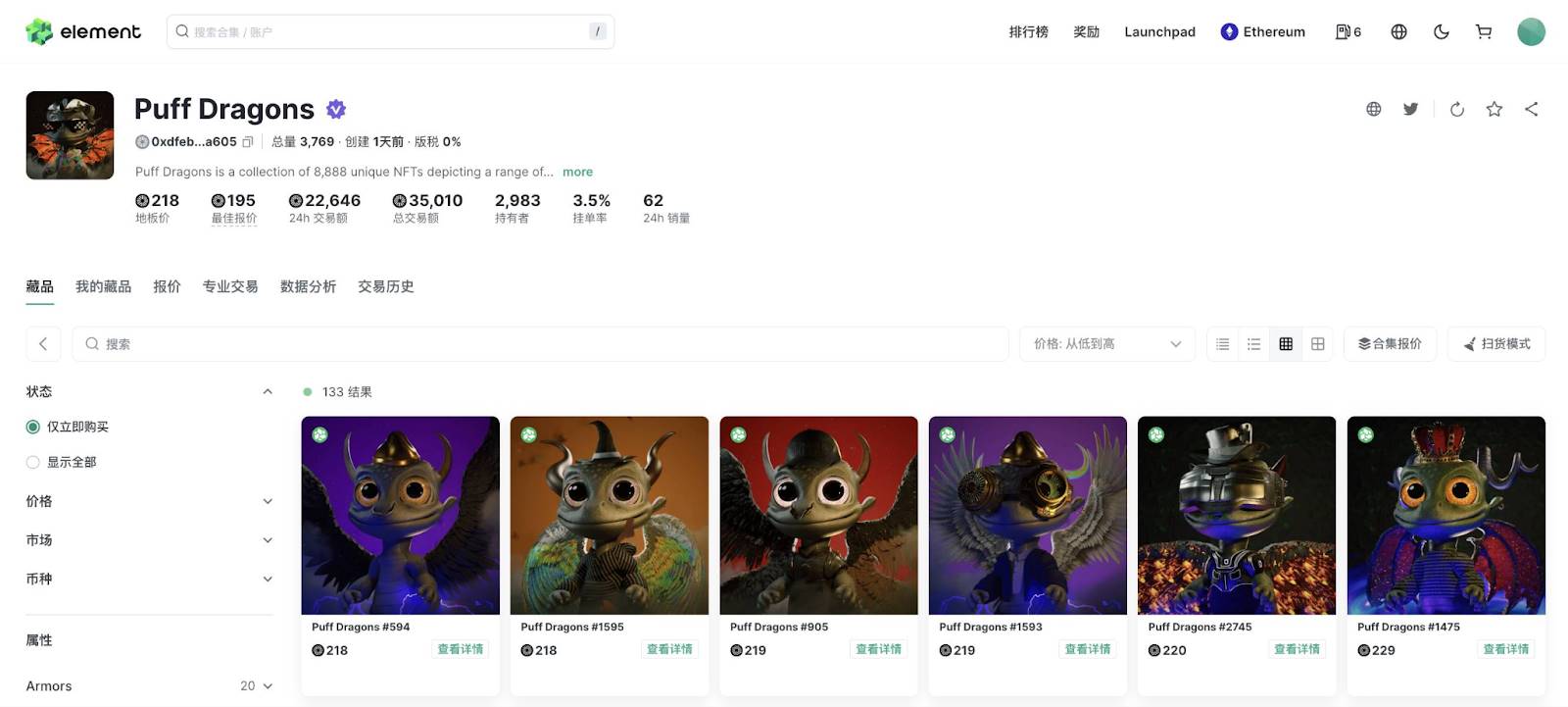
Image Source: element.market
Mantle’s thriving ecosystem provides strong support for its on-chain data growth. This prosperity stems not only from Mantle’s unique technical advantages as a foundational platform but also from comprehensive support extended to projects within its ecosystem.
Dual Engine of Technical Advantages and Financial Support: Fueling Mantle’s Ecosystem Breakthrough
As a highly modular L2, Mantle separates core blockchain functions—transaction processing, state validation, and data availability—into specialized layers to optimize performance and reduce costs. Developers and users within the ecosystem benefit from the numerous advantages offered by modularity:
Decentralized sequencers reduce centralization risks
Transaction processing on Mantle is handled by Sequencers. Initially, Mantle used a centralized sequencer operated by its foundation. Later, Mantle introduced a “scheduler” mechanism to determine which sequencer produces the next block, enabling secure and trustless block production and reducing single points of failure or censorship risks on the network.
TSS nodes shorten fraud proof windows through state validation
Mantle employs a Threshold Signature Scheme (TSS) for state validation, leveraging MPC (multi-party computation) technology to effectively shorten challenge periods and improve correctness of off-chain transactions.
EigenDA enables high-performance data availability
EigenDA leverages EigenLayer’s re-staking mechanism to inherit Ethereum’s robust security foundation. Additionally, EigenDA’s carefully designed incentive and penalty mechanisms ensure data availability (DA) nodes are properly rewarded, providing more stable and reliable service, guaranteeing high data availability, and paving the way for high-throughput, low-cost blockchain applications.
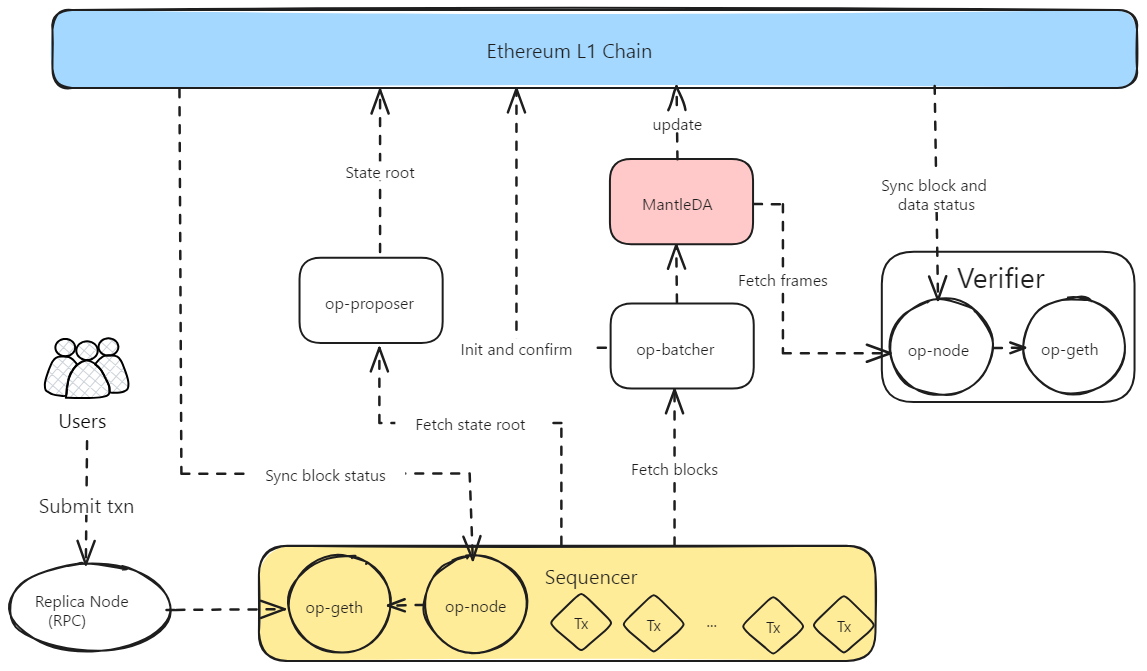
Image Source: Mantle doc
Strong underlying technology is essential for superior application experience and rapid development. In recent years, technical homogenization in the L2 space has been widely criticized. Mantle, however, delivers a better experience for developers and users through its unique technical design. Throughout its evolution, Mantle continues refining its tech stack, ensuring technical superiority supports sustained ecosystem growth. The successful mainnet v2 Tectonic upgrade completed in March stands as a prime example—the first major update since the Alpha v1 mainnet launch, aimed at significantly lowering gas fees.
Beyond technology, Mantle has implemented various measures to support developer growth and innovation. On one hand, Mantle provides comprehensive developer documentation and tools covering platform features, usage guides, sample code, and best practices, helping developers build faster and more efficiently on Mantle.
On the other hand, Mantle launched the Mantle LSP Bug Bounty Program, incentivizing developers to participate in security audits and vulnerability discovery. Developers who identify vulnerabilities in Mantle LSP smart contracts can earn rewards ranging from $5,000 to $500,000, continuously enhancing the ecosystem’s security and reliability.
Beyond technical strengths, another standout advantage in Mantle’s ecosystem development is the substantial financial reserve held in the Mantle Treasury. According to Defillama, at its peak, the Mantle Treasury held over $5 billion in assets, making it the largest treasury in the crypto industry. This massive scale empowers Mantle to offer strong incentives for developers, further establishing itself as a fertile ground for innovation.
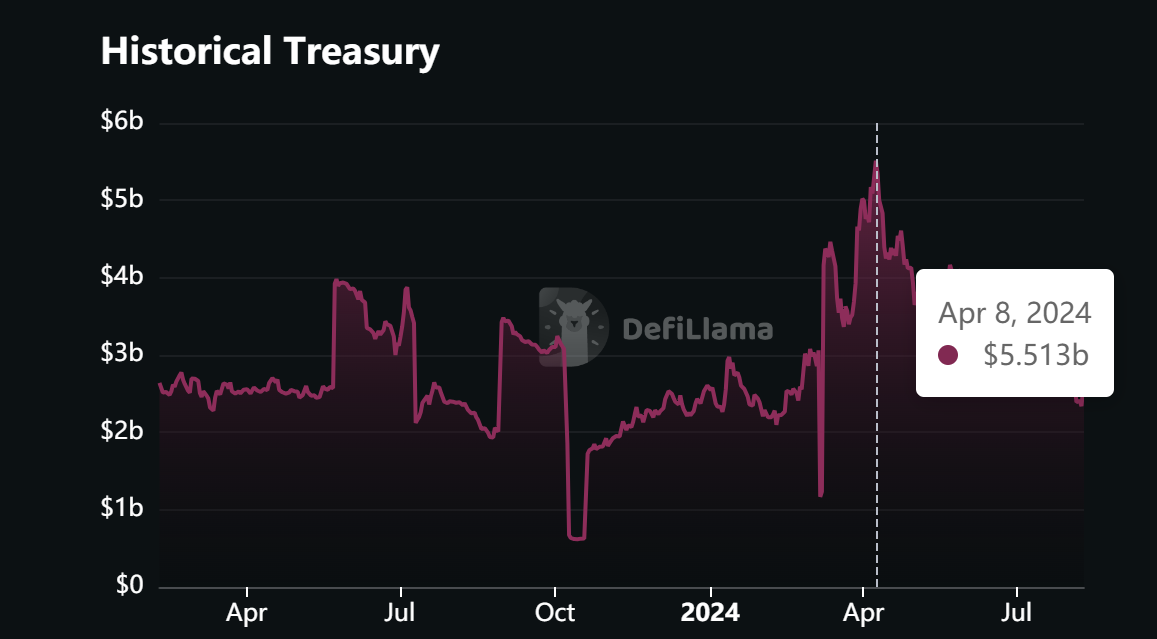
Image Source: defillama.com
Currently, Mantle implements a multi-track parallel approach to ecosystem incentives:
Mantle EcoFund is a $200 million ecosystem fund supported by the Mantle Treasury, promoting developer and DApp adoption on the Mantle network. It prioritizes investing in teams building high-quality, innovative projects within the Mantle ecosystem, with opportunities to increase allocations to promising projects.
For early-stage projects, Mantle launched Public Grants, offering approved applicants up to $20,000 in MNT tokens.
To address liquidity challenges faced by ecosystem projects, Mantle introduced an Application Liquidity Support Program: totaling $300 million (comprising USDe, ETH, BTC, and MNT), this initiative provides liquidity support to ecosystem applications, fostering overall ecosystem growth.
For high-performing ecosystem projects, Mantle launched the Mantle Scouts Program, empowering 16 influential figures in the Mantle ecosystem to distribute $1 million in MNT tokens to quality projects.
Mantle is also committed to global blockchain education and innovation: EduDAO connects university ecosystems worldwide to enhance collaboration and data exchange, nurturing the next generation of blockchain and Web3 innovators. As an independent steering committee, EduDAO allocates up to $11 million annually for project grants, research, and independent product development. University partners include Berkeley RDI, Penn Blockchain, Harvard Blockchain Club, MIT Sloan Blockchain Club, Michigan Blockchain, USC Blockchain, Oxford Blockchain Society, and Tsinghua University Blockchain Association.
Notably, as gaming is a key strategic direction for Mantle, Mantle partnered with Game7 to launch a gaming accelerator program. Leveraging Mantle Network’s infrastructure, Game7 provides developers with essential tools such as NFT markets, cross-chain bridges, and game DAOs, delivering seamless user experiences and ecosystem connectivity for incubated and invested game projects. Together, they aim to advance the development of permissionless and interoperable gaming worlds.
Additionally, due to Mantle’s close relationship with Bybit, outstanding projects in the Mantle ecosystem will have opportunities to list on Bybit, gaining exposure to a broader investor base through Bybit’s promotion.
This diverse set of ecosystem incentives has attracted widespread developer participation, with many projects rapidly growing thanks to Mantle’s incubation. In September last year, EcoFund announced support for three innovative projects: LiquidX, Valent, and Range Protocol. In January this year, EcoFund deployed $10 million to fund six DeFi projects: Merchant Moe, INIT Capital, Butter, Renzo, MUFEX, and TsunamiX. Currently, according to the official website, EcoFund has supported over 13 projects, with INIT Capital, Catizen, and Merchant Moe emerging as key pillars of the Mantle ecosystem.
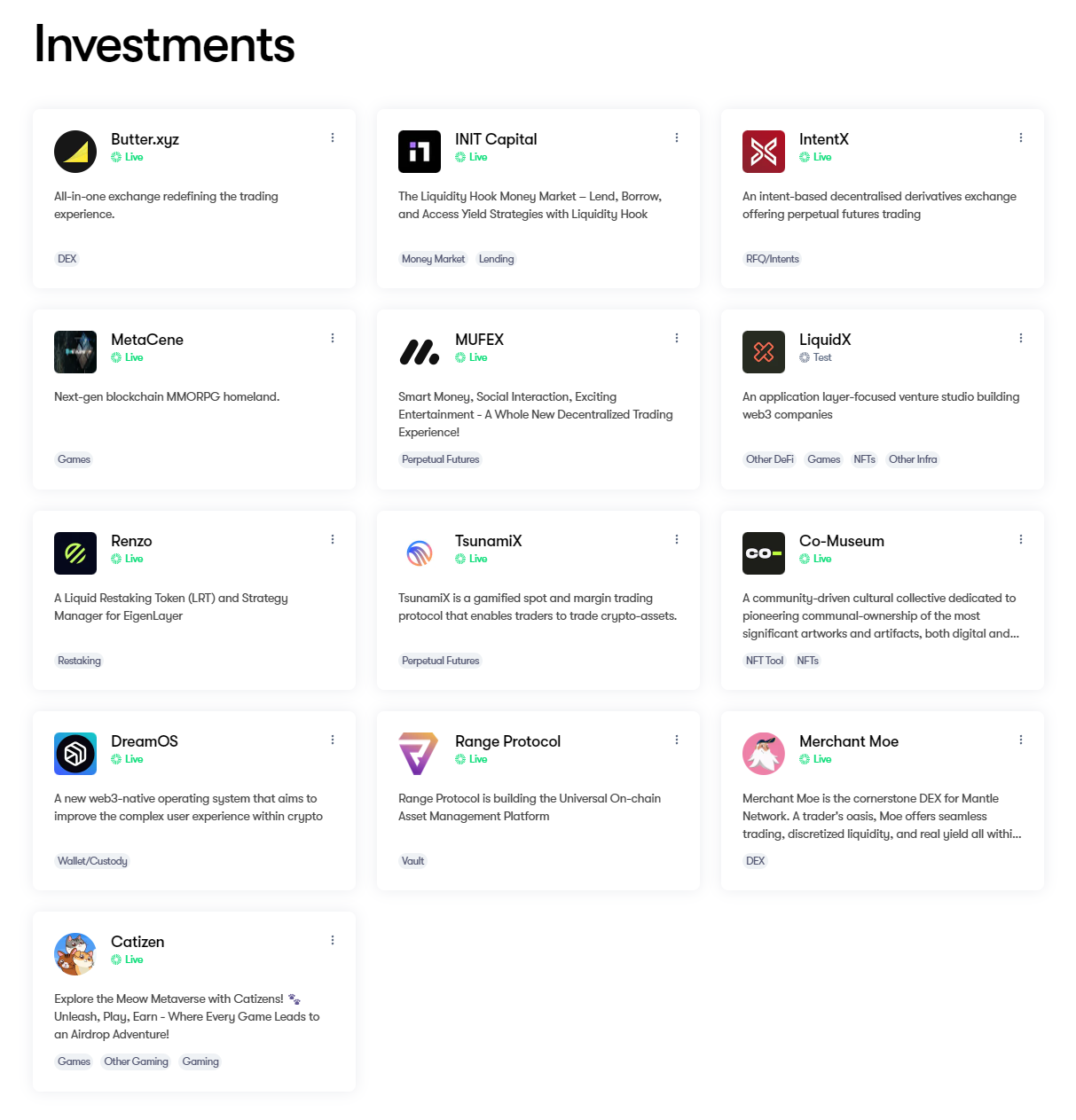
Image Source: Mantle Website
cmETH Approaching: Mantle’s Future Growth Outlook
Of course, given Mantle’s steady growth over the past six months, some users may wonder:
Is it still possible to enjoy ecosystem benefits from future growth if joining now?
Many community members remain optimistic about Mantle’s future growth, a confidence fueled by the upcoming arrival of cmETH.
We know that mETH is a liquid staking token (LST). With the passing of MIP-30, cmETH will become the new liquid restaking token (LRT). Like mETH, cmETH will be highly composable within the Mantle ecosystem, allowing users to retain the benefits of mETH while exploring additional yield opportunities through L2 decentralized applications and protocols. Meanwhile, COOK will be introduced as the new governance token for Mantle LSP, with the official token TGE planned for mid-October.
This TGE will create 5 billion tokens, with 15% allocated to four ecosystem projects under the following distribution:
-
Season 1 Methamorphosis Campaign: 5%, 250 million tokens;
-
Mantle Rewards Station: 4%, 200 million tokens;
-
Puff: 5%, 250 million tokens;
-
Puff NFT: 1%, 50 million tokens.
Users currently have multiple ways to accumulate COOK tokens through ecosystem participation. Besides staking MNT to earn future COOK rewards, Mantle has partnered with Bybit on related campaigns.
The campaign runs from July 26, 2024, 12:00 UTC to October 8, 2024, 23:59 UTC. During this period, users holding mETH in their wallets earn Powder rewards—10x Powder per mETH per day. The first 50 new users will receive a 2,000 COOK token airdrop. Additionally, Bybit will host daily lucky draws, with winners receiving COOK rewards worth up to $10,000.
Powder can later be redeemed for COOK—meaning the more Powder accumulated now, the more COOK users will receive in the future. Moreover, the top 500 participants on the Powder leaderboard will receive additional COOK rewards.
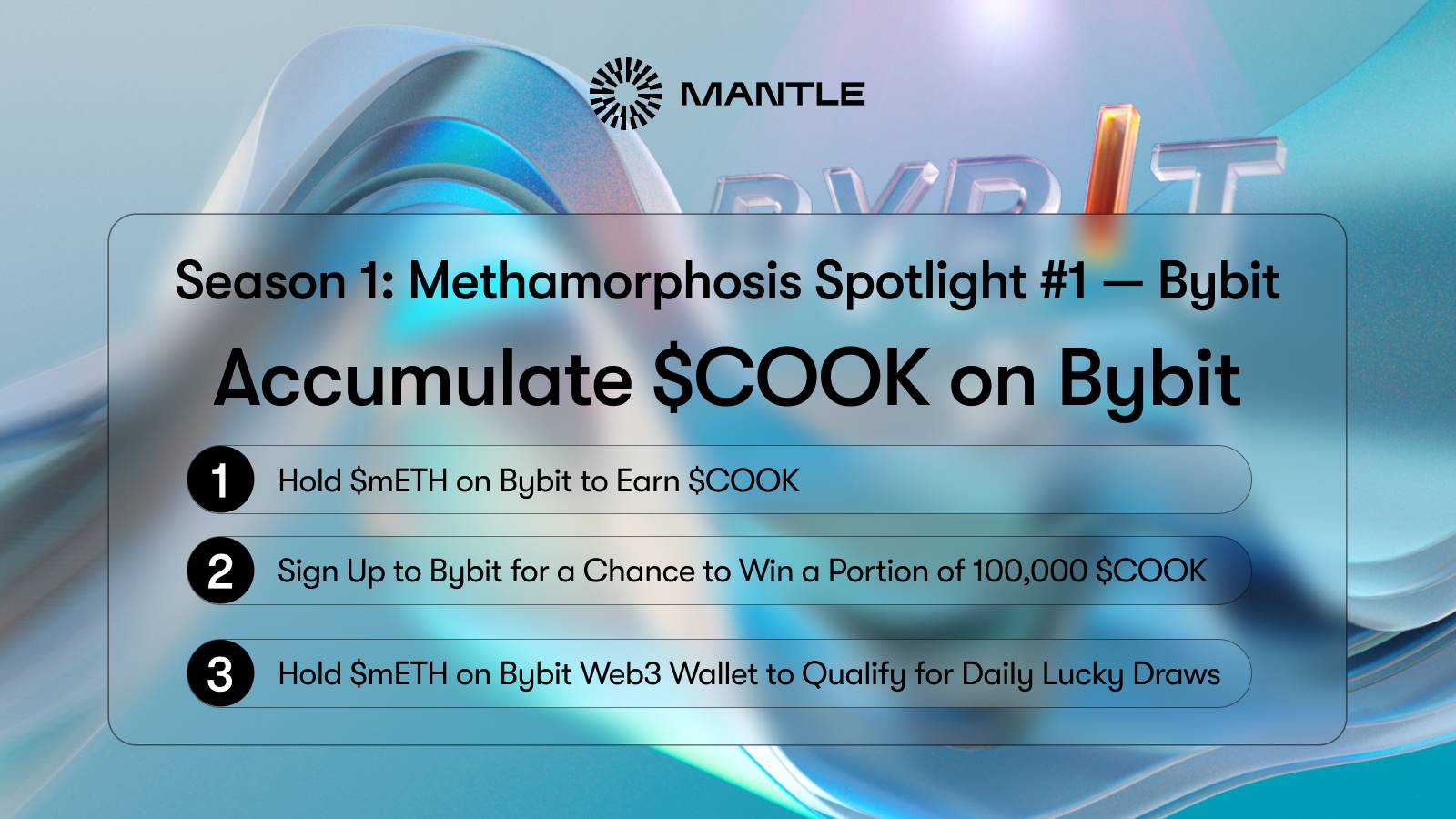
Image Source: Mantle Website
Additionally, users can earn COOK rewards by participating in Puff and Puff NFT activities: On August 6, 2024, Puff launched a TOP-UP Mint event for its Puff Dragons NFT collection. Participants minting the Puff Dealer series will receive approximately 4,000 COOK, while those minting the Puff Escobars series will receive approximately 5,000 COOK.
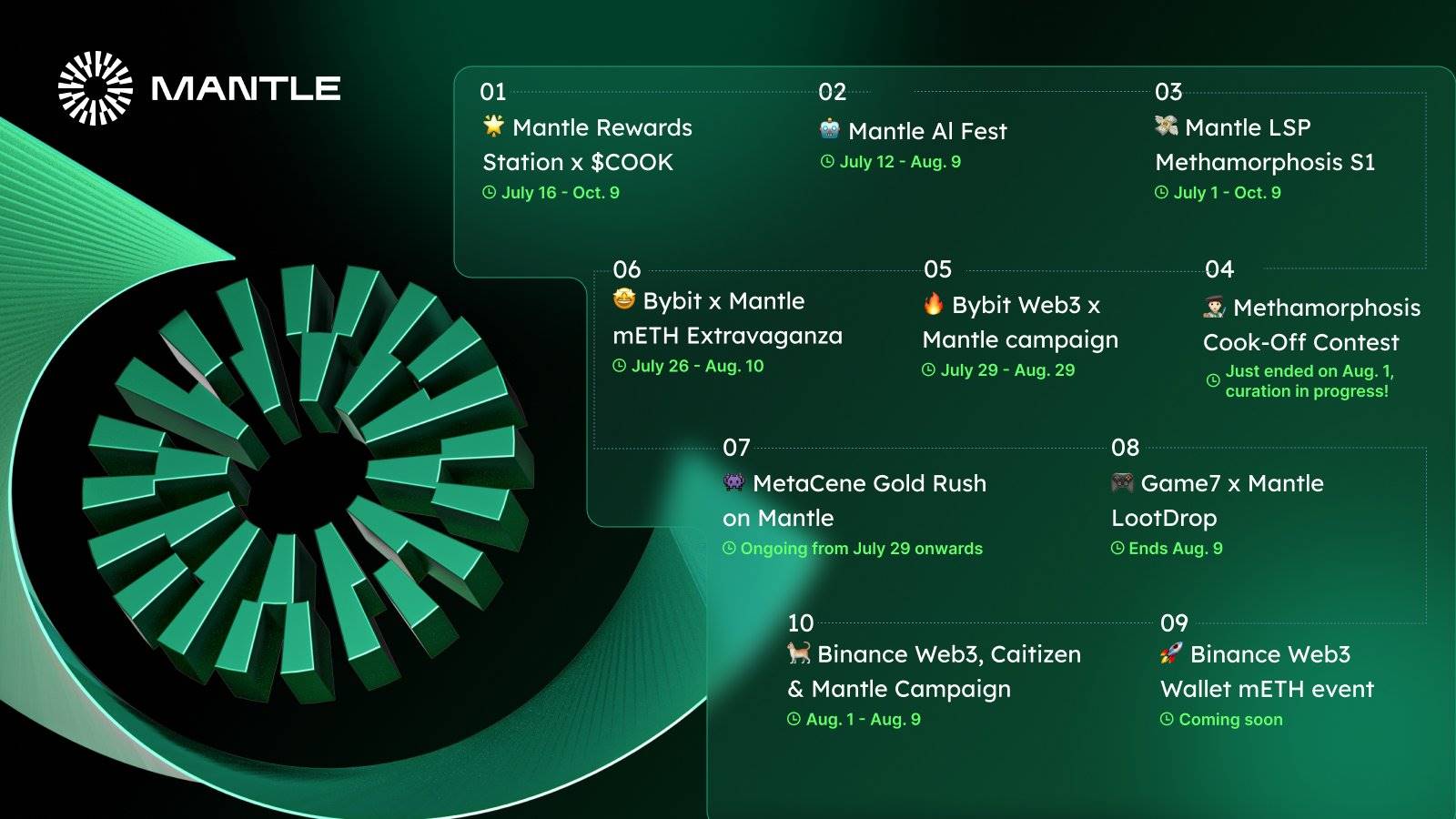
Image Source: Mantle Ecosystem Participation Guide (updated weekly) Twitter @0xMantle
Besides cmETH and COOK, another hot topic in the Mantle ecosystem is FBTC:
FBTC, launched by Mantle in collaboration with Ignition, is now available for swapping and bridging on the Mantle network. As a secure, decentralized, composable, and highly liquid Bitcoin asset pegged 1:1 to BTC, FBTC aims to enhance Bitcoin’s accessibility and utility while offering richer yields to holders.
Although FBTC within the Mantle ecosystem is still in its early stages, Bitcoin—as the cryptocurrency with the highest market cap—boasts a solid consensus foundation and over $1.5 trillion in capital. As a trending narrative this cycle, many community members believe BTCFi could surpass the historical peak of ETHFi and potentially reach a $300 billion scale. The introduction of FBTC brings the BTCFi narrative into the Mantle ecosystem, positioning it as one of the primary drivers of Mantle’s future growth.
In summary, observing Mantle’s ecosystem reveals that its impressive growth is built upon solid technical foundations, strong ecosystem support, and diverse participation opportunities enabled by a rich application landscape. While this growth path is theoretically replicable, few ecosystems can easily achieve it.
Over the past half-year, Mantle has clearly demonstrated its strong competitiveness in the L2 space through standout growth metrics. For users today, with deeper integration of FBTC into the ecosystem and the upcoming arrival of cmETH and COOK, signs of continued growth are already evident. Given this foreseeable momentum, active participation may well be a smart move for positioning within the evolving L2 landscape.
Join TechFlow official community to stay tuned
Telegram:https://t.me/TechFlowDaily
X (Twitter):https://x.com/TechFlowPost
X (Twitter) EN:https://x.com/BlockFlow_News
 深潮TechFlow






