Analyzing Sanctum: Staking and Restaking on Solana (2)
TechFlow Selected TechFlow Selected
Analyzing Sanctum: Staking and Restaking on Solana (2)
In this article, we will focus on recent airdrops and their structures, the success of Alpha Vault, tokenomics, key DeFi partner integrations and listings, the growth of LSTs, and their adoption into Web2.
 Navigating Web3 tides with focused insights
Author: Greythorn
Introduction
In our Sanctum Research Part 1, we explored how liquid staking is transforming asset management in PoS networks. We discussed how liquid staking protocols issue liquid staking tokens (LSTs) in exchange for staked assets, representing both the staked amount and accrued rewards. We highlighted the rapid growth in total value locked within liquid staking, noting Solana’s staking rate exceeds 70%, far surpassing Ethereum’s 27%. Nevertheless, LSTs account for only 6% of Solana’s staked supply compared to over 40% on Ethereum, presenting a significant market opportunity for Sanctum within the Solana ecosystem.
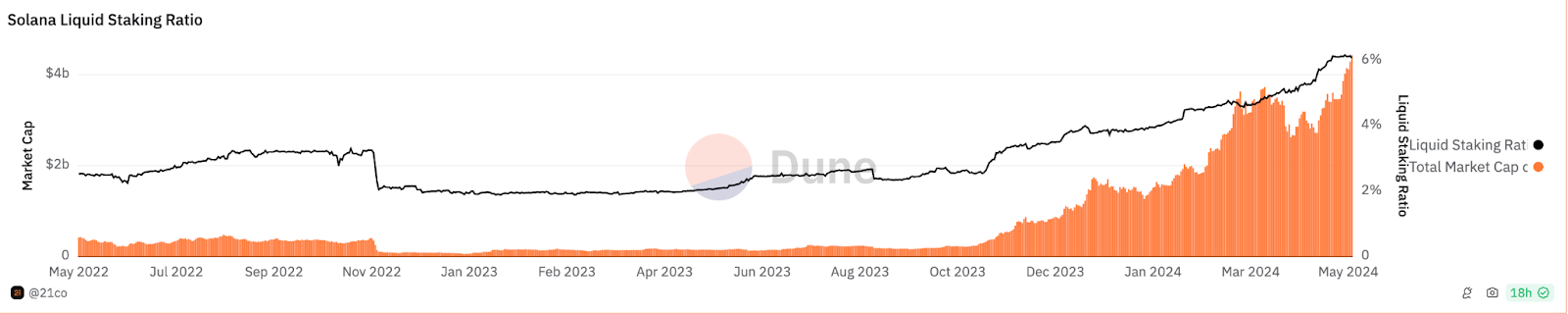
Source: Dune Analytics
For more detailed information about the Sanctum protocol, its capabilities, technical architecture, and comparisons with competitors, please refer to Part 1. It takes just a few minutes and will show why Greythorn is closely watching this project.
In this article, we will focus on the recent airdrop and its structure, the success of the Alpha Vault, tokenomics, key DeFi partner integrations and listings, LST growth, and adoption into Web2.
Tokenomics
Since tokenomics were not yet disclosed during our initial research, let’s begin here. Sanctum employs a multi-token system to support and enhance its ecosystem. Because the project aims to enable people to launch and trade millions of LSTs within the Solana ecosystem, there must be a mechanism ensuring these LSTs are truly liquid. To achieve this, Sanctum introduced the Infinity Pool, a multi-LST liquidity pool enabling swaps between all LSTs within the pool. Users can become liquidity providers by depositing any whitelisted LST and earn $INF tokens, which accrue staking rewards, benefit from trading fees within the pool, and can be directly used across DeFi protocols.
On the other hand, the Sanctum governance token $CLOUD controls capital and attention within the ecosystem. Partners must stake $CLOUD to qualify for the Sanctum Verified Partner (SVP) program, while $CLOUD holders vote on which partners are accepted.
The total supply of $CLOUD tokens is 1 billion (1B), allocated as follows:
-
Launch Liquidity (20%): 10% for the initial airdrop, 10% for launch liquidity.
-
Community Reserve (30%): Managed by the community for growth initiatives.
-
Strategic Reserve (11%): Used by the team for ecosystem growth and partnerships.
-
Team (25%): Allocated to founders and core contributors.
-
Investors (13%): Allocated to investors.
-
Jupiter LFG (1%): Reserved for Jupiter LFG.
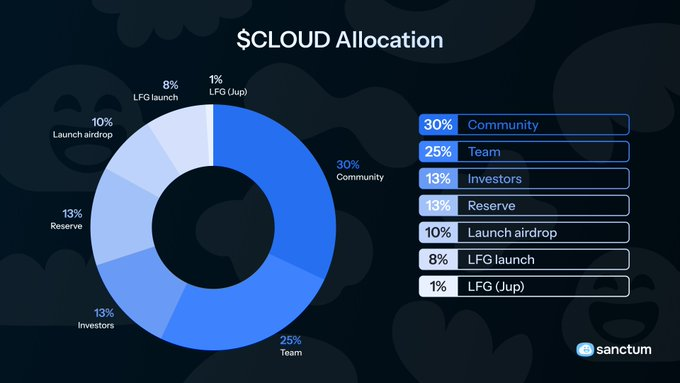
Source: Sanctum
TGE, Airdrop, and Community Feedback
The Sanctum airdrop occurred on July 18 at 11:00 AM EST. This airdrop distributed 10% of CLOUD tokens, with 5% (50 million CLOUD) allocated to the Capital portion and another 5% (50 million CLOUD) to the Merit portion. A total of 108,185 accounts qualified for the airdrop.
Participants had two options for claiming their airdrop. They could choose the “Long-Term-Aligned” option, waiting to claim tokens and earning progressively larger bonuses up to 100%. Alternatively, they could choose the “Sanctum-Curious” option, claiming tokens immediately without any bonus.
To receive the full 100% bonus for the Capital portion, participants needed to wait 14 days. The full 100% bonus for the Merit portion was unlocked after 180 days. Participants could claim at any time, but doing so early forfeited the remaining bonus.
Community reaction to the Sanctum airdrop fell short of expectations, with some users expressing frustration—particularly those who invested substantial amounts of $SOL—and felt unfairly treated compared to non-monetary contributors.
As recently observed, many projects struggle to establish fair criteria that reward all deserving participants and balance distribution between small and large contributors—in other words, it's difficult to satisfy everyone.
The Sanctum team thanked all supporters, clarifying that the Merit allocation aimed to build a loyal user base. They acknowledged missing many deserving users and committed to reviewing submissions more carefully in the future.
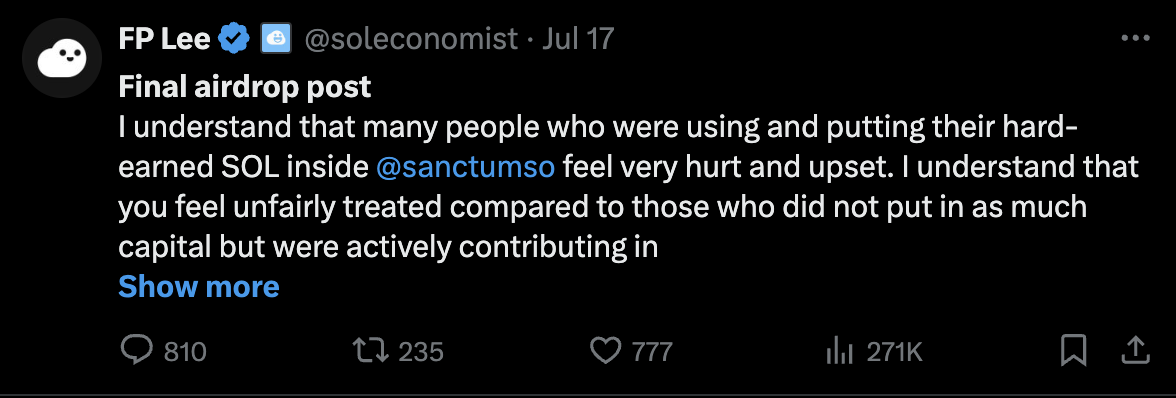
Source: X
To address these concerns, the team hosted an impromptu Twitter Spaces session, reiterating their commitment to building top-tier products on Solana and making Sanctum the best destination for SOL holders. This response demonstrated the Sanctum team’s dedication and community resilience, highlighting the need for better communication and fairer distribution.
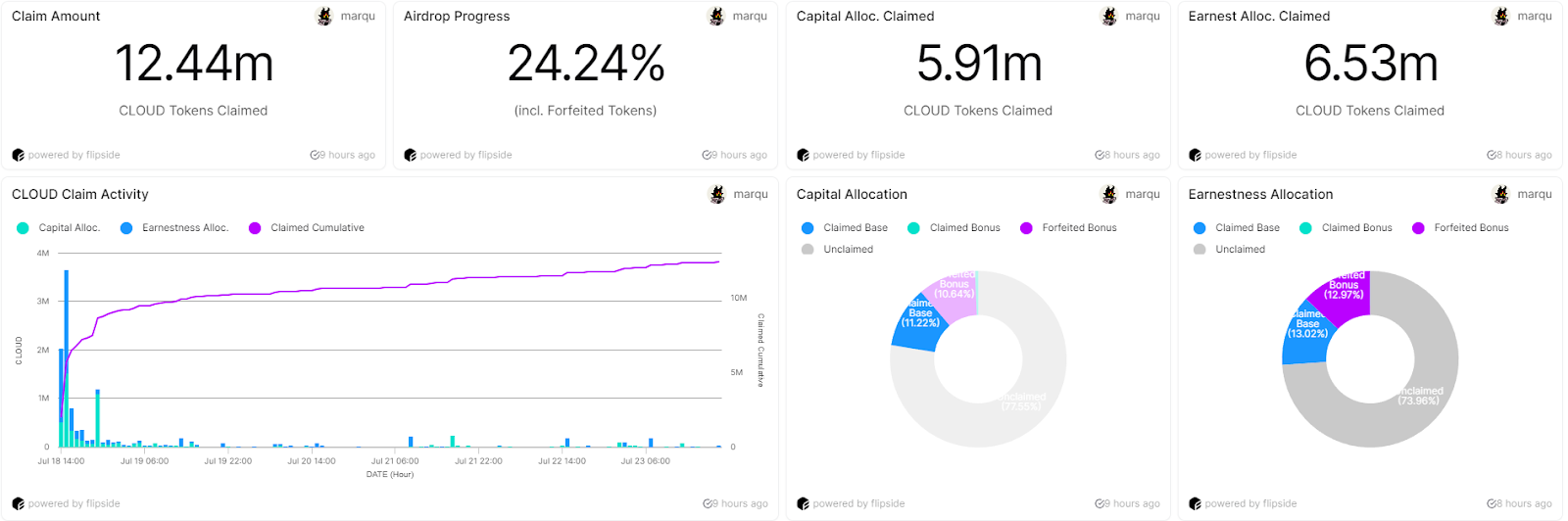
As of today, July 24, 12.44 million CLOUD tokens have been claimed, representing 24.24% of the total allocated amount (including forfeited tokens). This includes 6.53 million tokens from the Merit allocation and 5.91 million from the Capital allocation, based on data from Flipside by Marqu.
Source: Flipside
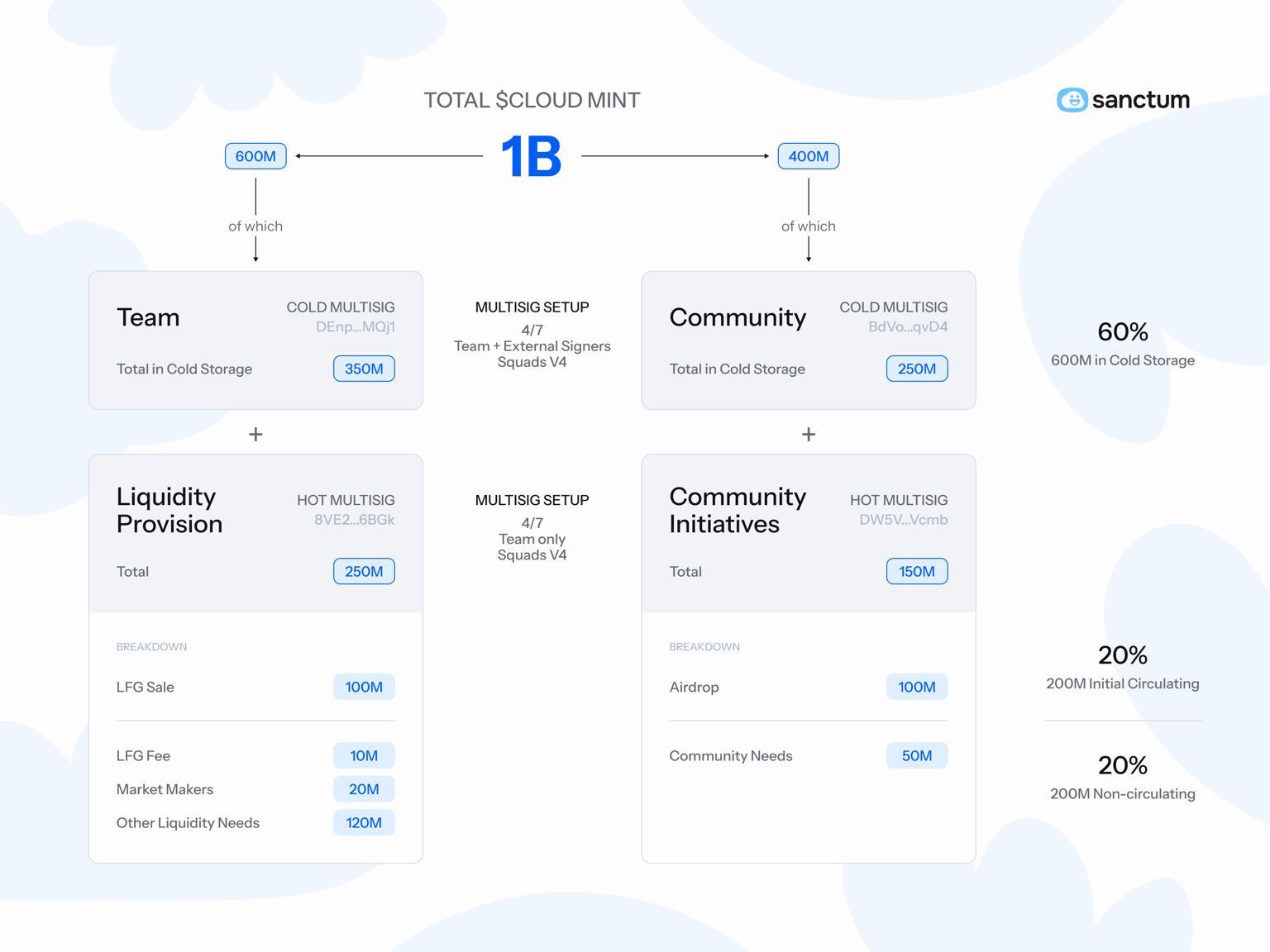
On the same day, the Sanctum TGE minted 1 billion CLOUD tokens, allocating them 60/40 between team cold wallets and community cold wallets. From the team cold wallet, 250 million tokens were allocated for liquidity, with 100 million used to bootstrap pools via Meteora DLMM. The remaining tokens will meet liquidity needs within the first year. From the community cold wallet, 150 million tokens were designated for launching the airdrop and meeting community demands. This makes 300 million tokens available within the first year, with up to 125 million initially circulating.
Source: Sanctum
Success of the Sanctum Alpha Vault
The Alpha Vault is a special feature developed by Sanctum in collaboration with Meteora, allowing long-term supporters to purchase $CLOUD tokens at potentially better prices. Participants can deposit USDC into the vault and receive $CLOUD tokens at a discount in return. However, these tokens have a six-month vesting period to encourage long-term commitment.

The vault has a cap of 50 million CLOUD tokens and a maximum purchase limit of 7.5 million USDC. The starting price of CLOUD is determined by the amount of USDC deposited into the vault, ranging from $0.001 to a maximum of $0.5 on the LFG curve. If USDC deposits exceed the cap, tokens will be allocated proportionally, and excess USDC will be refunded to contributors.
If fully subscribed, reaching $7.5 million TVL, the highest price paid by vault buyers would be $0.15 per CLOUD. If not reached, both spot and vault buyer prices would be lower.
Participants could either deposit into the Alpha Vault at a discount with a six-month vesting period or buy on the open market for immediate liquidity. The Alpha Vault was open from July 16 to July 18, 2024.
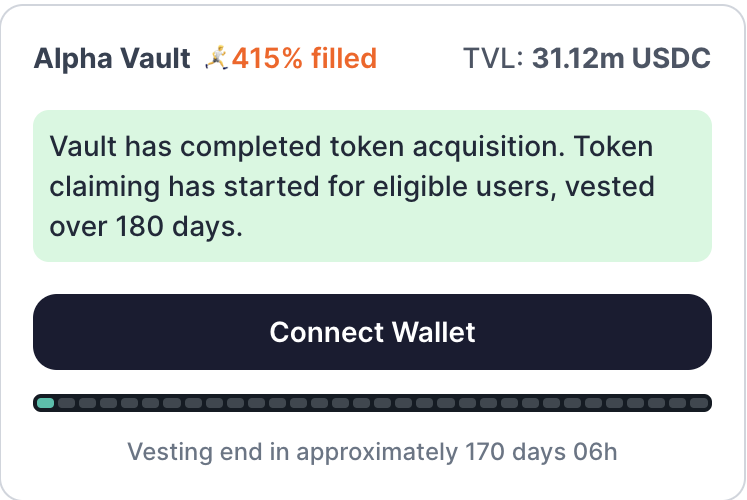
The Alpha Vault was highly successful, oversubscribed by 416%, attracting long-term supporters and demonstrating strong interest and confidence in the Sanctum project.
Source: Meteora
Sanctum’s Optimistic Future: Outlook
CEX Listings and DeFi Partner Integrations
From the outset, $CLOUD has adhered to a policy of not paying any CEX listing fees, yet successfully increased market presence through strategic listings on major exchanges such as Kraken, Bybit, and Bitget. These efforts enhanced liquidity and made the token more accessible to traders and investors. Additionally, rumors suggest further listings may come, potentially boosting the token’s visibility and integration within the DeFi space.
Beyond exchange listings, Sanctum has established valuable partnerships within the DeFi landscape to expand its ecosystem. Collaborations with platforms like Kamino, Drift, Texture, and Orca add unique strengths to the Sanctum network. Kamino improves liquidity through its liquidity pools, Drift introduces advanced trading options such as perpetual swaps, Texture expands $CLOUD’s functionality through asset synthetics, and Orca simplifies token swaps through its user-friendly interface.
Sanctum Launchpad
Sanctum founder fplee announced plans to create a Launchpad to launch an on-chain economy within the Sanctum community. This platform will leverage liquidity-backed tokens (LSTs) to support new projects and innovative products of interest to the community. For example, the Pathfinders team is using pathSOL yield to fund pioneering free NFT mints. This initiative is not limited to creative projects but also aims to support businesses looking to adopt crypto-native frameworks. In partnership with Jupiter, Sanctum is developing the infrastructure needed to support these projects, fostering a circular economy where each success paves the way for more, ultimately cultivating a vibrant on-chain ecosystem.
Sanctum Profiles V2
Sanctum announced an upgrade to its profile functionality, aiming to redefine identity within the Sanctum universe. These profiles allow users to build and expand their reputation within the community as digital identities open to everyone. The upcoming Sanctum Profiles V2 aims to transform social interactions and loyalty programs on the Solana blockchain by introducing customizable layers that anyone can tailor to their needs.
With Sanctum Profiles V2, users will be able to create their own LSTs, enabling them to monetize their activities in various ways. The platform will go beyond standard communication channels like private Discord or Telegram chats. For instance, Greythorn could generate research reports accessible only to holders of its LSTs (greythornSOL), publishable on Twitter or other websites. This enhancement will allow users to identify and reward their followers through unique content, deepening connections within the community.
Sanctum Pay
Sanctum Pay is also under development in collaboration with BasedApp, a Web3.0 financial platform. This innovative project involves creating the first debit card backed by LSTs. By directly converting cardSOL staking yields into USDC, Sanctum Pay allows users to make purchases without needing to liquidate their SOL holdings. This integration aims to eliminate the need for traditional cash settlement, enabling users to manage transactions directly via a debit card and offering a convenient user experience.
Conclusion
We believe Sanctum offers a novel and compelling solution to liquidity issues in traditional staking. By acting as a liquidity backstop, it enables staked SOL to be used more flexibly within DeFi, significantly enhancing the utility and accessibility of staked assets. Many other potential future growth opportunities outlined by James Hanley, such as payment subscriptions, mobile plans, etc., could bring positive momentum to Sanctum.
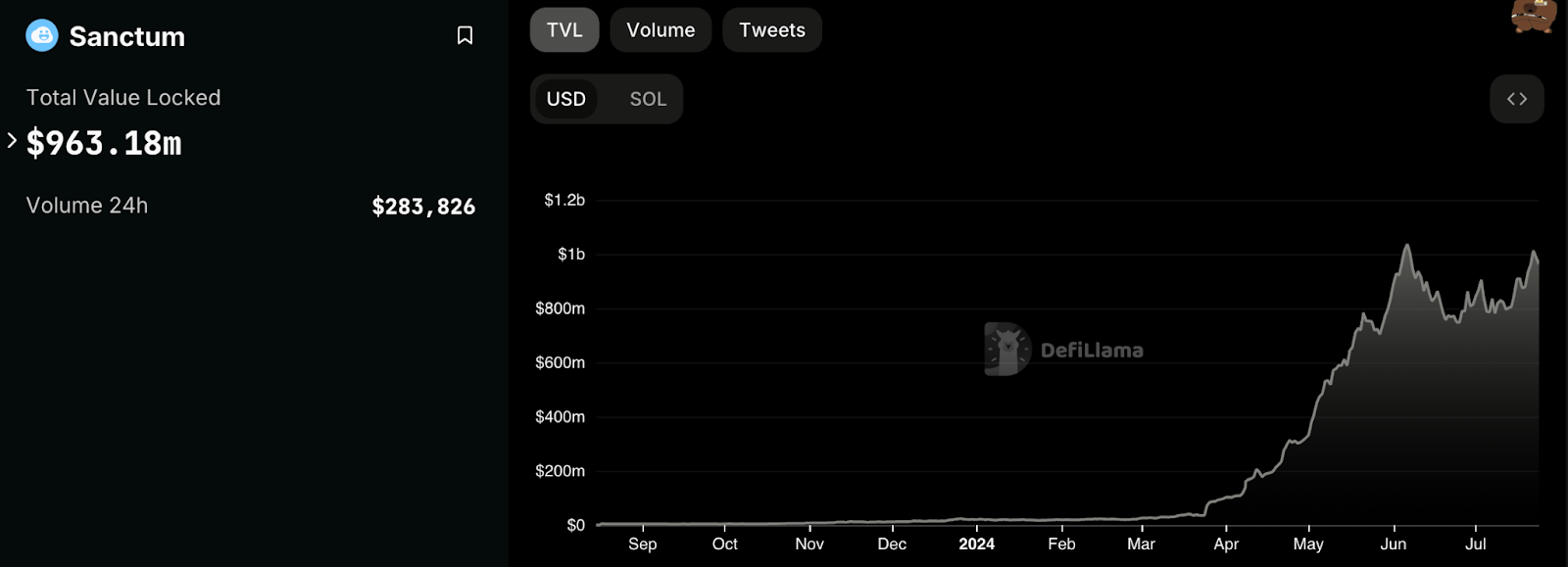
With TVL healthily rising toward $1 billion (5.54 million SOL), Sanctum has already integrated with Jupiter Exchange, Kamino, and several other platforms. These integrations could attract more users and drive adoption and growth.
Source: DeFiLlama
Sanctum plans to establish a DAO for decentralized governance, ensuring it evolves according to community consensus. This approach fosters trust and engagement from the growing Solana community.
Considering these factors, Sanctum’s $CLOUD governance token, with a market cap of $53 million and FDV under $300 million, presents an interesting protocol worth watching.
However, the DeFi landscape on Solana is highly competitive, with multiple projects vying for liquidity and user adoption. Sanctum must continuously innovate and deliver greater value to stay ahead—an ongoing challenge.
We hope our Sanctum Research Series has provided valuable insights. Please remember, our publications should not be interpreted as financial advice. These are merely our thoughts and perspectives as we navigate the market. Protocols we research do not necessarily represent positions in our portfolio.
For more content like this, follow us on social media and feel free to contact us.
Disclaimer
This presentation was prepared by Greythorn Asset Management Pty Ltd (ABN 96 621 995 659) ("Greythorn"). The information contained herein should be regarded as general information only and not as investment or financial advice. It is not an advertisement nor an offer or solicitation to buy or sell any financial instrument or engage in any particular trading strategy. In preparing this document, Greythorn did not take into account any recipient's investment objectives, financial situation, or specific needs. Recipients of this presentation should consider their own personal circumstances and seek professional advice from their accountant, lawyer, or other advisor before making any investment decision. This presentation contains statements, opinions, forecasts, projections, and other materials based on various assumptions ("forward-looking statements"). Greythorn has no obligation to update this information. These assumptions may or may not prove correct. Neither Greythorn nor its officers, employees, agents, advisors, or any other person mentioned in this presentation makes any representation regarding the accuracy or likelihood of realization of any forward-looking statement or the underlying assumptions. To the fullest extent permitted by law, Greythorn and its officers, employees, agents, and advisors shall not be liable for any loss, claim, damage, expense, or cost arising from the information contained in this presentation. This presentation is the property of Greythorn. Receipt of this presentation constitutes agreement to keep its contents confidential and not to copy, provide, disseminate, or disclose any information contained herein without prior written consent.
Join TechFlow official community to stay tuned
Telegram:https://t.me/TechFlowDaily
X (Twitter):https://x.com/TechFlowPost
X (Twitter) EN:https://x.com/BlockFlow_News
 Greythorn