Simplicity is the ultimate sophistication — a single post to instantly understand multilayer chain abstraction
TechFlow Selected TechFlow Selected
Simplicity is the ultimate sophistication — a single post to instantly understand multilayer chain abstraction
Chain abstraction means users don't need to manually handle the complex processes involved in interacting with multiple blockchains.
 Navigating Web3 tides with focused insights
Author: nairolf
Translation: TechFlow
"Friend, what is a multi-layer chain abstraction stack?"
Let me explain the multi-layer chain abstraction stack in very simple terms.
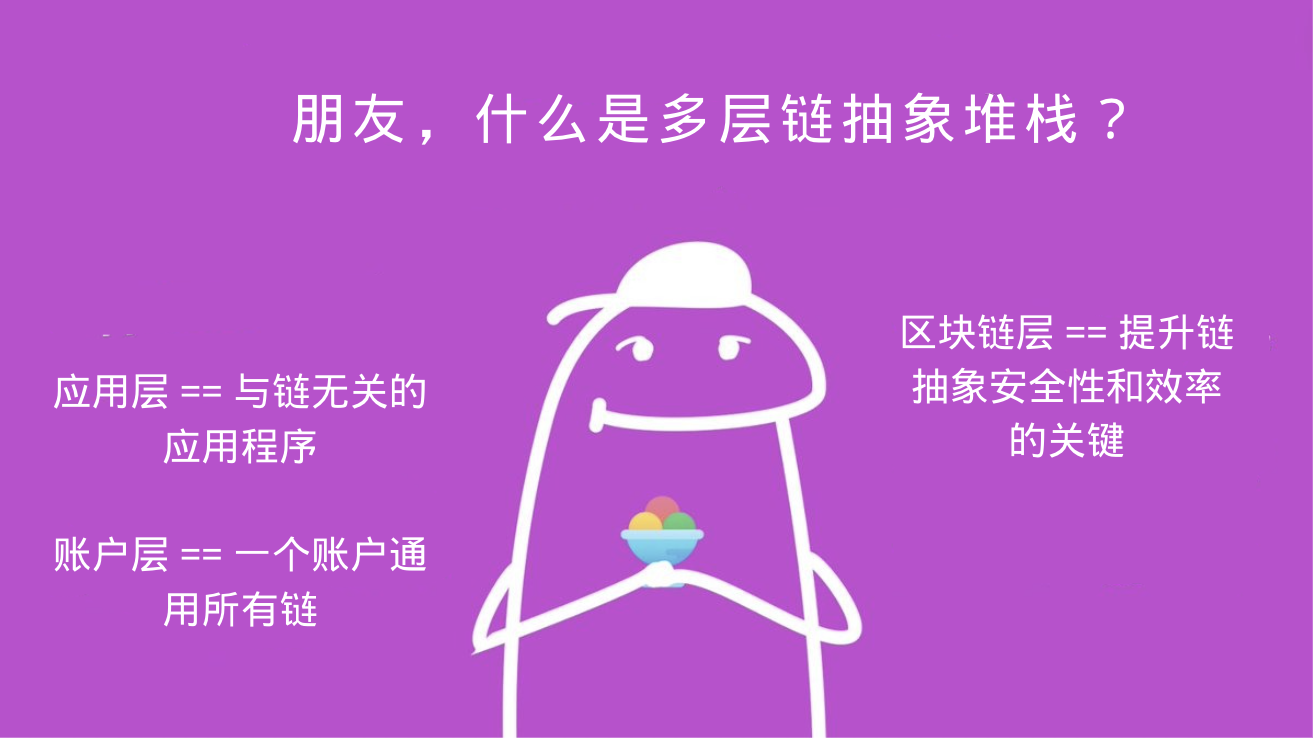
Chain abstraction means users don't need to manually handle the complexity of interacting with multiple blockchains.
The multi-layer stack provides various chain abstraction approaches at different levels: application layer, account layer, and blockchain layer.
"Application layer?"
This layer enables developers to build chain-agnostic applications that can easily interact with multiple blockchains.
In practice, this layer facilitates cross-chain transactions and workflows, allowing applications to seamlessly compose with other applications and assets.
"So it's mainly for developers?"
Exactly. Projects like @agoric, @SocketProtocol, or @skipprotocol simplify the complexity of building chain-abstraction applications.
Instead of dealing with blockchains, you deal with applications.
"What about the account layer?"
This layer addresses issues such as managing multiple wallets, handling token balances across chains, and dealing with different gas fees.
You can think of the account layer as the level that achieves one universal account usable across all blockchains.
"Who's working on this?" @ParticleNtwrk offers universal accounts that let users access any blockchain with just one account and one balance.
@burnt_xion's meta-account allows centralized control of assets and accounts on external chains through its L1.
"And the blockchain layer?"
This might be the hardest layer to understand.
Essentially, it involves multiple blockchains deciding to share certain properties, thereby increasing interoperability between them.
"What does that mean?"
For example, blockchains built using the same technology stack (or infrastructure) achieve direct compatibility.
Recent examples include @ZKsync's Elastic Chain or @Optimism's Superchain.
"But?"
While this doesn't directly achieve chain abstraction, this layer acts like glue, enhancing the security and efficiency of chain abstraction.
Other examples include Polygon's AggLayer or IBC widely used in Cosmos for interoperability.

"To sum up"
The application layer makes it easy for developers to build cross-chain applications, the account layer reduces user complexity around wallets and bridges, and the blockchain layer fosters collaboration by sharing infrastructure characteristics.
All of these share one common goal: chain abstraction.

Join TechFlow official community to stay tuned
Telegram:https://t.me/TechFlowDaily
X (Twitter):https://x.com/TechFlowPost
X (Twitter) EN:https://x.com/BlockFlow_News
 @0xNairolf