Hong Kong Crypto ETF: Which One Is the Best? A Detailed Comparison of the "Big Three" Issuers' Offerings
TechFlow Selected TechFlow Selected
Hong Kong Crypto ETF: Which One Is the Best? A Detailed Comparison of the "Big Three" Issuers' Offerings
What are the specific differences among the cryptocurrency ETFs issued by the three institutions, and as an investor, which one should you choose for purchase and trading?
 Navigating Web3 tides with focused insights
Compiled by: JIN, Techub News

Spot Bitcoin and Ethereum ETFs Approved for Listing in Hong Kong
On Wednesday, April 23, the Hong Kong market achieved a major milestone in the virtual asset sector, as three asset management firms—ChinaAMC, Harvest Fund, and Bosera Asset Management—were approved to launch spot Bitcoin and Ethereum ETF products in Hong Kong. What is a Bitcoin/Ethereum Spot ETF? ⎡It is an exchange-traded fund (a highly liquid fund traded like stocks during trading hours) that primarily tracks the price of Bitcoin by holding large amounts of cryptocurrency in physical form. Similar to gold spot ETFs.⎦
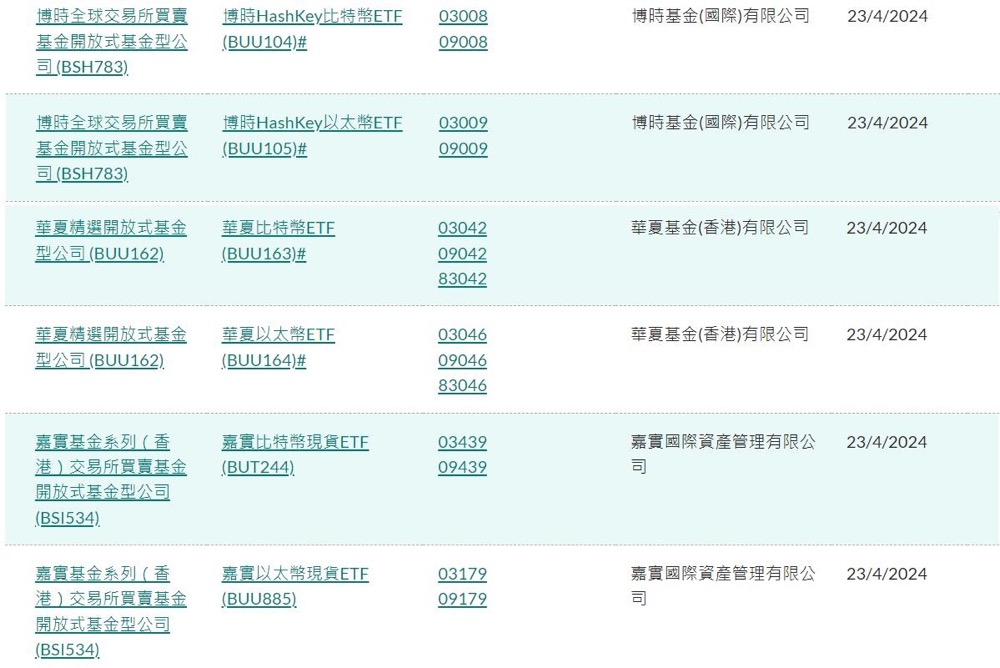
These products mark their debut in the Asian market, aiming to deliver investment returns closely correlated with the spot prices of Bitcoin and Ether. Spot virtual asset ETFs simplify the investment process and lower entry barriers. Professional fund management brings standardized operations and risk control systems. Investors can trade these ETFs on major securities trading platforms, reducing operational complexity and risk. Additionally, these ETFs support in-kind subscription and redemption, allowing investors to indirectly own Bitcoin through ETF shares without worrying about private key storage or asset security.
Currently, these ETF products accept subscriptions in cash or Bitcoin, but transactions must be conducted via accounts opened in Hong Kong. According to Caixin, under the joint notice issued in December 2023 by the Securities and Futures Commission (SFC) and the Hong Kong Monetary Authority (HKMA), neither existing virtual asset futures ETFs nor future spot ETFs may be offered to retail investors in restricted jurisdictions such as mainland China. However, even non-permanent residents from mainland China who hold Hong Kong identity cards may participate in trading these ETF products, provided they comply with relevant regulations.
Details of Virtual Asset ETFs from Three Asset Management Firms
What are the specific differences among the cryptocurrency ETFs launched by these three institutions? Which one should investors choose to buy or trade? Drawing on information provided by a Hong Kong financial institution, we have compiled a detailed comparison to help investors make informed decisions based on their individual circumstances.
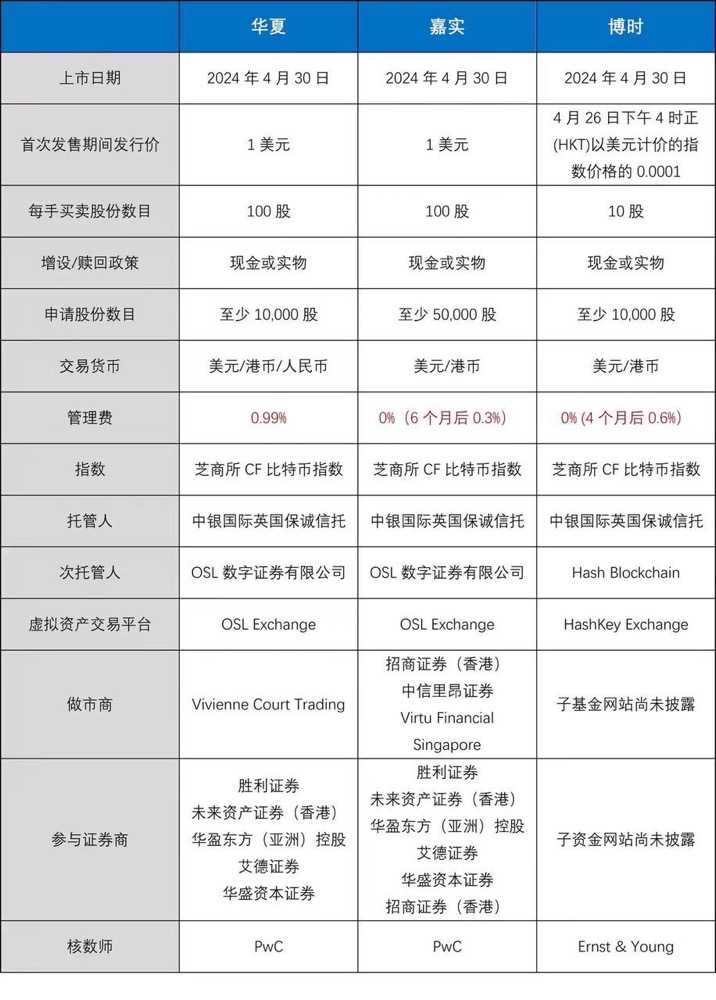
Listings and Initial Pricing:
All three companies’ ETF products will list on the same day—April 30, 2024. In terms of initial pricing, both ChinaAMC and Harvest Fund set their opening price at USD 1 per share, while Bosera Asset Management priced its shares at 0.0001 times the CME CF Bitcoin Index value as of 4:00 PM Hong Kong time on April 26.
Share Trading and Subscription Requirements:
Regarding lot sizes, ChinaAMC and Harvest Fund require a minimum of 100 shares per trade, whereas Bosera Asset Management sets a lower threshold at 10 shares. For share subscriptions, the minimum requirement is 10,000 shares for both ChinaAMC and Bosera, while Harvest Fund requires a higher minimum of 50,000 shares.
Creation and Redemption Policies:
All three firms allow investors to create or redeem ETF shares using either cash or physical assets, offering flexibility to investors.
Trading Currencies and Management Fees:
ChinaAMC supports trading in USD, HKD, and RMB, while Harvest Fund and Bosera only support USD and HKD. In terms of management fees, ChinaAMC charges 0.99%, Harvest Fund waives fees for the first six months and then charges 0.3% thereafter, and Bosera offers a four-month fee waiver followed by a 0.6% management fee.
Benchmark Index and Custodian Institutions:
All three ETFs track the CME CF Bitcoin Index to ensure performance closely mirrors real-time Bitcoin market movements. The custodian for all funds is BOC International UK Provident Trust, responsible for asset custody and oversight of fund operations. For sub-custodians, ChinaAMC and Harvest Fund selected OSL Digital Securities Limited, while Bosera chose Hash Blockchain, reflecting differing preferences in asset custody and risk management approaches.
The “CME CF Bitcoin Index” is a specific index reflecting the weighted average price of Bitcoin across multiple exchanges. By tracking this index, these Bitcoin and Ethereum spot ETFs aim to accurately replicate its performance, delivering investment returns similar to owning actual Bitcoin—but through a more convenient and regulated mechanism.
A “sub-custodian” is typically a financial institution appointed by the primary custodian to provide custody services in specific regions or for certain asset types. Due to legal requirements, market practices, or operational efficiency, specialized sub-custodians may be needed to handle particular custody functions. This tiered structure enhances management efficiency and risk diversification, ensuring fund asset safety and adaptability to diverse market needs.
Trading Platforms, Market Makers, and Authorized Participants:
For virtual asset trading platforms, ChinaAMC and Harvest Fund use OSL Exchange, while Bosera uses HashKey Exchange. On market makers, ChinaAMC appointed Vivienne Court Trading; Harvest Fund selected CMBI Securities (Hong Kong), CLSA, and Virtu Financial Singapore; Bosera has not yet disclosed its market maker. Authorized Participants (APs), which play a crucial role in ETF liquidity, include Victory Securities, Mirae Asset Securities (Hong Kong), Waywin Oriental (Asia) Holdings, AID Partners Securities, and华盛 Capital Securities for both ChinaAMC and Harvest Fund. Harvest Fund additionally includes CMBI Securities (Hong Kong).
“Authorized Participants (APs)” are typically large financial institutions that collaborate with ETF issuers to facilitate share creation and redemption. APs can deliver a basket of stocks or other assets to receive new ETF shares, or redeem ETF shares for underlying assets. This mechanism helps keep the ETF’s market price close to its net asset value (NAV), enhancing liquidity and market efficiency.
Role of Auditors:
Finally, to ensure financial transparency and regulatory compliance, ChinaAMC and Harvest Fund appointed PwC as auditors, while Bosera selected Ernst & Young. Through independent audits, auditors verify the accuracy and authenticity of the ETFs’ financial reporting.
An “auditor” is an independent third party responsible for auditing the ETF’s financial statements to ensure fairness, accuracy, and compliance with accounting standards. Auditors help detect and prevent financial misstatements and fraud, giving investors confidence in the ETF’s financial health. In some jurisdictions, auditor reports are a statutory requirement for disclosing ETF financial information to regulators and the public.
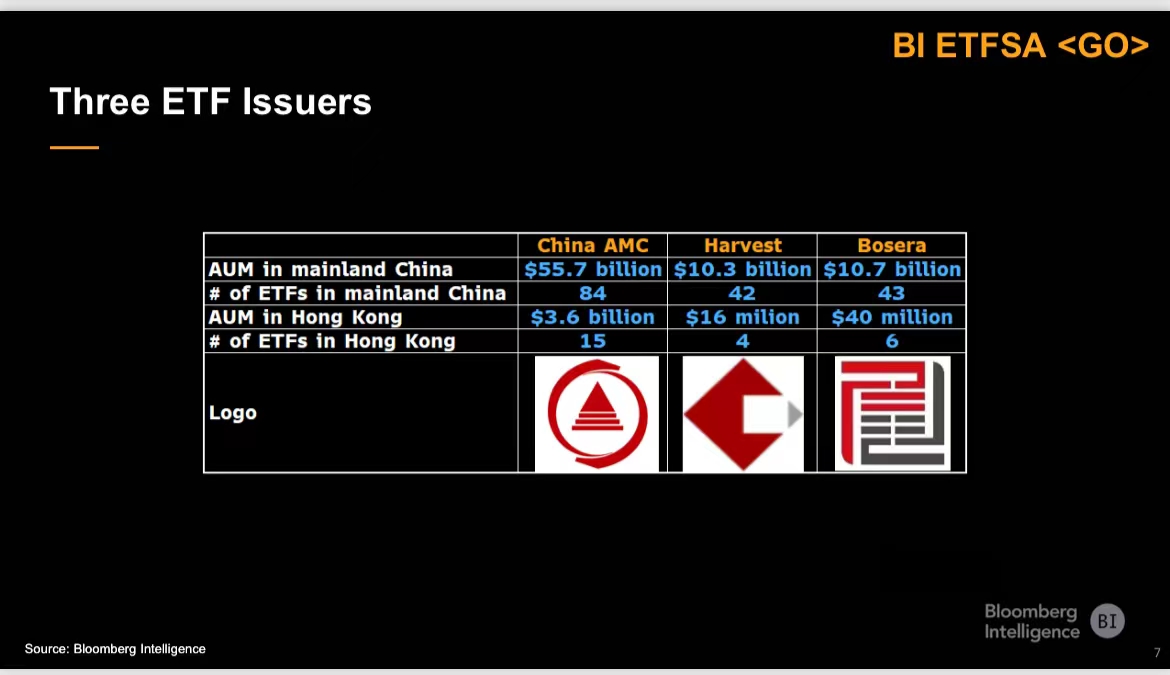
Bloomberg data showing AUM of the three firms
Assets Under Management (AUM) and Number of ETFs Issued:
According to Bloomberg Intelligence, ChinaAMC manages USD 55.7 billion in AUM in mainland China and has issued 84 ETFs there, while managing USD 3.6 billion in Hong Kong with 15 ETFs listed. Harvest Fund manages USD 10.3 billion in mainland China with 42 ETFs, and USD 16 million in Hong Kong with 4 ETFs. Bosera manages slightly more than Harvest in mainland China—USD 10.7 billion—with 43 ETFs, and USD 40 million in Hong Kong with 6 ETFs.
As virtual assets grow increasingly popular, these ETF products in Hong Kong offer new opportunities for global investors and demonstrate Hong Kong’s competitiveness as an international financial center in launching innovative financial products. For investors interested in Bitcoin and Ethereum, these ETFs undoubtedly represent a compelling option worth watching.
Join TechFlow official community to stay tuned
Telegram:https://t.me/TechFlowDaily
X (Twitter):https://x.com/TechFlowPost
X (Twitter) EN:https://x.com/BlockFlow_News
 @News_Techub