








Binance Report: Highlights of the Omni Network Project and Token Economics
TechFlow Selected TechFlow Selected
Binance Report: Highlights of the Omni Network Project and Token Economics
Omni's mission is to restore Ethereum to its role as the single, unified operating system for decentralized applications.
 Navigating Web3 tides with focused insights
Source: Binance
Omni Network (Omni) is a Layer 1 blockchain designed to integrate Ethereum's rollup ecosystem into a unified system. With Omni, developers can build native global applications that by default have access to all of Ethereum’s liquidity and users.
OMNI is the native token of Omni Network and plays the following roles in the protocol:
-
Universal Gas Asset: OMNI serves as a payment mechanism to compensate relayers for submitting transactions to target rollups.
-
Gas for Omni EVM: OMNI is the native currency used to process transactions on the Omni EVM.
-
Network Governance: OMNI stakeholders will govern various decisions such as protocol upgrades and other developer features.
-
Staking: The Omni protocol implements a dual staking model to ensure economic security. Security is a function of the combined value of staked OMNI and restaked ETH.
The protocol consists of the following key components:
-
External Rollups: Source and destination networks for cross-rollup messages.
-
Omni Validator Nodes: A permissionless network of nodes using CometBFT consensus to validate cross-rollup messages and transactions on the Omni EVM. These nodes are secured by the combined value of staked OMNI and restaked ETH.
-
Omni Blockchain: The single source of truth for all cross-rollup messages and Omni EVM transactions processed by Omni validators.
-
Relayers: Permissionless entities that submit finalized cross-rollup messages from the Omni network to the destination rollup networks.
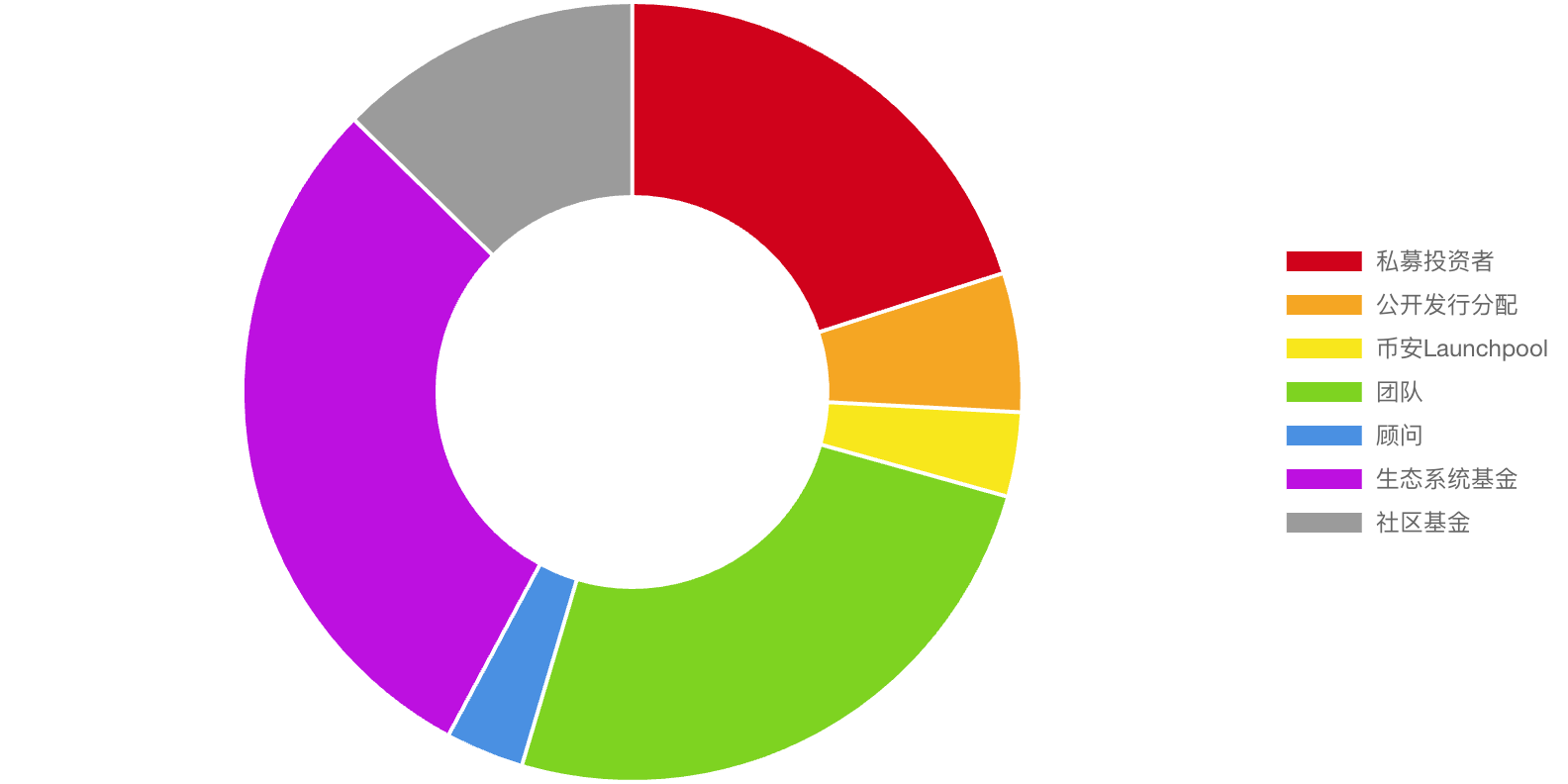
The project has raised $18.1 million through two private token sales, selling 9.1% of the total OMNI token supply at $0.18/OMNI (Seed Round) and 11% of the total OMNI token supply at $1.50/OMNI (Series A), representing 20.1% of the total OMNI tokens sold during the private sale rounds.
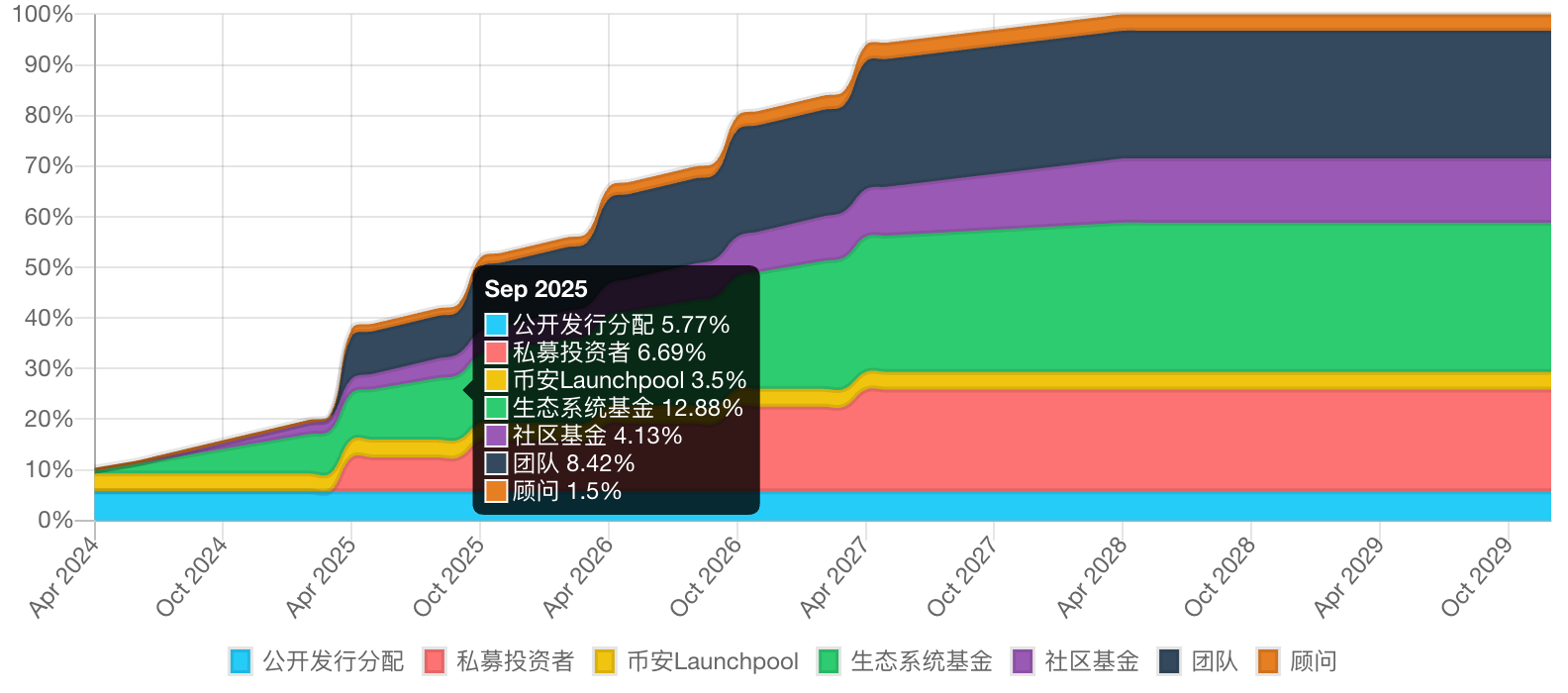
As of April 12, 2024, the total supply of OMNI is 100,000,000, with a circulating supply of approximately 10,391,492 post-launch (about 10.39% of the total token supply).
Key Metrics: (As of April 12, 2024)

1. What is Omni Network?
Omni is an integrated rollup layer for Ethereum, enabling developers to build unified applications across all Ethereum scaling solutions. It is powered by a novel blockchain architecture that supports sub-second finality and derives security from Ethereum via restaking.
1.1. Project Mission and Value Proposition?
Project Mission
-
Omni’s mission is to restore Ethereum to its role as a single, unified operating system for decentralized applications.
Project Value Proposition
-
Ethereum’s rollup-centric architecture forces the network to scale through isolated execution environments. This leads to fragmentation of liquidity, users, and developers, weakening Ethereum’s network effects.
-
With Omni, developers can program across multiple Ethereum rollups as if working within a single state machine. Applications built using Omni EVM exist across all Ethereum rollups by default, allowing developers to integrate all of Ethereum’s liquidity and users into their applications.
1.2. Key Project Highlights
Dual Staking Model: Omni is a proof-of-stake network secured by the combined value of restaked ETH and staked OMNI.
Sub-Second Finality: Omni nodes use CometBFT consensus to process cross-rollup messages and Omni EVM transactions within one second. Using alternative finality mechanisms like pre-confirmations and transaction insurance, Omni achieves sub-second finality for cross-rollup messages.
Diverse Rollup Support: Omni is designed with minimal integration requirements to ensure compatibility with any rollup virtual machine, programming language, and data availability architecture.
Backward Compatibility: Applications can integrate Omni without modifying existing smart contracts. Instead, applications can send cross-rollup messages via modified frontend instructions through Omni.
1.3. Products
Omni Origins Testnet (June – July 2023)
-
Total Transactions Processed: 1.5M
-
Total Unique Users: 150K
-
Ecosystem Projects: 4
Omni Overdrive Testnet (August – October 2023)
-
Total Transactions Processed: 6M
-
Total Unique Users: 400K
-
Ecosystem Projects: 30
Omni Omega Testnet (March 2024 – Present)
-
Total Operators: 37
-
Total Restakers Delegated to Omni Operators: 75,600
2. Technical Infrastructure
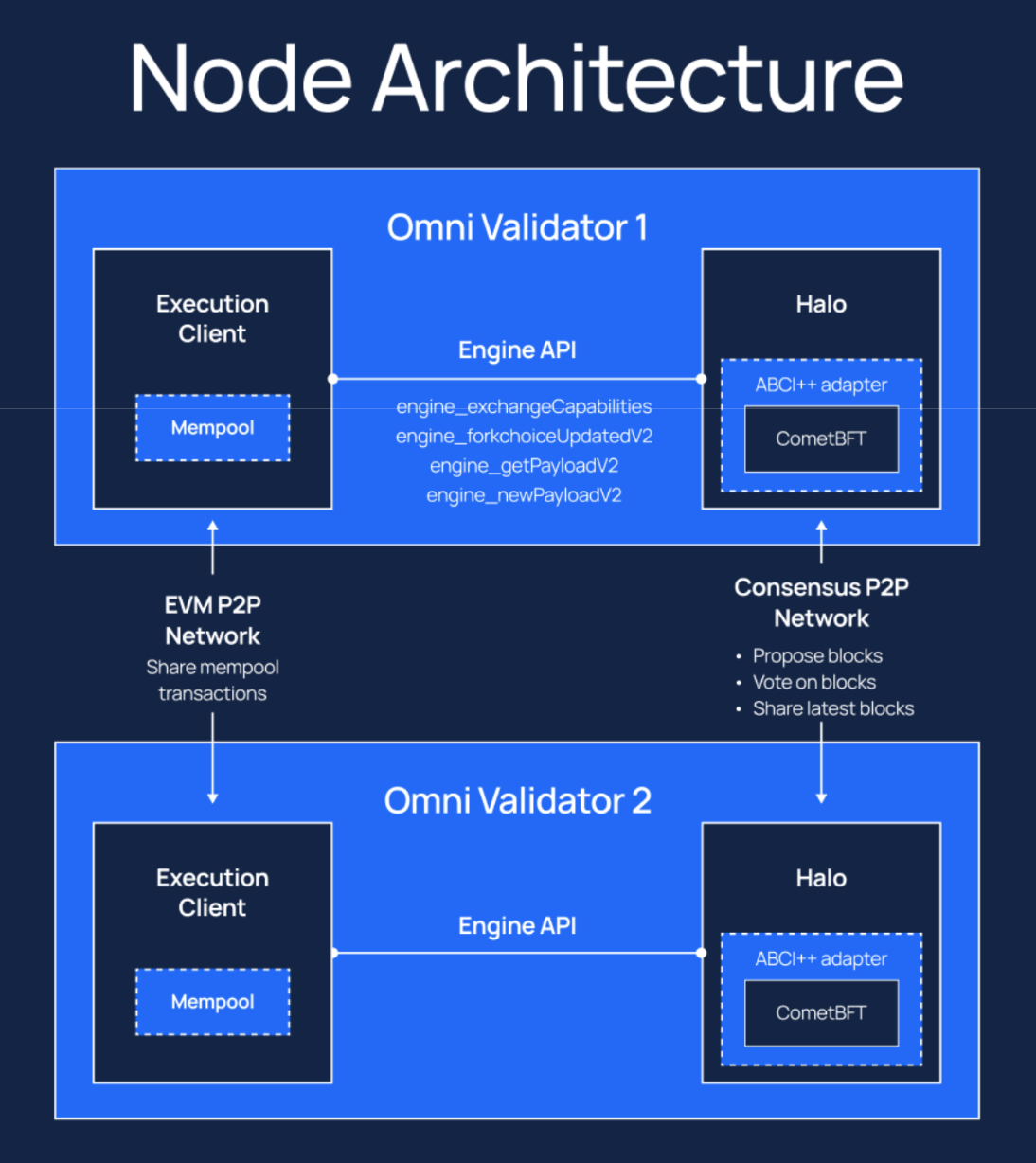
Modular Node Architecture: Omni introduces a novel node architecture (Octane) designed around the Ethereum Engine API. This creates a clear separation between consensus and execution environments within each node while allowing nodes to use existing Ethereum execution clients.
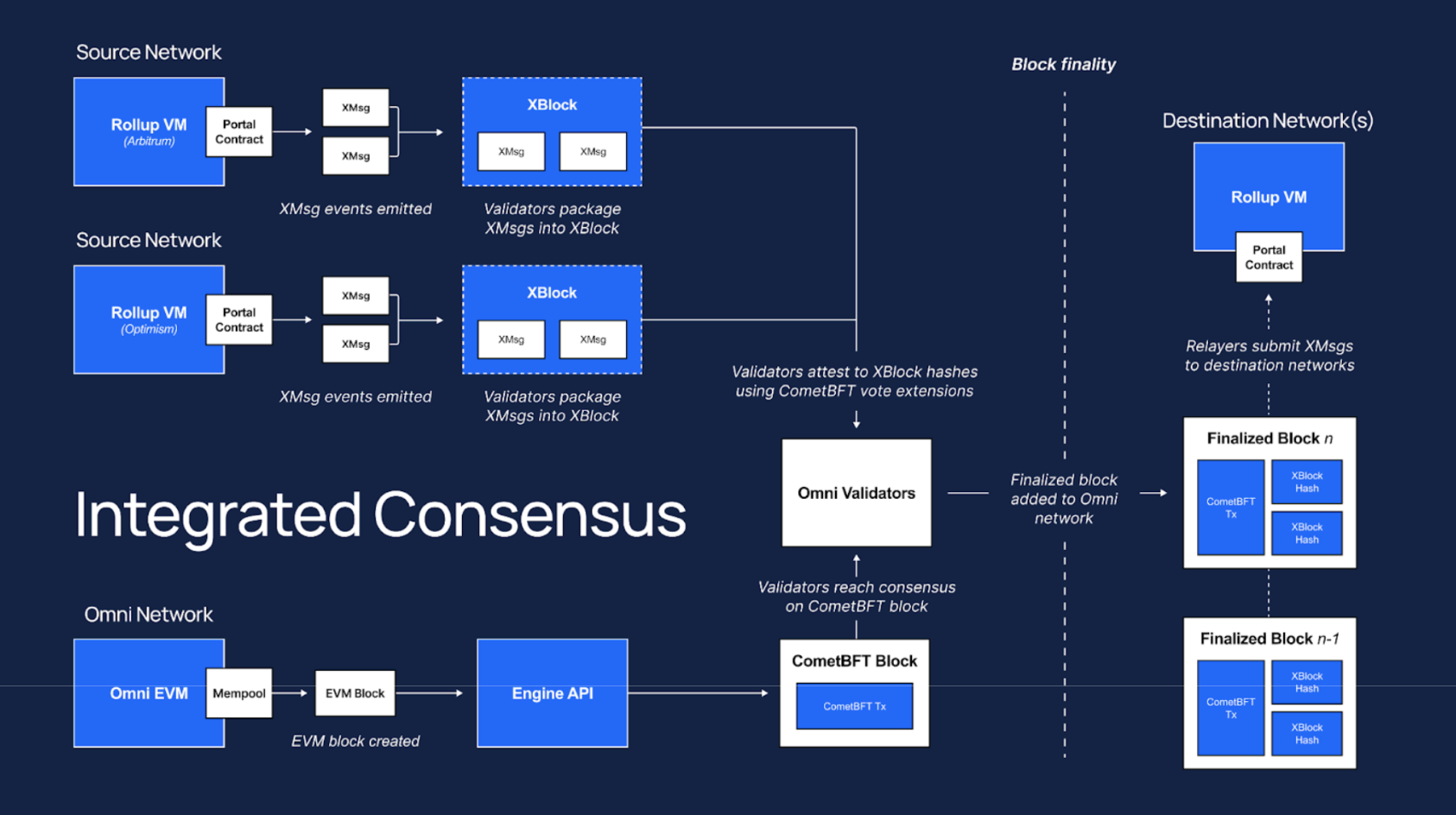
Integrated Consensus: Omni validators use CometBFT consensus and ABCI++ voting extensions to simultaneously validate cross-rollup messages and transactions on the Omni EVM.
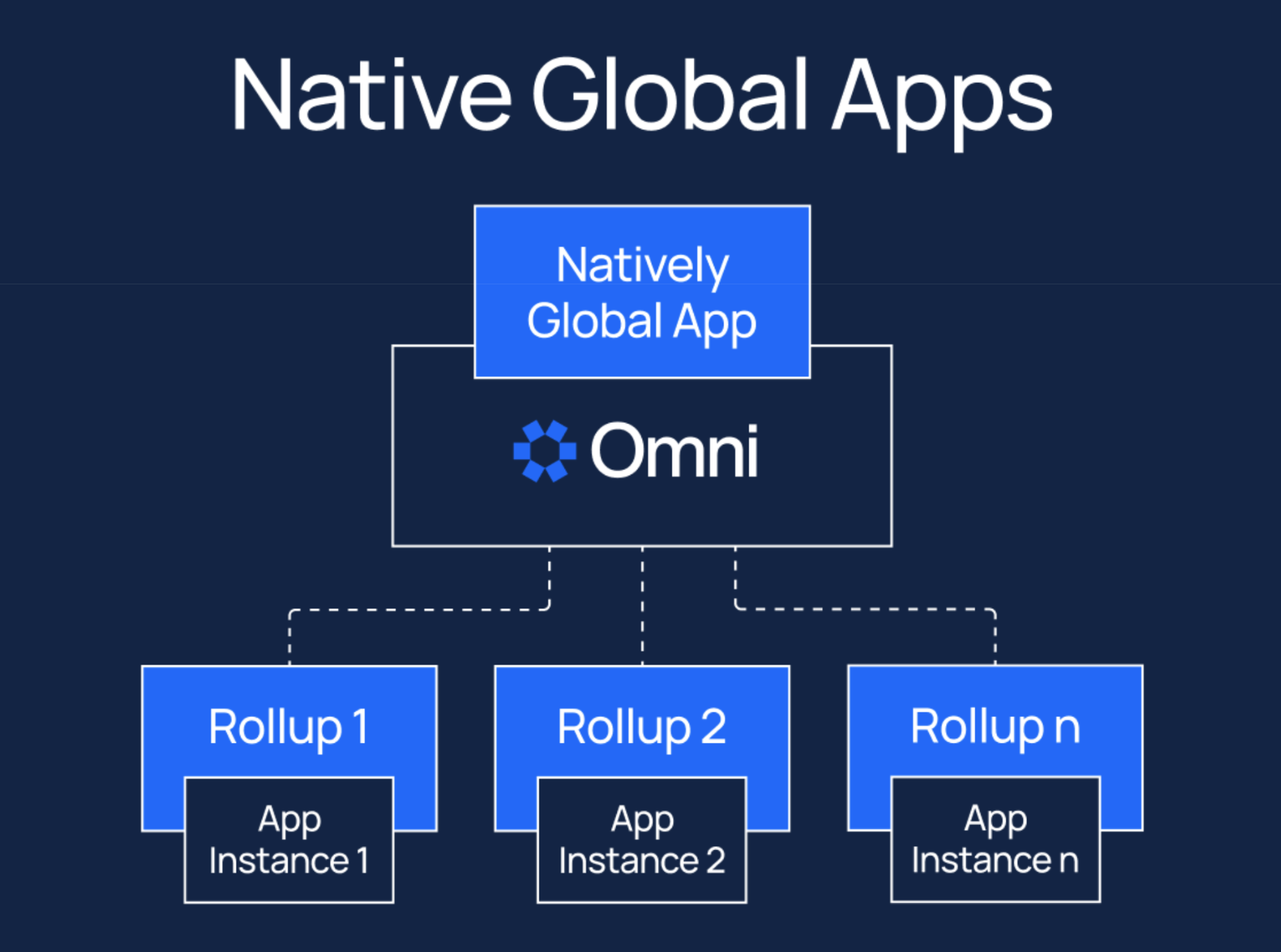
Native Global Applications: The Omni EVM simplifies cross-rollup application development by dynamically propagating contracts and interfaces to any rollup. This approach enables developers to program cross-rollup applications within a single environment and minimizes the risk of smart contract vulnerabilities arising from the complexity of managing distributed states.
3. Token Sale and Economics
3.1. Token Distribution
3.2. Token Release Schedule
4. Roadmap and Updates
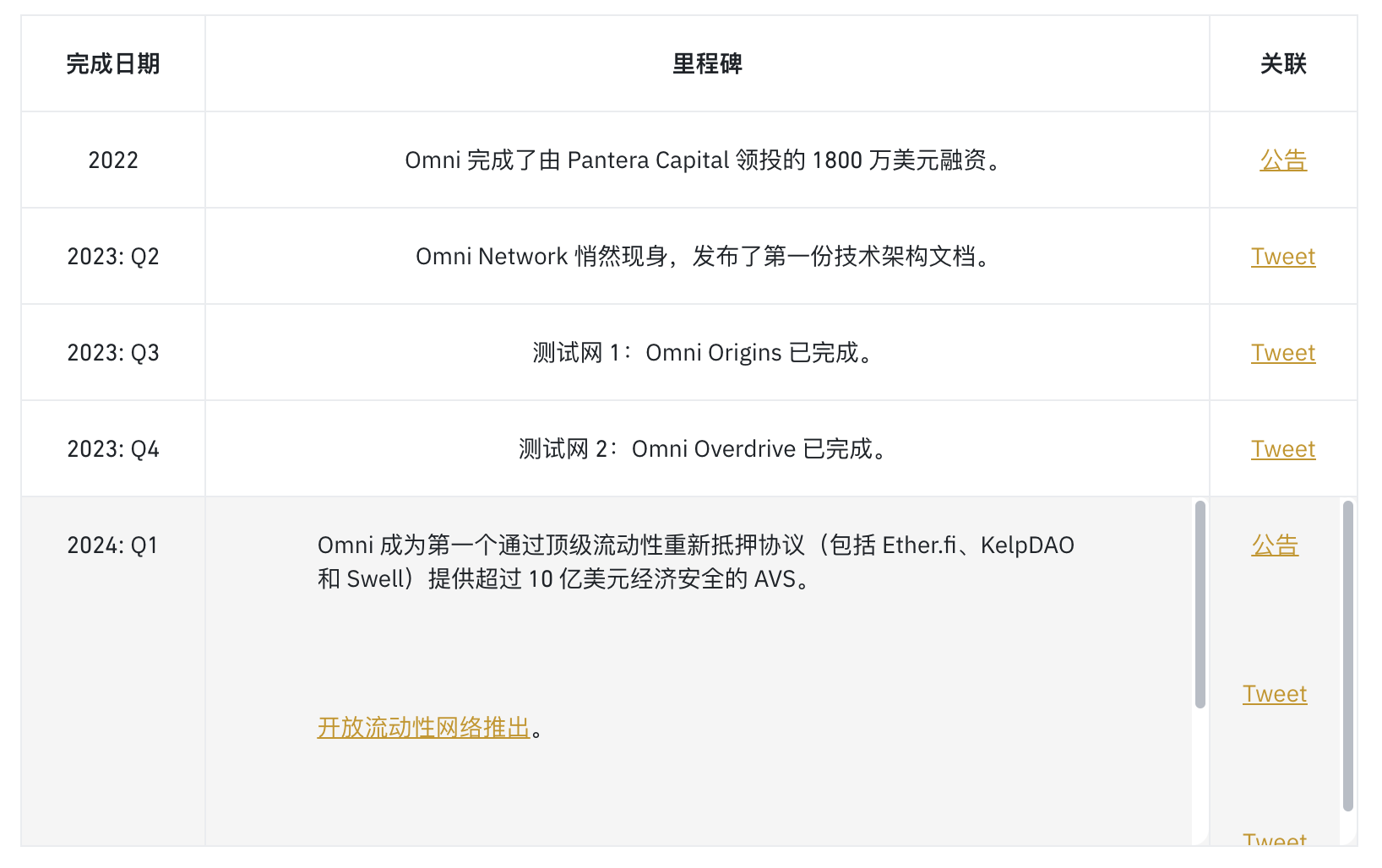
4.1 Completed Milestones
4.2 Current Roadmap
Q2 2024:
-
Mainnet launch.
-
Integration with liquid restaking protocols and EigenLayer operators.
-
Token generation event.
-
First 11B+ commitment to deploy xERC20 secured by Omni.
Q3 2024:
-
Batch launch of Native Global Applications (NGAs) deployed on Omni EVM.
-
Declarative deployment of multi-rollup smart contracts, enabling Kubernetes-like developer experience to scale applications across all rollups.
-
TypeScript frontend library for deploying native multi-rollup applications that work seamlessly across all rollups.
Q4 2024:
-
Expand Omni Network to include alternative data availability systems such as EigenDA and Celestia.
-
Demonstrate proof-of-concept sharding to increase the network’s rollup capacity by an order of magnitude.
-
Integrate MPC providers to enable institutional users to access all Ethereum rollups.
4.3 Business and Business Development Progress
Ethereum L2s:
-
Examples: Arbitrum, Optimism, Polygon, Linea, Scroll, zkSync, Mantle, Metis, Base, Plume, etc.
-
Definition: Layer 2 blockchains that scale the Ethereum network.
-
Scope: Native integration to ensure access across Ethereum’s ever-expanding L2 ecosystem.
2. Liquid Restaking Protocols:
-
Examples: EtherFi, Renzo, Puffer, Swell, Kelp, EigenPie, Bedrock, etc.
-
Definition: Liquidity restaking protocols are liquidity derivative platforms built on EigenLayer. They act as interfaces to the EigenLayer ecosystem by securing active validation services (AVS) like Omni, offering users higher yields than standard ETH staking.
-
Scope: Omni has received over $1 billion in Ethereum commitments from leading restaking protocols listed above to secure the Omni Network.
3. EigenLayer:
-
Definition: EigenLayer is an Ethereum-based protocol that introduces restaking, a new primitive in crypto-economic security. This allows ETH to be reused beyond consensus layer staking. Native stakers of ETH or users of liquid staking tokens (LSTs) can opt into EigenLayer smart contracts to restake their ETH or LSTs, extending crypto-economic security to other applications on the network in exchange for additional rewards.
-
Scope: Omni Network is a blockchain secured via restaking enabled through EigenLayer. Over 50,000 individual stakers have delegated their Ethereum via EigenLayer on testnet to secure Omni.
4. Rollup-as-a-Service Providers:
-
Examples: Conduit, Caldera, Ankr, AltLayer.
-
Definition: RaaS providers allow anyone to deploy a rollup. They offer turnkey infrastructure enabling customers to rapidly deploy rollups on Ethereum mainnet.
-
Scope: Native integration within RaaS product suites, providing instant, out-of-the-box interoperability for any developer using a RaaS provider.
5. Infrastructure Partners:
-
Examples: a41, Galaxy, Blockdaemon, Kiln, Ankr, etc.
-
Definition: Core infrastructure partners providing validator, node, and operator services for Omni.
-
Scope: The Omni infrastructure partners listed above have committed to securing the Omni Network by accepting delegations from Omni stakers and Ethereum restakers.
Join TechFlow official community to stay tuned
Telegram:https://t.me/TechFlowDaily
X (Twitter):https://x.com/TechFlowPost
X (Twitter) EN:https://x.com/BlockFlow_News
 @binance






