Bitget Research: Western Europe, the Backbone of Cryptocurrency
TechFlow Selected TechFlow Selected
Bitget Research: Western Europe, the Backbone of Cryptocurrency
Western Europe has become an indispensable part of the crypto world.
 Navigating Web3 tides with focused insights
Executive Summary
-
Western Europe is a crucial market for the cryptocurrency industry. Currently, the region sees 1.2 to 1.5 million daily active traders on average, with Germany and France being the most active countries among the eight Western European nations;
-
Regulatory environment: The regulatory direction of the eight Western European countries largely aligns with that of the EU, generally maintaining an open attitude toward cryptocurrencies and providing a stable and transparent regulatory framework;
-
On-chain preferences: Users in Western Europe are enthusiastic about participating in decentralized projects, are familiar with DEX tools, and show strong interest in popular public blockchains and the Solana ecosystem;
-
Trading preferences: Spot trading is widely favored across Western Europe, while users in Germany, the Netherlands, and Switzerland exhibit stronger interest in derivatives trading. Overall, there is high acceptance of emerging assets such as NFTs and memecoins;
-
CeFi exchange preference: Over the past year, traffic to centralized exchanges in Western Europe has shown a fluctuating upward trend, indicating higher demand compared to decentralized exchanges. For DEX platforms: Users primarily use leading cross-chain DEXs such as Uniswap and PancakeSwap. The most commonly used wallets include TrustWallet, MetaMask, Coinbase Wallet, and Bitget Wallet;
-
Finally, based on the above analysis, the Bitget Research Institute has made five predictions regarding the future development of the Western European crypto market.
Introduction
Western Europe is the birthplace of many cultural and scientific movements, a fertile ground where pivotal events such as the Renaissance, Enlightenment, and Industrial Revolution originated and flourished. Today, with its advanced economy and population generally open to exploring new ideas, Western Europe ranks among the regions with the highest cryptocurrency adoption rates globally.
Cryptocurrency trading habits and user preferences in Western Europe have distinct characteristics. However, due to the large number of countries involved and variations in policies, cultures, and customs, the traits exhibited by crypto users across these nations differ significantly.
Through in-depth market research, this report provides a comprehensive overview of the current state of the Western European crypto market, aiming not only to help local users identify their ecological positioning and connect with like-minded communities but also to assist Web3 project teams and crypto institutions in better understanding and expanding into this market.
I. Market Overview
1. Regional Overview
According to the United Nations definition, Western Europe includes eight countries: Germany, France, Switzerland, the Netherlands, Belgium, Austria, Luxembourg, and Liechtenstein.
In terms of overall cryptocurrency adoption and volume, Western Europe ranks in the global second tier. Based on Chainalysis' 2023 Adoption Index rankings, Germany, France, and the Netherlands rank relatively high, placing between 20th and 40th globally; Switzerland, Belgium, and Austria rank lower, between 60th and 85th; Luxembourg ranks below 120th. Limited data is available for Liechtenstein, so it will not be analyzed in detail here.
Western European countries collectively exhibit the characteristics of "large cryptocurrency market size, high DeFi activity, and relatively low P2P transaction volumes":

The ranking scores of Western European countries are primarily driven by metrics such as "DeFi usage rate" and "DeFi transaction volume," while their P2P transaction rankings are notably lower than their overall positions. This is mainly because users in the region prefer fiat on-ramps via card payments and direct bank transfers rather than P2P methods common in Southeast Asia.
Germany and France are the two most active countries in Western Europe regarding cryptocurrency activities. Analyzing traffic from over 150 centralized cryptocurrency exchanges, total visit counts from Germany and France reached 48.17 million and 35.11 million respectively over the past six months, with the Netherlands ranking third at 30 million visits.
In April 2023, the German government passed the "Future Financing Act" to regulate crypto asset custody and provide bankruptcy protection. Additionally, Germany has a strong historical foundation in blockchain technology—for instance, it operates the second-highest number of Bitcoin full nodes globally.
France’s Financial Markets Authority (AMF) actively supports EU crypto regulations and has established additional technical standards for the industry. Major digital asset players in the country are prioritizing exploration of DeFi. Notably, France saw significant growth in DeFi transaction volume in November 2022 and May 2023, likely due to users leveraging DeFi tools during events such as the FTX collapse, Silicon Valley Bank failure, and USDC de-pegging.
2. Crypto Policies and Cultural Influences
Most Western European countries belong to the EU, so their crypto policies largely follow EU-wide frameworks. While individual nations may implement slight variations, they generally maintain favorable stances toward cryptocurrencies, with well-developed anti-money laundering (AML) and KYC regulatory systems. Culturally and religiously, users in Western Europe remain open-minded toward blockchain technology and cryptocurrencies, showing keen interest in learning about new technologies.
Regarding specific regulations, MiCA (Markets in Crypto-Assets Regulation) is a proposed EU regulation aimed at creating a unified crypto market across member states to foster digital innovation, financial development, and enhanced consumer and investor protections. On the classification of crypto assets, the EU recognizes them as legitimate assets. Except for tokenized securities, most tokens are not classified as securities and are categorized into four types: crypto assets, utility tokens, asset-referenced tokens, and electronic money tokens.
Germany, France, and the Netherlands serve as the most influential crypto hubs in Western Europe, indirectly shaping neighboring countries’ policy directions, making their regulatory approaches particularly representative. Specifically:
-
Germany is one of the more innovative and progressive European nations in crypto regulation, overseen by the Federal Financial Supervisory Authority (BaFin). While its regulatory approach is relatively strict, it offers a stable and transparent environment. Germany also actively encourages innovation in the digital asset market to promote broader economic digitization.
-
France maintains an open regulatory stance, managed primarily by the Autorité des Marchés Financiers (AMF) and Banque de France. It is proactively developing its regulatory framework to support innovation while ensuring market integrity and investor protection. The French regulatory environment is characterized by inclusivity and forward-thinking alignment with EU-wide crypto rules such as MiCA.
-
The Netherlands was among the first European countries to explore crypto regulations, with oversight shared between De Nederlandsche Bank (DNB) and the Authority for the Financial Markets (AFM). Dutch policy emphasizes investor protection and tends to be stricter, yet initiatives such as the Dutch Blockchain Coalition and the joint “Innovation Hub” by DNB and AFM demonstrate strong institutional support for blockchain innovation.
Beyond these three, Switzerland, Belgium, Austria, Luxembourg, and Liechtenstein also maintain relatively open and transparent regulatory environments for crypto and blockchain, emphasizing AML compliance and investor safeguards while encouraging industry growth.
Culturally, most residents in Western Europe adhere to Catholicism. While their trading behaviors do not differ drastically from the general population, Catholic individuals tend to place greater emphasis on ethical and moral considerations in financial decisions—such as principles of “honesty and justice,” “social responsibility,” and “community development”—when investing in cryptocurrencies.
3. Market Size
In December 2023, the daily active users (DAU) trading on centralized crypto exchanges in Western Europe totaled approximately 640,000–750,000. With the approval of BTC spot ETFs and continued growth in the overall crypto market cap, by February 2024, DAUs in Western Europe had increased to around 1.2 to 1.5 million.
In December 2023, Germany led the region with 260,000–310,000 DAUs. France and the Netherlands followed with 100,000–150,000 DAUs, while Switzerland, Austria, and Belgium ranged between 40,000 and 60,000 DAUs.
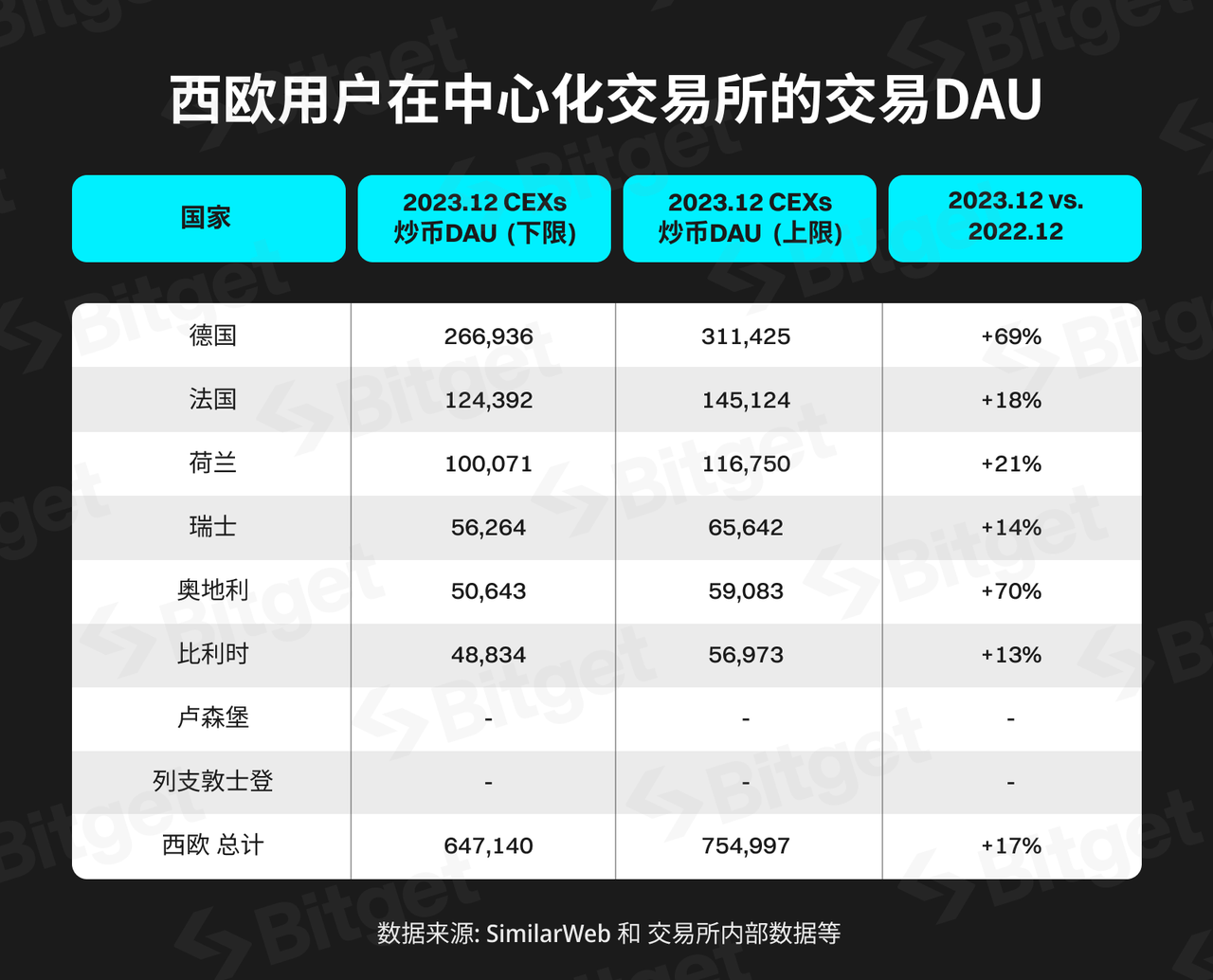
From the estimation results:
Globally: Compared to the same period last year, Western Europe's traffic recovery in December 2023 was weaker than India (up 59%) and Turkey (up 39%), comparable to Vietnam (up 21%) and South Africa (up 26%), but stronger than Russia (down 19%).
Within Western Europe: Germany and Austria showed the fastest year-on-year growth in trading users in December 2023, increasing by 69% and 70% respectively—significantly outpacing other regional peers (15%-20%).
II. Characteristics of Local Crypto Users
Each of the eight Western European countries exhibits unique user traits. This section analyzes crypto user characteristics across three dimensions: trading behavior, popular projects and sectors, and local community and social media engagement.
1. User Trading Habits
1.1 General Profile of Western European Crypto Users
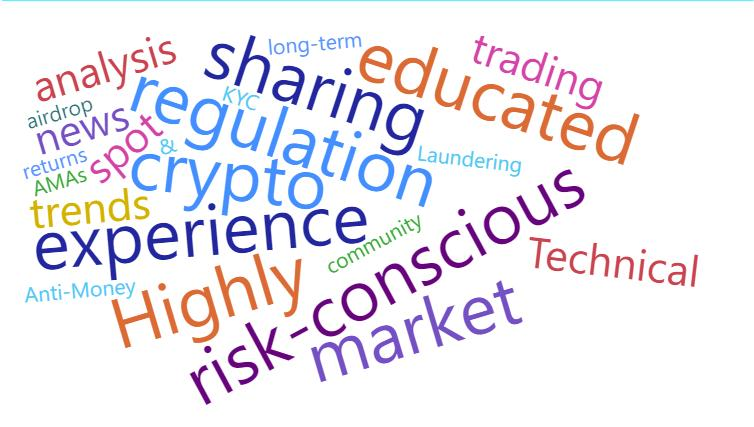
Image: Word Cloud of Western European Crypto User Habits
Source: Google Trends
Users in Western Europe maintain an open attitude toward crypto trading and project interactions, exhibiting several key traits:
-
Generally high education levels mean users possess deeper knowledge of crypto technology fundamentals and market dynamics;
-
Risk-aware investors who prioritize long-term returns, favoring spot trading and yield-generating products;
-
Active participants in online forums, AMAs, and offline meetups to exchange market insights, share technical expertise, and discuss trends;
-
Law-abiding users who pay close attention to AML and KYC compliance when using cryptocurrencies.
1.2 Trading and Interaction Habits by Country
[Germany]
In trading, Germans prefer derivatives contracts, primarily focusing on major cryptocurrencies, with nearly half concentrating on BTC. In spot markets, about 10% engage in memecoin speculation, while roughly a quarter express interest in NFT trading.
In application interaction, according to Statista’s report “Crypto Holders in Germany,” German users rank among the top globally in participation in gaming projects such as Alien Worlds and Gala Games. They also actively engage with DEX tools, Web3 quest platforms, IDO platforms, and DeFi projects, reflecting broad acceptance of on-chain applications.
[France]
Unlike Germans, French users lean toward spot trading and long-term holding. According to TripleA data, 72.8% of crypto participants trade BTC, and 45.3% hold less than €1,000 worth of crypto, suggesting they view digital assets as a tool for portfolio diversification.
In application interaction, French users rank highly in engagement with Galxe (Web3 quests), Splinterlands (gaming), GMX (DeFi), and HOOKED (Web3 education), with moderate involvement across other sectors, indicating strong openness to on-chain projects.
[Netherlands]
In trading, Dutch users primarily engage in derivatives. Many YouTube influencers in the Netherlands promote technical indicator-based contract trading, significantly influencing local trading habits.
In application interaction, Dutch users show notable DeFi engagement, especially with dYdX, which ranks among the highest globally. They also frequently use Dextool and Web3 quest platforms, demonstrating solid acceptance of DeFi and altcoin DEXs.
[Switzerland]’s trading habits resemble those of [Germany], while [Belgium]’s mirror those of [the Netherlands]. In terms of preferred domestic exchanges, Swiss and German users favor Bitpanda, whereas Belgian and Dutch users prefer Bitvavo.
[Austria], [Luxembourg], and [Liechtenstein] have limited user sample sizes, potentially leading to significant statistical inaccuracies, so no detailed summaries are provided. Their user behaviors generally align with those of the other five Western European nations.
2. Popular Sectors and Projects
In terms of sector and project engagement, Western European users show enthusiasm for decentralized projects, familiarity with DEX and other on-chain tools, and a clear preference for leading public chains and the Solana ecosystem.
(1) Popular Projects & Sectors
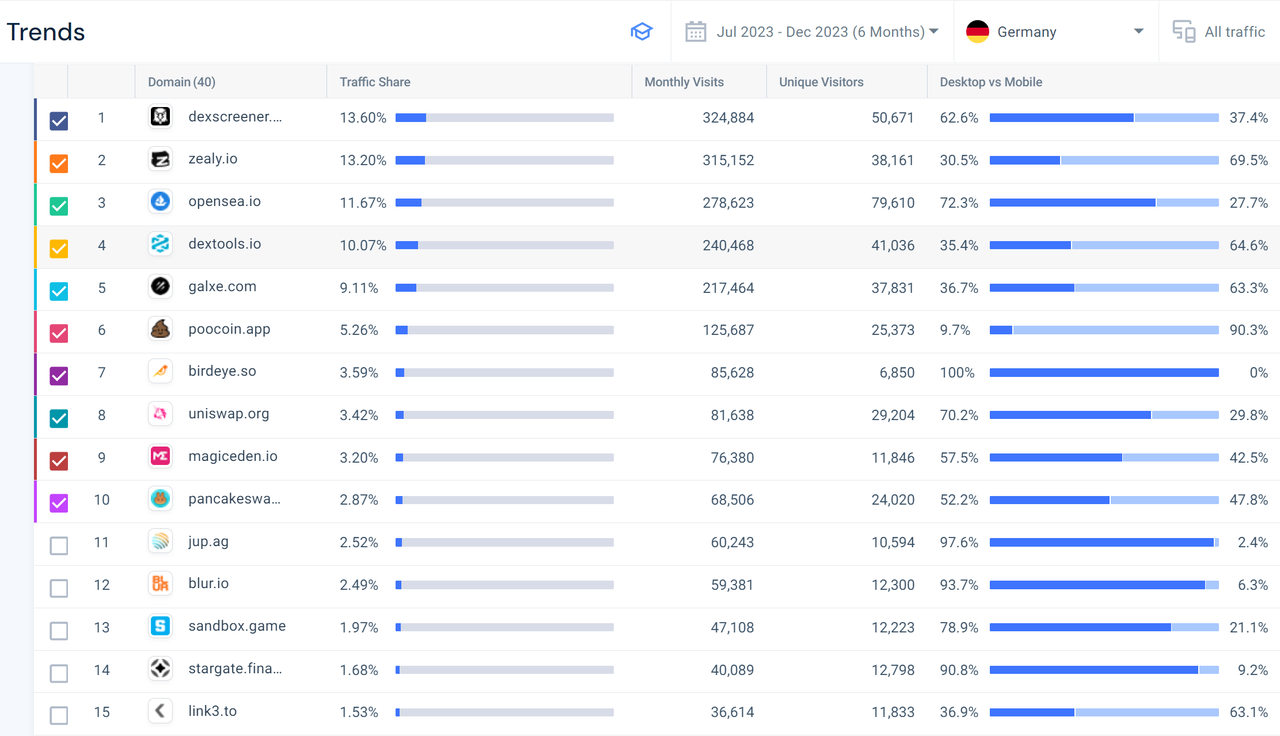
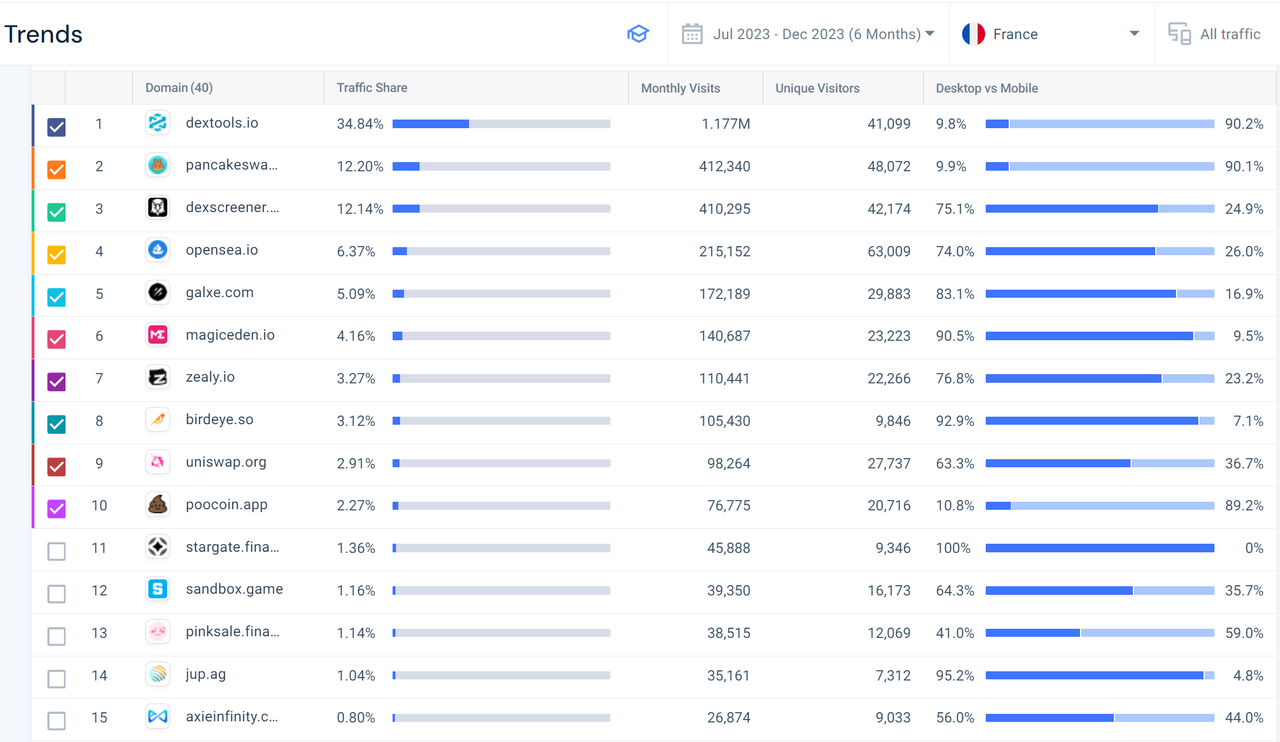
Popular project traffic in Germany and France (July 2023 – December 2023)
Data source: SimilarWeb
[Germany]: German users show high engagement with Dextools (on-chain tokens), Web3 quest platforms, and NFT trading. Four of the top ten visited sites are Dextools-type on-chain analytics platforms, indicating strong interest in memecoin trading. High participation in Web3 quest platforms and NFTs reflects deep understanding and acceptance of decentralized ecosystems.
[France]: France leads Western Europe in decentralized ecosystem participation, with extremely high traffic in DEX tools and trading. NFT transactions occur mainly on OpenSea and MagicEden; minor usage of Sandbox and Axie indicates low game sector penetration.
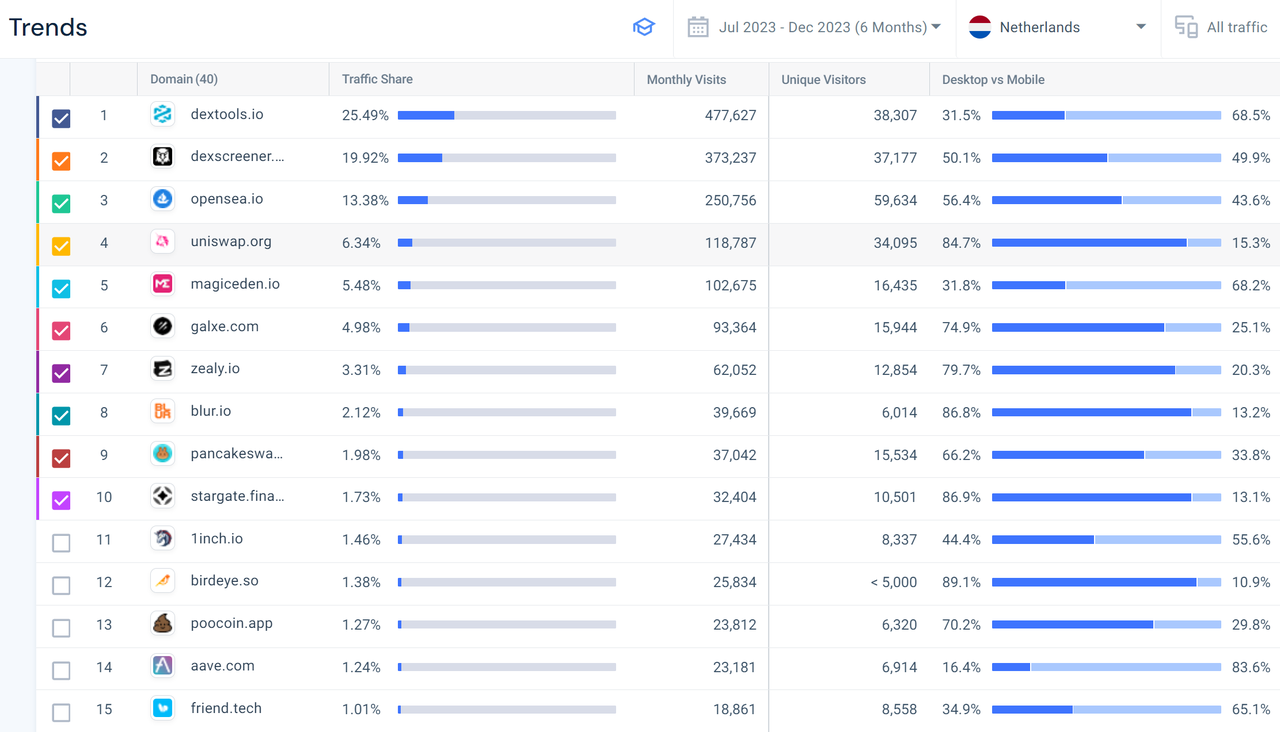
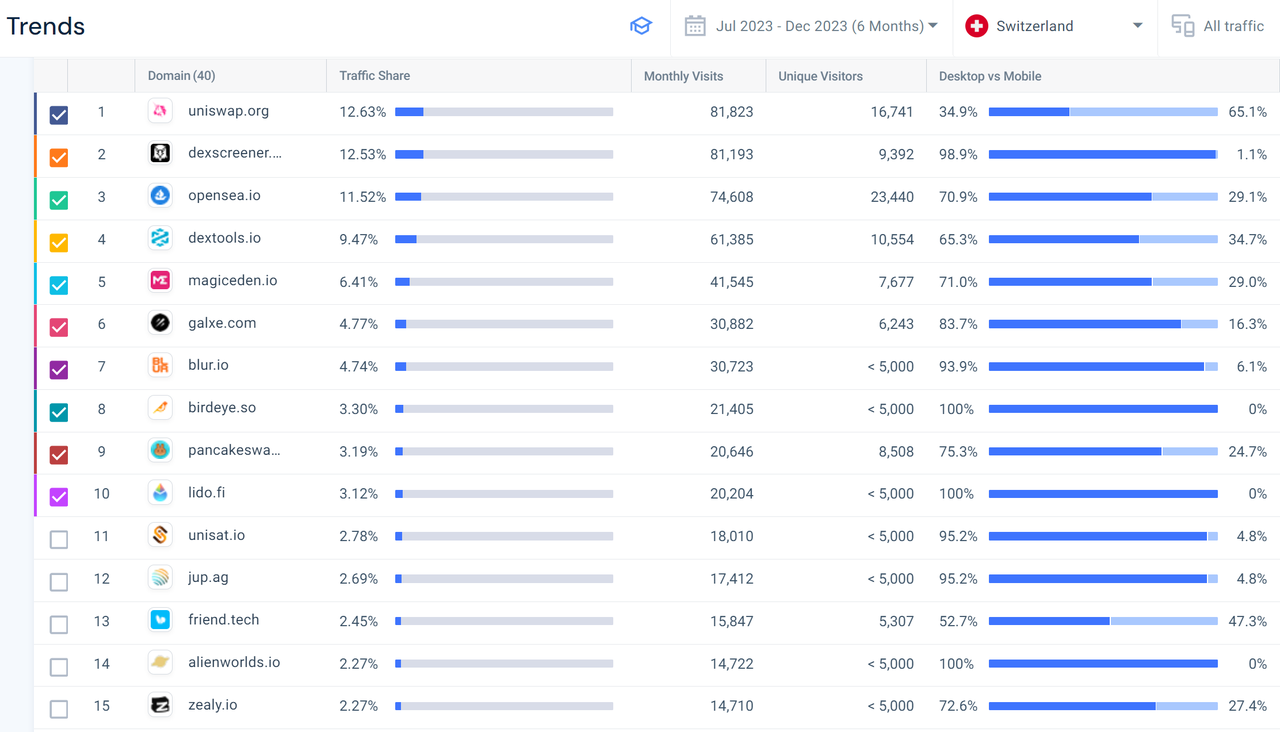
Popular project traffic in the Netherlands and Switzerland (July 2023 – December 2023)
Data source: SimilarWeb
[Netherlands]: Dutch users exhibit very high usage of DEX tools and NFT platforms, often paired with DEX trading, demonstrating strong foundational experience with decentralized applications, spanning DeFi and social categories.
[Switzerland]: Swiss participation in decentralized ecosystems is relatively low, mainly using DEXs like Uniswap and associated tools, with moderate NFT usage but minimal engagement elsewhere.
Popular project traffic in Belgium and Austria (July 2023 – December 2023)
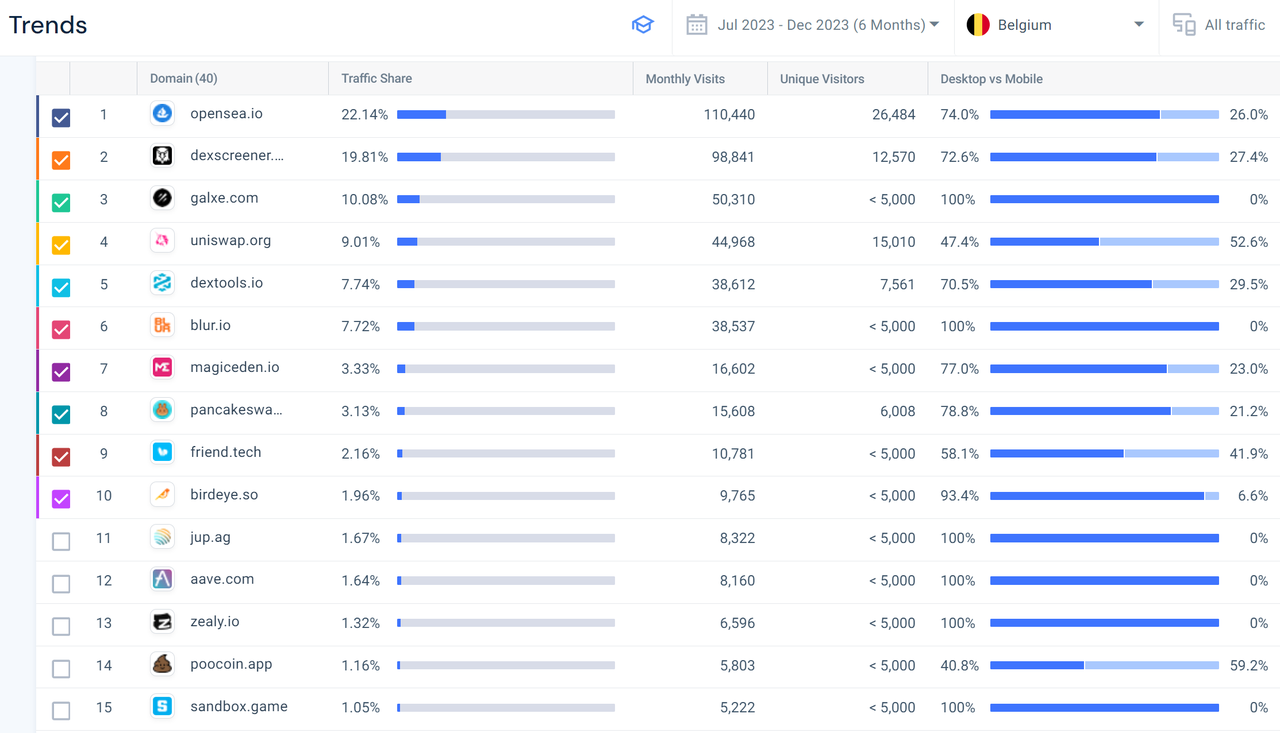
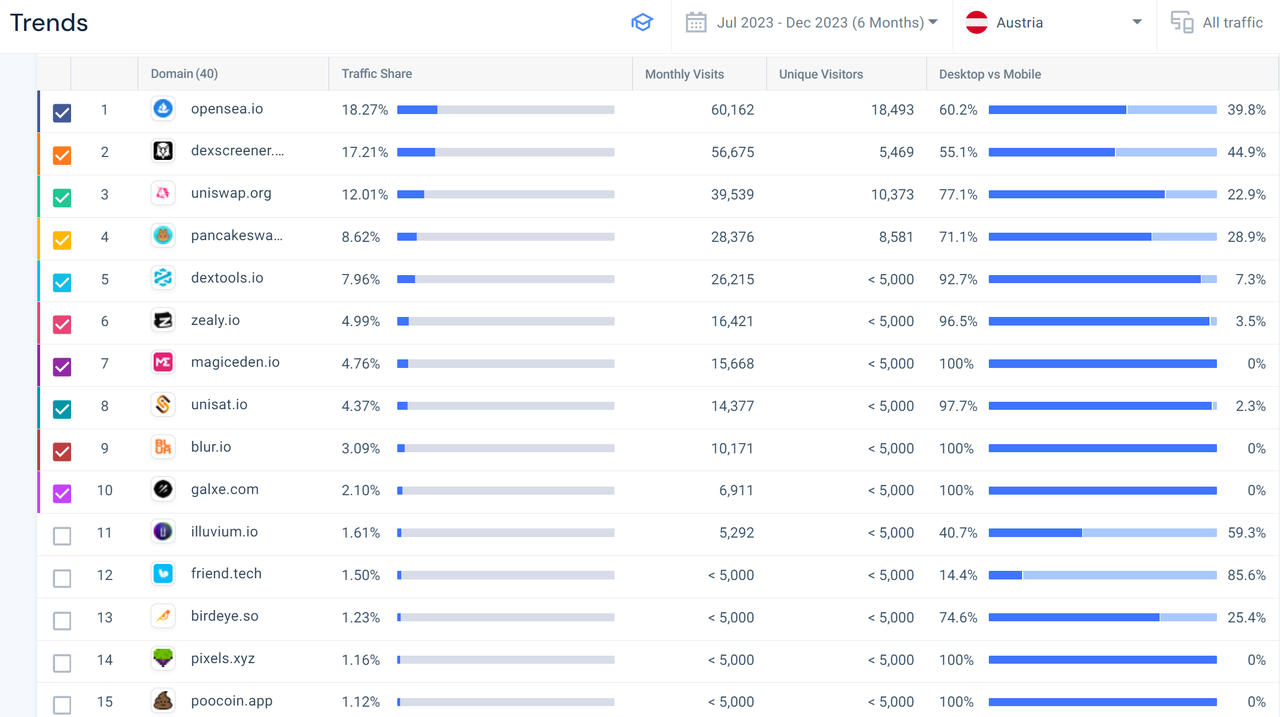
Data source: SimilarWeb
[Belgium]: Belgian users primarily participate in NFT trading and use DEX tools, with OpenSea and DexScreener receiving the highest traffic, though overall volumes remain low within Western Europe, and engagement in other sectors is negligible.
[Austria]: Austrian engagement in decentralized ecosystems is nearly nonexistent, with only moderate usage of OpenSea and major DEXs.
[Luxembourg] and [Liechtenstein]: Due to small user samples, aggregated results may be inaccurate and thus not summarized. Their user behaviors closely resemble those of neighboring Western European countries.
(2) Top Crypto Topics of Interest Among Western European Users (Past Three Months)
Analyzing Google Search trends reveals what Western European users are searching for:
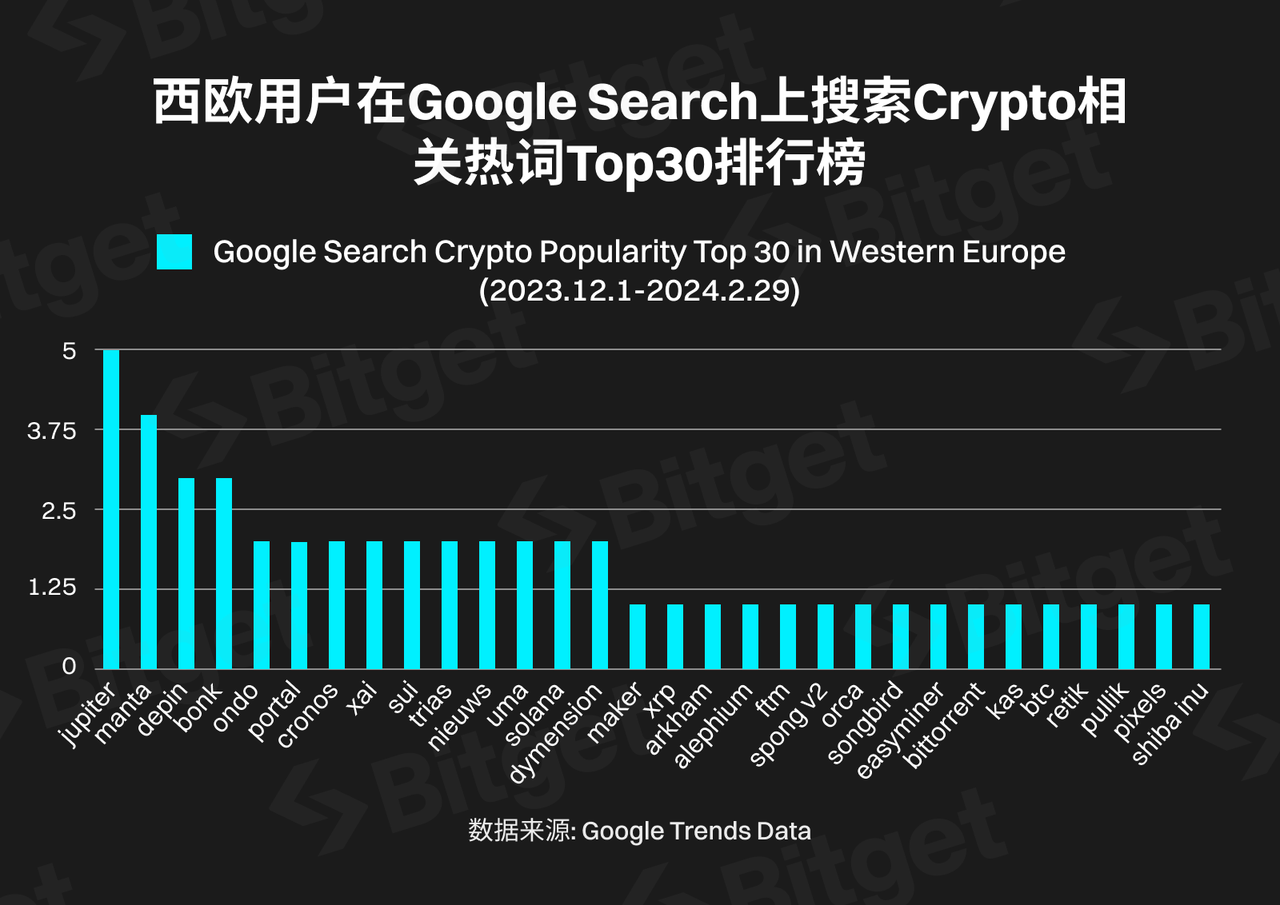
Based on search interest in crypto-related terms across Western Europe from December 1, 2023, to February 29, 2024, user attention focused on:
(1) Solana ecosystem (JUP, BONK, ORCA, and DePIN projects):
In Q4 2023, the Solana ecosystem experienced strong growth following token launches and airdrops from JUP, PYTH, and JTO, generating massive traffic and wealth effects. Key metrics such as TVL doubled month-over-month, and leading DEXs hit record-high trading volumes.
The surge in Helium (HNT), Helium Mobile (MOBILE), and Hivemapper (HONEY), along with listings on major exchanges, brought the DePIN sector into mainstream awareness. HNT previously peaked at $50 and now trades below $10, fueling expectations for future price appreciation.
(2) Manta:
Manta Network released its tokenomics in mid-January and opened airdrop claims on January 18. Its ecosystem TVL rose steadily before and after the airdrop, and its token listed on multiple major exchanges. Subsequent DDoS attacks sparked widespread discussion in communities and media.
In late February, restaking liquidity staking protocol ether.fi launched on Manta Pacific, allowing users to stake ETH via the ether.fi protocol.
(3) ONDO:
RWA protocol Ondo Finance announced its ecosystem directory in late January, including partners in liquidity, custody, and other critical areas, involving major institutions such as Morgan Stanley and BlackRock.
Originally focused on the LaaS (liquidity-as-a-service) space, Ondo transitioned to RWA in January 2023 and achieved rapid TVL growth—an exemplary case of successful pivot during a project bottleneck.
(4) Ongoing interest in second- and third-tier public chains:
The presence of CRO, FTM, and SUI suggests sustained user interest in these chains despite lack of major news or catalysts.
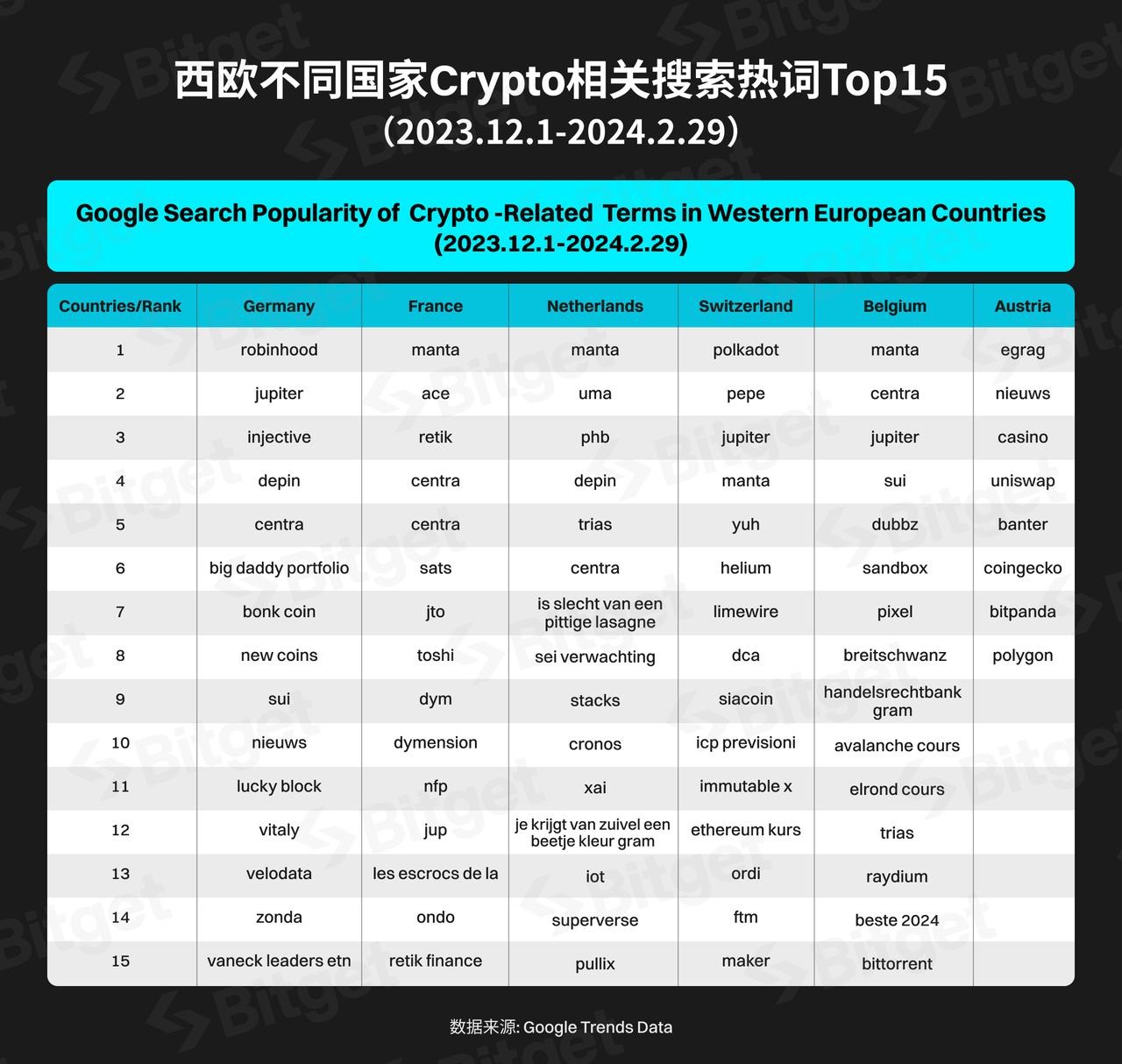
"Germany" ranked Robinhood highest in search volume during this period, possibly indicating significant overlap between German stock traders and crypto users, or a tendency among Germans to trade crypto on Robinhood.
"France," "Netherlands," and "Belgium" all ranked Manta as their top search term, likely due to both the rapid TVL growth pre- and post-airdrop and extensive media coverage of the DDoS attack.
Interest in second- and third-tier public chains varied by country:
"Germany" users were more interested in Injective and Sui;
"France" users followed MANTA and modular settlement Layer1 Dymension (DYM);
"Switzerland" surprisingly ranked Polkadot (DOT) #1, despite DOT appearing relatively dormant throughout the recent bear and recovery cycles;
"Netherlands" focused on Stacks (Bitcoin L2) and Cronos;
"Belgium" showed interest in Sui, Avalanche, and Elrond;
"Austria" paid attention to Polygon.
3. Local Communities and Social Media
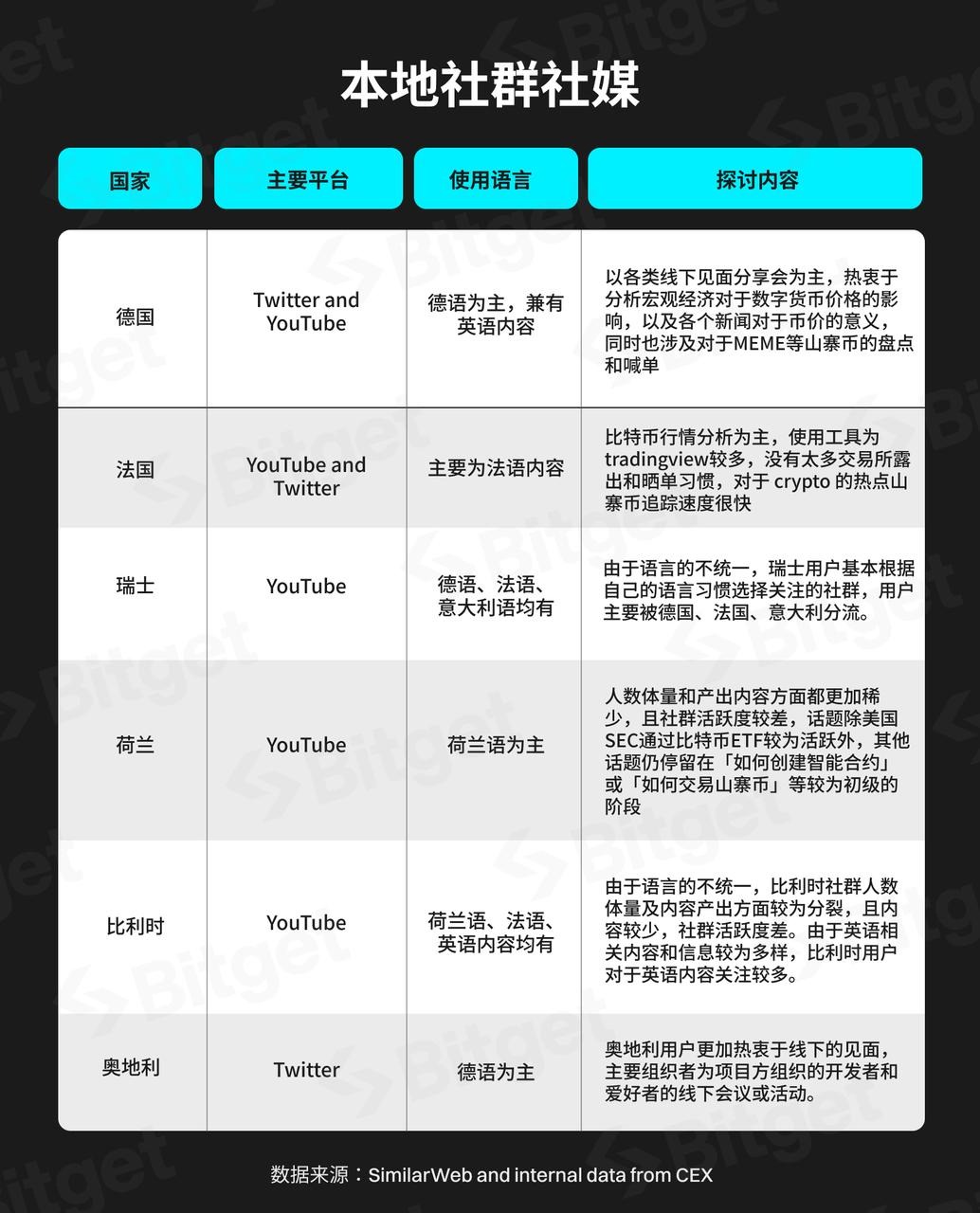
The primary battlegrounds for local communities in Western Europe are Twitter and YouTube. Content is mostly in national official languages, but English-language content is also widely consumed across the region.
Discussion topics vary by country, ranging from macroeconomic impacts and news-driven price movements to detailed trade analysis, memecoin promotions, and basic educational content such as “how to create a smart contract” or “how to trade altcoins.”
III. Competitive Landscape and Platform Advantages
1. Centralized Exchanges
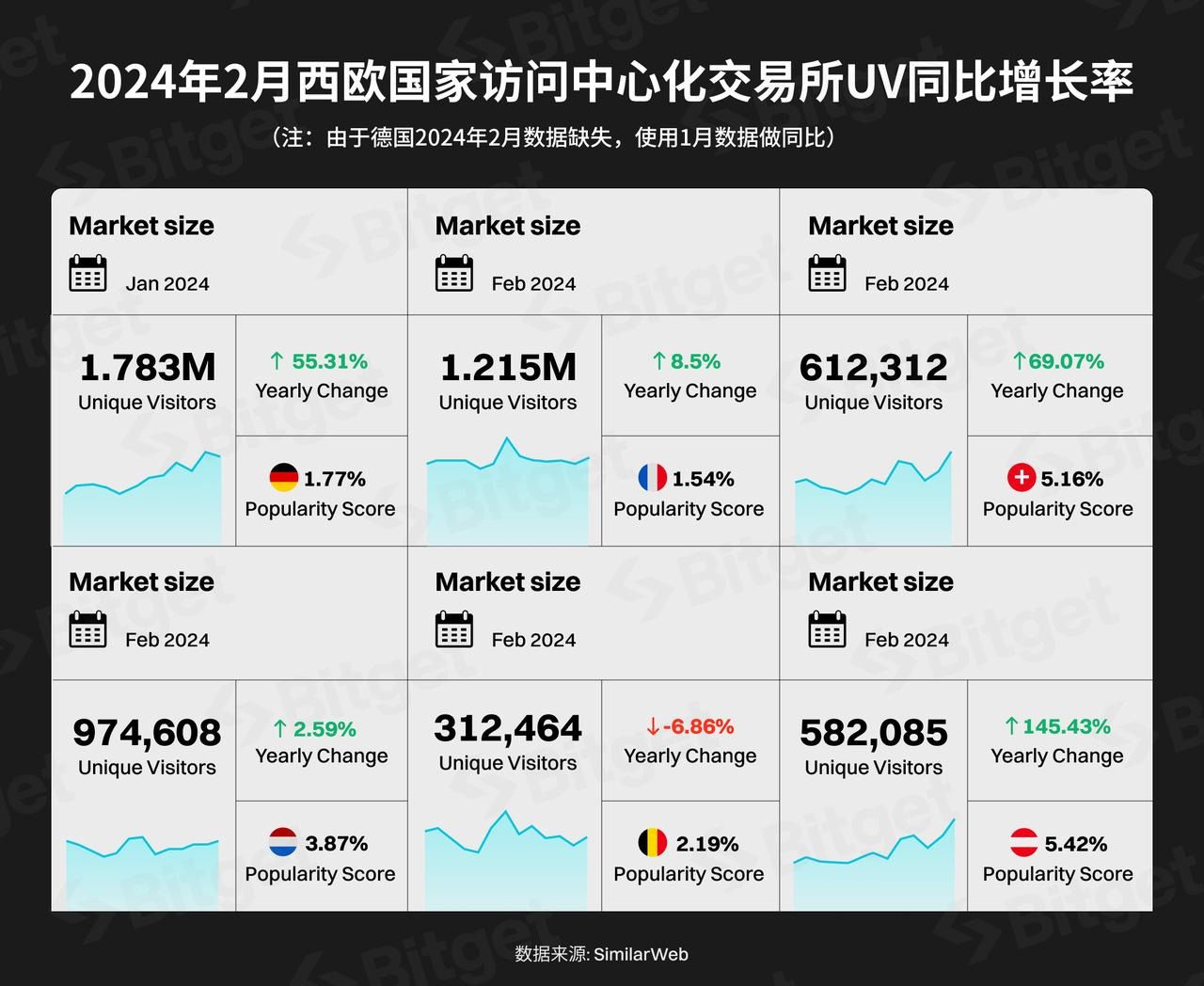
In terms of UV (unique visitor) growth for centralized exchanges in Western Europe:
Over the past year, overall traffic to centralized exchanges in the region has risen sharply, with Germany, Switzerland, and Poland seeing the most pronounced increases. Germany and Switzerland posted over 50% YoY growth, while Poland surged by 145%. France and Belgium showed modest growth, with Belgium even experiencing a 6.8% decline compared to the previous year.
In absolute UV numbers:
(1) Over the past year, monthly average UVs in Germany and France exceeded 1 million, with Germany leading at 1.78 million;
(2) Traffic to decentralized exchanges is only about one-tenth of that seen on centralized platforms. For example, in Germany, annual DEX UVs remained below 150k, just 1/11.8th of CeFi traffic. Other Western European countries show similar patterns, confirming that centralized exchanges remain the dominant trading venues, with traffic approximately ten times higher than DEXs.
2. Decentralized Exchanges
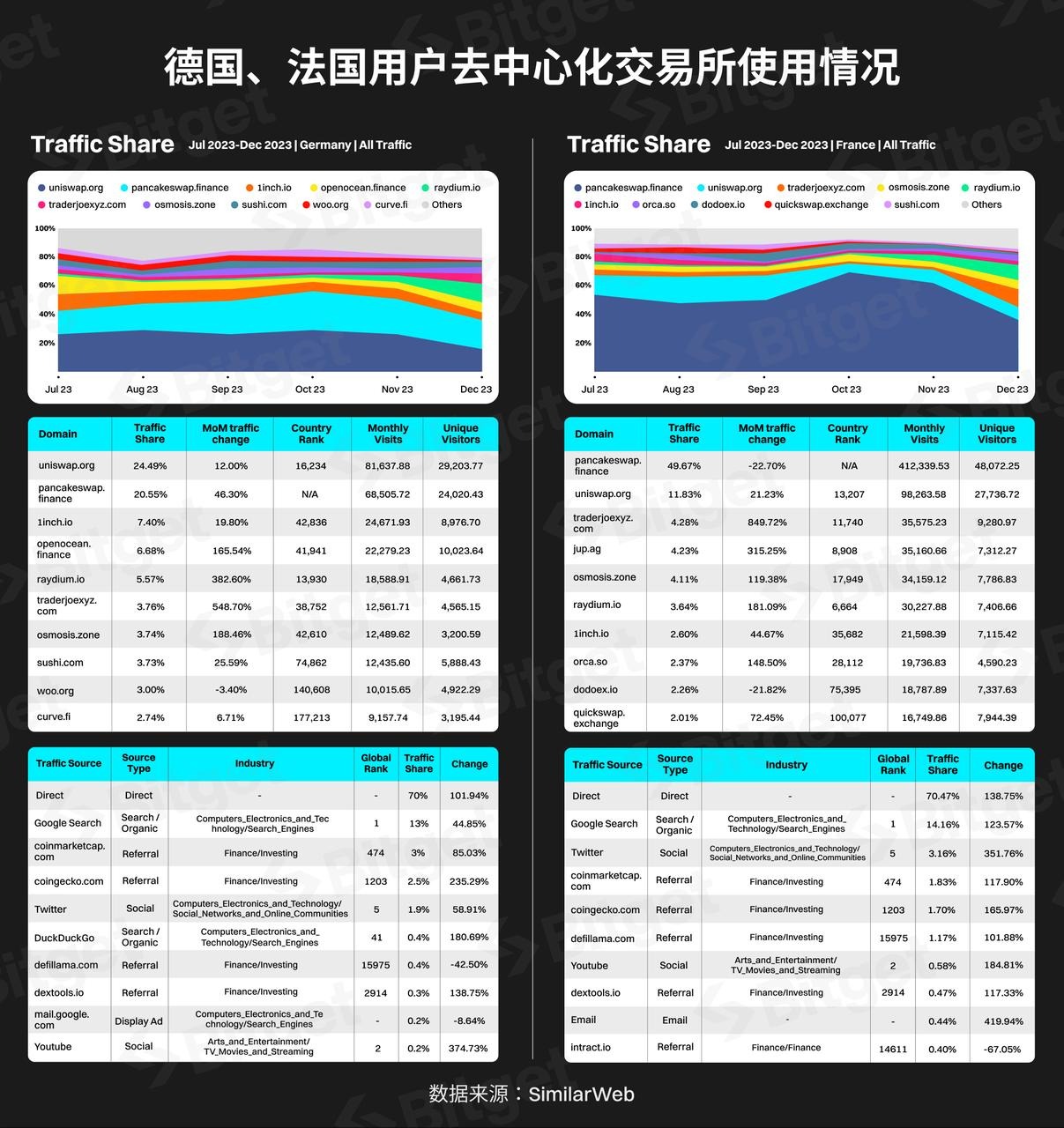
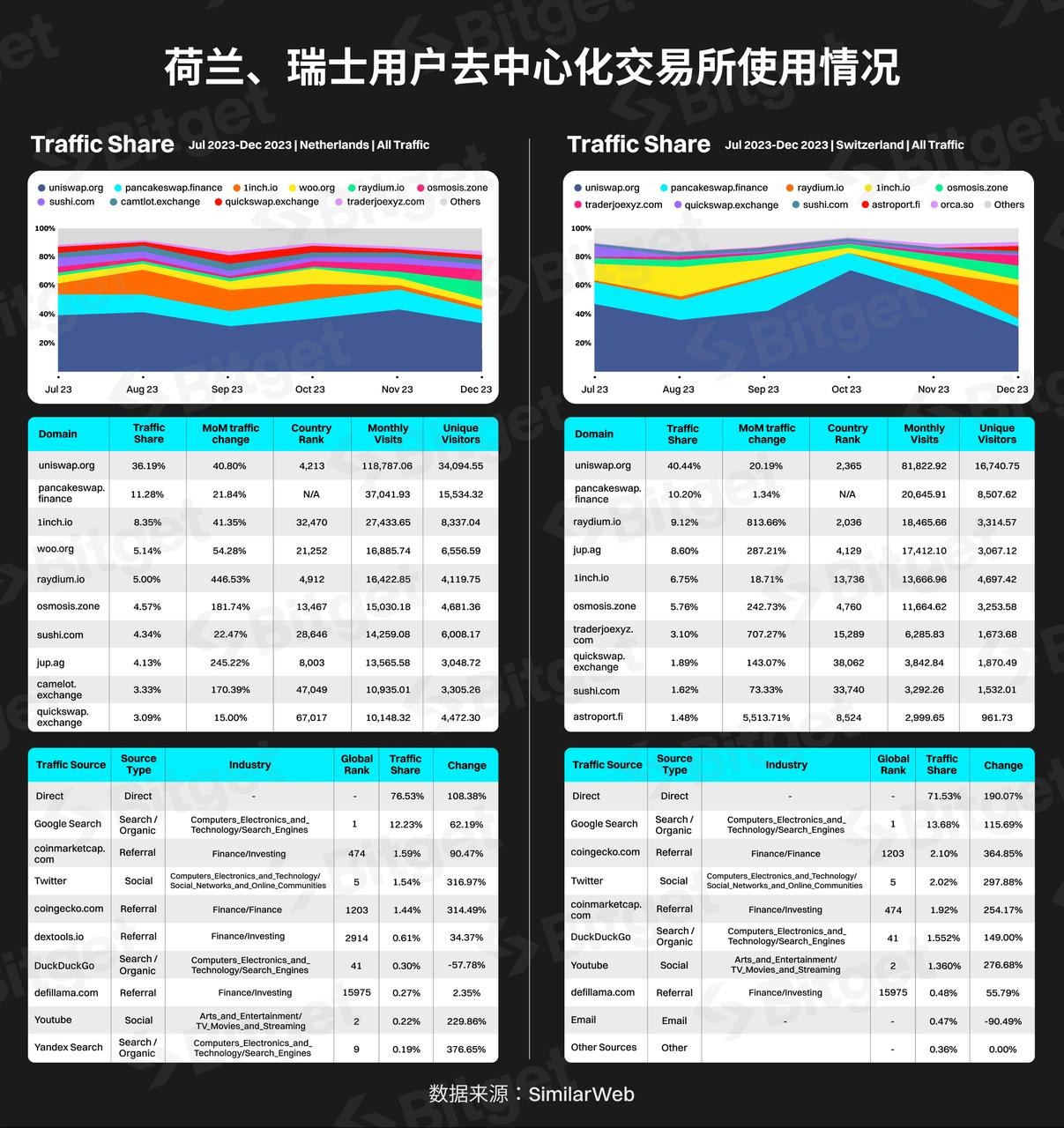
Western European users frequently use DEXs, primarily engaging with leading DEXs on each chain, such as Uniswap, PancakeSwap, and Raydium. There is also growing use of DEX aggregators like 1inch and Jupiter.
Most users access these DEXs directly, with some arriving via Google searches or social media links. This indicates that Western European users value brand recognition and tend to develop loyalty once usage habits are formed.
Germany
DEX Competitive Landscape
German users account for a relatively high share of DEX usage in Western Europe. Platforms such as Uniswap, PancakeSwap, and 1inch are particularly popular. Across various chains, top-tier DEXs perform strongly in Germany, including Ethereum, BSC, Solana, Avalanche, and Cosmos. Following the Solana ecosystem revival from October to December 2023, DEXs like Raydium saw renewed traffic growth.
DEX Traffic Sources
German users primarily access DEX websites through direct searches. Notably, social platforms like Twitter and YouTube also serve as common entry points, alongside crypto information sites such as CoinMarketCap, CoinGecko, and DefiLlama, which drive substantial traffic and conversions.
France
DEX Competitive Landscape Summary
French users generate far more traffic on PancakeSwap than on any other DEX, indicating a preference for BSC-based assets. Other leading DEXs such as Uniswap and TraderJoe also stand out. As with Germany, Solana-based DEXs like Raydium saw traffic recovery from October to December 2023.
DEX Traffic Sources
Similar to German users, French users mainly access DEXs through direct visits, Google searches, social media referrals, and crypto news/information sites.
Netherlands and Switzerland
DEX Competitive Landscape Summary
Users in the Netherlands and Switzerland generate significantly more traffic on Uniswap than on other DEXs, indicating a preference for Ethereum and EVM-compatible chain assets. Other top DEXs like PancakeSwap also perform well. Notably, aggregator platforms such as 1inch, Woo, and Jupiter appear in the list of commonly used DEXs, suggesting users value trading convenience.
DEX Traffic Sources
Like other Western European users, Dutch and Swiss users primarily access DEXs through direct visits, Google searches, social media, and crypto information sites. Other search engines such as DuckDuckGo and Yandex Search also appear, with the former being privacy-focused and the latter the largest Russian search engine.
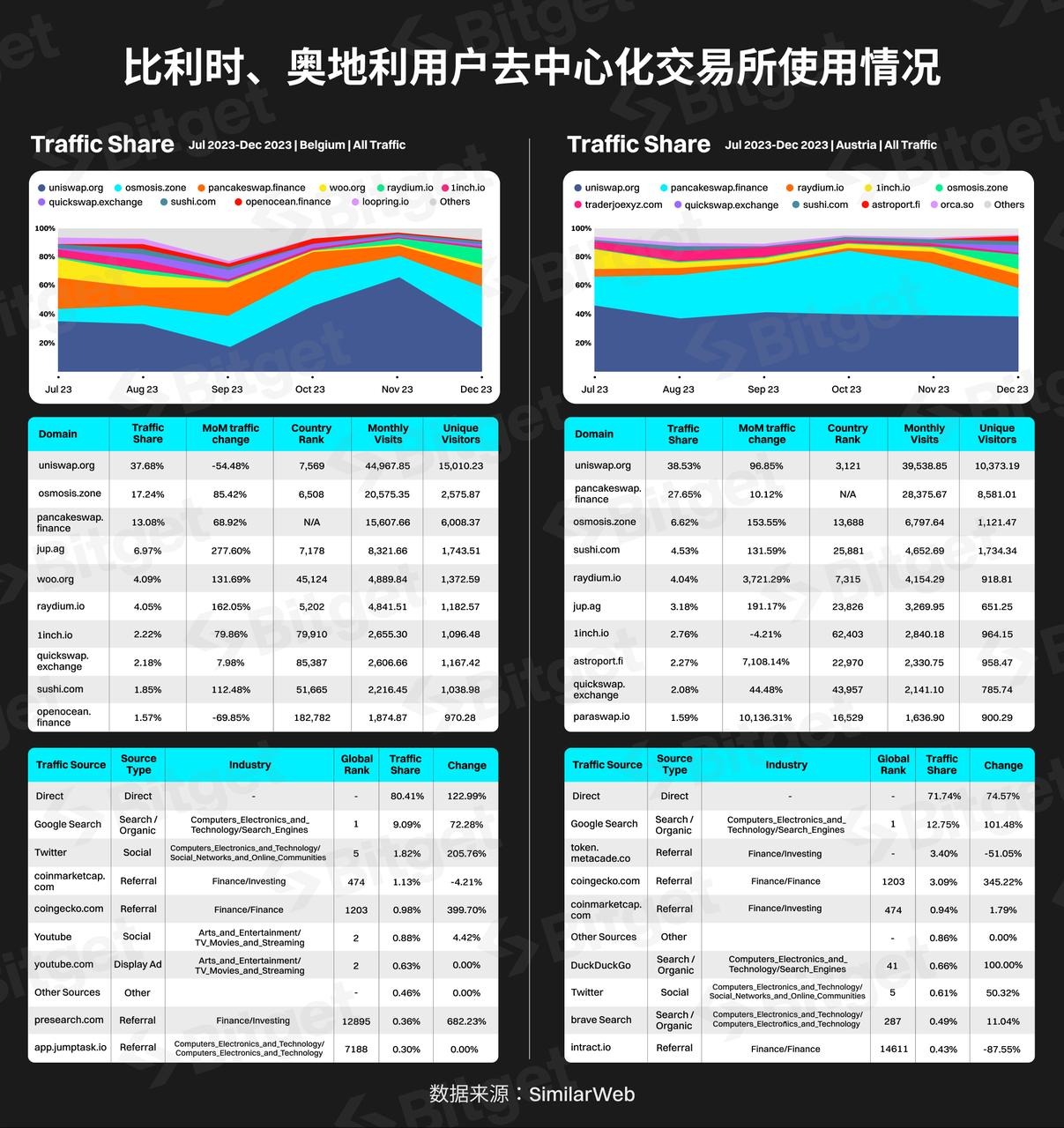
Belgium and Austria
DEX Competitive Landscape Summary
Users in Belgium and Austria generate much higher Uniswap traffic than other DEXs, indicating a preference for Ethereum and EVM-compatible chains. Leading DEXs such as Osmosis and PancakeSwap also perform well. Notably, Osmosis, part of the Cosmos ecosystem, receives notable local attention.
DEX Traffic Sources
Similar to most Western European users, Belgians and Austrians mainly access DEXs through direct visits, Google searches, social media, and crypto information sites. Presearch, a blockchain-based search engine, appears in Belgium’s DEX search sources, indicating solid local user adoption.
Luxembourg and Liechtenstein have small user bases, leading to potential inaccuracies; hence, no detailed summary is provided. Their DEX usage habits align closely with neighboring Western European countries.
3. Wallets
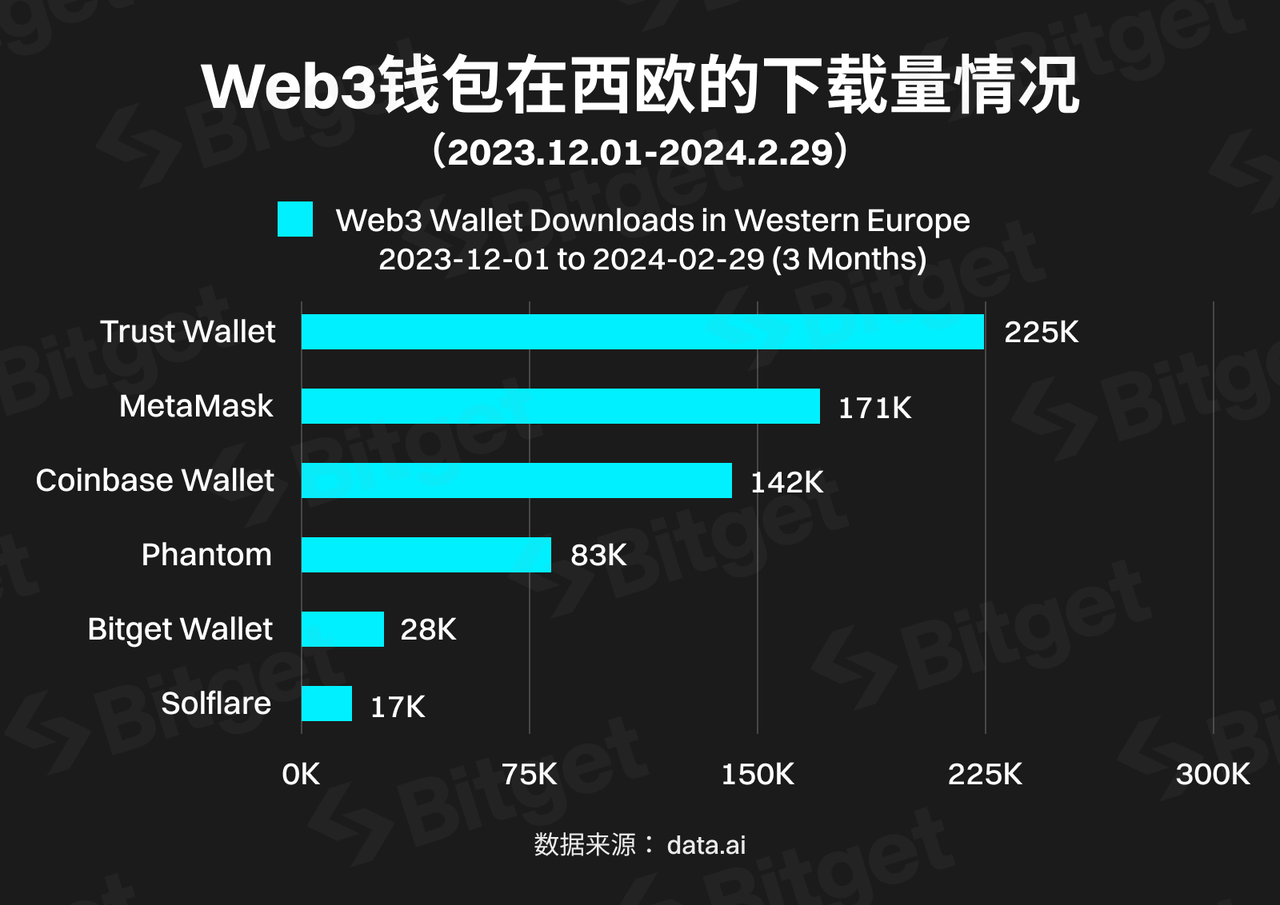
(Note: Some well-known wallets, such as Binance Wallet, share the same app as their centralized exchange and cannot be tracked separately, so they are not shown in the table above.)
In wallet usage, Trust Wallet, MetaMask, Coinbase Wallet, Phantom, and Bitget Wallet are the top five wallets in Western Europe.
As in most other regions, the top three are Trust Wallet, MetaMask, and Coinbase Wallet. Trust Wallet, launched in 2017, benefits from early-mover advantage and an intuitive design suited to European users. Similarly, MetaMask enjoys strong early adoption, with most EVM-compatible chain projects prioritizing integration, making both wallets highly popular across Europe.
Coinbase Wallet, ranked third, leverages the trust and security reputation of Coinbase. Given the large existing user base on Coinbase Exchange and the seamless interoperability between exchange and wallet balances, many users naturally choose Coinbase Wallet.
Recently, Phantom—the native wallet for Solana—has seen noticeable download growth due to the booming Solana ecosystem. Rumors of potential token airdrops have further encouraged users to adopt Phantom when interacting with Solana-based projects.
Bitget Wallet stands out for its fast iteration speed, supporting over 90 public chains. Its innovative liquidity aggregation algorithm enhances swap efficiency, while features like on-chain alert monitoring and smart recommendation systems help users discover trending projects. In NFTs, Bitget Wallet hosts the first marketplace enabling purchases with any cryptocurrency. Deep user insight and rapid feature deployment have propelled it to fifth place in European downloads.
Conclusion
With advanced economies and populations generally well-educated and open to innovation, Western Europe ranks among the world’s most crypto-literate regions. This report examines the crypto markets of the eight UN-defined Western European countries across three pillars: “market overview,” “local user characteristics,” and “competitive landscape and platform strengths.”
Overall, Western Europe ranks in the global second tier in terms of crypto adoption and volume, characterized by “large market size, high DeFi activity, and relatively weak P2P transaction volumes.” The region currently sees approximately 1.2 to 1.5 million daily active users on centralized exchanges, with Germany and France leading as the most active crypto hubs.
From regulatory and cultural perspectives, most surveyed countries align with EU crypto policies, adapting them to national laws. AML and KYC regulations are relatively mature, with core goals centered on investor protection and financial stability without stifling technological innovation.
Western European users are generally well-educated, risk-conscious investors who actively participate in forums and community AMAs. Key characteristics of the region’s crypto users include:
- Use a mix of spot and derivatives trading, primarily focusing on major assets;
- High engagement in decentralized projects, proficient with DEX tools and trading, NFTs, and Web3 platforms, with strong interest in leading chains like Solana;
- Local communities are concentrated on Twitter and YouTube, primarily using national languages, though English content is widely accessible.
In terms of competitive landscape, global centralized exchanges continue to dominate with diverse service offerings. DEX usage shows little variation, with users gravitating toward leading platforms such as Uniswap, PancakeSwap, and 1inch depending on market cycles and ecosystem developments. The top five wallets in Western Europe are Trust Wallet, MetaMask, Coinbase Wallet, Phantom, and Bitget Wallet.
Finally, based on Bitget Research Institute’s comprehensive analysis of the European market, we anticipate the following developments in Western Europe in 2024:
-
Germany and France will continue to lead as the central hubs of Western European crypto;
-
As market sentiment improves and crypto awareness grows, the number of DAUs in Western Europe is expected to rise from around 700,000 in 2023 to 1.2–1.5 million in 2024;
-
Continued on-chain engagement, with sustained or rising interest in NFTs, DEXs, and blockchain games. We may see 1–2 Western European teams launch on-chain applications that become leaders in their respective sectors;
-
DEXs will handle increasing on-chain trading demand, while newer centralized exchanges offering superior customer service and platform incentives may gain larger market shares;
-
Growing interaction within the Solana ecosystem will benefit multi-chain wallets such as Phantom and Bitget Wallet, driving significant market share gains in Western Europe.
Join TechFlow official community to stay tuned
Telegram:https://t.me/TechFlowDaily
X (Twitter):https://x.com/TechFlowPost
X (Twitter) EN:https://x.com/BlockFlow_News