Interview with Bitget AI’s Head: AI Trading Can Approach a Perfect Score Infinitely, but Cannot Reach 100
TechFlow Selected TechFlow Selected
Interview with Bitget AI’s Head: AI Trading Can Approach a Perfect Score Infinitely, but Cannot Reach 100
Dr. Bill recounts Bitget’s evolution from information aggregation to personalized trading assistance: building long-term memory and risk profiling centered around Agents, while optimizing multi-model costs and enforcing strict security isolation.
 Navigating Web3 tides with focused insights
This episode of the podcast centers on Bitget’s AI trading product strategy. Dr. Bill, Head of Bitget AI, reflects on his transition from traditional AI research and industry experience into the crypto space, and systematically outlines Bitget’s iterative evolution of AI trading products over the past year-plus: starting with helping users capture market information, curating news and signals; progressing to building risk profiles and delivering personalized recommendations based on users’ historical behavior; and finally exploring ways to lower the barrier to AI-powered trading—via an Agent Hub, Telegram-native interfaces, and interaction paradigms inspired by tools like Claude Code.
The interview also explores the boundaries of AI in trading: while AI has already significantly enhanced ordinary users’ information processing and decision-support efficiency, it remains unable to fully replace top-tier traders. Looking ahead, competitive differentiation will hinge not only on model capability, but also on security architecture, cost control, product “smoothness,” long-term memory systems, and continuous learning from users’ authentic trading habits. Finally, the conversation addresses whether AI-driven trading will lead to a “winner-takes-all” dynamic or whether strategies will rapidly decay in effectiveness. The conclusion is that markets remain highly complex—human psychology and black-swan events continue to prevent any single system from achieving total dominance over trading.
Dr. Bill’s AI Background and Entry into Crypto
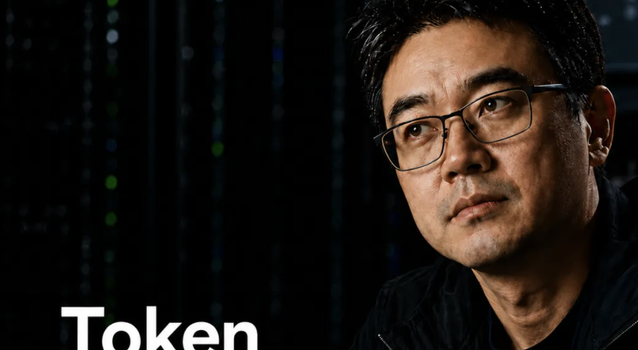
Cat Brother: Welcome to this episode of the WuShuo Non-Crypto Podcast. Today’s guest is Dr. Bill, Head of Bitget AI. To begin, could you introduce yourself—how did you enter the crypto industry? Also, we’d love to hear about your background in AI. I’ve heard people refer to you as “Dr. Bill”—were you trained in AI?
Dr. Bill: I earned my Ph.D. in 2009, and my undergraduate, master’s, and doctoral studies were all in AI. During school, I visited numerous enterprises and research institutes, and attended many international conferences.
After graduation, I spent four years conducting AI R&D at an overseas research institute. Then I joined a major domestic enterprise, where I worked for four years on search & recommendation and natural language processing (NLP), leading its NLP department. Later, I spent four years at an overseas e-commerce company overseeing overall AI R&D, followed by three years at another large enterprise leading global marketing algorithm R&D. Altogether, I accumulated sixteen years of experience.
Early last year, a headhunter reached out to me about an opportunity at Bitget. Though I’d never worked in crypto before, I’ve long been interested in finance—and had traded U.S. and Hong Kong stocks for many years—so I decided to give it a try.
At the time, I wasn’t deeply familiar with Web3—I only had a surface-level understanding and no hands-on experience, so I felt somewhat nervous before the interview. Surprisingly, the interview went smoothly, and I quickly received an offer. My role was Head of AI at Bitget—and it’s now been over a year. Overall, this journey has been incredibly exciting. Every day brings new challenges and projects—though stressful, it’s also deeply rewarding.
For me, the biggest shift has been cognitive. Before joining, my exposure to Web3 was purely theoretical; I hadn’t participated deeply. So upon joining, I essentially began learning on the job while executing real projects—an intensely enriching experience.
Is AI + Trading Just Hype—or Already Practical?
Cat Brother: Bitget is primarily a trading platform. How do you view “AI + trading”? Has it truly entered a viable stage—or is it still mostly market hype? After all, nearly every industry is embracing AI right now. Returning to this topic: do you see it as fundamentally practical today, or does it still contain elements of trend-chasing?
Dr. Bill: For Bitget, this is no longer hype—it’s a necessity. For its first seven years, Bitget didn’t even have a dedicated AI team, and algorithmic applications were extremely rare. It wasn’t until the past two years that we began systematic investment—precisely because AI has matured enough to deliver tangible value in live trading environments, whether through cost reduction, efficiency gains, or revenue enhancement.
Trading itself is exceptionally complex. Users differ vastly in their knowledge, risk appetite, strategies, and execution styles—so the core question isn’t *whether* to adopt AI, but *where* in the trading chain AI should intervene.
Fully autonomous trading—akin to full self-driving—isn’t feasible yet. But layered, stage-specific assistance? That’s highly viable. And whether Bitget pursues it or not, other firms are already doing so—and reaping early benefits.
For instance, some traders focus on short-term price action and quantitative signals. Previously, they might monitor dozens of screens and data feeds simultaneously—AI excels at aggregating and assisting judgment here. Others rely on news, earnings reports, and social media sentiment—tasks inherently involving information gathering and synthesis, where AI delivers clear efficiency gains.
Further, users increasingly expect AI to go beyond information retrieval—to provide concrete strategic suggestions: entry/exit direction, position sizing, leverage levels, even pre-configured trade buttons. At the highest level, it begins approaching wealth management functionality.
Our assessment is simple: AI cannot fully replace elite professional traders—but for average users, replacing ~95% of routine tasks is already practical today.
Bitget’s AI Product Evolution: From Information Aggregation to Trading Assistance
Cat Brother: So your point is that the first layer—information summarization, project background analysis, and auxiliary judgment—is already quite mature. Where does Bitget’s current AI product stand? Is it still focused on early-stage decision support—or has it progressed toward actual execution?
Dr. Bill: This journey began last year. One month after I joined, we launched our Agent initiative. At the time, “Agent” was still a nascent concept—everyone was experimenting. Our first small-scale pilot was called “Meme Catcher,” launched during the peak Meme coin frenzy when market signals were fast and chaotic, making timely opportunity capture difficult for users.
That product ran for two months with solid results—but its capabilities were narrow, focused solely on Meme-related signals. We then upgraded it into GetAgent, whose initial goal was solving that first-layer need: information collection and organization. Since this is fundamentally a labor-intensive task, fine-tuning workflows and models yields significant efficiency gains.
So initially, we prioritized information-layer capabilities—curating key crypto news sources and feeding high-quality, pre-vetted inputs into our models, rather than letting models scrape the open web indiscriminately. This dramatically improved accuracy in information gathering and analysis—and user satisfaction rose accordingly.
But soon, users began demanding more: not just information, but actionable decision guidance—e.g., long/short bias, position size, suitable risk-tiered strategies. So we began integrating users’ historical trade records to build behavioral profiles, analyzing their risk tolerance and trading patterns to deliver more personalized advice.
Information-layer functions can be broadly standardized, but at the trading layer, differences explode. Two users facing identical market conditions may receive entirely different recommendations. Thus, GetAgent gradually evolved toward personalized matching—a process requiring meticulous refinement.
We even extended into execution. For example, users could say, “Buy 10 USDT worth of Bitcoin,” and the system would instantly prepare the trade button for confirmation. Of course, instructions needed to be unambiguous—not vague.
After launch, real users adopted this feature—and trading volume increased. Yet we soon observed a risk: pushing too far into direct order execution led users to mistakenly believe the product could “generate profits for them.” When losses occurred, expectations clashed sharply with reality.
So we pivoted: de-prioritizing automated order execution, and refocusing instead on strengthening information aggregation, analytical synthesis, and personalized delivery—making those foundational capabilities more robust.
Then, earlier this year, we launched Agent Hub—not a Q&A chatbot inside the app returning lengthy responses like GetAgent, but a power-user-facing interface enabling programmatic access to underlying capabilities via command-line-style interactions.
This direction attracted attention—but adoption remained limited due to high barriers. Few users actually write code or use CLI tools for trading. Most are ordinary traders who need simpler, more intuitive product forms.
So next, we moved the entry point to Telegram. Users simply click a link, log in to their Bitget account, and interact with AI agents to execute trades—delivering a far smoother experience.
Cat Brother: How is security handled?
Dr. Bill: Security-wise, we implemented sandbox isolation, four-layer identity verification, and isolated execution environments—ensuring absolute asset safety. We also actively lower usability barriers for mainstream users. Many competing products require users to manage model integrations, token costs, and service plans themselves—far too complex for most. We absorb that complexity, offering polished, ready-to-use capabilities out-of-the-box.
Bitget AI Trading: Underlying Logic and UX Design
Cat Brother: Which large language model(s) do you use?
Dr. Bill: We employ multiple LLMs, intelligently routing tasks across them to balance cost and performance. Simple tasks shouldn’t run on expensive models; complex ones can’t rely solely on cheap ones—so we optimize holistically.
From day one, our product design prioritized lowering entry barriers—for example, offering generous free usage tiers before transitioning to paid plans. Users don’t need to purchase tokens or select models—they access our battle-tested infrastructure directly.
Later, we migrated many capabilities—including information retrieval, analysis, and basic strategy generation—to Telegram. This product is called GetClaw. Here, users interact conversationally, making engagement feel natural and frictionless. Previously, many users couldn’t even locate the AI feature within the app—but on Telegram, the path is immediate and intuitive.
Once this end-to-end experience was unified, GetClaw gained rapid traction. We also ran trading competitions—providing demo funds and rewards—to help users organically adapt to Agent-style trading.
Yet we consistently emphasize: no tool eliminates human judgment. Timing entries and exits remains critical. Over-reliance on models is dangerous; ignoring them altogether is equally limiting. Our goal isn’t replacement—it’s empowerment: building exceptional tools while elevating users’ understanding. That’s why, from the outset, we set a mission: “Empower 100 million users to trade like Wall Street”—not by turning them into quants, but by making them better traders.
Ultimately, our aim is to make trading simpler and more personalized. The system progressively learns your trading habits, risk profile, and operational style—absorbing complexity behind the scenes—then surfaces only a few clear, actionable decision options. This gives users stronger grounding and greater confidence in execution.
Thus, the product’s core rests on two pillars: First, long-term memory and adaptive personalization—the system continuously learns from each user. Second, security, efficacy, and ongoing evolution of underlying tools. GetAgent has spent over a year refining foundational capabilities; GetClaw builds directly atop that stack. Of course, perfection remains elusive—we’ll keep iterating.
Cat Brother: Have you tracked AI-driven trading volume quantitatively?
Dr. Bill: Currently, it’s still relatively low. As a share of Bitget’s total trading volume, fully AI-guided trades remain minimal—because building mass user trust in AI-directed trading requires deliberate cultivation.
Also, this domain evolves extremely rapidly. LLMs advance constantly—often, upgrading backend models alone (e.g., swapping an older version for a newer one) yields dramatic improvements without major UI changes. This signals growing decoupling between model layers and application layers: model upgrades directly lift user experience.
So today, applications iterate rapidly while models advance steadily—creating a hyper-dynamic ecosystem. Where a feature once took weeks or months, it now ships in days—or even hours.
In this context, raw development speed matters less than deep business understanding—especially of trading itself. Tools and models evolve relentlessly, but ultimate product value stems from scene-specific insight.
Bitget AI’s Competitive Edge and Optimization Priorities
Cat Brother: Beyond Bitget, Binance and OKX are also launching AI products. Have you reviewed their published skills or offerings? What advantages does Bitget’s AI product hold versus competitors—and where do you intend to excel further?
Dr. Bill: Excellent question—and one we track closely. In AI, all exchanges start from the same baseline, making it a true “overtaking opportunity.” Moreover, AI demands massive talent and capital investment—inevitably becoming a battleground for top-tier exchanges. Bitget’s commitment here is substantial.
Since launching GetAgent last year, we’ve probed how AI Agents should operate in crypto. With virtually no precedents, we drew inspiration from other domains while rigorously adapting to our own business needs. After over a year of iteration, we’ve built robust foundational capabilities and a proven methodology for continuous improvement.
Compared to peers, our advantages fall into three main areas.
First, iterative experience. From March last year to today, we’ve undergone multiple quarters of relentless iteration—often scrapping and rebuilding entire modules. Painful as it was, this forged unusually deep institutional knowledge. We won’t claim industry leadership—but we’re certainly among the earliest and most thorough practitioners.
Second, security. When Agent products first emerged, many rushed in—only to retreat amid security concerns. Internally, we treat security as non-negotiable—even if it slows development. After several quarters of rigorous hardening, we’ve maintained zero material incidents in AI trading or Agent operations—a critical differentiator.
Third, speed in adopting new product paradigms. Whether Agent Hub or GetClaw, we launched early—not just building features, but co-designing trading-native experiences. For example, we integrated AI traders with copy-trading systems, letting users follow top-performing AI strategies—an innovation rooted in real trading contexts.
Superficially, such products seem easy to replicate using off-the-shelf dev tools. But real-world performance—smoothness, stability, reliability—varies enormously. Success hinges not on which model you pick, but on harmonizing model choice, cost, quality, security, and UX.
Especially in C-end scenarios, cost control is paramount. Without optimization, expenses spiral uncontrollably. So our work now extends far beyond “which LLM?”—it’s about deep integration and tuning across multiple capabilities, sustaining quality and experience while holding costs within rational bounds.
To summarize: our edge lies in (1) early, sustained iteration yielding deep expertise; (2) a mature, battle-tested security framework; and (3) established methodologies and foundational infrastructure for skill-product integration.
That said, our most urgent optimization priority isn’t benchmarking against peers—it’s learning from users. AI trading isn’t a feature race; it’s a user-understanding race. What do users *actually* know, expect, and need from AI trading today? That remains an active research area for us.
Ultimately, users come to trading platforms to earn money. We can’t guarantee profits—but we can help users trade faster, more conveniently, and with greater peace of mind. Imagine the system presenting only three crisp, personalized options—and transparently explaining the logic behind each. That makes decisions easier, safer, and more confident.
So we’re far from finished. Our current focus remains sharpening UX smoothness, security, and personalization—while continuing to learn from both peers and users.
Will AI Trading Lead to Winner-Takes-All? Will Strategies Rapidly Decay?
Cat Brother: You described an ideal “AI + trading” scenario earlier. Let me ask two follow-up questions.
First: AI trading models clearly vary in capability. Could this lead to “winner-takes-all,” where well-funded players deploy superior models, massive compute, and ultra-low latency—allowing a few entities to dominate and extract most market profits?
Second: Markets change rapidly—strategies often work only briefly before being copied, adapted, or even gamed. Does AI trading face the same limitation? Is sustained advantage impossible without constant iteration?
Dr. Bill: These are indeed central industry questions.
On “winner-takes-all”: I doubt it will emerge. Consider equities markets: quant and fund industries have matured over decades—yet no single firm captures all market profits. Even dominant institutions coexist with countless smaller participants.
Why? Because trading systems are astronomically complex—not governed by a few variables, but by thousands, plus constant exogenous shocks and black swans. No entity can ever achieve 100% market domination.
On the second question: yes, AI trading faces inherent ceilings. If “perfect trading” scores 100, today’s AI likely achieves ~90—and may approach 99 in the future—but hitting 100 is implausible.
Cat Brother: Do you mean AI is at 90 today—or that it’ll plateau near there?
Dr. Bill: I mean it’s around 90 today—and will improve further, but I believe perfect scoring remains unreachable. Why? Because financial trading’s greatest challenge is ultimately human nature. As long as markets involve human participants making decisions, emotions, biases, and irrationality will persist.
Of course, an extreme future scenario exists: markets dominated not by humans, but by Agents trading against Agents. Then dynamics shift—execution discipline becomes machine-constant, and competition narrows to model strength, system robustness, and speed.
But today’s crypto markets are nowhere near that stage. So this remains an evolutionary process. Human involvement guarantees enduring uncertainty.
Cat Brother: I strongly agree. Trading has always been about using reason to overcome emotion. If AI fully replaces humans, the final contest may boil down to intelligence and speed alone.
Dr. Bill: Exactly. We’re far from that threshold—leaving vast room for growth and immense fascination in this space.
Join TechFlow official community to stay tuned
Telegram:https://t.me/TechFlowDaily
X (Twitter):https://x.com/TechFlowPost
X (Twitter) EN:https://x.com/BlockFlow_News
 吴说区块链
吴说区块链