Interview with Bitget CEO: Tokenization Is the Most Important Megatrend in Finance, The "10% Blueprint" She Outlined for BlackRock COO
TechFlow Selected TechFlow Selected
Interview with Bitget CEO: Tokenization Is the Most Important Megatrend in Finance, The "10% Blueprint" She Outlined for BlackRock COO
You cannot stop the RWA trend, nor can you stop the AI trend; you can only choose to ride the wave and do something remarkable.
 Navigating Web3 tides with focused insights
Organized & Compiled: TechFlow
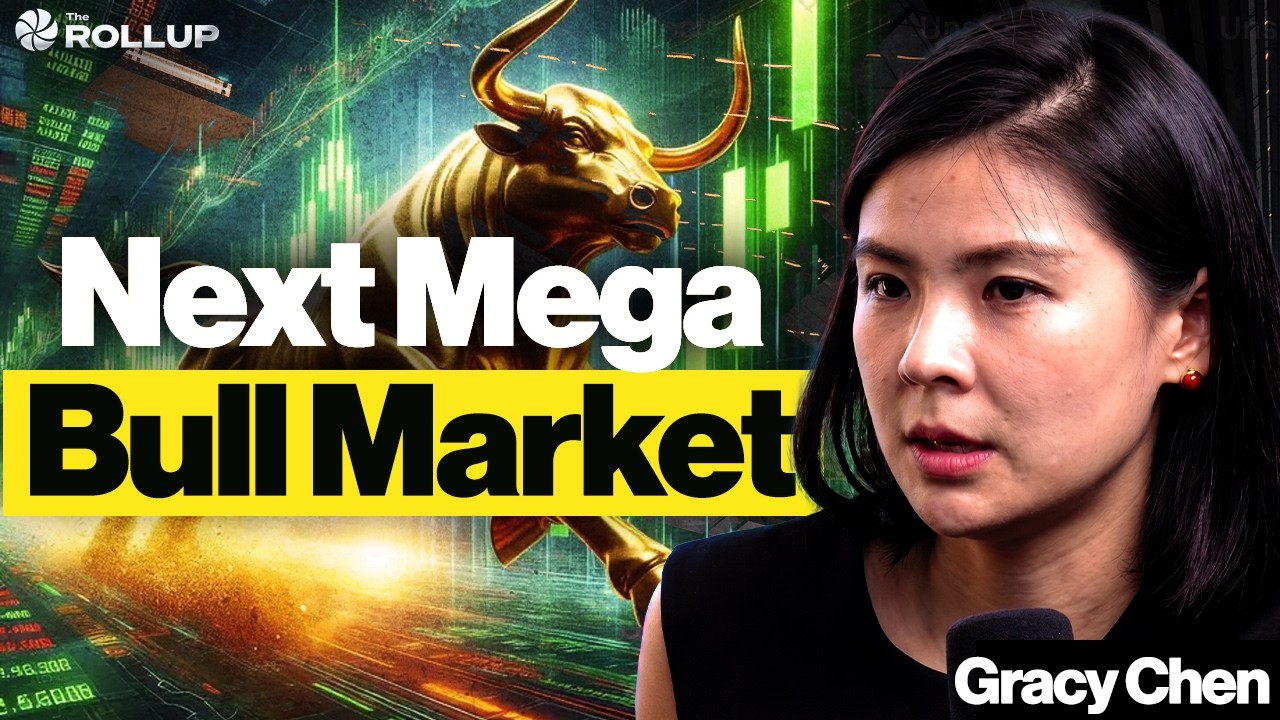
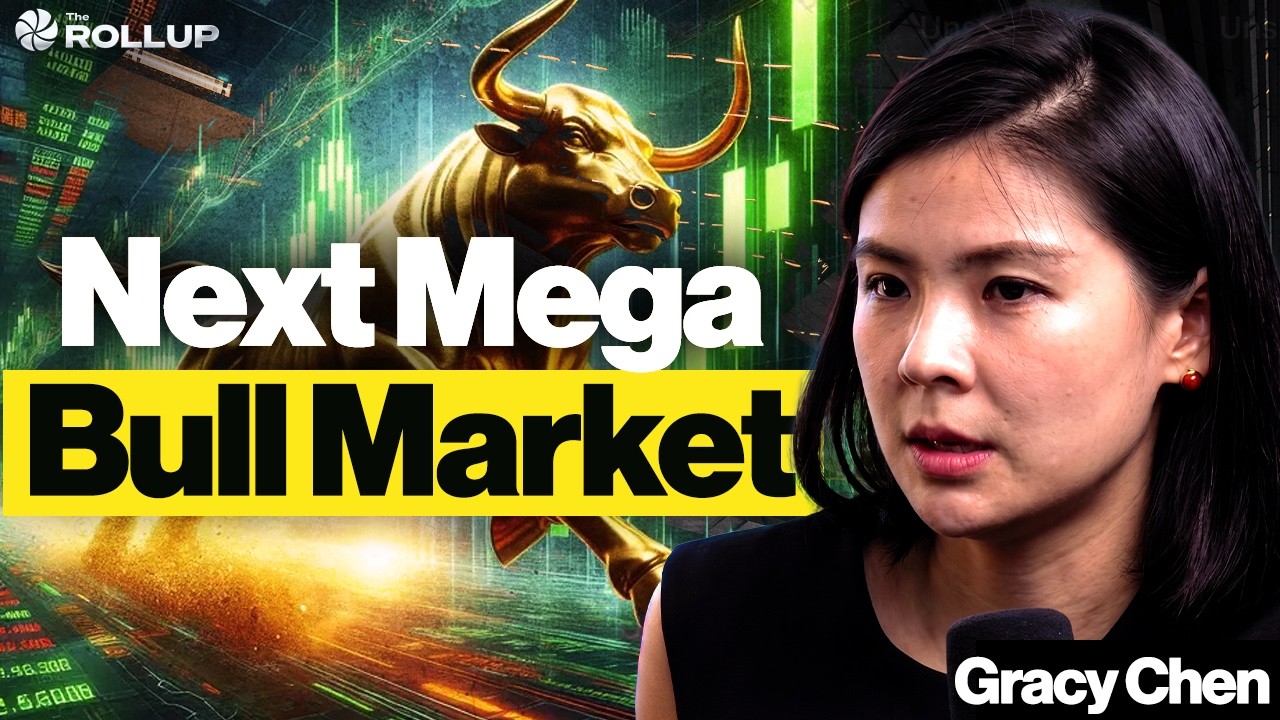
Guest: Gracy Chen, Bitget CEO
Host: The Rollup
Podcast Source: The Rollup
Original Title: Bitget CEO: Tokenization Is The Most Important Mega Trend in Finance (Full Thesis)
Broadcast Date: July 1, 2026
Key Takeaways
Bitget CEO Gracy Chen shared her core judgment on the industry transformation at the New York Tokenization Tower: crypto is no longer an alternative asset, but a penetration of underlying technology into traditional finance. She proposed a "10% Blueprint"—in a private exchange with BlackRock COO Rob Goldstein, she predicted that by 2030, the penetration rate of tokenized assets in various traditional financial assets will climb from the current 0.01%-0.5% to 10%. This episode revolves around three core conflicts: how to clarify the relationship between tokens and equity, the route divergence between DEX and CEX, and whether perpetual contracts and spot tokenization are complementary rather than substitutive. Chen clearly stated that Bitget is transitioning from a crypto exchange to a "Universal Exchange" (UEX), and is considering an IPO path rather than continuing to rely on the platform token narrative.
Highlights
The 10% Blueprint for Tokenization
- "When I was having coffee with BlackRock COO Rob Goldstein in his Manhattan office, he asked me what RWA would look like by 2030. I said I have a 10% Blueprint—currently, the penetration of tokenized assets into traditional finance is extremely low, tokenized stocks are only 0.01%, private credit is about 0.5%, but by 2030, these should all reach 10%."
- "Crypto is finally no longer just that small group of people who only listen to your podcast and follow your Twitter—now we need to bring in Wall Street, traditional finance, big banks, lawyers, regulators, and even political figures."
Tokens ≠ Altcoins
- "A token is not just an altcoin like a shitcoin; it also includes tokenized assets. RWA has been a very important topic since 2025."
- "I don't want every project to be like a meme coin. Meme coins are naturally speculative assets—not to say they are worthless, but they are essentially speculative."
- "If more bad players only tell stories and narratives, this industry will die very quickly."
Divergence in Exchange Paths
- "Among the top ten exchanges, at least four or five are seriously pursuing the compliance route, getting licenses, and doing Big Four audits. At the same time, there are also exchanges that have chosen another path—completely DeFi, pure on-chain, altcoin markets with no KYC."
- "I don't want to get into those big lawsuits with the SEC or CFTC. I want to do compliant things."
The Clash Between Tokens and Equity
- "Many projects, especially those that can generate decent revenue and profits, may not want to issue tokens at all, but instead take the formal IPO path, list on larger markets, and obtain better liquidity and investor exposure."
- "We used to have the platform token BGB, but it has been transferred to Morph for Layer 2 public chain management. Bitget itself is considering an IPO path."
Who Wins the Tokenization Wave
- "Exchanges certainly have a say, but not every one of them—only those who truly see this vision and invest resources and manpower to build."
- "Stablecoin issuers will be the second beneficiary group—whether USDT, USDC, or USD Gold, stablecoins are becoming an important payment and trading medium for all asset classes on exchanges."
- "I am more optimistic about Solana's development in RWA—it cooperates more closely with regulators and big banks; Ethereum is also in it."
Opening: The Token Dilemma and Industry Transformation
Host: Welcome back to Tokenization Tower. Today we're discussing the debate between tokens and equity, and our guest is Bitget CEO Gracy Chen. Gracy, welcome.
Gracy Chen:
Glad to be here.
Host: Bitget is one of the exchanges that has served global customers the longest, covering crypto assets, commodities, stocks, etc., and is expanding towards a "Universal Exchange." Today I want to focus on the current state of digital assets—we've probably been in a bear market for eight or nine months, and in every bear market tokens are considered bad, no one wants to hold tokens. But this time is a bit different; we've gone through various types of tokens, and we've seen a large number of retail users suffer losses due to unreasonable token structures, insiders, market makers, and other issues. Now token holders are beginning to demand investor rights like equity holders. From your perspective, compared to previous bear markets, how is the token market reconstructing itself now?
Gracy Chen:
From 2025 to now, I think the biggest shift is—when you talk about crypto, it's no longer just an alternative asset class. It's about blockchain, about the underlying technology that has the potential to disrupt trillion-level traditional financial markets.
Similarly, when you talk about tokens, as you said, many altcoins are indeed losing momentum, prices are either falling all the way or like a roller coaster—there's likely market manipulation behind that. But tokens are not just altcoins like shitcoins; they also include tokenized assets. RWA has been a very important topic since 2025, and Bitget is at the forefront of this—we already listed tokenized stocks and commodities last year.
Now we not only provide crypto, but also forex, stocks, ETFs, even bonds and money market funds, as well as pre-IPO stocks. We partnered with Republic Crypto to list SpaceX's pre-IPO stocks—that was in April, allowing retail users to capture gains before the stock went public.
This is the real revolution I see in this industry—crypto is finally no longer just that small group of people who only listen to your podcast and follow your Twitter; now we need to bring in Wall Street, traditional finance, big banks, lawyers, regulators, and even political figures. They are all very important stakeholders in this industry.
What Token Investors Are Demanding
Host: I think this shift is very fundamental—we are shifting from thinking about the existing two or three trillion crypto market and the 150 billion TVL in DeFi, to facing millions of trillions in assets即将 about to go on-chain. This shift also changes the type of investors. New investors have completely different demands for tokens—before I might buy a token because of some narrative, saying a bank might put it on its balance sheet. But now token investors are demanding revenue, demanding value flow back to the token, demanding a clear and transparent framework between tokens and equity. They examine assets from the perspective of "what exactly am I holding"—as a token holder, am I a first-class citizen? How do you view this shift in token economic structure, and how new institutional-level RWA investors plus a more friendly regulatory environment are driving investors to re-examine tokens?
Gracy Chen:
You asked a lot, I'll try to cover it.
When you say tokenized assets, it's not just tokens in the sense of altcoins—it also includes tokenized stocks. We do see many projects, especially those that can generate decent revenue and profits, they may not want to issue tokens at all, but instead take the formal IPO path, list on larger markets, and obtain better liquidity and investor exposure. Or like us—we used to have the platform token BGB, but it has been transferred to Morph for Layer 2 public chain management. Bitget itself is considering an IPO path. This shift is very critical in the current industry.
Even just for altcoin-level token listings, as an exchange we are also very cautious. In the past week or so, the only token we listed was an RWA token. This shift is happening between exchanges, retail buyers, and project founders—we need to focus more on high-quality projects.
I started actively pushing this about two years ago. At that time people didn't care much, I publicly reminded everyone on Twitter to be wary that many altcoins might just be market manipulation, meme coins are naturally speculative assets—not to say they are worthless, but they are essentially speculative. I don't want every project to be like a meme coin. It shouldn't be like that. In terms of investor protection and tokenomics, now is a very interesting point in time—there are indeed some projects striving to be transparent, sharing a lot of on-chain and off-chain data with the community, building something truly meaningful. There are also more bad players who only tell stories and narratives, without truly creating value—if such players become more numerous, this industry will die very quickly.
The Two Paths for Exchanges
Host: You mentioned the clash between tokens and equity—many projects with equity structures and token structures are thinking about how to merge the two. You mentioned Bitget has BGB, and is also considering an IPO. I have such a prediction: some tokens may eventually be phased out, and then replaced in the form of tokenized equity; or find a way to merge company/foundation equity with existing tokens. As a company that has both tokens and is considering an IPO, how do you view the fusion of these two worlds?
Gracy Chen:
This is indeed a difficult problem. All exchanges that issued platform tokens four or five years ago face the same problem.
The current market practice is—hand over the token to a Layer 2 public chain or public chain to manage, just like OKX's platform token was handed over to X Layer, our BGB was handed over to Morph Foundation. Then the exchange itself goes the compliance route—find Big Four audits, get licenses in various jurisdictions: Europe's MiCA, Dubai's VARA, America's MTL and broker-dealer, etc.
We do see the top ten exchanges starting to diverge on these two paths—at least four or five are seriously pursuing the compliance route, getting licenses, doing audits, and being transparent to regulators and the public. I firmly believe we should cooperate with governments and regulators, do compliant KYC/AML, do more user protection, and be transparent—especially if we list in three years.
As for the role of BGB, it now belongs to Morph Foundation—Morph is a company we invested in and incubated. These issues are complex and need careful navigation.
But there is another interesting trend—immediately after the interview I'm going to NASDAQ. NASDAQ, NYSE, these largest stock listing platforms, are also seeking tokenized stocks or even more crypto-native ways of issuance. These conversations are still relatively early, they need a lot of support from regulators like the SEC, but that future looks very exciting.
The "10% Blueprint" and the Ultimate Direction of Tokenization
Host: What does that future look like specifically?
Gracy Chen:
I have a "10% Blueprint," which I shared with BlackRock's COO Rob Goldstein. Last time I was in New York, we had coffee in his Manhattan office, and he asked me: "Gracy, what do you think RWA will look like by 2030?"
I said: Currently, the tokenized versions of all traditional financial asset classes—money market funds, real estate, stocks, private credit, etc.—their penetration rate relative to traditional finance is still extremely low. Private credit is about 0.5%, tokenized stocks are only 0.01%. But by 2030, my judgment is that these should all reach 10%. So all discussions surrounding tokenized traditional financial assets are still very early—we need to continue building on the current foundation to drive adoption and drive my 10% Blueprint to 落地.
Host: We have always had similar judgments—millions of trillions in traditional assets will have 10 to 20 trillion on-chain in the next 5 to 10 years. But who wins? If the tokenization thesis is correct, what companies, what protocols, what platforms, what infrastructure capture the most value? You just talked with BlackRock, they obviously also believe in this direction. So who wins?
Gracy Chen:
This is the first time I've been asked the specific question of "who will be the winner in three or four years."
Different ecosystem participants will play a role in this trend. As an exchange, of course I will say exchanges have a say—exchanges are the markets connecting users, assets, liquidity providers, and institutions. But not every exchange can win—only those like us who see this vision, truly invest resources and manpower to build good products. Those exchanges that choose to only do crypto, only serve small communities unwilling to do KYC, may not be suitable partners for the future of RWA.
The second beneficiary group is stablecoin issuers and providers. Two days ago Visa and others launched the Open USD network, which directly knocked Circle's stock price down quite a bit—but anyway, these stablecoin participants will be important. We now allow users to use stablecoins like USDT, USDC, USD Gold, etc. to trade all asset classes, stablecoins occupy an important share in both payments and trading.
The third group is projects building protocols and public chains—I am more optimistic about Solana's development in RWA, it cooperates more closely with regulators and big banks. Ethereum is also in it.
There is another most important group: communities and retail users. When these users gain access to all valuable assets through universal exchanges like ours, they can do the best portfolio management—for example, we now allow users to use RNVDA (Reality's tokenized Nvidia stock) as margin to trade perpetual contracts or trade other stocks and Bitcoin. This improves capital efficiency, users have more choices, can access 24/7 or at least 24/5 markets, and have more freedom in jurisdictions. We allow users in dozens of countries to access tokenized US stocks—these might be completely inaccessible in their own traditional financial markets.
DEX vs CEX and Perpetual Contracts
Host: On the exchange side, perpetual contract platforms are indeed rapidly listing real-world assets—whether on the DEX side like Hyperliquid, Lighter, etc., or on the CEX side like you and other platforms with pre-IPO perpetuals, traditional commodities, stocks, indices, etc. CZ was recently asked about Hyperliquid when talking with people from Galaxy, he said their advantage is no KYC, and then he said he hopes they have good lawyers, said he himself has been to prison and doesn't want to go again. Gracie, what do you think about Hyperliquid?
Gracy Chen:
Whenever I talk about Hyperliquid, whether positive or negative, I attract a lot of backlash. So I decided not to comment on Hyperliquid specifically.
But overall, DEX and CEX—or what we call UEX—will continue to be a polarized pattern in narrative and role. Some people just like DEX, like not doing KYC. We as a CEX do not serve US customers—at least not now. The situation will change after we launch our US website and dedicated US app at the end of this year. This is also one of the reasons I come to New York frequently this year—to do US market expansion.
But we want to go the compliance route, do formal KYC/AML, avoid getting into those big lawsuits with the SEC, CFTC. I don't want to touch that kind of thing.
Host: Perpetual contracts as a whole are returning to the US—CFTC, Michael Saylor talked about this on CNBC, the competition for onshoring perpetual contracts is happening. Someone asked: are perpetual contracts and spot tokenization complementary or conflicting? Spot tokenization is one-to-one ownership, perpetuals only need an oracle—do you think these two are complementary or substitutive?
Gracy Chen:
I think they are complementary. Perpetuals and spot have coexisted in crypto exchanges for ten years, people trade both in different scenarios.
For example, myself—I don't have time to do day trading, but for certain tokens or stocks I am very bullish and want to hold long-term, then I will only trade spot rather than futures. Futures have funding rates, there is the risk of liquidation, leverage is higher so returns are higher but risks are greater.
As an exchange, we provide both spot and perpetuals, we always have. Perpetuals are synthetic oracle-driven data, supporting the entire market operation. We see the same pattern in stock listings—at least under the offshore exchange setting.
In the long run, perpetual contracts will not replace the one-to-one ownership relationship of spot tokenization. However, in the US market, this is an important issue of continuous evolution—CME only started listing single-stock futures in recent weeks, trading perpetual stock futures in the US is still a very new thing, but in offshore markets we have been doing it for ten years.
Host: To be honest, US users just hang a VPN to trade these.
Gracy Chen:
But they can't trade here with us, because we still have to do KYC.
Industry Identity Crisis and Future Outlook
Host: Almost at the end—you're going to NASDAQ soon. When you joined Bitget in 2022 (Bitget was founded in 2018), the crypto industry was still very small, very liberal, anti-Wall Street. Now the industry has a bit of an identity crisis—on one hand we have handed over a lot of identity to traditional finance, on the other hand the dynamics between tokens and equity make us realize there are actually not many high-quality assets in crypto, we need to redefine what high-quality assets are, make these assets investable, while bringing traditional assets on-chain. In the 8-month bear market, there is a huge emotional gap between institutions' considerations of this technology and ordinary investors. Against this background, how have your judgments on digital assets changed in the past year or two? What is your updated cognition of where this industry is heading?
Gracy Chen:
How the industry will be in the next few years—I'll answer that last question first, because we just talked about 2030.
My 10% Blueprint is a good representative—RWA, stablecoins, payments, true product-market fit, the fusion of crypto and traditional finance, and AI, these will be the trends for the next phase.
Regarding the identity crisis, this term is interesting, and you are absolutely not the first person to talk to me about this this year. There have already been dozens of similar conversations.
But my feeling is—this is how things should be. Whether you like it or not, it will develop this way. Just like in the AI era some people have an identity crisis—I am a carbon-based human, not silicon-based, when AI can do things faster and better than me, where is my value? There is a common truth behind these conversations: when an industry or the world is evolving rapidly, you cannot stop these trends.
You cannot stop the trend of RWA, nor can you stop the trend of AI. You can only choose to follow the trend, ride the wave, become an important player, and do something amazing. This is how I handle the identity crisis.
As Bitget, we also closely monitor these trends, think about our positioning, how to serve users, how to run this marathon together—this is not a sprint. Running an exchange is not a sprint, running a project is not a sprint. You must have a long-term mindset to build something great.
And if you have this mindset, I think now is the best time, New York is the best place—you can really do something amazing. Sometimes I feel we are in an era similar to the early 20th century when J.P. Morgan pioneered the financial revolution—and the core of this wave of revolution is tokenization. We have a good position and opportunity to stand on this wave—let's do something together.
Join TechFlow official community to stay tuned
Telegram:https://t.me/TechFlowDaily
X (Twitter):https://x.com/TechFlowPost
X (Twitter) EN:https://x.com/BlockFlow_News
 深潮TechFlow