NVIDIA Kyber Delayed to 2028, Winners and Losers in the Industry Chain
TechFlow Selected TechFlow Selected
NVIDIA Kyber Delayed to 2028, Winners and Losers in the Industry Chain
The delay changes the pace, and incidentally rewrites the list of winners.
 Navigating Web3 tides with focused insights
By: TechFlow Research
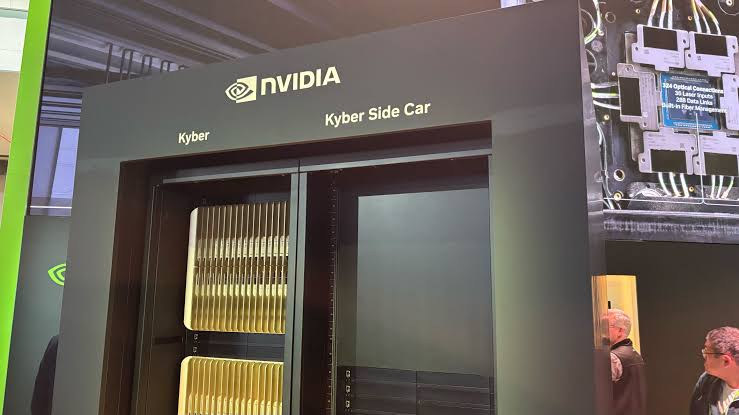
July 6, semiconductor research firm SemiAnalysis released a report: The Kyber NVL144 cabinet personally demonstrated by Jensen Huang at GTC 2026 encountered a major setback only three months after its unveiling, with deployment delayed by over 12 months to 2028. The supporting NVL72x2 back-to-back cabinet architecture was directly cancelled, thereby compressing Rubin Ultra's NVLink expansion domain.
This news became the single largest source of negative sentiment for the tech sector today.
Viewed in isolation, this is a product delay. Extending the timeline to 30 days reveals a clear curve of retreat.
June 10, SemiAnalysis released a report to institutional clients, pointing out that mass shipment of NVIDIA's native 800VDC power architecture is delayed to after 2028, and CPO (Co-Packaged Optics) mass production may be delayed to 2028 or even 2029. The US stock optical communication sector plummeted in response, with AAOI falling as much as 17% in a single day, Lumentum down about 8%, and Himax, Navitas, and Wolfspeed under pressure simultaneously.
June 30, SemiAnalysis spoke up again: The four-chip version of Rubin Ultra, highly promoted at GTC 2026, was cancelled due to manufacturing execution risks and changed to a dual-chip design, with actual computing power and memory bandwidth about half of the original version. Behind this is TSMC's CoWoS-L advanced packaging hitting physical limits at the four-chip, multi-reticle scale, with the succeeding CoPoS not expected to mass produce until late 2028 at the earliest.
July 6, it was Kyber's turn. Three reports, three retreats.
What is Kyber, and Why is it So Difficult?
Kyber is the next-generation cabinet architecture designed by NVIDIA for the Rubin Ultra and subsequent Feynman generations. Its core move is to rotate the compute tray 90 degrees and insert it vertically into the cabinet, like books on a bookshelf, then replace tens of thousands of copper cable connections inside the cabinet with a single orthogonal backplane PCB. According to the initial specifications at GTC 2025, single cabinet power consumption is as high as 600 kW, supported by a brand new 800VDC power system.
This backplane is the most difficult PCB to manufacture in the entire industry. According to Jefferies' research report, it requires 78 layers of M9-grade material; and according to industry observers' teardown of the GTC 2026 exhibition machine, the connector pin count on a single mid-plane exceeds 10,000, and the total cabinet NVLink pin count exceeds 87,000. Bending any single pin could scrap the entire board. Only two or three suppliers globally have the mass production capability for this specification.
Jefferies actually warned as early as June 22: The Kyber backplane PCB solution is highly likely to be delayed to 2028, or completely cancelled in the worst case, and based on this, downgraded the global AI PCB market size forecast for 2027 and 2028 by 5% and 11% respectively, and CCL (Copper Clad Laminate) by 8% and 16%. On June 23, compounded by rumors such as "NVIDIA requested PCB manufacturers to reduce prices by 10%" which were later debunked, the A-share and HK-stock PCB sectors saw panic selling. Today's SemiAnalysis report effectively put a confirmation stamp on this warning.
The cancellation of NVL72x2 means NVIDIA has abandoned the transitional solution of splicing two cabinets back-to-back to expand the NVLink domain. Rubin Ultra will likely retreat to the mature Oberon architecture (i.e., NVL72 form) in 2027, with expansion capability returning to the previous generation's framework.
Jensen Huang once emphasized externally that NVIDIA is the first tech company in history to announce a four-generation product roadmap at once. The intention of early announcement was to leave sufficient preparation time for the supply chain: data center site selection, power supply renovation, and liquid cooling solutions all require lead investments measured in years.
The side effects concentrated this year: the roadmap itself became a tradable asset. The market priced the entire industry chain based on the timeline on the PPT, optical modules modeled by CPO penetration rate, PCB valued by backplane volume release rhythm, and power supply manufacturers scheduled production based on the 800VDC switch timing. When physical laws took back these promises one by one, every correction corresponded to a sector-level repricing. In the past 30 days, the optical communication, PCB, and power supply sectors experienced this process in turn.
Winners and Losers in the Industry Chain
Delays change the rhythm, and incidentally rewrite the list of winners.
Copper cable manufacturers received a "reprieve". The Oberon architecture lifecycle is extended, and copper cable demand originally planned to be replaced by backplane PCB is retained. Connector manufacturers such as Amphenol are listed as relative beneficiaries in SemiAnalysis' framework, and Vertiv and Legrand also received relatively positive assessments.
The logic for upstream materials is the hardest. The supply tightness of fiberglass cloth and CCL has nothing to do with Kyber; it is driven by industry-wide demand, and CCL prices have risen four times in half a year. Kyber's delay only changes the demand structure, not the total demand volume; pricing power remains in the hands of material suppliers.
The PCB manufacturing side bears the most direct pressure, among which manufacturers stuck in the middle are in the worst situation: High-end players have technical depth and customer stickiness and can follow specification upgrades; low-end capacity has cost advantages; mid-end manufacturers can't reach either end, and the elimination race is accelerating.
The time window for the optical communication and CPO industry chain has shifted backward overall. Sidecar shipments relying on the Rubin Ultra and Kyber platforms are deferred to the 2028 window. SemiAnalysis maintains a cautious stance on Lumentum, Himax, Navitas, and Wolfspeed, while noting that some NPO (Near-Packaged Optics) projects may accelerate inversely.
The greater narrative impact is on NVIDIA itself. The halving of Rubin Ultra specifications combined with Kyber's delay has led some analysts to interpret it as a signal of wear on NVIDIA's performance moat, with AMD and Google TPU ecosystems named as potential marginal beneficiaries.
This assertion currently lacks sufficient evidence, but the fact that it is entering mainstream discussion is itself a change.
Follow up on two confirmation signals: Whether NVIDIA will directly respond to the Kyber and Rubin Ultra timelines at the next earnings conference call; whether order guidance from Taiwanese ODM and PCB manufacturers shows structural adjustments.
It also needs to be noted that the delay and cancellation information involved in this article comes from third-party channels such as SemiAnalysis and Jefferies; NVIDIA official has not yet confirmed. Supply chain information has historically had the possibility of repeated corrections. NVIDIA network business executives have previously made optimistic statements on the CPO timeline contrary to third-party research. Before the official stance lands, treat this as a high-probability scenario, not an established fact.
Join TechFlow official community to stay tuned
Telegram:https://t.me/TechFlowDaily
X (Twitter):https://x.com/TechFlowPost
X (Twitter) EN:https://x.com/BlockFlow_News
 @chaoxiangooo