Nvidia, AMD, and Qualcomm CEOs Gather in Taipei: Whether Your Chips Can Be Sold Depends on Taiwanese Assembly Plants
TechFlow Selected TechFlow Selected
Nvidia, AMD, and Qualcomm CEOs Gather in Taipei: Whether Your Chips Can Be Sold Depends on Taiwanese Assembly Plants
What Should You Watch at Taipei Computex?
 Navigating Web3 tides with focused insights
Author: Tim Culpan
Compiled by: TechFlow
TechFlow Intro: This year’s Computex has drawn the largest-ever contingent of overseas tech CEOs—but they’re not here for show. This article reveals an overlooked truth: the fate of chipmakers is not decided by brand-name OEMs like Dell or HP, but by Taiwan-based supply-chain engineers who design modules, thermal solutions, and system integration. Understanding this bottom-up power structure is key to grasping how the tech industry truly operates.
Good evening from Taipei—Computex opens tomorrow (Tuesday, June 2), and this annual trade show is hotter than ever before.
Recently, people have asked me what makes this year’s Computex different—and why it suddenly feels so popular. The answer? Nothing’s changed. I’ve attended every year since 2000, and the show itself has remained virtually unchanged.
What has shifted in recent years is the world’s renewed fascination with computers—and its sudden realization that Taiwan dominates this industry. This year, servers—the massive, unglamorous black boxes—have entered mainstream conversation and cultural discourse in unprecedented ways.
This is my guide to Computex: how to attend efficiently, and how to understand what’s *really* happening behind the scenes at the world’s most important computer expo.
Computex’s origin story is embedded in its name: Computer Expo. Even as global interest in computers has waxed and waned, this annual event has stayed true to its founding mission.
Over the years, the rise of consumer electronics, gaming consoles, and smartphones made computers seem dull. Yet the show never strayed from its core purpose: a stage for computer manufacturers to showcase desktops, laptops, servers, motherboards, cables, peripherals—and every other component of the PC ecosystem.
The official exhibition runs Tuesday through Saturday of the first week of June. Monday isn’t part of the official schedule, though some companies host events then. Saturday is the final day—and open to the public. I recommend avoiding Computex on Saturday.
Computex consists of three main parts:
- Keynote speeches
- Forums
- The exhibition floor
Keynotes
Keynotes are where executives pitch their companies, ecosystems, and latest products. Remember: Computex’s target audience is engineers, product managers, supply-chain procurement specialists, and global sourcing directors—people who speak the language of soldering, motherboard design, bus speeds, and thermal thresholds.
For years, Intel reserved one of its major annual chip launches for Computex. AMD did the same. VIA Technologies once became a Computex hero—and Intel, the villain—when it literally burst VIA’s balloon (yes, literally—I’m not joking). Graphics chipmakers ATI and Nvidia relied heavily on Computex to introduce niche products to highly specialized audiences.
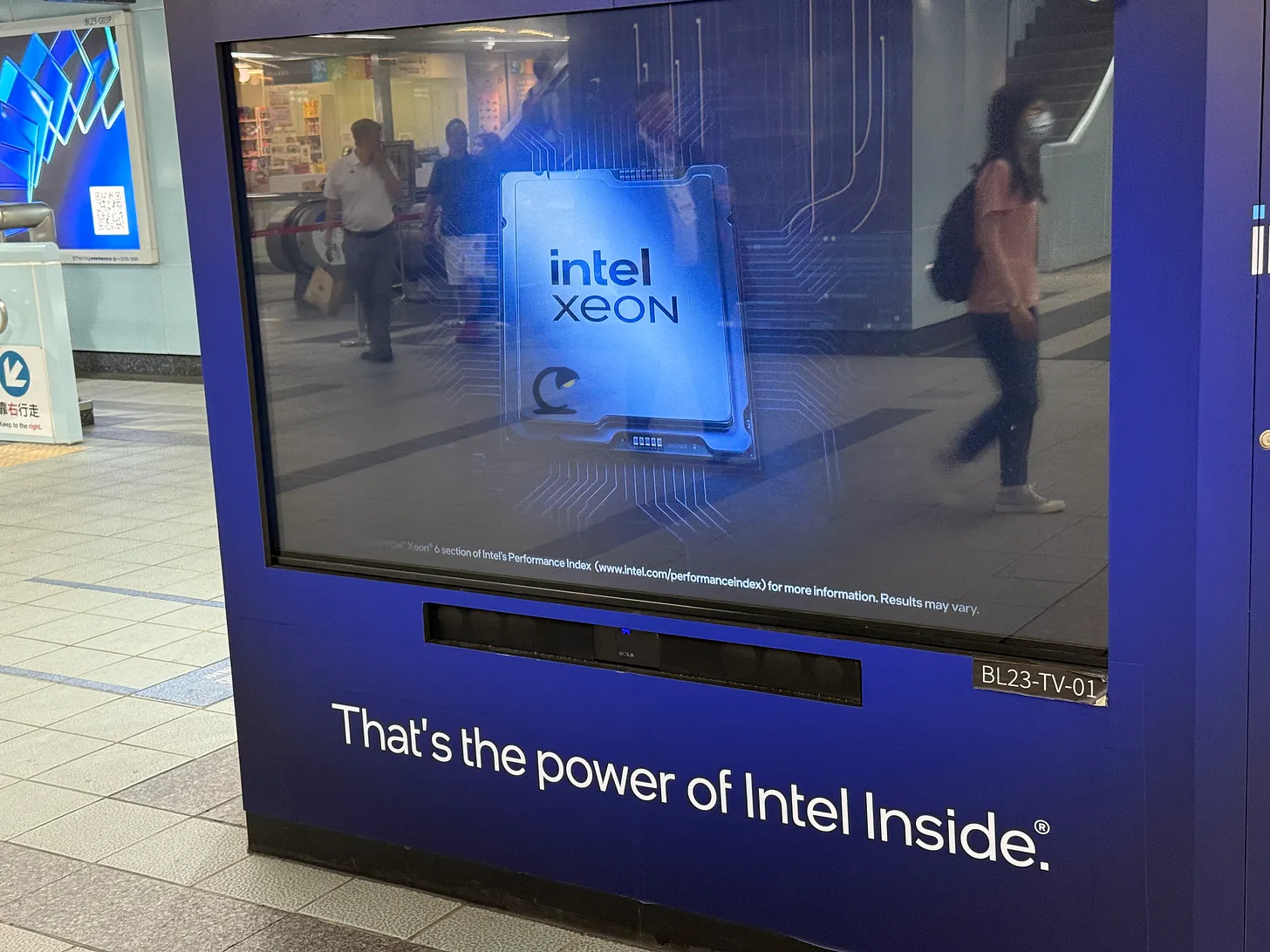
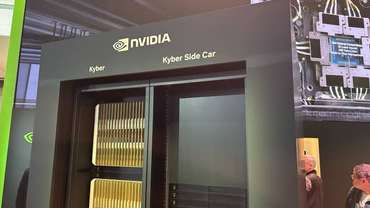
Major brands occupy prime marketing real estate around the exhibition hall perimeter
Photo: Tim Culpan/Culpium
Computex has always been—and remains—the premier computer expo.
Hence, Intel’s CEO typically delivers a keynote, and one or two other executives may also take the stage. A handful of foreign CEOs usually make up the full roster of international headliners, while local leaders like ASUS’s Jonney Shih or Acer’s Gianfranco Lanci carry the Taiwanese flag. Regional or vice-presidential executives from global giants often serve as corporate ambassadors.
This year, Computex attracted the largest number of overseas CEOs I can recall, including:
Qualcomm: Cristiano Amon
Intel: Lip-Bu Tan
Arm: Rene Haas
AMD: Lisa Su
NVIDIA: Jensen Huang
Marvell: Matt Murphy
NXP: Rafael Sotomayor
Computex’s significance doesn’t stem from these tech CEOs coming to Taipei. Quite the opposite—they come to Taipei *because* Computex matters so much.
Global industry leaders travel to Taipei to kiss the ring of tech power.
I include AMD’s Lisa Su on this list—even though she arrived in Taipei before Computex and wasn’t there specifically for the show itself. NVIDIA’s Jensen Huang, meanwhile, didn’t officially appear at Computex—at least not on the official schedule. His Monday GTC keynote fell outside Computex’s official program.
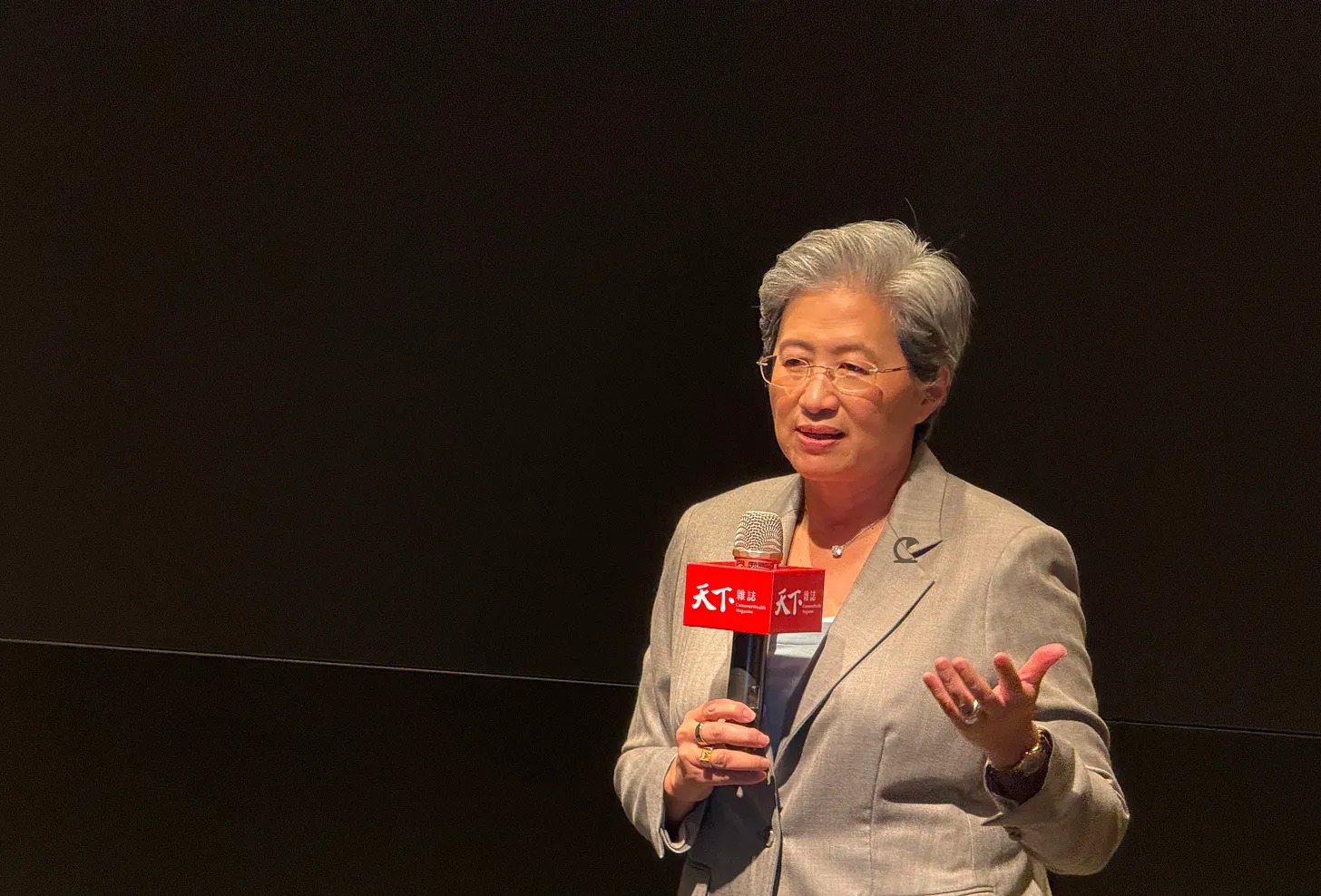
AMD CEO Lisa Su addresses journalists after speaking at Compute 100 ahead of Computex in Taipei
Photo: Tim Culpan/Culpium
Yet this illustrates precisely the point: So many executives recognize just how vital Computex—and Taiwan more broadly—is to their business that they bend over backward to squeeze into an already packed calendar. They want to make major announcements while the world watches—and then meet critical stakeholders behind closed doors to forge relationships that will make or break their businesses over the next 12 months.
The real action doesn’t happen during keynotes. All news naturally flows from embargoed interviews and press releases timed precisely to coincide with executives’ appearances onstage.
Forums
Since keynotes are thoroughly covered by media, press releases, and social media, your time may be better spent attending smaller, hyper-specialized forums. For example, Craig McDonnell, Managing Director of ABB Robotics, is hosting a forum this year on industrial-grade physical AI for robotics. If that’s not your thing, consider Google DeepMind’s Ed H. Chi discussing the future of personalized general-purpose assistants. There are many more such sessions—and companion events like Innovex, which focuses on startups and emerging enterprises.
Companies use these forums to promote their visions and ecosystems—and also sit in the audience to learn what competitors and partners are doing, and to exchange business cards. I guarantee you’ll learn more and build higher-quality connections from a few carefully selected forums than from attending every single keynote.
The Exhibition Floor
I’m always surprised to see Computex visitors schedule their departures for Wednesday or Thursday. But if you don’t know where the real treasures lie, this choice is understandable—after all, most other trade shows really do run out of steam in their final days.
Yet the most exciting action happens neither on keynote stages nor in forums. It unfolds across the exhibition floor—in VIP 3x3 booths, in invitation-only hotel suites, and in meeting rooms inside tech company offices across Taipei’s Nangang and Neihu districts near the Taipei Nangang Exhibition Center.
Many companies—including local tech firms and local branches of foreign multinationals—mark Computex as a “closed date” on their calendars, prohibiting leave or travel to ensure full attendance.
Overseas customers are the lifeblood of Taiwan’s industry—especially its tech sector—and local partners prepare meticulously for this annual pilgrimage. Seasoned attendees come because they understand something many visitors miss: winning over the PC ecosystem is essential to capturing market share among end customers.
The tech ecosystem is far more bottom-up than most imagine. Foreign customers bring money—but local suppliers bring talent and relationships.
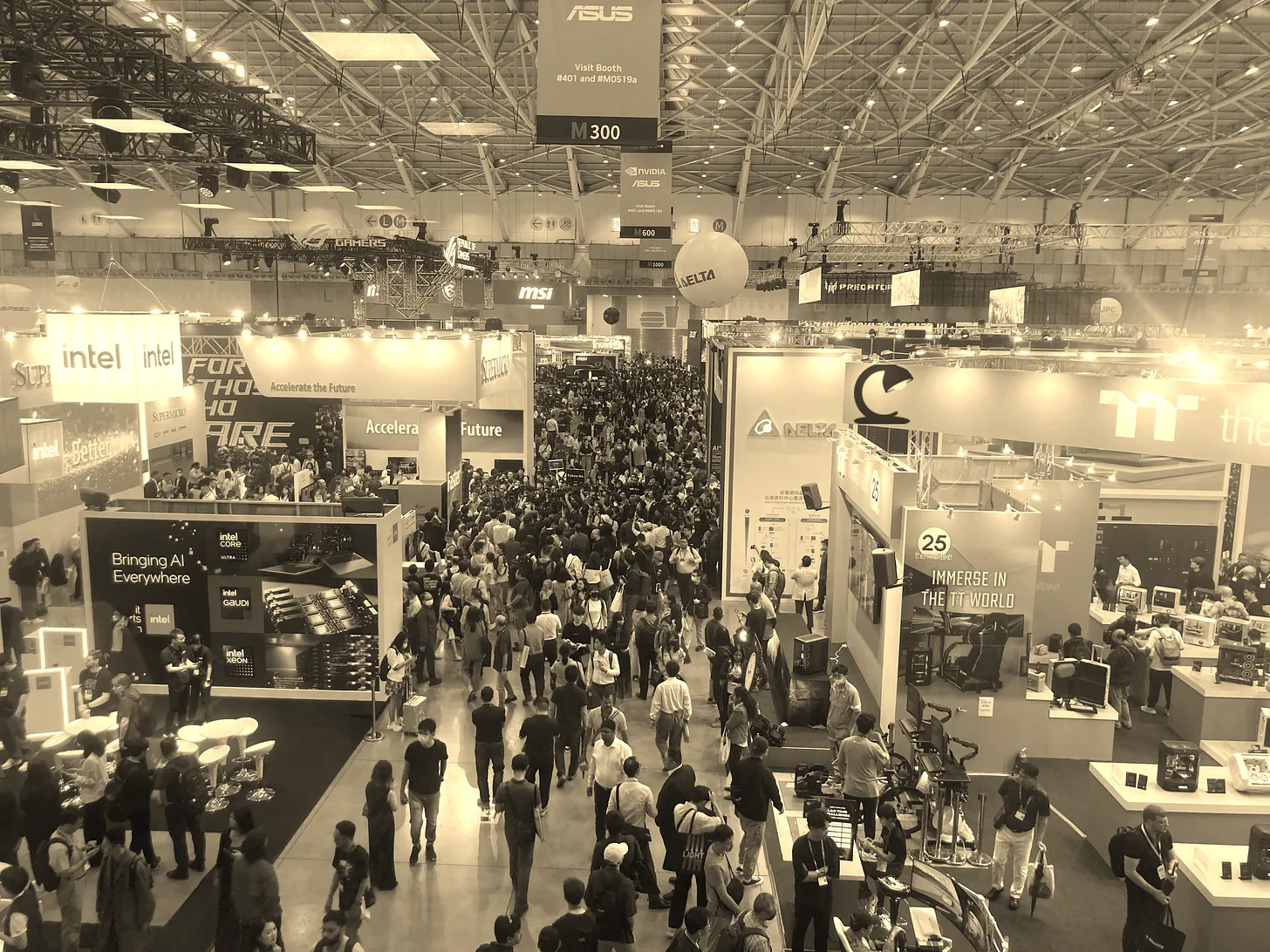
Just another trade show? Perhaps not.
Photo: Tim Culpan/Culpium
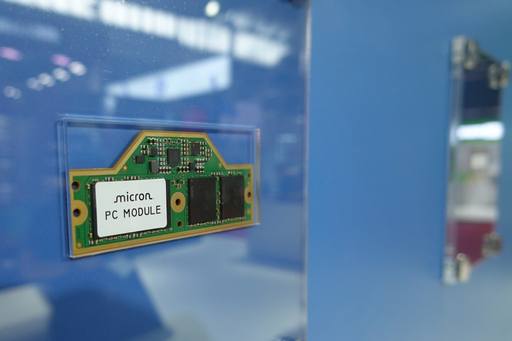
A module manufacturer unwilling to design circuit boards around your chip won’t become an advocate for your product. A thermal management or mechanical parts supplier unwilling to invest time learning your specs and building to them won’t have ready-to-deploy solutions when system integrators need them.
And a system integrator unwilling to invest time and resources developing systems integrating your product—partly because upstream suppliers haven’t prepared components—won’t even bother showing it to branded PC OEMs.
While Dell, HP, Lenovo, Acer, and ASUS decide what products to sell, at what specs and price points, they’re powerless if the rest of the ecosystem lacks interest.
A little-known reality is that system integrators and their suppliers make many critical product and engineering decisions *before* presenting anything to branded customers. These choices determine whether your component is taken seriously—or relegated to obscurity as yet another under-shipped oddity.
Though many components are manufactured in Korea, Japan, China, or even the U.S., the real decision-making authority lies with Taiwan’s hardware community. An uninterested system integrator—or a baffled, exhausted module manufacturer—can kill your product before it even leaves TSMC’s wafer fab. This isn’t conspiracy—it’s cold, hard pragmatism.
Tech cycles are short. Margins are thin. Technical barriers are high. The only speed at which this industry can operate is fast—and doing so demands collaboration between competitors and partners alike. As Lisa Su recently said in Taipei about her rivals: “We’re all friends—we grew up together.” Bringing new products to market carries enormous risk for every manufacturer potentially involved in production.
The exhibition floor—and the hidden backrooms—are where these relationships evolve. It’s on these booths that niche manufacturers of heat sinks, high-speed cables, or multilayer PCBs showcase their offerings—and then listen as existing or prospective customers share engineering challenges, outline sales forecasts, and seek advice on delivering products on impossible deadlines and razor-thin margins.
Got ideas? Please share.
For large companies like Intel, AMD, NVIDIA, Qualcomm, and Marvell, being absent from these conversations signals that your chips are being rejected by the very people building final products. Likewise, failing to show up and support these manufacturers pushes them toward suppliers willing to do so.
As in any industry, relationships and interoperability matter. What makes tech hardware unique is that physical product manufacturing must keep pace with product development cycles operating at tech-speed.
Computex offers a rare window into this ecosystem—you just need to know where to look.
Join TechFlow official community to stay tuned
Telegram:https://t.me/TechFlowDaily
X (Twitter):https://x.com/TechFlowPost
X (Twitter) EN:https://x.com/BlockFlow_News
 @tculpan