JPMorgan Research Report Analysis: AI Panic Narrative Has Not Run Its Course, Mid-August Is the Entry Window
TechFlow Selected TechFlow Selected
JPMorgan Research Report Analysis: AI Panic Narrative Has Not Run Its Course, Mid-August Is the Entry Window
The AI alarm has not been lifted yet. Before mid-August, bottom-fishing AI semiconductors is high-risk.
 Navigating Web3 tides with focused insights
By: Rita
TechFlow Guide
The Philadelphia Semiconductor Index (SOX) has fallen approximately 19% since hitting a historical high on June 22, approaching the 20% bear market threshold. AI is still falling, and JPMorgan says: Do not rush to buy the dip yet.
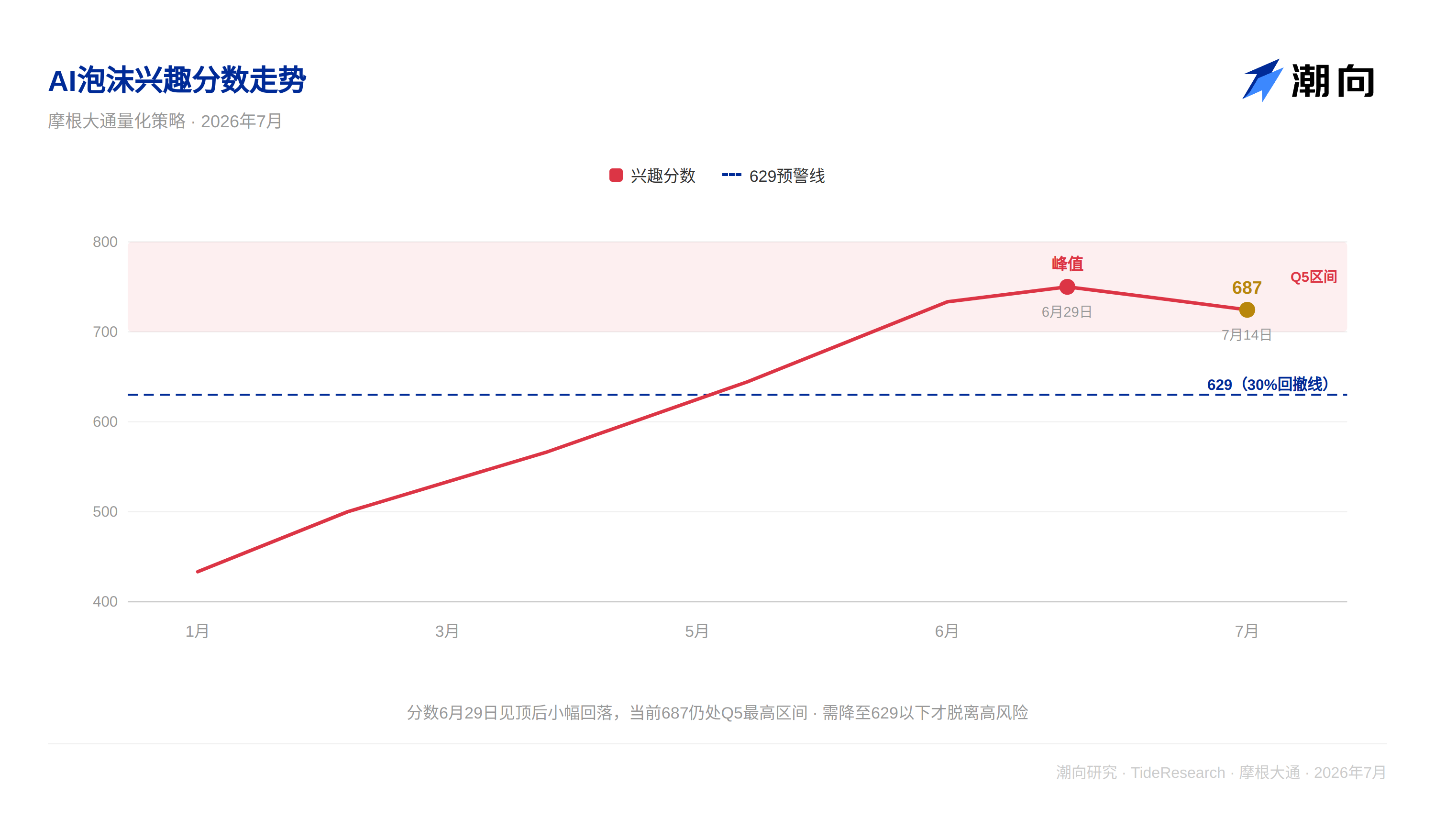
This judgment comes from the "AI Bubble Interest Score" constructed by JPMorgan's quant team, which tracks how hot the global media discussion on the AI bubble is. The score peaked on June 29 and is now declining. According to historical patterns, this narrative cycle from hot to cold takes about 1.5 months, earliest hitting the low point by mid-August.
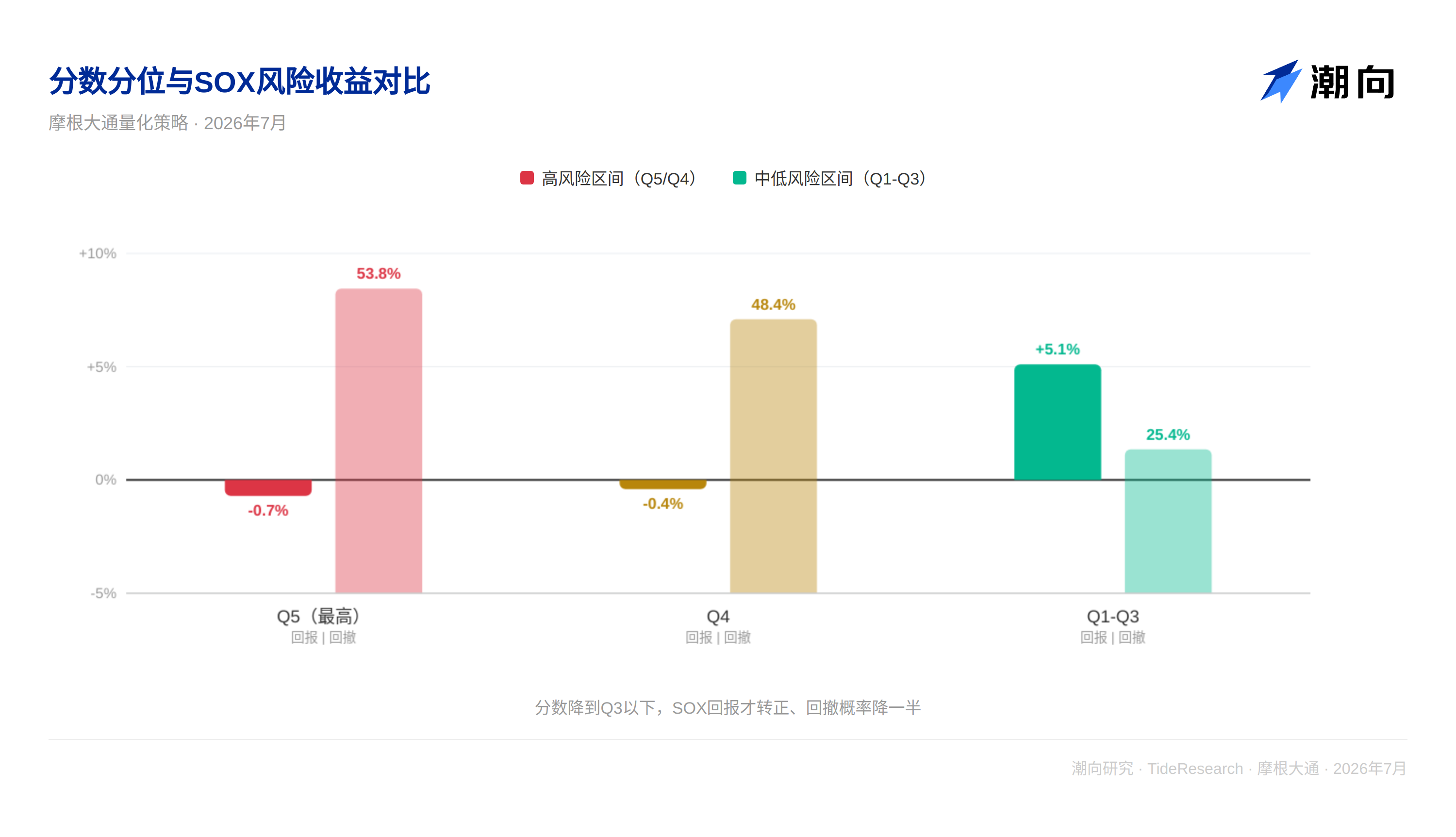
The problem is that the absolute value of the score is still at 687, standing at the highest quintile in history. Even if it starts cooling down now, as long as it remains in the high range, the probability of the SOX experiencing a drawdown of more than 8% in the next 20 days is still 53.8%.
JPMorgan's quant model states it plainly: The AI alert has not been lifted. Before mid-August, buying the dip on AI semiconductors is high risk.
How the Alarm Works
JPMorgan tracks narratives, not stock prices. This score counts the number of negative reports on the AI bubble in global media; the more reports, the more anxious the market, and the higher the score.
Historically, the cycle for this anxiety to subside is very regular: from peak to trough averages 43 trading days, about 1.5 months. This peak appeared on June 29, and calculated by historical rhythm, it will earliest bottom out around August 12.
But this score depends on two things: direction and level.
The direction is going down, which is good, but the level is wrong, still at 687, standing at the highest quintile in history (Q5). JPMorgan backtested all past samples; when the score is in the Q5 range, the average return of SOX in the next 20 days is -0.7%, with a drawdown probability of 53.8%. Only when the score falls to the medium-low range does the average return turn positive (+5.1%), and the drawdown probability drops to 25.4%.
In other words: The alarm is turning, but not yet lifted.
Three Specific Thresholds Given by JPMorgan
JPMorgan translated "alert lifted" into three specific numbers:
- Score falls below 629: SOX drawdown probability drops to 30%
- Falls below 560: Drawdown probability drops to 25%
- Falls below 418: Drawdown probability drops to 20%
Current score 687. To fall to 629 requires a drop of 8.5%, to 560 requires a drop of 18.6%, to 418 requires a drop of 39.2%.
JPMorgan suggests entering in two phases: the first phase around 629, the second phase around 560. Before this, every rebound may be pressed back by narrative panic.
What Stage Is It Now: Japanese Stock AI Positions Are Almost Cleared, But US Stock Panic Has Not Run Its Course
The situation with Japanese stocks is different from US stocks.
Position adjustment for Japanese AI momentum stocks is nearing completion. The Nikkei 225 was dragged down by semiconductors, but TOPIX futures remain strong, with funds flowing from semiconductors to banks, finance, and materials. CTAs (Commodity Trading Advisors) still hold long positions on TOPIX futures.
The situation with US stocks is closer to the "narrative" stage. The SOX has fallen approximately 19% since hitting a historical high on June 22, approaching the 20% bear market threshold. But the score is still at 687, indicating market anxiety mainly comes from the narrative that "the AI bubble is about to burst," with position issues being secondary.
JPMorgan used historical data to highlight a key difference: When the score starts declining but remains high, the drawdown risk for SOX is still very high. The real condition for a rebound is not "AI is good again," but when the topic of "AI bubble" cools down completely, that is when one can truly buy the dip.
TechFlow Perspective
The most useful information in this report is turning the vague market sentiment of "AI bubble" into three actionable numbers: 629, 560, 418.
For US stock investors, the quant alert has not been lifted; now is not the time to add positions. You can use this framework to monitor; only when the score falls below 629 should you start considering entering in batches. Before this, use PUTs or defensive sectors to hedge.
For A-share investors, sentiment in the A-share AI sector is more fragile, and the domestic AI sector (such as optical modules, servers) has higher volatility. JPMorgan's "two-phase entry" strategy can be referenced, but needs adjustment combining domestic policies and domestic computing power logic. The August earnings period may be a key window for the Chinese AI ecosystem to regain the lead.
The long-term logic of AI has not changed. But the short-term quant alert has not been lifted yet.
Disclaimer
This article is a compilation and interpretation by TechFlow Research of a third-party broker research report (JPMorgan, July 16, 2026). The ratings, target prices, earnings forecasts, and related judgments cited in the text are the views of the broker's analysts, representing only their institution's stance, not representing the views of TechFlow Research, nor constituting any investment advice.
The market has risks, decisions must be independent. This article should not be used as a basis for buying or selling any securities.
Join TechFlow official community to stay tuned
Telegram:https://t.me/TechFlowDaily
X (Twitter):https://x.com/TechFlowPost
X (Twitter) EN:https://x.com/BlockFlow_News
 @chaoxiangooo