Podcast Notes | Conversation with CZ: Don't Think About Exiting Crypto; If I Started From Scratch, I Would Still Build an Exchange
TechFlow Selected TechFlow Selected
Podcast Notes | Conversation with CZ: Don't Think About Exiting Crypto; If I Started From Scratch, I Would Still Build an Exchange
You won't exit the Internet, won't exit AI, and shouldn't exit crypto. It is technology, not a speculative chip.
 Navigating Web3 tides with focused insights
Organized & Compiled: TechFlow
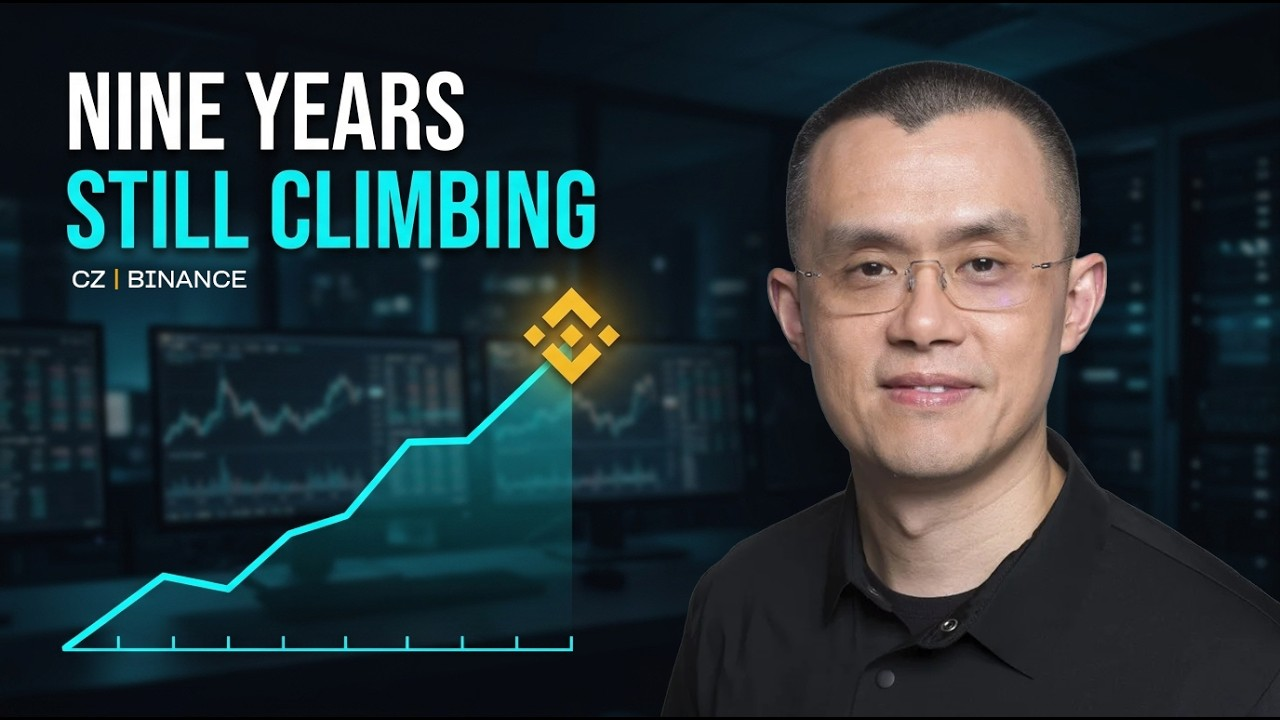
Guest: CZ (Changpeng Zhao), Binance Founder, Former CEO
Host: Jacquelyn Melinek, Talking Tokens Podcast (Strata Media)
Podcast Source: Talking Tokens Podcast
Original Title: Binance Founder CZ on what it took to build the world's largest crypto exchange and stay #1
Broadcast Date: July 16, 2026
Disclosure: CZ is the founder and major shareholder of Binance. This episode involves overall trends in the crypto industry and Binance platform development, so views inevitably carry bias.
Key Takeaways
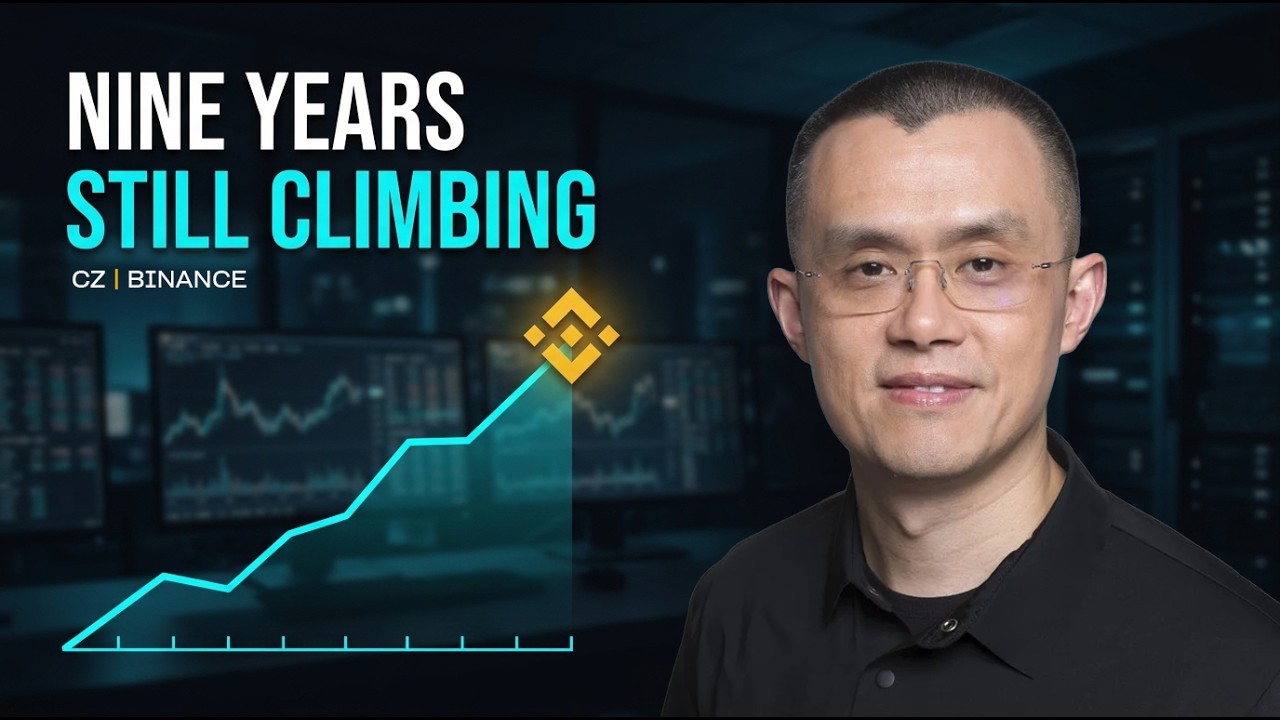
Binance celebrates its ninth anniversary. CZ accepted a brief interview with Talking Tokens at a Binance event. He reviewed the rough state of the exchange industry when he started his business in 2017, admitting that his biggest blind spots at the time were legal compliance and international politics. Binance reached the top globally within five months of launch. CZ attributes this to product experience, user protection, and the luck of catching the ICO wave.
The most forward-looking part of the interview lies in the intersection of AI and crypto. CZ judges that AI agents will start completing payments for humans within months (rather than years), and cryptocurrency is the "native currency" of AI agents. He also believes that crypto penetration rate calculated by wealth is less than 1%, and the industry's biggest misunderstanding is treating crypto as a speculative asset rather than underlying technology. After stepping down from the CEO position, CZ admits he missed the rise of stablecoins back then and is now spending a lot of time researching RWA and tokenization.
Highlights of Key Views
On Startup Review
- "I would tell my younger self: spend more time learning compliance, learning politics. Before 2017 I was just a technical person, focused on making products, protecting users, but I underestimated the importance of the legal aspect."
- "The second suggestion is to run faster. Binance's futures contracts were launched two years after going online. If I could do it again, I would do it much earlier."
- "Within the first five months we achieved number one globally, and stayed in this position every day since."
On Community
- "If you treat the community well, they will follow you to the ends of the earth."
- "Companies will be attacked by regulation, law, geopolitics, communities are almost immune to these. Communities will even fight back for you."
On Crypto Perception
- "People treat crypto as a speculative asset, always thinking about when to exit. You won't exit the internet, won't exit AI. Crypto is the same, it is a technology."
- "Calculated by wealth, crypto penetration rate is probably less than 1%. The market is far from saturated."
On AI × Crypto
- "AI will sooner or later handle payments for us. Now AI can search for the best hotels and flights, but cannot place orders for you yet. This capability will come within months, absolutely no need to wait years."
- "Once AI starts trading, it will need a native currency. Using credit cards is too clumsy, cryptocurrency is the natural choice."
- "Crypto payments are AI's biggest unlock point. Others like training data verification, those are still far away."
On Security
- "AI will completely change the security landscape. It can find vulnerabilities, useful for both developers and hackers. In the short term there will be some attack incidents, but in the long term systems will become safer."
- "The latest Anthropic Methuselah model is extremely powerful, I hope soon there will be a version for developers to use to harden systems."
On Financial Integration
- "There should not be a distinction between crypto finance and traditional finance. Just like you wouldn't say postal mail and email are two systems, ultimately there is only one financial system."
- "Which country doesn't want its stock market open to the globe? Tokenization is just a matter of time."
Main Text
Nine Year Lookback: Exchanges in 2017 Weren't Good Enough
Jacquelyn Melinek: This year is Binance's ninth anniversary. Before founding Binance, you also worked at large exchanges. Looking back at the 2017 market and your state at that time, what problems in the exchange industry do you think no one solved well that made you have to come out and do it yourself?
CZ: My entire career before starting a business was doing order execution and exchange systems. Looking at the exchange industry in 2017, I felt products could be better, technology could be better, matching engines could be faster, security could be higher, customer service could be more complete. Exchanges back then didn't really put users first. I felt there was definitely room for improvement. Of course we were also lucky, caught a wave of ICO hype, rode that market trend.
Jacquelyn Melinek: Do you think CZ in 2017 and CZ in 2026 are the same person?
CZ: Laughs. Different. Much older, but not necessarily smarter. Experienced more challenges, let's put it that way. A lot happened in nine years, mindset and body are both different.
Jacquelyn Melinek: If you could give yourself in 2017 one piece of advice, what would you say?
CZ: Knowing what I know now, I would tell my younger self: spend more time learning legal compliance, learning politics. Before 2017 I was just a technical person, focused on making products, protecting users, but I underestimated the importance of the legal aspect. I didn't understand international law well enough either, didn't know some US laws have global jurisdiction, and have long lookback periods. This is the first suggestion I give myself.
The second suggestion is to run faster. There were many products I hesitated whether to launch at the time. Looking back, entrepreneurs should push products to market as early as possible to get feedback. For example, Binance's futures contracts were launched two years after going online. If I could do it again, I would do it much earlier.
Reached Top in Five Months: Product, Mission, and a Bit of Luck
Jacquelyn Melinek: Binance surpassed dozens of exchanges and quickly reached the top. Was it in the first year or the second year?
CZ: First year. Within the first five months we achieved number one globally, and stayed in this position every day since.
Jacquelyn Melinek: Reaching the top is easy, holding it is hard. What do you attribute this to?
CZ: There are many factors to a company's success. Products must be good, customer service must be good, more importantly there must be a mission. Our mission is to increase the freedom of currency, one of the core values is protecting users. Protecting users helped us hold the position after becoming number one.
Of course 2017 also had a luck component. That year was the first year of ICOs. We were a new exchange, natively supported ICO listings quickly. Most other exchanges were still Bitcoin exchanges, some of the largest US exchanges hadn't even listed Ethereum at the time. We caught the industry turning point. But competition was also fierce, Bittrex and Poloniex were both giants at the time. We had good products and services, plus user protection done well, these items were all indispensable.
Community is More Resilient Than Company
Jacquelyn Melinek: Binance's ninth anniversary theme is "Built by You". How do you describe the community culture you want to create?
CZ: Nine years ago crypto was still a very niche industry. When we started Bitcoin was about two or three thousand dollars. User base was small, but very loyal, all early adopters, knew the product inside out. They knew we protected them, so followed their hearts, followed the money.
As the community grew, Binance always protected users with concrete actions. Many volunteers contributed to the Binance ecosystem, some were called Binance Angels, some didn't even have formal titles. The whole platform is really community-driven, "Built by You" is saying this.
Jacquelyn Melinek: You said communities are sometimes more resilient than companies. What can communities do that companies cannot?
CZ: If you treat the community well, they will follow you to the ends of the earth. Companies will be attacked in various ways, especially centralized companies, regulation, law, geopolitics will all come knocking. Communities are almost immune to this kind of attack, because it is distributed, and in our case spread globally. It is very hard to launch an effective attack on a globally distributed community. Communities will also fight back for you, volume on social media is often larger than mainstream media. Communities have huge power that can be mobilized.
Crypto Penetration Rate Less Than 1%: Biggest Misunderstanding is Treating Technology as Speculation
Jacquelyn Melinek: In today's market, what can make a product that users come back to repeatedly?
CZ: Products in any industry can be improved. Today's fiat on/off ramp friction is still very high. Whoever can achieve lower fees, lower friction, cover more regions, has the advantage.
Stablecoins too, the most popular ones don't give users interest, those that give interest are hard to trade. If there is a stablecoin that gives good interest and can be traded freely, that is an improvement point. RWA tokenization is still very new, truly tokenized stocks are only a few, and US-centric. Why don't other countries want to tokenize their stock markets, let the globe participate? Calculated by wealth, crypto penetration rate is probably less than 1%. We are still in the early stages.
Jacquelyn Melinek: We have talked about "the next billion users" for many years, but don't even have the first billion yet. What do you think is the industry's biggest misunderstanding about mainstream adoption?
CZ: Many people treat crypto as a speculative asset, not underlying technology. Bought Bitcoin and think about when to exit. You won't exit the internet, won't exit AI. Crypto is the same, it is a technology. Crypto blockchain will stay, is one of the three foundational technologies in my life, the other two are internet and AI. I suggest people look at projects for long-term prospects.
AI Agent Payments: Will Come Within Months
Jacquelyn Melinek: Where will the two worlds of AI and crypto truly intersect?
CZ: AI will sooner or later handle payments for us. Now AI can help you search for the best hotels and flights, but cannot place orders for you. This capability will come within months, absolutely no need to wait years. Once AI starts trading for people, it will need a native currency. Using credit cards is too clumsy, cryptocurrency is the natural choice.
Traditional fiat payments are okay domestically, but cross-global payments are very poor. You will see more and more global citizens, need to pay people on the other end of the earth, need to book tickets in different regions, crypto payments are much more convenient. Crypto payments are AI's biggest unlock point. Others like blockchain for training data verification, those are still far away. AI companies are big, profitable, and high valuation, won't care too much about decentralization for now.
Jacquelyn Melinek: Do you think crypto payments are a near-term thing, or three to five years later?
CZ: I guess one to two years. Once people start using AI to pay via crypto, they will find it much faster. And early adopters in crypto circle and early adopters of AI overlap heavily.
AI Changes Security Landscape: Harden Systems with Strongest Models
Jacquelyn Melinek: How does AI affect Binance's internal operations and crypto infrastructure?
CZ: I view AI like the internet. Can you say you don't use the internet? That's probably not a good idea. Every company, every person should use AI to the fullest, but cannot abuse it. AI is very good at helping people write code, find errors, do code analysis, also very useful in design and video. But don't let AI do everything, we live in a human world, people still want human touch. AI is good in creativity, but original creativity is still stronger in humans.
Jacquelyn Melinek: Besides payments, where else will AI change crypto?
CZ: AI will completely change the security landscape. AI is very good at finding vulnerabilities, developers can use it to quickly discover system weaknesses. The latest Anthropic Methuselah model is extremely powerful, I hope soon there will be a version for developers to use to harden systems. In the short term there may be some hacking incidents, but in the long term systems will be much safer.
Additionally blockchain throughput is not enough, need faster, larger capacity chains to reduce usage costs. AI will play an important role in accelerating this development. There is also a more fundamental trend: AI will push us towards a more digital world, ten or even a hundred times deeper than what the internet achieved. The more digital, the more digital currency is needed. Paper money concept is already outdated, AI will push us past that tipping point.
Perspective After Stepping Down: Missed Stablecoins, Now Eyeing RWA
Jacquelyn Melinek: You stepped down from CEO to a different role now. After stepping down, looking at the industry, are there any different discoveries?
CZ: Perspective is indeed different. When CEO everything revolved around Binance, twenty-five meetings a day, various problems kept popping up, vision was actually very narrow. Now forced to step back a step, instead can look from the industry overall. Have time to learn new things, learn AI, learn biotech, in crypto field can also understand new directions more deeply.
When CEO I actually missed stablecoins. I thought stablecoins were just a transition technology at the time, used to bridge between exchanges. Turns out it grew big. Now I spend a lot of time looking at RWA and tokenization, also giving governments advice in this area. To be honest, stepping down actually makes learning new things faster.
If Starting from Zero: Would Still Do Exchange
Jacquelyn Melinek: If you started from zero today, no Binance, no reputation, only your experience, what would you choose to do?
CZ: If building something new, I can only choose things I understand. My experience points to only one direction: doing exchanges. Laughs. I always tell people, need to find what you are good at, what you are interested in, what is valuable to others, the intersection of these three. What I am good at is trading systems, if going to lead an AI team, probably a disaster.
Jacquelyn Melinek: Do you think traditional finance, on-chain finance and trading ecosystem will eventually merge into one?
CZ: Definitely. There should not be a distinction between crypto finance and traditional finance. Just like you wouldn't say postal mail and email are two parallel systems. Today most people sending messages already don't use postal mail. Crypto blockchain is just a new technology of the financial system. Because it is new, so first formed a niche field, but integration is already happening. Stocks tokenized on chain, traditional banks and financial institutions are also using blockchain. Ultimately there will not be two parallel lines, only one financial system.
Jacquelyn Melinek: CZ, thank you very much for your time, congratulations to Binance team on ninth anniversary.
CZ: Thank you, thanks for the invitation.
Join TechFlow official community to stay tuned
Telegram:https://t.me/TechFlowDaily
X (Twitter):https://x.com/TechFlowPost
X (Twitter) EN:https://x.com/BlockFlow_News
 深潮TechFlow