








CZ’s New Interview: 76 Days in Prison, a Presidential Pardon—Yet I Still Dedicate 80% of My Energy to Blockchain
TechFlow Selected TechFlow Selected
CZ’s New Interview: 76 Days in Prison, a Presidential Pardon—Yet I Still Dedicate 80% of My Energy to Blockchain
For nearly everyone on Earth, $90 million is more than enough… but I believe $10 million is sufficient to achieve financial freedom if one lives an ordinary life.
 Navigating Web3 tides with focused insights
Compiled & Translated by TechFlow
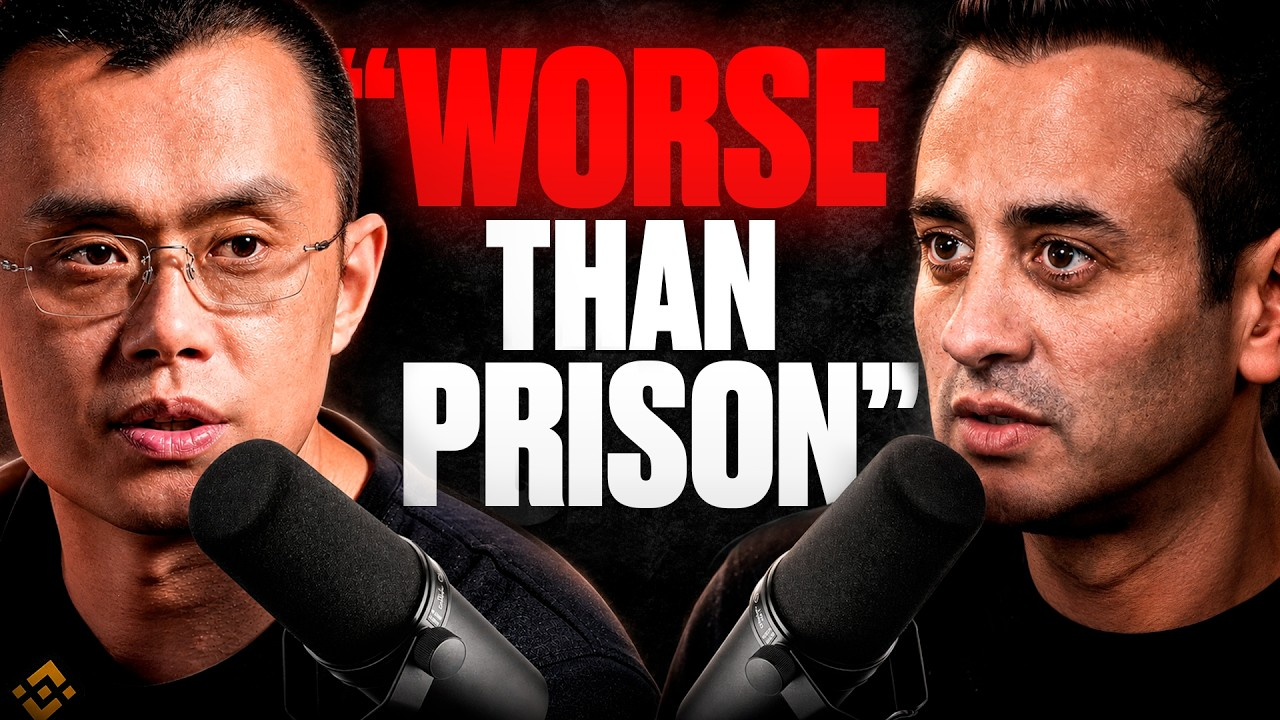
Guest: CZ, Founder of Binance
Host: Ran Neuner, CNBC Crypto Trader
Podcast Source: Crypto Banter & Crypto Insider
Original Title: CZ Life Before and After Prison, Crypto’s Future & The Freedom Of Money
Air Date: May 9, 2026
Key Takeaways
In this exclusive interview, Ran Neuner engages in an in-depth conversation with Binance founder CZ, exploring his new book The Freedom of Money (the English edition of Binance Life), his prison experience, the pardon process, family relationships, and the future of the crypto industry. CZ recounts writing his book while incarcerated in a U.S. prison, navigating uncertainty, and redefining life priorities. He also explains why he still devotes 80% to 90% of his time and energy to blockchain—believing that the AI Agent era will spawn a financial transaction network vastly larger than today’s, with blockchain likely serving as its indispensable settlement rail. Finally, CZ reflects on wealth, children, investment, health, and legacy: money is not the end goal; what truly matters is using one’s abilities and resources to improve the world.

Key Insights Summary
On the 76-Day Prison Experience and Mental Transformation
- “I started writing in prison, where I had plenty of time but very limited access to the outside world. I had no internet—only a very rudimentary terminal, accessible for just 15 minutes at a time before being automatically logged off. That terminal didn’t allow copy-paste, so everything had to be typed manually.”
- “Newspapers wrote that I was the wealthiest person ever to enter a U.S. prison—and the only person ever imprisoned solely for violating the Bank Secrecy Act. So my lawyer warned me before I went in: ‘You’re a prime target for extortion.’”
- “No one in U.S. history has ever been imprisoned solely for violating the Bank Secrecy Act—not then, and not even today. I am the only one, the first and only. So I’m unique—and they treated me uniquely. I don’t know what other ‘special treatment’ might follow.”
- “In the book, I wrote that after release, I actually don’t care much about reputation—or even legacy. I don’t care how others see me. What matters is how I see myself when I’m old.”
- “It’s crystal clear: it’s people—I miss my family, my children, my partner, and my friends. When everything is taken away, you discover exactly what you miss most.”
On the Pardon, Citizenship, and Commercial Competition in U.S. Crypto Regulation
- “To obtain the pardon, there was absolutely no deal involved. My lawyer made it extremely clear: ‘You don’t want to create more trouble just to get pardoned.’”
- “We faced intense lobbying, counter-lobbying, and reverse lobbying. Some of our competitors in the U.S.—other U.S.-based crypto exchanges—did not want me pardoned. They feared Binance’s return to the U.S. This was pure commercial competition.”
- “It had nothing to do with negotiations—I was invited to become a UAE citizen. … But I didn’t use UAE citizenship. I didn’t want to treat it as a tool to ‘hide here.’ In fact, receiving it motivated me even more to resolve things in the U.S., rather than rely on it.”
- “When I was convicted, one condition was that I could no longer operate Binance. After the pardon, that restriction disappeared for me personally—so I face no personal limitations. For the company, however, some restrictions may or may not remain.”
Business Reflection: CZ’s Biggest Business Mistake in Retrospect
- “If I could go back, I’d launch two platforms from day one: Binance US and Binance Global (binance.com), and block U.S. users entirely from the start. That would have avoided most of the trouble.”
- “U.S. users never exceeded 30% of our user base—across different phases, it was roughly 10%, 20%, or 30%. … We became profitable within three months—and highly profitable. So even losing 30%, we’d likely have survived.”
- “But I later learned that the U.S. looks back many years—it examines what you did long ago.”
- “I’m far more cautious in business now—but I won’t send every tweet to lawyers for review. … On the business side, I now involve more lawyers—that’s a lesson I’ve learned. Law is my weak spot; I have no legal background.”
Crypto × AI: Why the Crypto Rail Is Severely Underappreciated
- “Blockchain is money—the technology of money. We’ll always need money—and increasingly more of it, more efficiently and more freely.”
- “I still devote 80% to 90% of my time, money, and energy to blockchain. AI and biotech are great, but they’re not my expertise.”
- “Based on what I see today, Bitcoin still holds dominant position—and durability to maintain it. Nothing currently replaces Bitcoin.”
- “This isn’t just AI trading with AI—it’s one AI representing a person transacting with another AI representing someone else on the other side of the world. I see no alternative: such funds must be crypto.”
- “It will certainly far exceed $2 trillion—and far surpass today’s monetary system. The future monetary system will dwarf today’s.”
Wealth, Trust Structures, and the Hard Numbers Behind ‘Financial Freedom’
- “I won’t give my children large sums of money. For adult children, I tell them: if you want comfort for life, I’ll support you. But if you want luxury—sports cars, private jets, yachts, mansions—you’ll have to earn it yourself.”
- “I won’t leave them billions. I may leave tens of millions, structured via trust—distributed annually, with smaller amounts early on and larger amounts as they age. The logic: if they haven’t achieved much by age 45 or 50, they’ll receive more.”
- “I plan to deploy most of my money while I’m still alive. I don’t believe in ‘donating everything to charity at life’s end.’ That’s terrible capital allocation—you lose real control over it.”
- “For almost everyone on Earth, $90 million is enough… But I think $10 million enables financial freedom for an ordinary life. By ‘$100 million,’ I mean beyond that point, extra money makes no real difference—if you have $100 million yet claim unhappiness, believing $200 million would fix it, that’s madness—and it won’t work.”
- “Beyond $50 million, the difference is zero. If you cling to money for happiness, you’ll stay unhappy.”
- “When I’m old and bedridden, I hope to look back and say: I did my best to contribute to the world I entered. I want the world to be slightly better than when I arrived.”
YZi Labs’ Screening Logic and Elon Musk’s ‘Alien Theory’
- “I don’t chase shiny objects, flashy ‘great brands,’ or ‘genius new ideas.’ I focus on fundamentals.”
- “I seek people who genuinely believe in their mission—even without money. If you’re only chasing profit, you’ll stop at relative success, never becoming a historically great company. So it comes down to two things: capability and mission.”
- “I think Elon doesn’t care about money. My theory? He’s an alien trying to return to his home planet—and Mars is merely a stopover. Half-joke, half-serious.”
The Freedom of Money: CZ’s New Book Release
Host Ran Neuner: When was your new book, The Freedom of Money, written?
CZ:
I began writing it in prison, where I had abundant time but minimal external contact. I had no internet—only a crude terminal, usable for 15 minutes per session before automatic logout. Copy-paste wasn’t possible, so all text had to be typed manually—and deletions required full re-entry. Essentially, I dumped thoughts directly from my mind, emailing drafts to my assistant and a friend.
After release, it took roughly a year and a half to complete fully. I finished the manuscript in about six months, followed by multiple rounds of revision—each round a 400-page document requiring two to three weeks.
Host Ran Neuner: What goes through your mind before writing a book? Why write? You entered prison possibly anxious, fearful, stressed—why write a book as your first instinct? What were you thinking?
CZ:
Several reasons. First, I wanted to stay occupied in prison—writing was an ideal project, needing nothing but mental focus and output. So I constantly queued for computer access.
More importantly, writing a book is really writing to yourself—a dialogue with yourself, reviewing your life, reflecting on what matters, what’s meaningful, what’s unimportant, what’s interesting—and capturing it on paper.
After release, I also saw it as a natural turning point—a chapter closing. I originally planned to publish immediately upon release, but it took longer. In the following months, I applied for clemency, uncertain when it would arrive. When the pardon finally came, I was genuinely surprised—and realized it would make a perfect book epilogue.
Host Ran Neuner: Tell me what writing a book in prison felt like. You said you sometimes got computer access. Outsiders don’t know what prison is truly like—we only see movies. To write a book, do you use pen and paper? Is there only one computer? Can it access the internet? How does it actually work?
CZ:
Our unit housed 200 inmates, with four terminals—access required queuing. Each session lasted only 15 minutes. No internet: only a messaging app, pre-approved for up to 30 contacts. I had just two—my assistant and a friend.
So I used the terminal 15 minutes at a time. After logging off, I waited hours before re-queuing—typically accessing it three to four times daily. I also had paper and pen, jotting bullet points for the next session. Once online, I typed as fast as possible—this writing process lasted several months.
Host Ran Neuner: You spent four months there—was writing the book simply to keep busy? Did you count days—Day 1, Day 2, Day 3—while keeping your mind active?
CZ:
Approximately. Technically, I served 76 days in prison. Then I moved to a halfway house—allowed office access but restricted movement. I stayed there three to four weeks, followed by 14 final days back in custody—detailed in the book. During those last 14 days, I had zero access to anything, so no writing occurred.
Host Ran Neuner: What was the scariest part of prison? Entering—or something inside?
CZ:
Before entering, you truly don’t know what awaits. Newspapers labeled me the wealthiest person ever imprisoned in the U.S.—and the sole individual jailed solely for violating the Bank Secrecy Act. So my lawyer warned me: “You’re a prime target for extortion.” How do you protect against extortion? I didn’t know what form it might take—someone holding a knife or metal rod to your neck? How do you prevent it? I prepared extensively—causing immense psychological stress. The book barely mentions this.
But the intake process itself was also frightening. You walk into a unit—200 strong men staring at you. Yet most turned out reasonable—some criminals, some wrongly imprisoned, some detained too long.
Then came worry: Would they keep me locked up indefinitely? Find new charges? New pretexts? Especially after reaching the halfway house—where my final nine days should have shifted to home confinement. But on day 13 before release, police arrived, cuffed me, and returned me to detention. Detention centers are worse than prisons—temporary, barren, offering nothing. I wondered: Were new charges coming? The mental pressure was enormous.
Even on the day of scheduled release, I remained tense—on the plane, I didn’t relax until crossing U.S. airspace.
Host Ran Neuner: It sounds like you carry PTSD—or deep distrust—of this system. That distrust may stem from expecting not to be imprisoned, and the whole process feeling like rules shift unpredictably—no fixed game rules.
CZ:
Exactly. Any lawyer will confirm: No one in U.S. history has ever been imprisoned solely for violating the Bank Secrecy Act—not then, and not even today. I am the only one—the first and only. So I’m unique—and they treated me uniquely. I don’t know what other “special treatment” awaits.
Five days before sentencing, Senator Elizabeth Warren declared war on crypto. Under the Biden administration, a genuine crypto crackdown unfolded—creating massive uncertainty. As a unique case, I had no precedent to anticipate. Even my sentencing judge admitted he couldn’t follow precedent—he called me a unique case.
Host Ran Neuner: You’re a unique case. Outside, people recognize and respect you. What’s it like inside? When do inmates learn who you are? Do they respect you—or are you just another inmate with a number?
CZ:
Upon entry, a few recognized me—but didn’t approach. Fortunately, those who knew me read newspapers—relatively educated. Most inmates don’t read the Wall Street Journal, Bloomberg, or New York Times; they live their own lives and didn’t know me.
But soon, word spread that I was relatively wealthy. Most inmates receive no outside funds—truly impoverished. They must earn inside—making items, providing services, doing odd jobs. I received family support—$80–$90 biweekly, the prison’s maximum. That was already good for me. So they’d say, “This guy’s well-off”—and news traveled.
Some asked my crime—I said financial. Mention “financial crime,” and they instantly assume fraud. I tried explaining no fraud occurred—but they didn’t care. They saw relative wealth, so granted a certain respect—even without knowing who I was. Later, word spread further—not from news, but oral transmission.
Most Fearful and Most Rewarding Moments in Prison
Host Ran Neuner: What was the scariest thing you experienced in prison? A particular night, moment, or sight?
CZ:
I served a relatively short term—though it felt agonizingly long—with constant novelty and uncertainty. Once, a guard summoned me to a small room—gave no explanation—and left me sitting for two hours. Later, I learned I’d violated a dress code—wearing wrong clothes in the hallway. Such trivialities triggered sudden detention, no explanations—just two hours in a ~1m×1m room. These psychological games recurred.
I faced no physical threats or fights. I witnessed minor altercations—no knives. U.S. prison systems—at least mine—strictly control physical violence, but guards play psychological games—another matter entirely.
Host Ran Neuner: Did you make friends inside?
CZ:
Yes—I still keep in touch with two.
Host Ran Neuner: You make friends anywhere. What crimes did they commit?
CZ:
One robbed 12 banks. Former Cisco developer, carried a gun during robberies—sentenced to 45 years. Carrying a gun and contesting the case led to severe sentencing.
He read the Wall Street Journal, New York Times, and Bloomberg—subscribed to magazines in prison. His method intrigued me: lose a few thousand dollars poker one day—rob a bank the next noon. No research, no preparation. Wore same T-shirt for multiple robberies—linking cases for police. Never fired his gun—gentle, IT professional, Vietnamese, genuinely kind.
Host Ran Neuner: Were you angry in prison? Outside, you’re a major figure—inside, just an inmate, treated equally. That’s a huge adjustment. Used to importance, suddenly reduced to a number—uncomfortable. Did you feel anger or resentment?
CZ:
I didn’t care how I was treated—I actually wanted equal treatment. I hoped no one knew who I was—no special treatment. I just wanted to serve those four months. In prison, I didn’t want to be important—or run anything. I preferred being ordinary—that was actually beneficial.
U.S. federal prisons treated me normally—no special favors or punishments. Real stress came mentally—I just wanted it over, not extended, and back with family.
Host Ran Neuner: What did you miss most? Sitting in prison, what did you miss most?
CZ:
Crystal clear: people—I missed family, children, partner, and friends. When everything’s stripped away, you discover your deepest longing. You miss food, your bed, comfortable showers—but people most of all.
Host Ran Neuner: Was there a moment you thought: “Once out, I’ll change—spend more time with these people, less elsewhere”?
CZ:
Somewhat. I told myself: “After release, spend more time with family—I hadn’t before.” Also reduce time with random people. Some things you’d expect to miss—parties, events—aren’t missed at all. Nor luxuries.
Host Ran Neuner: Did you miss social validation—likes, shares, social proof?
CZ:
No—I seriously considered this. Post-release, I wrote in the book: “I don’t care about reputation—or even legacy. I don’t care how others see me. What matters is how I see myself when I’m old.”
Host Ran Neuner: Is that different from pre-prison?
CZ:
Essentially the same—but less clear before. Especially after stepping down as Binance CEO, I’d already begun reflecting: What’s next? What matters? What do I care about?
Host Ran Neuner: Did the prison experience bring any good? Obviously imprisonment isn’t good—but did it yield positive outcomes?
CZ:
Yes—some positives. Fundamentally, I grew stronger—exercised in prison and continued afterward. It clarified priorities—and changed how I act. It made me cherish life more.
Previously, I worked ~20 hours daily for six to eight years. It was fun.
Host Ran Neuner: Do you regret working 20-hour days—neglecting loved ones? Or do you credit those efforts for your current success?
CZ:
No regrets. It was a great experience—I enjoyed it. But I’m glad forced rest and redirection occurred. Life stages differ. I still work hard—but not like running Binance. No regrets—it was fantastic. I was younger, fitter—such sustained effort demands extreme physical resilience. Life stages naturally differ.
Host Ran Neuner: Do you miss that intensity now? I recall your Binance days—managing teams, European operations, legal issues. Today, you seem far more relaxed.
CZ:
I’m still quite busy—but significantly less. I engage with Giggle Academy—fascinating work solving diverse problems: boosting kids’ retention on learning apps, ensuring consistent return. YZi Labs makes many investments—reviewing projects, meeting founders. I also advise governments on crypto regulatory frameworks—time-consuming.
Post-Prison Life and Family Connection
Host Ran Neuner: Let’s unpack CZ’s life. Pre-“vacation,” I imagine 95% was Binance, 5% everything else. Now you seem more relaxed—and stronger. How do you allocate your current “100%”? Not necessarily time—mental bandwidth.
CZ:
Four main areas command roughly equal attention: Giggle Academy (education platform), YZi Labs, BNB Chain initiatives, and government advisory work. That’s work. Work occupies ~80–90% of my time; remaining 10–20% is family, relaxation, rest.
Host Ran Neuner: What do you do with family now—things you didn’t before?
CZ:
Simply spend more time with them. I can’t specify exact activities—but my philosophy is high-quality time: no phones, no multitasking messages while with them.
Host Ran Neuner: Do you feel guilt toward older children—insufficient time invested? How do you make up for it later?
CZ:
I don’t feel strong guilt—I believe everyone grows differently. Their environment is far better than mine was. Even with less time, I deeply care and support them—they feel it. Now adults, they face typical young-adult challenges—career prospects, financial advice—I’m always available. I don’t sense resentment—or consider it an issue.
Host Ran Neuner: I ask because I work intensely—with young kids. I constantly balance: Is my time sufficient? Will I resent today’s hustle later? Truthfully, I don’t need to work—I love it.
CZ:
There’s another side: High-quality time helps—but over-involvement can weaken children. Over-protection reduces antifragility.
Family Wealth Management and Financial Freedom Choices
Host Ran Neuner: You now hold vast wealth—possibly among the world’s richest. What about your children? How ensure they stay driven—not spoiled heirs?
CZ:
I align with Warren Buffett’s philosophy. His famous quote: “Give children enough money to do anything—but not so much they do nothing.” I broadly agree.
I won’t give children large sums. For adults, I say: “Want lifelong comfort? I’ll support you. Want luxury—cars, jets, yachts, mansions? Earn it yourself.” I’ll ensure basic lifetime support—even if they earn nothing.
Host Ran Neuner: Will your children retain hunger? As children of one of the world’s richest, will they stay motivated?
CZ:
The two older ones show strong drive—they actively seek jobs, ask career advice, financial guidance—they’re hungry.
Host Ran Neuner: How do children view Dad’s imprisonment? Publicly reported—high-profile financial case. Social impact?
CZ:
I don’t perceive impact—I’ve always been open, so they understand context. They grasp why I was imprisoned—and the situation. I’m the sole person jailed solely for Bank Secrecy Act violation—no fraud, no grave crimes—unique case. Children rarely discuss me with friends—I encourage discretion.
Host Ran Neuner: Walking into college two weeks after Dad’s arrest—people talk.
CZ:
Not much. Only close friends likely knew who their dad was—and they supported them. Today’s youth are smart—they examine my case. Imprisonment didn’t cost me children, friends, or respect.
Host Ran Neuner: What will you leave your children? Upon departure, potentially billions—and businesses.
CZ:
I won’t leave them billions. Possibly tens of millions—structured via trust: annual distributions, smaller amounts younger, larger older. Logic: If little achieved by 45–50, larger share follows.
Host Ran Neuner: Doesn’t this disincentivize effort?
CZ:
No—it incentivizes achievement. If successful, the money loses relevance by then.
Host Ran Neuner: How will you deploy your wealth?
CZ:
I’ll strive to make money work. Money is an enabler—I want it to generate positive global impact. That’s difficult. Simply donating money—or directing it for impact—isn’t easy. I’ll deploy most while alive. I distrust “donate everything at life’s end”—terrible capital use—you lose real control. I hope decades remain—to deploy funds for positive impact.
Host Ran Neuner: Average life spans ~28,800 days. First/last 5,000 unclear—early formation/later decline. Middle ~18,800 days—your current midpoint. So ~9,000 days remain. You must use them. You aim for socially productive investments—what specifically?
CZ:
Charity helps—direct cash transfers have positive effects—but not maximal. Maximal impact lies in advancing our technologies. Thus, I prioritize AI and biotech investment. With ~9,000 days left, perhaps invest heavily in biotech—extending both lifespan and quality.
We’re at a stage where AI handles massive data—finding patterns, running experiments—while biotech lags in human understanding. I can deploy money here for impact—even without biology expertise.
The Ultimate Truth About Money: Global Bitcoin Adoption, AI, and Blockchain
Host Ran Neuner: Do you retain passion for blockchain, crypto, and cryptocurrencies?
CZ:
Absolutely. Three foundational technologies shaped my adulthood: internet, blockchain, and AI. AI is new and sexy—but doesn’t replace internet or blockchain. Blockchain is money—the technology of money. We’ll always need money—and increasingly more of it, more efficiently and freely.
Host Ran Neuner: What’s blockchain’s killer use case? AI Agent currency?
CZ:
AI Agent currency is one. Reframe: What’s money’s killer application? Many directions exist. Money drives economies, innovation, global finance. Compare companies across nations—but money should be global—so blockchain offers diverse use cases.
I still devote 80–90% of time, money, and energy to blockchain. AI and biotech are great—but not my expertise. One should pursue what one excels at, enjoys, and benefits others—maximizing the intersection.
Host Ran Neuner: Will Bitcoin become global currency? It’s existed years—known issues, quantum risks. Do you still believe it will—or has your view shifted?
CZ:
No shift. Based on current information, Bitcoin retains dominance—and durability to sustain it. Nothing today replaces Bitcoin. Better Bitcoin-like currencies may emerge—but none yet visible.
Host Ran Neuner: Blockchain’s ~15–16 years old. Killer apps include Bitcoin as store-of-value (not fully money), fiat on-chain for instant trading, and digital value creation/trading—anyone can create and trade digital assets. Yet arguably, no decisive killer app—no “ChatGPT moment.”
CZ:
I agree—but consider: Crypto, blockchain, Bitcoin faced intense government suppression for 15 years. Only the past 18 months saw U.S. pivot to crypto support. So, under supportive governance, we’ve had just 18 months—previously, suppression dominated globally—UAE a rare exception. Governments now slowly shift toward support.
They realize even under suppression, this technology grew. Bitcoin rose from $0.05 to $80,000—despite suppression. Many killer apps never matured—they were strangled prematurely. Payments, micro-payments, Agent payments, Agentic Money—all coming.
Host Ran Neuner: These unfold in an AI world—billions of Agents. What currency will they use? Bitcoin chain? On-chain USD?
CZ:
Predicting details is hard—multiple possibilities exist. One: Bitcoin—perhaps Lightning Network or other L2s—enabling instant, low-cost micro-transactions.
Host Ran Neuner: Advantage: Proven functionality, network effects, global reach, non-sovereign control—yielding borderless global Agent world. What alternatives exist?
CZ:
The other extreme is highly centralized. Today’s AI firms are highly centralized—perhaps <10 top models, maybe <3–4. Current AI landscape is extremely centralized. Will open-source models win? Unknown. In centralized structures, AI firms could launch proprietary blockchains or crypto tokens—not AI tokens, but crypto tokens. Could be new chains—or private/enterprise blockchains. Another possibility.
I foresee diverse attempts across domains—then see where consensus settles.
Host Ran Neuner: Recently—especially post-Oct 10—I hit crypto’s lowest sentiment. Worried Bitcoin faces quantum risk—but no one cares. Beyond fiat-on-chain, few use cases.
Then Agentic Commerce clicked. I asked: How will they transact? Where’s funding? Conclusion: Only blockchain money works. So AI revolution remains V1—Agents don’t yet transact for us. But V2/V3 will—and blockchain is essential.
CZ:
Yes. Understand: This isn’t AI-to-AI trading—it’s one AI representing a person transacting with another AI representing someone else across the globe. I see no alternative—this money must be crypto.
Why Crypto Assets Are Severely Undervalued
Host Ran Neuner: If true, crypto is today’s most undervalued asset class. If it becomes the rail for every financial transaction—and finance expands 1,000x+—yet current rail size is just $2 trillion, what’s wrong?
CZ:
It will vastly exceed $2 trillion—and dwarf today’s monetary system. As you said, future monetary systems will massively surpass today’s.
Host Ran Neuner: Ordinary economy may expand 1,000x. Financial systems—built on micro-transactions—must scale exponentially.
CZ:
Absolutely. Look further: Elon goes to Moon, then Mars—populates it. How do we transact? We won’t trust individuals on Earth. So long-term, as humans become interstellar species, suitable currency is needed.
Host Ran Neuner: You say 80–90% remains in crypto. Your outlet—is it YZi Labs? Your crypto incubator—engaging founders, investing?
CZ:
Yes. I no longer found/start projects—but invest. We back founders open to my advice—mentor, guide, help others succeed.
Host Ran Neuner: What traits do you seek in founders? Critical components?
CZ:
I ignore shiny objects, flashy “great brands,” or “genius ideas”—focus on fundamentals. If you have product—or revenue/profit—that’s easily assessed. Before that, a functional product with perceived product-market fit works. Earlier—no product yet—we assess team strength, cohesion—team matters at every stage.
Host Ran Neuner: Founders seeking distinction—what specific qualities do you watch for?
CZ:
Two things: technical capability and mission-driven purpose. Profit-only founders plateau at relative success—not historic greatness. I seek those who’d pursue their mission even unpaid. We hope their mission adds value—if valuable and mission-driven, wealth follows. So: capability + mission.
Host Ran Neuner: Honestly—if you invest in my company, are you a good partner? What makes you valuable? Beyond money, what do I gain?
CZ:
I ask every founder: “Beyond money, how can we help?” In crypto, that’s why I keep 80–90% focus there. We offer reputation and exposure; community and vast user base; deep crypto ecosystem knowledge—advising on tokenomics, token design, vesting schedules, common pitfalls. We connect resources—other investors, market makers, etc.
Host Ran Neuner: If I secure your investment, what support do I get from you—and your team? You have a great team.
CZ:
Depends on the project. YZi Labs runs incubation cohorts. Each cohort, I spend hours in group Q&A sessions. For projects needing—and suited to—my direct help, I engage more. I can’t help all—some lie outside my expertise. E.g., biotech projects get minimal help—I can’t add much.
Crypto projects—especially near trading, exchanges, wallets—I help more. An AI data project—I chat with them quarterly. Their domain isn’t my expertise—so when they ask about tokenomics/token design, I advise.
Host Ran Neuner: Closer to crypto trading—your passion, expertise, familiarity—the more concrete advice you provide. Elsewhere, general founder mindset—e.g., stress management. How large is your investment firm’s team?
CZ:
~15 people—small, but we don’t need large teams.
CZ’s Pardon and Restrictions Explained
Host Ran Neuner: As part of the pardon—originally convicted, barred from operating Binance. Post-pardon, is that lifted? Can you return?
CZ:
For me personally—lifted—no restrictions. For the company—restrictions may or may not persist—legal opinions vary. Anything I do now goes through lawyers.
Host Ran Neuner: Post-incarceration, your name carries a “black mark.” How restrictive is it? What impact does it cause?
CZ:
Without pardon, I’d be flagged a felon with financial crime record—deemed unfit as ultimate beneficial owner (UBO) of financial firms. This severely impacts global financial licensing—not just U.S.
Pardon helps significantly. Still, some regulators—unreasonably—may deem me unfit—but we can rebut, lacking legal basis.
Host Ran Neuner: How did you obtain pardon?
CZ:
Process: Lawyers draft petition—submit legally. I know White House pardon official Alice Johnson—served 10 years, wrote excellent book. Submit—and wait. Experience shows no one truly knows the process. My understanding: Constitution grants presidential pardon power—but specifies no procedure.
Host Ran Neuner: How did you get the President’s attention? He receives thousands of petitions. Direct question: Was lobbying involved? Rumors of money flowing.
CZ:
To obtain pardon—absolutely no deals. My lawyer explicitly stated: “Don’t create more trouble seeking pardon.”
How gain attention? Submit your case—I believe mine had strong grounds. U.S. aims to become crypto hub—President Trump wants U.S. as global crypto capital. Right time, right place—he pardoned Ross Ulbricht on Day 3, Arthur Hayes soon after. Hayes wasn’t imprisoned—but charged identically—Bank Secrecy Act violation. Context existed—he acted within months.
Host Ran Neuner: Did you expect it? Confidence it would happen?
CZ:
Uncertain—we faced intense lobbying, counter-lobbying, reverse lobbying. U.S. competitors opposed my pardon. Other U.S. crypto exchanges feared Binance’s U.S. return—pure commercial competition.
Host Ran Neuner: Business is one thing—human emotion, empathy, another. Ideally, compete professionally—not personalize, not attack individuals.
CZ:
I’m certain resistance occurred—no evidence, but certain. Resistance may even boost visibility—opposition escalates discussion. Initially seemed unfavorable—but looking back, perhaps helpful. Process is opaque—submit petition, wait.
The Truth Behind U.S. Crypto Regulation
Host Ran Neuner: Let’s discuss UAE. UAE seems exceptionally friendly—offered strong support when needed. Why initially go to UAE?
CZ:
I visited UAE in October 2021. Friends said UAE supports crypto—leaders visionary, pro-innovation. AI wasn’t hot then—but now UAE strongly backs AI too.
I flew there—3-week trip, one scheduled meeting: a minister. Planned 3 weeks—see who I met. Minister was exceptional—deep crypto understanding. Bought Ethereum in 2015/2016—very young, tech-enthusiastic—gave me confidence.
He appears in my book—His Excellency Omar Al Olama—excellent person. He introduced me to other ministers and friends. Through him, I met many successful people—including Telegram founder Pavel. UAE hosts fascinating people—once rooted, networks grow.
Over time, I engaged UAE’s highest leadership—visionary, mature, highly tech-literate. They aim for UAE as new innovation hub—not just crypto, but AI, biotech, any field.
Host Ran Neuner: This preceded troubles—right? You ran Binance successfully—UAE welcomed you.
CZ:
They knew me—so when issues arose, they knew CZ wasn’t that person. Personal judgment formed. They strongly supported me—and want UAE as crypto leader.
Crypto’s fascinating—largest business isn’t in U.S. Binance isn’t in China—we were expelled—China banned exchanges. We lead new fintech—but neither U.S. nor China—UAE welcomed us.
Host Ran Neuner: What support did they provide? “Support” means what, concretely?
CZ:
Most crucially—regulatory support. Establishing proper regulation enabling compliant operations—with clear regulatory guidance.
Host Ran Neuner: Is Binance in Dubai?
CZ:
Our HQ is now in Abu Dhabi—Abu Dhabi Global Market. Their financial regulator granted Binance a global license—enabling crypto exchange services.
Host Ran Neuner: When U.S. attacked—indictment issued—what dialogue occurred with UAE?
CZ:
I didn’t detail my case with UAE government—negotiations must remain private. I can’t disclose negotiation specifics—so minimal detailed exchange.
But coincidentally—unrelated to negotiations—I was invited to UAE citizenship. Invitation-based—Pavel of Telegram also received it. I gladly accepted—unrelated to negotiations—but aided negotiations. UAE isn’t a U.S. extradition country—rarely extradites—citizenship makes extradition virtually impossible.
Yet I didn’t use UAE citizenship—I didn’t want it as “hiding here” tool. Receiving it instead motivated me more to resolve things in U.S.—not rely on it.
CZ’s Biggest Business Mistake in Retrospect
Host Ran Neuner: Two final questions. First: Returning to U.S.—any regrets? If rewinding—change 1–2 key things? You mentioned spending more family time—let’s discuss business mistakes too.
CZ:
Personally—as noted—I’d spend more family time. Easier said than done—running startups consumes total attention.
Business-wise—retrospect is simple. If I could rewind—I’d launch two platforms from day one: Binance US and Binance Global (binance.com)—blocking U.S. users entirely from launch. That avoids most trouble.
Host Ran Neuner: But that would earn less—growth exploded because everyone used your platform.
CZ:
Not necessarily. U.S. users never exceeded 30%—phases ranged ~10%, 20%, 30%.
We launched wisely—if user base grows, operating a competent exchange is straightforward. We became profitable in 3 months—with high margins. Once asked finance: “How much profit?” Answer: “Hundreds of Bitcoin”—business quickly sustainable. So even losing 30%, survival likely.
Host Ran Neuner: So more compliance? Startups balance: Comply—or grow wildly, then seek forgiveness?
CZ:
Early-stage tech startups worry: Will this business exist in a year? You wonder: Will I quit in a year—since it may or may not work? Regulatory concerns aren’t initial priorities. Today, with regulatory frameworks—get licenses. Then—no licenses existed—no crypto licenses, no VASP, no MiCA, no VASP, no Genius Act, no Clarity Act—nothing. Crypto’s classification—currency, commodity, security—unclear. But I learned: U.S. looks back many years—examines past actions.
Host Ran Neuner: Are you more cautious now? Convicted, then pardoned—reclaimed innocence. Do you double-check tweets/posts?
CZ:
I’m far more cautious in business—but won’t send every tweet to lawyers. I know tweet boundaries—avoid provoking. Business now involves more lawyers—that’s my lesson. Law is my weakness—I lack legal background.
Net Worth Required for True Freedom
Host Ran Neuner: Your relationship with money is unique. I’ve known you long—you’re a低调 billionaire. Money seems unimportant personally—crucial for ventures/investments. Correct?
CZ:
Money has milestones. You must cover basics—food, shelter—requiring little money.
Host Ran Neuner: Where else do you spend? Houses worldwide?
CZ:
No—I minimize property holdings. I own one in Dubai, one in Abu Dhabi. Dubai unit sits empty—I’ve tried selling; prices dropped—fine. Abu Dhabi unit—15-year-old, second-floor bathroom leaks into living room—still unresolved. AC’s poor—bought for ~$57M.
Host Ran Neuner: USD? You own boats, use private jets. Any other lifestyle changes?
CZ:
Little else—you need little for a good life—luxury watches won’t bring joy.
Host Ran Neuner: How do you deploy money?
CZ:
I don’t view enjoying money as a goal. Doing so makes you work for money—money controls you.
Host Ran Neuner: What money buys—what truly brings joy?
CZ:
I own many camera devices—but use once, then abandon—doesn’t bring real joy. So I don’t believe focusing on money-for-joy is wise. Once you have sufficient money—which isn’t high—more money shouldn’t drive joy.
Host Ran Neuner: For viewers today—what’s “sufficient money”?
CZ:
For almost everyone on Earth, $90M suffices—though far less works. For ordinary life, $10M enables financial freedom. By “$100M,” I mean beyond that, extra money makes no difference—if $100M brings no joy, believing $200M will is madness—and false.
I think $20M may differ from $10M—but marginal gains drop fast. Beyond $50M, difference is zero. Obsessing over money for joy guarantees unhappiness. Other things matter—family, health.
CZ’s Desired Legacy
Host Ran Neuner: How do you wish to be remembered? You’ll leave a legacy—you’re among most influential—changed an industry. How should people remember you?
CZ:
As stated in my book—and publicly many times—I don’t care much about legacy. I care more about how I see myself before death. When old and bedridden, I hope to reflect: “I did my best to contribute to the world I entered. I want the world slightly better than when I arrived.”
I want positive contribution. If capability is strong—I’ll do much; if small—I’ll try my best. I aim for my personal best—not best at everything—just knowing I tried.
Elon Musk’s “Alien Theory”
Host Ran Neuner: Observing figures like Elon—who walks different paths—changing worlds, even Mars. What do you think he’s thinking?
CZ:
I think Elon doesn’t care about money. My theory: He’s an alien returning to his home planet—Mars is merely a stopover. Half-joke, half-serious.
Think carefully: Gasoline cars won’t work on Mars—battery vehicles will. Other planets lack gasoline—solar power vital. Consider SpaceX, batteries, Tesla, now Tesla robots—all aimed at returning to his home planet. Mars isn’t endpoint—likely just a stopover.
This fully makes sense. Of course, pure conspiracy theory—or maybe Earth’s just boring.
Host Ran Neuner: Do you know Elon? Interacted?
CZ:
I’ve never met him in person. We occasionally message—maybe five texts yearly—or fewer. Sometimes no contact. He’s busy—I’m busy. Both entrepreneurs—I’m not chatty. I only message when needed—no “Hey bro, how’s it going?” He’s too busy—I’m too busy—never met offline.
Join TechFlow official community to stay tuned
Telegram:https://t.me/TechFlowDaily
X (Twitter):https://x.com/TechFlowPost
X (Twitter) EN:https://x.com/BlockFlow_News
 深潮TechFlow


