








SK Hynix Becomes “Traitor to Capitalists,” Samsung Employees Stage Major Strike
TechFlow Selected TechFlow Selected
SK Hynix Becomes “Traitor to Capitalists,” Samsung Employees Stage Major Strike
Samsung provided $340,000—employees say it’s insufficient.
 Navigating Web3 tides with focused insights
By Xiao Bing, TechFlow
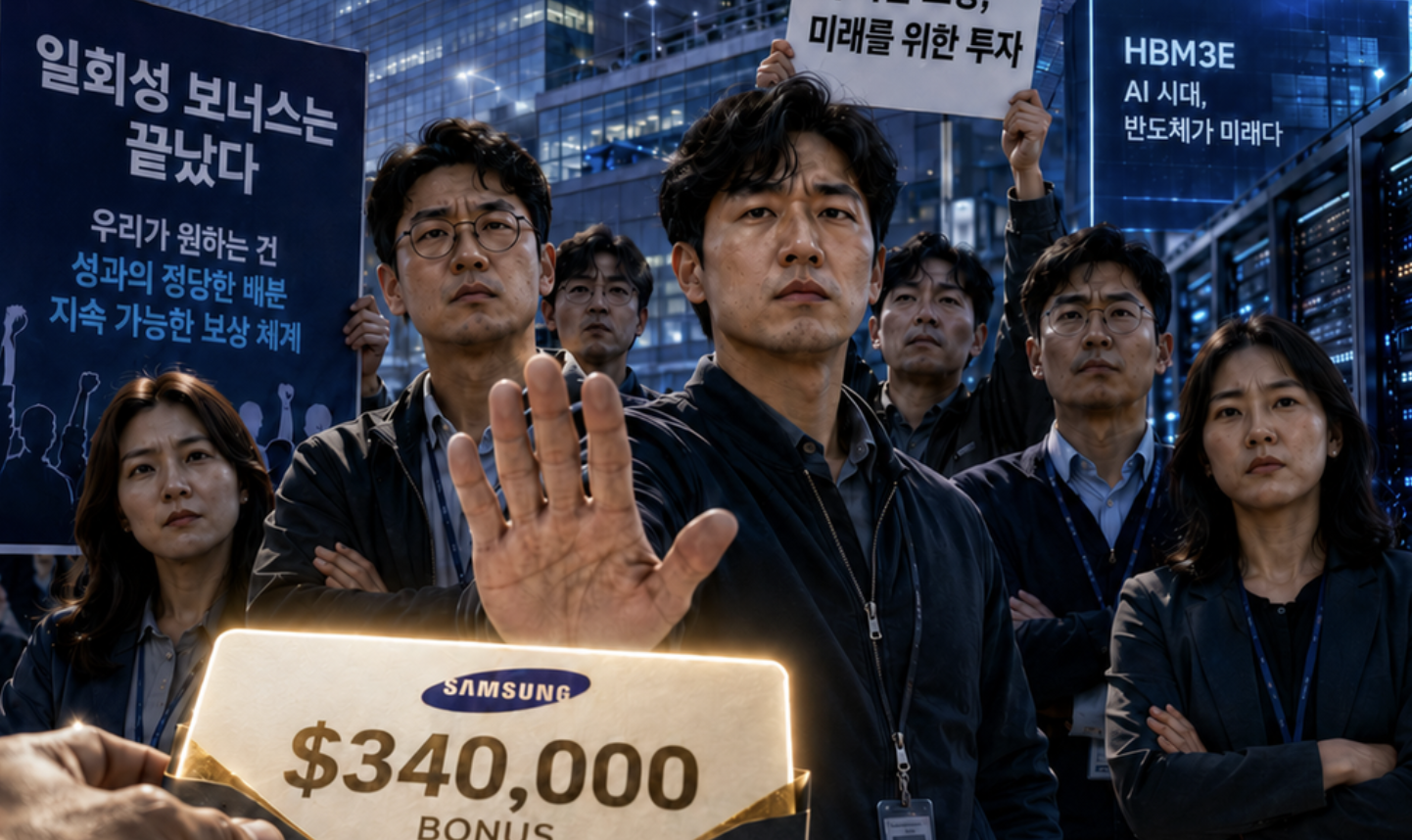
Samsung Electronics’ labor-management negotiations have finally reached the brink of a strike.
In the early hours of May 12, mediation hosted by South Korea’s National Labor Relations Commission collapsed. As Choi Seung-ho, chairman of the Samsung Electronics union, exited the meeting room, he told reporters, “There’s no point in waiting any longer.” Unless something unexpected intervenes, the union will launch an 18-day strike beginning May 21—running through June 7.
The union currently has approximately 74,750 members, with around 80% working in the Device Solutions (DS) semiconductor division. According to Choi, roughly 41,000 members have already expressed willingness to join the strike, and the final number could exceed 50,000. Based on participation rates from Samsung’s labor actions over the past two years, industry analysts estimate actual participation at between 30,000 and 40,000—a scale unprecedented in Samsung’s history. A single day of localized strikes previously reduced overnight output on certain production lines by as much as 58%. If the full 18-day strike proceeds uninterrupted, TrendForce estimates it could affect 3–4% of global DRAM capacity and 2–3% of NAND capacity. JPMorgan estimates that, given the current impasse, Samsung Electronics’ annual operating profit could fall by over ₩40 trillion ($28 billion) as a result.
The real story here isn’t the strike itself—but rather the proposal the union rejected.
A 13% Proposal That Failed
According to the Financial Times’ reconstruction, recent negotiations had narrowed the gap between labor and management to an extremely tight range. Initially, the union demanded allocating 15% of the semiconductor division’s operating profit into a bonus pool, eliminating the existing 50% cap on bonuses, and raising base wages by 7%. Management’s initial counteroffer was 10%, plus some additional benefits. After back-and-forth bargaining, both sides reportedly came close to agreeing on 13%.
But they stalled.
The union insisted on codifying the 13% figure into a binding agreement—guaranteeing it annually going forward. Management, however, was willing to pay out 13% only once, calculated against current profitability—equivalent to a one-time payout of roughly $340,000 per employee.
At first glance, the difference may seem minor—but the union refused.
For employees, the distinction is straightforward:
A one-time bonus operates on the logic that “the company earned more this year, so you get a special payout.” Whether—and how much—you receive next year depends entirely on renegotiation each time.
An annualized profit-sharing arrangement, by contrast, treats a fixed percentage of operating profit as inherently belonging to employees under contract. As long as AI-driven profits continue, employees share in them; if those profits fade, employees accept that too.
Both are technically “bonuses,” but they reflect fundamentally different employment identities. The former is a discretionary, ad hoc gesture from management; the latter is a structural entitlement written into the employment framework. When the monetary values are similar, the difference lies in whether employees must wait for management’s annual approval—or rely on a predictable, contractually guaranteed rule.
This is the core issue the union refuses to budge on.
SK Hynix Has Already Paved This Path
The union’s confidence stems from its neighbor across the aisle.
In the second half of last year, SK Hynix reached an agreement with its union to abolish the previous bonus cap and institute an annual profit-sharing pool equal to 10% of operating profit—valid for ten years. In February 2026, SK Hynix issued its first payout under this new mechanism: a bonus equivalent to 2,964% of base salary, averaging nearly $100,000 per employee.
SK Hynix’s Q1 2026 operating profit surged over fivefold year-on-year, with an operating margin of 72%—an exceptionally rare figure in the hardware industry. The reason is clear: it holds over 50% of the global HBM (High Bandwidth Memory) market and serves as the primary supplier of HBM chips for NVIDIA’s H100 and H200 GPUs. The more AI data centers are built, the more SK Hynix earns.
With full-year profit forecasts being revised upward throughout the year, some Korean and international media outlets, under optimistic scenarios, project SK Hynix employees’ average bonus for 2026 could reach around $470,000. If high-end profit forecasts from institutions like Macquarie materialize in 2027, the theoretical average could approach $900,000. These figures should be treated cautiously—they’re projections based on optimistic assumptions, not cash already disbursed. Yet even using only the payouts already made, plus conservative forecasts for the second half of the year, the absolute numbers still far exceed Samsung’s current offer.
Since December last year, approximately 200 Samsung employees—including engineers—have defected to SK Hynix, according to Samsung’s own union statistics. Such migration is highly unusual among engineering talent: for the past decade, SK Hynix has consistently trailed Samsung. This time, however, the change in bonus structure shifted the balance—and people followed.
Samsung Management Faces Real Constraints
From the outside, Samsung may appear simply stingy—but from management’s perspective, the issue is far more complex.
Samsung Electronics is not solely a memory chip company. It operates multiple business units: smartphones, home appliances, display panels, foundry services, and memory semiconductors. Even if semiconductors enjoy strong profits this year, other divisions won’t necessarily ride the same cycle. In Q1, the DX (Device Experience) division’s operating profit was already declining. If semiconductor employees alone receive a formal 15% profit-share clause, internal questions would immediately arise: “Why do they get a share—and we don’t?”
External analysts estimate that a 15% profit-share for Samsung’s semiconductor division would create a bonus pool worth ₩40–45 trillion—larger than SK Hynix’s entire annual operating profit. This isn’t about “reluctance” to spend; rather, institutionalizing such a massive, fixed expense makes it nearly impossible to reverse later.
What management most fears is codifying “formula-based profit sharing” into a binding contract. Once that precedent is set, next year the DX union and the display panel union will apply identical logic in their negotiations. Samsung Group’s internal compensation architecture—and indeed the broader chaebol labor-contract framework in Korea—would face wholesale recalibration.
So Samsung prefers to absorb strike-related losses—and endure accusations of “stinginess” from unions and the press—rather than concede on the word “annualized.”
This Won’t Stay Confined to Korea
The precise timing and terms of any eventual compromise between union and management matter less in the long run.
What matters is this: Scarce roles across the AI supply chain are now re-negotiating their value.
For three decades, Silicon Valley’s playbook tied employee fortunes to company stock via equity incentives. But that model rests on two implicit assumptions: the company must be publicly listed, and employees must join early enough to benefit meaningfully. Later hires see their options diluted to near-irrelevance compared to earlier cohorts.
SK Hynix has pioneered an alternative path: no IPO required, no stock price dependency—just transparent, cash-based profit sharing that turns employees into cyclical partners. Its advantages are clarity, schedule, and predictability. Its cost is corporate acknowledgment that employees aren’t just cost items—but also contributors to profit generation.
Once this model proves viable at SK Hynix—and finds some negotiated form at Samsung—the same question will soon confront more than just Korean firms.
How do TSMC engineers view NVIDIA’s revenue per GPU sold? How do ASML workers assess the $200 million price tag of each EUV lithography machine? Might veteran suppliers of liquid cooling, power infrastructure, and transformers for data centers suddenly realize they hold scarce, irreplaceable assets?
Not all these questions will find immediate answers—but they’ve already been asked.
Over the past two years, capital markets have delivered one round of answers to the question, “Who captures AI’s windfall?”: NVIDIA shareholders were first; TSMC, SK Hynix, and Samsung followed, capturing industrial upside through capacity allocation and pricing power—this was inter-corporate distribution.
Internal distribution—within companies—is only now beginning.
The coming 18 days, starting May 21, may end in union victory—or in some negotiated compromise, with management conceding slightly on “annualization” by embedding it in a shorter-term agreement, preserving flexibility. The specific outcome will shape this contract’s dollar amount—but not the underlying direction.
SK Hynix employees have already received their first profit-sharing entry ticket. Samsung employees are striking to claim theirs. Who receives the next ticket—and when, and in what form—may well be one of the most telling undercurrents across the AI supply chain over the next three to five years.
Join TechFlow official community to stay tuned
Telegram:https://t.me/TechFlowDaily
X (Twitter):https://x.com/TechFlowPost
X (Twitter) EN:https://x.com/BlockFlow_News
 深潮TechFlow


