








ARK Invest’s Cathie Wood in Conversation with Binance’s Changpeng Zhao: AI, Stablecoins, Quantum Threats, Crypto, and the Future of Finance
TechFlow Selected TechFlow Selected
ARK Invest’s Cathie Wood in Conversation with Binance’s Changpeng Zhao: AI, Stablecoins, Quantum Threats, Crypto, and the Future of Finance
AI will become a new accelerator for crypto innovation.
 Navigating Web3 tides with focused insights
Podcast Source: ARK Invest
Compiled by: BitpushNews
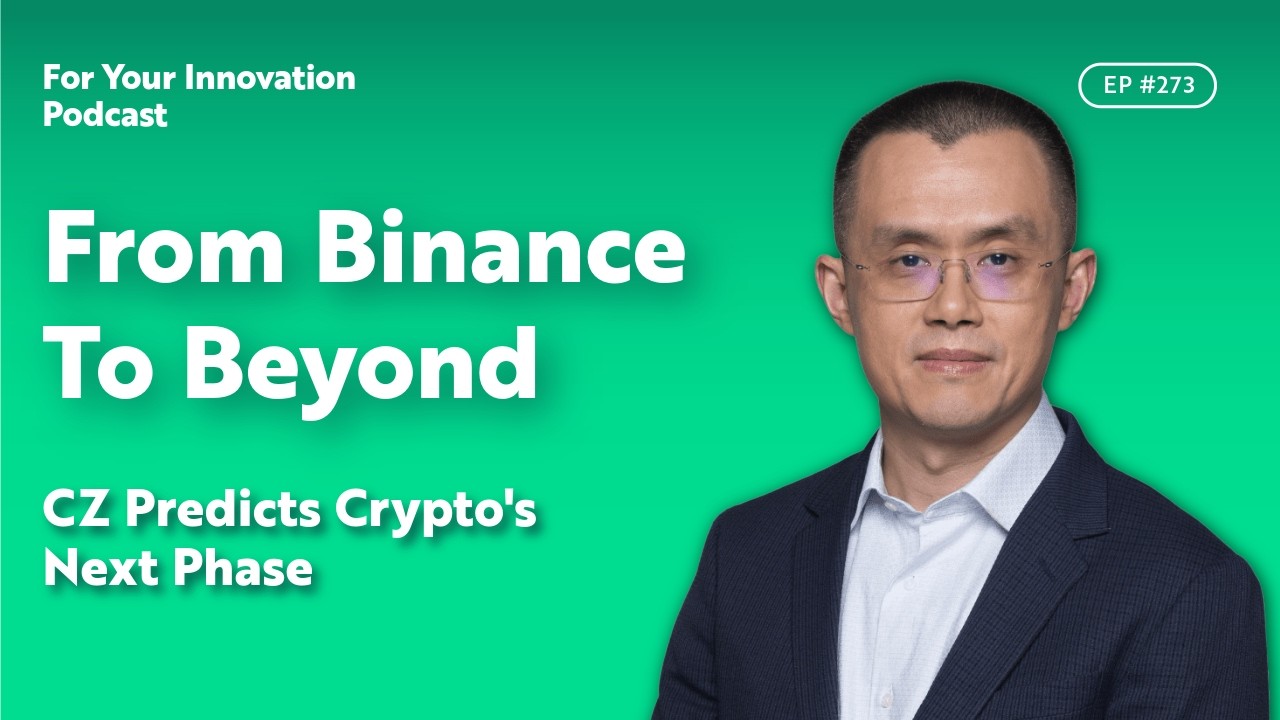
On the FYI podcast, Lorenzo Valente of ARK Invest spoke with Cathie Wood and Changpeng Zhao (CZ), founder of Binance. The conversation began with CZ’s personal journey, then expanded to cover Binance’s rise, regulatory shocks, stablecoin competition, AI-blockchain convergence, quantum computing risks, and his views on Bitcoin and the future of global finance.
I. From Rural China to the World’s Largest Cryptocurrency Exchange
Lorenzo: CZ, could you begin by sharing a few minutes of your early life story with our listeners? How did you enter the crypto industry, and what led you to found Binance?
Cathie Wood: I’ve read your origin story—it’s truly inspiring.
CZ: Thank you. I was born in a small village in China, later moved to a slightly larger city, and at age 12 relocated to Canada. My teenage years were mostly spent in Canada, where I also played a lot of volleyball. Afterward, I attended McGill University.
After graduation, I worked in Tokyo for several years, then moved to New York to join Bloomberg as a software engineer. At Bloomberg, I progressed from development to leading engineering teams—initially managing around 60 people, later expanding to roughly 80.
In 2005, I returned to Shanghai to launch a fintech startup, which I ran until 2013. In 2013, I discovered Bitcoin and found it fascinating—so much so that I decided to commit fully. I left my startup and tried several roles within the crypto industry.
By 2017, I felt the timing was right to build a cryptocurrency-to-cryptocurrency exchange—and thus founded Binance. That year coincided with the ICO boom, during which many projects launched ERC-20 tokens on Ethereum. Existing exchanges remained largely Bitcoin-focused and offered limited support for these new tokens. We ourselves issued BNB as an ERC-20 token, naturally enabling robust support for numerous ERC-20 assets.
Binance grew rapidly. We prioritized user protection, delivered high-quality service, built a fast matching engine, and emphasized security. Within five months, we became the world’s largest cryptocurrency exchange by trading volume—a position we held for many years.
Later, we navigated multiple crypto cycles—including bear markets. In 2022–2023, we addressed issues with the U.S. Department of Justice. I personally pled guilty to one charge under the Bank Secrecy Act (BSA), and Binance reached a similar agreement. The judge sentenced me to four months’ imprisonment, and Binance paid a $4 billion fine. Now I’m out—and fortunately, Binance remains the world’s largest cryptocurrency exchange, unshaken.
Today, I spend most of my time mentoring other founders, investing via YZi Labs, and building Giggle Academy. Of course, I also engage with the community on X and remain deeply involved in this industry.
Cathie Wood: Your full story is also captured in your new book, Freedom of Money. For listeners seeking a comprehensive account—from your beginnings to today—that book is highly recommended. While you still love crypto, you’re now expanding into other domains like multi-omics and robotics—areas that strongly overlap with ARK’s long-standing innovation focus. It’s exciting to see you channel capital into these fields, since such innovations have historically been undervalued in public markets—and their opportunity is now exploding.
CZ: Yes. Transitioning from builder to investor has been a learning process for me. You’ve done this for far longer—I have much to learn from you.
II. Crypto Industry: What’s Moving Faster—and Slower—Than Expected?
Lorenzo: You’ve been in this industry for over a decade. Looking back from 2026, what developments have outpaced your expectations—and what has lagged behind?
CZ: Many things have diverged from my original expectations. For instance, I assumed payments would already be widespread—but most people still don’t pay directly with crypto. Crypto cards exist, letting users spend digital assets—but merchants still see Visa or Mastercard rails beneath the surface.
What surprised me is how quickly institutions adopted crypto over the past year—especially in the U.S. Just eighteen months ago, the U.S. was broadly hostile toward crypto; some even declared open “war on crypto.” I myself was imprisoned under the Biden administration. So the subsequent 180-degree policy shift astonished me.
This underscores the resilience of the U.S. Constitution and institutions. Presidents change every four years—even if policies turn sharply restrictive for a period, they can reverse just as quickly.
Yet those years of suppression had real consequences. Many major crypto projects faced SEC lawsuits; builders dwindled; capital and attention shifted toward meme coins; and genuinely useful applications failed to mature. If U.S. regulation pivots toward supporting crypto, I hope we’ll finally see more real-world applications emerge.
III. AI: A New Accelerator for Crypto Innovation
Cathie Wood: When we wrote our first Bitcoin white paper in 2014, we didn’t foresee stablecoins growing to their current scale. Now AI—particularly agentic AI—is advancing rapidly. Do you think AI will spark a new wave of crypto innovation?
CZ: Absolutely. AI will aid crypto in multiple ways.
First, AI agents will soon execute vastly more trades than humans—perhaps 10x, 100x, or even 1,000x more. AI won’t rely primarily on legacy systems like SWIFT or Visa. While it may use parts of traditional financial infrastructure, interacting globally with counterparties or systems will be far easier using cryptocurrencies.
Second, AI will accelerate development. AI-assisted coding already significantly boosts developer productivity—though it can’t yet fully replace humans, it lets us build applications faster. We’ll roll out new crypto apps, more intuitive wallets, more secure wallets, and faster blockchains—all at accelerated pace.
So AI isn’t merely adding a new class of trading participants—it’s also turbocharging technical development across the entire industry.
CZ: Stablecoins were another surprise—I didn’t anticipate their scale. When we first listed Tether in 2017, I viewed it as a temporary tool for users to hold fiat-pegged value during market downturns. Its subsequent growth far exceeded my expectations.
Another surprise: gold has become remarkably active on crypto exchanges. Binance only recently launched gold trading—but it quickly became one of the largest gold-trading venues outside traditional markets. Gold now accounts for a significant share of Binance’s futures volume. We’ve also launched oil trading. Traditional assets are flowing into crypto platforms—this convergence happened faster than I imagined.
IV. Traditional Finance and Crypto Finance Will Ultimately Converge
Cathie Wood: Why do you think these traditional assets suddenly gained such traction? Did Larry Fink’s comment years ago—“everything will be tokenized”—give traditional finance a major push?
CZ: Larry’s influence is undeniable. He wields strong sway in traditional markets and shapes policymakers and institutions globally. When BlackRock’s CEO declares a trend important, national leaders, financial institutions, and institutional capital take notice.
He also demonstrated foresight in predicting universal tokenization. Frankly, although I worked in traditional finance, I was primarily a technologist—my grasp of money markets and related domains couldn’t match Larry’s depth. His deep understanding of traditional finance, combined with his public endorsement of tokenization, makes both elements critical.
We now see Wall Street and crypto converging. Ultimately, this shouldn’t be two industries—but one industry, delivering transactions and financial services using either legacy or next-generation technology.
Binance now serves over 300 million users—but the crypto industry has lacked sufficient high-quality assets over recent years. If users can only trade meme coins, that’s just one category. Now that gold, oil, tokenized equities, and other traditional assets are entering crypto platforms, global crypto investors gain far broader choice. Geopolitical tensions further drive volatility—and demand—for assets like gold and oil.
Cathie Wood: Early in our Bitcoin research, traditional finance leaders like Larry Fink and Jamie Dimon strongly opposed crypto. Today, their embrace of the space is welcome. But why are they embracing it now? Is it because they see cost reduction and frictionless finance—or because they recognize the technology’s potential to unlock new financial activity?
CZ: I think it’s both. They see Binance’s trading volume, other exchanges’ volumes, and on-chain activity—and naturally spot commercial potential.
Simultaneously, new technologies do lower fees and costs. Short-term, this may compress margins—but lower fees boost trading volume. Ideally, halving fees could increase volume two-, five-, or even tenfold.
Moreover, even if one institution refuses to cut fees, competitors will. Those who resist risk losing market share. You can cling to high fees—but eventually, you’ll run out of customers. So institutions are forced to adopt new technologies, cut costs, and offer lower prices to attract more users.
Cathie Wood: During technological disruption, traditional industries often resist change. Yet finance seems quicker to embrace crypto—perhaps because resisting means ceding market share. Historically, pure-play tech companies often win, precisely because they lack legacy-system baggage. How do you see this playing out?
CZ: It’s a delicate balance. Some traditional finance CEOs focus only on the next two years—they figure, “If the company’s fate beyond that isn’t my problem, I’ll collect bonuses this year and next.” Such leaders won’t proactively change.
Others look five or ten years ahead, pursuing longer-term strategy. Yet publicly traded firms face quarterly earnings pressure—delivering results every three months—so short-term and long-term thinking constantly pull against each other.
Over time, short-sighted firms suffer. Native crypto firms carry no legacy financial system baggage and can adopt new technologies directly. Private companies also tend to make longer-term decisions more easily than public ones.
Overall, those who adopt better technology, reduce costs, and improve efficiency will win. Those who don’t will lose. Even if a traditional finance CEO resists change for two years, obvious business erosion after that point will force action.
Cathie Wood: And blockchain and AI are converging rapidly. AI is advancing faster than any technology we’ve seen before—so “falling behind” will happen faster than ever before.
CZ: Fully agree. The pace of change is accelerating—and response windows are shrinking. A CEO might assume he has two years—but without AI or blockchain adoption, he could be fired in one. Today, a financial firm’s CTO who ignores AI risks dismissal; soon, ignoring blockchain may carry the same consequence.
V. Why Has Binance Sustained Its #1 Position for So Long?
Lorenzo: External narratives about Binance’s story remain surprisingly sparse. Why has Binance maintained its top position for so many years? Is it cultural, structural—or something else?
CZ: Several reasons. First, we always place user protection above revenue and profit. Whenever anything happens, user protection comes first—and users know this.
Second, our global footprint is broader. Over the past decade, regulatory uncertainty has loomed large. Many exchanges anchor themselves in a “home country”: thriving if supportive, constrained if not. Binance’s approach is different—if a country opposes crypto, we exit; if supportive, we expand. Each friendly market contributes users, collectively forming massive scale.
Scale delivers superior liquidity. Better liquidity means tighter spreads and lower costs—drawing more users, reinforcing network effects.
Third, we maintain low operating costs. We have modest offices—not lavish skyscrapers—and many staff work remotely. I want Binance to retain its startup feel. Though our team is large, this lean, entrepreneurial culture sustains our competitiveness.
Fourth, trust. Centralized exchanges depend heavily on trust. Our long-standing #1 ranking, massive trading volume, and strong security record all build trust.
By contrast, some U.S. platforms operate at high cost and charge high fees. U.S. users currently face limited choices—but opening the U.S. market to global competition would lower prices, broaden options, and ultimately raise U.S. crypto adoption—even benefiting domestic platforms.
VI. “The Everything Exchange”: The Boundaries of Trading Platforms Are Blurring
Cathie Wood: What’s your view of the future of exchanges? We hear frequent talk of the “everything exchange”—like Coinbase aiming to let users trade all asset classes. Then there are prediction markets like Kalshi and Polymarket. How do you see this evolving?
CZ: Everyone wants to become the “everything exchange”—and that’s natural. To a large extent, it will happen.
Binance already trades gold and oil—assets I wouldn’t have predicted a year ago. Coinbase will likely follow suit, as will other exchanges. Binance recently integrated prediction markets, and I expect others to do likewise—some even launching their own, where licenses permit.
New technologies eliminate intermediaries. One platform can strip away layers—users need fewer distinct platforms. This drives consolidation (a word many dislike)—but it’s also centralization or network effects.
At the same time, regional and user-level differences persist. New crypto users often prefer centralized exchanges—because decentralized exchanges still require handling wallets, addresses, and random strings of numbers, which non-technical users dislike.
But as users mature—and self-custodial wallets become simpler and safer—they may migrate to DEXs. So the relative growth of CEXs versus DEXs depends on user onboarding speed and tool improvements.
If 10–20% of the global population enters crypto overnight, CEXs will surge. If adoption is gradual—and users grow comfortable with self-custody and DEXs—then DEXs may outpace CEXs.
U.S. regulatory attitudes are shifting too. The SEC’s stance on DEX UIs has grown more favorable, and the CFTC appears strongly supportive of prediction markets. The U.S. may now hold a regulatory-policy advantage—unlike just eighteen months ago. Exchanges in regulator-friendly jurisdictions may grow faster.
VII. Stablecoin Competition Has Only Just Begun
Cathie Wood: U.S. regulation still needs clarity—especially regarding “rewards”: whether stablecoins or related products can share yield with users. What’s your take? Also, many assume Binance and Tether have close ties—how do you view Tether versus Circle?
CZ: Let me clarify: Binance and Tether have no commercial relationship. Binance listed Tether early on, helping it grow; Tether has also been vital to industry development. But we hold no equity, share no revenue, sign no commercial contracts—and have no formal commercial agreement.
Cathie Wood: Perhaps because you both emerged early and supported each other, outsiders inferred closeness.
CZ: Exactly. Personally, I believe stablecoins should generate yield for users. I also agree Tether may not do so in the near term. It achieved dominance without yield-sharing—leaving room for competitors to attract users with yield.
You might say interest payments aren’t allowed—but firms will find other ways to reward users: promotional incentives, tiered accounts, staking mechanisms, or other forms of engagement. If a company wants to reward users, many paths exist.
Of course, I understand regulators aim to avoid disrupting traditional finance entirely—and must allow legacy institutions time to adapt. Yet I believe, soon—both in the U.S. and abroad—we’ll see stablecoins offering attractive yields alongside seamless usability. Those will win.
Tether is dominant today, but USDC is sizable too—and USD1 is growing fast. Stablecoins from other countries and regions are also gaining traction. Stablecoins are just one part of crypto. Any business better serving users—with lower fees or higher yields—holds a competitive edge.
Lorenzo: Some worry that allowing stablecoins to distribute yield to users could trigger bank deposit outflows—and even bank runs. Is this a legitimate concern—or a narrative driven by bank CEOs’ panic?
CZ: This concern holds some validity. The issue lies in where stablecoins deploy assets to generate yield. Holding them in relatively safe instruments—like U.S. Treasuries or government bonds—is one approach. But yield competition may tempt some to chase higher returns via riskier investments.
Compared to banks—which operate fractional-reserve systems, lending or investing most deposits (often illiquid)—bank runs pose real danger. Crypto exchanges and stablecoin issuers—at least reputable ones—typically emphasize 1:1 reserves and undergo regular audits.
I believe the crypto industry must preserve this principle. Exchanges and stablecoin issuers should uphold 1:1 pegs and 100% reserves—a strength less common in traditional finance but essential for crypto.
Even with 100% reserves, yield generation remains possible. As long as yield is sustainable, I encourage firms to pass it through to users. Of course, legal restrictions in certain countries prohibit this locally—but stablecoins issued elsewhere may do so, attracting global users.
Cathie Wood: Stablecoins exhibit strong network effects—suggesting eventual winner-take-most outcomes. Yet new stablecoins appear almost daily. Do you foresee winner-take-all—or long-term multi-coin coexistence?
CZ: Long-term, we may see “winners capture most.” Short-term, however, I expect heightened competition—not immediate consolidation.
Historically, launching stablecoins was difficult. Before the Trump administration, many nations were openly hostile to crypto. Tether long avoided disclosing bank accounts—fearing closure upon disclosure. Maintaining banking relationships and large asset reserves in that environment demanded extraordinary capability. Even today, I’m unsure how they managed it.
Now that barrier has lowered. Many can launch stablecoins, secure banking partners, conduct audits, and ensure 1:1 backing. Entry thresholds are far lower than before. The challenge isn’t issuance—it’s adoption: how to get users to actually use your stablecoin.
Also, our discussion centers mostly on USD-backed stablecoins. Other nations will seek stablecoins backed by their own currencies. USD stablecoins reinforce the dollar’s global dominance—and indirectly help the U.S. sell Treasury debt to global crypto users. Other countries similarly wish to promote their currencies and sell sovereign debt. So we’ll see more stablecoins emerge in the near term.
VIII. Why Haven’t Non-USD Stablecoins Taken Off Yet?
Lorenzo: Why haven’t we seen many local-currency stablecoins? Euro stablecoins remain tiny; Mexican peso stablecoins haven’t scaled meaningfully. Is it due to inefficient on/off-ramps—or do users simply prefer USD?
CZ: Based on my limited understanding, the main reason is cost. Take euro stablecoins: I’m no expert, but other stablecoin projects tell me euro stablecoin issuance incurs high costs—requiring extensive insurance arrangements and large capital allocations. For startups, committing hundreds of millions of dollars upfront is daunting—especially when demand hasn’t fully materialized. It becomes a chicken-and-egg problem.
Mexico may face banking-channel constraints. RMB stablecoins are also desired—but securing bank support proves complex. Hong Kong recently granted stablecoin licenses to HSBC and Standard Chartered; we’ll watch their moves. Yet banks tend to move cautiously and slowly—not matching the agility of crypto-native firms.
Thus, non-USD stablecoins haven’t taken off at scale—giving USD stablecoins enormous advantage. Still, other nations will keep catching up.
IX. Quantum Computing: Not Unsolvable—but Requires Community Coordination
Lorenzo: You’ve shared intriguing perspectives on quantum computing and Bitcoin security. As Binance holds substantial crypto assets, how do you assess the quantum threat timeline? Is the market over- or under-worried?
CZ: First, I’m not an expert in this domain. My knowledge stems mainly from news reports and conversations with technical friends.
My intuition is that Bitcoin and other cryptos will upgrade appropriately. As for “Satoshi coins,” the community will devise solutions—perhaps granting one or two years for affected addresses to move funds; if unclaimed before attacks materialize, the community may vote on freezing, burning, or other measures. This is more a philosophical and governance question.
I also suspect some hype surrounds Google’s quantum progress claims. Researchers often overestimate what’s achievable in one year—but underestimate what’s possible in ten. Quantum teams’ timelines may be overly optimistic. Still, this serves as a timely wake-up call for the industry.
I’m not overly concerned—because this isn’t an unsolvable problem. Post-quantum cryptographic algorithms already exist; the challenge lies in migration and coordination. More centralized, agile chains—like Ethereum, Tron, and BNB Chain—may upgrade first. Bitcoin may move slower, given its community’s emphasis on decentralization—but it will address the issue eventually.
X. Cathie Wood Clarifies: The October 11 Liquidation Was Not Triggered by Binance
Cathie Wood: Before we wrap up, I’d like your thoughts on Bitcoin today. Is the four-year cycle still valid? Are we experiencing a cyclical correction—setting the stage for the next bull run?
Also, I’d like to clarify a comment I made earlier on a news program mentioning Binance. This occurred around the October 11 liquidation event. We confirmed there was indeed a software glitch—but Binance did not trigger that liquidation. I want to make this clear: We know Binance did not cause that crash.
Markets were already chaotic due to tariff-related uncertainty—and extremely tense and volatile. Binance-related concerns may have exacerbated the fluctuation, but were not the catalyst. We believe the ripple effects from that event have largely subsided.
So, do you believe Bitcoin will reach new all-time highs? Are you still bullish on Bitcoin?
CZ: First, thank you for clarifying. You may not realize this, but your earlier statement was widely cited in Chinese media. Your photo appeared everywhere—and many used that clip to claim Binance caused the October 11 crash. So I’m truly grateful for your clarification now.
Cathie Wood: Oh my goodness—I had no idea.
CZ: I suspected as much. On podcasts or interviews, statements are easily clipped and taken out of context—you can’t add disclaimers to every sentence. Yet that clip circulated extensively in Chinese communities. No matter—it feels like we’ve moved past that phase.
XI. CZ Remains Bullish on Bitcoin: Institutional Capital Is Reshaping Cycle Dynamics
CZ: Regarding Bitcoin, I see two concurrent forces.
On one hand, the four-year cycle suggests a dip post-2026. 2021 was a bull market; 2025 was another—so a 2026 correction fits the framework.
On the other hand, two positive factors stand out. First, President Trump prioritizes stock market performance—and will strive to lift it. Strong equities markets usually buoy crypto too. When stocks rise, people enjoy greater wealth and cash flow—allocating portions to crypto assets.
Second, geopolitical tensions have energized gold trading. Gold surged and turned highly volatile—Bitcoin should thrive in such conditions too. Though Bitcoin has declined, it recently rebounded to ~$74,000–$75,000.
Thus, strong equity markets should positively impact Bitcoin and the broader crypto ecosystem. Ahead of midterm elections, Trump will likely push markets hard—logically so. I don’t know him personally nor have spoken with him—but U.S. markets profoundly influence global and crypto markets alike.
I hope this year’s recovery differs from historical bear-market rebounds—perhaps unfolding faster. Bitcoin has already touched the $60,000 zone, near prior all-time highs’ support levels. I hope the worst is behind us. Of course, this is not investment advice.
Cathie Wood: We must consistently stress this is not investment advice. Yet a key factor underpinning Bitcoin today is institutional support from traditional finance. Institutions have long heard the “four-year cycle” narrative—and are working to understand it. So they may have waited for such a correction. Our fund-flow analysis suggests they’re entering more actively now than in prior years.
CZ: You’re right. Institutions move slowly—often requiring committee approvals. Once committed, they won’t exit within a month. They might buy $1 billion over a month—and hold it for years, not sell it immediately.
So institutional entry via ETFs stabilizes prices—and should help lift them. I remain highly optimistic.
Cathie Wood: We share that optimism—and sincerely thank you for joining this episode of FYI. I believe this may be one of our best episodes yet.
CZ: I’m delighted to join—and grateful for the invitation. We hope to invest more in the U.S. going forward and look forward to your support.
Lorenzo: Absolutely. Finally, where can listeners purchase your new book, Freedom of Money?
CZ: Amazon—it’s convenient. The book is published through Amazon’s own imprint.
Join TechFlow official community to stay tuned
Telegram:https://t.me/TechFlowDaily
X (Twitter):https://x.com/TechFlowPost
X (Twitter) EN:https://x.com/BlockFlow_News
 @ARKInvest


