Fidelity Dialogues with Venture Capitalists: How Can DePIN Become the On-Chain Infrastructure Disrupting the Real World?
TechFlow Selected TechFlow Selected
Fidelity Dialogues with Venture Capitalists: How Can DePIN Become the On-Chain Infrastructure Disrupting the Real World?
Mahesh provided an in-depth analysis of the concept of DePIN, its development history, and its disruptive impact across various industries.
 Navigating Web3 tides with focused insights
Author: Fidelity
Translation: TechFlow
In today's rapidly developing digital economy, blockchain technology is no longer confined to the virtual world but is beginning to penetrate various aspects of our daily lives. Recently, Fidelity sat down with early-stage investor Mahesh Ramakrishnan to explore how Decentralized Physical Infrastructure Networks (DePIN) are leveraging public blockchains to reconstruct real-world infrastructure. Mahesh provided an in-depth analysis of DePIN’s concept, evolution, and its disruptive impact across industries, revealing the dawn of a new era in infrastructure development driven by cryptographic economics.
1. Can you briefly define DePIN and describe its history from inception to present?
DePIN, or Decentralized Physical Infrastructure Networks, is an umbrella term for projects building next-generation infrastructure by decentralizing the provision and delivery of physical and human capital. It refers to a movement initiated by builders who aim to create products in the physical world using cryptographic toolkits and tokenization. At their core, these networks feature peer-to-peer elements where community members participate in network growth by contributing passive or mechanical work. This can be as simple as validating and hosting (or providing devices that transmit data), or as complex as completing tasks like mapping roads or deploying Wi-Fi routers.
These networks take inspiration from Web2 businesses such as Uber and Airbnb, which allow consumers to monetize their capital (apartments, cars) and labor (driving, hosting). However, this revolution is only just beginning, and numerous issues have already surfaced within existing Web2 platforms, including high fee structures and platform dependency. DePIN networks offer a clear, transparent framework for revenue distribution, utilizing permissionless public blockchains for payments—an improvement in systemic trust mechanisms.
This movement has only been active in practice for about three years, initially sparked by networks like Helium and Braintrust that began redefining relationships between enterprises, communities, and resources. Helium gained recognition for establishing the first decentralized wireless network focused on IoT standards, achieving notable supply-side success even before demand fully scaled. While the initial attempt wasn’t commercially successful, it demonstrated to other builders the powerful potential of using tokens to bootstrap infrastructure from scratch. Today, Helium is launching national phone plans and applying its original model to mobile data roaming and telecom services, showing promising early results. Braintrust took a different path, using its token to build one of the largest on-demand labor supply pools—workers willing to accept contract jobs offered through the platform. By involving workers directly in network growth, Braintrust achieved remarkable employee retention and cultivated a highly motivated, unified workforce.
When we began researching this space in early 2021, there were fewer than ten DePIN projects. Two years later, we’re tracking over 600 projects on our DePIN Ninja platform—and seeing that number continue to accelerate.
2. What does the industry structure of DePIN look like? Which categories, industries, and infrastructure domains are being disrupted by DePIN projects?
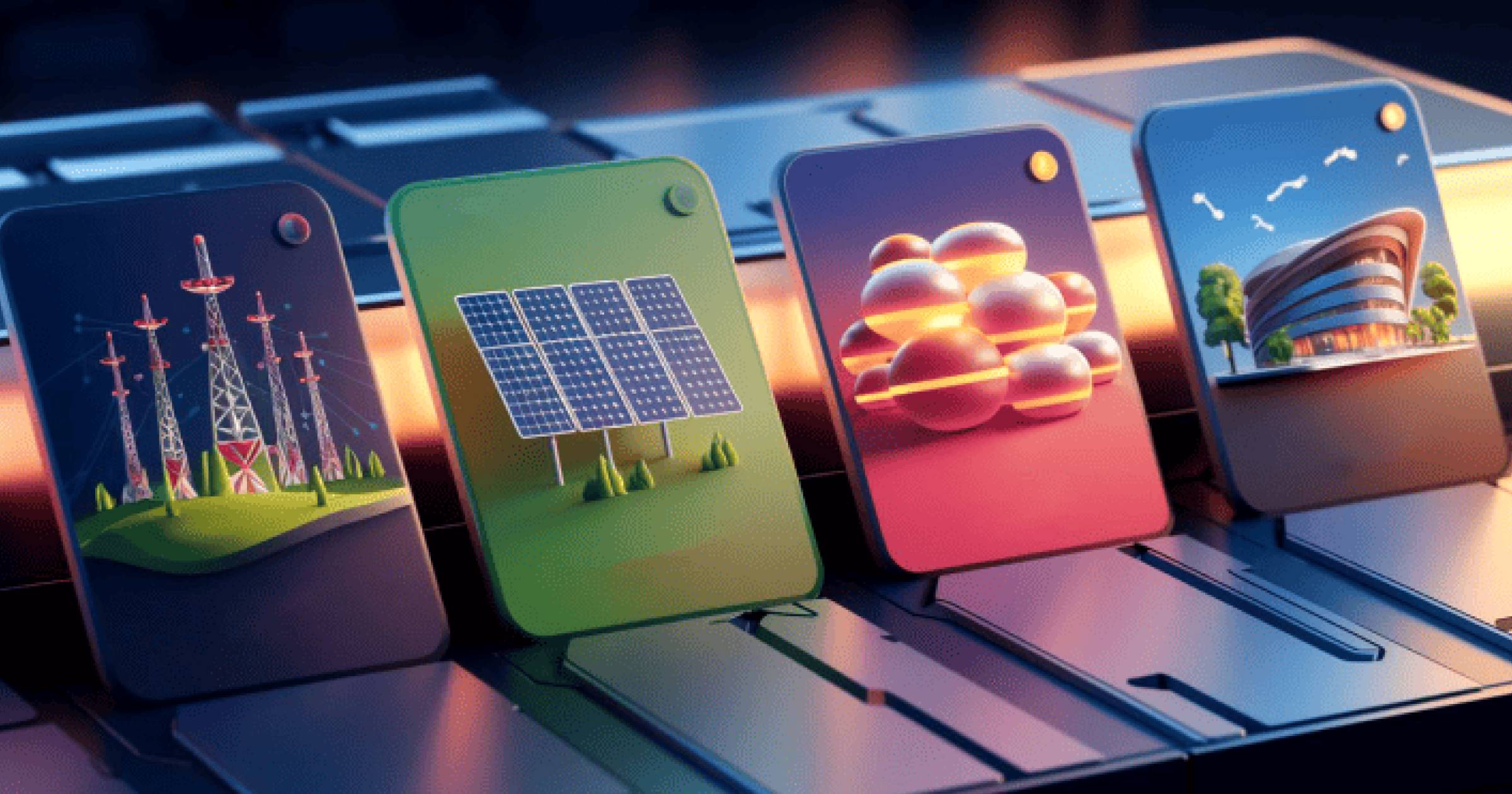
While we let the community define all sub-sectors, I believe DePIN most clearly drives the decentralization of capital and labor, resulting in three main subcategories:
Physical Infrastructure:
Physical infrastructure networks were the first to achieve large-scale breakthroughs, ranging from protocols offering digital goods like computing power, storage, and bandwidth to companies solving pickup-rate challenges in areas like food delivery. These ventures are united by a simple principle: certain activities are more efficiently executed by incentivized, coordinated communities rather than governments or even corporations. Examples include Filecoin, Helium, Render, and WiFiMap—all using token incentives to link vast hardware footprints and make them useful.
Human Infrastructure:
Although lagging behind physical infrastructure in terms of project count, human infrastructure networks are also growing. These networks typically connect individuals possessing human capital with those needing it. The pioneer in this space, Braintrust, has expanded to offer peer-to-peer mentoring products and other meaningful community experiences aimed at enhancing individual human capital. Event-based applications like Teleport are emerging to create unique personal experiences, and we continue to watch NFTs fulfill the promise of internet-native clubs.
Machine Infrastructure:
Machine infrastructure networks remain in their infancy, yet hold great potential for decentralizing emerging fields like artificial intelligence and robotics. Their unifying premise is that more (and more diverse) data will enhance AI performance. This sector benefits partially from advances in physical infrastructure, such as distributed computing.
Early use cases include inference networks that run any query prompt across multiple final models and return the best answer among them, and co-owned agent frameworks allowing people to own robotic services via NFTs. Examples include Bittensor, Autonolas, and MachineFi—all aiming to bring greater intelligence and autonomy into everyday life.
3. Who are the typical participants in these networks, and what are their responsibilities and incentives?
Network participants can range from consumers to prosumers, depending on the complexity of the required work. We believe the earliest successful use cases will be the simplest, especially regarding hardware complexity and physical effort.
Take WiFiMap as an example: it rewards both Wi-Fi hotspot owners and mappers for increasing the number of nodes on the network. No specialized hardware is needed—people already own Wi-Fi routers and smartphones—and the physical task is as simple as asking, “Hey, can I add your hotspot to this network?” Value accrual is straightforward: stores that contribute hotspots see increased foot traffic due to proximity-based Wi-Fi usage. The network generates economic value and rewards contributors with WiFi tokens based on the perceived connectivity value of each hotspot. Through this simple mechanism, WiFiMap has grown to include hundreds of millions of hotspots globally. The network pays for its own growth through token dilution.
The mapper’s responsibility is to onboard hotspot owners and add nodes to the network, while the owner’s only obligation is to keep their hotspot online. As long as WiFiMap continues driving traffic, the network can generate economic value and monetize Wi-Fi through services (speed tests), subscriptions (SIM cards), and advertising. We believe use cases that empower individuals to perform simple tasks at scale can be extremely powerful.
4. Which aspects of cryptocurrency (tokens, cryptography, immutability, network effects, smart contracts) benefit DePIN projects? Why do these networks need blockchain?
DePIN projects benefit from all the above elements—each plays a distinct role in solving the final puzzle of creating ultra-secure, fast, and easily accessible digital infrastructure. However, the relative importance of each factor shifts as projects progress through different stages.
Tokens (or in-app currencies) are already central to DePIN. Strategic use of token incentives is the secret weapon behind DePIN’s viral, exponential growth. However, token usage must be targeted and carefully designed to avoid redundancy. Projects like Hivemapper and WiFiMap are pioneers here, creating innovative structures that reward only useful contributions. For instance, Hivemapper pays full rewards only to the first mapper of any given road, with significantly reduced payouts for subsequent mappers. This enables self-governance and ensures only valuable coverage is added.
Immutability is fundamental to why blockchain is essential for these projects. If DePIN is to serve as the foundation for next-generation digital infrastructure—including government and defense systems—it must be highly secure. The immutability provided by underlying blockchains and cryptography ensures any tampering—internal or external—is immediately detectable. In this ecosystem, bad actors have nowhere to hide. Finally, network effects and economics are crucial for enabling scalable pricing: more nodes mean greater supply, enabling lower fees (especially for digital goods). We expect the largest networks to reach initial escape velocity and then grow even larger.
5. Many DePIN projects aim to challenge established players: Helium 5G vs telecom companies, Hivemapper vs Google Maps, Render and Akash vs general and specialized computing giants. What common themes give these projects structural advantages over incumbents?
They share the use of network economics to solve some of the largest economies of scale problems in history.
When examining industries threatened by DePIN, they are all defined by economies of scale. Today’s cloud services represent one of the strongest economies of scale ever seen, as telecom giants and Web2 incumbents have created infrastructure oligopolies, leveraging historically low capital costs to build massive enterprises. Infrastructure remains a significant barrier to entry for any participant wanting to compete in software. With antitrust and regulatory bodies often reluctant to take strong action, traditional business models may struggle to compete against incumbents enjoying huge capital, distribution, and regulatory advantages.
But strategists at Harvard Business School would tell you that only network economies stand a chance against economies of scale—and the rapid increase in computational resources gives them that opportunity. Peer-to-peer organization, combined with open-source, composable software, offers a fundamentally different approach to similar problems, shifting the battlefield from capital cost to collaboration. Take cloud services: DePIN outperforms incumbents in three key areas:
-
Capital Expenditure: DePIN networks either leverage existing hardware or push the industry toward next-generation commoditized hardware, offering significant upfront cost advantages compared to incumbents.
-
Location: A key strength of communities lies in utilizing fixed costs—people have already paid rent/mortgages and can use spaces that traditional companies would need to purchase or lease. DePIN communities don’t incur additional land costs like traditional data centers.
-
Personnel: Given software’s role in managing the entire network—including payments—DePIN protocols require far fewer personnel than traditional firms. By eliminating substantial setup, service, and maintenance labor costs from the profit and loss statement, DePIN projects can achieve stronger margins than incumbent companies.
Across many competitive dimensions, DePIN appears to hold an edge over incumbents. By transforming fixed costs into variable ones reinforced by network effects, DePIN can challenge the dominance of cloud service monopolies and benefit from structural pricing advantages.
Join TechFlow official community to stay tuned
Telegram:https://t.me/TechFlowDaily
X (Twitter):https://x.com/TechFlowPost
X (Twitter) EN:https://x.com/BlockFlow_News
 @FCATalyst