A Perspective on BRC20 During the Scorching Summer of Inscriptions
TechFlow Selected TechFlow Selected
A Perspective on BRC20 During the Scorching Summer of Inscriptions
What are the mechanisms and driving forces behind the surge in inscription assets?
 Navigating Web3 tides with focused insights
Author: Alex Xu
Introduction
Inscription assets, represented by the BRC20 series, have recently gained significant popularity. As far as I recall, this marks the second major bullish wave for asset prices since the launch of the Ordinals protocol earlier this year. Recently, I conducted research on the current inscription market—digesting industry information and data, participating in both online and offline BRC20-themed discussions—and formed some interim views about this market, which I aim to organize and present in this article.
This article attempts to answer the following questions:
-
What are inscription assets? What are the criteria for identifying breakout BRC20 assets?
-
What is the core value proposition of inscription assets, exemplified by BRC20?
-
Are inscription assets a good commercial innovation?
-
What mechanisms and driving forces underlie the rapid price surges of inscription assets?
-
What are the possible next stages for inscriptions?
-
How might an inscription asset market crash unfold?
The views expressed below represent my interim perspective as of publication and may contain factual inaccuracies, biases, or errors. They are intended solely for discussion, and I welcome corrections from fellow researchers and investors.
Inscription Assets and the Criteria for "High-Quality" Assets
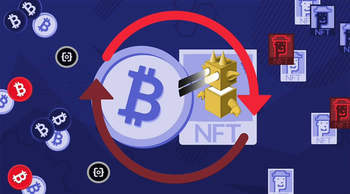
Inscription assets refer to virtual assets created by recording formatted data on BTC (or other blockchains) and then using specific indexing protocols to interpret these on-chain records into tradable digital assets. These can be fungible tokens (such as BRC20 tokens) or non-fungible ones (like Bitcoin Frogs, a type of NFT).
Bitcoin, as a public ledger, was historically used primarily to record transfer transactions. However, after Bitcoin completed its Taproot upgrade in November 2021, it gained enhanced data storage capabilities, enabling cheaper uploading of text and multimedia content—laying the technical foundation for inscription assets.
On Ethereum, asset issuance and operation rely on smart contracts. In contrast, BTC inscription assets are issued and managed based on on-chain data combined with indexing standards.
Although the mechanisms differ, both types of assets are ultimately derived from data stored on blockchain ledgers.
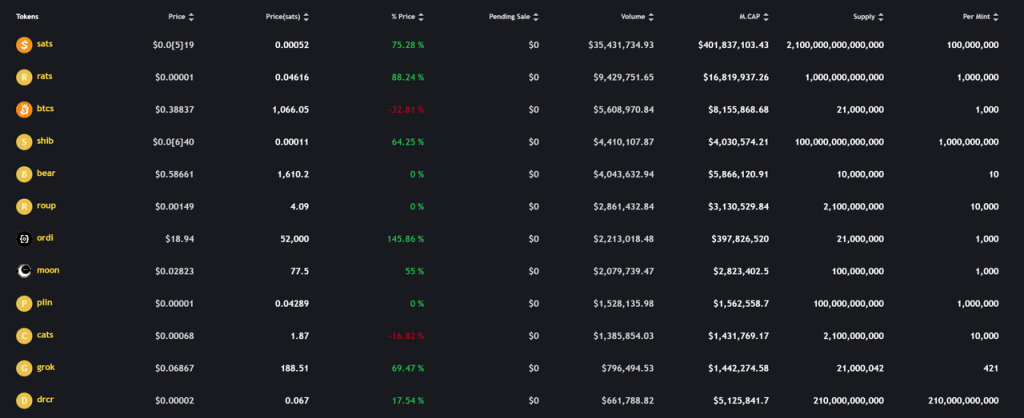
Token-like inscription assets on Bitcoin, source: BTCTOOL
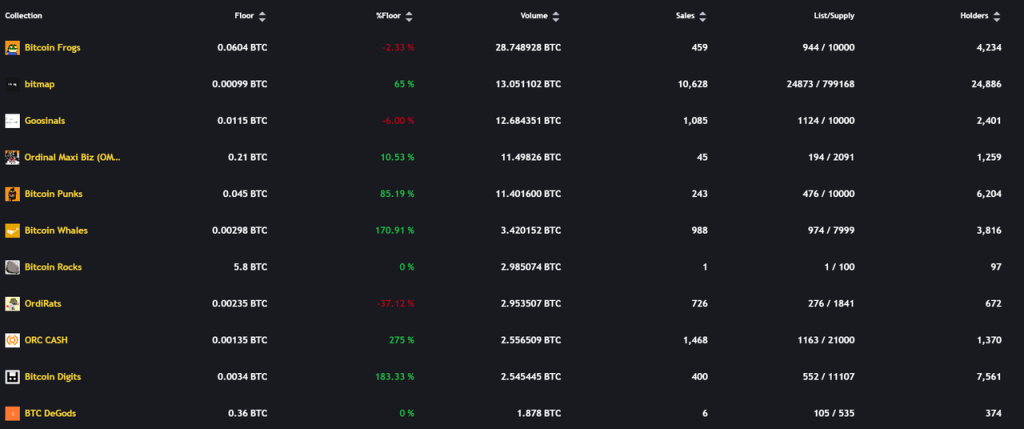
NFT-like inscription assets on Bitcoin, source: BTCTOOL
Depending on different inscription indexing standards, fungible tokens come in various forms such as BRC20 and ORC20.
This article focuses mainly on BTC inscription assets, particularly BRC20 tokens, which currently dominate the inscription asset market cap.
Despite breakout performers like Ordi and Sats posting massive gains this year, along with notable rises in others such as Rats, the majority of BRC20 assets launched during the same period have gone to zero, losing all liquidity within one or two months after launch.
Based on several inscription and BRC20 discussion sessions I've attended, participants generally describe promising BRC20 assets as having the following characteristics:
-
Strong name: related to Bitcoin or inscription culture (e.g., Ordi, Sats), or animal-themed (similar to the meme coin trend of 2021);
-
Truly native: not crude copies of existing memes, but original IPs;
-
Vibrant community: presence of influential leaders and aggressive, consistent promotional efforts to expand the user base;
-
Healthy distribution: early whale holdings should not be too concentrated, especially among passive investors who do not contribute to promotion.
Of course, applying these criteria in practice is far from straightforward.
The appeal of a name is subjective. Even within the relatively narrow niche of inscriptions, trends have shifted multiple times. A naming logic that resonates today may quickly fall out of favor in just a few weeks.
Value Proposition and Commercial Innovation of BRC20 Assets
There are various perspectives on the value proposition of BRC20 assets. The main arguments I’ve observed include:
-
Fair launch mechanism ensures equal access for all participants, unlike mainstream Web3 projects where VCs invest early at lower costs and later sell high to retail investors;
-
Simple and minimalistic BRC20 protocol reduces smart contract risks such as rug pulls, blacklisting, or hacks;
-
Enriches Bitcoin’s utility by expanding its accounting functions and asset classes, generating substantial transaction fees that could help fund Bitcoin's security budget as block rewards decline over time.
These points make sense, but in my view, they are not the primary drivers behind the explosive growth and wealth effects seen in BRC20 assets this year.
So, are inscription assets like BRC20 a good commercial innovation?
That depends on what we mean by “good” and whose interests we are considering.
For exchanges, speculators, and Bitcoin miners, this is clearly a beneficial innovation—these groups have seen tangible increases in revenue due to the rise of inscription assets.
However, if we assess whether inscription assets deliver broader commercial value—such as reducing production costs, improving efficiency, or optimizing resource allocation—then based on current observations, I would say no.
At their core, BRC20 assets are simply a new form of meme coins.
I don’t dismiss memes. As speculative instruments, meme assets provide real psychological satisfaction despite being a net-negative-sum game overall (due to fee extraction by platforms and creators). This explains why people continue visiting casinos even when they know gambling offers no mathematical edge.
Human susceptibility to gambling and greed is often as strong as basic physiological drives—this is the fundamental reason meme-based markets endure.
But within the meme space, BRC20 adds little true innovation beyond product diversification through a changed technical mechanism.
Take the much-touted “fair distribution” of BRC20: well-designed smart contract systems can achieve similar fairness. It is not a unique advantage exclusive to inscription-based assets.
As for the criticized model where VCs get in early while retail investors buy late, VCs take on enormous uncertainty when investing in projects that may have nothing more than a whitepaper. To compensate for this risk, they require extremely favorable entry prices. By the time tokens reach secondary markets, many uncertainties have been resolved—there are working products, observable metrics, mature ecosystems, exchange listings, etc. At this point, the project is no longer the intangible “early-stage idea” from before, so naturally, token prices reflect that progress.
The same logic applies to VC-free meme projects like Shiba Inu or Pepe. Initially, they were mere concepts with uncertain futures—would they gain attention? Would influencers promote them? Because of this uncertainty, early purchases were extremely cheap. But as holder counts grew, resources accumulated, and sentiment turned positive, those uncertainties became certainties, and prices rose dozens or hundreds of times.
So, why did BRC20—a not-so-novel form of meme—explode in popularity, especially in the second half of this year?
Mechanisms and Driving Forces Behind the Surge in Inscription Assets
Let us analyze the BRC20 wealth frenzy from two angles: mechanistic logic and driving forces.
Mechanistic Logic
As previously stated, BRC20 is fundamentally a speculative medium. Its sole utility for participants is the promise of “rapidly generating astonishing wealth.” And due to the statistical tendency that “people shout about profits but stay silent about losses,” even if most participants lose money, the dominant narrative remains stories of life-changing gains. This disproportionately amplifies the public perception of frequent millionaires emerging from such speculation.
Compared to traditional ERC20 memes, BRC20 has proven more efficient at generating this “wealth effect.”
The key reason lies in how most BRC20 assets—many even today—are traded via OTC order books, whereas ERC20 memes trade primarily on AMM DEXs or CEXs, which offer significantly deeper liquidity. This means far less capital is required to pump a BRC20 asset compared to an ERC20 meme (especially during rising market sentiment), resulting in much higher percentage gains from the same buying pressure.
In short, due to thin OTC liquidity, equivalent buying power can generate exaggerated price surges in BRC20 assets compared to ERC20 memes, creating stronger and faster wealth effects.
Beyond lower pumping costs, BRC20 assets traded off-exchange also lack short-selling tools like perpetual contracts, further unleashing their upside potential in the short term.
Additionally, core BRC20 participants note a high “mama participation rate” in speculation. Many new investors aren't seasoned DeFi users or familiar crypto natives, but rather middle-aged individuals encouraged by “team leaders” and grassroots marketing teams. These “mama investors” tend to follow instructions closely, are highly influenced by community leaders, and some don’t even know how to sell—leading to (3,3)-style holding patterns in certain projects, reducing near-term selling pressure.
Moreover, OKX’s push for its Web3 wallet—with its smooth experience for trading BRC20 assets—has lowered the barrier for entry, making it easier for these “mama speculators” to smoothly enter the market.
Driving Forces
The boom in inscription assets represents a rare bright spot of speculation during a bear market. Multiple stakeholders have strong incentives to fuel and prolong this trend:
-
Mining community: booming inscription transactions bring rich mining fees; miners and pools benefit directly, and mining hardware sells better—naturally, they want the “Inscription Summer” to last;
-
Exchanges: new speculative activity brings higher fees, new users, and strategic activation of wallet products. OKX has clearly emerged as a winner, with Binance now following suit;
-
CX teams: fresh themes and narratives allow them to monetize their influencer networks again.
These three forces together could accelerate the inscription market into its next phase.
Possible Scenarios for the Next Phase
To grow even larger and hotter, the already sizable inscription market needs a new act. Here are some potential catalysts:
-
More mid-tier CEXs listing additional inscription assets beyond Ordi and Sats, boosting other memecoins and drawing traditional crypto investors into BRC20 speculation;
-
Top-tier exchanges like Binance listing more inscription assets, funneling mainstream crypto capital into the BRC20 market;
-
Emergence of innovations beyond pure memes—for example, Ponzi-style mechanics in BRC20 memes that generate even more extreme wealth effects.
But will the inscription market successfully transition into a hotter phase—or gradually cool down or even crash suddenly?
Let’s examine possible paths and conditions for a market collapse.
Market Collapse Pathways
As discussed, the exaggerated wealth effect in early BRC20 assets stemmed from a combination of low liquidity in OTC trading, high concentration of “mama investors,” and numerous vested interest groups.
Low liquidity allows prices to skyrocket during rallies—but also causes freefalls when buyers disappear during downturns. Most people fail to realize that 95% of their wallet’s paper wealth might be “phantom valuation,” dependent on being able to exit quickly before liquidity dries up.
Key factors that could trigger a market crash include:
-
Excessive issuance and rapid exits by scammy projects. With limited users and capital in the ecosystem, BRC20 project operators compete primarily against each other. When funds flow into rival projects, fewer buyers remain available to absorb their own supply. Intense competition forces operators to dump earlier to secure profits, shortening the window for retail gains. Once loss stories overwhelm success stories and ridicule becomes dominant, users stop buying, and BRC20 meme liquidity evaporates.
-
Slowing user inflow. Factor 1 may cause some CEXs to become cautious about listing more BRC20 assets, further slowing the pace of new capital entering the space relative to dumping speed.
-
Once BRC20 tokens list on CEXs, primary liquidity shifts there, increasing resistance to pumps. With full shorting tools like perpetual contracts now available, unless the underlying mechanism changes, the post-listing wealth effect may sharply diminish.
-
Factors 1, 2, and 3 reinforce each other cyclically, culminating in a full-blown market collapse.
Afterword
Persistent greed and gambling instincts are the lifeblood of the crypto industry. I’ll continue observing how this “Inscription Summer” experiment unfolds.
For more on memes, check out "Dodge Meme Coin Mania: Why You Shouldn’t Bottom-Fish in Bear Markets".
Join TechFlow official community to stay tuned
Telegram:https://t.me/TechFlowDaily
X (Twitter):https://x.com/TechFlowPost
X (Twitter) EN:https://x.com/BlockFlow_News
 Mint Ventures