A Brief Analysis of BRC-20: Another Brilliant Star in the Bitcoin Ecosystem
TechFlow Selected TechFlow Selected
A Brief Analysis of BRC-20: Another Brilliant Star in the Bitcoin Ecosystem
This article will compare BRC-20 with ERC-20 and introduce the BRC-20 ecosystem.
 Navigating Web3 tides with focused insights
Author: Dai Shanlang
Article written on May 29, 2023 at 15:34
BRC-20 vs. ERC-20
BRC-20 is more like a special NFT, where the NFT specifies how many units of a fungible token it represents.
Advantages of BRC-20 over ERC-20:
A relatively fairer issuance mechanism. This mainly benefits from Bitcoin's limited programmability. While low programmability is generally considered a disadvantage for Bitcoin—especially when compared to Turing-complete blockchains like Ethereum that support smart contracts—this very "limitation" enables BRC-20 tokens to be issued without inherent value. Since BRC-20 tokens are tied to satoshis (sats), their minimum value can be seen as equivalent to one satoshi. In contrast, ERC-20 tokens lack such a fundamental floor in value.
Disadvantages of BRC-20 compared to ERC-20:
1. Limited programmability is a double-edged sword. The absence of native smart contract support on Bitcoin severely limits BRC-20’s potential for DeFi expansion.
2. Bitcoin cannot reject invalid inscriptions. Inscriptions are JSON-formatted data, and Bitcoin nodes do not parse this data.
3. Unisat holds dominant authority in determining inscription legitimacy, making the system less decentralized. Unisat already dominates the BRC-20 market. Because BRC-20 data is stored as JSON and requires interpretation tools, Unisat plays a central role as an interpreter—an indication of the ecosystem’s insufficient decentralization.
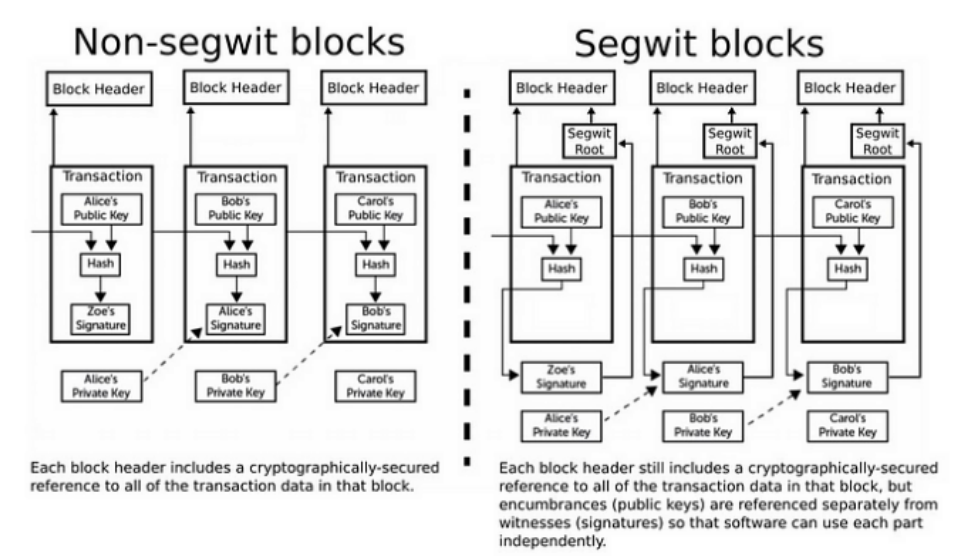
In fact, two technical upgrades to the Bitcoin protocol in 2017 and 2021—Segregated Witness (SegWit) and Taproot—increased the data storage capacity per block, enabling the emergence of Ordinals NFTs. However, these upgrades were not originally designed to create Bitcoin NFTs.
SegWit moves script signature (scriptSig) data out of the base block structure into a new data structure. Nodes and miners still verify these signatures in the new structure to ensure transaction validity. SegWit also relaxes size limits on signatures, effectively increasing Bitcoin’s block capacity.
The Taproot soft fork implemented in 2021 includes three BIPs: Schnorr Signatures, Taproot, and Tapscript. Their goal is to enhance privacy, efficiency, and security on the Bitcoin network.
Schnorr Signature is a digital signature algorithm proposed by Claus Schnorr. It allows multiple signatures to be aggregated into one, improving both efficiency and privacy. Taproot uses Merkle abstract syntax trees to hide complex transactions under ordinary public keys, further enhancing privacy and efficiency. Tapscript is a new scripting language used to write conditional logic within Taproot, optimizing Schnorr signatures and adding new opcodes. The core of this upgrade lies in Schnorr signatures, which bring better performance and broader use cases to Bitcoin. Although Bitcoin blocks are capped at 1MB, each transaction can include extra data, allowing up to 4MB of data per block.
Ultimately, the combination of Ordinal theory, SegWit, and Taproot enabled Bitcoin NFTs, giving every satoshi unique significance.
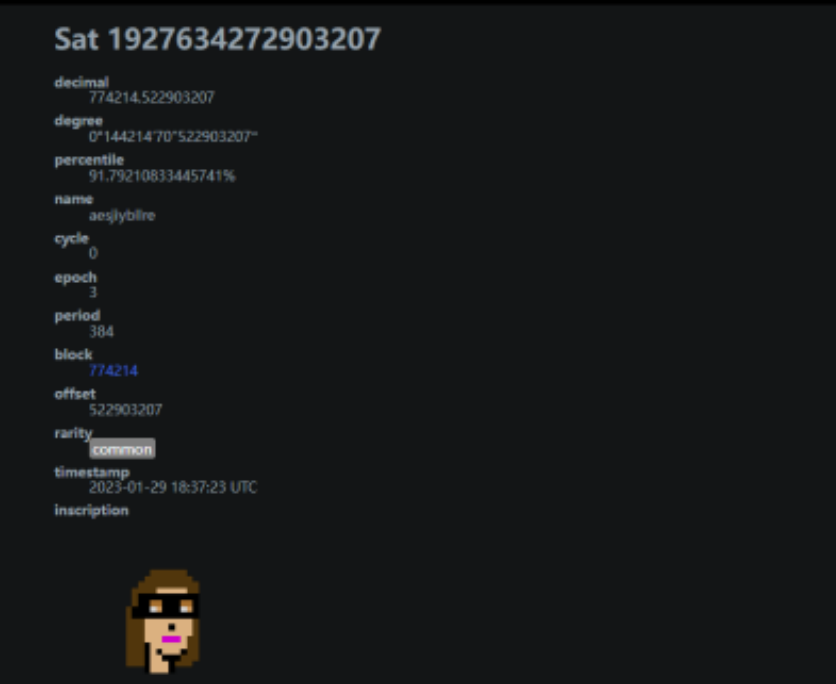
BRC-20 Ecosystem
When discussing BRC-20, Unisat cannot be ignored. Undeniably, BRC-20 was born with narrative momentum, but Unisat played a crucial role in fueling its rapid growth.
What did Unisat get right?
Unisat is first and foremost a browser extension wallet, with installation and user experience closely resembling MetaMask. Given MetaMask’s large user base, users familiar with EVM-compatible chains can quickly adapt to Bitcoin chain operations. Beyond wallet functionality, Unisat offers inscription, search, and marketplace services, becoming a one-stop application for the BRC-20 ecosystem.
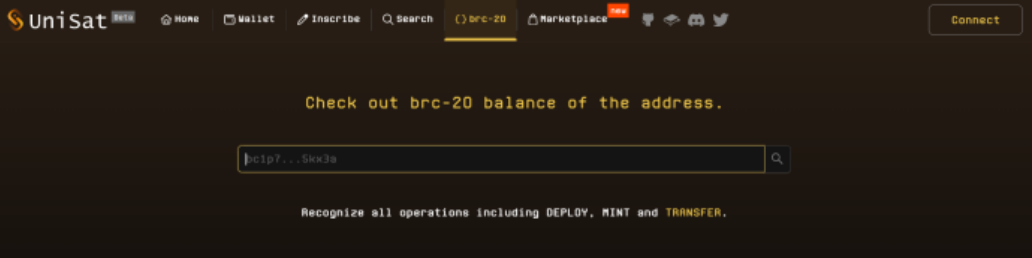
By offering comprehensive services, Unisat addresses various pain points for BRC-20 users, enabling them to perform minting, selling, searching, and other BRC-20-related tasks within a single tool.
Why did Unisat ignite the BRC-20 market?
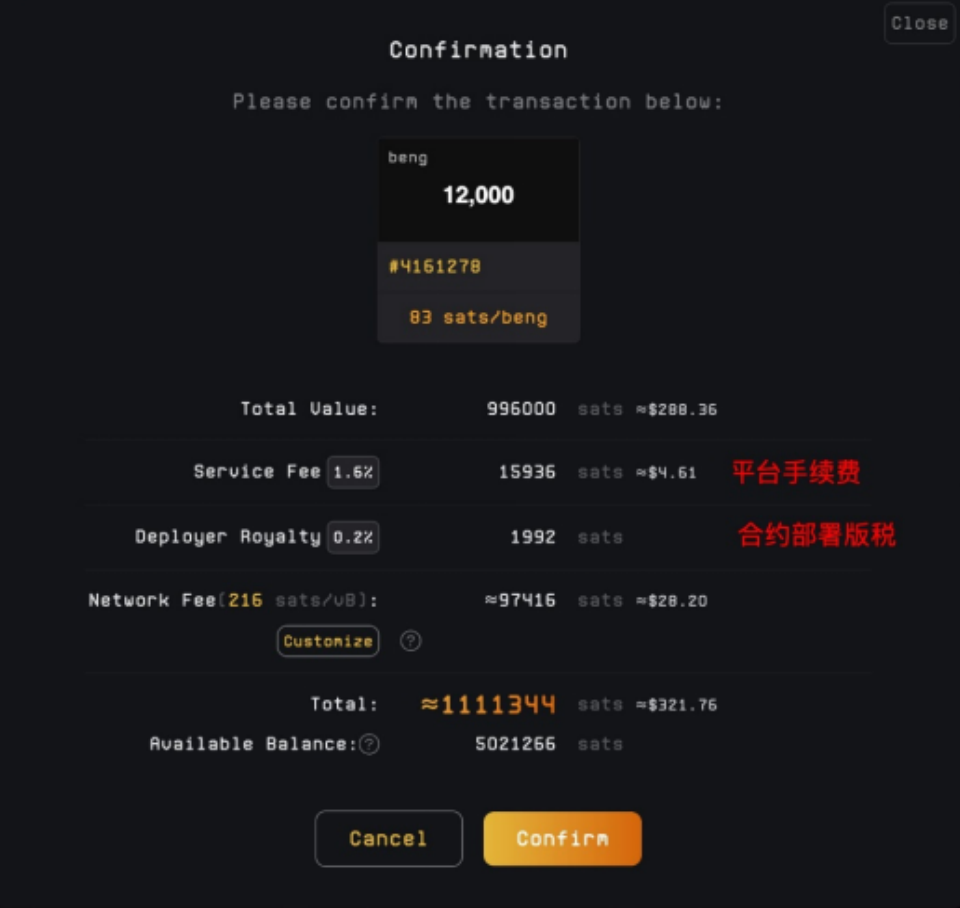
Beyond providing a one-stop solution, when Unisat launched its Marketplace feature, access required users to have a certain number of points. These points could only be earned by using Unisat’s minting tool, forcing users eager to buy desired BRC-20 tokens—driven by FOMO—to rapidly mint new project tokens. This clearly benefited project creators. Moreover, Unisat offers inscription deployers a 0.2% royalty on trades. As a result, numerous projects launched simultaneously, significantly heating up the market. It wasn’t until May 11 that, according to its official Twitter, the BRC-20 marketplace UniSat Marketplace removed access barriers, allowing usage without UniSat points.
Ordswap
Ordswap also aims to provide an all-in-one tool, allowing users to mint, buy, and sell ordinal inscriptions. However, it is not particularly friendly toward BRC-20 tokens—the marketplace lacks optimization for BRC-20, offering only four sorting options (Recent, Number, Price ASC, Price DESC). Clearly, BRC-20 enthusiasts are unlikely to choose Ordswap as their primary trading platform.
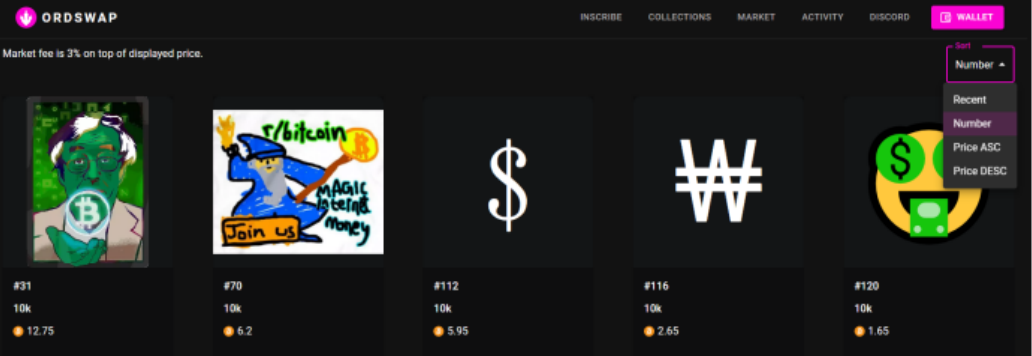
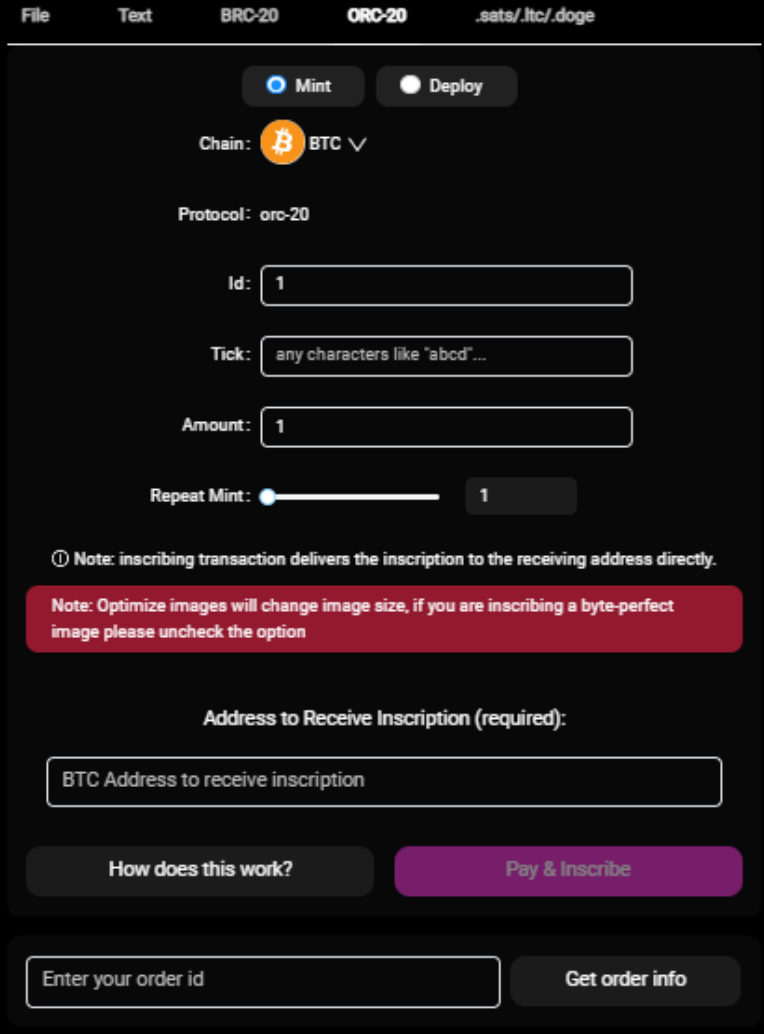
Interestingly, Ordswap provides an interface for inscribing orc-20 (an upgraded protocol compatible with BRC-20), facilitating related user operations.
Ordmint
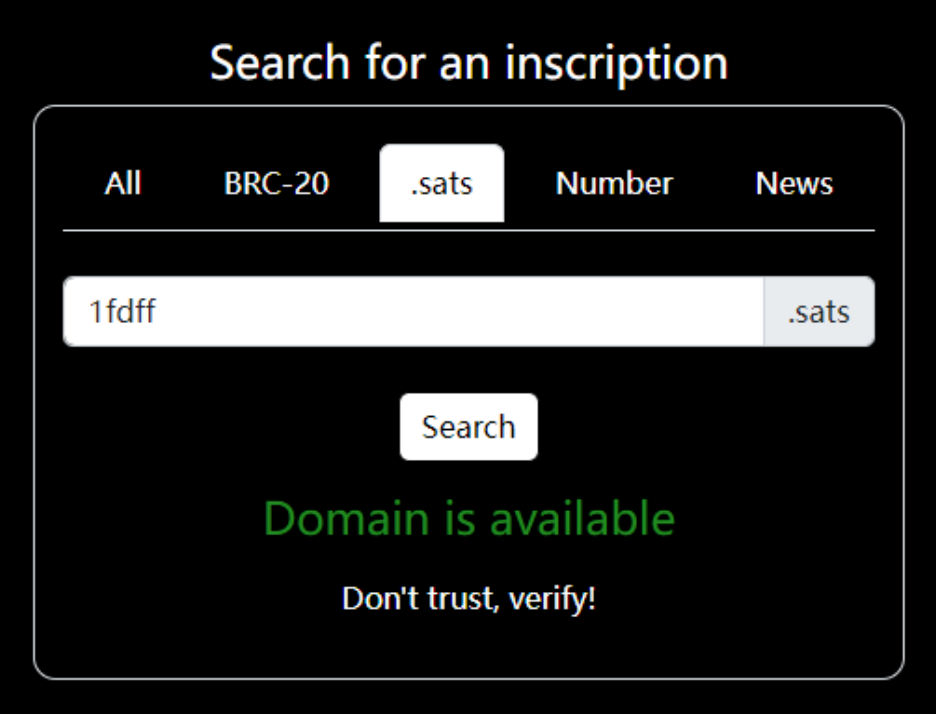
Ordmint is currently primarily a minting tool, supporting inscription payments via the Lightning Network. It also includes some search features, though they are not fully developed. Currently, it helps users check whether a .sat domain has already been inscribed. While additional search options appear on the front end, they remain non-functional as of now.
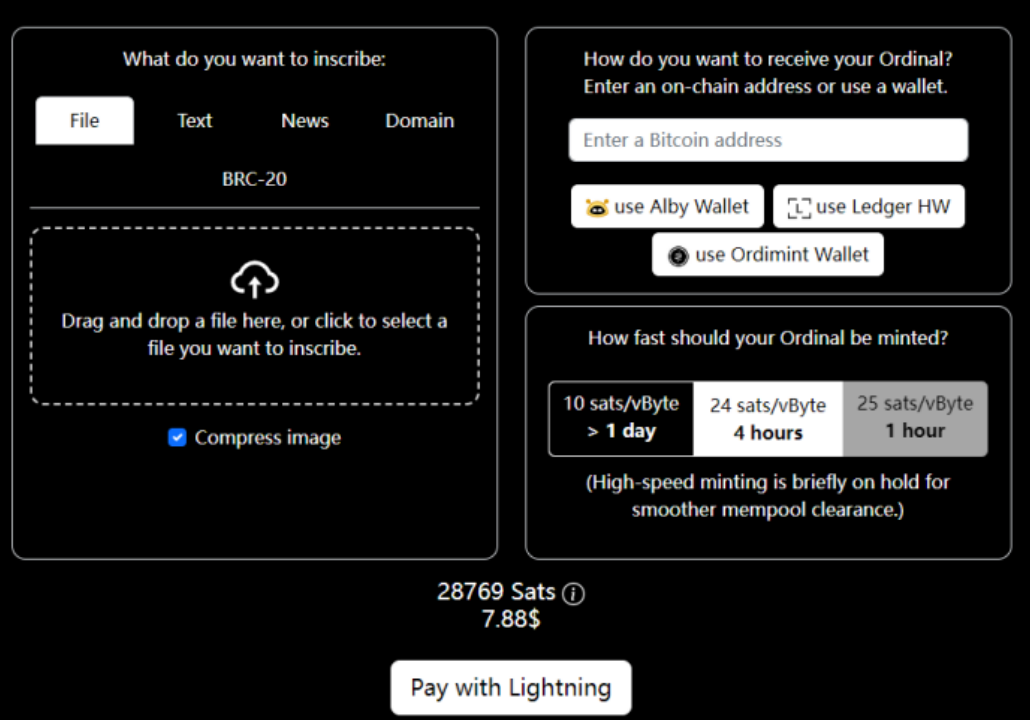
It currently helps users check whether a .sat domain has already been inscribed. Although additional search options are present on the front end, they are not yet usable.
Ordinals Wallet
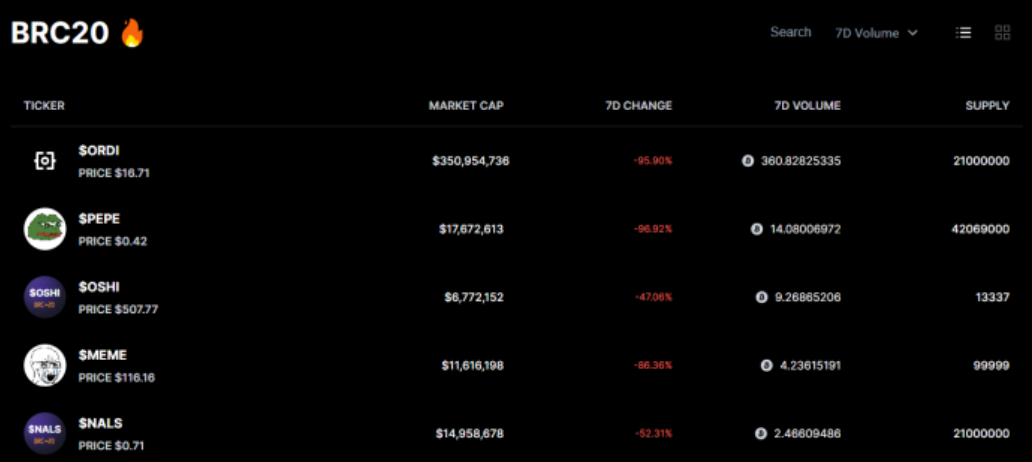
Ordinals Wallet is a web-based wallet and inscription explorer specifically designed for ordinals. It currently supports minting, trading, and other functions, and is highly BRC-20-friendly. The project has already airdropped Pixel Pepes NFTs to early users.
Other infrastructure components within the Ordinals/BRC-20 ecosystem:
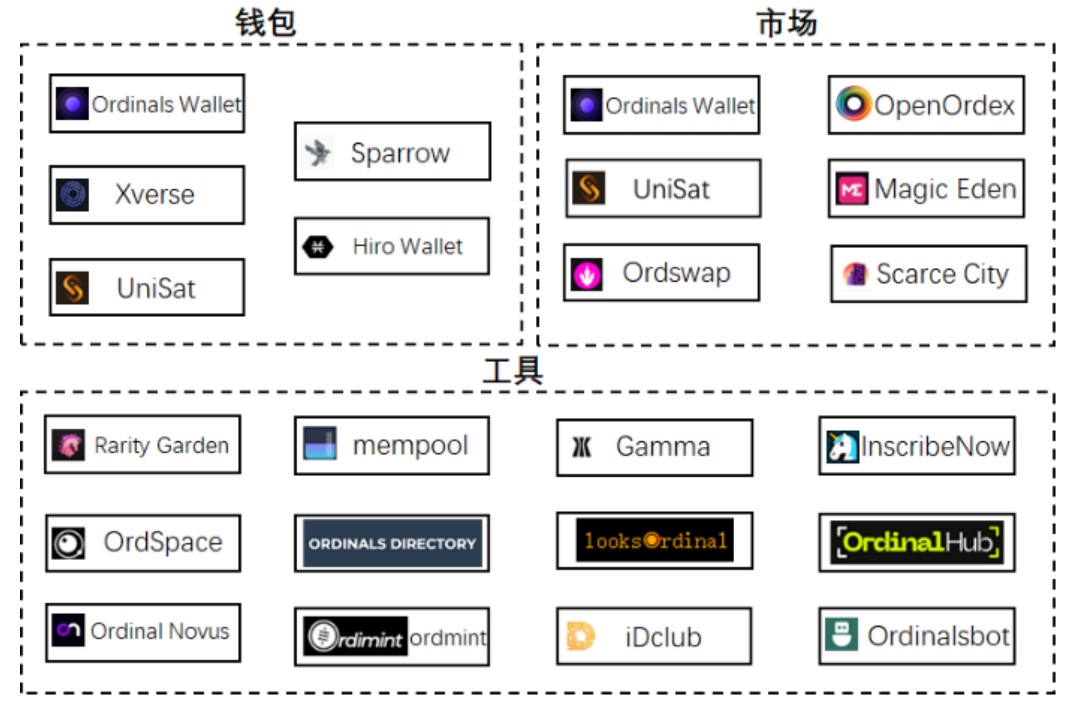
Future Outlook
BRC-20 represents a significant innovation on the Bitcoin network, revitalizing Bitcoin’s ecosystem and narrative while bringing renewed attention to the long-dormant Lightning Network. As more people begin to explore BRC-20’s potential, increasing numbers are succumbing to FOMO. A full-fledged BRC-20 ecosystem is gradually forming. However, most current BRC-20 tokens remain speculative “meme coins,” often possessing only entertainment value. Once the hype fades and market rationality returns, the prices of most BRC-20 tokens will inevitably drop sharply.
Join TechFlow official community to stay tuned
Telegram:https://t.me/TechFlowDaily
X (Twitter):https://x.com/TechFlowPost
X (Twitter) EN:https://x.com/BlockFlow_News