Podcast Notes | Conversation with Arthur Hayes: The Bursting of the Sovereign Debt Bubble, and Where Is BTC Headed?
TechFlow Selected TechFlow Selected
Podcast Notes | Conversation with Arthur Hayes: The Bursting of the Sovereign Debt Bubble, and Where Is BTC Headed?
The owners of financial assets are primarily the top 1% of society, who benefit from them, while the costs are borne by society as a whole.
 Navigating Web3 tides with focused insights
Compiled & Translated by TechFlow
In today's episode, Arthur Hayes, Chief Investment Officer of Maelstrom Fund, discusses the bursting of the sovereign debt bubble as bonds continue to face one of the largest sell-offs in U.S. history—the steepening bear market and its impact on bank balance sheets and market liquidity.
How can cryptocurrencies serve as a safe haven during financial crises?
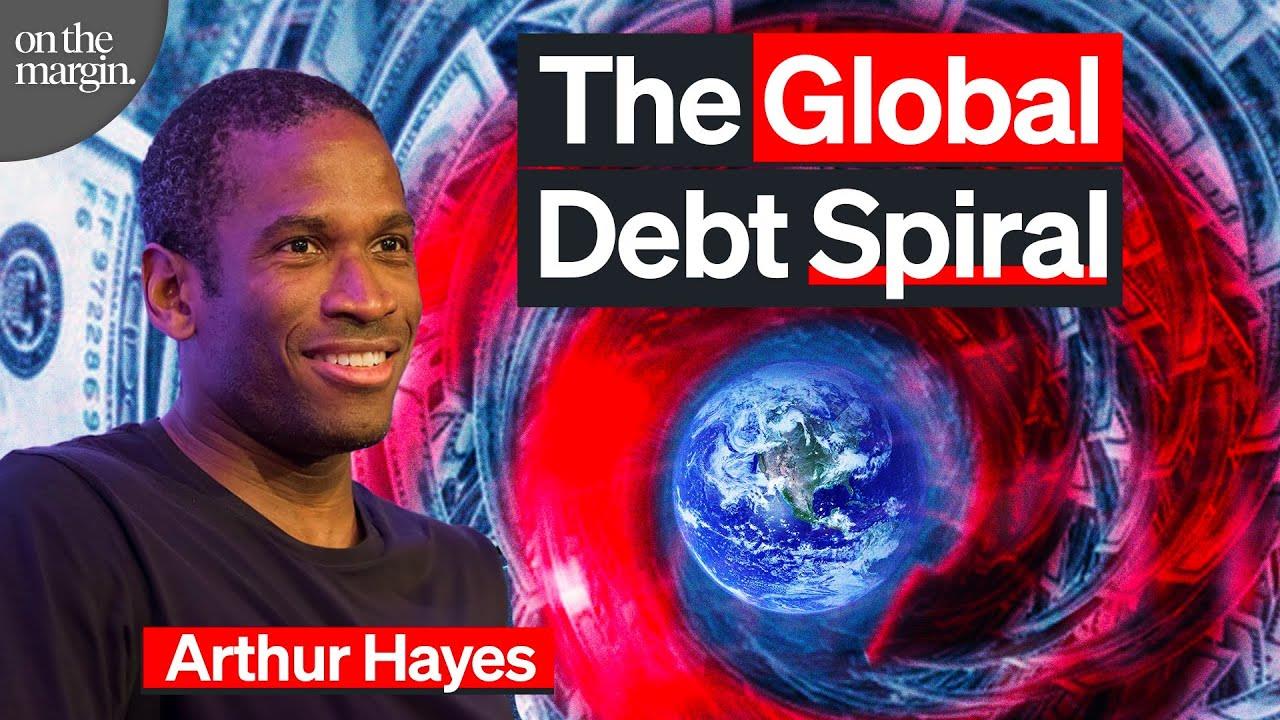
Host: Michael, Blockworks Macro
Guest: Arthur Hayes, CIO of Maelstrom Fund
Original Title: "Bursting Of The Sovereign Debt Bubble"
Air Date: November 1
Impacts of High Global Debt Levels
-
Nature of debt: Arthur compares debt to time travel—borrowing from the future to fund today’s activities based on the expectation that the output of these activities will exceed the cost of debt. In theory, this is a way to leverage future potential growth to drive current economic development.
-
Arthur points out that debt structures are typically predicated on there being more people in the future participating in economic activity, thereby generating wealth and income to repay debts. If population growth declines, this fundamental assumption is challenged. With slowing or negative population growth, fewer participants remain in economic activity while debt burdens persist, forcing the remaining population to shoulder greater repayment responsibilities—an issue particularly acute in developed nations.
-
Arthur criticizes the post-WWII effort to eliminate business cycles. He argues that attempts to smooth out natural economic fluctuations through debt financing—aimed at avoiding recessions and promoting stable growth—have created an unsustainable situation, with the global debt-to-GDP ratio reaching approximately 360%, making interest management a major challenge.
-
Arthur emphasizes that when debt reaches such high levels, economies must allocate vast resources simply to service interest payments, reducing funds available for other productive investments. This heavy debt burden limits fiscal space for governments, which must dedicate large portions of their budgets to debt servicing rather than investing in education, infrastructure, or other growth-promoting initiatives.
Bear Market Steepening: Are U.S. Treasuries Losing Their Appeal?
-
Definition: Bear market steepening refers to a rise in long-term interest rates relative to short-term rates, widely seen as a negative signal in bond markets.
-
Arthur compares the performance of long-dated U.S. Treasury ETF (TLT) versus Bitcoin. Since Russia’s invasion of Ukraine on February 24, 2022, Bitcoin has risen about 50%, while TLT has fallen about 17%. From October 7, 2022, to present, Bitcoin has gained roughly 24–25%, while Treasuries have declined by 3%.
-
Arthur notes that traditional investment strategies—allocating to U.S. assets during market instability—are shifting. Investors are now turning to globally accessible assets like Bitcoin, which unlike traditional assets are not directly controlled by any single government. Being digital and intangible, Bitcoin offers an alternative store of value. Investors are losing confidence in U.S. Treasuries, concerned that America's involvement in global military operations may prevent it from fulfilling economic commitments to retirees.
-
Arthur mocks investors who continue buying Treasuries despite the fact that U.S. 30-year bonds have lost 50% of their value over the past three years. He predicts that once investors realize bonds no longer reduce portfolio volatility, they will be forced to seek alternative investments.
-
Arthur believes that as investors recognize changing market dynamics, they will turn to fixed-supply assets like Bitcoin and gold. Given the enormous size of the global bond market, if investors begin questioning bonds’ ability to stabilize portfolios and preserve purchasing power—especially regarding energy costs—demand for Bitcoin, tech stocks, and other alternative assets could surge significantly.
Policymakers’ Dilemma
-
Arthur mentions the MOVE Index—the bond market volatility index—commonly used to gauge market instability. Rising values reflect heightened market stress. To calm nerves and prevent further turmoil, the Federal Reserve or U.S. Treasury may intervene with stabilizing measures.
-
He points out that although rising long-term rates are generally considered favorable for banks, in reality, banks were encouraged between 2020 and 2022 to purchase massive amounts of U.S. Treasuries. Now, with falling bond prices, many banks are technically insolvent, unable to lend or generate profits.
-
Arthur references a conversation with a volatility-focused fund manager who noted that U.S. banks disclosed significant unrealized losses on held-to-maturity securities in their quarterly reports. While these losses do not appear on income statements, they have already eroded banks' capital adequacy ratios.
-
Arthur stresses that the U.S. banking system has underlying issues. Market signals suggest that if bank stock indices fall below March levels, more institutions may face similar problems. As the yield curve steepens rapidly, additional pressure could emerge.
-
Arthur poses a hypothetical scenario: what if market participants identify a bank holding heavily depreciated commercial real estate and substantial unrealized losses? Such a discovery could force the bank to sell assets to balance its books. If it cannot resolve the situation independently, intervention by the FDIC—and ultimately U.S. taxpayers—might be required to rescue it from financial collapse.
TechFlow Note: FDIC, the Federal Deposit Insurance Corporation, is a government agency that protects depositors from losses due to bank failures.
-
Arthur highlights a critical decision point: whether a comprehensive backstop mechanism will emerge—not only protecting bank depositors from losing savings but potentially extending support to various forms of debt.
-
Arthur points out that owners of financial assets are primarily the top 1% of society, who benefit disproportionately, while the costs are borne by the broader population. This leads to class division, social inequity, and inflationary pressures, which may manifest differently across regions.
-
Arthur notes that governments and central banks may continue printing money and intervening in markets, especially when financial institutions face distress. However, while currency can be printed, energy cannot—leading to rising energy prices that become a persistent driver of inflation.
-
Arthur believes inflation statistics are manipulated by governments. Since everyone's consumption basket differs, individual inflation experiences vary. A better measure of real interest rates, he argues, would be nominal GDP growth minus government bond yields—providing a clearer picture of actual economic activity.
-
Arthur observes that the U.S. successfully implemented financial repression strategies in the 1940s and 1950s because it was then the world’s sole major producer. But in today’s globalized economy, such a strategy may no longer be viable.
Debt, Global Competition, and Asset Market Performance
-
Arthur notes that in 2023, every country produces goods and has workers needing jobs, with those workers expecting governments to deliver employment opportunities. He highlights current global trade imbalances—particularly the U.S. as a net debtor nation versus Germany, China, and Japan as net creditor nations—a relationship so extreme that it is unsustainable.
-
Arthur points out that U.S. policies like the CHIPS Act and Inflation Reduction Act aim to encourage domestic production through monetary expansion, posing a direct threat to China, the EU, and Japan. He quotes: “Trade Wars Are The Mirror Image Of Currency Wars,” suggesting that trade conflicts can escalate into currency wars, and ultimately, real-world conflict.
-
Arthur emphasizes that massive military interventions in Afghanistan, Iraq, and Syria have cost the U.S. government trillions of dollars over the past two decades—expenditures that continue to weigh heavily on its current economic condition.
-
Arthur notes that central banks worldwide must issue debt, but the key question remains: who will buy it? Ultimately, the burden may fall on ordinary citizens globally. He forecasts possible market developments ahead: rising long-term bond yields, higher prices for gold and Bitcoin, and declining equity trends.
-
Arthur believes ETFs could boost Bitcoin’s fiat-denominated price but also risk concentrating ownership, contradicting its decentralized ethos. He stresses that cryptocurrency offers an escape route from an unsustainable traditional financial system. As more fiat money enters circulation while Bitcoin and other major cryptos maintain fixed or deflationary supplies, this scarcity will drive up crypto values relative to fiat currencies.
-
Arthur argues that a currency’s value lies not in its quantity, but in how much energy it can buy. What matters—whether for fiat or even Bitcoin—is its purchasing power over energy. Energy is a non-printable resource. If we keep printing everything else except energy, energy prices will keep rising, becoming a persistent, sticky component of inflation.
Bitcoin’s Role in Today’s Economic Environment
-
Arthur notes that in 2021, Bitcoin moved similarly to tech stocks, reacting alike to market volatility and macroeconomic factors.
-
However, in recent months, Bitcoin has diverged—performing inversely to tech stocks and beginning to act more like gold. This shift suggests Bitcoin is increasingly viewed as a more stable store of value, rather than being tied to high-risk tech equities as before.
-
Arthur views Bitcoin’s price as a function of both fiat liquidity and technological focus. When attention centers on Bitcoin’s decentralized peer-to-peer monetary technology, combined with abundant fiat liquidity, it can fuel a massive bull run.
-
Arthur further explains that when global fiat liquidity expands—such as through central bank quantitative easing—this excess liquidity seeks investment outlets. Due to its limited supply and decentralized nature, Bitcoin becomes an attractive destination.
-
Arthur adds that when market focus aligns with Bitcoin’s technological strengths alongside increasing fiat liquidity, this combination can trigger a powerful bull market.
-
Arthur mentions the potential influence of large institutional investors like BlackRock on the Bitcoin market. If such firms gain control over significant portions of Bitcoin and mining operations, it could profoundly affect Bitcoin’s future. He envisions a scenario where institutions absorb large quantities of circulating Bitcoin via ETFs, potentially reducing liquidity as those coins become locked inside ETF structures rather than freely traded.
-
Arthur worries that if institutions become dominant shareholders in mining operations, they may resist upgrades to the Bitcoin network—such as enhanced privacy or encryption features—that could strengthen Bitcoin as a robust cryptographic asset.
-
He sees institutional participation as a double-edged sword. On one hand, institutions bring substantial capital and credibility to the Bitcoin market. On the other, they may undermine Bitcoin’s decentralization and free liquidity. Arthur warns that if most of Bitcoin’s supply falls under institutional control, its essence as a decentralized, freely tradable asset could be compromised.
-
Regarding market cycles, Arthur observes that the typical pattern starts with Bitcoin, then spreads to major altcoins like Ethereum, and finally reaches higher-risk assets. Each cycle introduces new narratives to capture market attention. Although Maelstrom Fund participates in these cycles, Arthur acknowledges it is extremely difficult to convince consumers to adopt new ideas and change long-established behavioral patterns.
Join TechFlow official community to stay tuned
Telegram:https://t.me/TechFlowDaily
X (Twitter):https://x.com/TechFlowPost
X (Twitter) EN:https://x.com/BlockFlow_News
 深潮TechFlow