Turkey Web3 Use Cases and Cryptocurrency Market Overview
TechFlow Selected TechFlow Selected
Turkey Web3 Use Cases and Cryptocurrency Market Overview
Turkish users show strong interest in Bitcoin and Ethereum, preferring to use cryptocurrencies for fiat hedging.
 Navigating Web3 tides with focused insights
Host: jolin
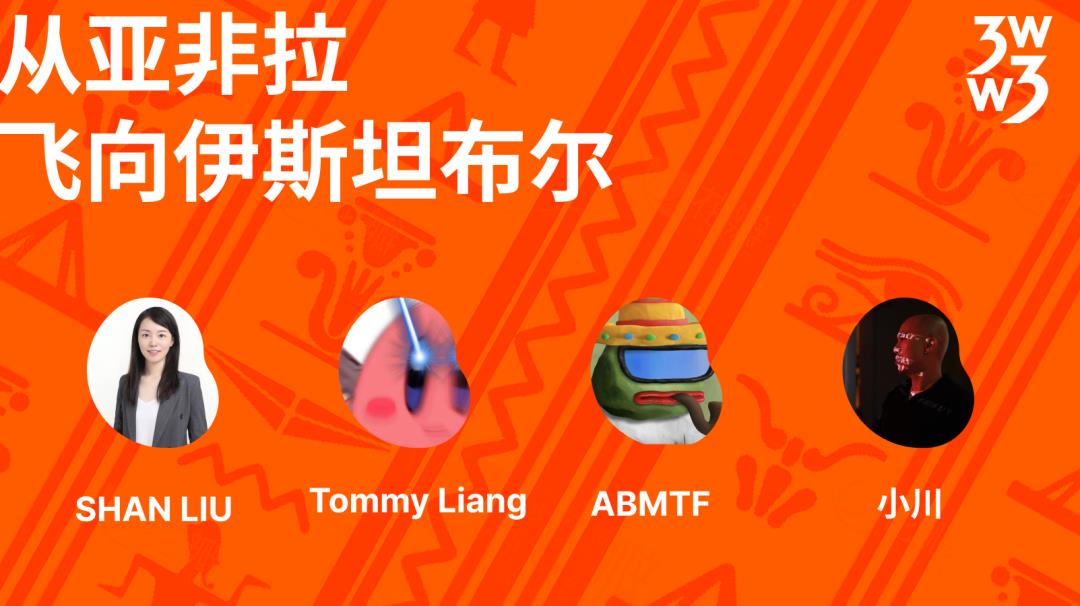
This article summarizes insights from the 3WW3 Afro-Asia-Latin Research Institute Space event on the "Turkish crypto market," along with key takeaways for attending blockchain events in Istanbul.
Guests
Web3 Use Cases in Turkey
Tommy Liang (Data):
- Daily active cryptocurrency traders across all CEX platforms in Turkey reached between 500,000 and 700,000 in December 2021. However, due to the bear market, this number dropped to between 270,000 and 410,000 by February 2023.
- Meanwhile, usage of non-custodial wallets remains relatively low in Turkey. Turkish users heavily rely on centralized exchanges (CEX) and have limited understanding of DeFi. Additionally, there is strong interest in Bitcoin and Ethereum, primarily used as a hedge against fiat currency depreciation. Football is extremely popular, leading to high enthusiasm for fan tokens.
Xiaochuan (Policy):
- The Turkish government's stance on Web3 has remained ambiguous. Although the Ministry of Digital Transformation mentioned plans in its 2018 strategy paper to build a National Blockchain Infrastructure, no major implementation has materialized.
- In 2021, the Central Bank issued a directive banning Turkish citizens from purchasing or providing services related to cryptocurrencies. However, the head of the Digital Transformation Office under the Presidential Complex clarified that “the central bank’s policy did not prohibit individuals from owning crypto assets.”
- More recently, political candidates have stated that “Turkey’s next unicorn will emerge from Web3,” which may reflect growing governmental support for crypto-related policies.
ABMTF (Local):
- Upon landing in Istanbul, you’ll notice local exchange advertisements at every boarding bridge, and numerous OTC crypto exchange outlets seamlessly integrate cryptocurrency into daily life.
- Even taxi drivers trade on exchanges while waiting, and small physical OTC shops are common throughout the city.
Shan (Local):
- Many people in Turkey can discuss recent BTC and ETH prices. When visiting my Turkish boyfriend’s family, even grandparents actively talk about fluctuations in ETH and BTC values.
- During real estate transactions, most agents automatically ask if you’d like to pay in cryptocurrency. Recently, when booking a venue for an event, the restaurant owner proactively suggested, “You can transfer payment—we accept digital currencies.”
- Younger generations often decorate their bedrooms with Bitcoin-themed items, and Bitcoin frequently appears in television programs.
Development Status Across Web3 Sectors in Turkey
Shan:
- Based on my experience with funds and projects, DeFi activity is relatively limited. While some focus remains on centralized exchanges, gaming currently dominates due to speculative behavior.
- Many gaming projects are led by former Web2 game developers transitioning into GameFi, SocialFi, and NFT ventures.
- Developers are also shifting focus—some infrastructure projects exist, but overall fundraising capacity lags behind Asia-Pacific regions due to a scarcity of VCs investing in Web3 within Turkey.
- Compared to last year, both user and developer communities are maturing. Application-layer development is expanding beyond GameFi and SocialFi to include cybersecurity, smart contracts, and auditing tools. Recently, figures from politics and academia have begun exploring RWA initiatives.
Tommy Liang:
- Nearly 16% of traffic to Lens Protocol’s website comes from Turkey, indicating popularity around SocialFi and airdrop farming. Turkish users frequently search Google for “free Bitcoin,” seeking out micro-task platforms offering small crypto rewards.
- Shan adds: From a retail investor perspective, many prefer long-term value coins over chasing MEME coins. For most, participation often begins and ends with airdrops.
Xiaochuan:
- We should pay attention to the views of TÜBİTAK (The Scientific and Technological Research Council of Turkey) Blockchain Institute on digital currency applications. They show particular interest in DID and using smart contracts to put government data on-chain.
- Also worth monitoring is the Digital Song initiative—a hackathon-style program run by the Digital Transformation Office under the Presidency—which reveals which sectors may receive policy-level support.
Tips for Attending Events in Turkey
Shan:
- There’s no need to worry about safety concerns—the event areas are secure. Protests, if any, typically only affect transportation. Despite being an Islamic country, Istanbul’s lifestyle resembles Western cities. Nightlife, bars, convenience stores, and social norms align closely with Europe and North America. Women do not need to wear headscarves to enter venues.
- However, when engaging in local community discussions, avoid mentioning scam projects or those exploiting religion for hype.
ABMTF:
- This isn’t something to be concerned about. Istanbul sits at the crossroads of Europe and Asia, surrounded by conflict zones, yet Turkey itself remains relatively stable. On a trip back from Montenegro, we transited through Turkey while many others rerouted via Serbia—an unnecessary detour.
Open Q&A
Xiaochuan (Question):
How connected is Turkey’s funding ecosystem with Saudi Arabia, UAE, and Qatar? Or is it more aligned with Western capital?
Shan (Answer):
Generally speaking, projects first raise from local angel investors, then expand overseas to North American and European investors. Afterward, they may attract more international capital including from Asia-Pacific, and finally consider Middle Eastern sources.
Few projects actively fundraise in Dubai, largely due to cultural differences. Many local founders—even those associated with so-called royal families—look down upon certain Islamic-themed projects coming from the Gulf.
Although flight times to the Middle East are short—only four to five hours—I find it less convenient than traveling to Asia-Pacific. Visa processes and logistics are cumbersome.
However, exchanges and fan token projects do maintain some connections with the region.
Guest Events
ABMTF will host the "Crypto Kitchen Ten-Day Talk" event, inviting entrepreneurs and project teams to enjoy local cuisine while discussing perspectives on Web3.
Shan will organize two events: a Pitch Day and a conference in collaboration with Polygon. She will also co-host a breakfast networking session with Xiaochuan at Create House, tailored for investors.
Xiaochuan will host a Create House event in Turkey focused on public goods, and will offer short-term lodging for attendees.
Join TechFlow official community to stay tuned
Telegram:https://t.me/TechFlowDaily
X (Twitter):https://x.com/TechFlowPost
X (Twitter) EN:https://x.com/BlockFlow_News
 @Research3ww3