Turkey Strengthens Anti-Money Laundering Regulation on Cryptocurrencies: Interpretation of New Rules and Industry Impact
TechFlow Selected TechFlow Selected
Turkey Strengthens Anti-Money Laundering Regulation on Cryptocurrencies: Interpretation of New Rules and Industry Impact
Recently, the Turkish government announced a series of stricter anti-money laundering regulations for cryptocurrencies, a move that has quickly drawn widespread attention from the industry.
 Navigating Web3 tides with focused insights
Author: Beosin Compliance Team
As the global cryptocurrency market rapidly expands, anti-money laundering (AML) and regulatory compliance have increasingly become focal points for governments worldwide. Recently, the Turkish government announced a series of stricter cryptocurrency AML regulations, immediately drawing significant attention from the industry. These new rules will officially take effect on February 25, 2025, demonstrating Turkey's determination in regulating the crypto sector and offering valuable insights for the global market’s compliance-driven development.
New Regulation Breakdown: Enhancing Transparency and Transaction Security
On December 25, 2024, the Turkish government released an official announcement outlining key provisions of the new AML regulations, focusing on transaction thresholds, handling of high-risk transactions, and restrictions on unregistered wallets—aiming to improve transparency and security in cryptocurrency transactions.
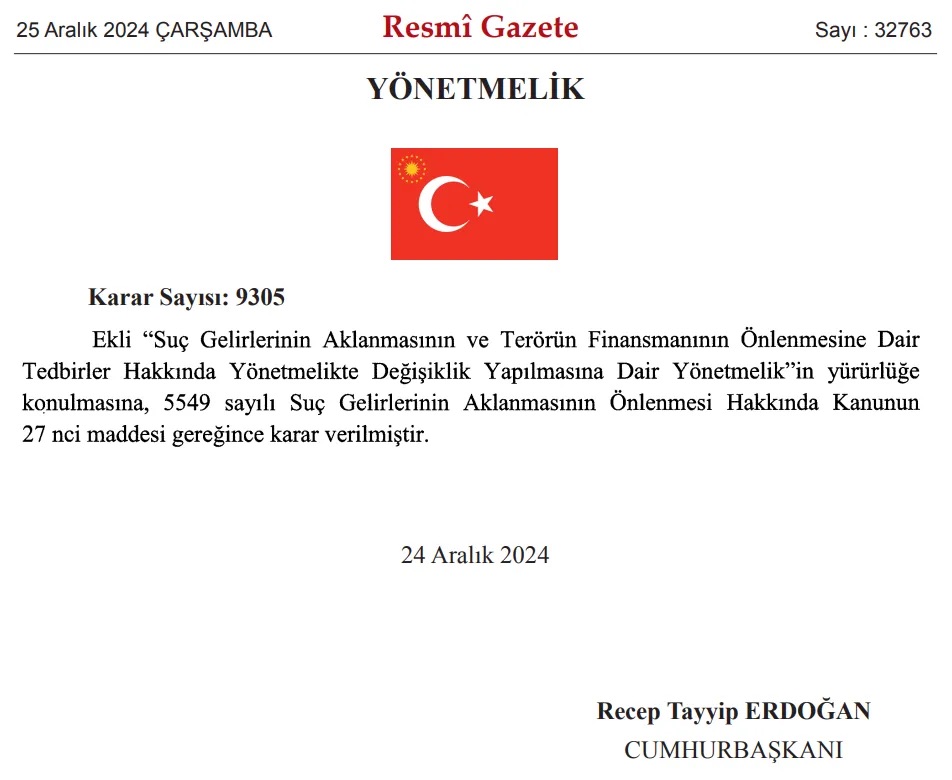
Turkey's New Cryptocurrency Regulations
Source: Official Gazette of the Republic of Turkey
1. Transaction Threshold Requirements
Under the new rules, users conducting cryptocurrency transactions exceeding 15,000 Turkish lira (approximately $425) must provide full identity information to service providers. For transactions below this threshold, providers may selectively collect relevant data. This requirement aims to ensure traceability of large-value transactions and effectively curb illicit financial flows.
2. Handling High-Risk Transactions
If a sender fails to provide sufficient identifying information, their transaction will be flagged as “high risk.” In such cases, service providers are empowered to take various actions, including rejecting the transaction, restricting cooperation with related financial institutions, or even terminating business relationships with the counterparty. This provision grants greater discretion to service providers, enhancing overall system security.
3. Restrictions on Unregistered Wallets
Wallet addresses not registered on platforms are now subject to strict oversight. Service providers must obtain the sender’s identity information; otherwise, the transaction will be blocked. This measure targets illegal activities conducted through anonymous wallets, such as money laundering and terrorist financing.
Through these measures, the Turkish government seeks to establish a more transparent and secure environment for cryptocurrency transactions, laying the foundation for future industry standardization.

Global Context: Alignment with Europe’s MiCA Framework
The introduction of Turkey’s new regulations coincides with a pivotal moment of regulatory transformation across the global cryptocurrency landscape. The European Union’s Markets in Crypto-Assets Regulation (MiCA), which came into force on December 30, 2024, is recognized as the world’s first comprehensive regulatory framework covering digital assets.
Turkey’s updated rules clearly draw from advanced international practices like MiCA, signaling its alignment with global standards in cryptocurrency compliance. This convergence with international norms not only enhances the attractiveness of Turkey’s market but also provides foreign investors with a more trustworthy operating environment. Furthermore, strengthened regulation plays a critical role in combating cross-border financial crimes such as money laundering and terrorist financing.
Industry Impact: Turkey’s Path Toward Compliance and Market Outlook
As the world’s fourth-largest cryptocurrency market, Turkey recorded trading volumes of up to $170 billion in 2023—surpassing both Russia and Canada—and solidifying its significance in the global crypto arena. However, Turkey continues to face challenges in balancing regulation with market growth. While buying, holding, and trading cryptocurrencies remain legal, their use as a payment method has been prohibited since 2021. This means that although investors can freely trade digital assets, they cannot directly use them in everyday transactions.
Turkey’s cryptocurrency market has shown strong momentum, driven by unique economic conditions and growing public demand for digital assets. Persistent high inflation and currency depreciation have led many citizens to adopt cryptocurrencies as tools for hedging risks and preserving wealth. Nevertheless, the Turkish government maintains a cautious stance toward crypto: while permitting legal trading, the ongoing ban on payments reflects regulators’ efforts to balance innovation with risk management.
1. Promoting Market Standardization
The new regulations will significantly enhance market transparency and transaction security, strengthening investor confidence in digital assets. In a standardized environment, market participants can access higher-quality services, further supporting healthy market development.
2. Accelerating Corporate Compliance
By December 2024, 77 cryptocurrency companies had already applied for operating licenses from Turkey’s Capital Markets Board. This reflects proactive corporate responses to the new rules and lays the groundwork for broader market participation.
3. Long-Term Growth Potential
Although the new regulations impose certain limitations on transaction activities, the Turkish government maintains a relatively open tax policy. For instance, capital gains from crypto assets are currently untaxed, and only a 0.03% transaction tax is levied—demonstrating support for market development. This balanced regulatory approach is expected to drive sustained growth in Turkey’s cryptocurrency ecosystem.
Join TechFlow official community to stay tuned
Telegram:https://t.me/TechFlowDaily
X (Twitter):https://x.com/TechFlowPost
X (Twitter) EN:https://x.com/BlockFlow_News
 @Beosin_com