Is a Turkish crypto license worth applying for Web3 entrepreneurs?
TechFlow Selected TechFlow Selected
Is a Turkish crypto license worth applying for Web3 entrepreneurs?
Interpreting the regulatory policies of the world's fourth-largest cryptocurrency market.
 Navigating Web3 tides with focused insights
Author: Jin Jianzhi, Senior International Lawyer at Shanghai Manqin Law Firm
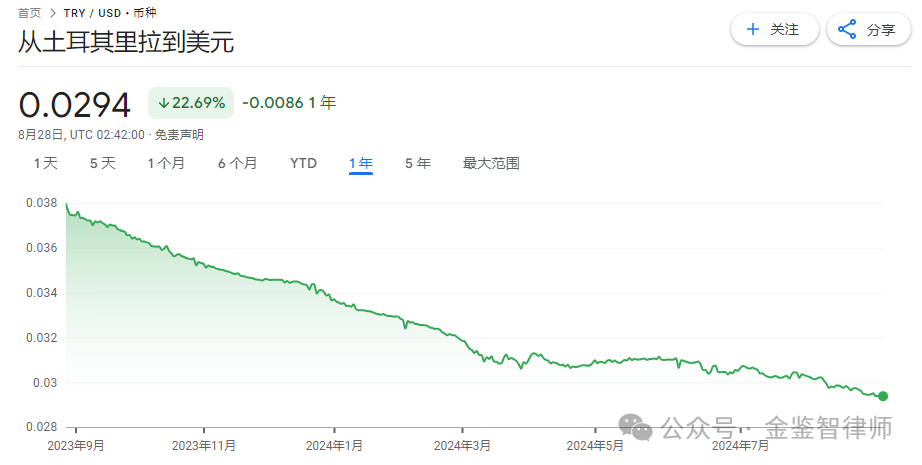
From September 2023 to August 2024, the Turkish lira depreciated by 22% against the U.S. dollar. For a Turkish individual sensitive to arbitrage opportunities, holding lira has become an unprofitable endeavor, prompting them to convert their lira into dollars or other assets less prone to devaluation as quickly as possible. According to Kucoin's 2023 report, over 50% of Turks invest in cryptocurrency.
Faced with this unstoppable trend, Turkish authorities have had no choice but to embrace cryptocurrencies. While officially avoiding any explicit mention of the rapid depreciation of the lira, the preamble to Turkey’s "Adopted Bill on Amendments to the Capital Markets Law" reveals a sense of resignation: “Although the high volatility in crypto-asset prices has increased public awareness of their risks, interest from households in these assets—distinct from traditional financial instruments—continues to grow. Particularly during the global pandemic, individuals worldwide showed heightened interest in this sector, and the use of crypto-asset platforms became widespread among risk-tolerant individuals. In Turkey, approximately 10 million people have opened accounts and conducted transactions on crypto-asset platforms. Therefore, following international examples, our country recognizes the necessity of regulating these platforms. Considering the benefits of blockchain technology in finance and other fields, we must avoid hindering the development of this innovative ecosystem. The Turkish authorities have decided to implement regulation. However, the aim is not to regulate blockchain technology itself, but rather the trading activities of crypto-assets based on this technology conducted via platforms.”
In our communication with local Turkish lawyers, we also found that Turkey's regulatory framework for crypto licenses is still in an exploratory phase, with many details lacking clear legal provisions, requiring constant communication with regulators to ensure compliance.
Applicability
Article 3 of the "Amended Capital Markets Law" stipulates that crypto-asset service providers must obtain a license from the Turkish Capital Markets Board (CMB) before establishment and commencing operations, and may only engage in activities defined by the CMB. A crypto-asset service provider refers to platforms, custodial service providers, and other entities designated under regulations promulgated under this law that offer services related to crypto-assets, including initial sales or distributions. A platform is defined as an organization facilitating one or more transactions such as trading, initial sale or distribution, clearing, settlement, transfer, custody, and other specified activities involving crypto-assets.
According to Foresight News, the number of companies applying for crypto licenses has risen to 76, including new entrants such as Coinbase, KuCoin, and Gate.io. Previously recognized platforms like Binance, Bitfinex, and OKX have also entered the application process.
Both legally and in terms of market response, exchanges are currently the primary applicants.
Application Process
1 Prepare Required Documents
Under the amendment, applicants must prepare a series of documents, which may include information about shareholders and key executives, organizational charts, detailed descriptions of technical systems and information security, among others.
2 Establish a Local Entity
Global exchanges operating in Turkey must establish a local entity, which must provide proof of reserves and maintain a minimum of 50 million TRY (approximately $150,000) in a designated local bank account.
3 Submit License Application
Submit the application along with all necessary documents and information to the Turkish Capital Markets Board. The amendment states that crypto-asset service providers must obtain approval from the Board before conducting any business activities.
4 Comply with Technical Standards
Applicants must ensure their technical systems and information security meet the standards set by the Scientific and Technological Research Council of Turkey (TÜBİTAK).
5 Wait for Review
After submission, await evaluation by the Capital Markets Board. The Board will assess the applicant’s qualifications, technical infrastructure, financial standing, and other relevant factors in accordance with the amendment.
6 Ongoing Compliance
After obtaining the license, service providers must continuously comply with all applicable laws and regulations and make necessary adjustments according to market developments and regulatory updates. Cryptocurrencies listed on the platform must undergo review and approval by the authorities.
7 Consequences of Operating Without a License
Exchanges without a Turkish license are prohibited from engaging in any marketing activities, including public promotion in Turkish or offering services in the Turkish language; doing so constitutes a criminal offense.
Process and Costs
The first round of applications closed in early September 2024, with the next deadline set for early November 2024. The average processing time is around two months.
Major costs associated with applying for a Turkish crypto license include: application fees (to obtain licensing from the Turkish Capital Markets Board), legal fees, technical infrastructure expenses (due to data compliance requirements), auditing and reporting fees, personnel costs (primarily hiring a compliance officer), insurance, training, and certification.
It should be noted, however, that because the Turkish authorities are still refining the details of the licensing regime—and given the previously unregulated nature of Turkey’s domestic crypto market—many aspects remain uncertain. For example, the exact qualifications required for a compliance officer are still being explored, making it challenging for applicants to balance cost efficiency with compliance. That said, based on current applicant experiences, the total cost of the entire process ranges from 2,750,000 TRY ($81,572) to 10,050,000 TRY ($311,458).
In addition, the standard corporate tax rate for most Turkish companies is currently 25%, which must be factored into operational planning for any business intending to operate in Turkey.
Manqin Law Firm Summary
For cryptocurrency exchanges and related service providers, Turkey’s crypto license presents a compelling opportunity. Despite the evolving and incomplete regulatory framework—which brings unavoidable uncertainty and costs—the continued depreciation of the Turkish lira and rising public demand for crypto-assets mean the market holds significant potential.
Obtaining a Turkish crypto license not only enables legal and compliant operations but also allows access to unique market opportunities, particularly as crypto-assets increasingly serve as tools to hedge against inflation and currency devaluation. However, applicants must carefully weigh the current regulatory uncertainties and compliance costs, and be prepared for ongoing dialogue with local regulators. For businesses willing to take on the risks and capable of navigating a volatile and uncertain environment, Turkey’s crypto license could yield substantial, unexpected rewards.
Join TechFlow official community to stay tuned
Telegram:https://t.me/TechFlowDaily
X (Twitter):https://x.com/TechFlowPost
X (Twitter) EN:https://x.com/BlockFlow_News