A Comprehensive Overview of Notable On-Chain Gaming Engines: The Key to Driving Full-Chain Game Maturity
TechFlow Selected TechFlow Selected
A Comprehensive Overview of Notable On-Chain Gaming Engines: The Key to Driving Full-Chain Game Maturity
This article will introduce some major on-chain gaming engine projects that deserve ongoing attention, as they will shape the future of blockchain-based gaming experiences.
 Navigating Web3 tides with focused insights
By: WILLIAM M. PEASTER
Compiled by: TechFlow

What Is On-Chain Gaming and Why Does It Matter?
On-chain gaming refers to games whose core logic, rules, assets, and state are directly stored on a blockchain—most commonly Ethereum or Ethereum Virtual Machine (EVM) networks to date.
Unlike traditional off-chain games or hybrid on-and-off-chain models, every action, transaction, and progression in an on-chain game is recorded on the blockchain. This approach offers several compelling value propositions:
-
Ownership — Players truly own their in-game assets, which can be traded, sold, or used across different games as NFTs.
-
Transparency — Game rules and mechanics are open and verifiable to anyone, ensuring fairness and enabling third-party builders to create unique experiences atop the core game.
-
Interoperability — Assets and progress can be used across multiple games or platforms.
-
Economic Incentives — Players can earn real-world value through crypto-economic gameplay, turning leisure time into potentially profitable opportunities.
-
Decentralization — Games are not controlled by a single entity, allowing players to more easily participate in governance processes for games they care about.
Different On-Chain Game Engines
On-chain game engine projects come in various forms and scales. Some are open-source and ecosystem-focused, while others are proprietary, custom-built to power individual games.
To help you better grasp the fundamentals of this landscape, below I’ve listed some of the major on-chain game engine projects worth watching, as they will shape the future of blockchain-based gaming experiences.
MUD
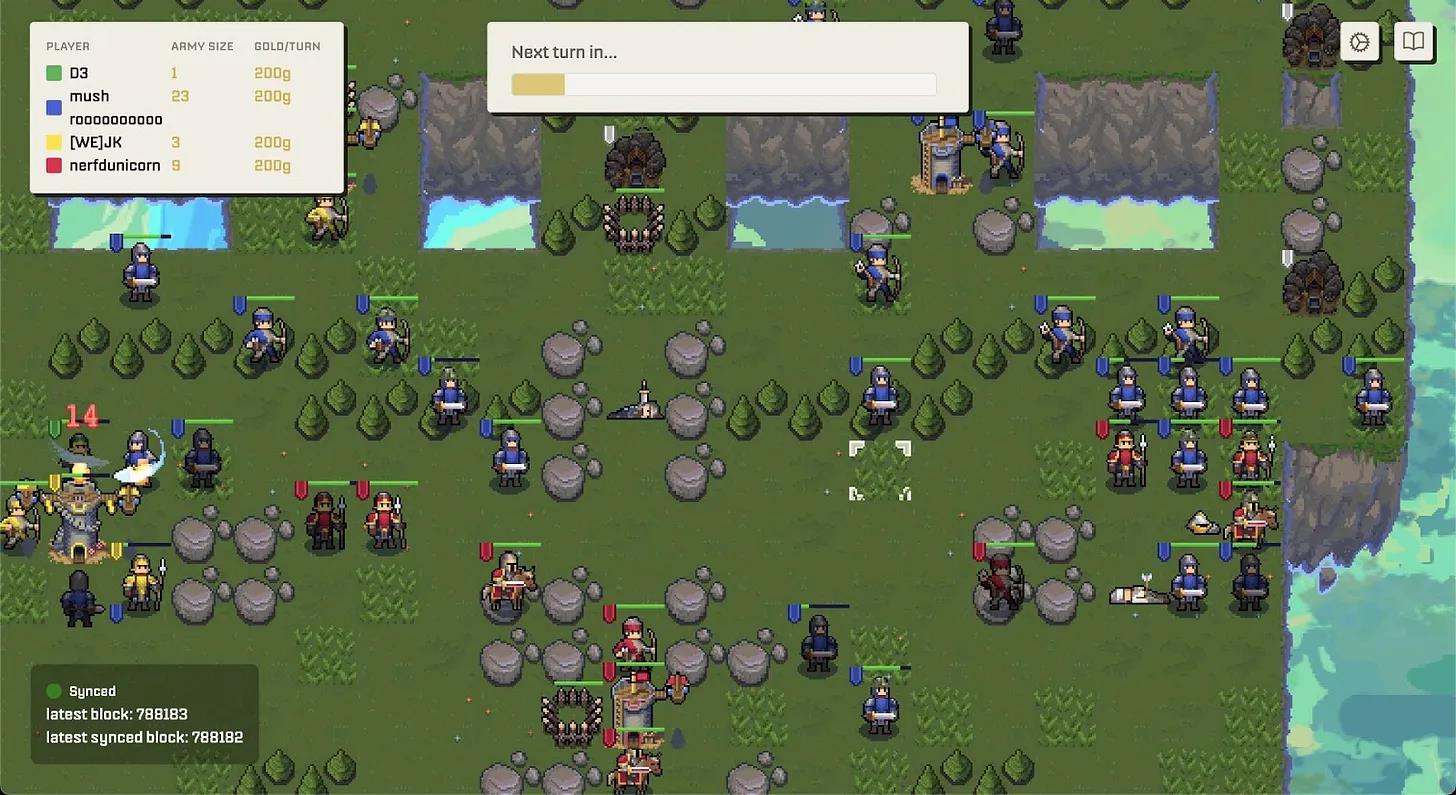
Lattice is a team building MUD, an open-source framework for developing on-chain applications, applicable to gaming and beyond. Currently, most on-chain games are built on top of MUD.
Overview: MUD provides game developers with a flexible toolkit to easily create on-chain games. Through its “Store” mechanism, it offers ready-made, secure storage for game data, eliminating the need to build from scratch. Meanwhile, the “World” manages interactions between different parts of a game and this data, streamlining development so creators can focus on gameplay.
Example games: OPCraft, Skystrife, Kamigotchi.
Dojo

Guided by tarrence.eth and other members of the Starknet gaming community, Dojo is a game engine and tech stack optimized for autonomous world games on Starknet.
Overview: Dojo leverages Cairo, an advanced language designed to allow massive computations to be compressed into a single proof. As a result, the engine’s adaptability and efficiency make it a powerful choice for developers aiming to create complex and transparent gaming experiences on the Starknet L2.
Example games: Roll Your Own, Influence.
World Engine
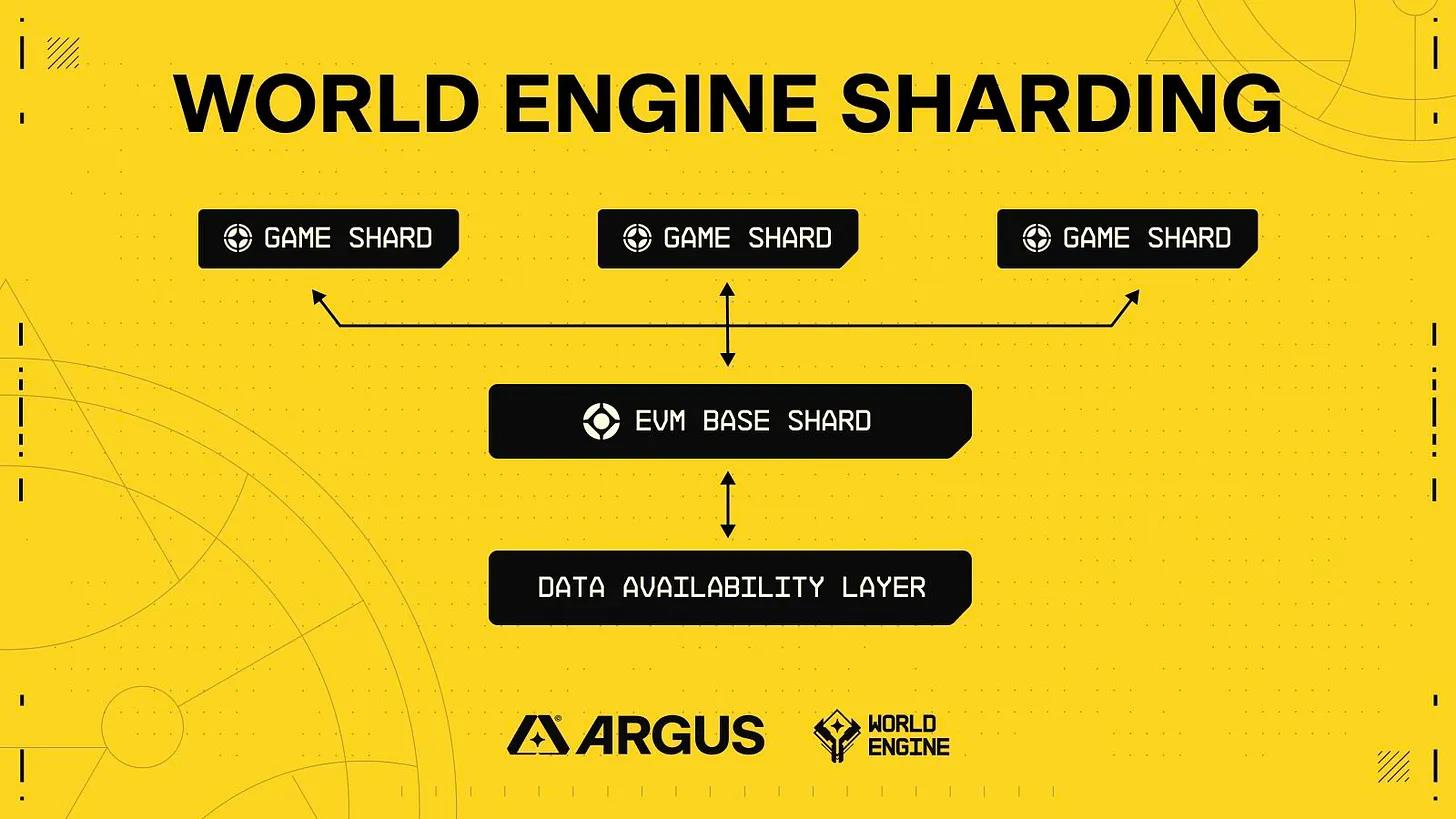
Argus is developing the World Engine as a sharded rollup tech stack designed to support and scale on-chain gaming.
Overview: The World Engine will be an L2 + game engine combo centered around a foundational shard capable of supporting numerous independent, customizable game shards. Notably, creators have previously hinted at “location-based” sharding, which could function similarly to regional server systems.
Keystone
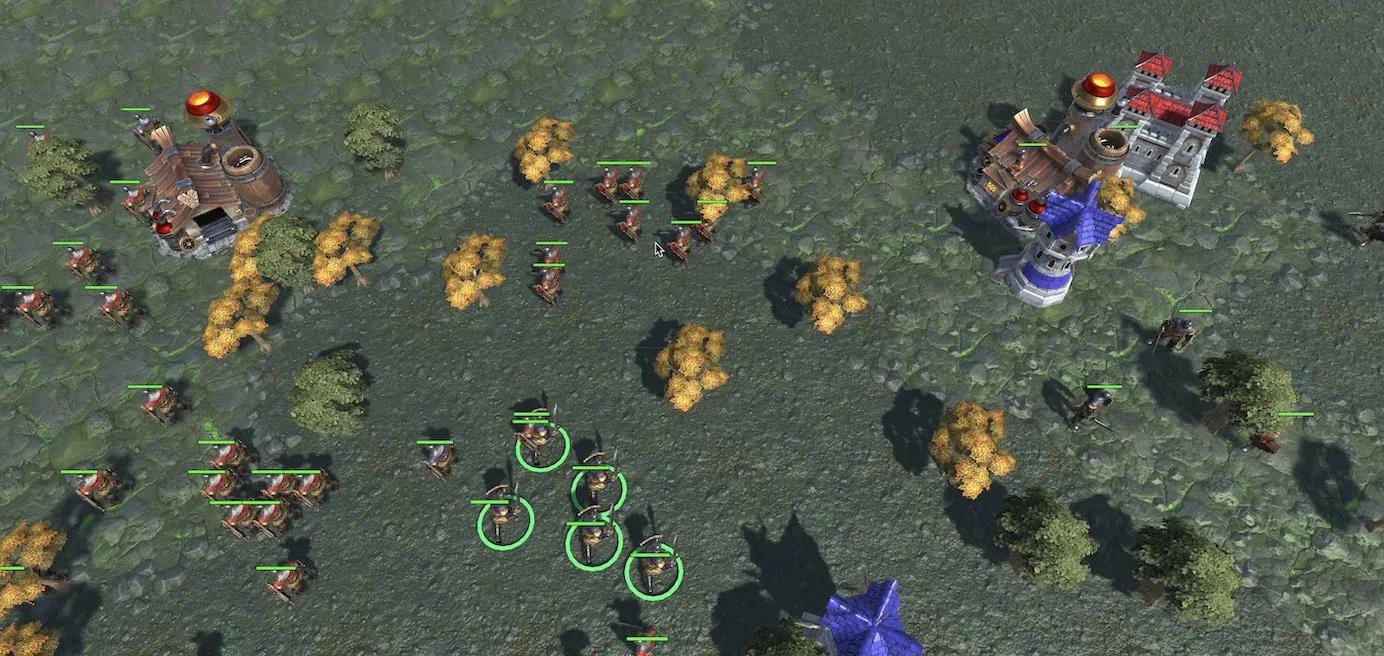
Created by the Curio team, Keystone is a rollup framework built atop the OP Stack, designed to enable high-performance on-chain gaming.
Overview: The Keystone L2 framework runs on a “high-refresh-rate” game engine, specifically tailored for real-time strategy titles like Age of Empires. It will support various data availability (DA) layers, starting with Celestia.
Example games: Treaty, Warcraft.
Conclusion
Of course, beyond the more prominent on-chain game engines covered here, there are many other pioneering projects in this space.
For instance, Paima Studios is a game studio built around the eponymous Paima framework—an L2 solution customized for gaming experiences. Playmint is another innovative studio developing “client proofs,” a novel approach to on-chain game mechanics.
Other teams building their own custom engine architectures include Topology, a Starknet-based team focused on digital worlds (also known as “on-chain reality”), and Pirate Nation, an on-chain RPG whose “mirroring” technology seamlessly links L2 activities to its Pirate NFTs.
Certainly, the on-chain game engine projects mentioned in this article do not represent the entire landscape, but those highlighted here exemplify the current wave of innovation at the intersection of blockchain and gaming. If a new era of gaming is truly dawning, then engines like these will lead the way.
Join TechFlow official community to stay tuned
Telegram:https://t.me/TechFlowDaily
X (Twitter):https://x.com/TechFlowPost
X (Twitter) EN:https://x.com/BlockFlow_News
 @WPeaster