








Arbitrum: The Underrated L2 Pioneer Poised for Ecosystem Expansion
TechFlow Selected TechFlow Selected
Arbitrum: The Underrated L2 Pioneer Poised for Ecosystem Expansion
Is the ARB ecosystem season coming?
 Navigating Web3 tides with focused insights
Author: DEGEN SENSEI
Translation: TechFlow

Although Base is currently the most talked-about Layer 2, we seem to have forgotten that Arbitrum has long been the market leader—albeit with local activity peaks occurring around the time of the ARB airdrop.
In this article, therefore, we will examine the impact of Arbitrum Stylus and the current state of the Arbitrum ecosystem.
Quick Overview of Arbitrum Stylus
Stylus is an upgrade to Arbitrum Nitro that adds a second equivalent virtual machine to the EVM, enabling the execution of WASM (WebAssembly) instead of EVM bytecode. The core value proposition of this upgrade is that developers can now build smart contracts using different languages such as Solidity, C, C++, and Rust.
Developers from ecosystems like Solana, known for their strong developer talent, can now easily build on Arbitrum Stylus using their familiar Rust programming language. This also makes it easier for Solana-based protocols to deploy Arbitrum as a secondary chain when they decide to expand. Anyone who has been around knows that protocol expansions onto Arbitrum often lead to positive price movements. If Solana continues to grow, projects building on Arbitrum can anticipate Solana’s expansion and remain active across two distinct L1s.
Ecosystem Activity
It’s no surprise that a new governance proposal to provide ARB incentives to the ecosystem gained support, especially after Camelot's similar proposal was rejected amid significant controversy. After extensive discussion, the community concluded to allocate 50 million ARB to incentivize the ecosystem, which could positively impact the entire ecosystem.
With that in mind, let’s take a look at some interesting upcoming protocols:
Tapioca
Tapioca is a long-anticipated decentralized cross-chain money market within the Arbitrum ecosystem, directly competing with Radiant. Tapioca’s value proposition lies in launching a decentralized cross-chain stablecoin mintable via a CDP model. Users can deposit interest-bearing assets, which gradually repay loans over time, while still allowing them to use the stablecoin USD0 across various DeFi cross-chain opportunities.
The protocol is still in testing phase but is expected to launch soon—definitely worth watching.
Dolomite
Dolomite is a decentralized margin protocol combined with a DEX, aiming to achieve higher capital efficiency. The protocol reuses liquidity on its platform to deliver enhanced yields to end users. For example, if you deposit tokens as collateral for borrowing on Dolomite, that asset can earn trading fees in addition to lending yield, thereby amplifying returns. You can also directly pledge assets through the platform, gaining additional capital efficiency and autonomy.
The protocol is still in early stages and has not yet launched its token.
Parallax
Parallax is a decentralized yield optimization protocol operating vaults to facilitate yield farming strategies. It runs auto-compounding vaults accessible on Arbitrum while executing strategies on the Ethereum mainnet. This allows smaller capital participants to engage in mainnet yield farming strategies at lower costs. The protocol places strong emphasis on LSTfi and plans to build customized strategies for this market segment.
The protocol is still in testing phase but recently launched its token PLX.
Empyreal
Empyreal aims to democratize blockchain development through its SDK, bridging the gap between talented developers and the complexity of building exciting on-chain applications. Its current product suite includes the Oasis privacy layer and seamless integration of off-chain and on-chain data within applications.
The protocol’s token is EMP, and revenue is generated by charging users who leverage its services through staking the protocol token.
Hyperliquid
Hyperliquid is a decentralized perpetual exchange operating as an Arbitrum L3. By running on its own app-specific chain, it benefits from near-instant settlement and offers up to 50x leverage on trades. Its order book is fully transparent and growing in popularity as a venue for trading perpetual contracts on major cryptocurrencies.
While Arbitrum has lagged behind other L2s for quite some time—essentially since the ARB airdrop—with Optimism and Base taking the lead, it’s clear that the trend is shifting.
If incentives begin to be distributed, users will need to acquire tokens and interact with specific protocols to qualify, naturally stimulating ecosystem activity.
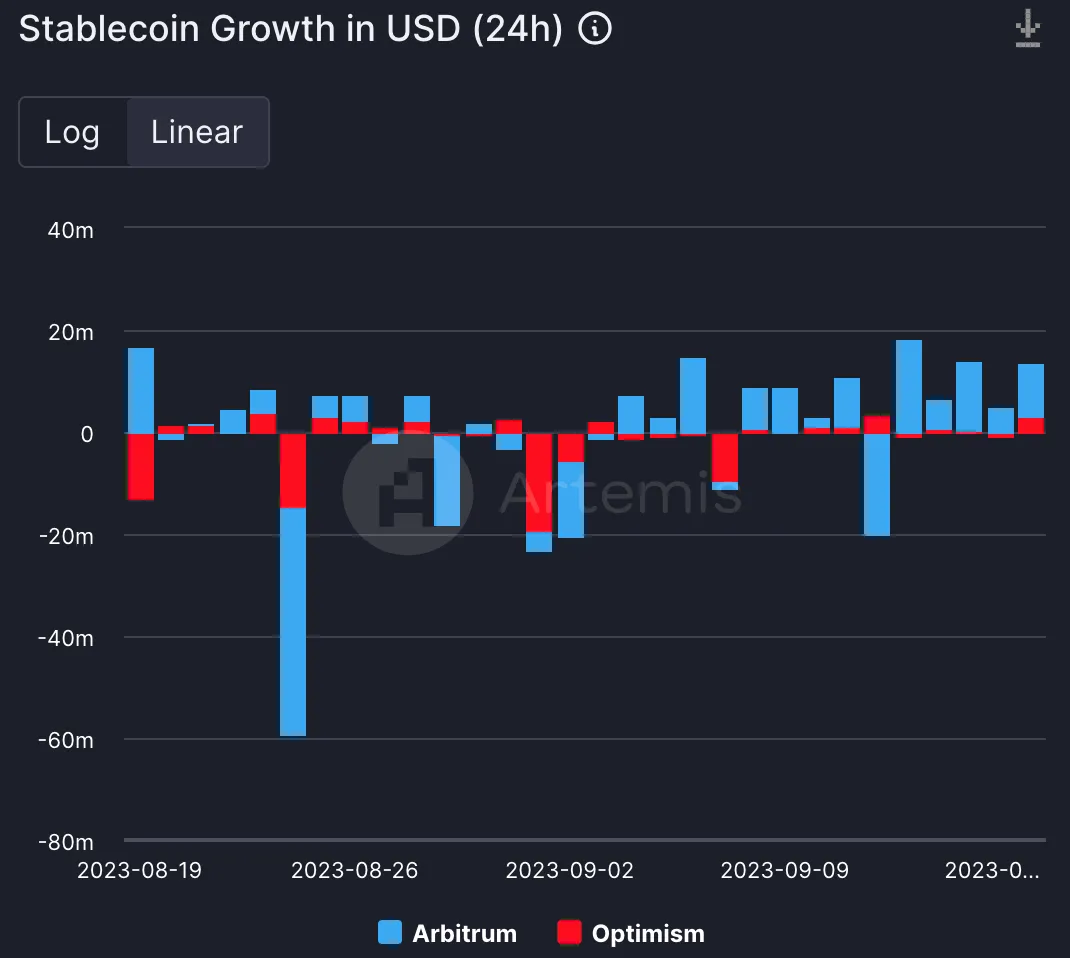
Is an ARB ecosystem season approaching? The movement of stablecoins suggests it’s possible—and worth tracking. Notably, trading volume has clearly increased in recent times.
Don’t forget that EIP-4844 is set to launch by year-end—an upgrade often overlooked by short-term thinkers. It represents another powerful catalyst for Layer 2s, currently underappreciated by the market.
Join TechFlow official community to stay tuned
Telegram:https://t.me/TechFlowDaily
X (Twitter):https://x.com/TechFlowPost
X (Twitter) EN:https://x.com/BlockFlow_News
 Degen Sensei






