








How do Ripple, Stellar, and Chainlink solve cross-border payment issues?
TechFlow Selected TechFlow Selected
How do Ripple, Stellar, and Chainlink solve cross-border payment issues?
The future of payments is evolving toward a hybrid model, combining existing payment systems with digital currencies as the next step toward full financial decentralization.
 Navigating Web3 tides with focused insights
Author: HERCULES | DEFI
Compiled by: TechFlow
We know that $170 billion in capital flows globally every hour. However, cross-border payments face issues such as high costs and slow transfer speeds.
Globalization, market expansion, and technological innovation highlight the dependence on cross-border payments. But existing solutions like SWIFT have two main problems:
-
Additional fees are incurred if payments must be processed through intermediary banks.
-
Slow transaction speed.
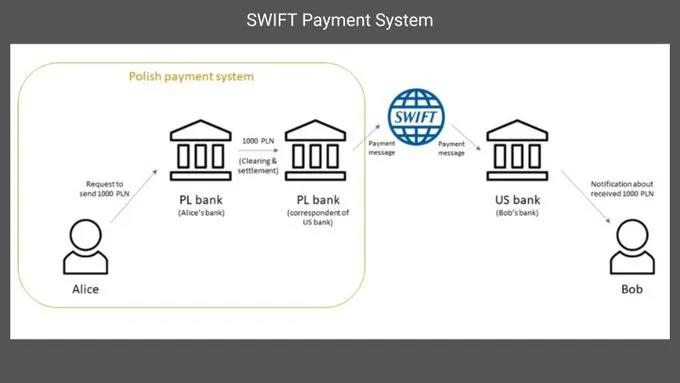
Both of these issues can be addressed by enabling direct transfers instead of relying on intermediaries. Blockchain solutions such as Ripple, Stellar, and Chainlink enable cross-border remittances.
Stellar
Stellar leverages its blockchain network and IBM’s World Wire platform to connect financial institutions for cross-border payments. Compared to SWIFT, Stellar’s native cryptocurrency Lumens (XLM) enables faster and cheaper transactions.

Stellar aims to replace SWIFT by facilitating cross-border payments for SMEs and individuals using a sophisticated system involving deposit institutions, stablecoins, and trading capabilities.
The platform uses blockchain technology and the Stellar Consensus Protocol to build an efficient infrastructure. Users deposit funds with local deposit institutions certified by Stellar, which are recognized as "anchors" within the Stellar network.
Key Features of Stellar:
-
Fast Processing: 2,000 transactions per second, with cross-border payments confirmed within 5 seconds;
-
No Intermediaries: Direct transactions via self-executing smart contracts;
-
Decentralization: Efficient transfers without reliance on centralized entities.
Ripple
Ripple collaborates with banks and financial institutions worldwide to drive technology adoption and expand the use of XRP for broader cross-border payments. Key partners include Santander, American Express, SBI Holdings, and PNC Bank.
Ripple leverages the XRP Ledger’s blockchain payment protocol to enable real-time, low-cost cross-border transactions. It eliminates the need for multiple intermediary banks, resulting in faster settlement and lower costs.
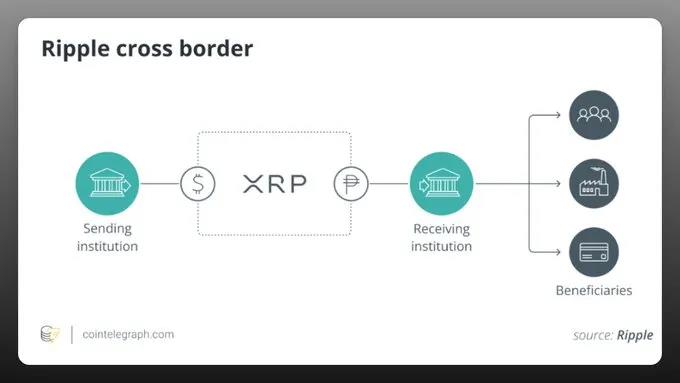
Given SWIFT’s influence and the regulatory challenges Ripple faces, replacing SWIFT with Ripple remains uncertain. However, when decentralized cross-border payments are preferred, Ripple stands out as an ideal choice.
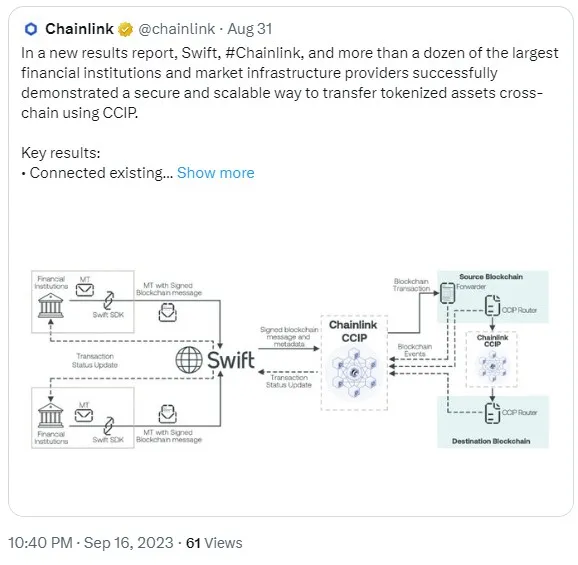
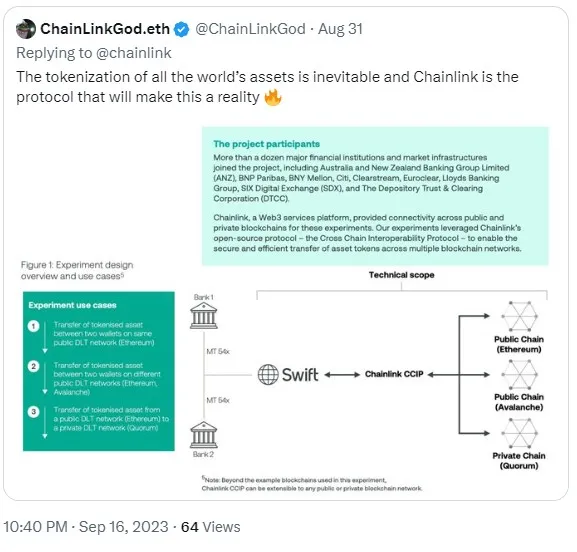
SWIFT is continuously evolving. It actively conducts experiments highlighting the importance of tokenization. By collaborating with financial institutions to facilitate the transfer of tokenized assets across multiple chains, SWIFT demonstrates the strength of its network.
Benefits of Tokenization
Tokenization is still in its early stages, yet 97% of institutional investors believe it will transform asset management. It will improve efficiency, reduce costs, and offer investors greater choices through fractional ownership.
SWIFT has partnered with Chainlink to address blockchain fragmentation and enhance the trading of tokenized assets.
Chainlink’s Cross-Chain Interoperability Protocol (CCIP) has launched on the mainnet. It provides plug-and-play options for transferring tokens between blockchains, supporting both burn-and-mint and lock-and-mint mechanisms.
Through its collaboration with Chainlink, SWIFT aims to improve interoperability and user experience. This partnership streamlines access to multiple networks and reduces operational challenges and costs associated with tokenized assets.
Chainlink is leading us toward the undeniable future of global asset tokenization.
Chainlink offers services in data transmission, token transfer, blockchain communication, and computation. Key services for capital market tokenization include CCIP, proof of reserve audits, and functions for synchronizing off-chain events or data.
Chainlink brings over $8 trillion in transaction value to blockchain applications, secured by a decentralized oracle network operated by major enterprises such as Deutsche Telekom, LexisNexis, and Swisscom. It maintains long uptime and tamper-proof security even during periods of market volatility.
Conclusion
The future of payments is moving toward a hybrid model. Combining existing payment systems with digital currencies represents the next step toward full financial decentralization.
Join TechFlow official community to stay tuned
Telegram:https://t.me/TechFlowDaily
X (Twitter):https://x.com/TechFlowPost
X (Twitter) EN:https://x.com/BlockFlow_News
 Hercules | DeFi






