








Token 2049 Highlights: Bear Markets Are a Good Time to Launch Crypto Projects
TechFlow Selected TechFlow Selected
Token 2049 Highlights: Bear Markets Are a Good Time to Launch Crypto Projects
CZ: Cryptocurrency doesn't need 100% adoption.
 Navigating Web3 tides with focused insights
Author | ChainDD
The two-day "Token2049 Singapore" conference officially kicked off on September 13, 2023. At this grand event, heavyweight guests including crypto experts, tech leaders, and industry pioneers from various countries gathered in Singapore to deliver insightful remarks and shape the future direction of the industry.

ChainDD is providing real-time coverage of the entire event and has compiled highlights and latest updates from the conference for readers' reference:
September 13
MakerDAO Co-Founder: Official Frontend Will Block U.S. Users; Praises South Korea and Japan’s Positive Attitude Toward Innovation
Rune Christensen, co-founder of MakerDAO, stated at the Token2049 Singapore conference that due to U.S. regulatory pressure, all official frontends controlled by MakerDAO will block users from the United States. This is, in a sense, an acceptable solution allowing MakerDAO to continue focusing on development and serving users without violating certain regulations. MakerDAO remains committed to eliminating dependency on any development company to ensure the protocol's long-term sustainability.
Additionally, Christensen noted that while South Korea and Japan have been cautious and slow in adopting cryptocurrencies, they maintain a persistently positive attitude toward innovation—meaning they are carefully crafting their regulatory frameworks. MakerDAO will monitor and develop within such markets.
Worldcoin CEO: Cryptocurrency Will Play a Key Role in Building Universal Basic Income in the Future
Alex Blania, CEO of Worldcoin, speaking at a roundtable during Token2049 Singapore, said that although there is no exact figure for universal basic income (UBI), a simplified model assumes annual economic output grows by 5%, increasing linearly over time. Within the next 10 to 20 years, some groups may actually receive basic income payments via cryptocurrency—a prospect he finds exciting. Beyond basic income, cryptocurrency can help build social tools adapted to technological advancements, which holds significant implications for its future development.
Zilliqa Partners with Google Cloud in Strategic Alliance, Making It a Strategic Cloud Provider
Zilliqa Group announced a multi-year strategic alliance with Google Cloud at the TOKEN2049 conference. This collaboration aims to enhance the scalability, resilience, and data availability of Zilliqa’s Layer 1 blockchain protocol. Google Cloud will become a Staking Seed Node (SSN) operator on the Zilliqa network, joining the existing 28 SSN operators by providing node infrastructure hosting and helping validate transactions across the network. Additionally, Zilliqa Group has selected Google Cloud as its strategic cloud provider, leveraging its open, secure, scalable, and energy-efficient infrastructure and services to boost flexibility, resilience, and data availability for its blockchain.
Ripple CEO: Over 80% of Ripple’s Hiring This Year Occurs Outside the U.S.
Brad Garlinghouse, CEO of Ripple, said in an interview with Bloomberg at the TOKEN2049 conference that due to the U.S. regulatory environment, over 80% of Ripple’s hiring this year has taken place outside the United States. Ripple is expanding its business in various ways, including through acquisitions.
Uniswap COO: Uniswap Has U.S. Users, Facing Regulatory Uncertainty
Mary-Catherine Lader, COO of Uniswap, said at the Singapore Token2049 conference that Uniswap products are globally accessible and inherently international. However, the Uniswap team is based in the U.S., with a physical office in New York, and it also serves U.S. users, leading to regulatory uncertainty. Nevertheless, Uniswap is engaging closely with regulators. The platform is also actively growing in Asian markets and remains committed to maintaining its global orientation.
Pantera Partner: Mobile-First Approach Is Essential for Global Adoption and User Reach of Crypto Products
Paul Veradittakit, partner at Pantera, said during the “Next-Gen Crypto Projects” roundtable at Token2049 that cryptocurrency acts as an interoperable layer across industries in the global economy, and mobile-first design is essential for the global adoption and user reach of future crypto products. His key focus areas include global brokerage, financial infrastructure, developer tools, NFTs, and gaming. For example, investing in infrastructure and middleware in the EU, gaming in South Korea, and financial infrastructure in Japan. In DeFi, his focus is on decentralized derivatives, cross-border payment facilitation, tokenized government bonds, and yield products—all of which must comply with local regulations.
BitMEX Founder: The Formula for the Crypto Industry Is “Fiat Liquidity + Technology”
Arthur Hayes, founder of BitMEX, said during his speech at the Token2049 conference that the formula for the crypto industry is: crypto = fiat liquidity + technology. He explained that birth rates are declining globally while debt—especially U.S. debt—is rising, even as AI-driven technologies advance. Since AI needs cryptocurrency, he expects the crypto industry to experience a “double win” and inevitably enter a bull market.
BitMEX Founder: AI Needs Decentralized Storage, and Filecoin Is a Solution
Arthur Hayes, founder of BitMEX, said during his speech at the Token2049 conference that as AI-driven technologies evolve, AI will require cryptocurrency and decentralized storage—and he believes Filecoin offers a viable solution. He revealed that he holds and is bullish on FIL. He also outlined three criteria for selecting promising cryptocurrencies from the “shitcoin” space: the token must be listed; it must have fallen more than 90% from its 2021 peak; and it must have a direct connection to AI. He believes Filecoin meets all three criteria. Although FIL has dropped over 99% from its 2021 high, its usage is growing, with institutions like CERN and UC Berkeley already utilizing the Filecoin storage network.
Former Coinbase CTO: Building a Decentralized Network State Is Possible, Desirable, and Profitable
Balaji Srinivasan, former CTO of Coinbase and author of *The Network State*, said in his speech at the Token2049 conference that building a decentralized network state is possible, desirable, and profitable.
He argued that the conditions for a network state are now ripe. Commerce has formed interconnected human networks globally, and community identity has become central to modern society. Tech giants like NVIDIA and Tesla have joined the crypto wave, and El Salvador has adopted Bitcoin as legal tender—indicating that network states may emerge soon.
In such a network state, digital citizens could gain diplomatic recognition, creating socio-political influence. Traditional nations and social media giants achieve massive GDP and market cap through large populations or user bases with high ARPU. In the future, network states could rival them in scale through Society-as-a-Service (SaaS).
Nic Carter, Father of Smart Contracts: Implementing ZK Rollups on Bitcoin Is One of the Most Critical Tasks Now
Nic Carter, known as the father of smart contracts, said at the Token2049 conference that he hopes more countries adopt Bitcoin. He believes implementing ZK Rollup operational code software on Bitcoin is one of the most critical tasks today. He noted it’s relatively straightforward and shouldn’t provoke much controversy. This would expand the development landscape, and similar innovations have already proven successful on Ethereum. If the Bitcoin community stays true to its original vision—drawing innovation from other blockchains—it will act accordingly.
Ripple CEO: The U.S. Is Currently the Only Country That Crypto Startups Should Avoid
Brad Garlinghouse, CEO of Ripple, said at the Token2049 conference in Singapore that the U.S. is currently the only country crypto startups should avoid. He urged the U.S. to follow the lead of nations like Singapore, the UK, UAE, and Switzerland in crafting policies that encourage crypto innovation while protecting consumers. Garlinghouse blamed the SEC, accusing it of waging a political war against the crypto industry through litigation.
Stacks Co-Founder: The Emergence of Ordinals Was a Watershed Moment for Bitcoin Development, Drawing Capital Interest
Muneeb Ali, co-founder of the Bitcoin Layer 2 network Stacks, said at the Token2049 conference that 2023 has been a pivotal year for Bitcoin. From 2017 to 2022—during Bitcoin’s block size civil war—was a dark era with little development activity. But in 2023, he sees a turning point, partly due to the emergence of Ordinals, which caused Bitcoin transaction fees to surge over 50-fold, attracting strong interest from both capital and developers. This has positively impacted Stacks and other L2 solutions, positioning Stacks to play a major role as a Bitcoin L2 extension.
Bitcoin Evangelist Dan Held: New Applications Like Ordinals Will Be Bitcoin’s Next Milestone
Bitcoin evangelist Dan Held said during a Token2049 panel that he is closely watching new applications on Bitcoin. Bitcoin’s main adoption so far has come from speculative cycles in 2013, 2017, and 2021, driven by traders in Asia and Western Europe. Speculation initially draws people in. Even before Bitcoin had value, Satoshi proposed this idea. Those early speculators who stayed became holders because they truly understood and learned about Bitcoin. That’s why bear markets have a floor—there are genuine believers. Speculation is how they enter, then they hold and profit. Today, Bitcoin lacks many speculative games—most trading is spot-based. At NFT NYC, he noticed users buying NFTs at 0.1 ETH and reselling at 0.3 ETH, knowing nothing about how ETH works or monetary policy. Yet this is how they discover ETH. He realized this mirrors how people are introduced to Bitcoin through spot trading. Therefore, the growing number of applications on Bitcoin—including Ordinals, NFTs, options, futures, and DeFi—will become its next milestone, driving broader adoption and the next bull run.
Chainalysis Co-Founder & CEO: Crypto Is Becoming Infrastructure That Enhances Finance
Michael Gronager, co-founder and CEO of Chainalysis, said during a roundtable at Token2049 Singapore that the FTX collapse caused significant harm and served as an important lesson. Many institutional participants felt fear and embarrassment due to their interactions with FTX. But another crucial point is emerging: crypto is no longer just about crypto itself. It has evolved from focusing solely on crypto to becoming infrastructure that enhances other financial sectors, offering better yields. This shift is real. According to him, 75% of banking transactions in some countries are conducted via stablecoins on blockchain.
Nansen CEO: Nansen Is Not Heavily Using AI Technology Right Now
Alex Svanevik, CEO of Nansen, said during a roundtable at Token2049 Singapore that the company has a highly skilled research and analytics team whose work is largely based on heuristics and algorithms, not heavy use of AI. They are exploring ideas, such as using transaction patterns to predict whether a wallet belongs to an exchange. He noted that AI could potentially take over some crowd-sourced tasks, almost acting as a way to harness collective internet intelligence. If you ask the right questions, provide context, train your AI, and extract insights from the network, it can assist in labeling. But he believes humans won’t be fully replaced—this is a collaboration between humans and machines.
Yuga Labs CEO: Investment and Foresight in the Asia-Pacific Region Are Unparalleled Globally
Daniel Alegre, CEO of Yuga Labs, said during a Token2049 Singapore roundtable that his experience in the Asia-Pacific region spans decades—from early days at Google to now at Yuga Labs. What he sees here goes beyond entrepreneurship to include foresight and reinvention levels unmatched anywhere else. Investment and forward-thinking in the Asia-Pacific region are unparalleled globally.
Some Korean game companies are considering using Web 2.0 to build flagship IPs and bring them into Web 3.0 environments—an approach unlikely to happen in the U.S. While U.S. regulation remains less friendly than elsewhere, changes are beginning. One clear reason is that stakeholders see tangible benefits: when done correctly, investments and potential job creation can drive economic growth.
Animoca Brands Co-Founder Yat Siu: Web3 Industry Is Actively Advising Governments
Yat Siu, co-founder of Animoca Brands, said during a Toen2049 roundtable in Singapore that the Web3 industry is actively advising governments. Singapore is among the world’s most advanced jurisdictions in crypto. Meanwhile, regions like Indonesia and Hong Kong have begun allowing retail crypto trading. These exciting developments, though often unknown to the general public—especially outside Asia—are progressing steadily, boosting market confidence and gaining regulatory recognition, further enhancing the credibility of the crypto industry.
ImmutableX Co-Founder: 40%–50% of Games Expected to Launch Next Year, but 90% Will Fail
Robbie Ferguson, co-founder of ImmutableX, said during a Token2049 Singapore roundtable that current infrastructure is gradually maturing, and even the world’s largest third-party app stores are exploring ways to embrace Web3. Web3 gaming has attracted substantial investment. However, unlike DeFi, where projects can launch quickly after securing $100 million, games typically take 2–4 years, sometimes even 6–7. He estimates that 40%–50% of games will launch next year, but 90% will fail. The 10% or 5% that succeed will redefine the entire industry, generating transaction volumes exceeding all others combined. Games are driven by user engagement, and Web3 games will be even more so, fueling industry-wide growth and providing replicable blueprints.
Axie Infinity Co-Founder: Business Models in Web3 Gaming Need More Innovation and Experimentation
Aleksander Leonard Larsen, co-founder of Axie Infinity, said during a Token2049 Singapore roundtable that business models in Web3 gaming need more innovation and experimentation. He emphasized the need for numerous fast-to-market games that prioritize core gameplay experiences over massive marketing budgets.
He also warned that excessive focus on the next “killer game” may merely cater to crypto social media rather than actual users. Successful games like *Candy Crush* show that Web3 games must attract diverse user types and offer greater innovation. The experimental nature of Web3 gaming is key to attracting hundreds of millions of users and achieving success.
Bullish CEO: Crypto Industry Increasingly Relies on the Dollar; Must Learn to Coexist With the Centralized World
Tom Farley, CEO of Bullish, said at Token2049 on September 13 that we shouldn’t fool ourselves—the digital asset sector isn’t doing well. Everyone talks about decentralization, yet the industry grows increasingly dependent on the dollar. But the dollar is centralized—no matter where you trade, it traces back to the Federal Reserve. The crypto industry must figure out how to coexist with the centralized world to achieve its dystopian vision of decentralization 50 years from now. The exchange industry hasn’t operated in a way compatible with a regulated, centralized world. Unfortunately, the U.S. government requires some kind of relationship.
10T Holdings CEO: Bitcoin and Ethereum Have Established Network Effects and Are Core Crypto Assets
Dan Tapiero, CEO of 10T Holdings, said during a roundtable at Token2049 Singapore that Bitcoin and Ethereum are core assets in the blockchain space, having established strong network effects and rapidly advancing over the past year. Bitcoin and Ethereum differ from other assets, which remain at the venture stage. He believes the bear market has ended, and opportunities arise during market panic. Despite sentiment damage during the FTX collapse, Ethereum didn’t hit new lows—a positive sign. Now is a great time to invest in crypto assets, Web3, and blockchain companies, as valuations are discounted by 60%–80%. Some traditional private equity investors are exiting, creating a prime opportunity, as many mature companies are fundraising—raising $50 million, $100 million, or more. Survivorship bias in the blockchain space presents unique investment opportunities.
Franklin Templeton Chairman: Bitcoin ETFs Are Traditional ETFs; Crypto Assets Will Open New Investment Opportunities
Jenny Johnson, chairman and CEO of Franklin Templeton, said at Token2049 on September 13 that although Franklin Templeton applied for a Bitcoin ETF, a Bitcoin ETF is still a traditional ETF—it doesn’t trade 24/7 on exchanges and is priced only twice daily. Crypto assets are different—they enable 24/7 trading, and smart contracts ensure accurate pricing of underlying assets. Thus, she firmly believes crypto assets will unlock new investment opportunities. She added that Bitcoin is the biggest disruptor in financial services and may be hard to invest in because governments always control money. She revealed that a U.S. governor she spoke with strongly opposes anything related to digital assets, especially since cybercriminals often demand Bitcoin, which cannot be tracked.
Scroll Co-Founder: Scroll Is in Final Testing Phase, Mainnet Launch Imminent
Ye Zhang, co-founder of Scroll, said during a roundtable at Token2049 Singapore that Scroll is in its final testing phase and will soon launch its mainnet. He expressed hope that more developers will build applications solving real-world problems. Major apps like Uniswap have already been deployed on Scroll’s testnet, and he expects more Ethereum applications to migrate to Scroll after mainnet launch to address diverse real-world challenges.
Polygon Co-Founder: Ethereum Is Shifting to a 'Chain-to-Chain' Model, Becoming a Foundational Settlement Layer
Sandeep Nailwal, co-founder of Polygon, said during a roundtable at Token2049 Singapore that while enterprises typically operate under B2B or B2C models, Ethereum until now has functioned more like a U2C ("User-to-Chain") model. Now, Ethereum is transitioning to a "chain-to-chain" model. This means that within the next 2–4 years, Ethereum will serve as a foundational settlement layer, providing security, settlement guarantees, and safety features to other chains.
Matter Labs CEO: Solving Data Availability Could Improve Ethereum’s Performance and Scalability
Alex Gluchowski, CEO of Matter Labs, said during a roundtable at Token2049 Singapore that Vitalik Buterin envisioned a roadmap centered on rollup upgrades. He likened Ethereum to an island capable of building only small houses due to spatial constraints. Rollup upgrades are like skyscrapers, enabling far more activity on the same surface. Still, capacity remains insufficient. We need capabilities beyond rollups—like reclaiming land from the sea—which will usher in a new chapter for Ethereum. EIP-4844 and sharding alone cannot solve Ethereum’s issues. A key challenge is data availability—the most expensive and scarce component, affecting transaction costs, execution, and storage. zkSync addresses this in two ways: using state differences instead of call data, and extending data availability off-chain with seamless interoperability with rollup accounts. These approaches could significantly improve Ethereum’s performance and scalability.
Offchain Labs Co-Founder: Minting Tokens on Layer 2 Is Cheaper Now, But Ethereum’s Data Costs Will Also Keep Falling
Ed Felten, co-founder of Offchain Labs, said during a roundtable at Token2049 Singapore that Ethereum hosts hundreds of billions in liquidity, with a portion bridged to various Layer 2 networks. On Layer 2, activity levels are higher relative to TVL because transactions are cheaper and gas fees lower. Another interesting trend: besides Arbitrum hosting the largest bridged value from Ethereum, more projects are choosing to launch tokens directly on Arbitrum. Native token value on Arbitrum now exceeds bridged ETH or tokens. This trend suggests minting and managing tokens is increasingly cost-effective on Layer 2. EIP-4844 will launch in coming months—the first step in this direction. Over time, Ethereum’s data costs will decrease, approaching typical commercial data storage costs. While users want lower operating costs, the advantage of external data availability solutions will diminish as data availability becomes a core part of Ethereum’s protocol.
Placeholder Partner: Bear Markets Are Great Times to Launch Crypto Projects
Chris Burniske, partner at Placeholder, said during a roundtable at Token2049 Singapore that Ethereum launched in mid-2015, during the 2014–2015 bear market. Solana followed a similar path. Launching projects in bear markets has advantages: lower valuation baselines mean all investors benefit from price appreciation. Chris stressed understanding market cycles: “Three Arrows Capital believed the prior bull market was a supercycle that would never crash. Such thinking can trap people. Accepting cyclical markets is essential—they’re inherent because markets are made of humans, who are deeply cyclical.”
September 14
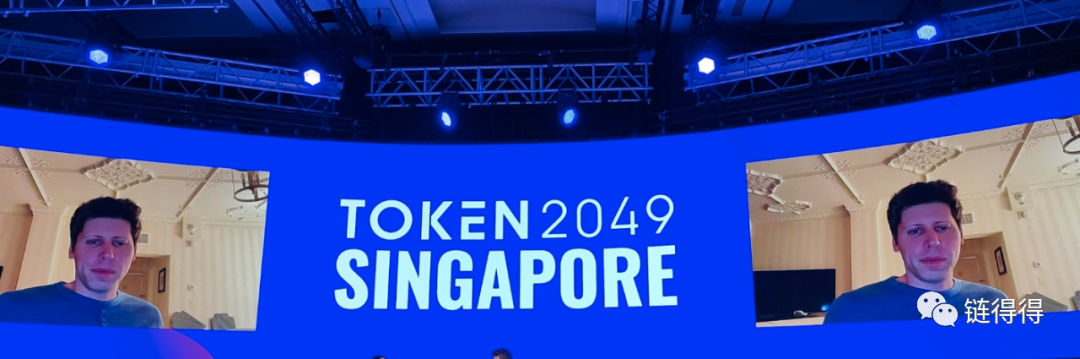
Sam Altman: Worldcoin Scanning Devices Aim to Release a New Version Every Two Years
Sam Altman, co-founder of Worldcoin, said at the Singapore Token2049 on September 14 that Worldcoin scanning devices aim to release a new version every two years, featuring improved security and imaging. He added that for crypto to achieve mass adoption, it must become easier to use, better suited for key use cases, and face clearer regulation. Worldcoin’s two biggest hurdles currently are operational challenges and resistance to biometrics.
MakerDAO Co-Founder: MakerDAO Will Launch a New Stablecoin and Governance Token Early Next Year
Rune Christensen, co-founder of MakerDAO, said at the Singapore Token2049 on September 14 that MakerDAO will launch a new unified brand, name yet to be determined. DAI and MKR users will be unaffected and can rebase at a 1:12,000 ratio. The new stablecoin will allow mining of the new governance token.
Rune Christensen also revealed that the new stablecoin and governance token will launch in early 2024, supporting subDAO mining, with subDAO tokens launching in Q2 2024, mineable with the new stablecoin.
MakerDAO Co-Founder: MakerDAO Will Have Four subDAOs Covering Community, Finance, and Technology Domains
Rune Christensen, co-founder of MakerDAO, introduced the MakeDAO subDAO plan at the Singapore Token2049 on September 14, stating that MakerDAO will establish four subDAOs: Sakura, Spark, Quant, and Qual. Sakura will be a community-focused subDAO; Spark will be a DeFi subDAO focused on cutting-edge tech; Quant and Qual will target finance and institutions. Quant will explore intersections of technology and finance, including RWA expansion, market making, and high-frequency tokenized trading. Qual will focus on specific financial areas (e.g., private credit and its tokenization) and regions like China, India, and Southeast Asia.
Worldcoin CEO: U.S. Regulators Want to Regulate Crypto Like Apple
Alex Blania, co-founder and CEO of Worldcoin, said at the Singapore Token2049 on September 14 that engaging with regulators and policymakers—especially since Worldcoin’s official launch—has become a major part of his work. The crypto industry, particularly since last year, has faced significant challenges. “I travel to many countries just to understand their general crypto regulatory frameworks. Everyone knows about U.S. regulation. Congress and regulators are debating how to regulate crypto like Apple. But similar discussions are happening worldwide—how to regulate crypto holistically. I believe progress will be made, and it must happen quickly. Our main issue today is that most of our products haven’t gone mainstream—very few have. But that will change.”
Castle Island Ventures Partner: USD Stablecoins Expected to Capture 95% Market Share
Nic Carter, partner at Castle Island Ventures, said at the Singapore Token2049 on September 14 that stablecoins show five major trends: dominance of USD stablecoins, rise of yield-bearing stablecoins, growth of crypto-collateralized stablecoins, dollarization of stablecoins across public chains, and offshore issuance of USD stablecoins. Regarding these trends, he predicted: USD stablecoins will capture 95% of market share; within two years, over 30% of stablecoins will be yield-bearing, and over 25% of USD stablecoins will be crypto-collateralized; over 70% of on-chain transactions will involve stablecoins; Singapore, Hong Kong, UAE, Bermuda, and others will become primary jurisdictions for USD stablecoin issuance.
CZ: Establishing Regulated Fiat OTC Channels Is the Current Key Issue
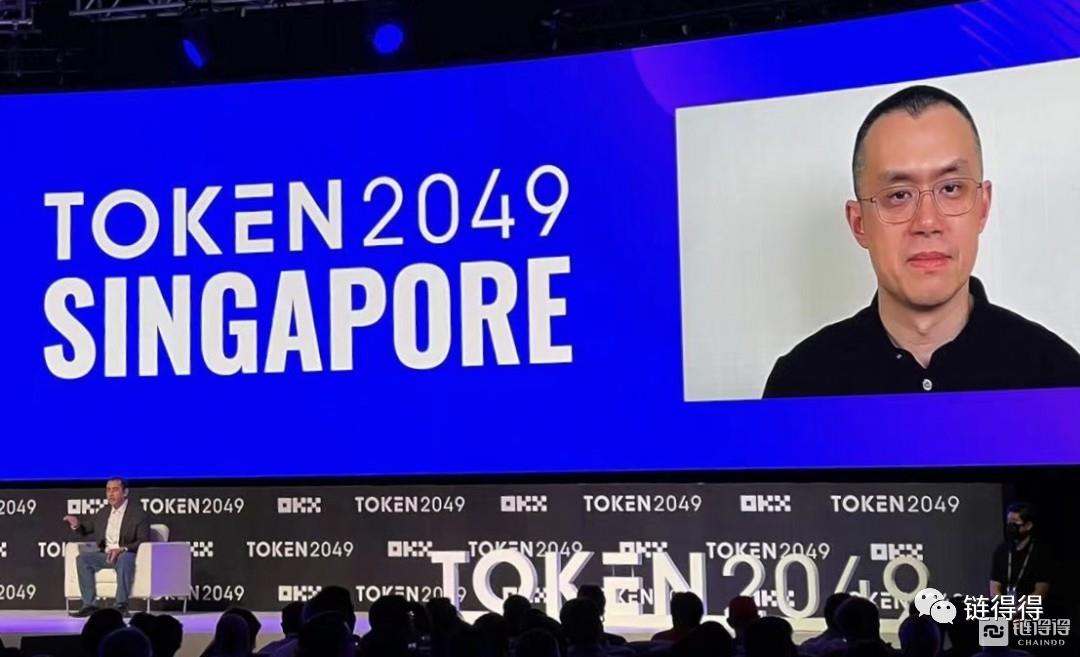
CZ said during the “Virtual Fireside Chat: CZ” session at the Singapore Token2049 conference: “In my view, the key issue lies in fiat-to-crypto OTC channels. Earlier this year, due to stricter regulations, many traditional institutions exited the OTC market. But at the same time, we’ve seen new institutions entering. The industry already has tens of millions of users. Doubling that number could bring us to a billion users. For most banks, serving just one country yields few users. A billion users would be enormous for a bank. We can bring tens of millions—or even hundreds of millions—of users to traditional financial institutions and benefit from that. So despite the importance of advanced crypto use cases, to attract more people into crypto, we must enable easy conversion between fiat and crypto, and vice versa.”
Wintermute Co-Founder: Spot Bitcoin ETF Approval Is Inevitable, But Extensive Preparation Time Remains Before Launch
Evgeny Gaevoy, co-founder of Wintermute, said during the “Institutionalization of Digital Assets” panel at the Singapore Token2049 conference: “In a way, spot Bitcoin ETF approval is inevitable—it will happen sooner or later. What people might misjudge is timing, because even if the SEC eventually approves these products, they’ll still need time to prepare for launch and managers will need time to allocate. So we’ll likely need at least six months before seeing capital inflows, though a more realistic timeline might be one to two years. But as I said, it’s bound to happen. From that perspective, it’s hard to gauge price impact, but once we see real capital inflows, that’s when we’ll return to a trajectory of meaningful growth.”
Worldcoin Parent Company Co-Founder: Will Fully Decentralize Within Five to Ten Years, Will Not Retain User Iris Data
Alex Blania, co-founder and CEO of Tools for Humanity (TFH), parent company of Worldcoin, said at the Singapore Token2049 conference that while hardware production currently relies on third parties, solutions are being developed—this is a major engineering priority. Over the next few years, they will achieve meaningful decentralization: fully decentralizing within five to ten years, relinquishing all control. Regarding ORB iris verification, he explained: “When registering, the ORB first checks if you’re a real human. Once verified, it takes a photo of your eye—the only part of the body with enough information to confirm humanity (faces, fingerprints, etc. don’t suffice). Then, a unique code is computed from the image and signed by the ORB. Only this code is uploaded to the network; the iris data is deleted. The code enters a database and is compared against others. If uniqueness is confirmed, you—as a user—can prove inclusion in the set via knowledge proof, meaning neither we nor the services you log into know your actual identity. Once you register with ORB and get your World ID, the data is deleted.”
DeFiance Capital Founder: High Interest Rate Environment Is One Reason for Capital Outflows
Arthur Cheong, founder and CEO of DeFiance Capital, said during a roundtable at the Singapore Token2049 conference that the high-interest-rate environment is one reason for capital outflows, as people no longer need to take on as much risk to achieve desired returns. Now, when investors face 4%–5% or slightly higher risk-free rates, they expect greater risk compensation. At the same time, expectations for crypto returns have shifted—he believes people won’t expect rapid returns anymore.
Selini Capital CIO: Lack of Liquidity Makes It Hard for Market Makers to Survive
Jordi Alexander, CIO of Selini Capital, said during a roundtable at the Singapore Token2049 conference that since the FTX collapse, more uninformed retail liquidity has left the market, leaving many with insider information—legal or otherwise. This makes market makers’ jobs harder. Very few market makers can survive under such liquidity conditions. This situation will persist unless more retail investors return to trading, which is needed to improve liquidity.
GoldenTree Head: When Facing Token Sell-Pressure, Investors Should Consider Whether It’s Already Priced In
Avi Felman, head of GoldenTree, said during a roundtable at Singapore Token2049 that when news of token supply emerges—whether government selling Bitcoin or investors unlocking tokens—you must assess how much is already “priced in” and who’s doing the pricing. There are two pricing mechanisms: First, people short the asset in anticipation of supply hitting the market; second, people wait until unlocks occur before buying, fearing negative market impact. So some capital waits on the sidelines, observing sale prices to buy better post-unlock. Just like in 2021, when massive capital waited to buy assets like Solana. Some assets have been overly hyped. So if you see an asset that’s been unlocked for a long time, it’s very likely already priced in.
Tangent Co-Founder: Measuring Market by Price Performance and Macroeconomic Conditions Is More Accurate
Darryl Wang, co-founder of Tangent, said during a roundtable at the Singapore Token2049 conference that crypto is a highly responsive asset class—halving alone may not guarantee a bull market. The halving effect may weaken over time. What matters more is price performance around the halving and the prevailing macroeconomic conditions. As crypto matures, it will increasingly align with broader risk assets.
LedgerPrime CIO: Watch Miner Sell-Pressure Before Halving; FTX Sell-Pressure Overstated
Shiliang Tang, CIO of LedgerPrime, said during a keynote roundtable at the Singapore Token2049 conference that previously, miners accumulated Bitcoin rather than selling, funded by extra credit to cover expenses. But that credit has largely disappeared. So miners now need to use their Bitcoin inventory to maintain cash flow. With the halving approaching, their post-halving income will drop. Thus, who sells first before the halving is key. Regarding FTX, sales were only recently approved and will start weeks later. Many assets are locked, with weekly sale caps. It’s a gradual process, not a sudden dump. OTC deals will further reduce price impact. Long-term, sell-pressure fears are overstated.
Tangent Co-Founder: Expect Some Recovery in NFT Market Next Year
Darryl Wang, co-founder of crypto VC club Tangent, said during a roundtable at the Singapore Token2049 conference that looking back at the past 12 months, even the most dedicated NFT holders have surrendered. NFTs represent an asset class—what we saw in 2021 was the first iteration toward more liquid assets. Many smart builders are now developing the infrastructure needed to support more such trades. Today, NFT prices and those of NFT protocols with liquid tokens are low. But when speculation returns, we expect some recovery next year. This asset class deserves attention.
Nic Carter, Father of Smart Contracts: Stablecoin Issuers May Be Forced to Start Paying Interest to Holders
Nic Carter, father of smart contracts and co-founder of Castle Island Ventures, said during a speech at the Singapore Token2049 conference that USD serves as the accounting unit for 99% of stablecoins—far exceeding its share in foreign reserves or global trade. This dominance will continue, with USD-denominated stablecoins retaining at least 95% market share. The lack of interest payments has led to contraction in the stablecoin sector. Now that interest-bearing stablecoins exist, the market will be forced to start paying some yield to holders. However, due to regulations, interest-bearing stablecoins cannot be issued in the U.S., accelerating the offshoring trend. Moreover, the rise of crypto-collateralized USD stablecoins is positive—it treats crypto as value storage and stablecoins as medium of exchange, aligning well with crypto-native principles. He predicts that within two years, 25% of USD stablecoins will be crypto-collateralized, up from less than 5% today.
CZ: Hopes to See Blockchain-Based Social Media Platforms Emerge
CZ Zhao Changpeng, founder of Binance, said during the “Virtual Fireside Chat: CZ” at Singapore Token2049 that he hopes to see blockchain-based social media platforms emerge, as today only Twitter exists. Such apps could be built on blockchain to tackle spam, scams, and identity verification. But most blockchains today can’t handle Twitter-scale interactions and data volume. With Layer 2 and other technologies, he believes we’re just one step away from achieving this.
CZ: Cryptocurrency Doesn’t Need 100% Adoption
CZ, founder of Binance, said during the “Virtual Fireside Chat: CZ” at Singapore Token2049 that cryptocurrency doesn’t need 100% adoption. Global internet penetration is only about 60%. So if crypto adoption is around 5% today—that’s the proportion of people with certain cognitive skills. Maybe it’s higher now—between 5% and 10%. We’ve already crossed the chasm. Once past this phase, growth becomes exponential. We’re now at the edge of that stage. We’re still early—but no longer extremely early.
Galaxy Managing Director: Spot ETF Approval Helps Position Crypto as an Asset Class, Not Just an Investment Tool
Chris Rhine, managing director at Galaxy, said during a roundtable at Singapore Token2049 that in conversations with institutions, they widely see approval of spot Bitcoin and Ethereum ETFs as a major regulatory milestone—helping position crypto as an asset class, not just a potentially unregulated investment tool. Feedback he hears is mostly positive. From another angle, institutional capital deployment involves time. Getting product approvals through wealth channels in big banks has long been difficult. Now, new wealth management models are finally emerging, offering simpler, accessible, low-cost ways for investors and interested parties to gain exposure to crypto.
Temasek Managing Director: Robust Crypto Infrastructure Is Key to Institutional Participation
Pradyumna Agrawal, managing director at Temasek, said during a roundtable at Singapore Token2049 that institutional participation occurs within traditional infrastructure contexts. In that context, there are not only traditional systems but also more transparent assets. So what’s truly needed is a bridge connecting these two worlds. For broad institutional participation, critical infrastructure must exist—one that enables risk management and deployment across asset classes, digitizing all infrastructure and tokenizing all asset types.
Gemini President: SEC Is Trying to Slow or Stop Crypto Development Through Enforcement Actions
Cameron Winklevoss, co-founder and president of crypto exchange Gemini, said during the “Fireside Chat: Cameron and Tyler Winklevoss” at Singapore Token2049 that companies may suffer due to misleading the public and get into serious trouble, but the SEC seems indifferent. They lack a vision for future regulation, so they try to slow or halt crypto’s development through enforcement. Why don’t they create rules? He believes it’s because they genuinely don’t know—or have no concept of what the crypto market should look like—and they can’t keep up with crypto and AI, rendering them irrelevant soon.
Join TechFlow official community to stay tuned Telegram:https://t.me/TechFlowDaily X (Twitter):https://x.com/TechFlowPost X (Twitter) EN:https://x.com/BlockFlow_News






