Bitget Wallet CEO: We're not building an empty "Web3 gateway"
TechFlow Selected TechFlow Selected
Bitget Wallet CEO: We're not building an empty "Web3 gateway"
"Faster trades, better assets" – Bitget Wallet is committed to becoming the most user-friendly Web3 trading wallet.
 Navigating Web3 tides with focused insights
At the beginning of the year, after Bitget Exchange increased its investment and gained controlling interest in the Web3 multi-chain wallet BitKeep, BitKeep completed a brand upgrade in August, rebranding as Bitget Wallet with a new vision: "Faster Trading, Better Assets," committed to becoming the most user-friendly Web3 trading wallet.
This article features an interview and insights from Karry, CEO of Bitget Wallet (formerly BitKeep Wallet). As the leader of Bitget’s Web3 wallet initiative, Karry systematically outlines the current structure and positioning of the wallet business, showcases achievements along its innovation journey, and discusses the evolving competitive landscape and future prospects within the wallet sector.
A Web3 wallet is like a ship sailing across the ocean. Where exactly is Bitget Wallet on this voyage? Is the sea ahead turbulent, calm, or filled with icebergs? And where are we heading in the future—what kind of powerful propulsion system will carry us faster and farther?
Current Position: A Global Web3 Trading Wallet with 12 Million Users
Following the rebranding from BitKeep to Bitget Wallet, our business has been structured into four main segments: mobile app, browser extension, web platform, and the upcoming integrated Web3 service within the Bitget Exchange. These four access points enable users to seamlessly use Web3 services across different scenarios.
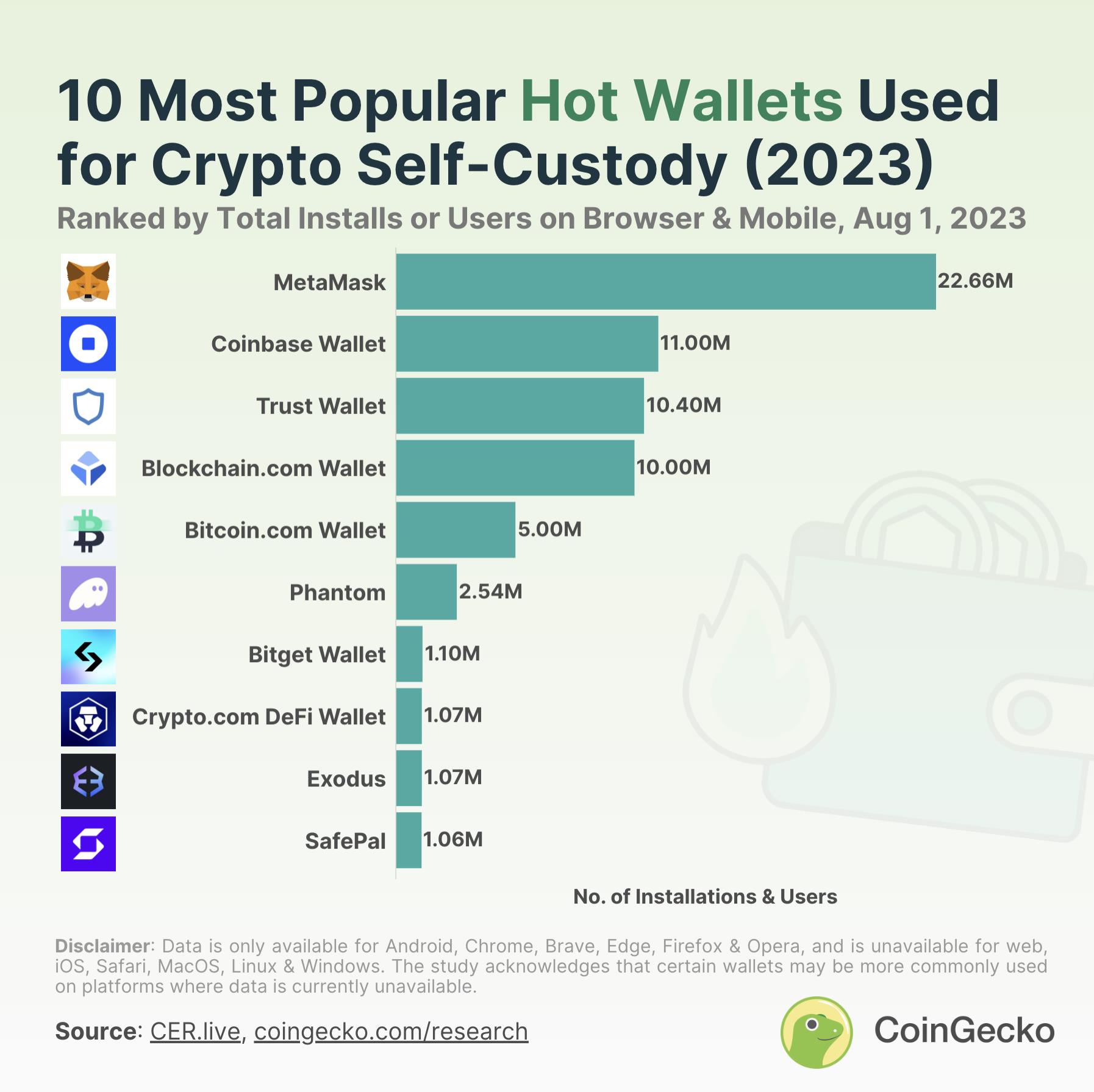
According to last month's CoinGecko report on the most popular crypto hot wallets, Bitget Wallet ranks seventh with over 1.1 million downloads on Google Play and Chrome extensions. Combining data from iOS, Android APK, and other platforms, our total user base now exceeds 12 million.
Core Positioning: A Trading-Centric Wallet
We have positioned trading as our core business, aiming to become the most user-friendly Web3 trading wallet—or essentially, a decentralized exchange. Why this focus?
In the mobile internet era, we believe that each DApp will evolve into an independent application, likely integrating built-in wallet functionality rather than relying on external wallets. Given this competitive landscape, we’ve chosen to specialize in asset and decentralized trading, striving for excellence in this domain. When it comes to trading, which wallet offers the best experience? Bitget Wallet. In any scenario—whether earning rewards in GameFi or SocialFi and needing to trade or preserve value—users can turn to our service first. In the future, wallets won’t remain standalone products but will increasingly function as foundational infrastructure: essential tools or account systems for managing and growing digital assets.
Our transaction penetration rate remains high. According to DappRadar data, Bitget Wallet consistently ranks among the top ten DeFi projects by Swap trading volume, often matching—and sometimes surpassing—MetaMask. This reflects the return on our sustained investment in building a superior trading wallet. Community feedback confirms that Swap is the most loved and frequently used feature, praised for its smooth and intuitive experience.

Timeframe shown: 7 days
From recent industry observations, a clear shift is evident: narratives are transitioning from capital-driven stories to community-centric ones. The rise of meme coins exemplifies this trend. Our wallet’s trading experience is specifically optimized for meme coins, community tokens, and long-tail assets, giving us a distinct advantage in this space.
Growth Engine Over the Past Two Years: Innovation in Swap Products
Over the past two years, Bitget Swap has introduced numerous innovations.
We were among the first in the wallet industry to provide K-line charts based on full-chain DEX trading data, offering users accurate multi-chain market data and trending asset rankings—features that received widespread acclaim and significantly contributed to user growth.
We also aggregated liquidity from hundreds of DEXs and cross-chain bridges, achieving seamless cross-chain trading. Our product philosophy is simple: as long as two tokens hold value, users should be able to freely trade between them—regardless of whether they’re on the same chain or different chains.
Additionally, we pioneered a gas-free trading experience, enabling transactions without requiring native gas tokens on nearly 10 blockchains including BNB Chain, Polygon, and TRON. Recently, this functionality was extended to Ethereum, allowing users to quickly acquire gas fees during trades. We also launched GASU subsidies—an innovative gas fee discount coupon system that automatically offsets various gas costs within the app.
The auto-slippage feature was another early innovation. When users trade volatile meme coins or “shitcoins” with burn mechanisms, we analyze both slippage tolerance and token burn rates, automatically setting the minimum slippage required to complete a trade—reducing friction and failed transactions.
When Uniswap recently unveiled the test version of UniswapX—with key features such as DEX liquidity aggregation, gasless trading, and MEV protection—it became clear these were capabilities we had already implemented six months to a year earlier. This demonstrates that Bitget Swap is leading the pack in product innovation.
Packed with Features: One Wallet to Connect All of Web3
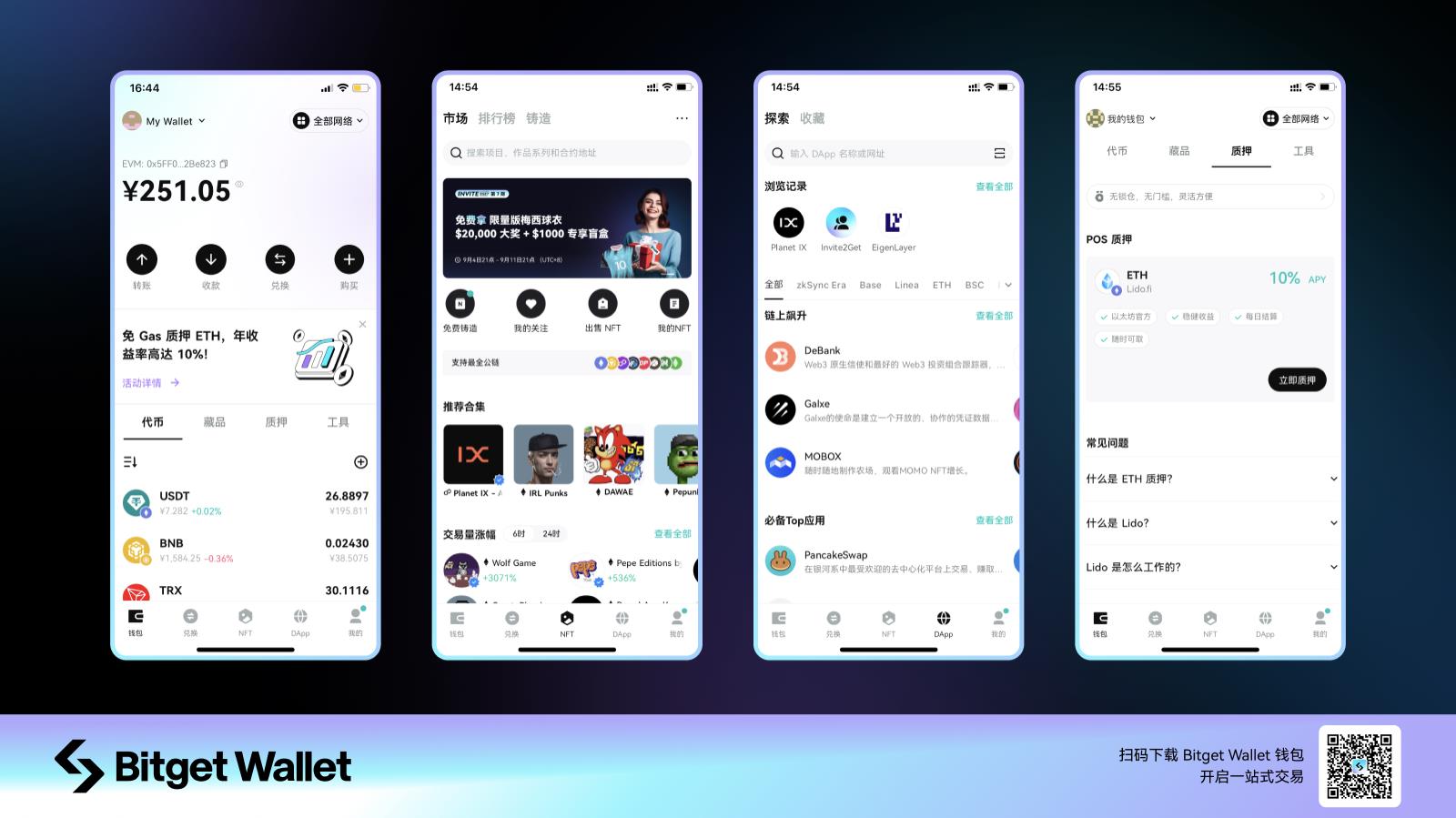
Beyond our multi-chain Swap offerings, we provide comprehensive on-chain services and DeFi solutions, including non-custodial wallet management, NFT marketplace, DApp browser, Launchpad, and ETH staking.
We support over 90 major public blockchains and many emerging ones—including EVM-compatible and heterogeneous chains—and automatically aggregate assets and transaction histories across chains. Adding custom networks requires no manual parameter input. We also support hardware wallets, and are actively developing MPC and AA wallets; we’ve already implemented AA smart contract wallets on Starknet.
On the Swap front, beyond robust liquidity aggregation and seamless trading experiences, we’re developing intelligent market analytics using “smart money” tracking and improved on-chain ranking systems to help users discover investment opportunities earlier. Integration with Bitget’s futures contracts further enriches our trading ecosystem. For global users, we offer Quick Buy services via six third-party providers including MoonPay and Alchemy Pay, plus Bitget P2P—enabling fast and easy cryptocurrency purchases for users in emerging markets like Southeast Asia, where credit card adoption is low.
On the application side, our NFT marketplace is the first to allow purchasing NFTs with any token, ranking second in trading volume across multiple chains, just behind OpenSea. Our DApp browser lists tens of thousands of DApps, making it the go-to gateway for project interactions. We plan to launch interaction-based airdrop tools soon and support project launches through our Launchpad.
Our support for public chains is comprehensive—from interacting with testnets and claiming airdrops, to K-line charts, Swap trading, DApp interactions, and displaying tokens and NFTs—allowing users to explore every corner of the Web3 ecosystem through a single wallet.
Official Website of Bitget Wallet
Key Insights on the Wallet Landscape
Wallets Need Clear and Focused Market Positioning
Avoid vague positioning as merely a “Web3 gateway.” A wallet could realistically become a Web3 entry point only if mass adoption occurs on a large scale. More likely candidates for such gateways would be system-level integrations—like built-in wallets in iOS or Android. If Apple Pay directly supported public-private key pairs, for example, it could naturally serve as a wallet interface. Standalone wallet apps are unlikely to achieve this role.
Therefore, we must define more specific and focused positioning. As discussed, focusing on being a trading-centric wallet helps highlight our unique strengths.
Moreover, currently, centralized exchanges remain the primary on-ramps due to their lower barriers. Integrated Web3 services within exchanges offer existing users a smooth path into Web3 experiences—something we are actively pursuing, as mentioned above.
Trading Is the Best Entry Point for Value Capture
The core value in the industry revolves around asset issuance and trading. By positioning ourselves as a trading wallet, we act as a bridge for asset circulation—creating value through liquidity provision, price discovery, and enhanced asset usability. This makes trading the optimal starting point for capturing value.
Focusing on trading allows us to reach a broader user base and capture diverse forms of value generated through trading activities. Decentralized trading holds immense potential. Looking ahead, as technology advances and user experience improves, along with overall industry maturation, decentralized trading is poised to become mainstream—with payments emerging as a key use case for wallets.
Technology Should Serve Real User Needs
Launching products based solely on technical concepts doesn’t necessarily attract users. Wallets must be designed from the user’s perspective. Technology solves problems—but users don’t care about the underlying tech buzzwords. For instance, MPC and AA technologies can address certain issues, but launching a wallet marketed primarily as an “MPC wallet” or “AA wallet” may not guarantee market success. Users care less about what powers the product and more about what problems it solves.
Many assume MPC or AA wallets lower entry barriers, but I believe they’re just one component of accessibility. Other compelling drivers—like GameFi or Bitcoin reaching $100,000—are needed to truly bring in masses. A single technical breakthrough alone won’t trigger widespread adoption.
That said, AA wallets do open new possibilities. For example, gas abstraction enables separation between the payer and the transaction initiator—we could become gas fee operators offering monthly gas packages (e.g., $20 or $50 plans). They also allow granular permission controls: small payments could require no signature or single-signature approval, while larger transfers demand multi-sig—all programmable via smart contract wallets, which traditional EOA accounts cannot easily support.
Exchanges Entering the Wallet Arena: Competition, Challenges, and Opportunities
Besides Bitget, several other exchanges foresee decentralized asset management and trading becoming mainstream and have begun strategic moves by launching their own wallets. With intensifying competition, innovation is now accelerating at the functional and UX levels. Sustaining leadership requires more than isolated innovations—it demands long-term thinking and systemic improvements.
Upcoming Ethereum upgrades like Cancun may further reduce Layer2 fees, making gas costs even lower and TPS higher—bringing decentralized trading closer to centralized exchange performance. OPStack drastically lowers the cost of launching Layer2s, triggering a “Layer2 hundred-chain war,” while the emergence of new public chains and interactive airdrop opportunities create fresh growth vectors for wallets.
The release of Uniswap V4 and UniswapX will amplify liquidity aggregation and enhance DEX user experience, fostering a more vibrant DEX ecosystem. This presents opportunities for us—especially in smart routing and optimal pricing strategies—where we can further differentiate ourselves.
Future Direction: Dare to Innovate, or Risk Mediocrity
We must strike a balance between product innovation and infrastructure development. Recently, I’ve been struck by how rapidly Elon Musk has iterated Twitter since taking over—launching more new features in one quarter than in the previous three years combined, such as paid subscriptions and verified checkmarks. While some features have flaws or limited usage, I believe that for a product to succeed, constant experimentation and output are essential. Otherwise, stagnation and mediocrity set in, killing innovation momentum.
Maintaining a startup mindset is crucial. Overemphasizing infrastructure can breed complacency, while neglecting foundations undermines sustainable innovation. While ensuring solid core quality, we must also unleash our team’s creative potential, continuously experimenting to find breakthroughs. This requires ongoing investment and persistence—but keeps our product at the forefront, delivering greater value to users.
Keep investing, iterate fast, experiment boldly, and befriend time.
Join TechFlow official community to stay tuned
Telegram:https://t.me/TechFlowDaily
X (Twitter):https://x.com/TechFlowPost
X (Twitter) EN:https://x.com/BlockFlow_News
 @BitgetWallet